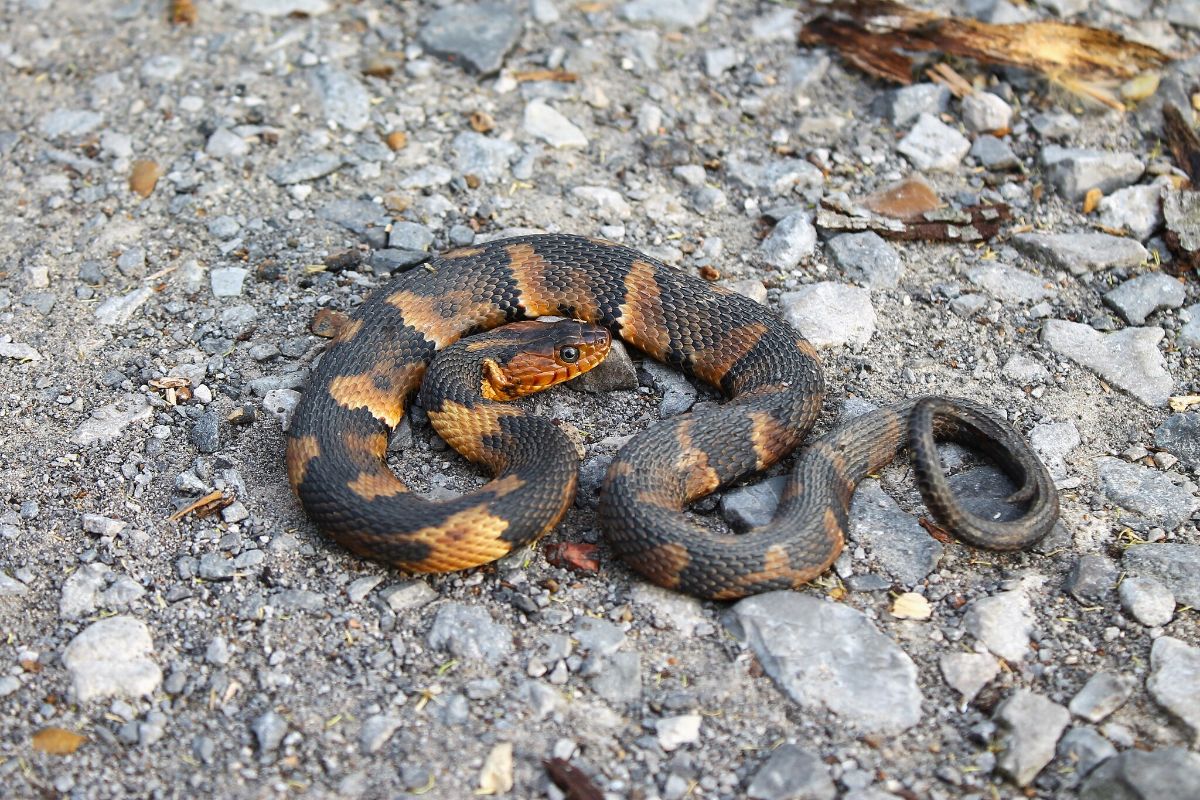
Banded Watersnake
Nerodia fasciata · Water Snakes
Tap a part to see what to look for. Tap it again to turn it off.
No venom, but it bites and musks freely if handled.
How to identify
- Head
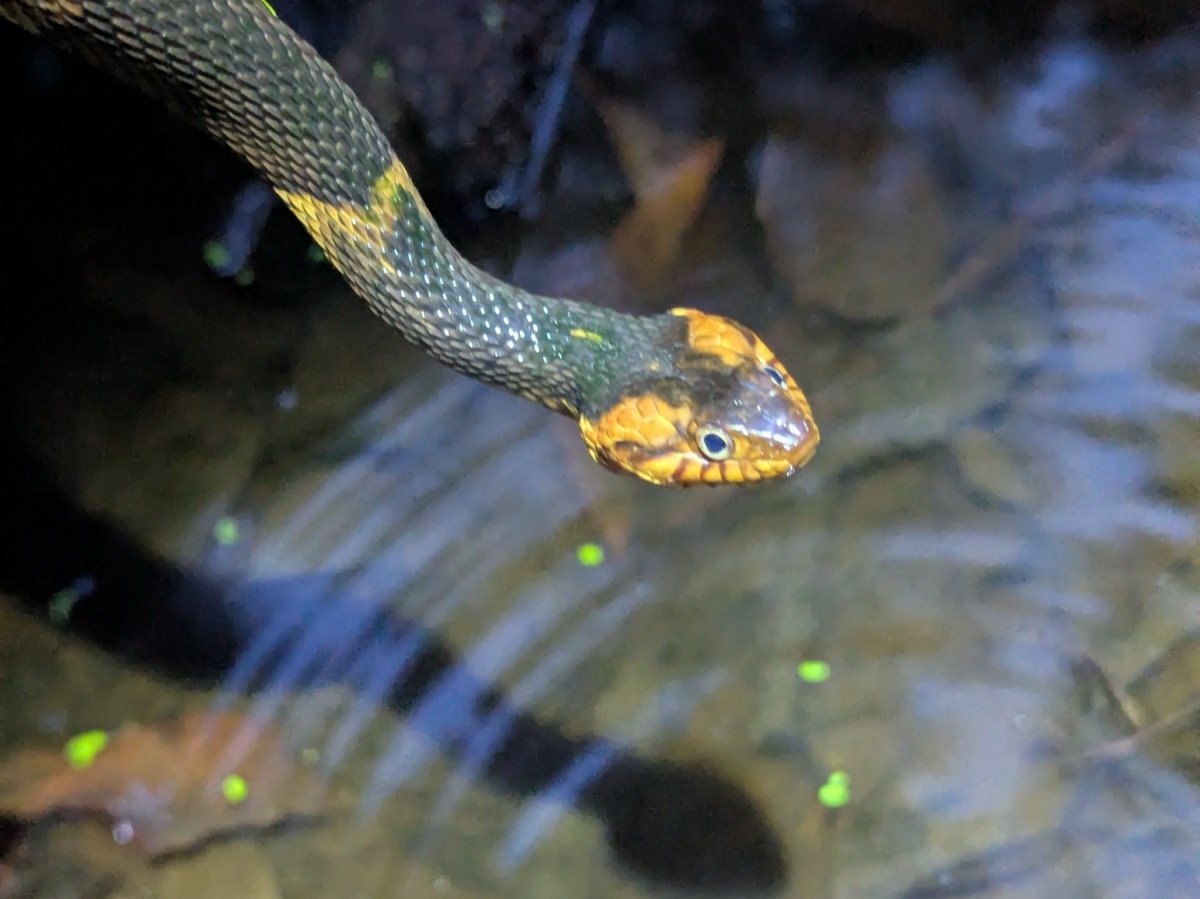
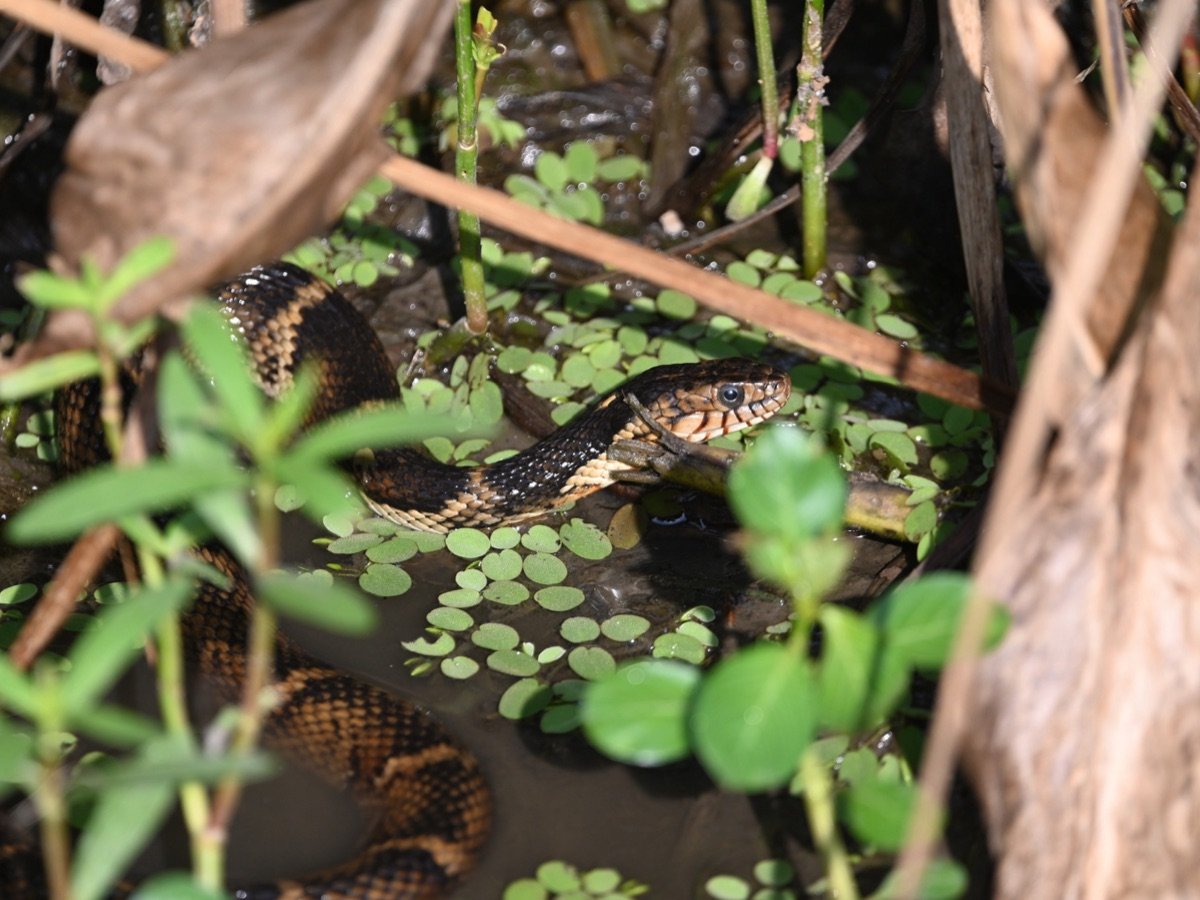
- Narrow head that flattens when alarmed; a dark stripe often runs from eye to jaw.
- Pattern
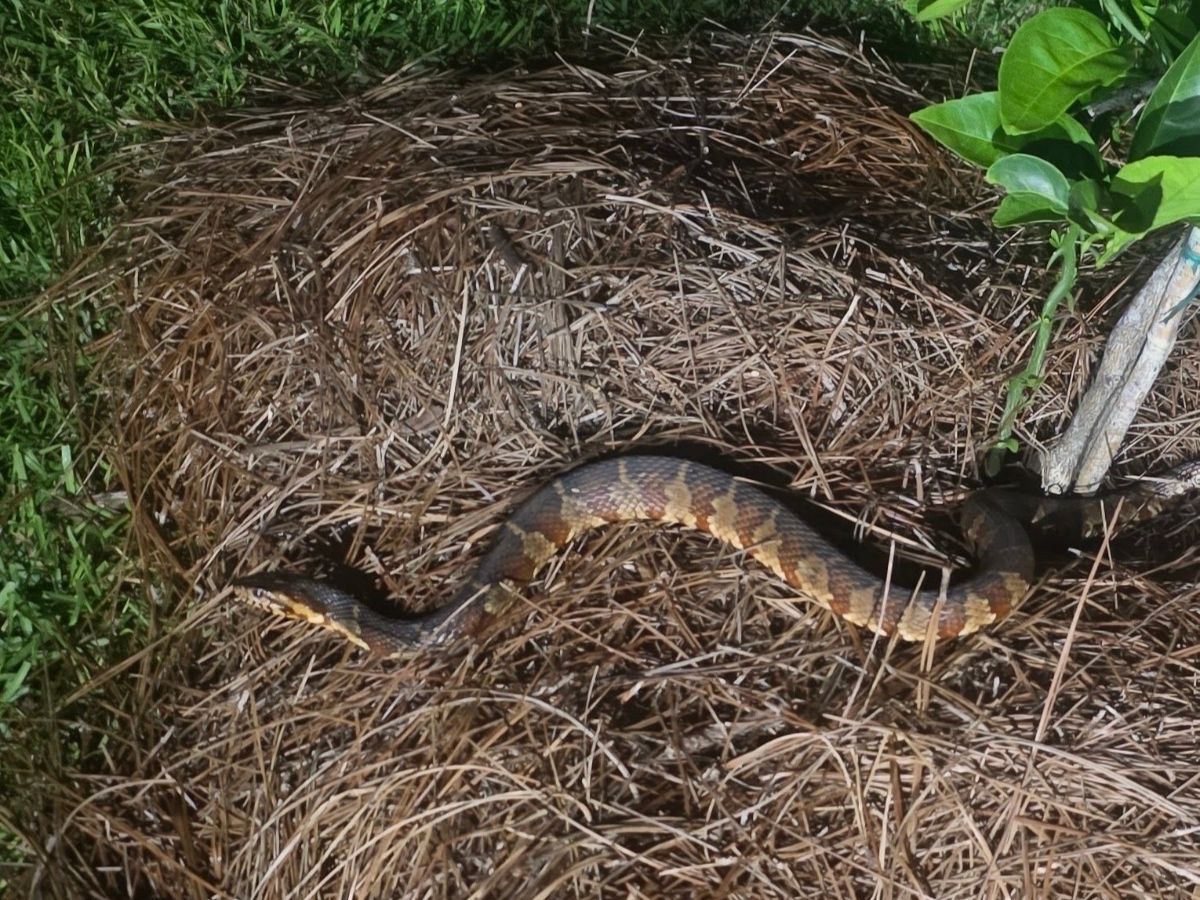
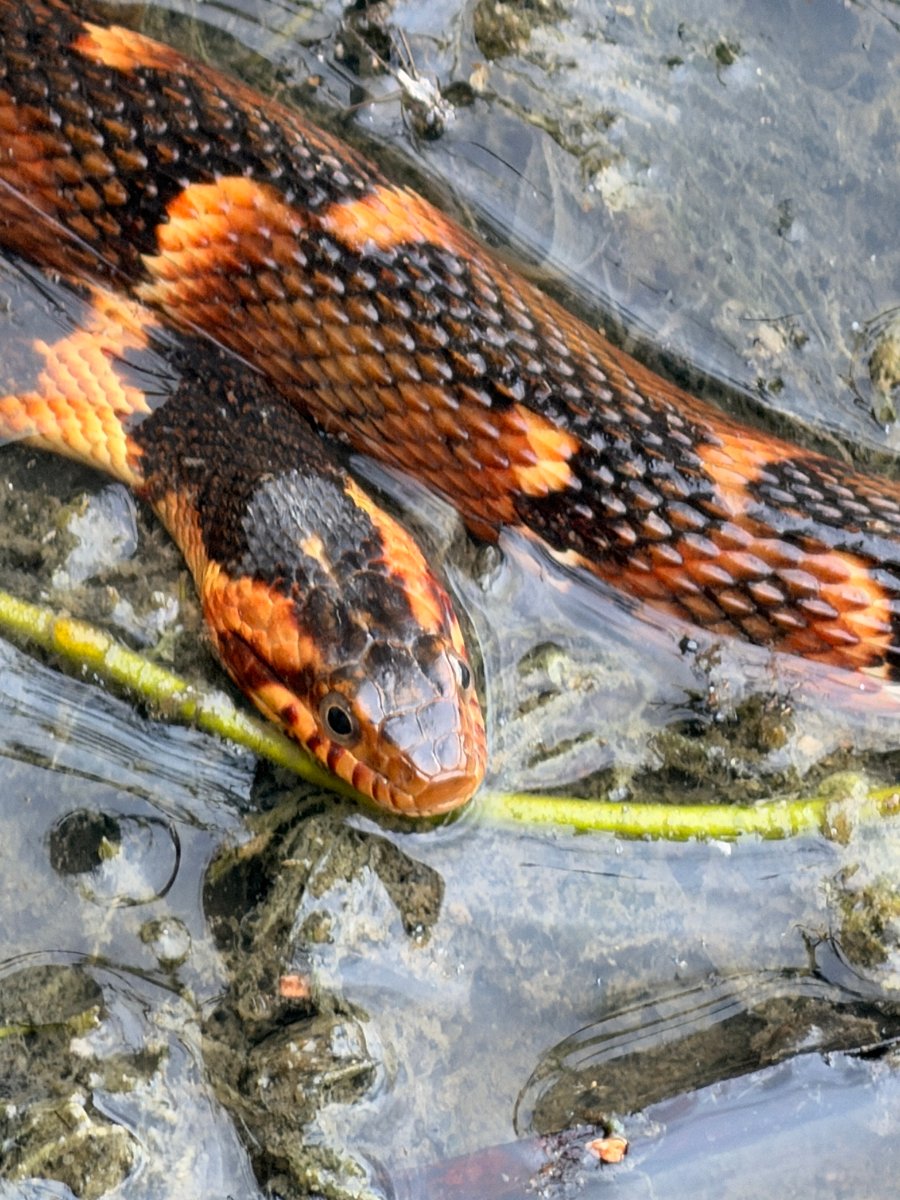
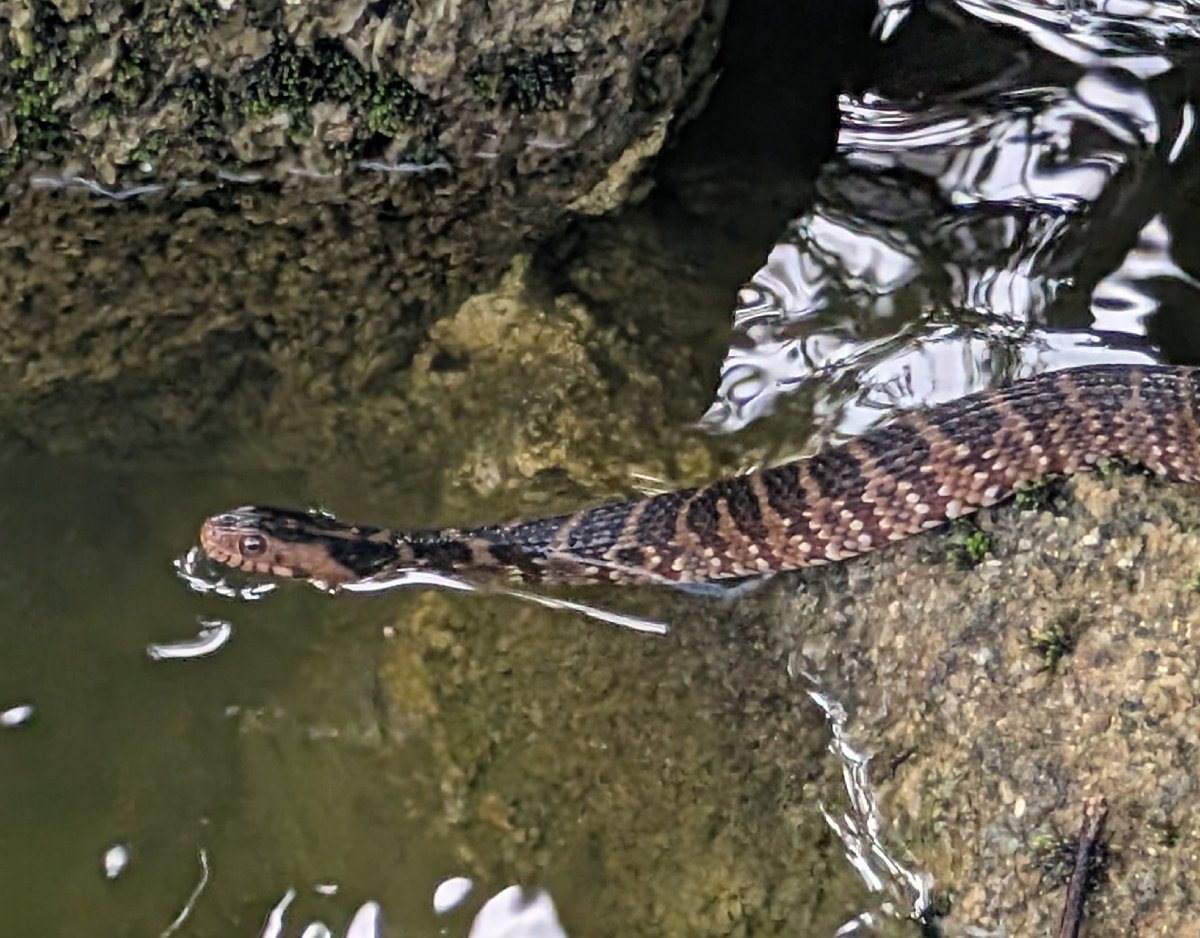
- Dark crossbands widest across the back; belly has dark square marks.
- Eyes
- Round pupil, eyes set high on the head; no heat-sensing pit.
- Pits
- None. There is no pit between the eye and the nostril.
- Tail
- Tapers evenly; no rattle.
- What it does
- Flattens its head and may strike if cornered; flees to water first.
Often confused with
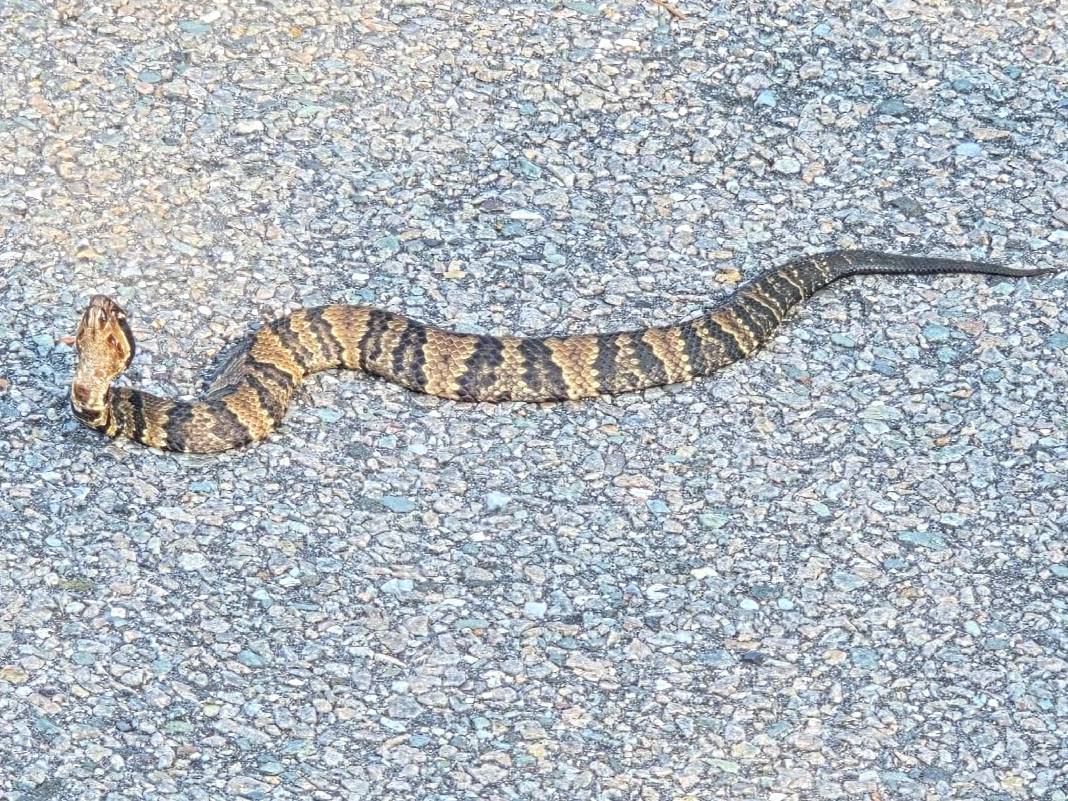
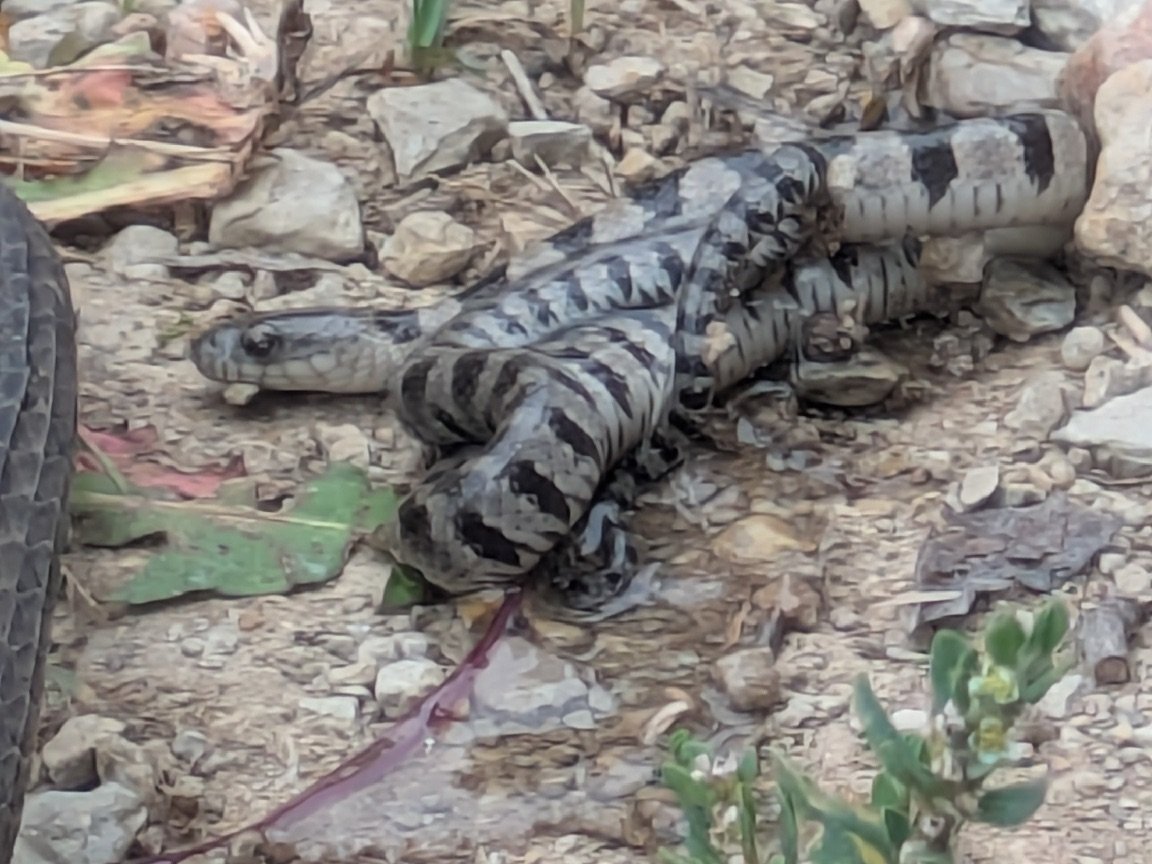
Northern Cottonmouth, which has a vertical pupil and a dark eye mask. Northern Watersnake looks nearly identical where their ranges meet.
How to tell them apart
Banded Watersnake vs Northern Cottonmouth›
The quick way to tellCheck the face. The cottonmouth has a vertical pupil and a dark eye mask. The Banded Watersnake has round pupils and no mask.
Banded Watersnake: Round pupil, eyes set high on the head; no heat-sensing pit.
Northern Cottonmouth: Vertical slit pupil; heat-sensing pit between eye and nostril.
Banded Watersnake vs Northern Watersnake›
The quick way to tellFollow the bands down the body. The Banded Watersnake's crossbands stay whole to the tail, and it usually has a dark stripe from eye to jaw. The Northern Watersnake's bands break into alternating blotches by mid-body.
Banded Watersnake: Dark crossbands widest across the back; belly has dark square marks.
Northern Watersnake: Crossbands up front breaking into blotches toward the tail; reddish half-moons on the belly.
About the Banded Watersnake›
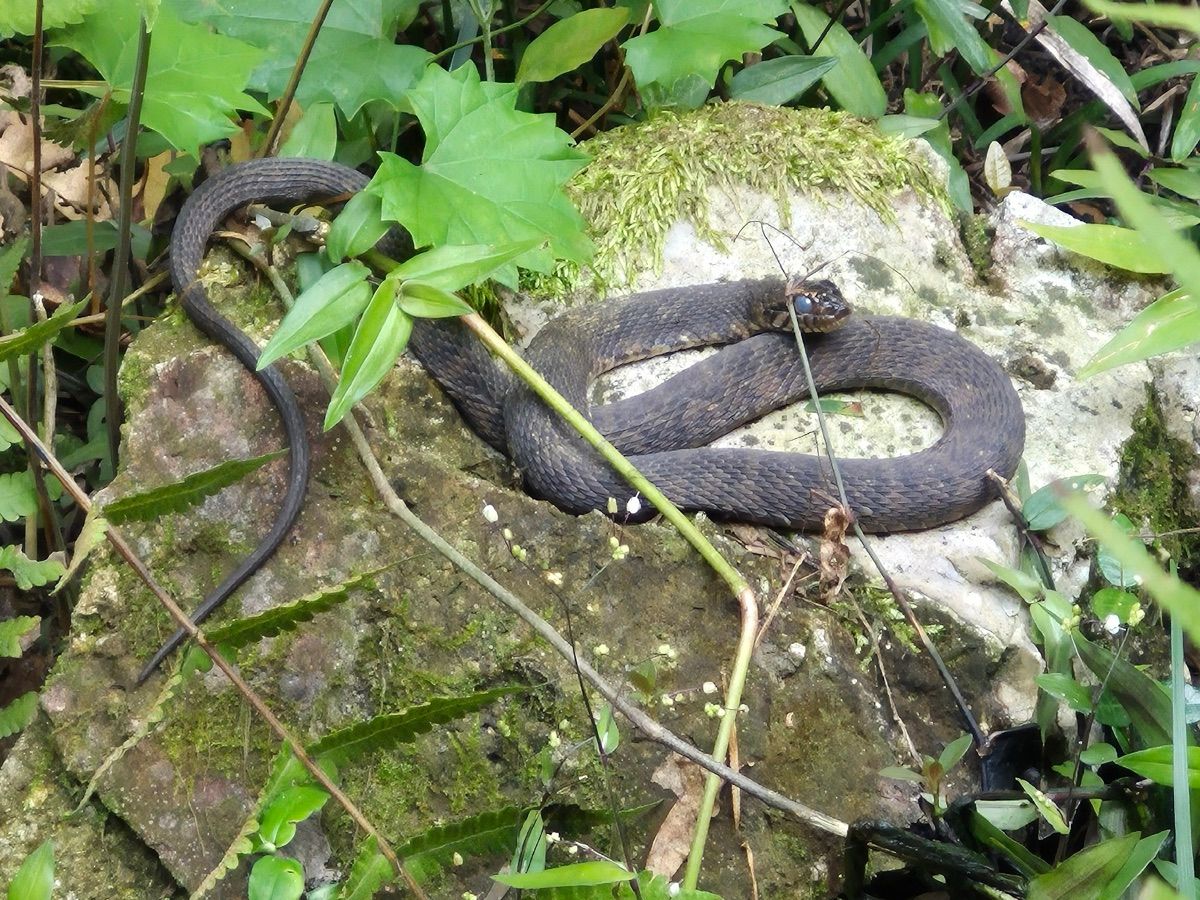
A common watersnake of southern swamps, ditches, ponds and marshes, at home in any still or slow water with cover.
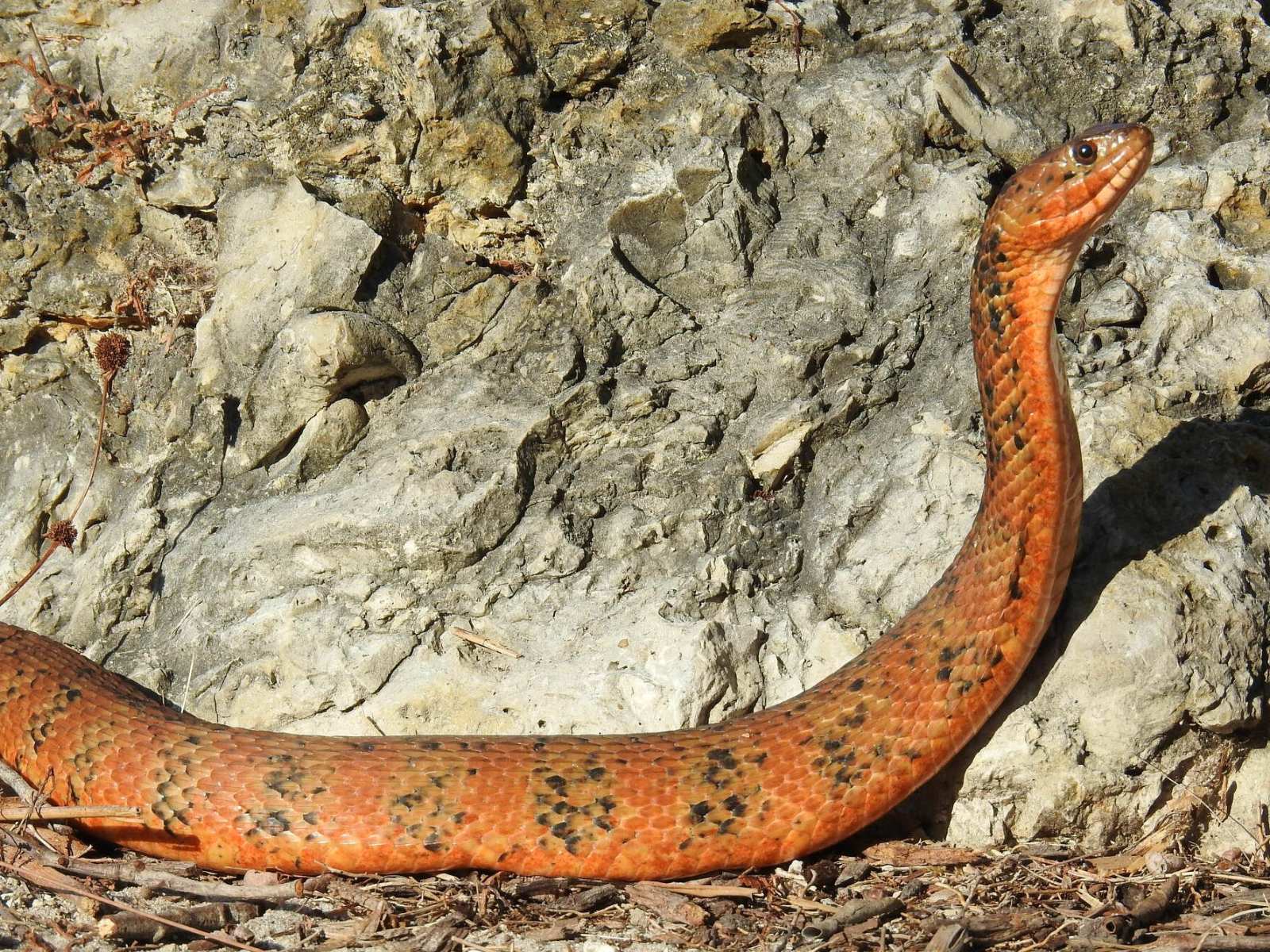
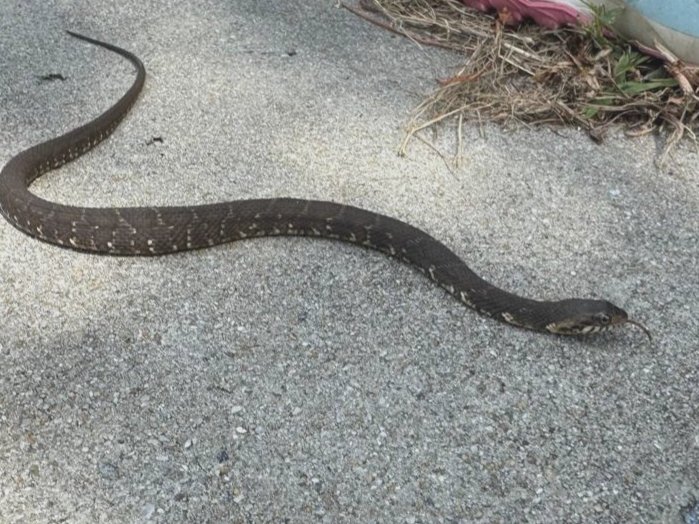
Bands fade with age, so old adults can look almost plain dark brown. Like all watersnakes it flattens its head when threatened, which adds to the cottonmouth confusion.
The details
Size Usually 2–3.5 ftWeight Commonly 0.5–2 lbLifespan About 10 years
Typical range›
Southeast coastal plain from North Carolina through Florida, west to eastern Texas and Oklahoma, and up the Mississippi valley to southern Illinois; introduced in California.
Activity›
Active day and night, more nocturnal in hot weather; often out hunting after rain.
Diet›
Fish and frogs, hunted by active searching in shallow water.
Reproduction›
Gives birth to live young, usually 10–30, in late summer.
Found in parts of 15 states›
Ranges are approximate. It may be found in only part of a state, or be rare there, and snakes can turn up outside of them.
More photos