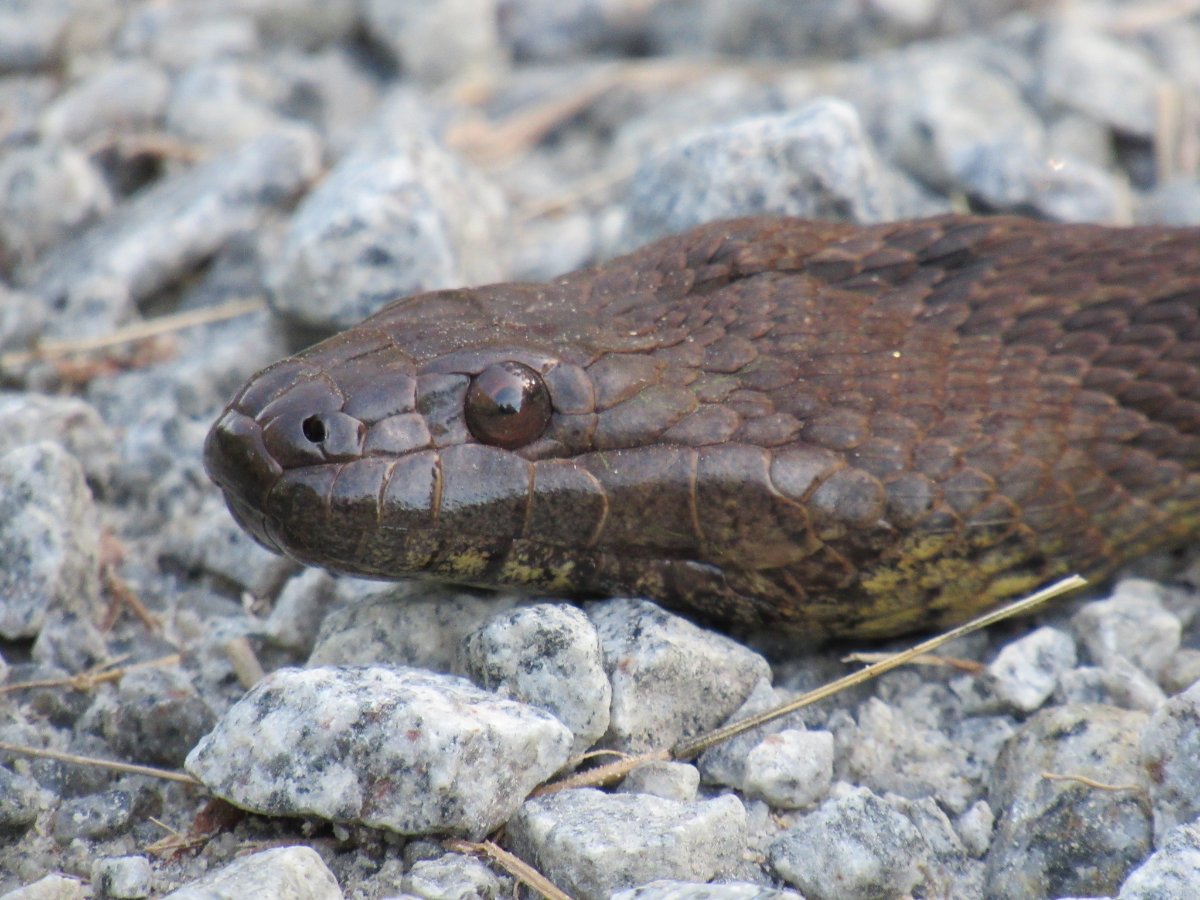
Brown Watersnake
Nerodia taxispilota · Water Snakes
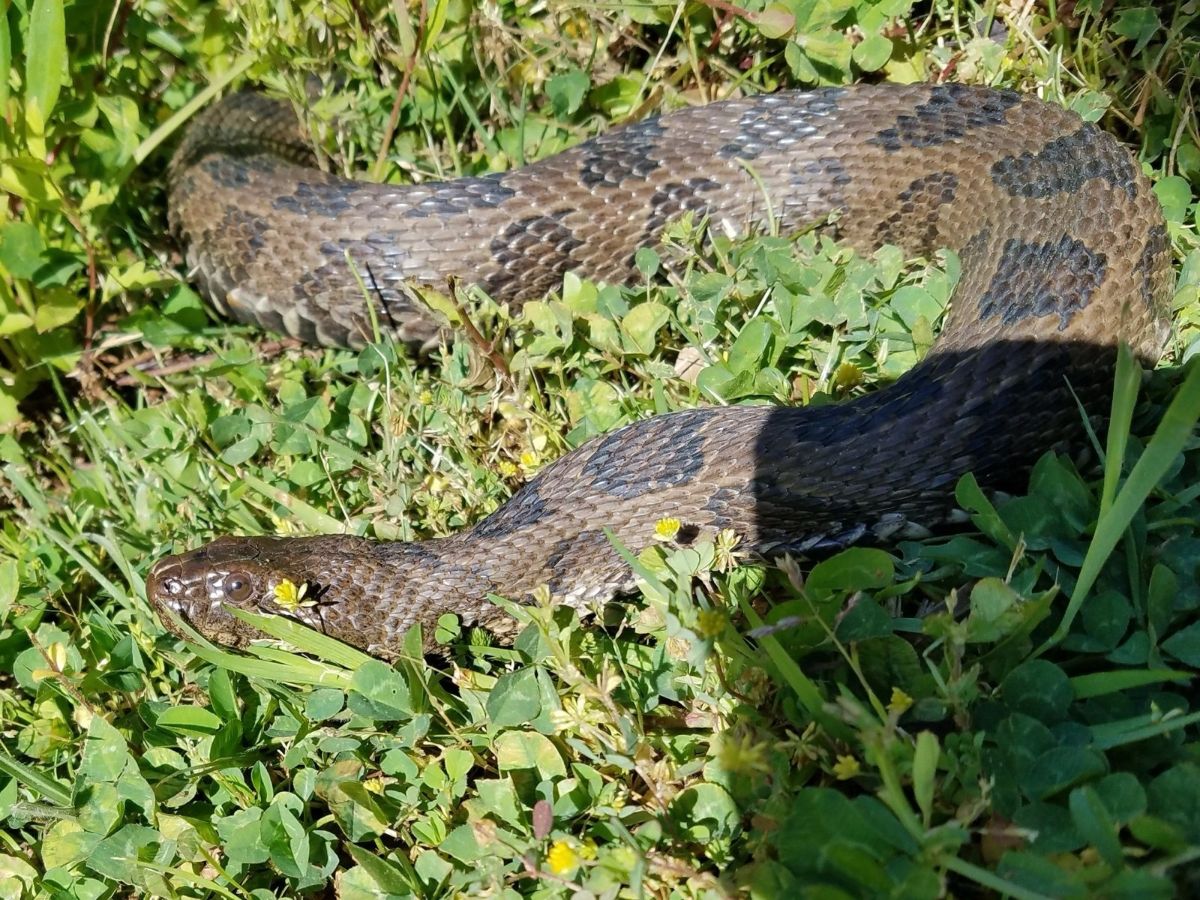
Tap a part to see what to look for. Tap it again to turn it off.
It has no venom, but if grabbed it will bite and smear a foul musk.
How to identify
- Head
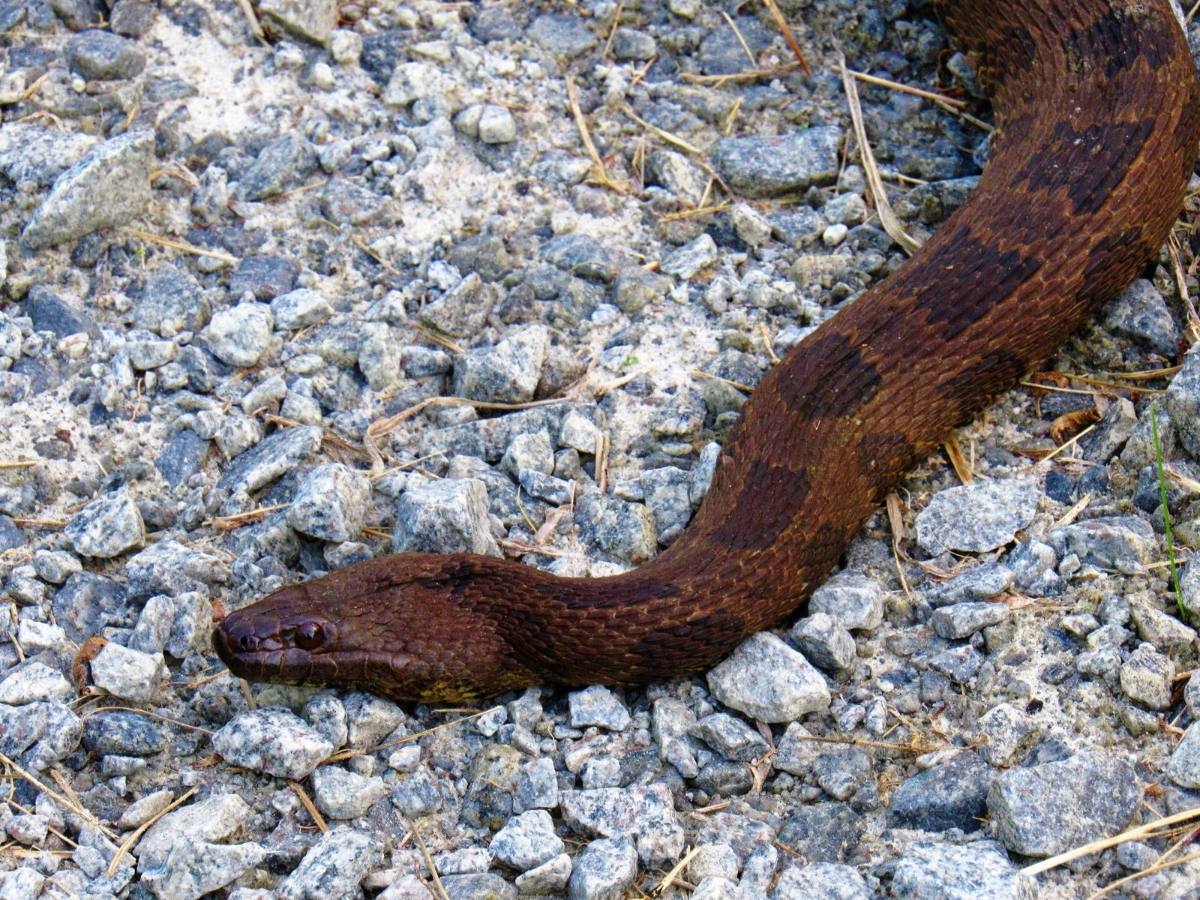
- Head clearly wider than the neck, but no eye mask and no pale snout.
- Pattern
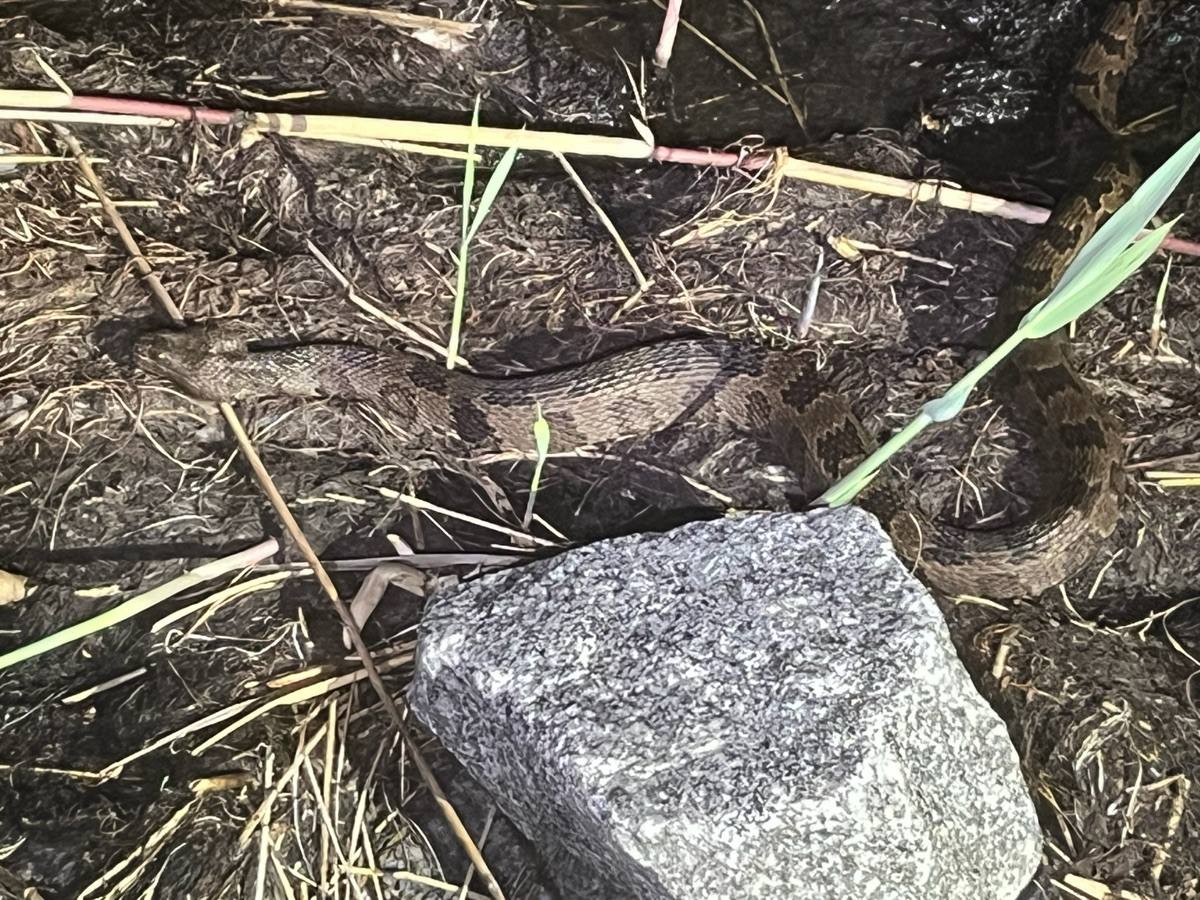
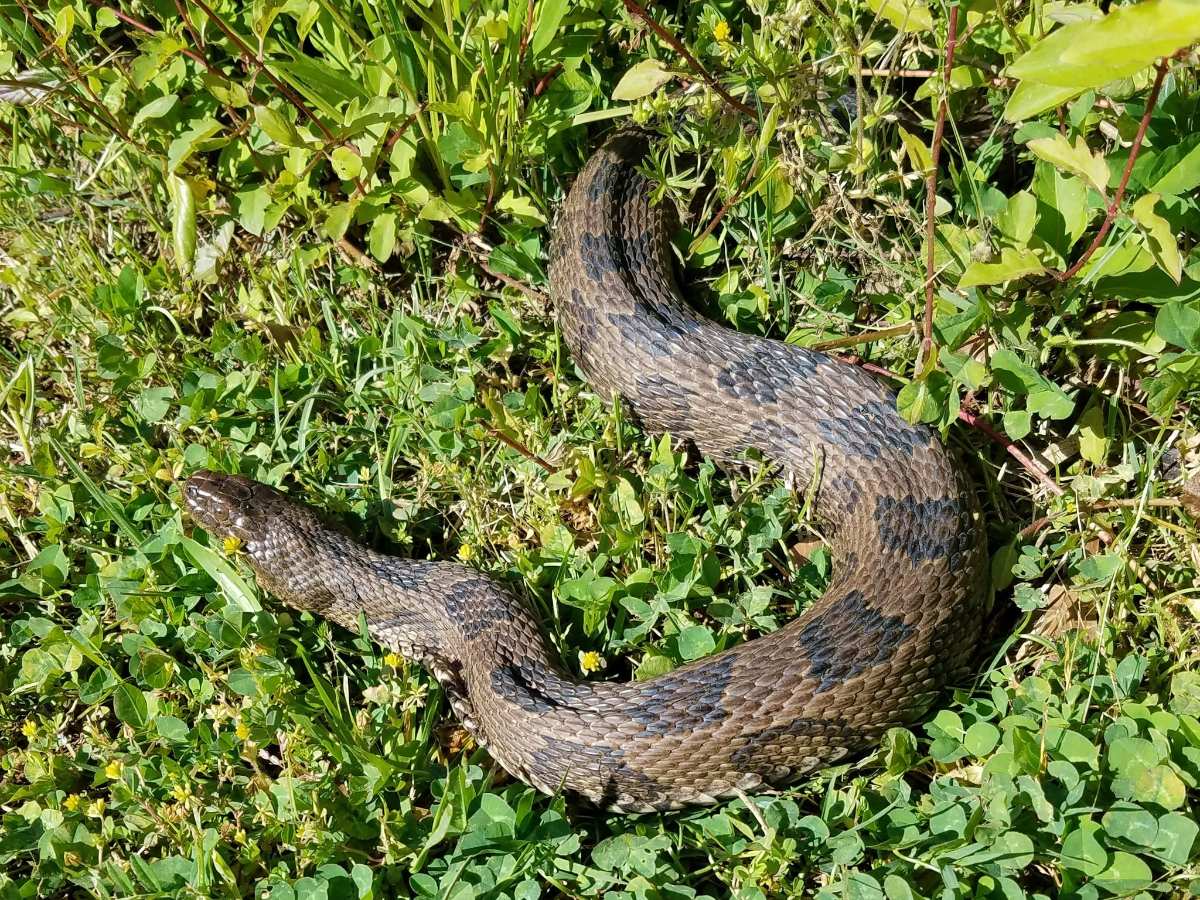
- Big squarish blotches alternating with side blotches - a checkerboard, not bands.
- Eyes
- Round pupil, eyes set high on the head; no heat-sensing pit.
- Pits
- None. There is no pit between the eye and the nostril.
- Tail
- Tapers evenly; no rattle, no markings.
- What it does
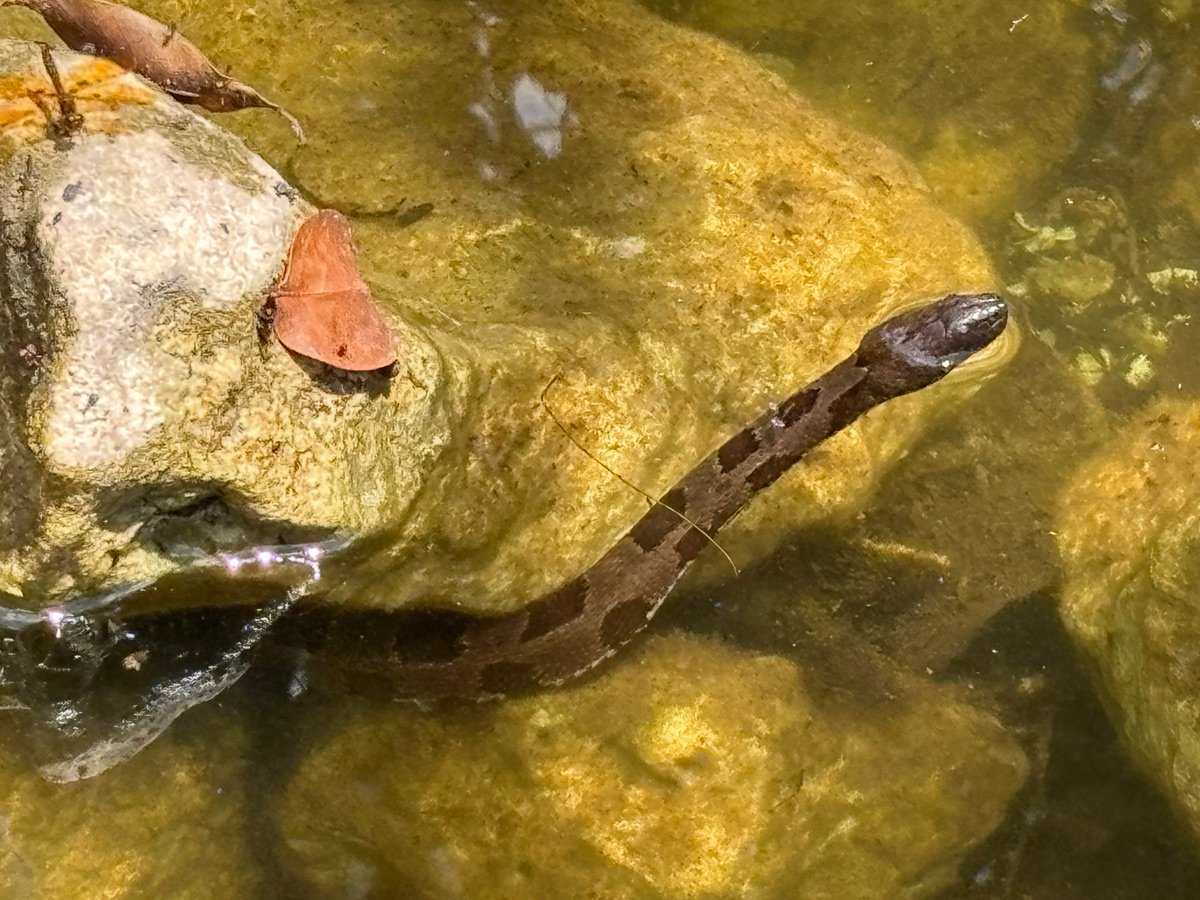
- Drops from branches into the water and swims away.
Often confused with
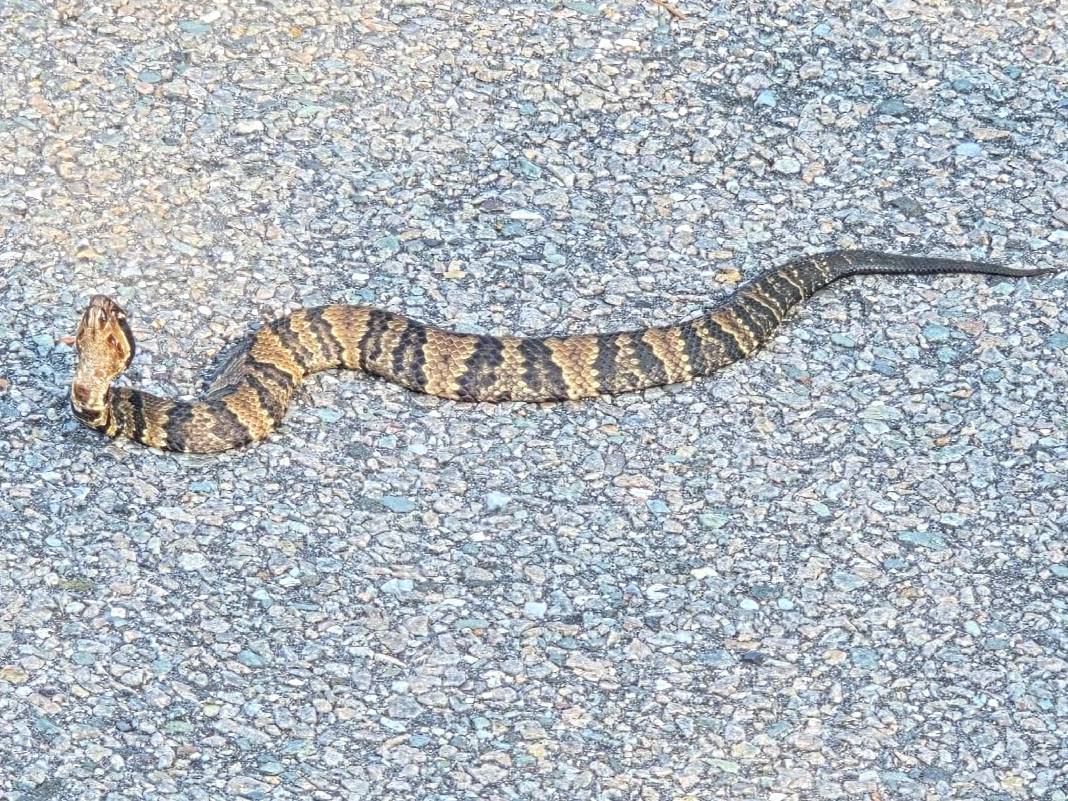
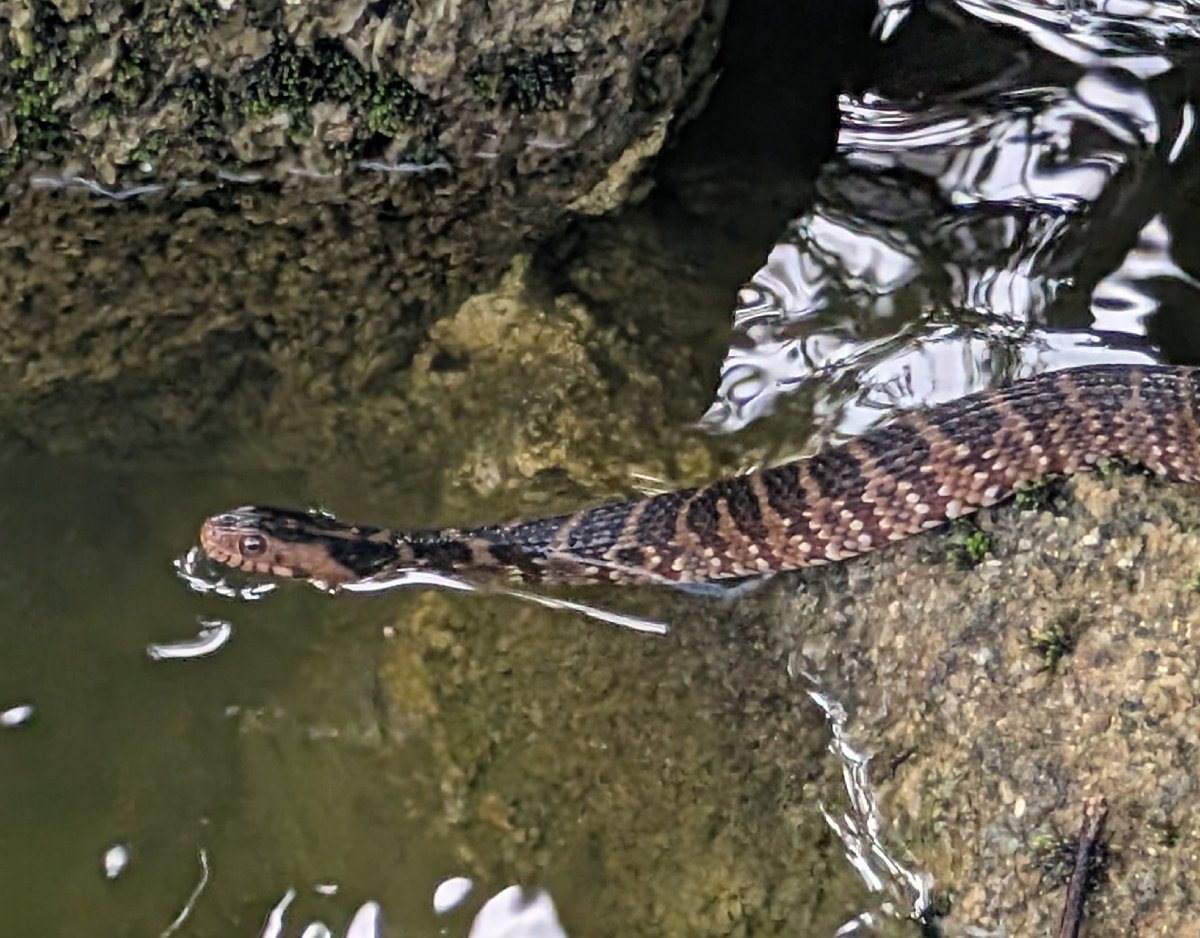
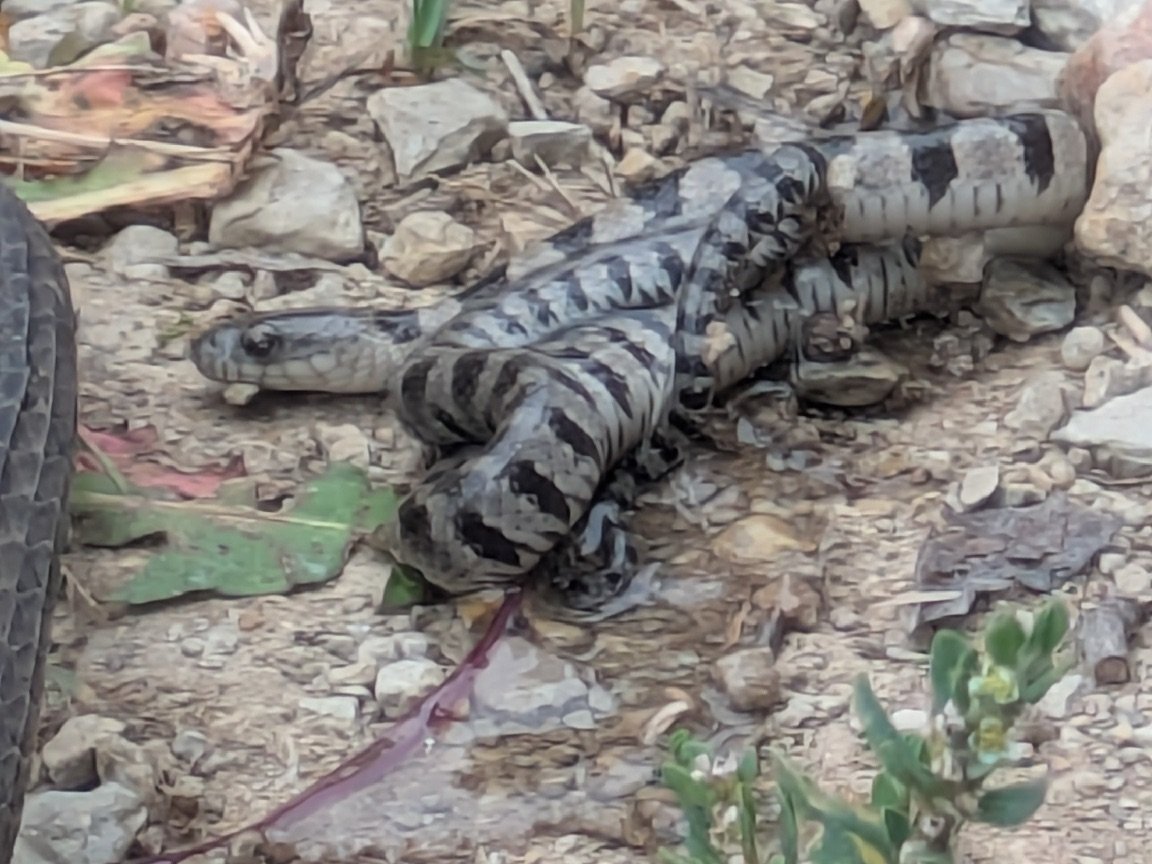
Northern Cottonmouth has a vertical pupil, a dark eye mask, and eyes that can't be seen from directly above. Banded and Northern Watersnakes have crossbands, not the Brown Watersnake's rows of squarish checkerboard blotches.
How to tell them apart
Brown Watersnake vs Northern Cottonmouth›
The quick way to tellCheck the face. The cottonmouth has a vertical pupil, a dark eye mask and a pale snout. The Brown Watersnake has round pupils and square, checkerboard blotches.
Brown Watersnake: Round pupil, eyes set high on the head; no heat-sensing pit.
Northern Cottonmouth: Vertical slit pupil; heat-sensing pit between eye and nostril.
Brown Watersnake vs Banded Watersnake›
The quick way to tellLook at the back and face. The Banded Watersnake has crossbands running over the back and a dark stripe from eye to jaw. The Brown Watersnake has square blotches in a checkerboard and no face stripe.
Brown Watersnake: Big squarish blotches alternating with side blotches - a checkerboard, not bands.
Banded Watersnake: Dark crossbands widest across the back; belly has dark square marks.
Brown Watersnake vs Northern Watersnake›
The quick way to tellLook just behind the head. The Northern Watersnake has full dark crossbands on the front of its body that break into blotches farther back. The Brown Watersnake has square checkerboard blotches all the way, with no bands.
Brown Watersnake: Big squarish blotches alternating with side blotches - a checkerboard, not bands.
Northern Watersnake: Crossbands up front breaking into blotches toward the tail; reddish half-moons on the belly.
About the Brown Watersnake›
A big river watersnake of the Southeast, usually seen draped on branches over slow water or basking on cypress knees. Drops into the water with a splash when approached.
It is one of the most frequently killed snakes in the South simply because people take it for a cottonmouth.
The details
Size Usually 2.5–5 ftWeight Commonly 1–4 lbLifespan About 10 years
Typical range›
Southeast coastal plain and Piedmont: southeastern Virginia through all of Florida, west into Alabama.
Activity›
Active by day and at night in warm months, often basking on limbs over water.
Diet›
Almost entirely fish, especially catfish, plus some frogs.
Reproduction›
Gives birth to live young, usually 15–40, in late summer.
Found in parts of 6 states›
Ranges are approximate. It may be found in only part of a state, or be rare there, and snakes can turn up outside of them.