California Kingsnake
Lampropeltis californiae · Kingsnakes & Milksnakes
Tap a part to see what to look for. Tap it again to turn it off.
No venom; it may musk or bite if grabbed, and it eats rattlesnakes.
How to identify
- Head
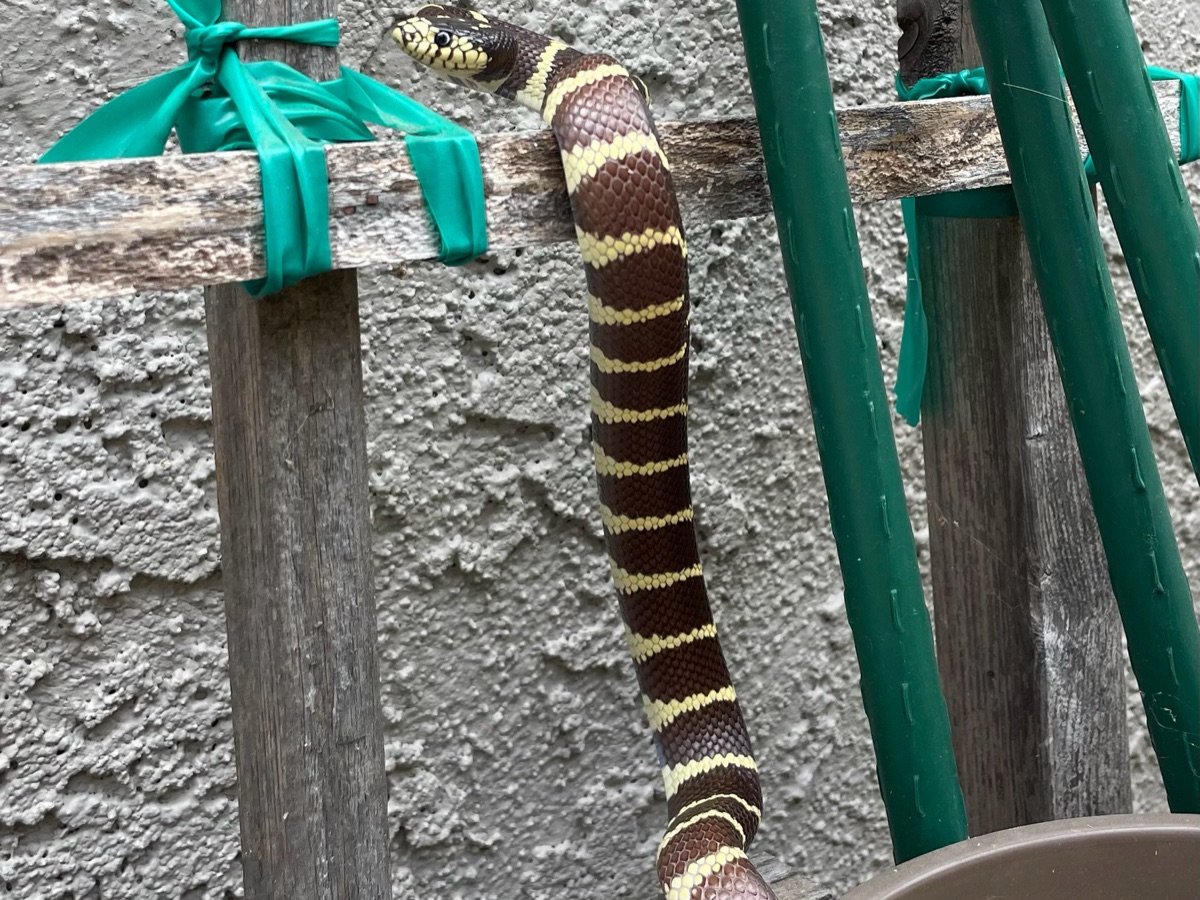
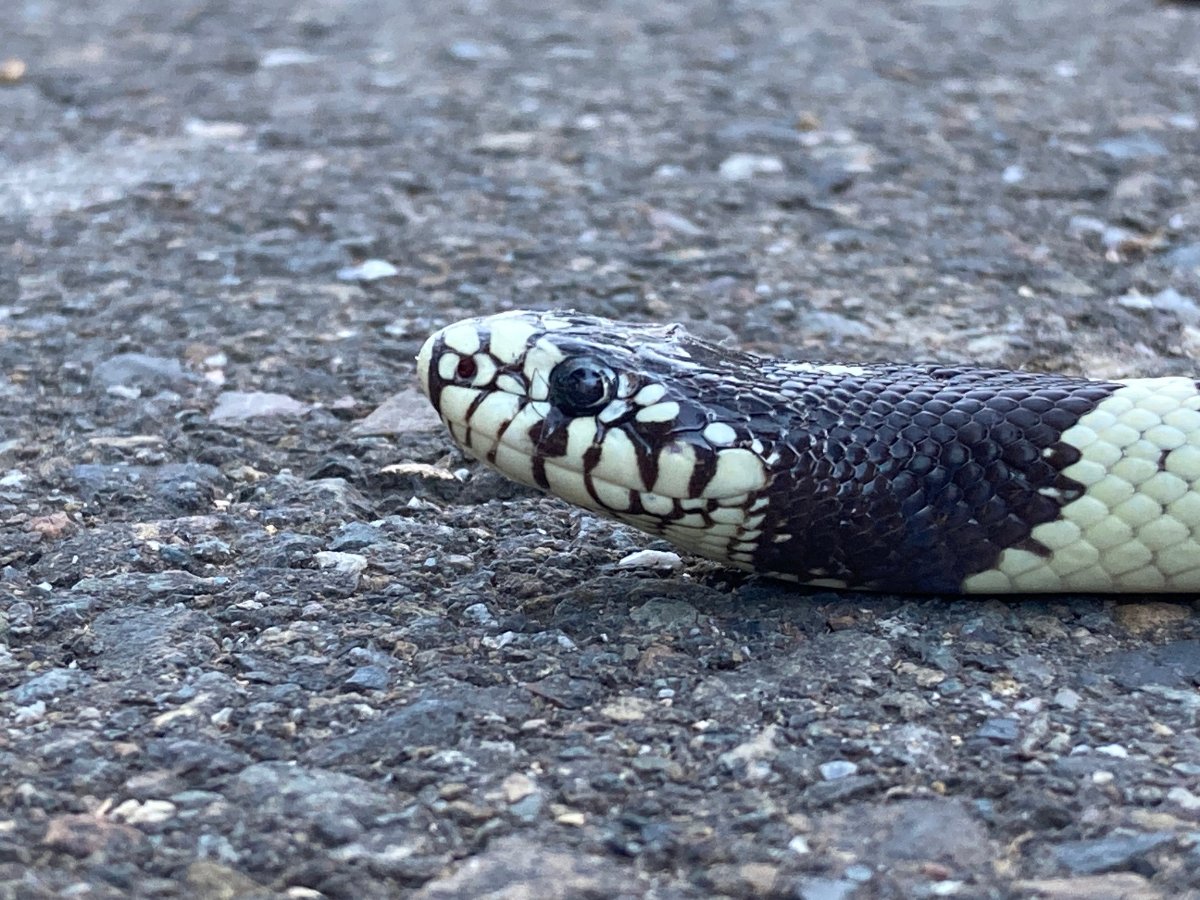
- Small head barely wider than the neck; smooth and glossy.
- Pattern
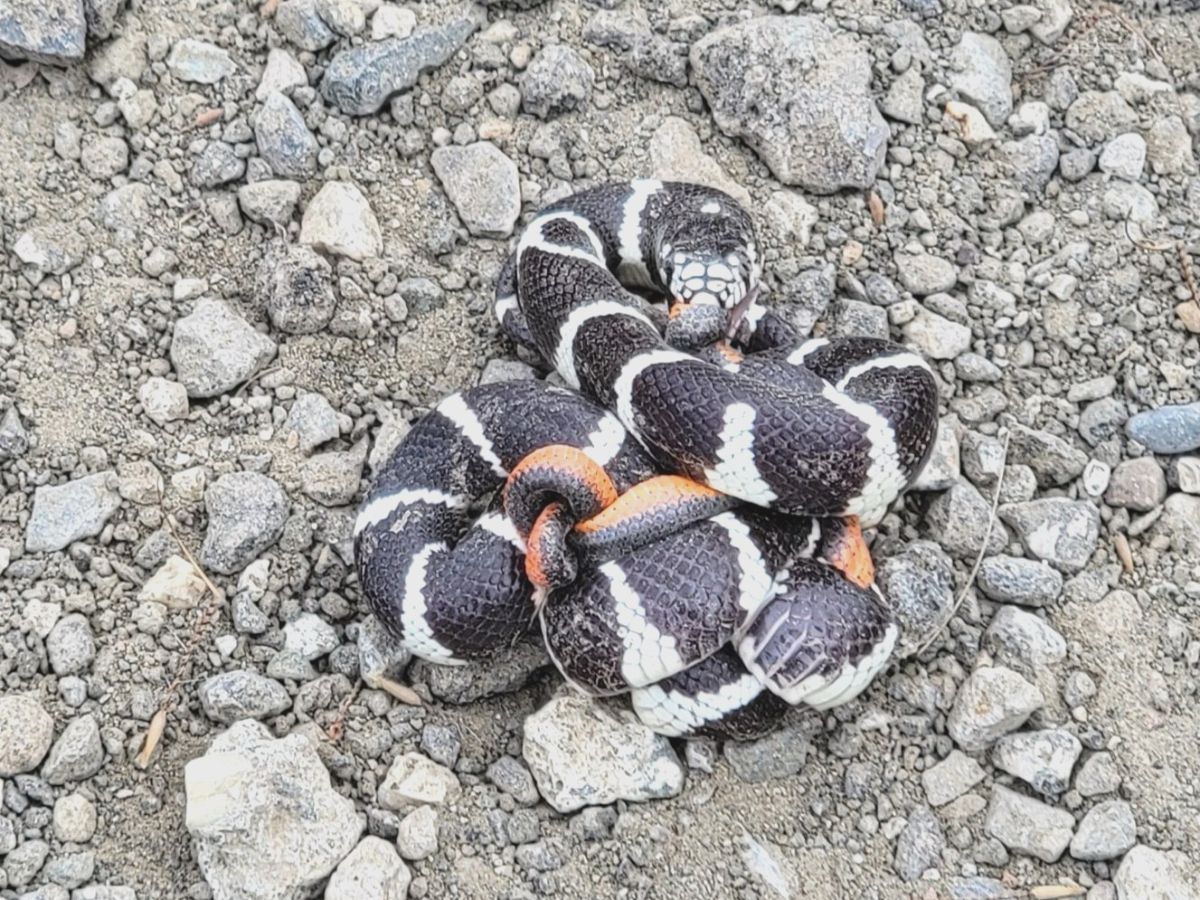
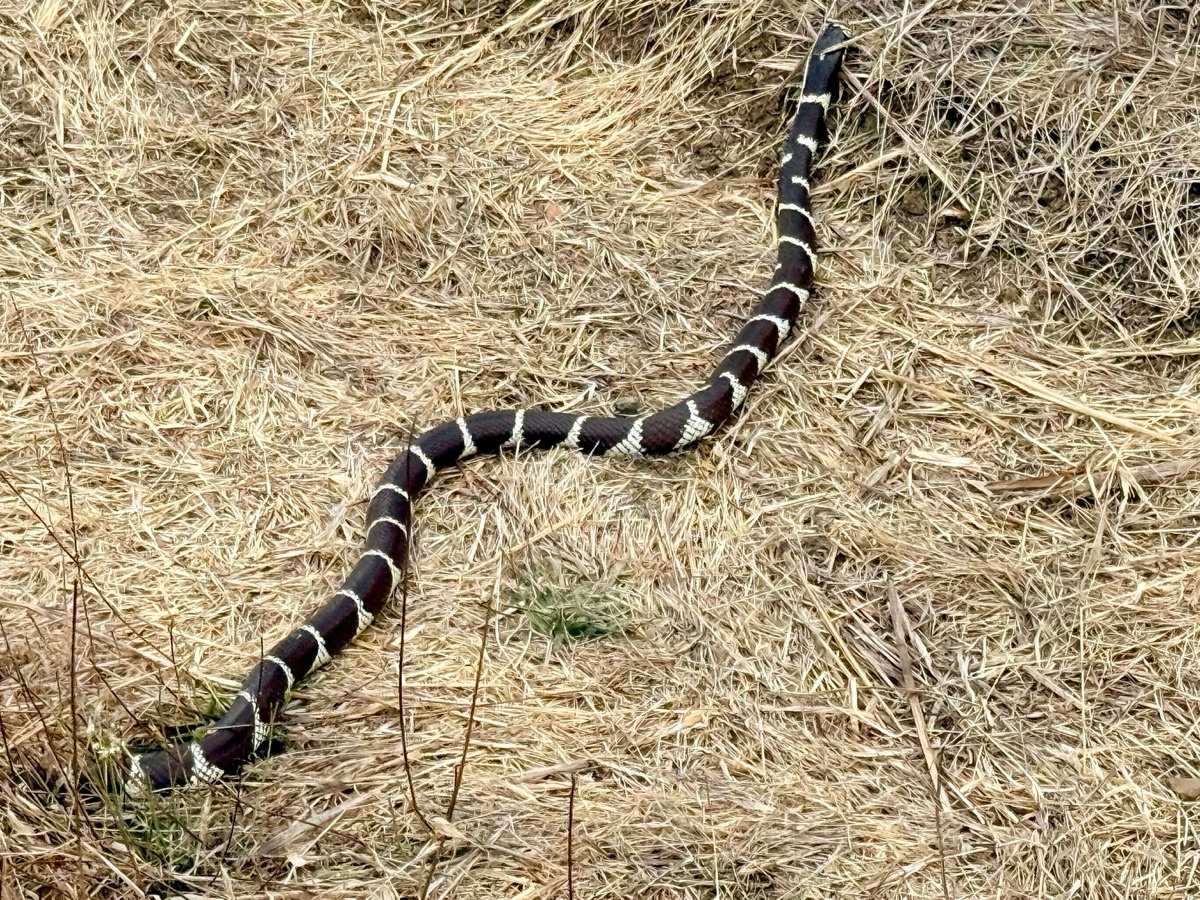
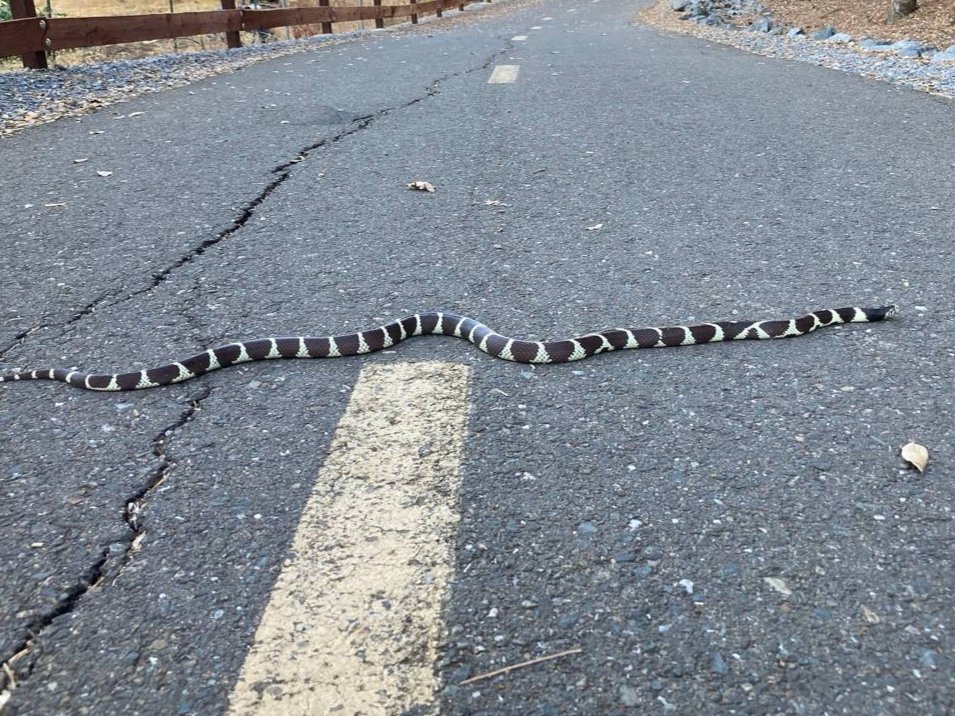
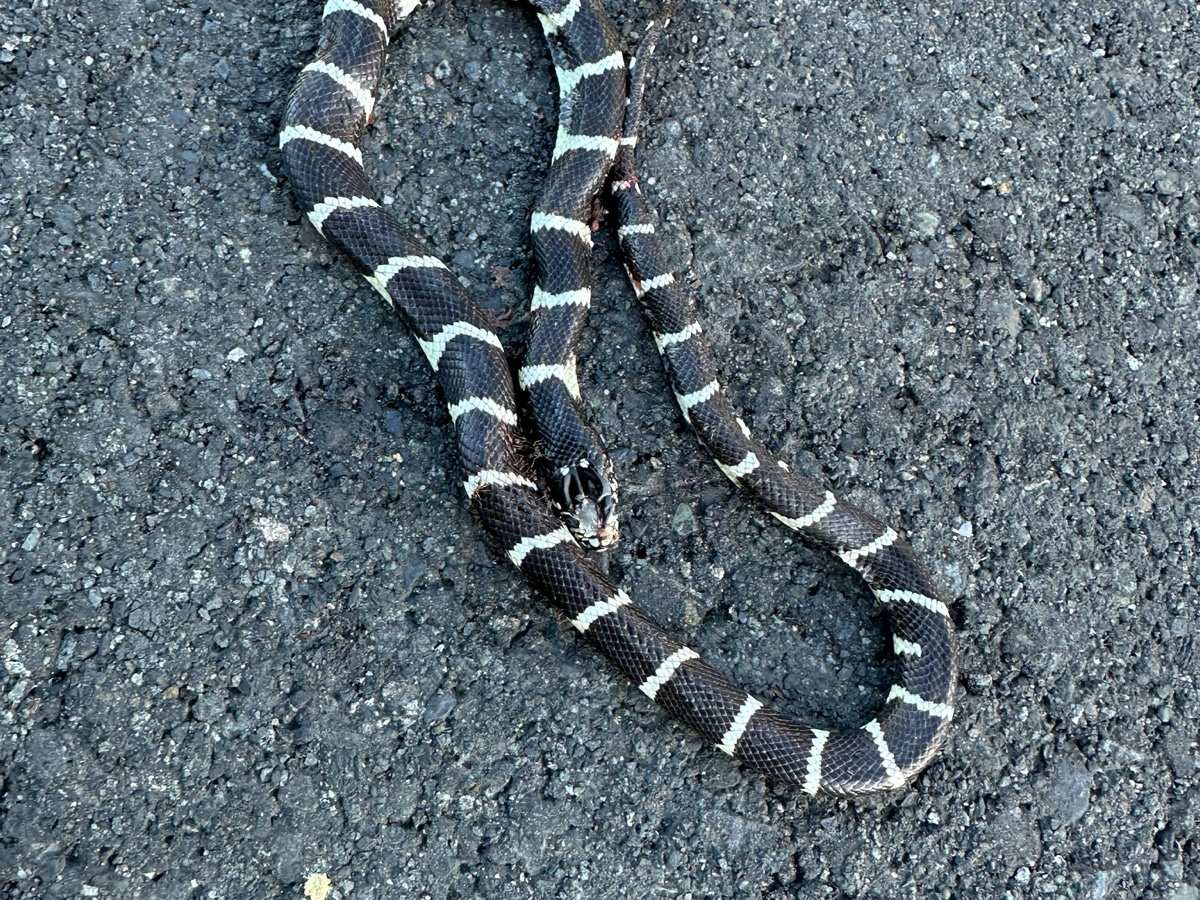
- Crisp black-and-cream bands right around the body; some are striped instead.
- Eyes
- Round pupil, small dark eye; no heat-sensing pit.
- Pits
- None. There is no pit between the eye and the nostril.
- Tail
- Tapers evenly, banded to the tip; no rattle.
- What it does
- Hisses, shakes its tail and may roll into a ball.
About the California Kingsnake›
The kingsnake of the West, found in desert, chaparral, farmland and suburban yards. A powerful constrictor that eats other snakes, including rattlesnakes, and is largely resistant to their venom.
Cornered, it may hiss, shake its tail and roll into a ball. Bands versus stripes is mostly a matter of geography.
The details
Size Usually 2.5–4 ftWeight About 1–3 lbLifespan 15–20 years wild, longer captive
Typical range›
California, southern Oregon, Nevada, Utah and Arizona, just reaching extreme southwestern Colorado and northwestern New Mexico, and south into Baja California and Sonora.
Activity›
Day active in spring and fall, at dusk and night in summer heat.
Diet›
Other snakes including rattlesnakes, plus rodents, lizards, birds and eggs.
Reproduction›
Lays eggs, usually 5–12, in early summer.
Found in parts of 7 states›
Ranges are approximate. It may be found in only part of a state, or be rare there, and snakes can turn up outside of them.
More photos