Coachwhip
Masticophis flagellum · Racers & Whipsnakes
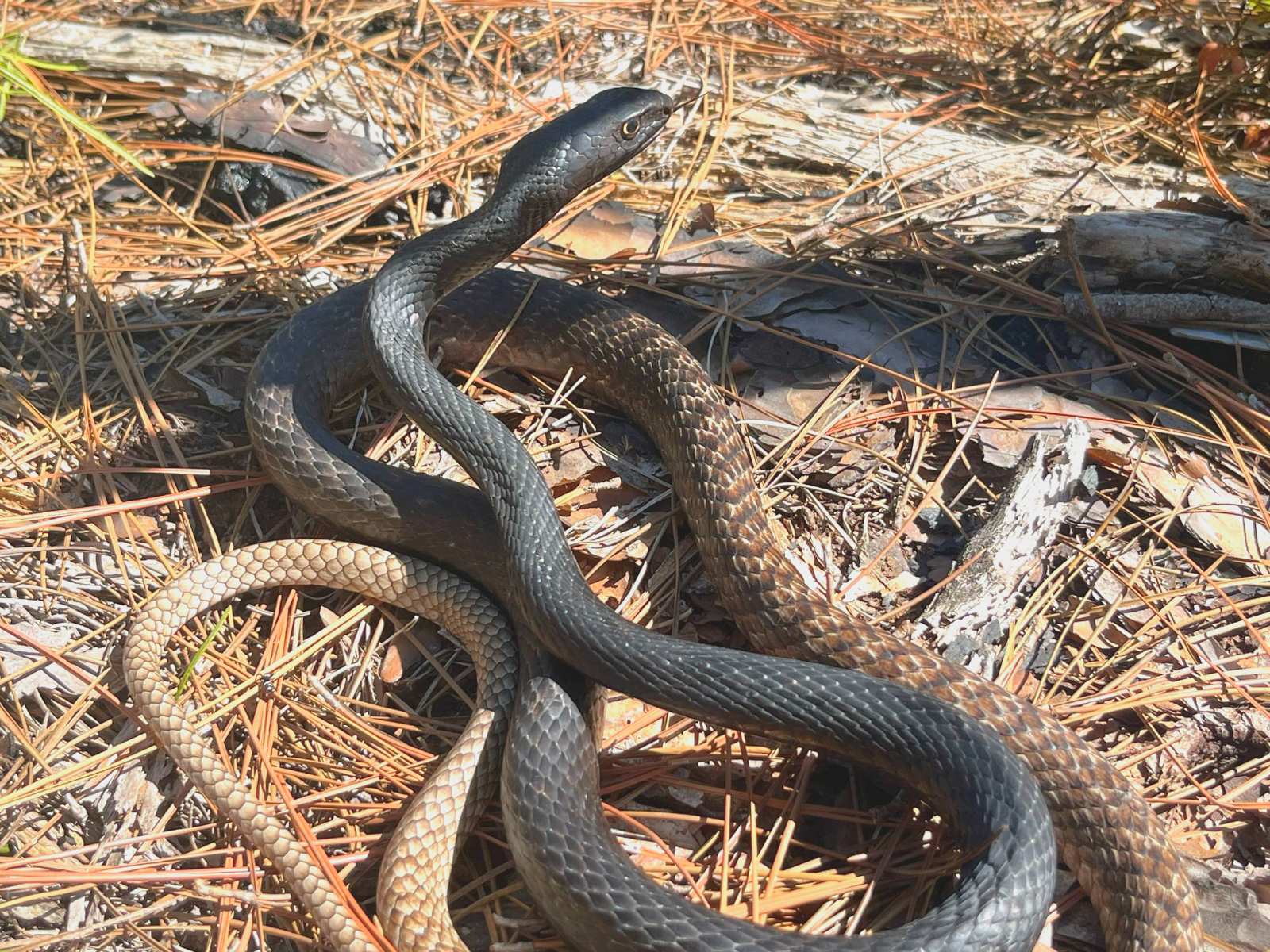
Tap a part to see what to look for. Tap it again to turn it off.
No venom, but it is fast and will bite hard if you corner or grab it.
How to identify
- Head
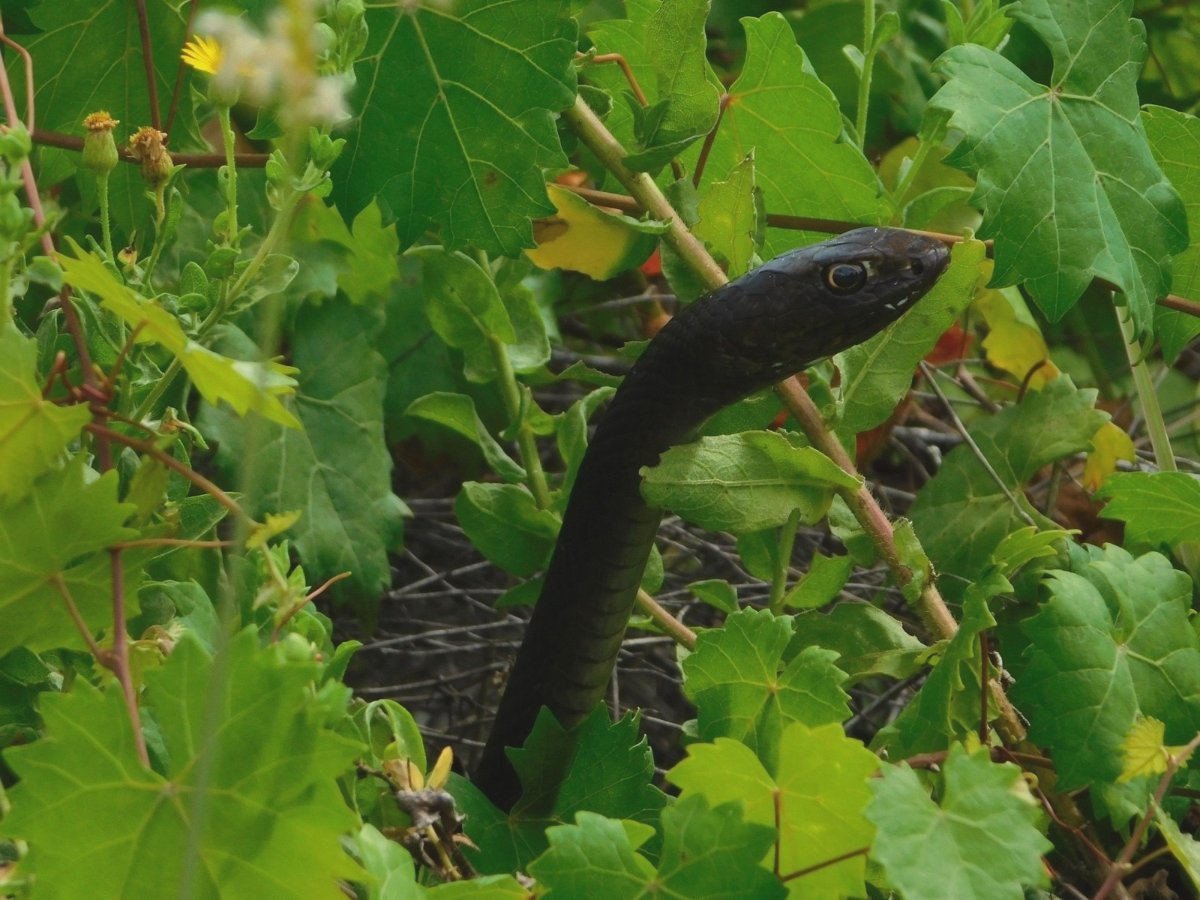
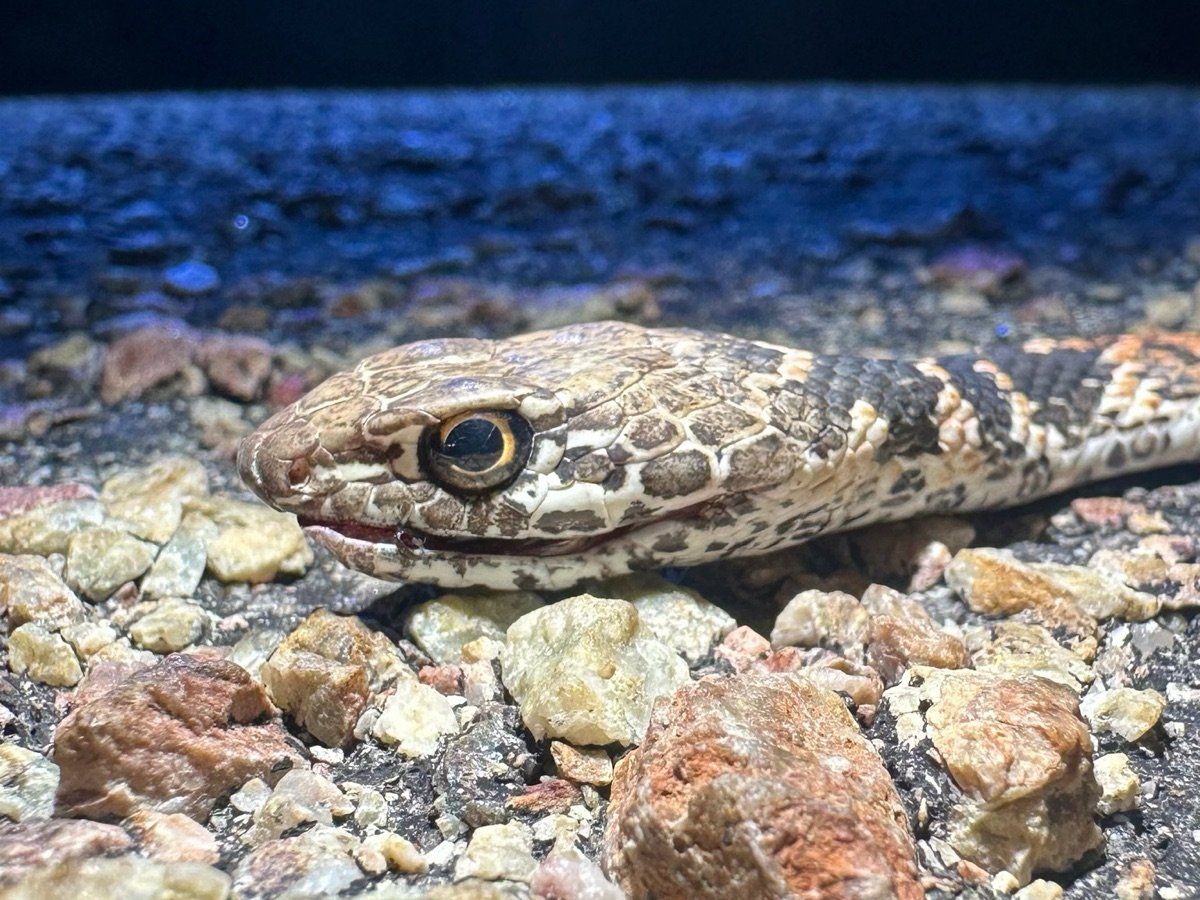
- Small narrow head with large eyes; barely wider than the neck.
- Pattern
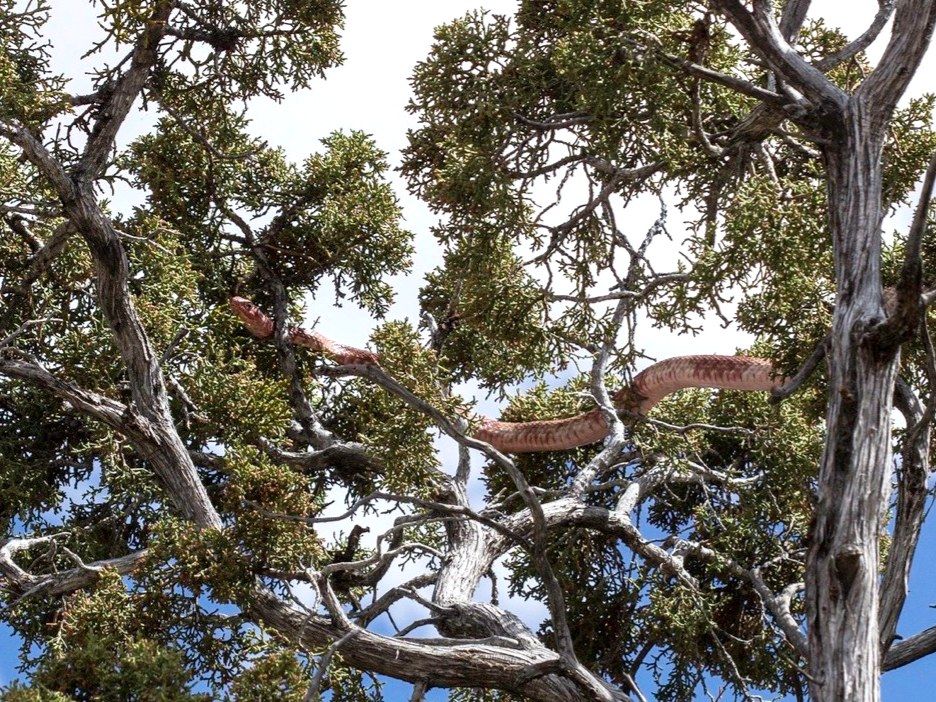
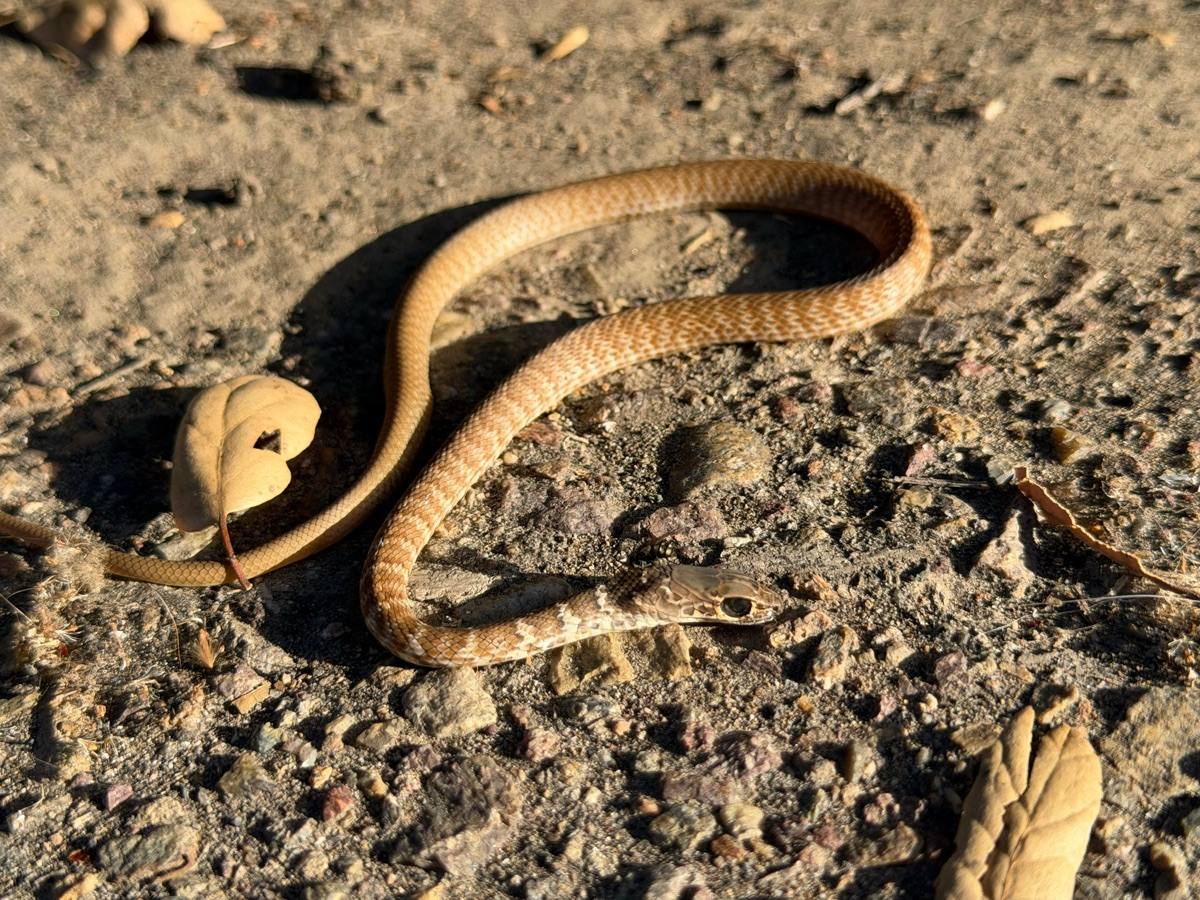
- Two-tone - dark head and neck fading to tan, pink or cream toward the tail, or the reverse.
- Eyes
- Round pupil in a large eye - a sight hunter; no heat-sensing pit.
- Pits
- None. There is no pit between the eye and the nostril.
- Tail
- Very long and tapering like a braided whip; no rattle.
- What it does
- Races off with its head raised; bites hard if cornered.
Often confused with
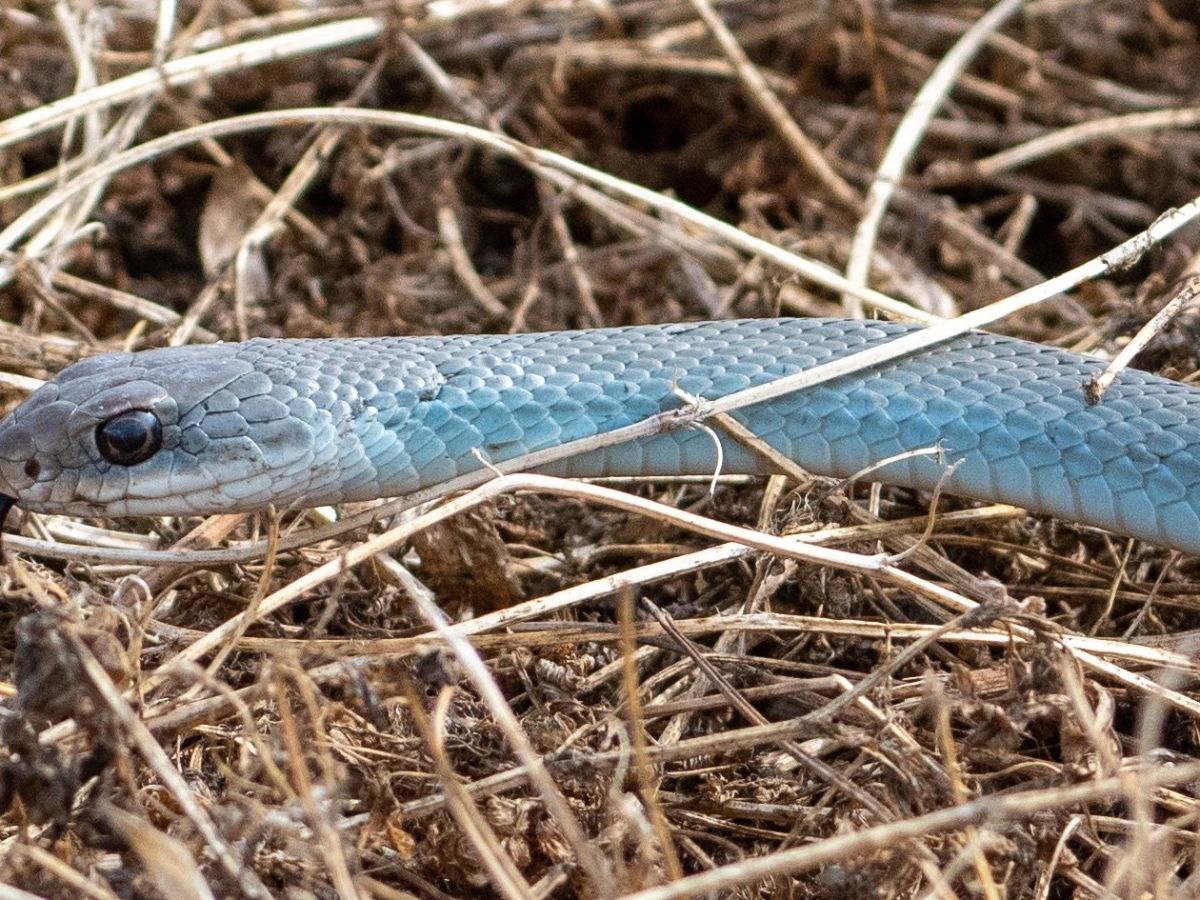
North American Racer, which is uniformly colored rather than two-tone. Neither is dangerous, and neither can "whip" anything despite the old stories.
How to tell them apart
Coachwhip vs North American Racer›
The quick way to tellThe coachwhip is two-toned: dark up front, fading lighter toward a braided-looking tail. The racer is one even color.
Coachwhip: Two-tone - dark head and neck fading to tan, pink or cream toward the tail, or the reverse.
North American Racer: Plain black, blue-gray, olive or tan; belly pale to gray; young strongly blotched.
About the Coachwhip›
The fastest snake in North America, crossing open ground with its head raised above the grass. It hunts by sight and speed in desert, prairie, pine sandhills and old fields.
Quick to flee and quick to bite if cornered, which is why it has a fierce reputation. The old tale that it whips people with its tail is pure folklore.
The details
Size Usually 3.5–6 ft; occasionally over 7 ftWeight About 1–3 lbLifespan 10–20 years
Typical range›
Southern US from California, southern Nevada and southwestern Utah east across Arizona, New Mexico, Texas, Oklahoma and Kansas to the Carolinas and Florida.
Activity›
Day active, even in real heat. Climbs into bushes; shelters in burrows and brush piles.
Diet›
Lizards, rodents, birds, insects and other snakes, swallowed without constriction.
Reproduction›
Lays eggs, usually 4–20, in early summer.
Found in parts of 20 states›
Ranges are approximate. It may be found in only part of a state, or be rare there, and snakes can turn up outside of them.
More photos