Eastern Coralsnake
Micrurus fulvius · Coral Snakes
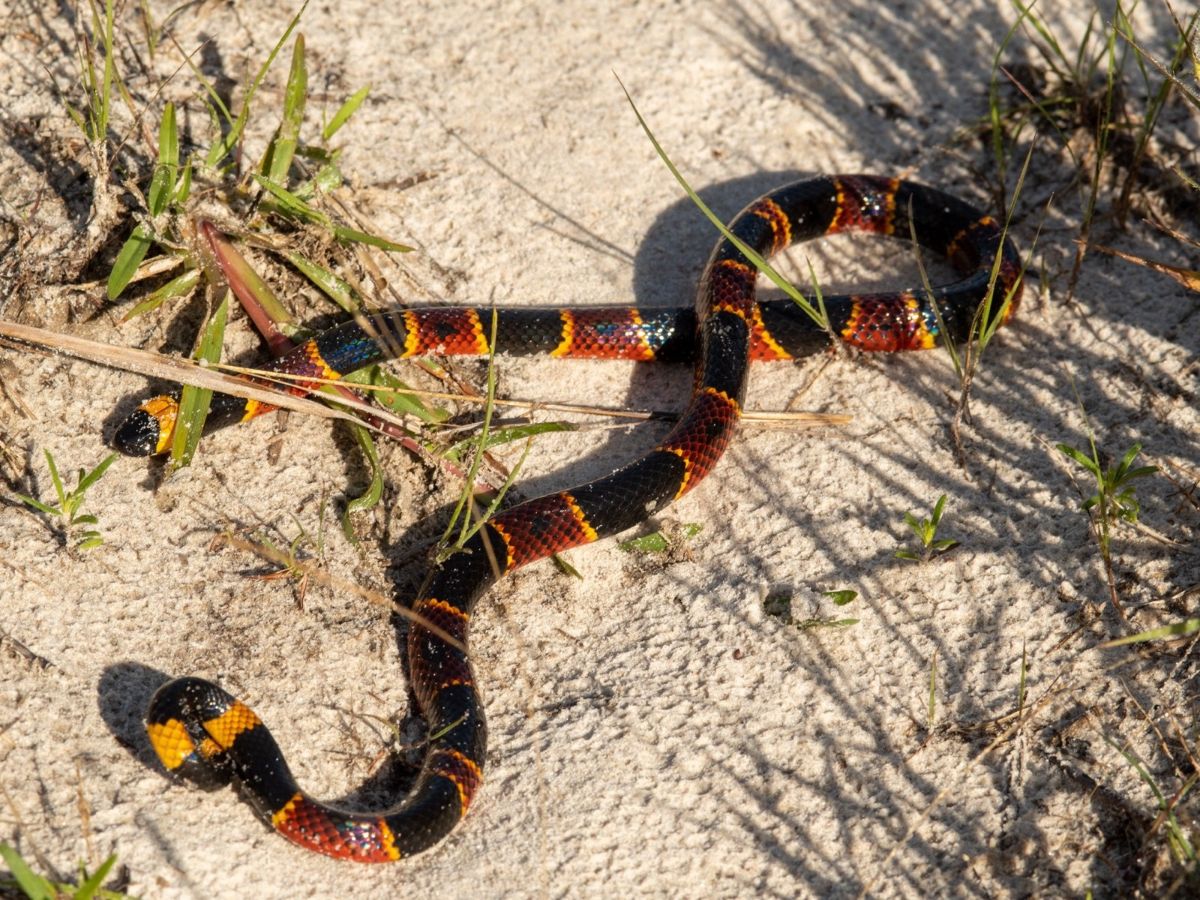
Tap a part to see what to look for. Tap it again to turn it off.
Venomous, with venom that affects the nervous system. Never handle one, even a small or apparently dead one; a bite is a medical emergency.
How to identify
- Head
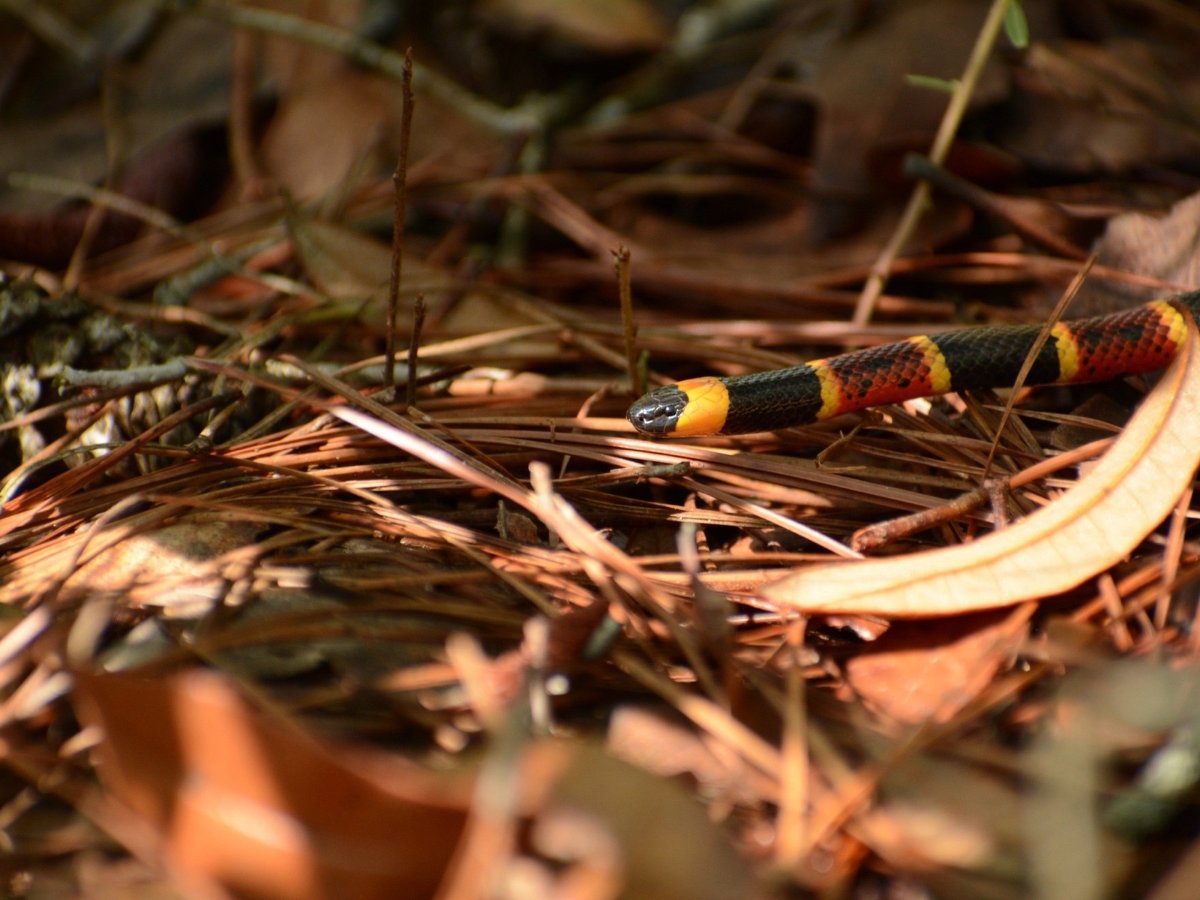
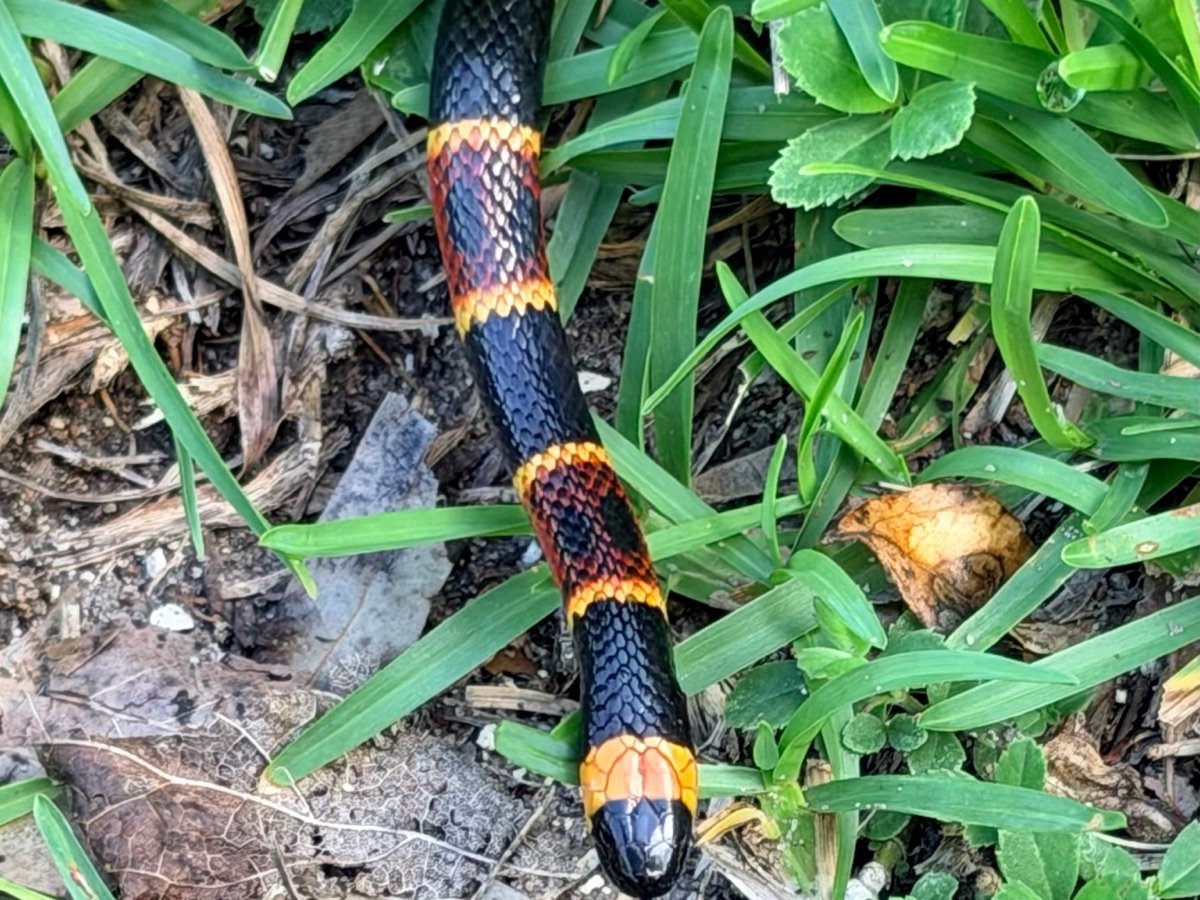
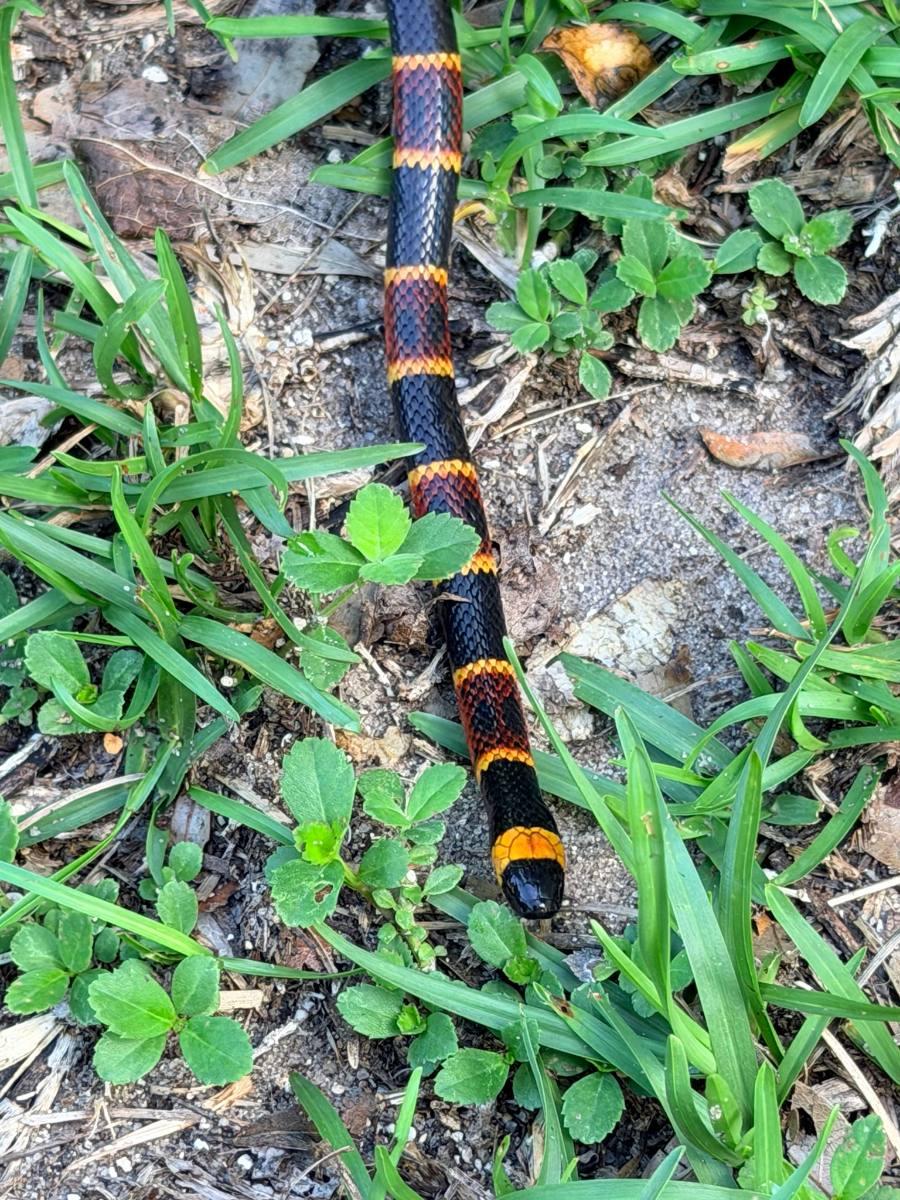
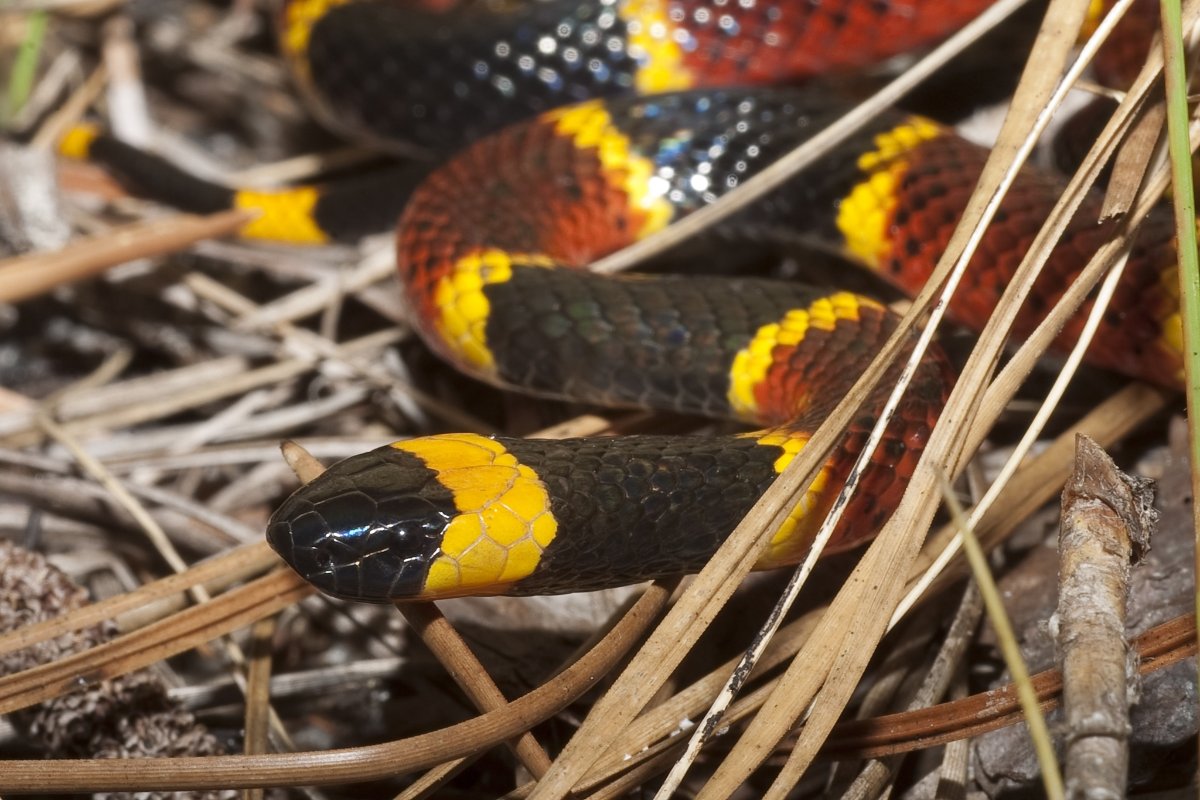
- Small blunt head with a solidly black snout and no distinct neck.
- Pattern
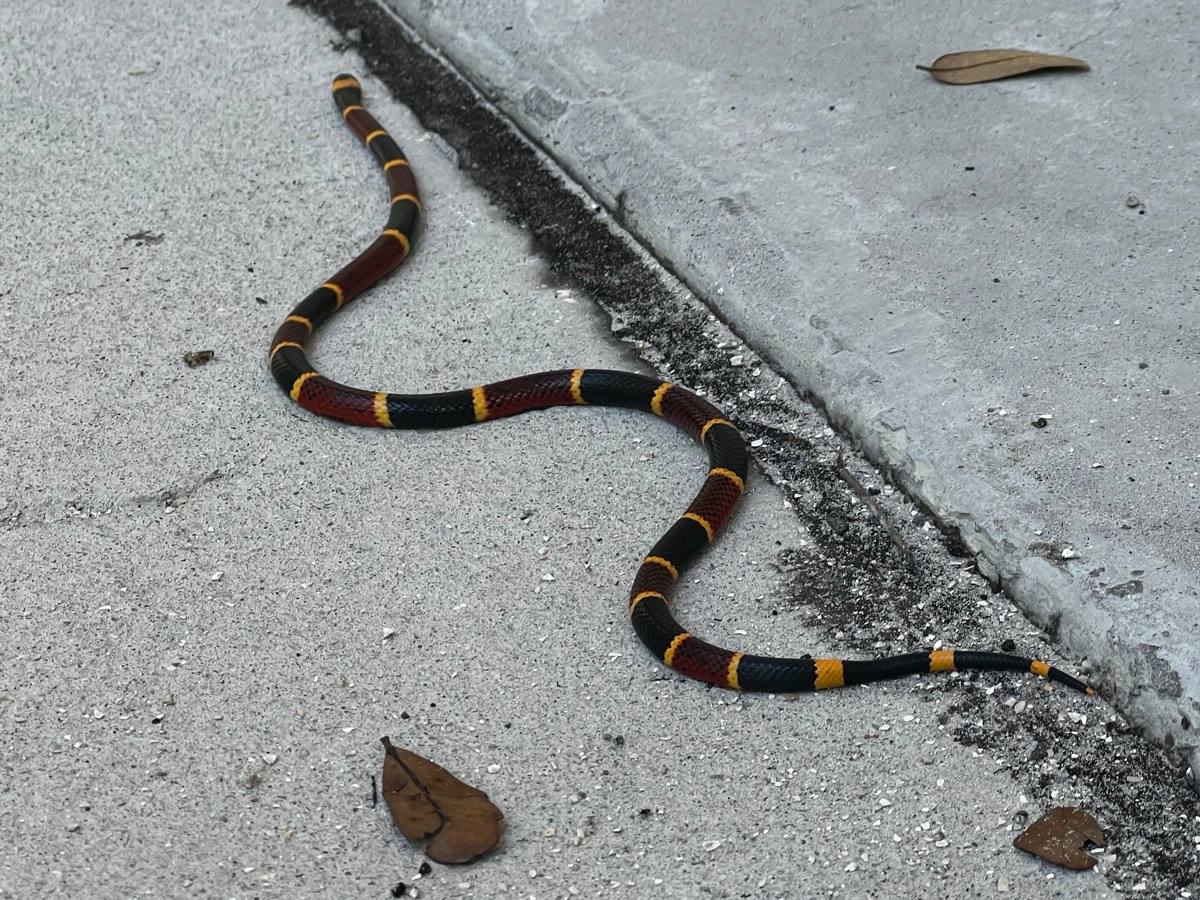
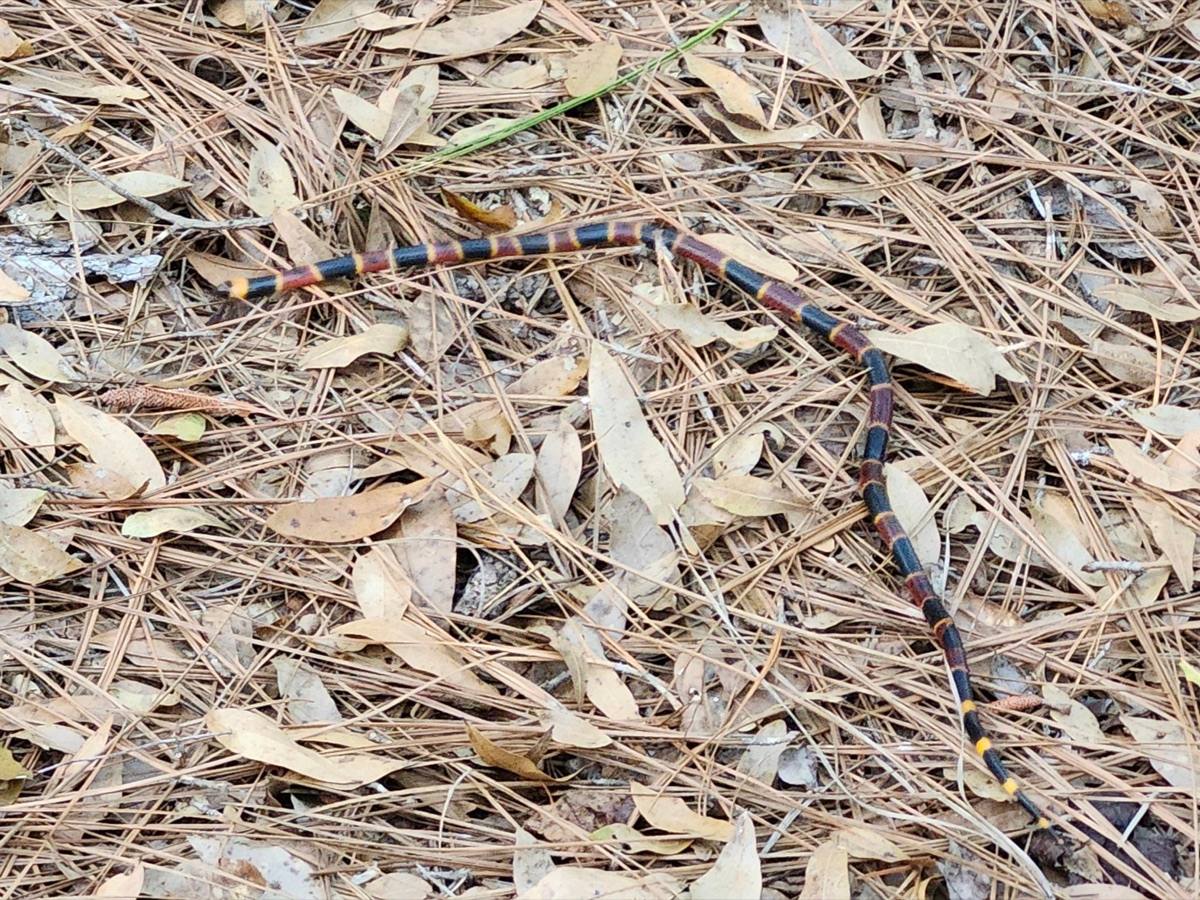
- Glossy rings right around the body: red, yellow, black, yellow, red - red touching yellow.
- Eyes
- Very small black eyes, round pupils; no heat-sensing pit.
- Pits
- None. There is no pit between the eye and the nostril.
- Tail
- Short, with black and yellow rings and no red.
- What it does
- Hides its head and waves its curled tail; rarely bites.
Often confused with
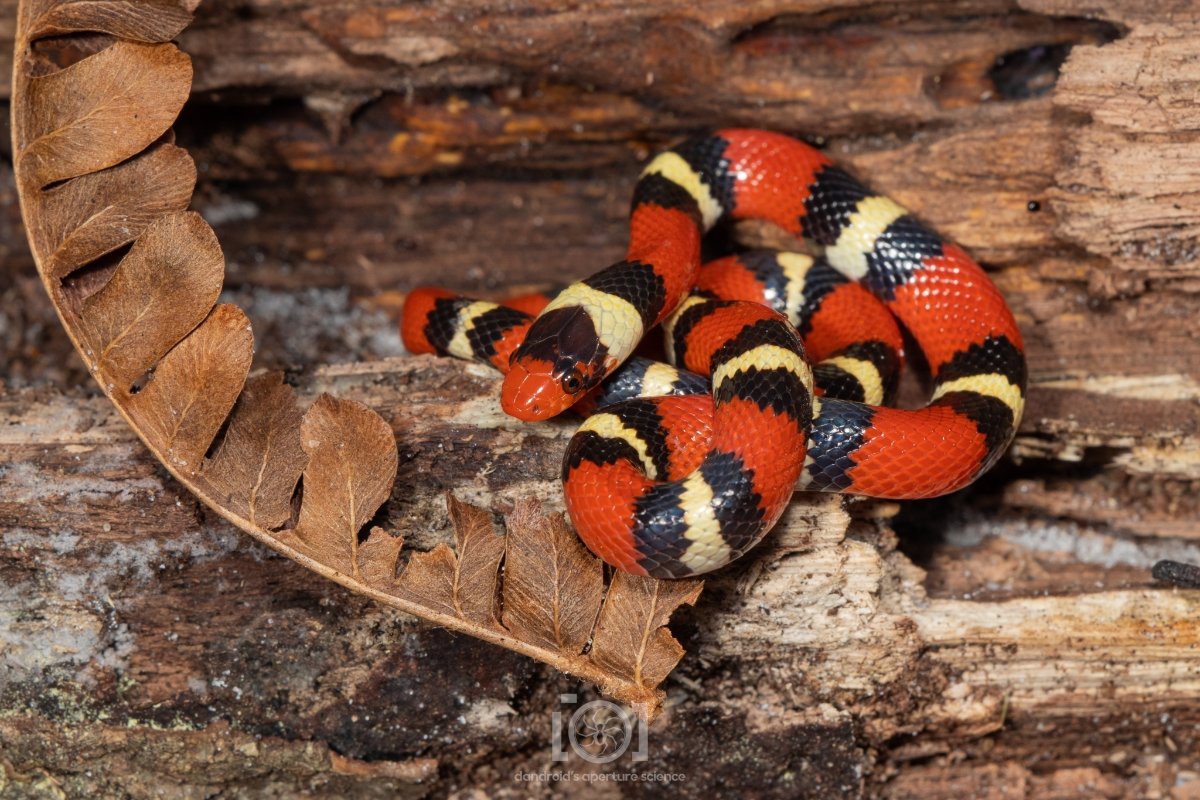
Scarlet Kingsnake and Scarlet Snake, both non-venomous, have red touching black and a red snout. The old rhyme "red touches yellow, dangerous fellow" works in the US but not elsewhere.
How to tell them apart
Eastern Coralsnake vs Scarlet Kingsnake›
The quick way to tellRed touches yellow on the coralsnake, and its snout is solid black. On the Scarlet Kingsnake red touches black, and the snout is red.
Eastern Coralsnake: Glossy rings right around the body: red, yellow, black, yellow, red - red touching yellow.
Scarlet Kingsnake: Red, black and yellow bands with red touching black; bands break on the belly.
About the Eastern Coralsnake›
A secretive relative of cobras and mambas, spending most of its life under leaf litter, logs and sandy soil in pine and hardwood country. It is far more often turned up by a rake than seen crossing a path.
It has short fixed fangs and a mild temper, so bites are rare — but its venom acts on the nervous system and is medically serious.
The details
Size Usually 20–30 in; occasionally 4 ftWeight Under 1 lbLifespan About 7 years in the wild
Typical range›
Southeast coastal plain: southeastern North Carolina through South Carolina, Georgia, all of Florida, and west to Alabama, Mississippi and eastern Louisiana.
Activity›
Most often seen in the open in spring and fall, morning and late afternoon; otherwise underground.
Diet›
Mainly other snakes and lizards, especially small skinks.
Reproduction›
Lays eggs, usually 3–12, in early summer.
Found in parts of 7 states›
Ranges are approximate. It may be found in only part of a state, or be rare there, and snakes can turn up outside of them.
More photos