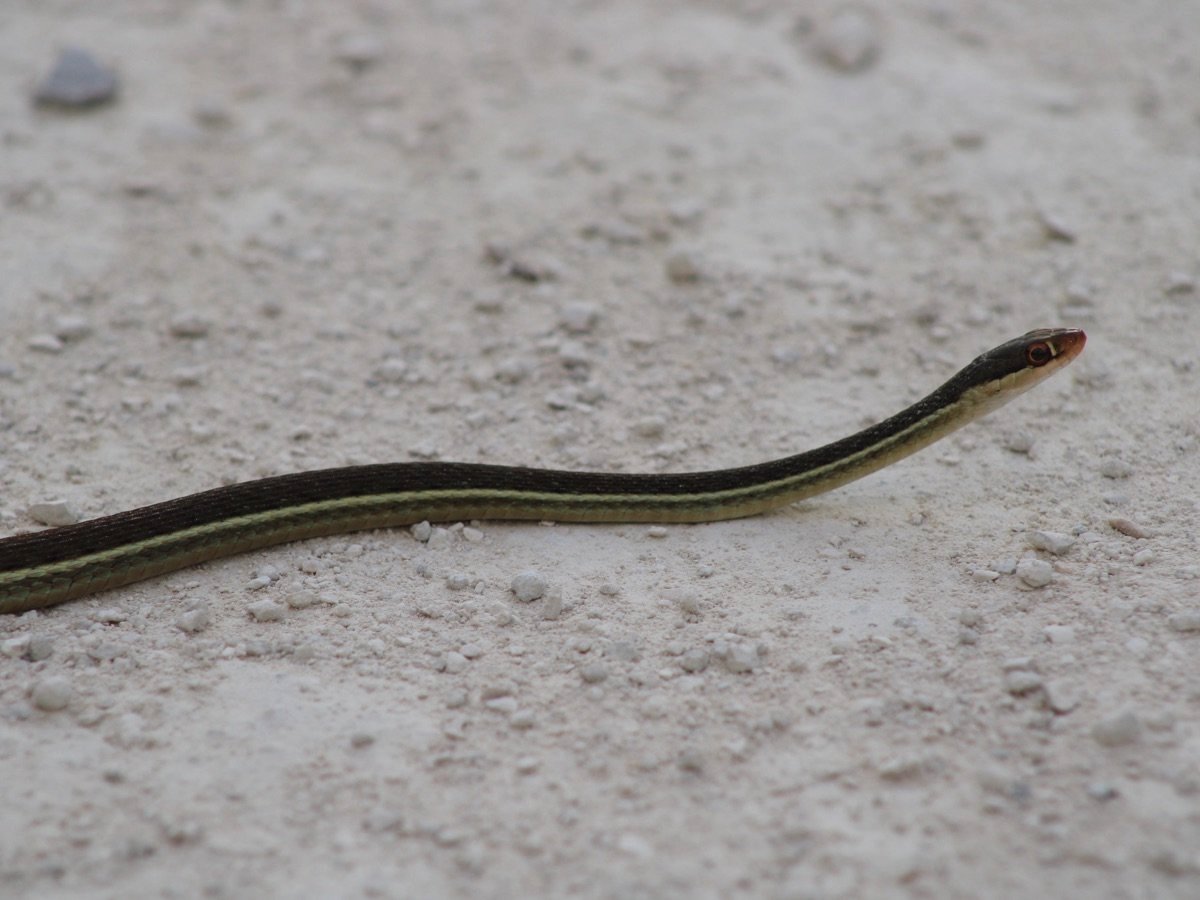
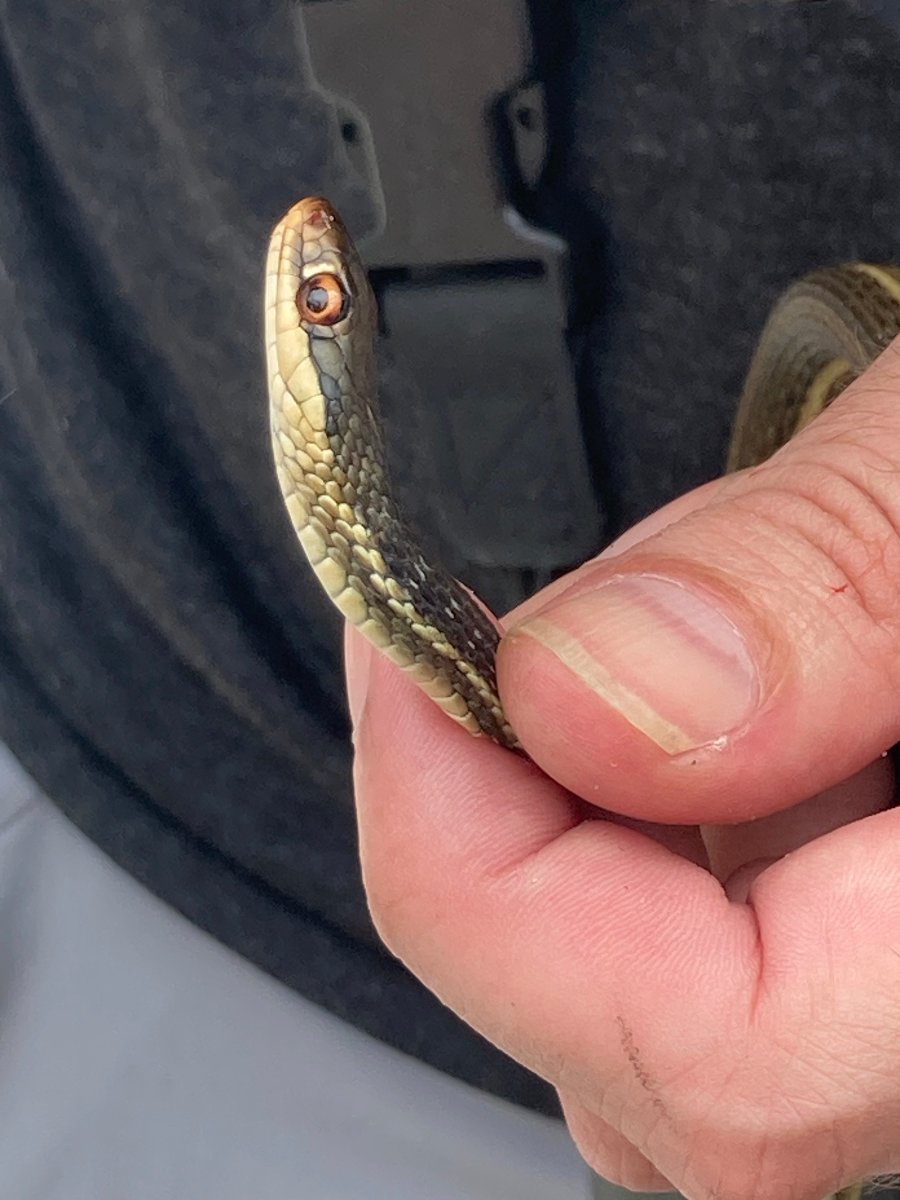
Eastern Ribbonsnake
Thamnophis saurita · Garter & Ribbon Snakes
Tap a part to see what to look for. Tap it again to turn it off.
No venom; it is far more likely to flee than to bite.
How to identify
- Head
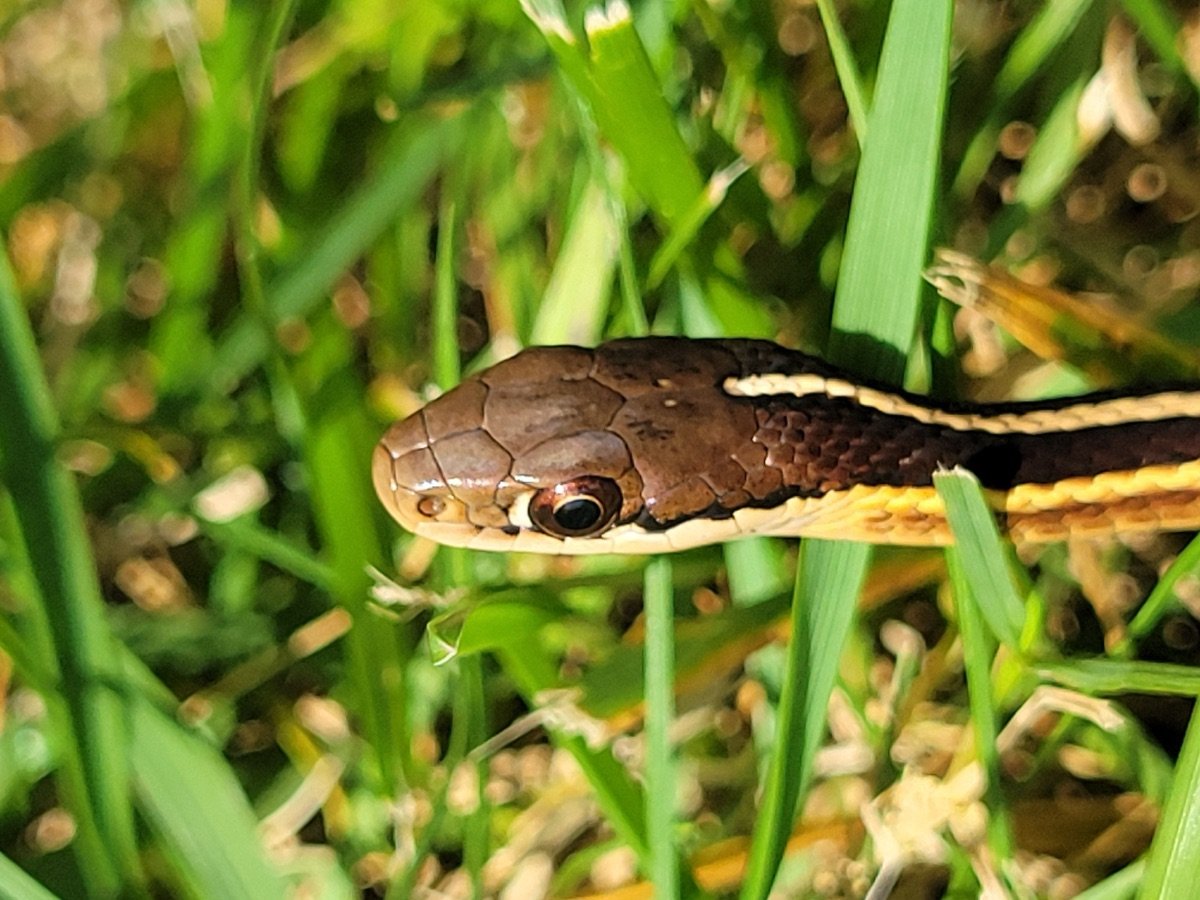
- Small narrow head with a white or yellow bar just in front of the eye.
- Pattern
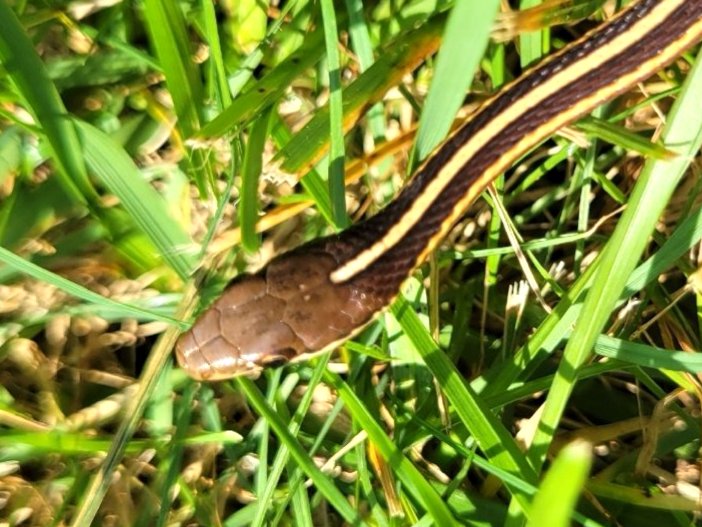
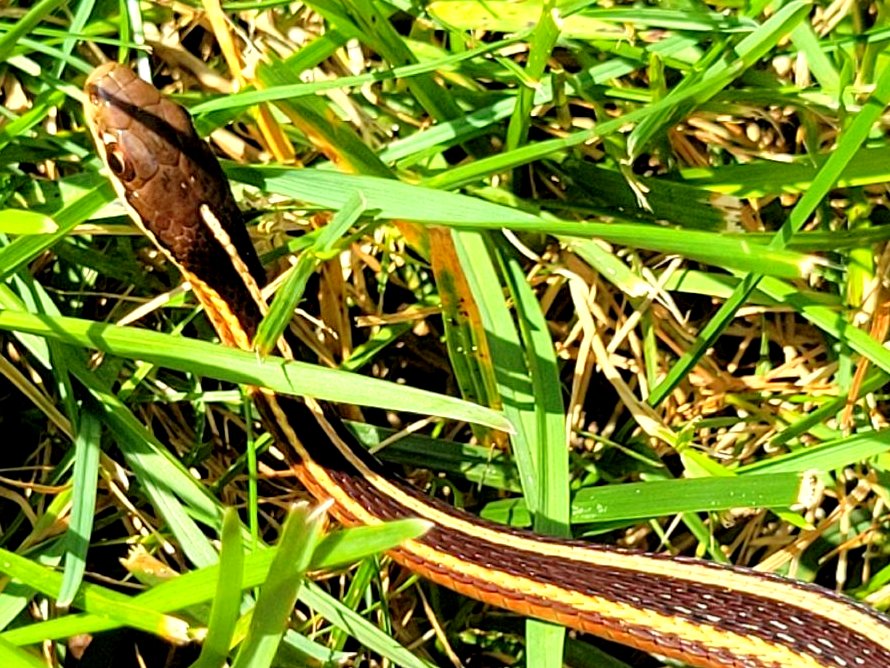
- Three bright yellow stripes on dark brown or black, with no flecking between them.
- Eyes
- Round pupil, with a pale bar in front of the eye; no heat-sensing pit.
- Pits
- None. There is no pit between the eye and the nostril.
- Tail
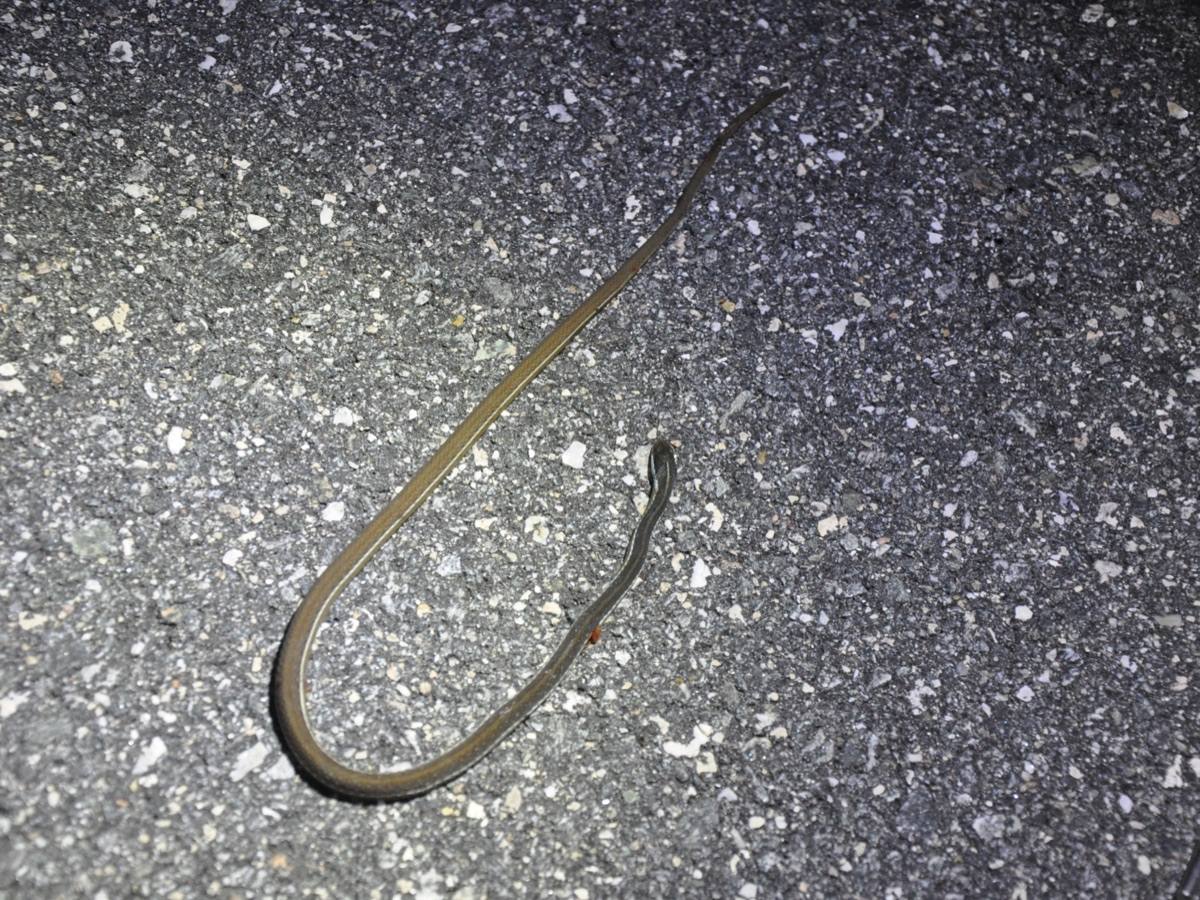
- Very long - about a third of its total length; no rattle.
- What it does
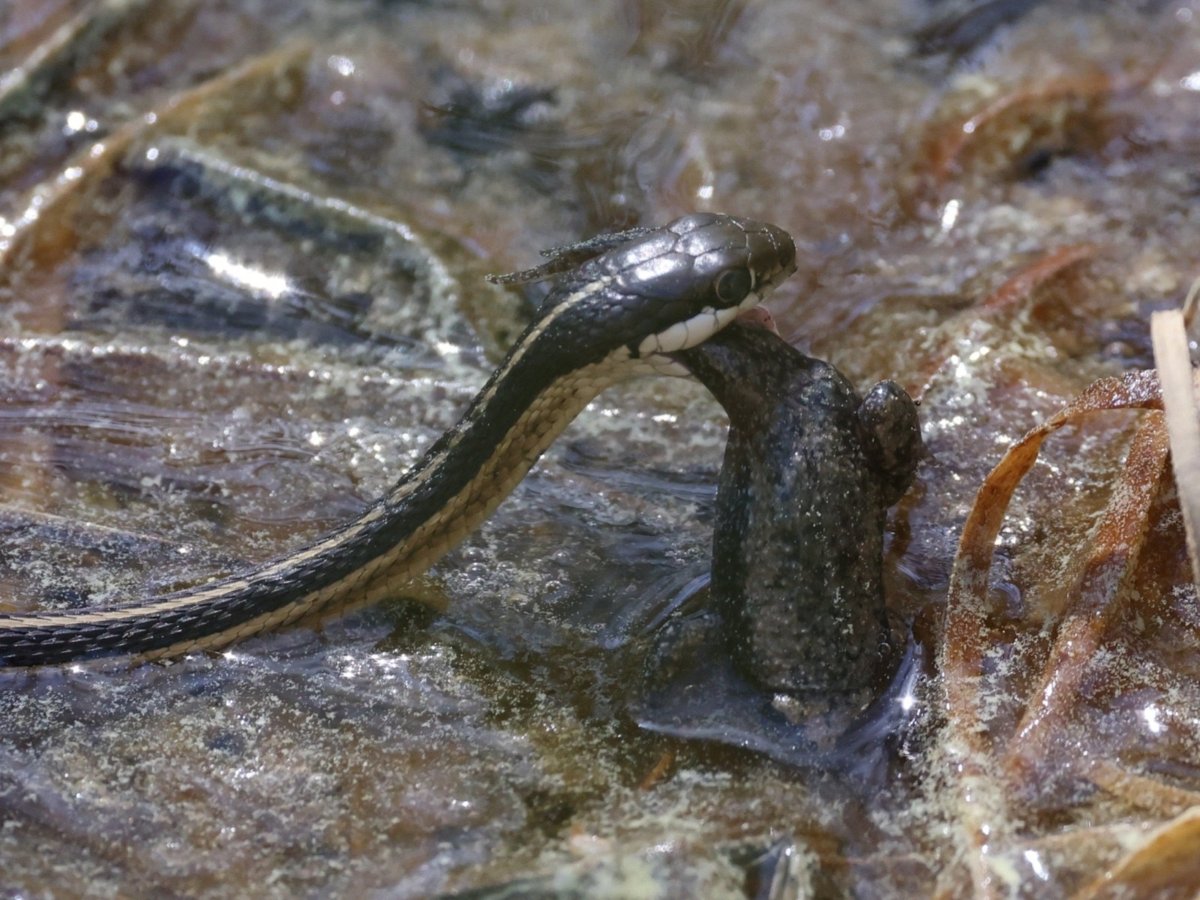
- Races across the water surface and into thick plants.
Often confused with
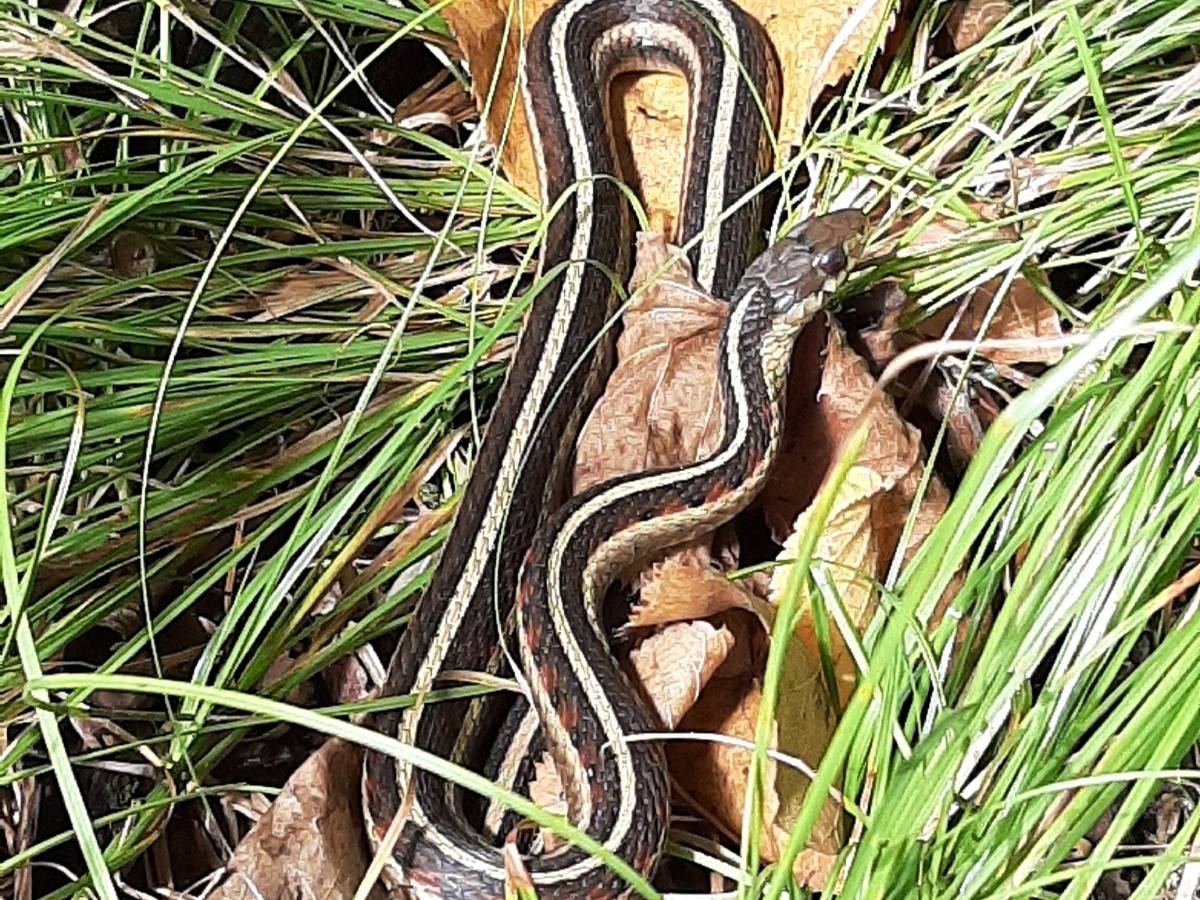
Common Gartersnake is stockier with a shorter tail, usually with flecking between the stripes and no pale bar before the eye.
How to tell them apart
Eastern Ribbonsnake vs Common Gartersnake›
The quick way to tellLook just in front of the eye. The ribbonsnake has a pale bar there, and a much longer, thinner tail. The Common Gartersnake doesn't.
Eastern Ribbonsnake: Small narrow head with a white or yellow bar just in front of the eye.
Common Gartersnake: Small head barely wider than the neck; often with pale jaw markings.
About the Eastern Ribbonsnake›
A quick, whip-thin snake of the Southeast's wet places — pond margins, cypress swamps, wet ditches and stream banks, where it hunts frogs in the shallows.
It often escapes by racing across the surface of the water and vanishing into thick vegetation rather than diving.
The details
Size Usually 20–30 inWeight Under 0.5 lbLifespan 6–10 years
Typical range›
Eastern North America: Nova Scotia, Maine and Ontario south through Florida, west to Michigan, Wisconsin, Illinois and the Mississippi River in Louisiana.
Activity›
Day active in warm months, usually near water; basks on low shrubs and grass.
Diet›
Mostly frogs, tadpoles and small fish.
Reproduction›
Gives birth to live young, usually 4–20, in summer.
Found in parts of 27 states›
Ranges are approximate. It may be found in only part of a state, or be rare there, and snakes can turn up outside of them.
More photos