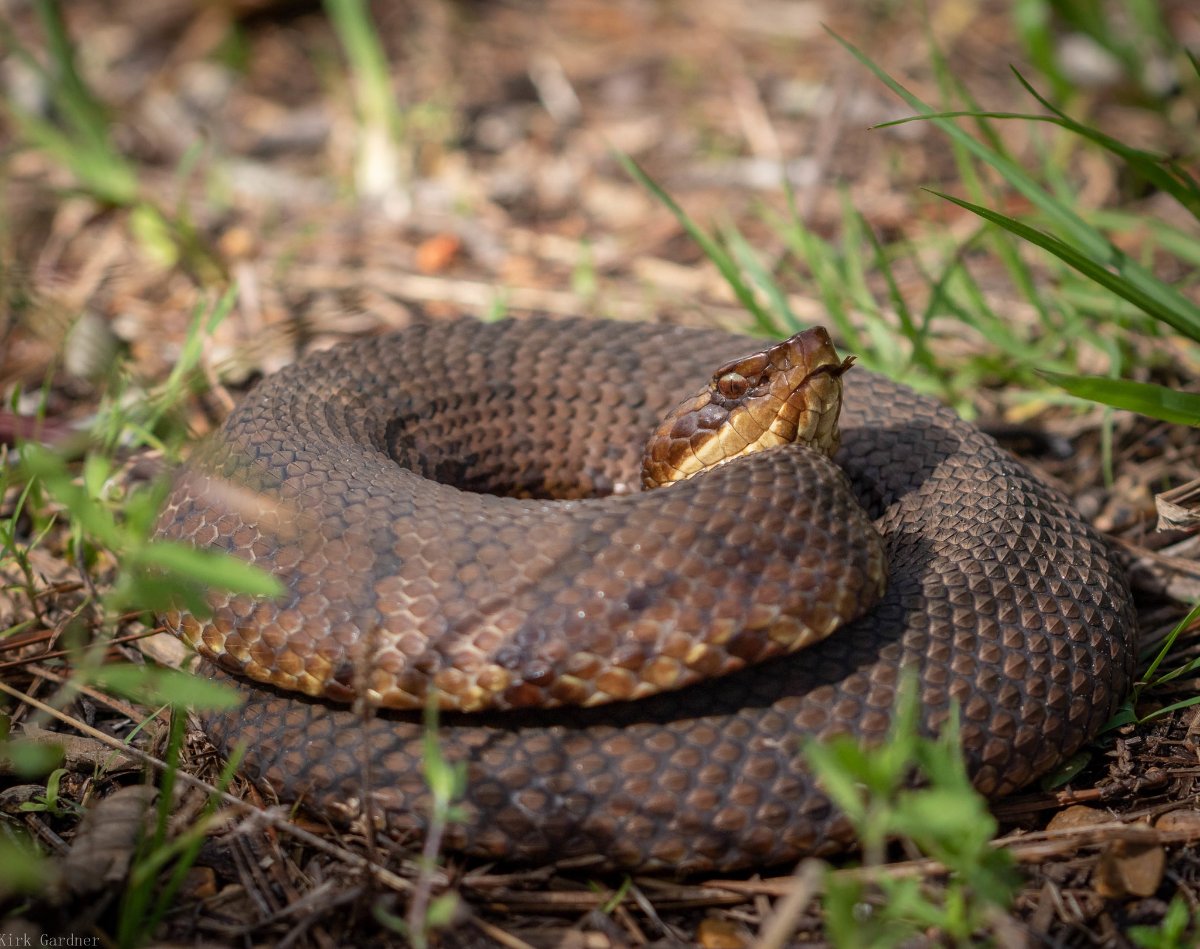
Northern Cottonmouth
Agkistrodon piscivorus · Copperheads & Cottonmouths
Tap a part to see what to look for. Tap it again to turn it off.
Venomous. It gapes and holds ground rather than fleeing, so back away; a bite is a medical emergency.
How to identify
- Head
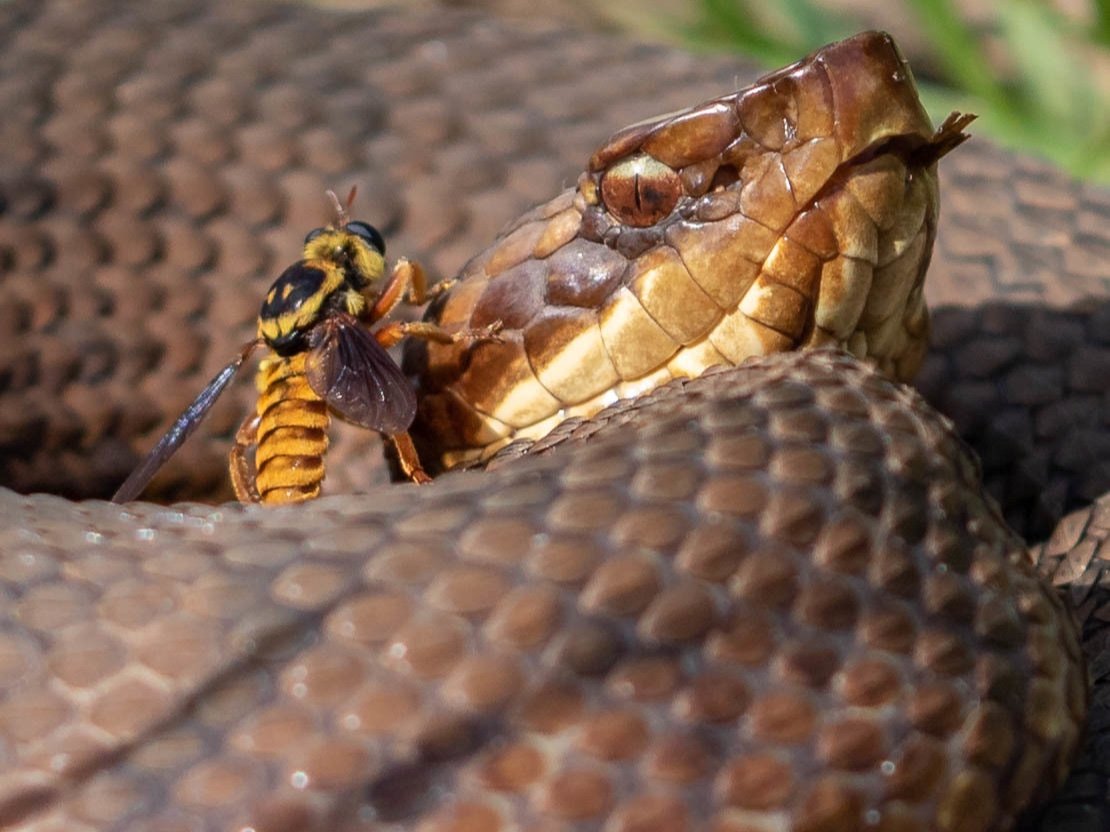
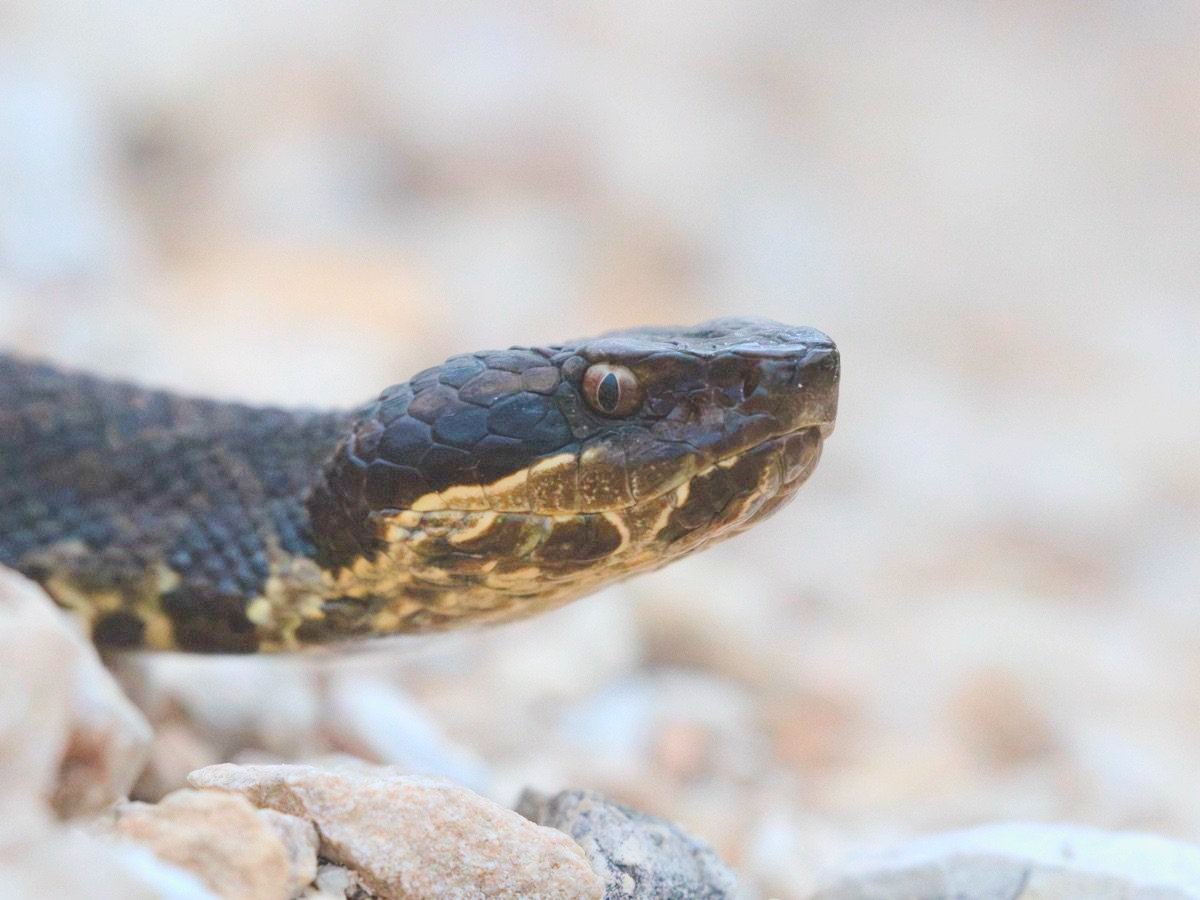
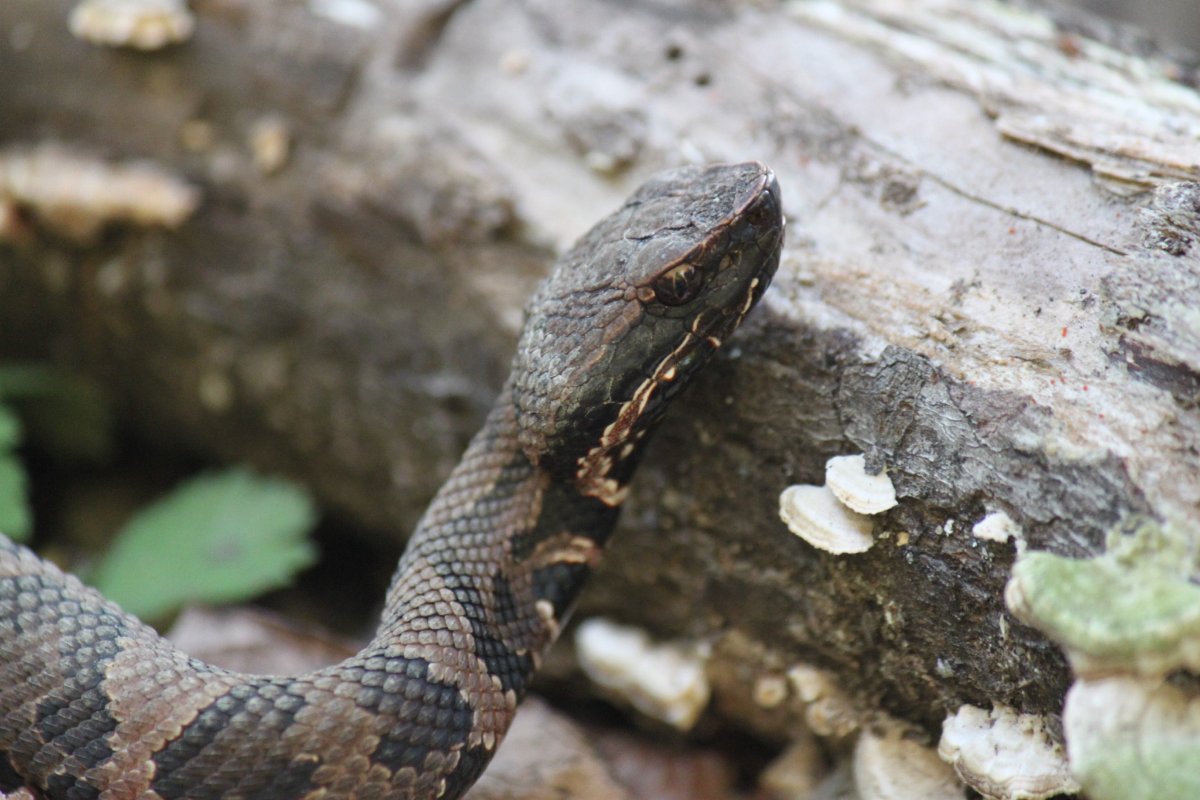
- Blocky, heavy brow, dark mask through each eye, pale snout.
- Pattern
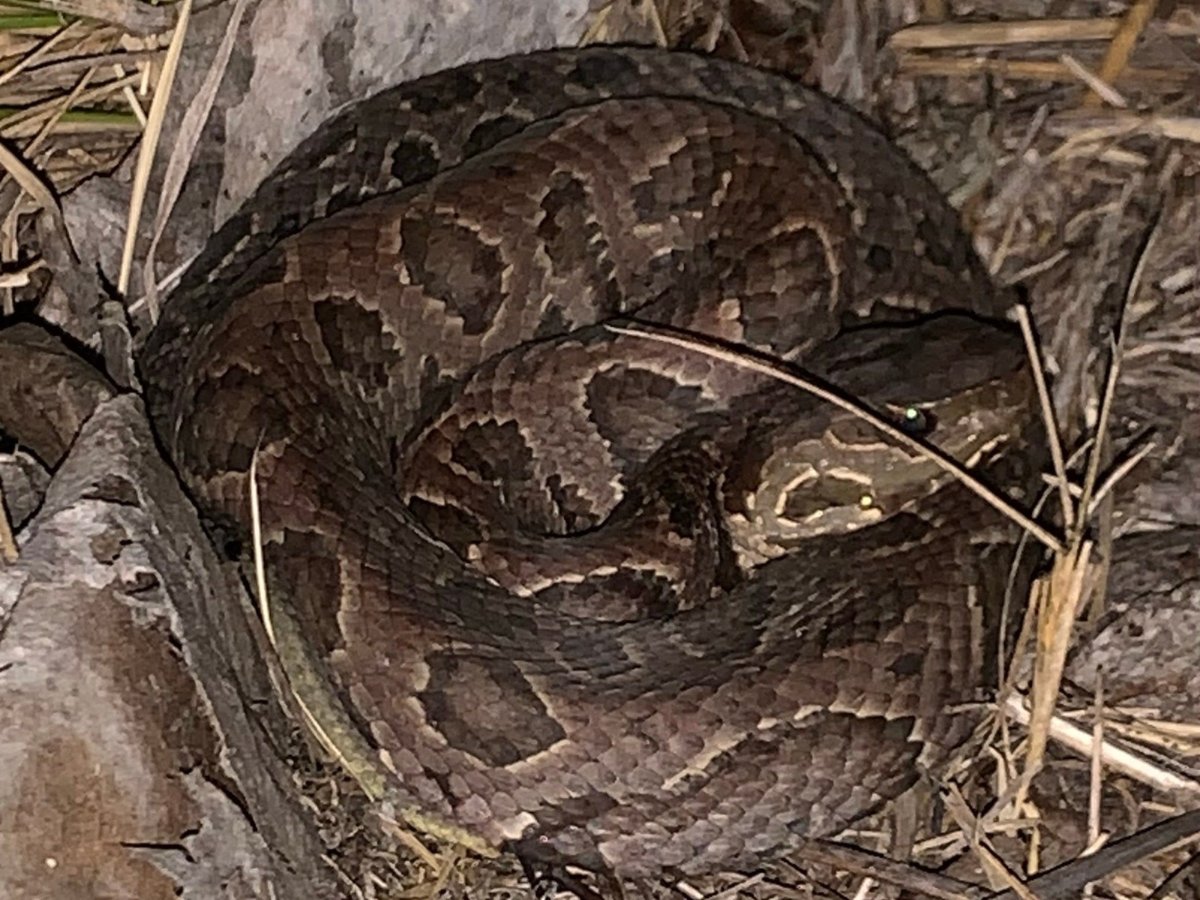
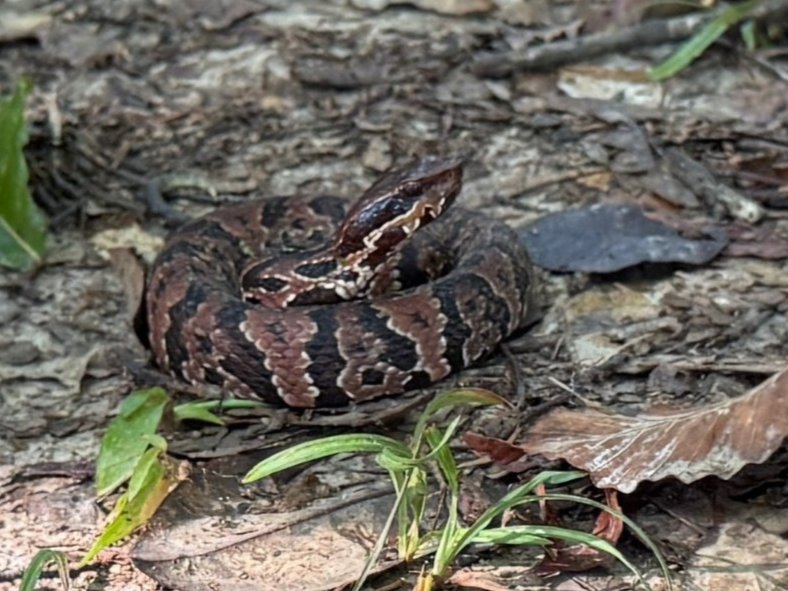
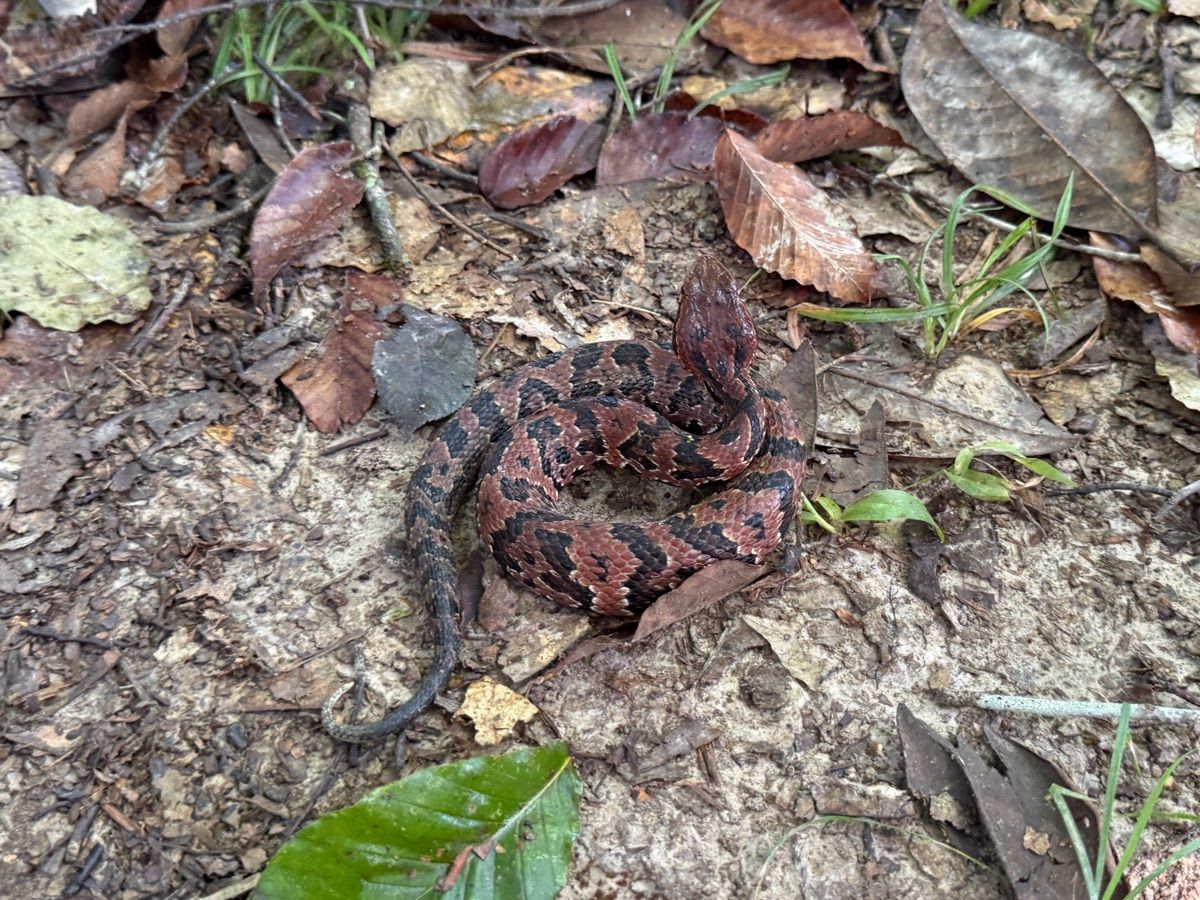
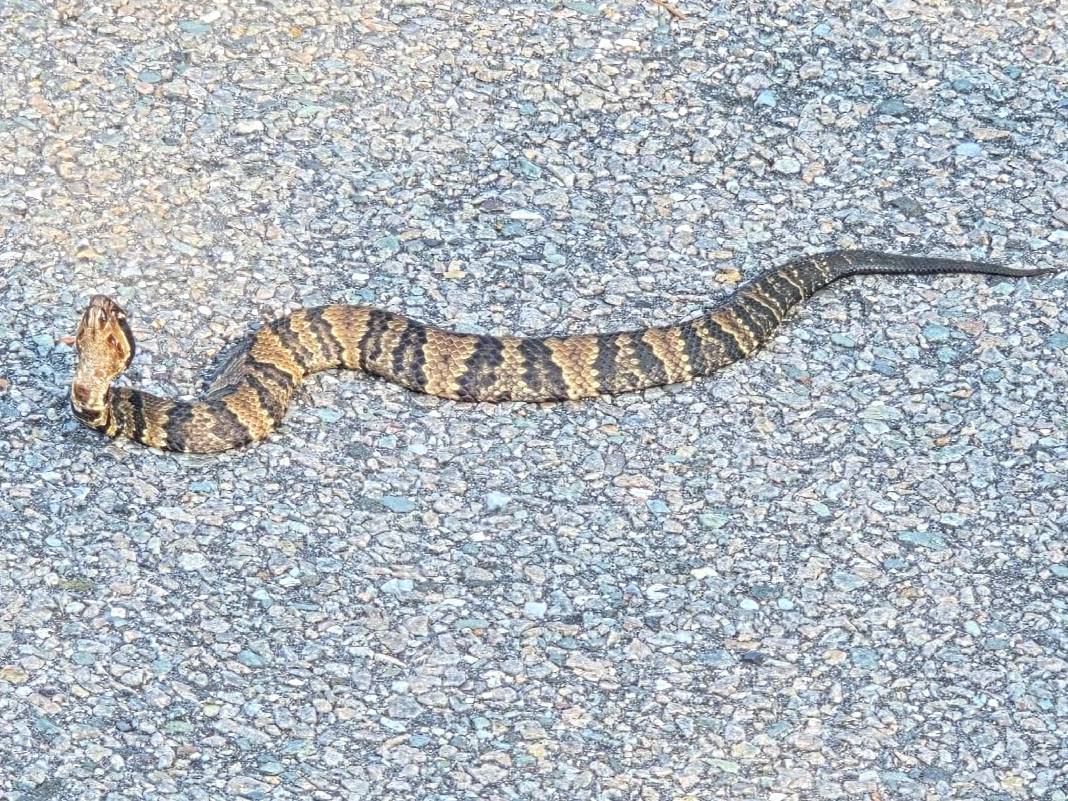
- Dark olive to nearly black, with faint wide bands clearest on young snakes.
- Eyes
- Vertical slit pupil; heat-sensing pit between eye and nostril.
- Pits
- A deep heat-sensing pit on each side of the face, between the eye and the nostril.
- Tail
- Thick-based; young have a yellow tail tip.
- What it does
- Coils, vibrates its tail and gapes to show a white mouth lining.
Often confused with
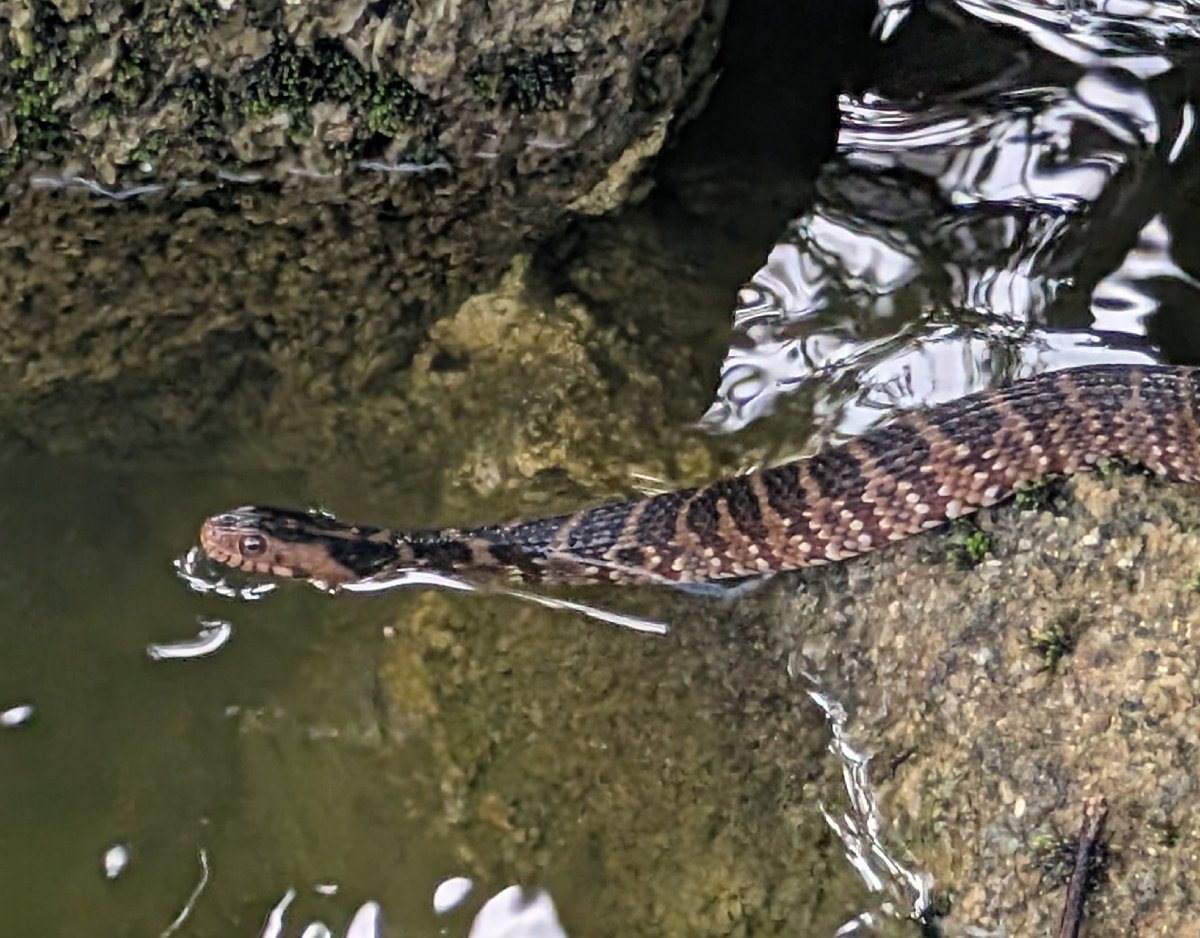
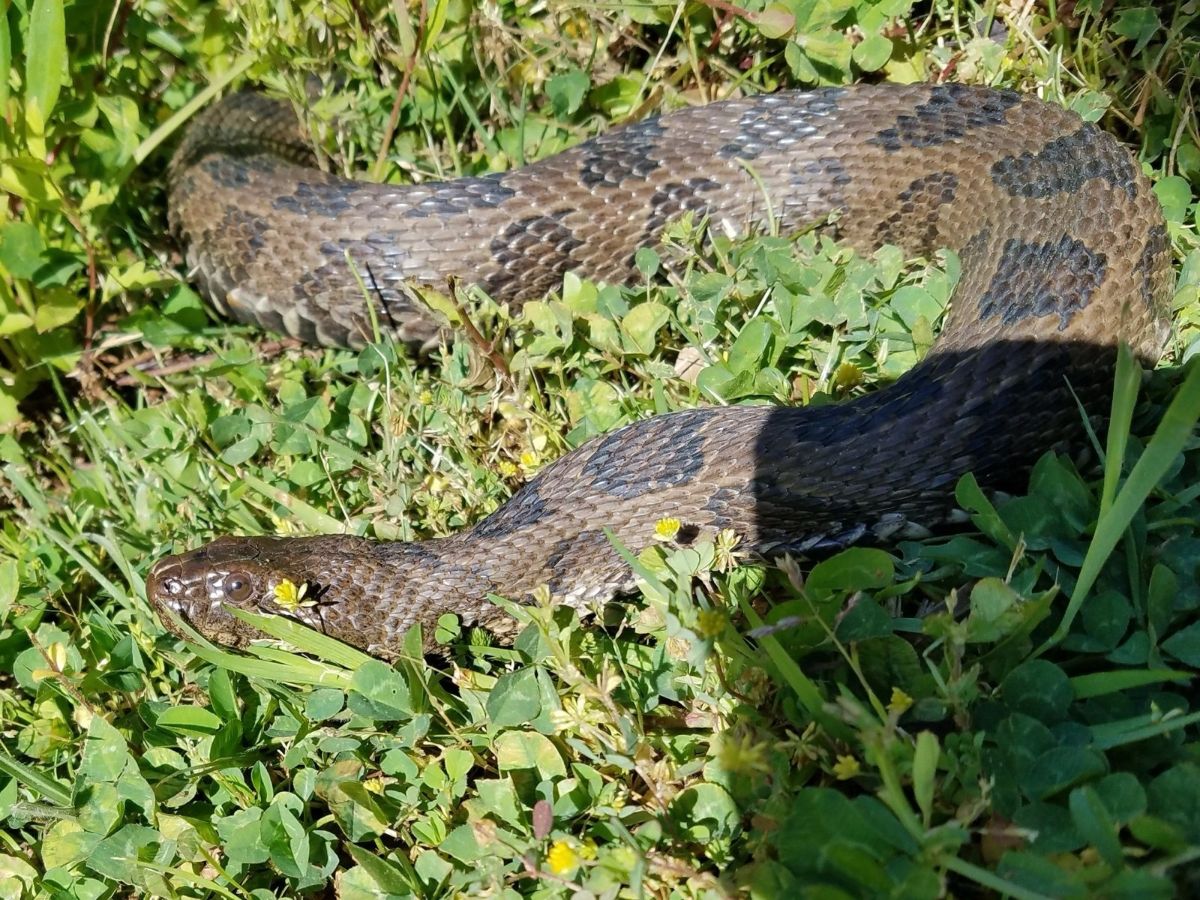
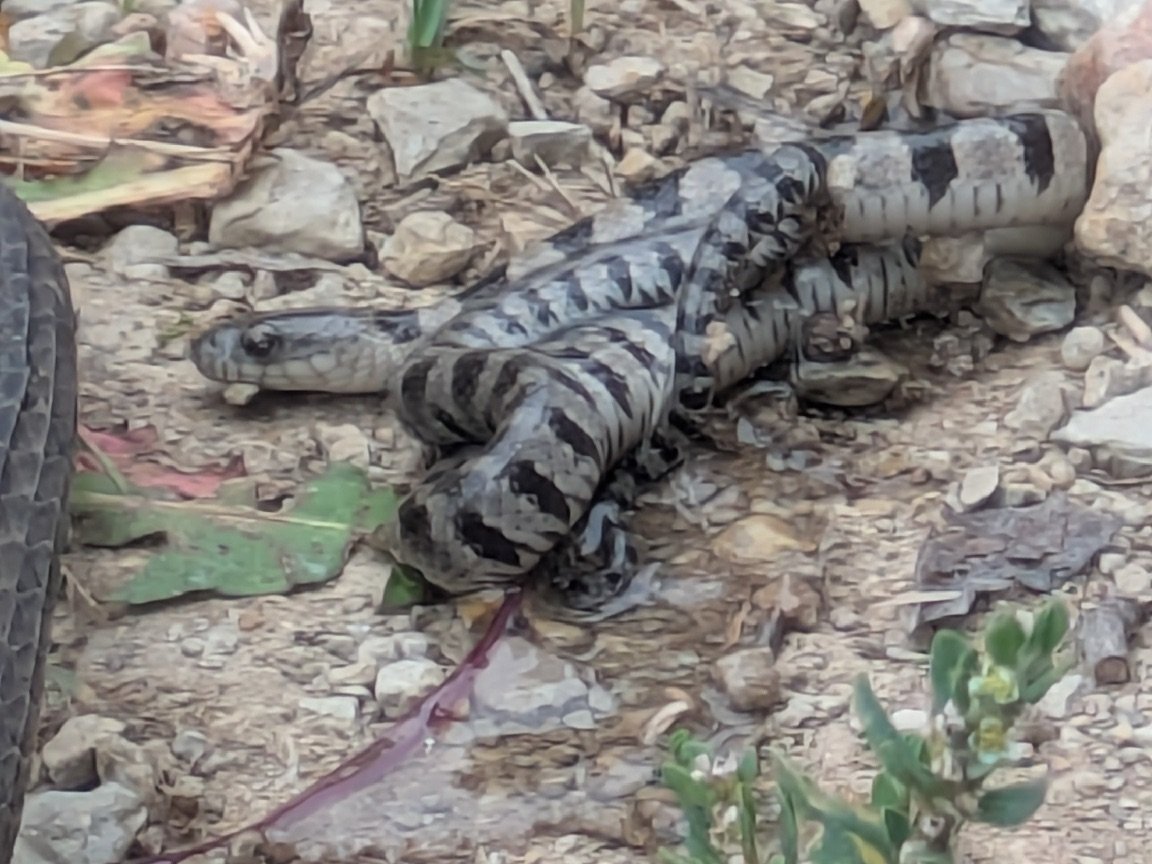
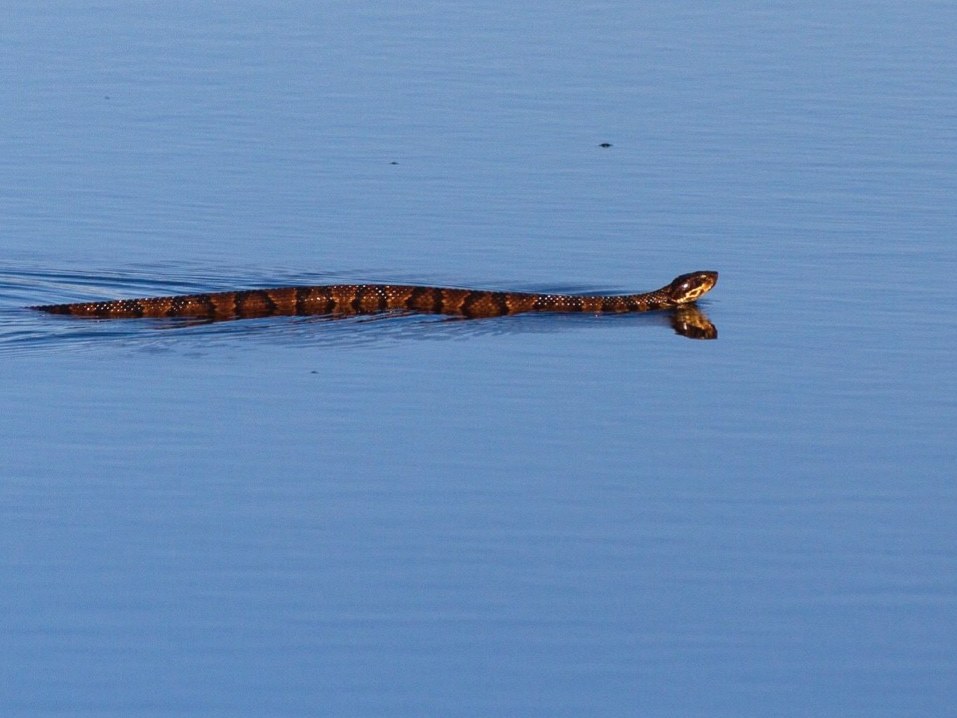
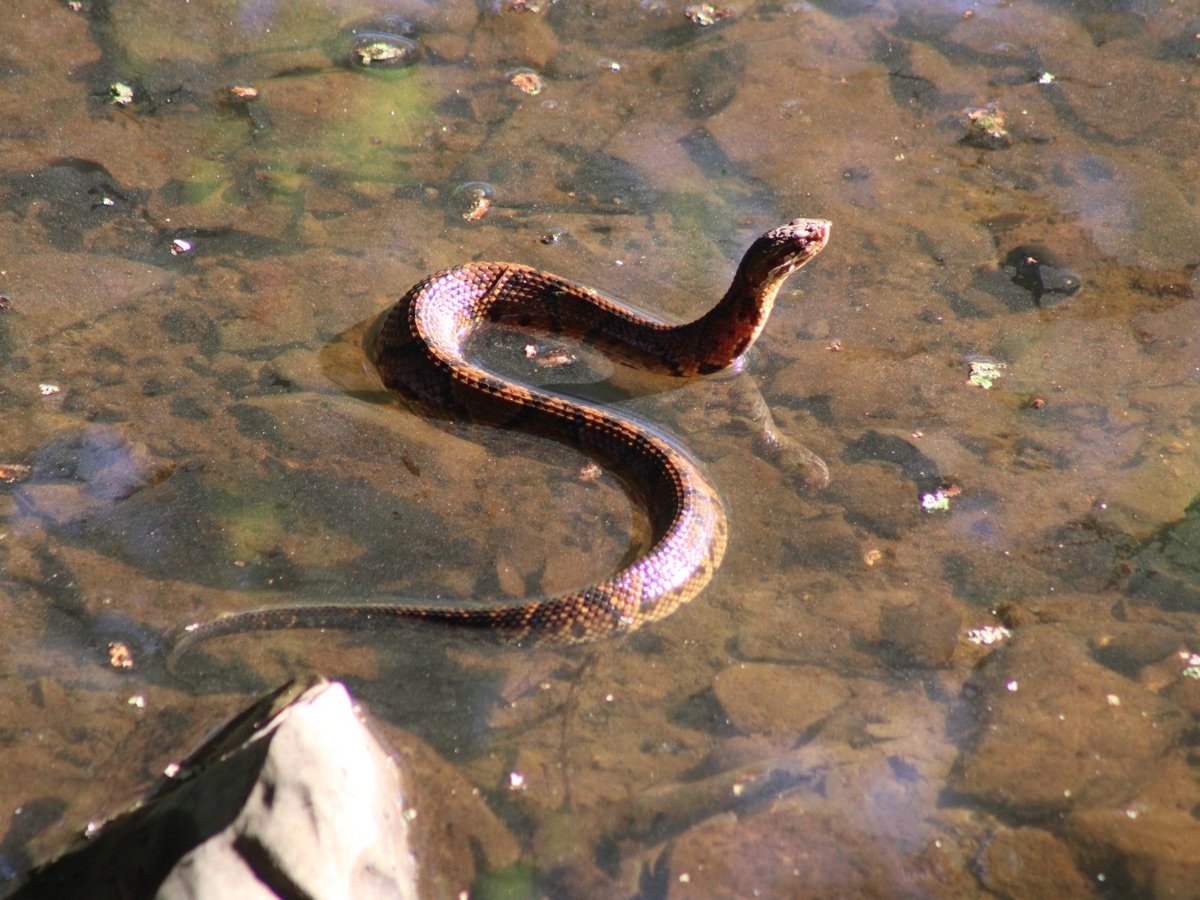
Watersnakes, constantly, especially Northern, Banded and Brown Watersnakes. Watersnakes have round pupils and a slimmer neck, and they swim with the body just under the surface; a cottonmouth floats high on the water with its head raised.
How to tell them apart
Northern Cottonmouth vs Banded Watersnake›
The quick way to tellCheck the face. The cottonmouth has a vertical pupil and a dark eye mask. The Banded Watersnake has round pupils and no mask.
Northern Cottonmouth: Vertical slit pupil; heat-sensing pit between eye and nostril.
Banded Watersnake: Round pupil, eyes set high on the head; no heat-sensing pit.
Northern Cottonmouth vs Brown Watersnake›
The quick way to tellCheck the face. The cottonmouth has a vertical pupil, a dark eye mask and a pale snout. The Brown Watersnake has round pupils and square, checkerboard blotches.
Northern Cottonmouth: Vertical slit pupil; heat-sensing pit between eye and nostril.
Brown Watersnake: Round pupil, eyes set high on the head; no heat-sensing pit.
Northern Cottonmouth vs Northern Watersnake›
The quick way to tellCheck the face. The cottonmouth has a vertical pupil and a dark mask through the eye. The watersnake has round pupils and no mask.
Northern Cottonmouth: Vertical slit pupil; heat-sensing pit between eye and nostril.
Northern Watersnake: Round pupil, eyes set high on the head; no heat-sensing pit.
About the Northern Cottonmouth›
The venomous water snake of the Southeast, found in swamps, cypress sloughs, ditches, river backwaters and coastal marsh.
Cornered, it coils, vibrates its tail and gapes to show a startlingly white mouth lining — the "cotton mouth." Nearly every "cottonmouth" reported far from the Southeast turns out to be a non-venomous watersnake.
The details
Size Usually 2–4 ftWeight Commonly 1–4 lbLifespan 15–20 years
Typical range›
Southeast from southeastern Virginia through the Carolinas, northern Georgia and Alabama, west to central Texas and Oklahoma, and up the Mississippi valley to southern Illinois, Missouri and southeastern Kansas.
Activity›
Active day and night, more nocturnal in summer. Often basks on logs and banks near water.
Diet›
Fish, frogs, other snakes, small mammals, birds and carrion.
Reproduction›
Gives birth to live young, usually 5–12, in late summer.
Found in parts of 16 states›
Ranges are approximate. It may be found in only part of a state, or be rare there, and snakes can turn up outside of them.
More photos