Pygmy Rattlesnake
Sistrurus miliarius · Rattlesnakes
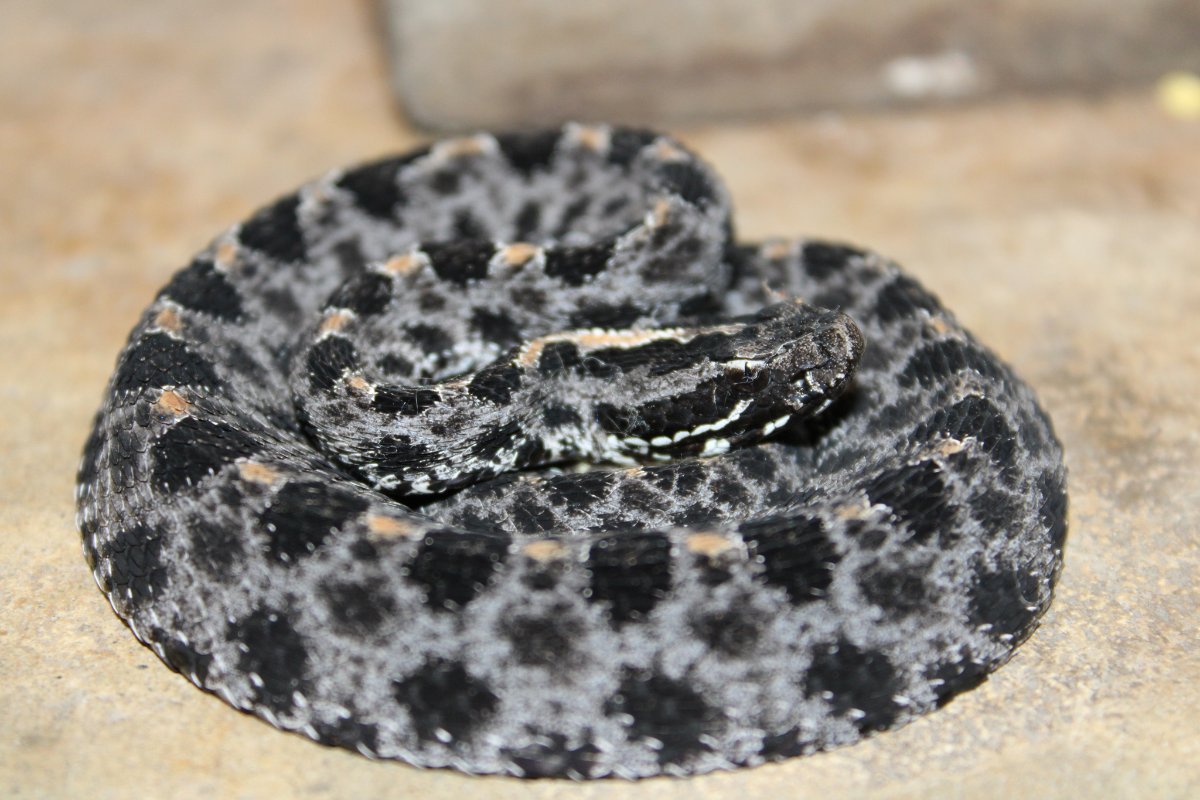
Tap a part to see what to look for. Tap it again to turn it off.
Venomous. Bites rarely threaten life but are very painful and need emergency hospital care.
How to identify
- Head
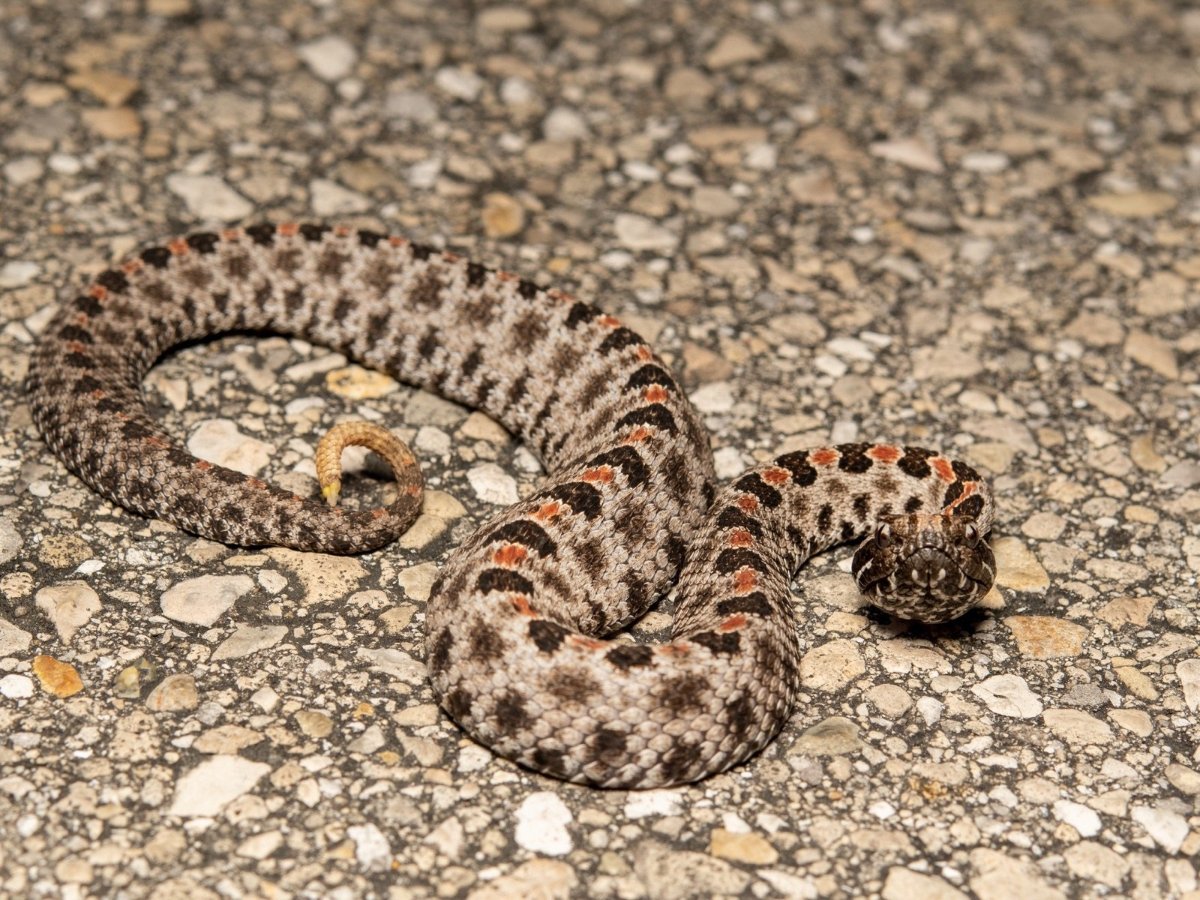
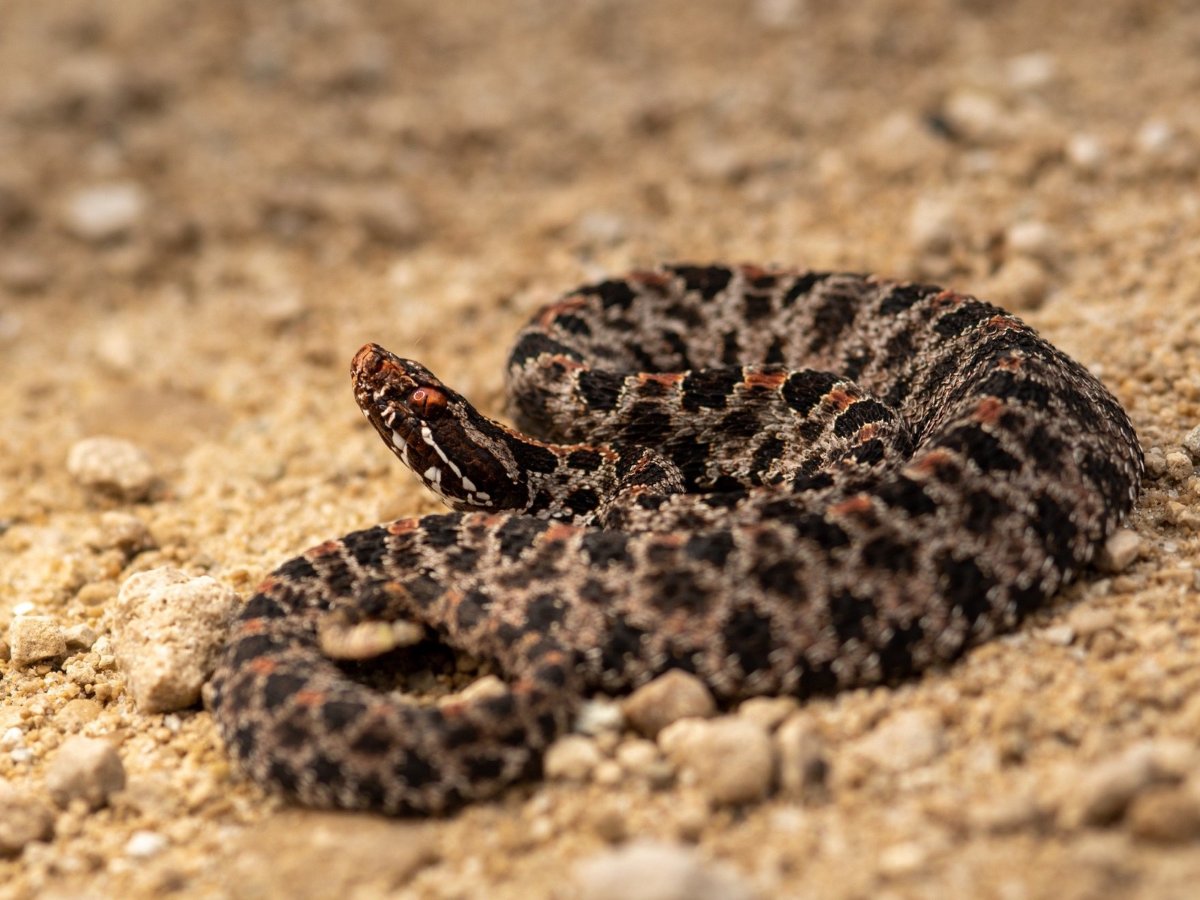
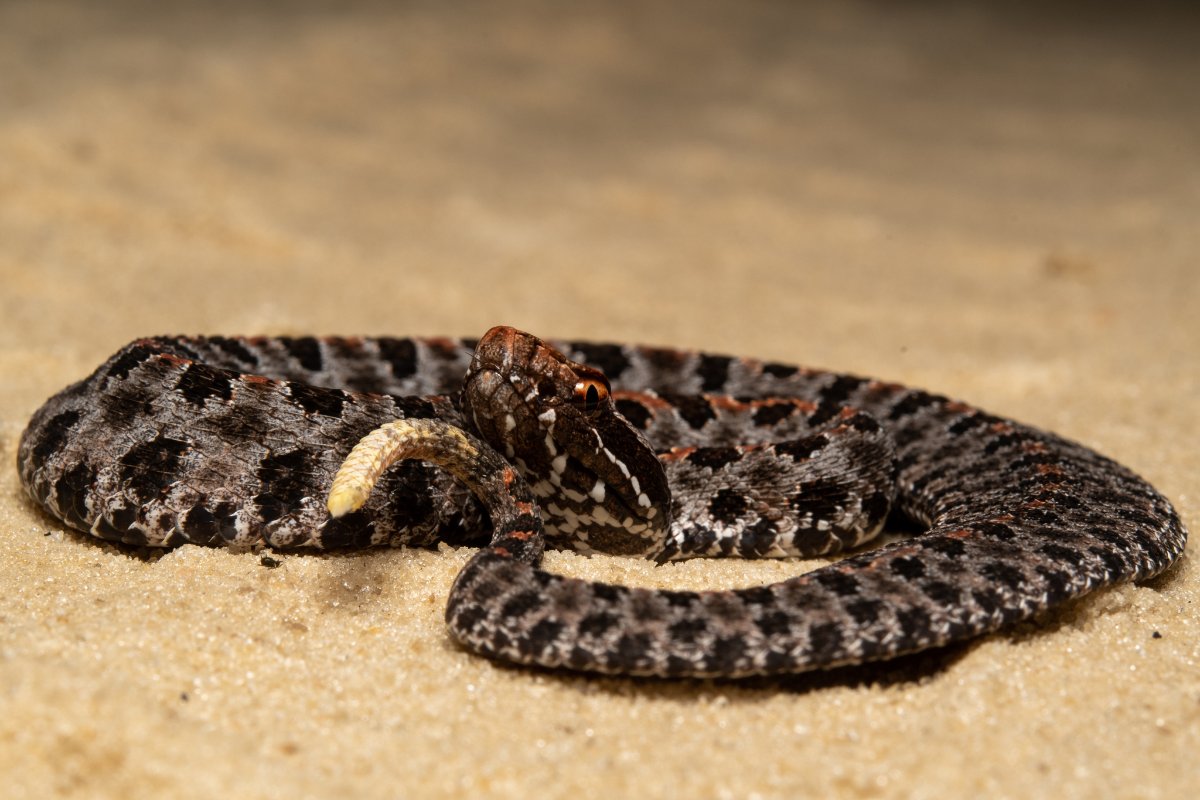
- Small head, only a little wider than the neck, with a dark stripe through the eye.
- Pattern
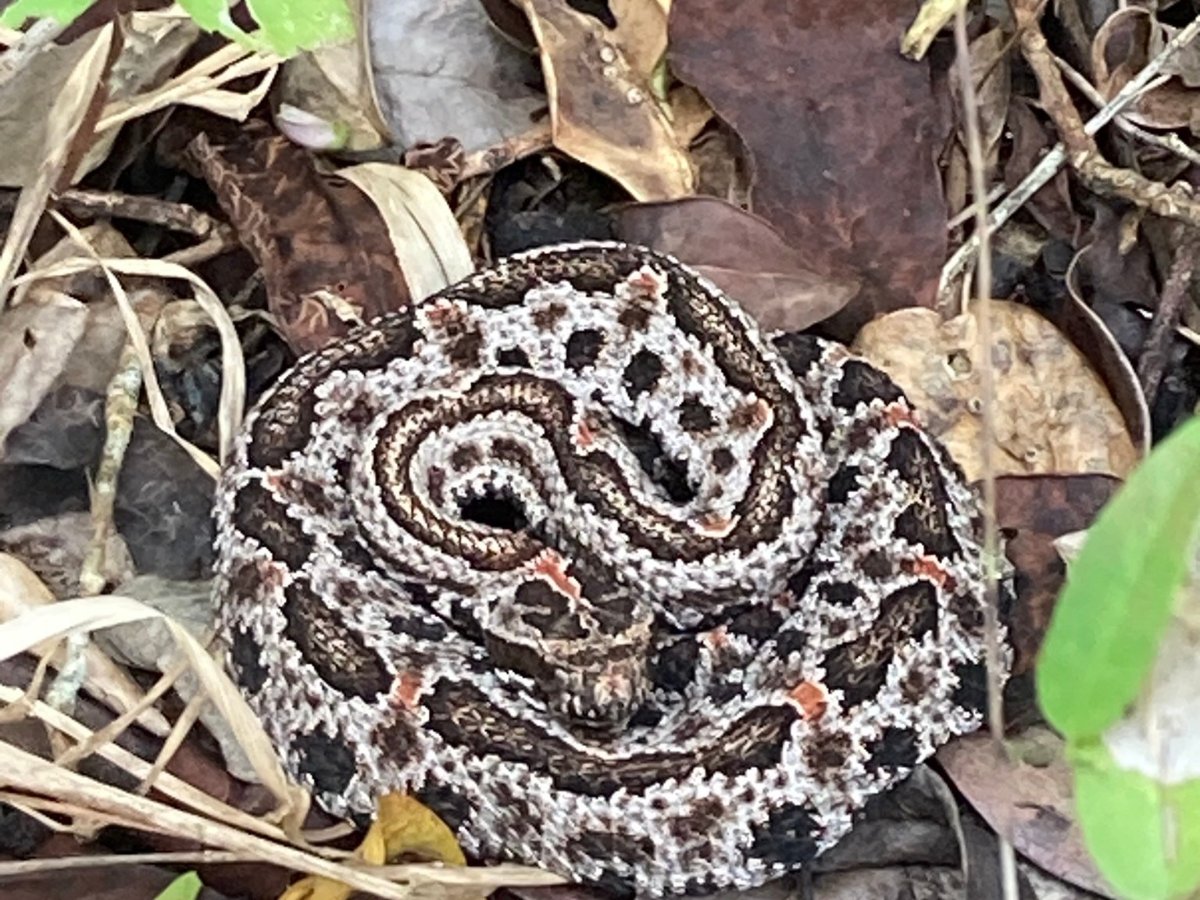
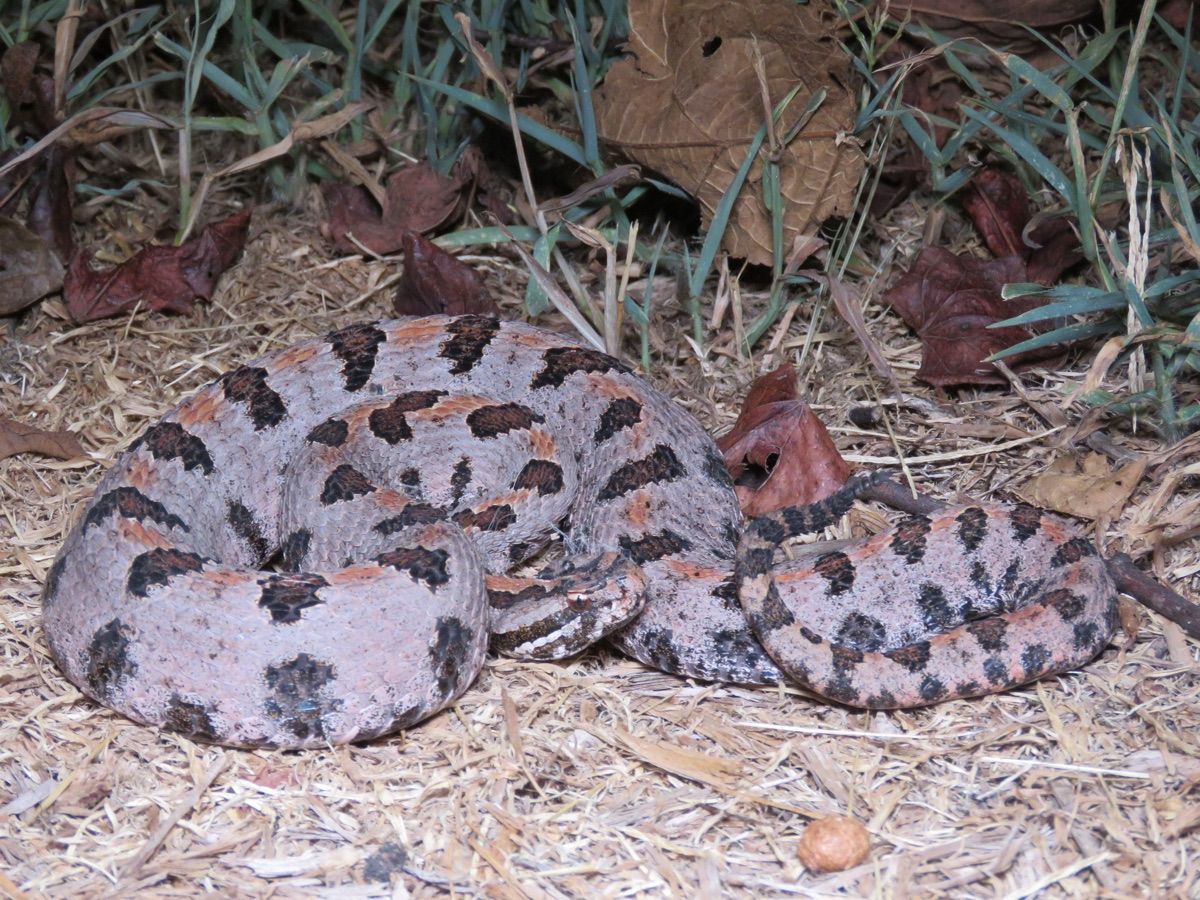
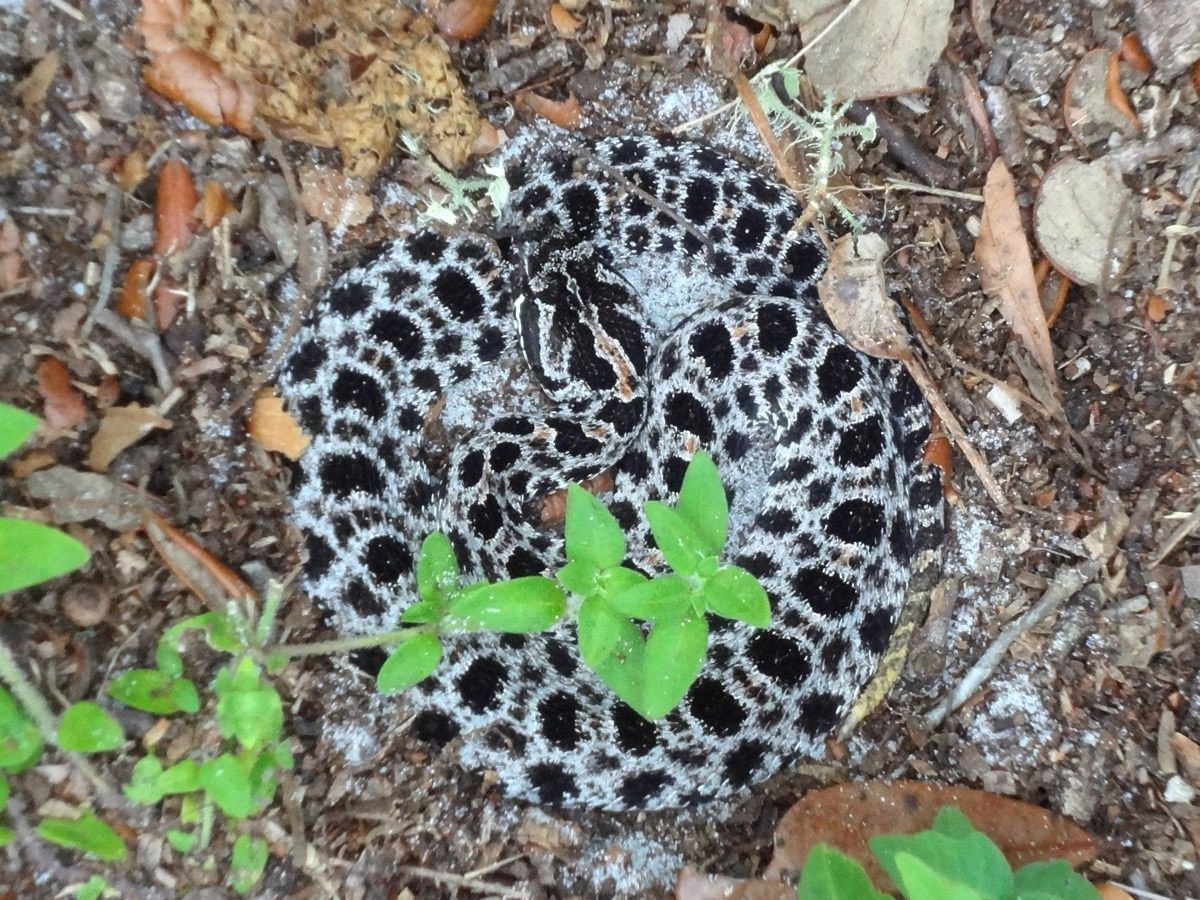
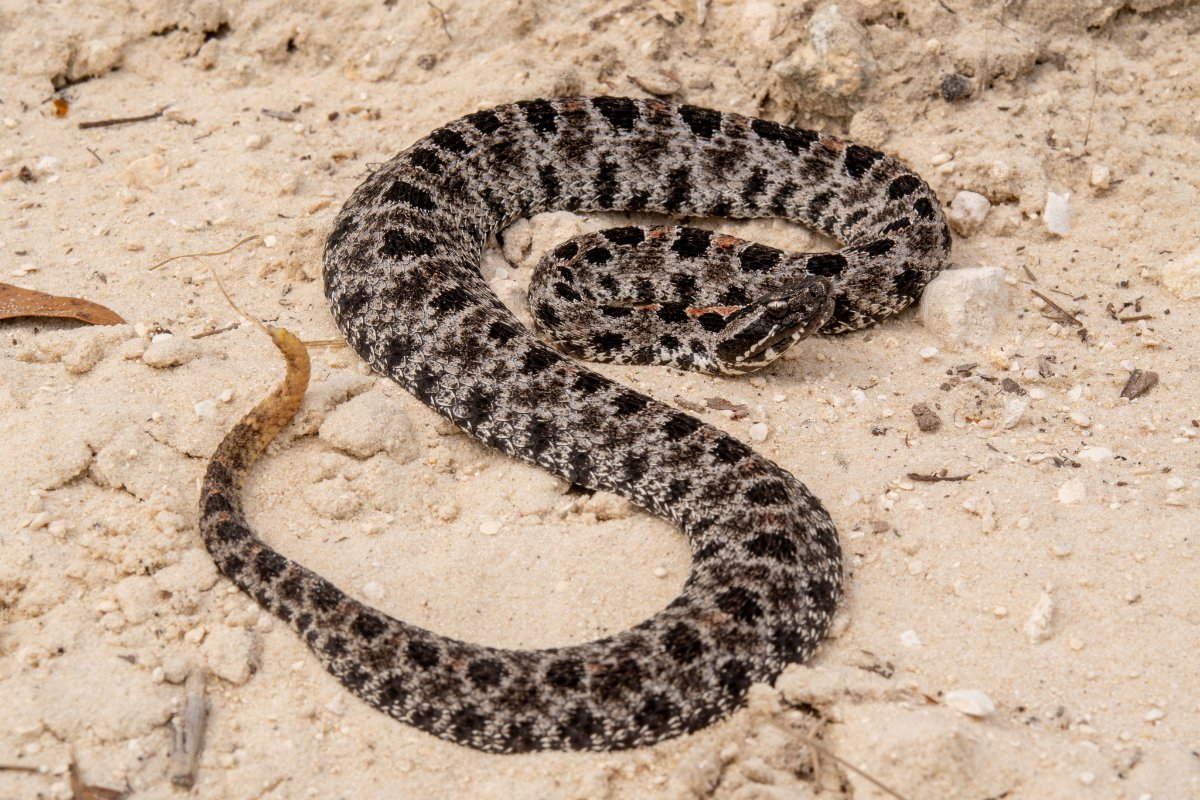
- Round dark spots down the back, often with a rusty stripe between them.
- Eyes
- Vertical slit pupil; heat-sensing pit between eye and nostril.
- Pits
- A deep heat-sensing pit on each side of the face, between the eye and the nostril.
- Tail
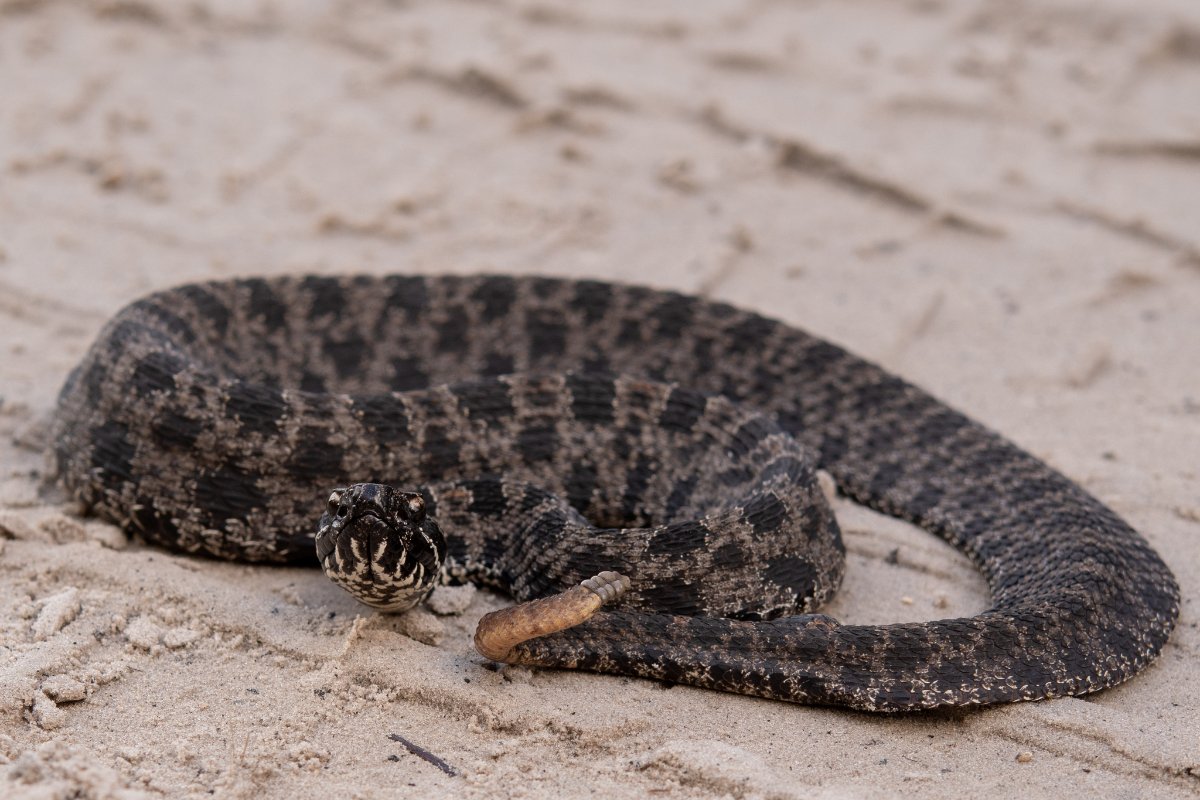
- Very slender with a tiny rattle that sounds like an insect.
- What it does
- Stays hidden under leaves; rattle often too faint to hear.
Often confused with
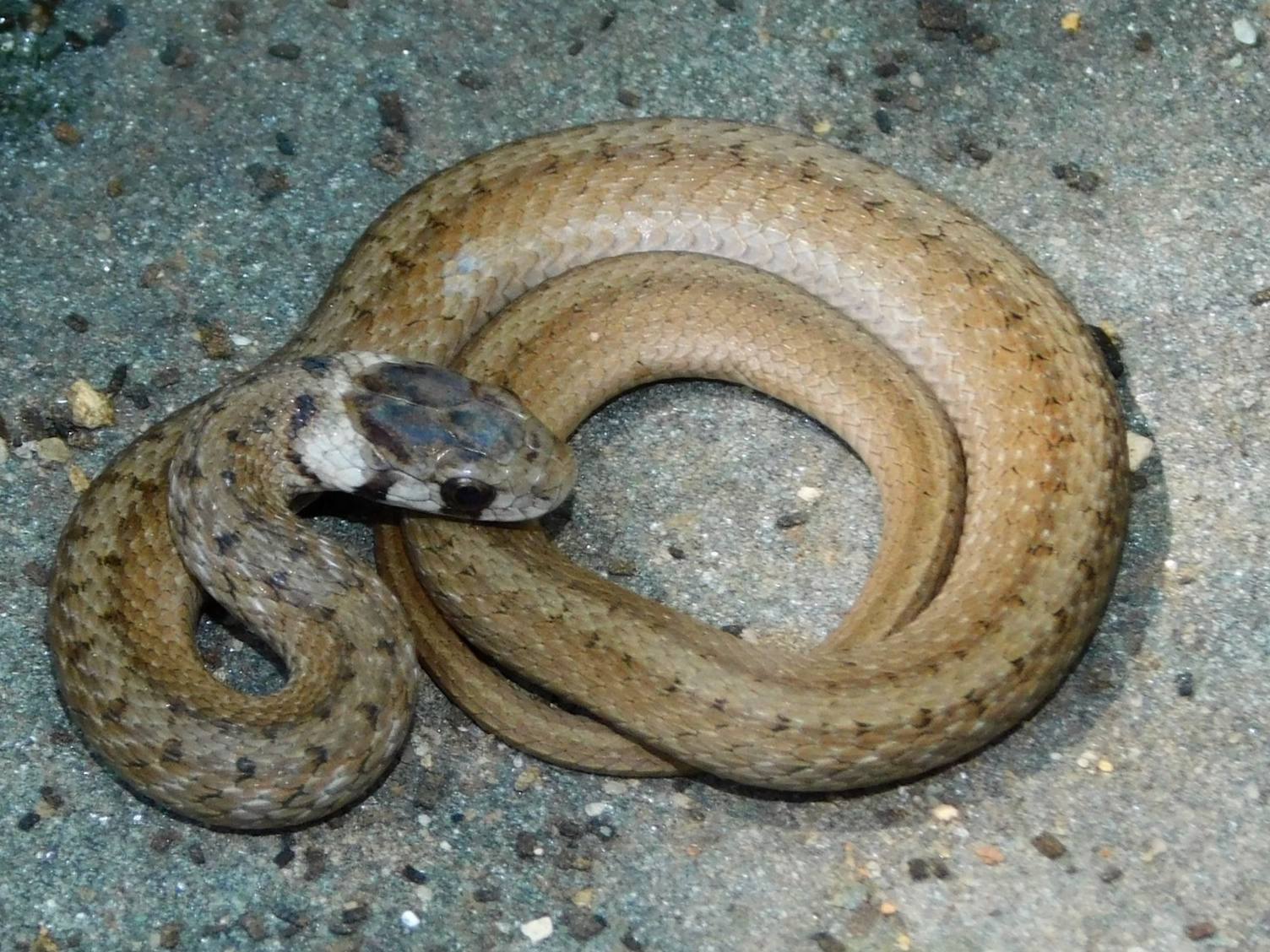
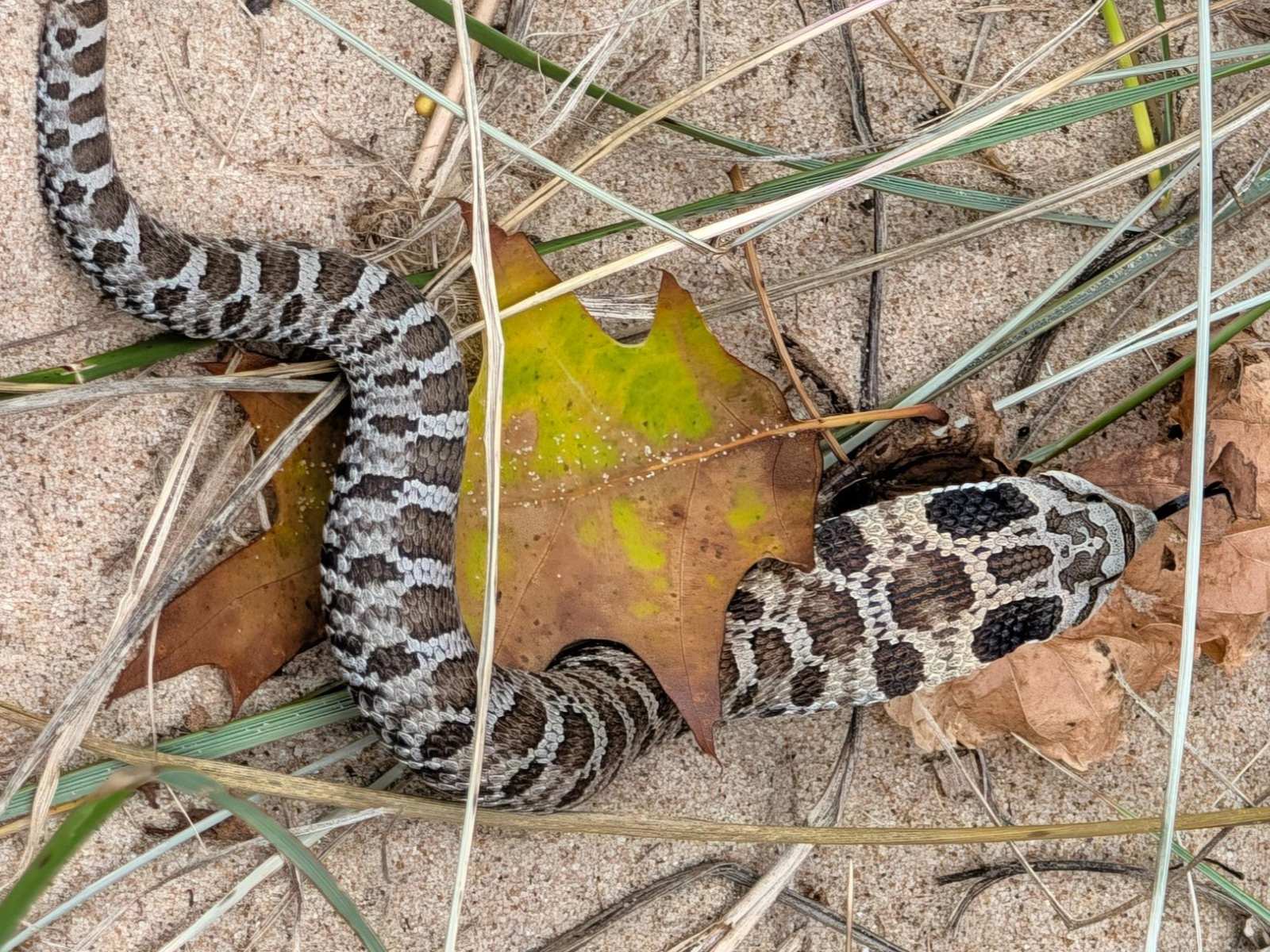
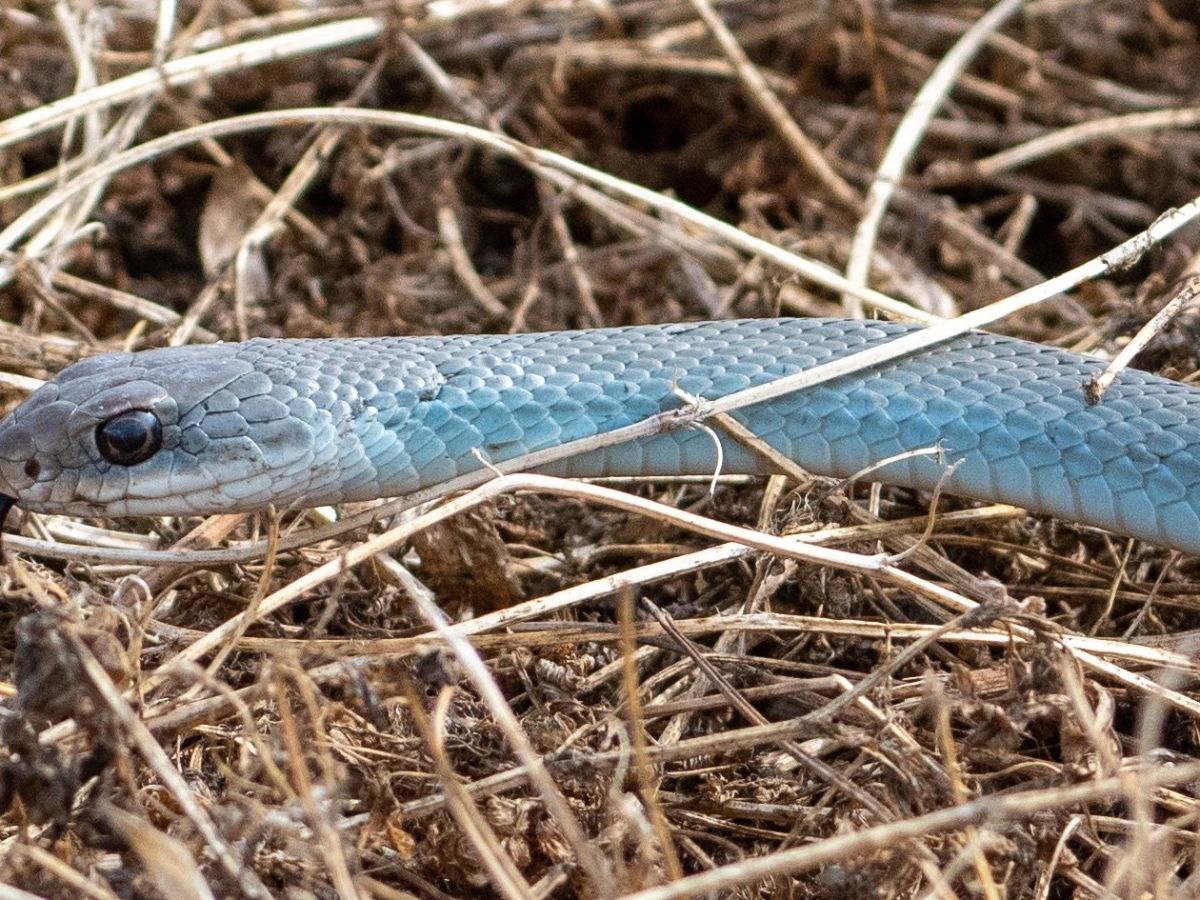
Eastern Hog-nosed Snake has a similar pattern but an upturned snout, and young North American Racers have reddish saddles on gray with big eyes. DeKay's Brownsnake shares the spotted look. All three have round pupils and no rattle.
How to tell them apart
Pygmy Rattlesnake vs DeKay's Brownsnake›
The quick way to tellCompare the spots along the back. The Pygmy Rattlesnake has one row of large dark blotches, often with a rusty stripe, and a tiny rattle. DeKay's has a pale stripe edged by two rows of small dots.
Pygmy Rattlesnake: Round dark spots down the back, often with a rusty stripe between them.
DeKay's Brownsnake: Pale stripe down a brown back between two rows of small dark spots.
Pygmy Rattlesnake vs Eastern Hog-nosed Snake›
The quick way to tellCheck the snout. The Eastern Hog-nosed's tip is upturned and pointed. The Pygmy has a blunt nose, a dark bar from the eye to the mouth corner, and a tiny rattle on its tail.
Pygmy Rattlesnake: Small head, only a little wider than the neck, with a dark stripe through the eye.
Eastern Hog-nosed Snake: Sharply upturned snout; spreads its neck wide like a cobra when alarmed.
Pygmy Rattlesnake vs North American Racer›
The quick way to tellCheck the tail tip. The Pygmy's tail is short and ends in a tiny rattle that is easy to miss. The racer's tail is long and whip-thin with a pointed tip, and adult racers are plain, not spotted.
Pygmy Rattlesnake: Very slender with a tiny rattle that sounds like an insect.
North American Racer: Long and slender; no rattle.
About the Pygmy Rattlesnake›
A little snake of pine woods, palmetto flatwoods, marsh edges and lake shores in the Southeast. It spends much of its time hidden under leaf litter and is easy to walk past.
Its rattle is so small and high-pitched that many people never hear it, which is the main reason it accounts for a fair number of bites — almost always to people who step near it or try to pick it up.
The details
Size Usually 15–24 inWeight Under 1 lbLifespan 10–15 years
Typical range›
Southeast from eastern North Carolina through Florida and west to eastern Texas and Oklahoma, north into western Tennessee, far western Kentucky, Arkansas and southern Missouri.
Activity›
Active spring through fall, by day in mild weather and at night when hot. Often on the move after summer rain.
Diet›
Frogs, lizards, small snakes, mice and large insects.
Reproduction›
Gives birth to live young, usually 3–10, in late summer.
Found in parts of 13 states›
Ranges are approximate. It may be found in only part of a state, or be rare there, and snakes can turn up outside of them.
More photos