Scarlet Kingsnake
Lampropeltis elapsoides · Kingsnakes & Milksnakes
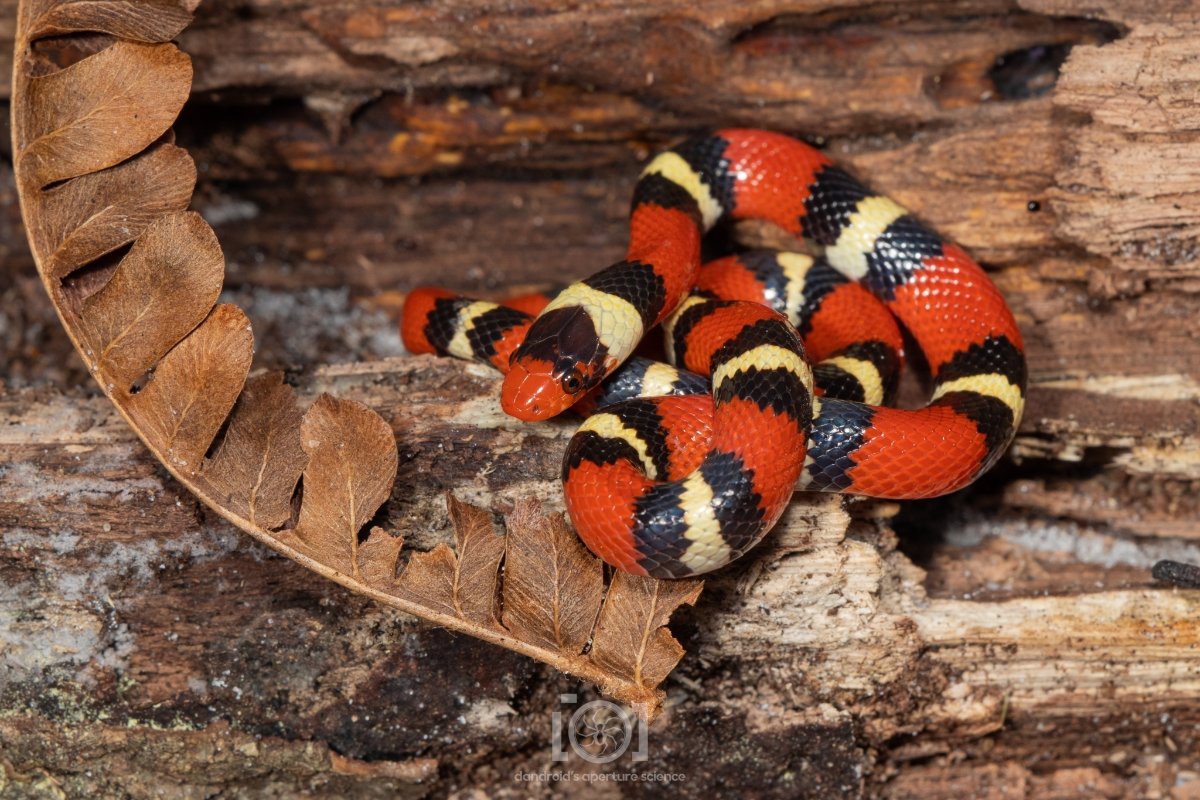
Tap a part to see what to look for. Tap it again to turn it off.
No venom — but confirm the snout color and band order before deciding, because its coralsnake look-alike is dangerous.
How to identify
- Head
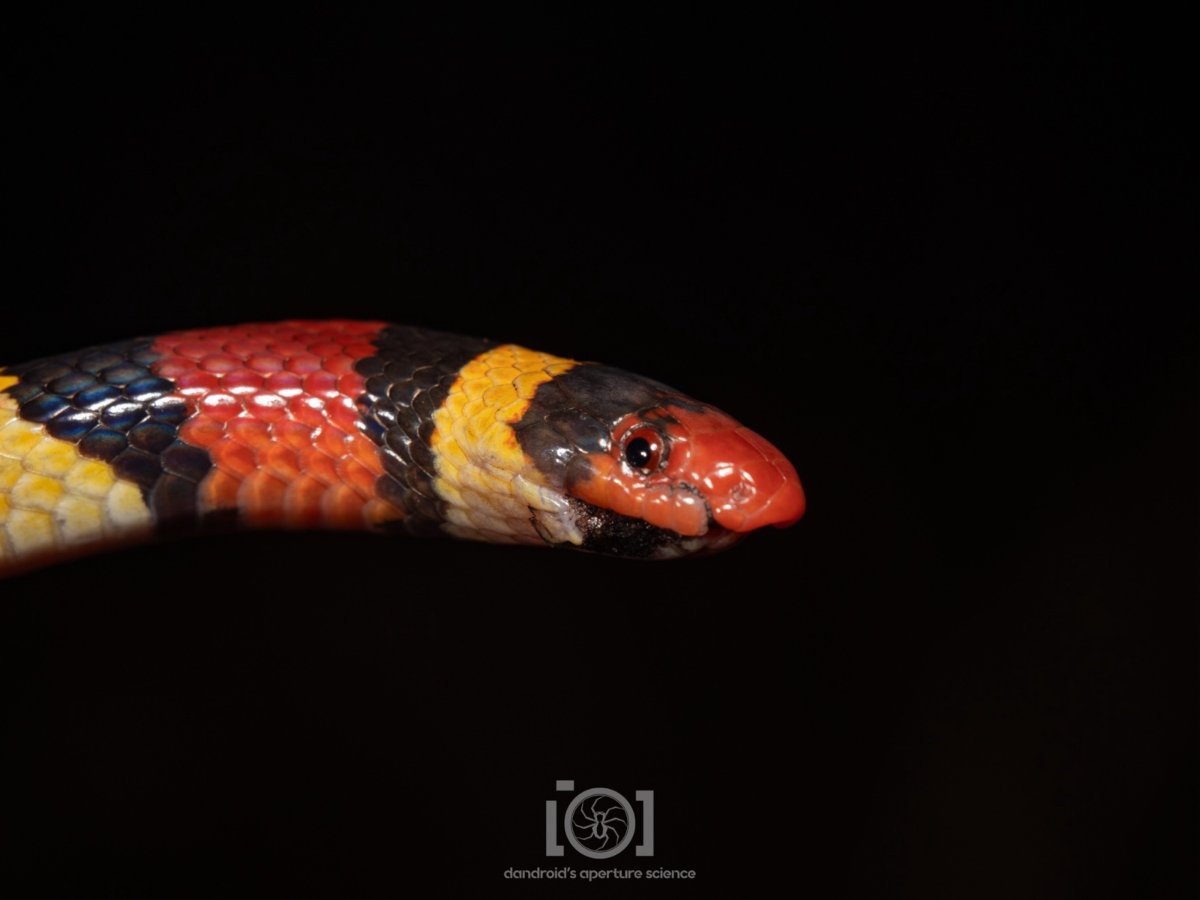
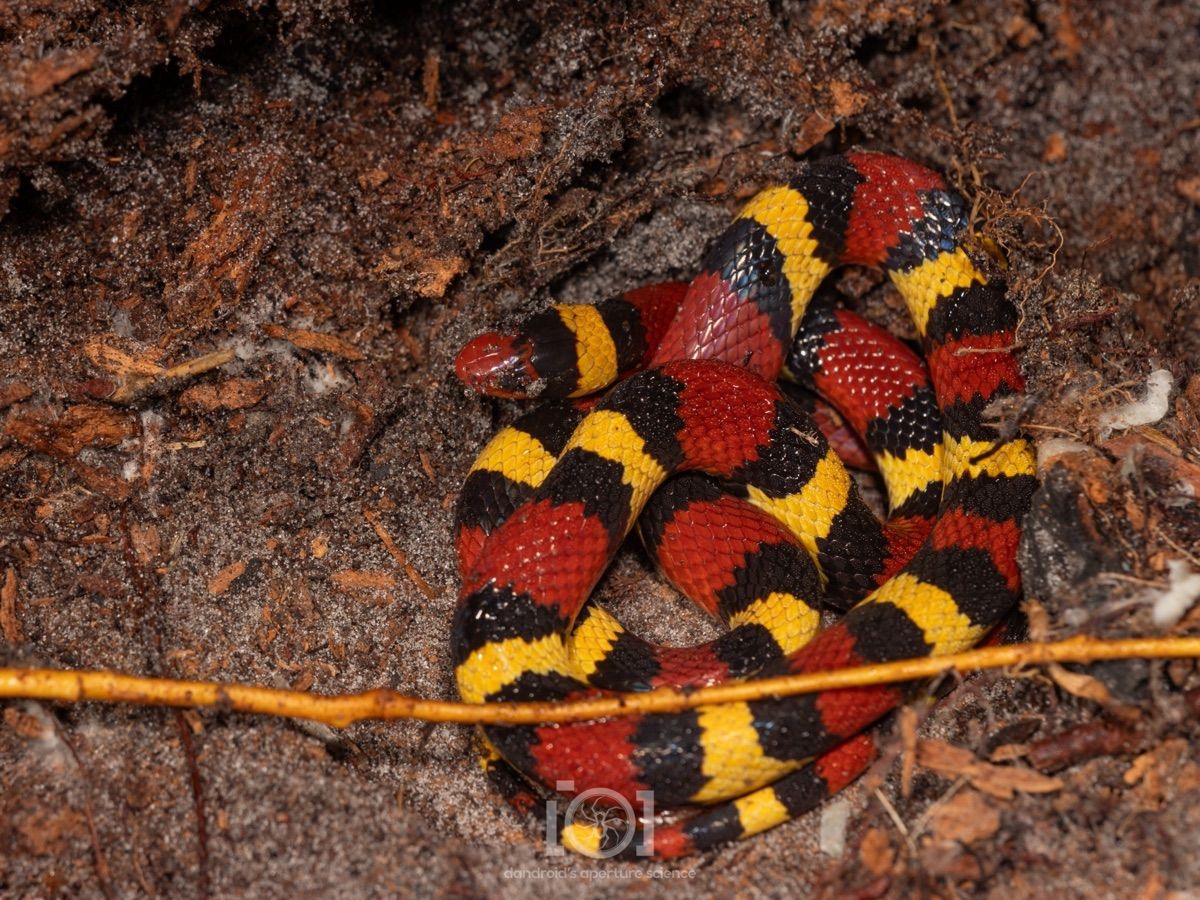
- Small head with a red snout, barely wider than the neck.
- Pattern
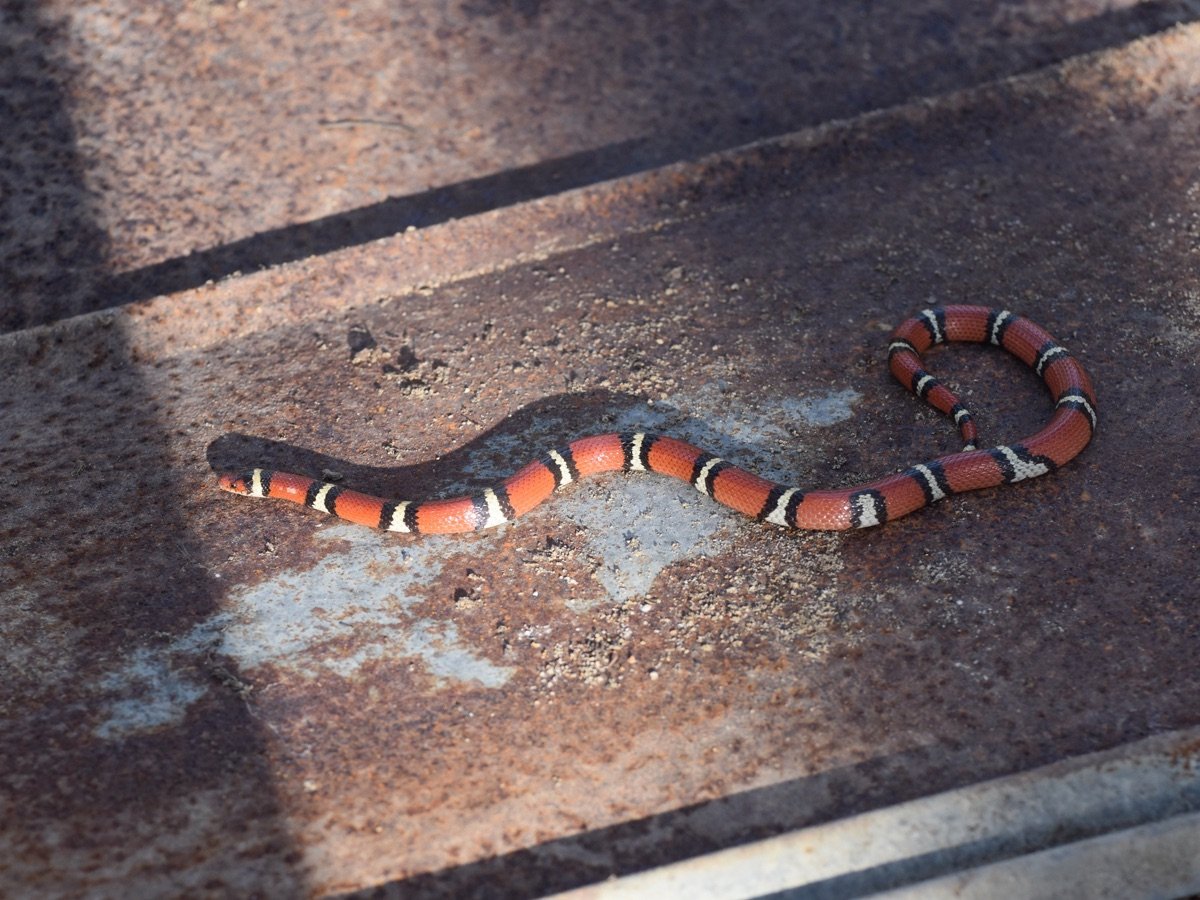
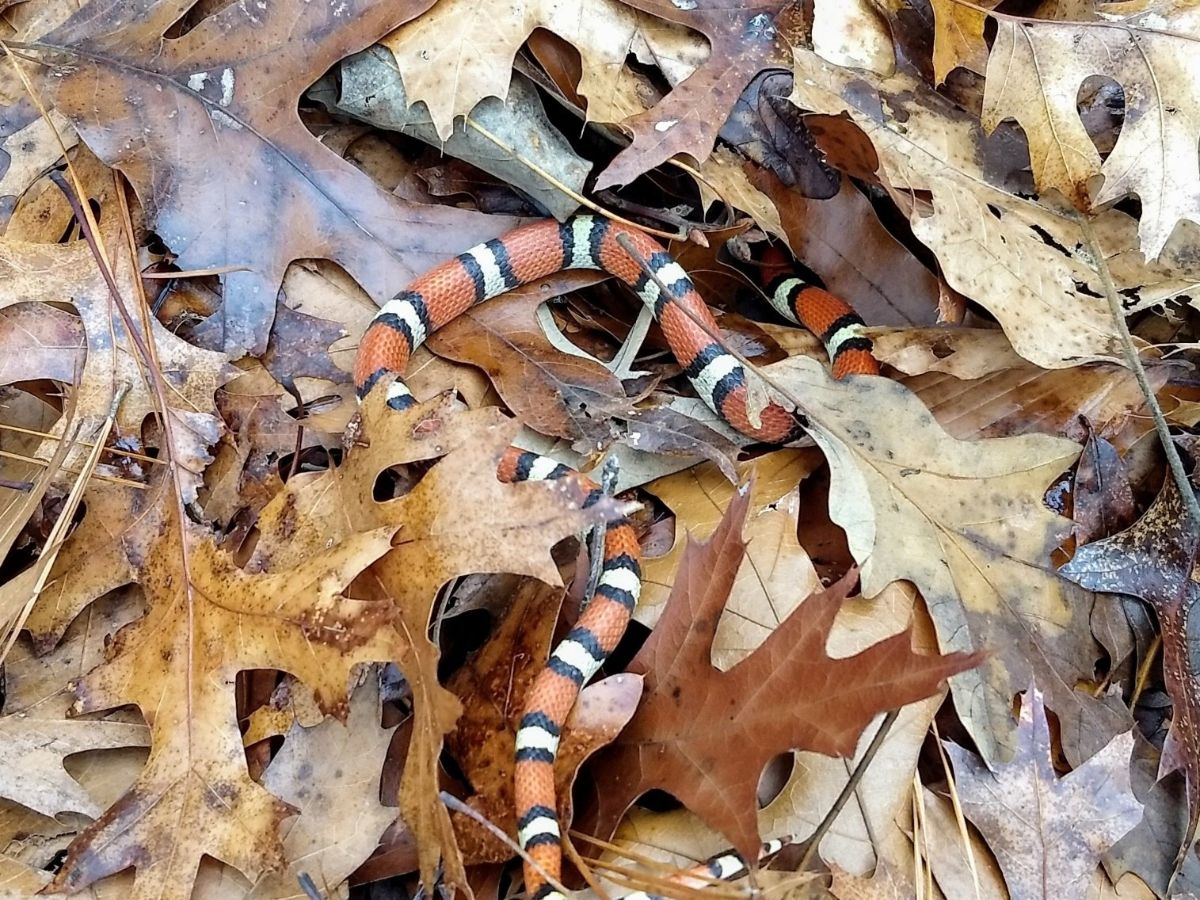
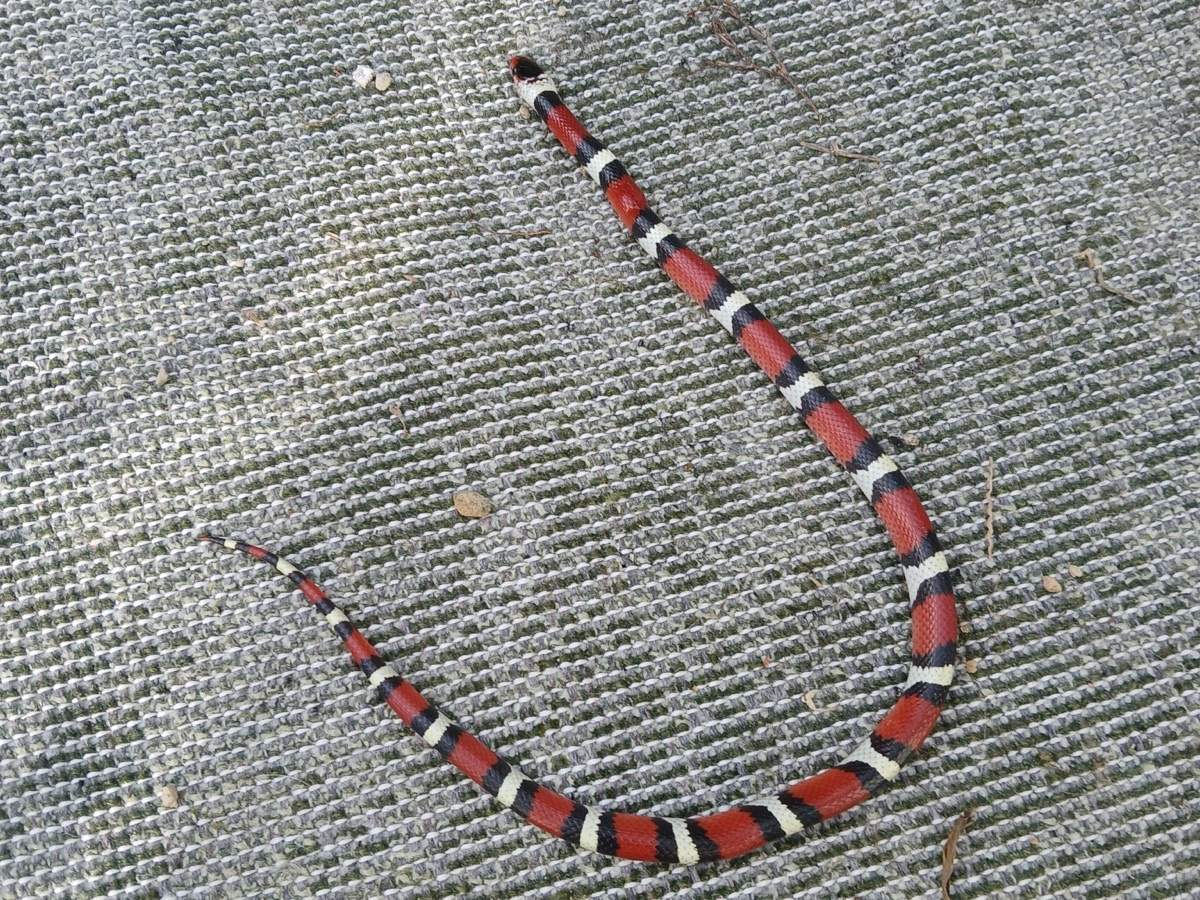
- Red, black and yellow bands with red touching black; bands break on the belly.
- Eyes
- Round pupil, small dark eye on a red snout; no heat-sensing pit.
- Pits
- None. There is no pit between the eye and the nostril.
- Tail
- Short and banded; no rattle.
- What it does
- Burrows under bark and litter; almost never bites.
Often confused with
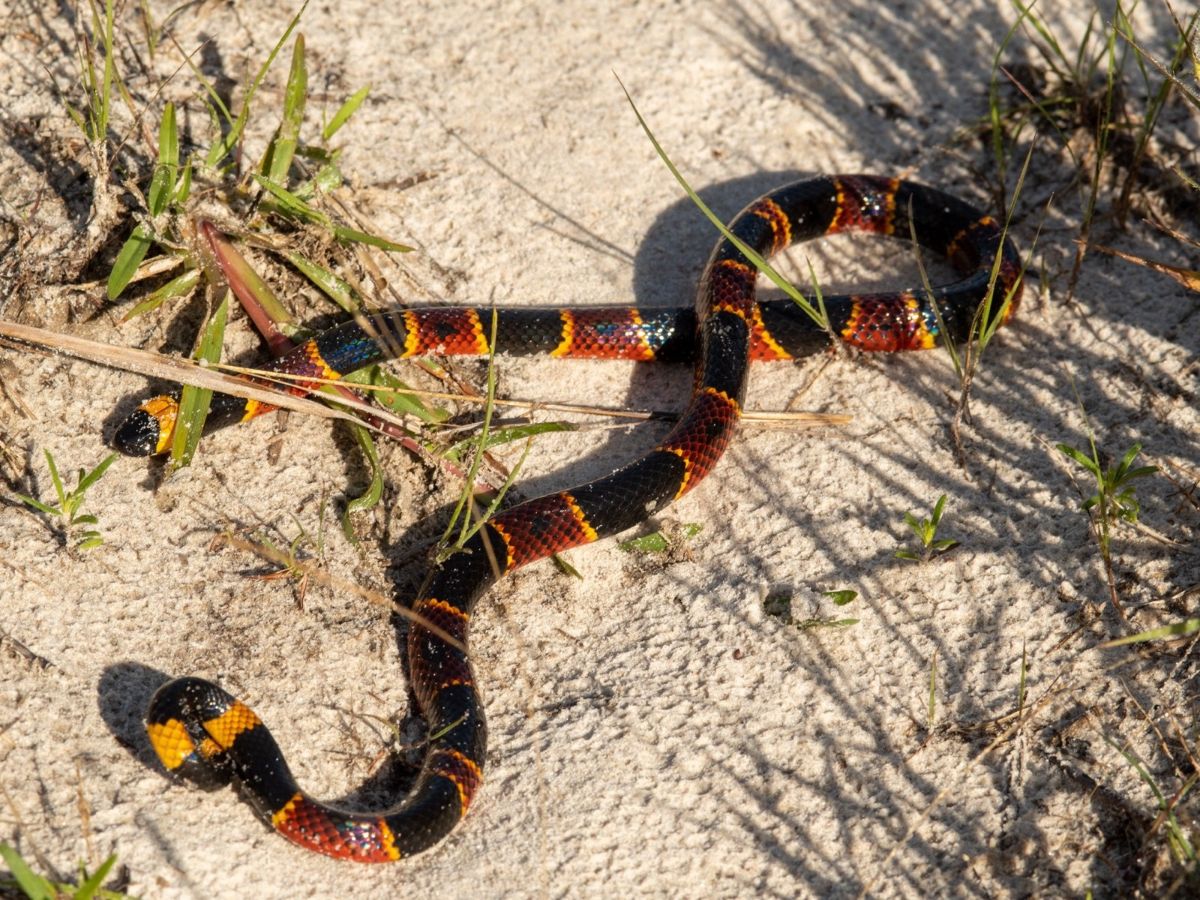
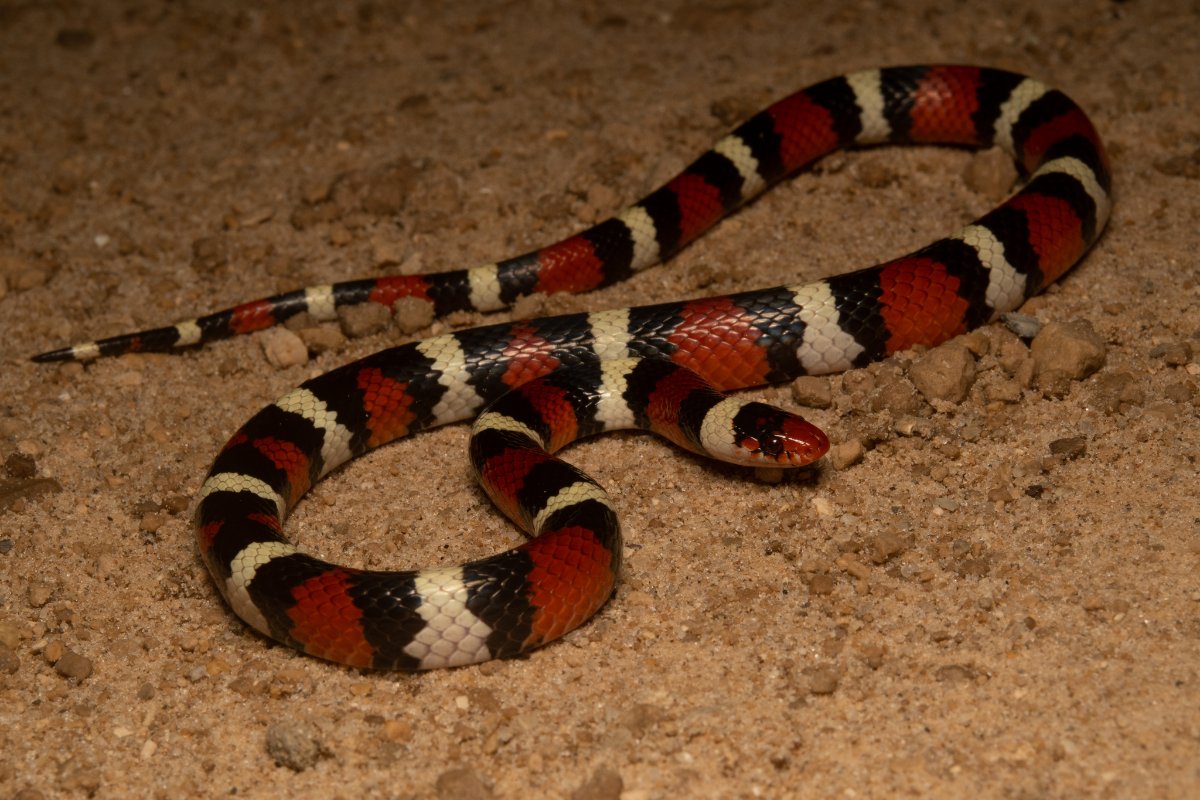
Eastern Coralsnake — the dangerous one. Its red touches yellow and its snout is solidly black. Scarlet Snake has a red snout too but its belly is plain white and its bands are saddles, not rings.
How to tell them apart
Scarlet Kingsnake vs Eastern Coralsnake›
The quick way to tellRed touches yellow on the coralsnake, and its snout is solid black. On the Scarlet Kingsnake red touches black, and the snout is red.
Scarlet Kingsnake: Red, black and yellow bands with red touching black; bands break on the belly.
Eastern Coralsnake: Glossy rings right around the body: red, yellow, black, yellow, red - red touching yellow.
About the Scarlet Kingsnake›
A small, secretive southeastern snake that spends most of its life under bark, logs and pine litter. Often found when a rotting stump is pulled apart.
Its resemblance to the coralsnake is the textbook example of mimicry, and the reason the "red touches yellow" rhyme is worth knowing in the Southeast.
The details
Size Usually 14–20 inWeight Under 0.5 lbLifespan 10–15 years
Typical range›
Southeast: Virginia south through Florida and west to eastern Louisiana, Tennessee and southern Kentucky.
Activity›
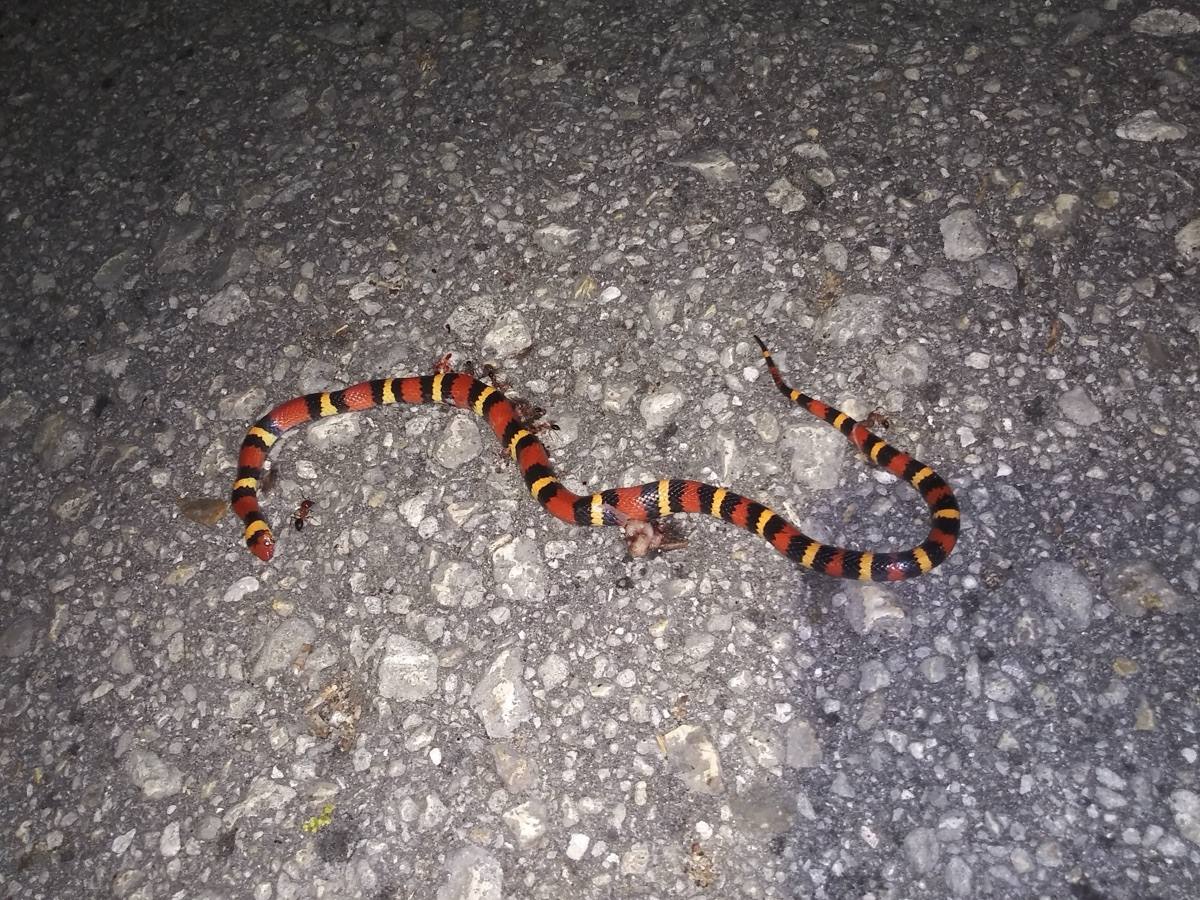
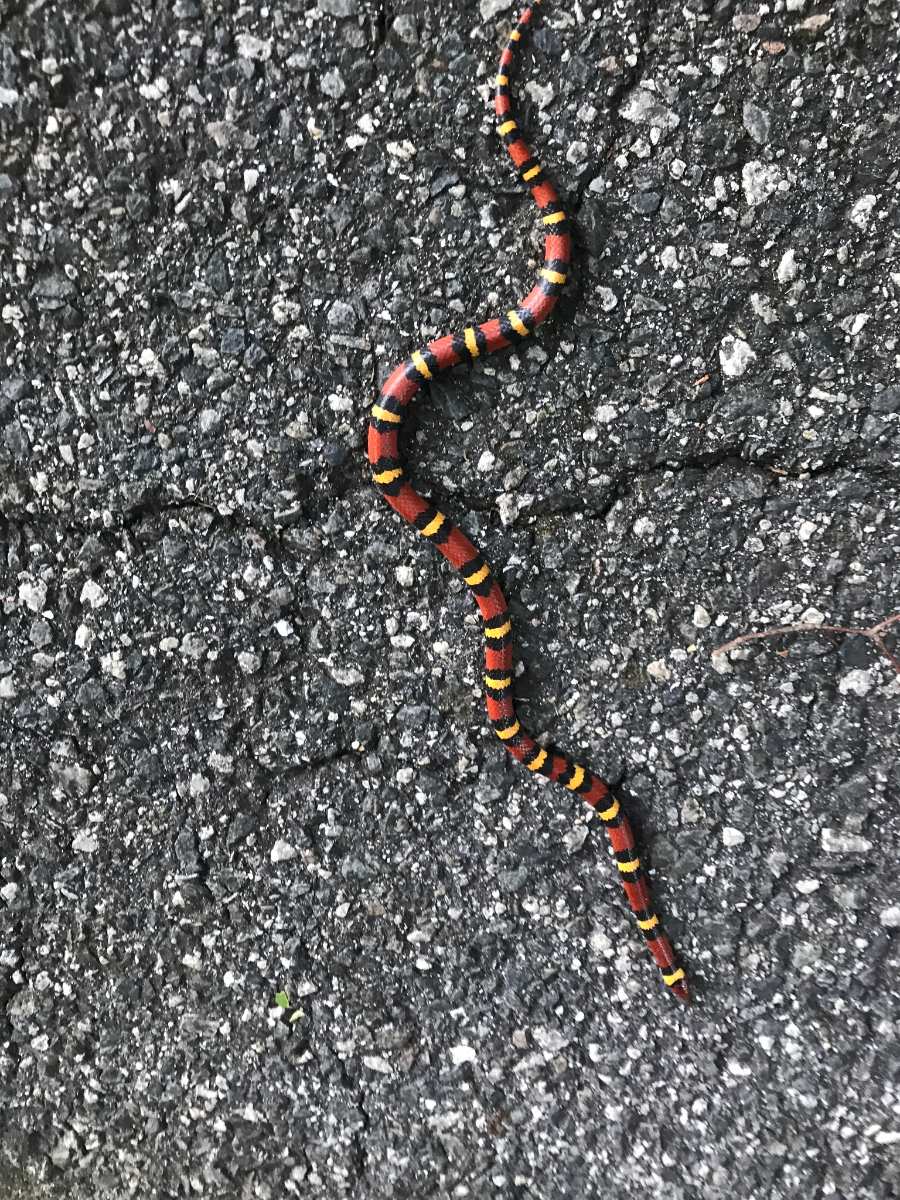
Mostly night active and underground; most often seen crossing roads on warm damp nights.
Diet›
Small lizards, especially skinks, plus small snakes and insects.
Reproduction›
Lays eggs, usually 2–9, in early summer.
Found in parts of 10 states›
Ranges are approximate. It may be found in only part of a state, or be rare there, and snakes can turn up outside of them.
More photos