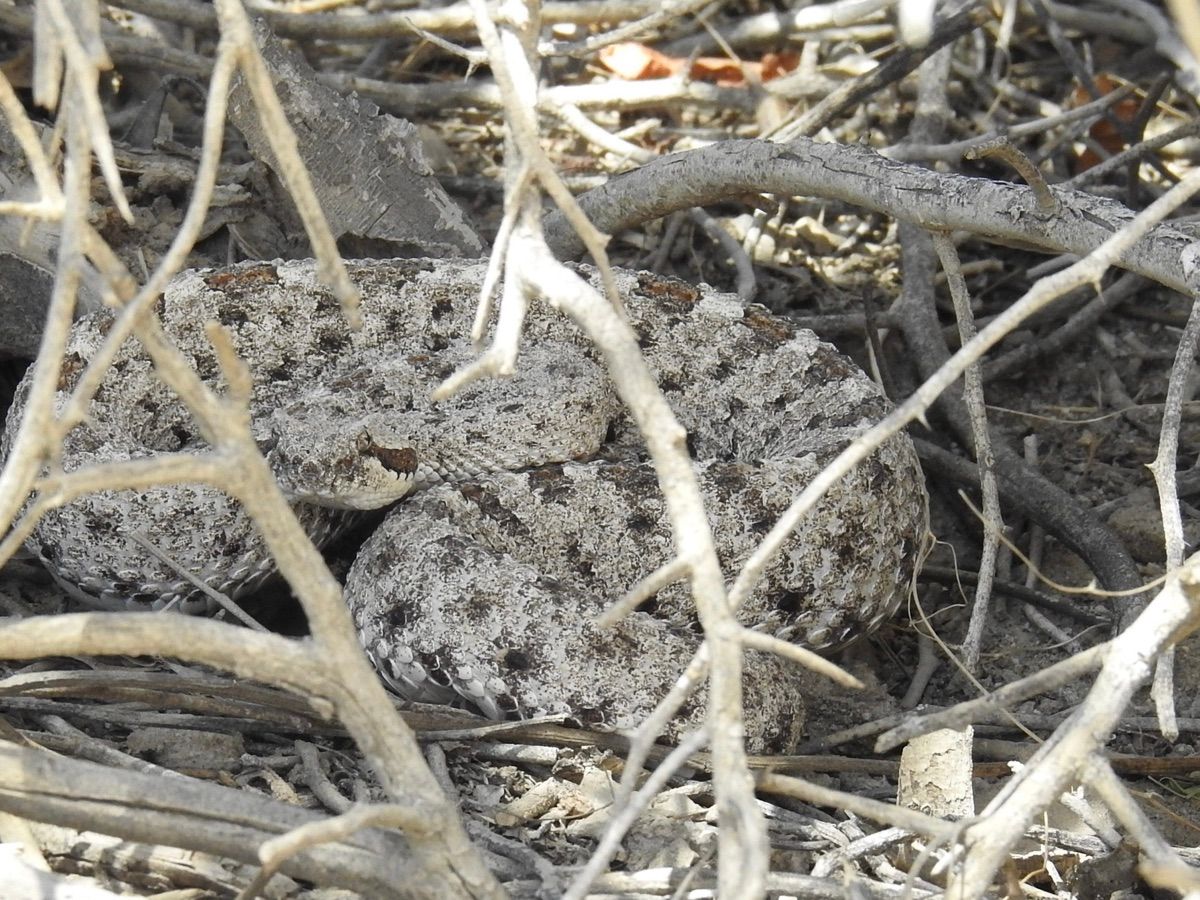
Sidewinder
Crotalus cerastes · Rattlesnakes
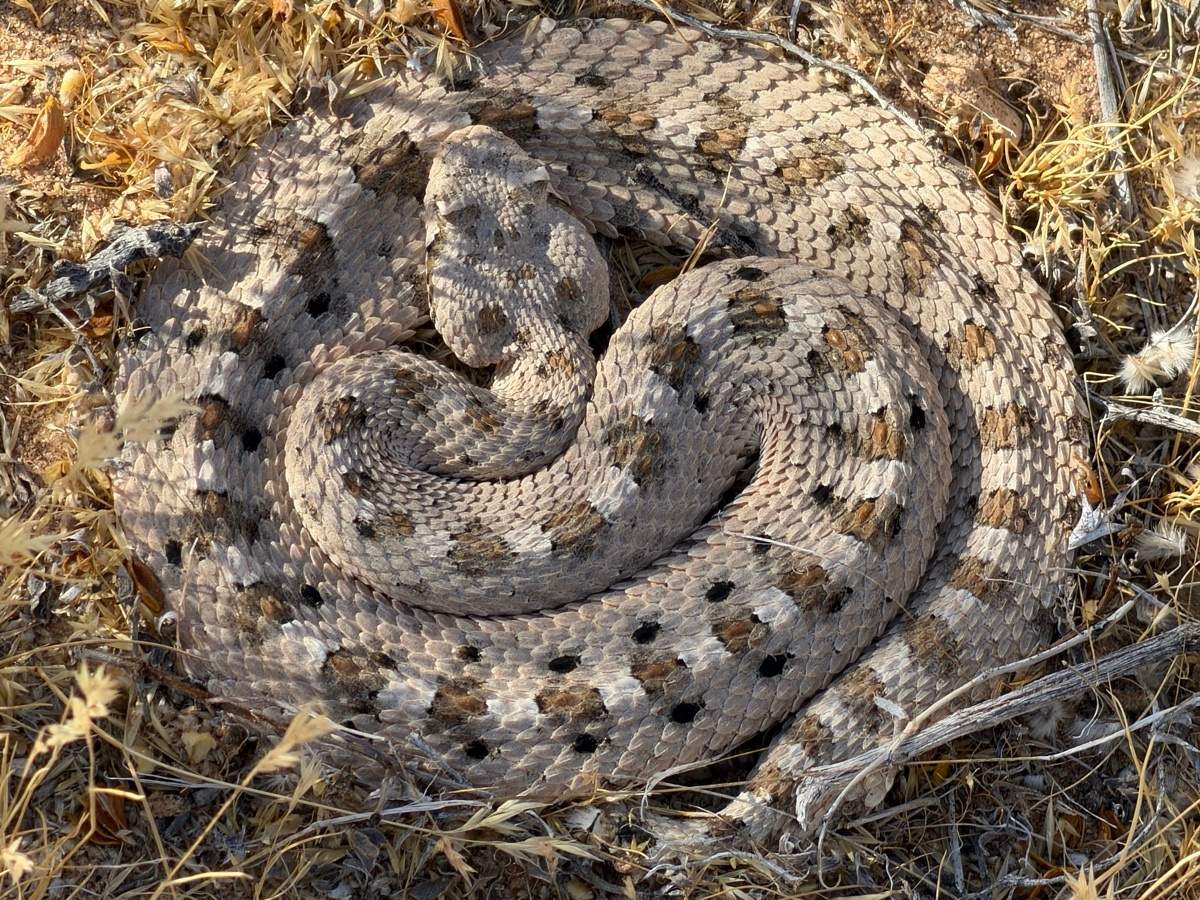
Tap a part to see what to look for. Tap it again to turn it off.
Venomous. Bites are less severe than from larger rattlesnakes but still need emergency hospital care.
How to identify
- Head
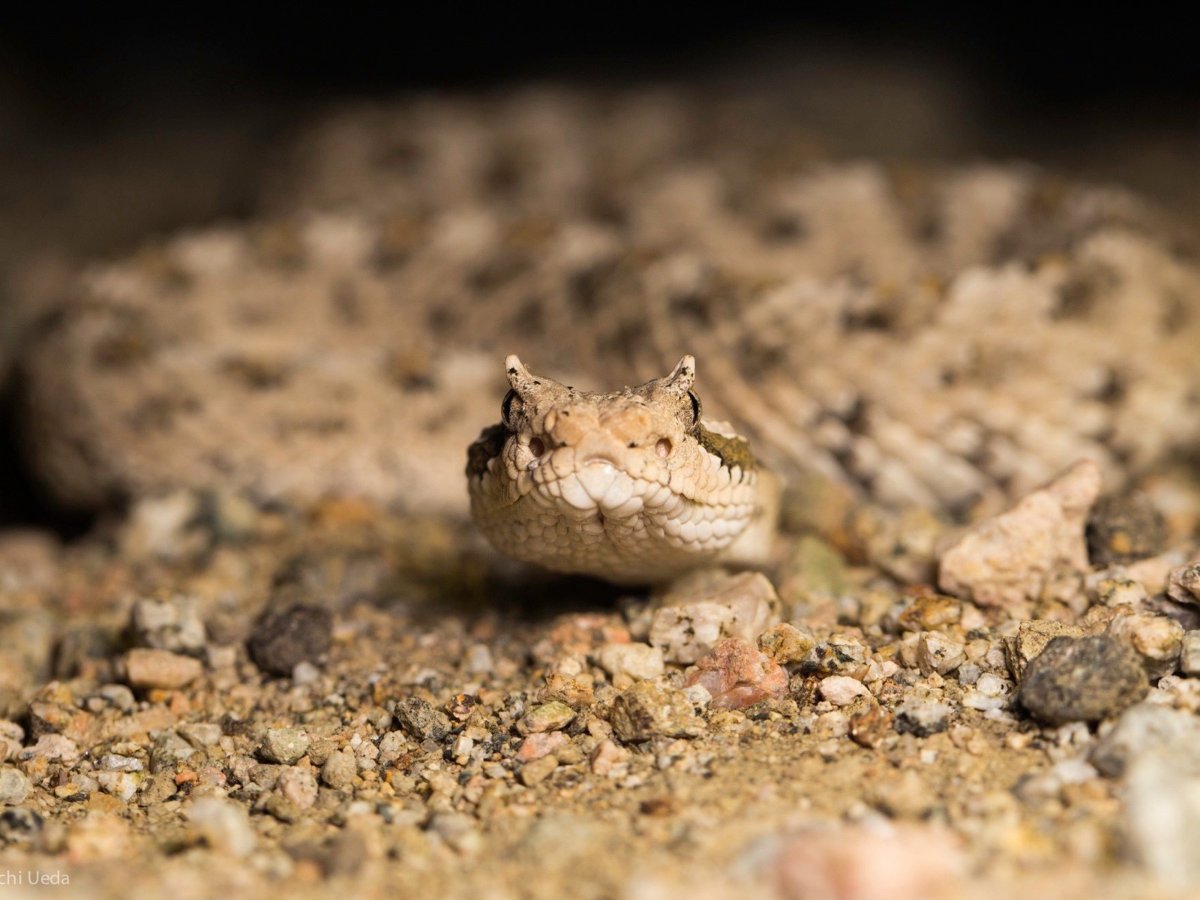
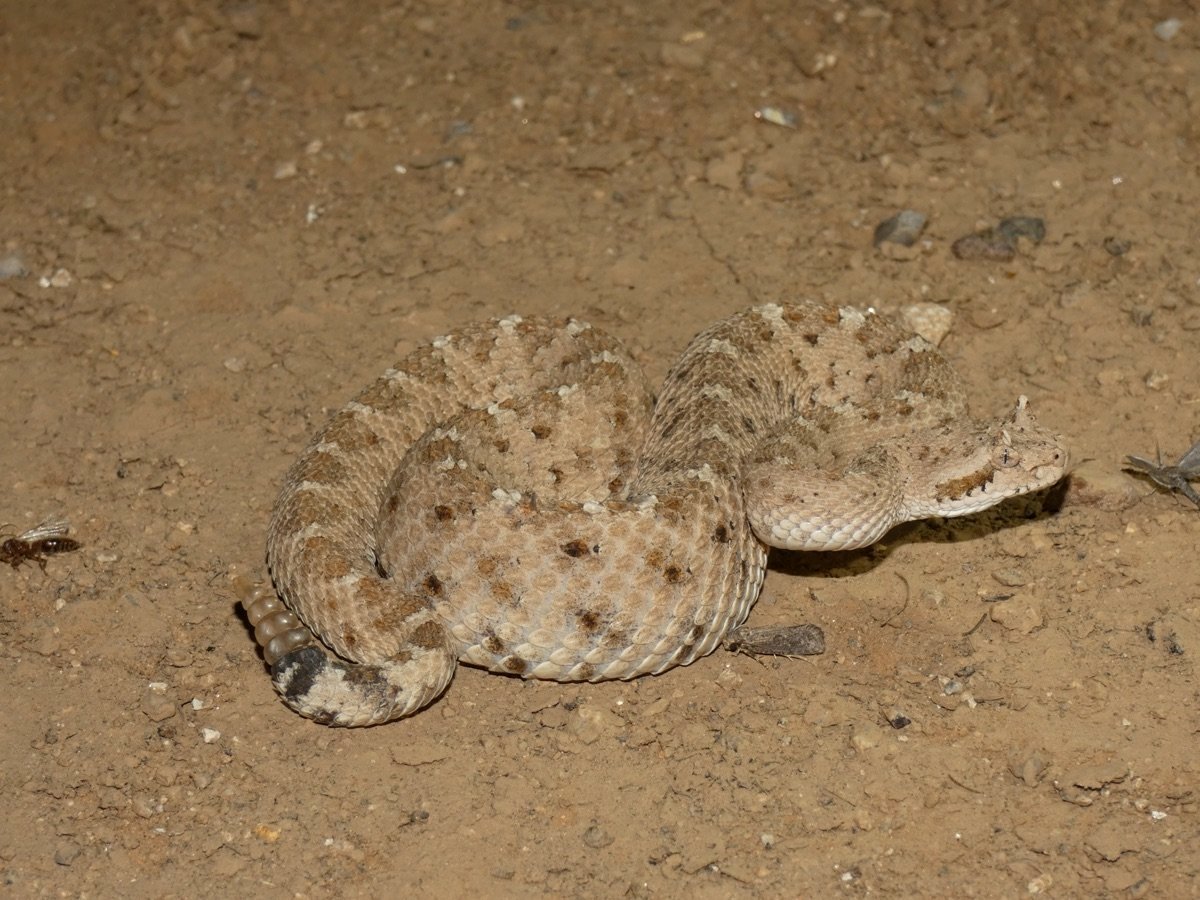
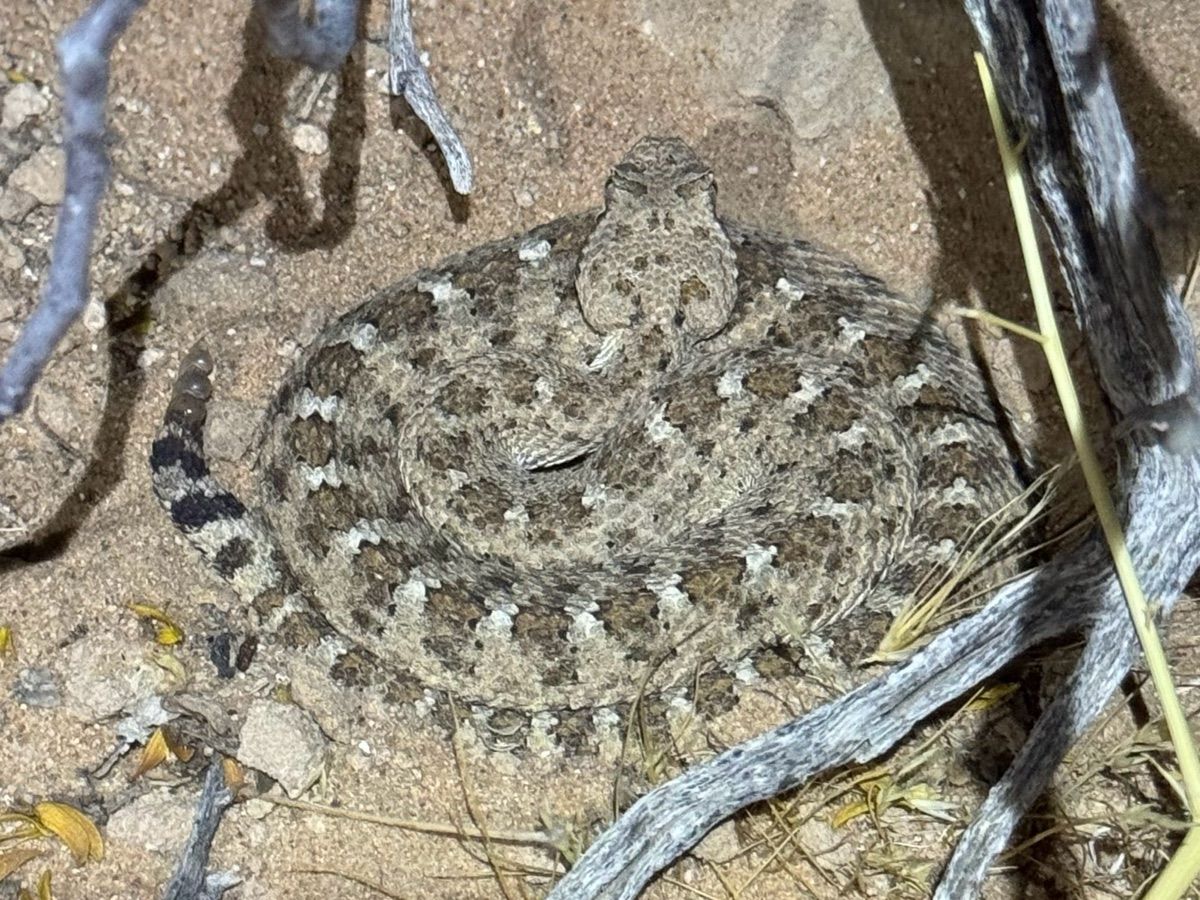
- Triangular head with a raised horn-like scale above each eye.
- Pattern
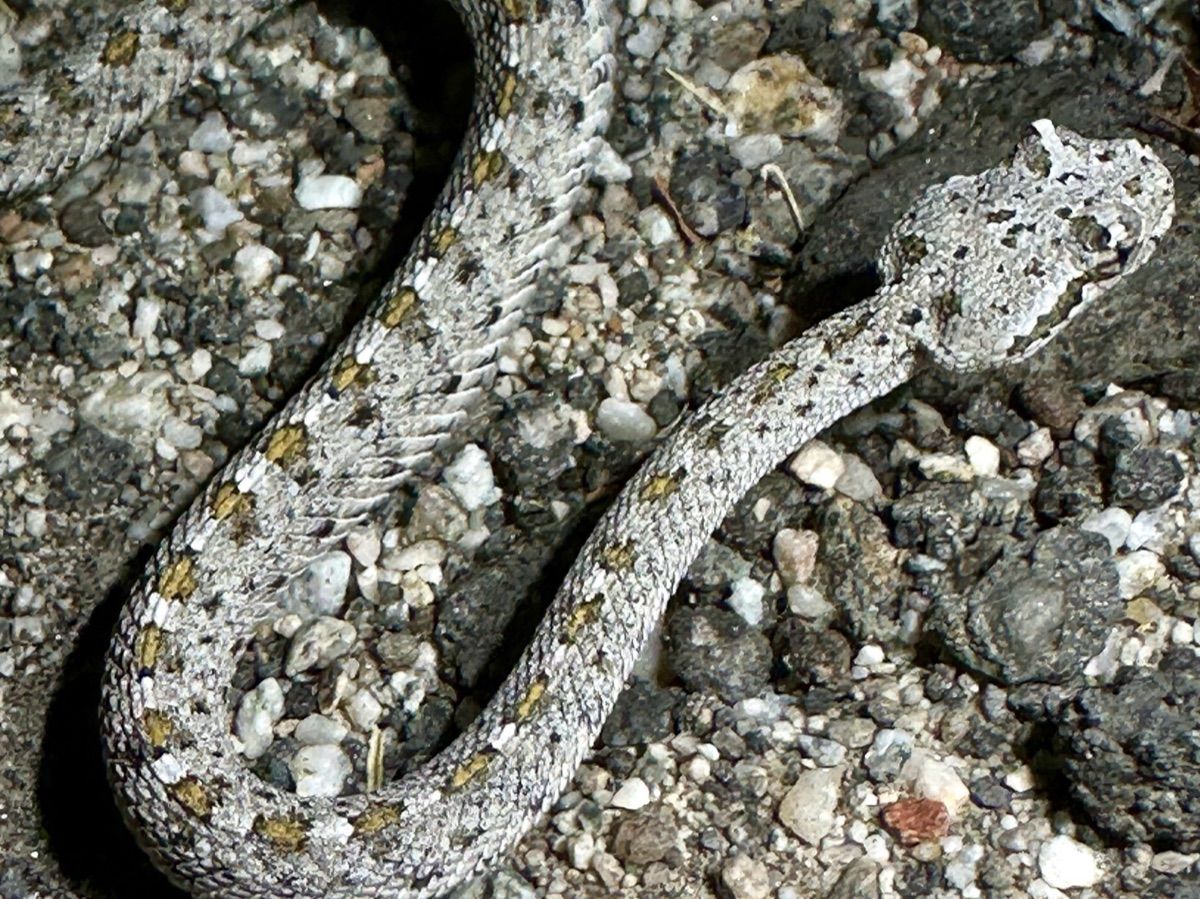
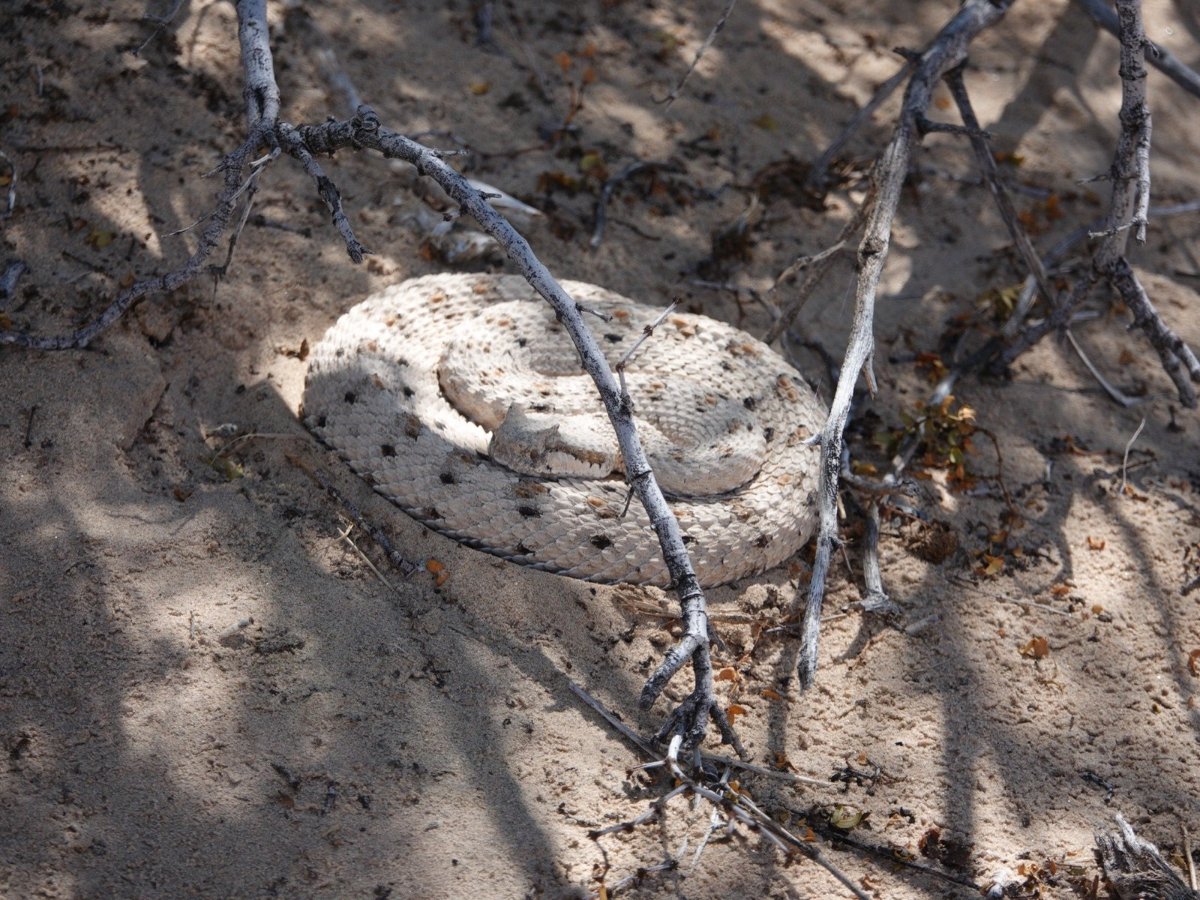
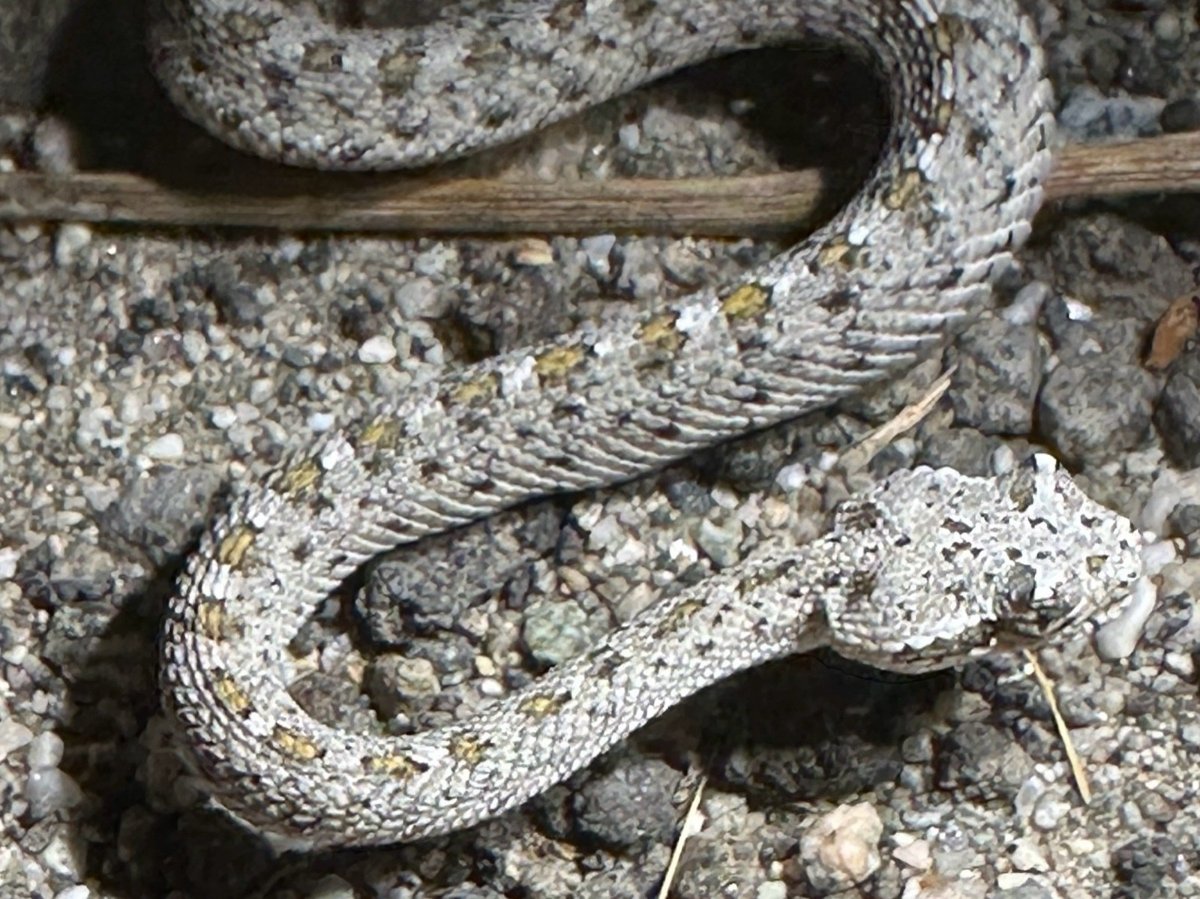
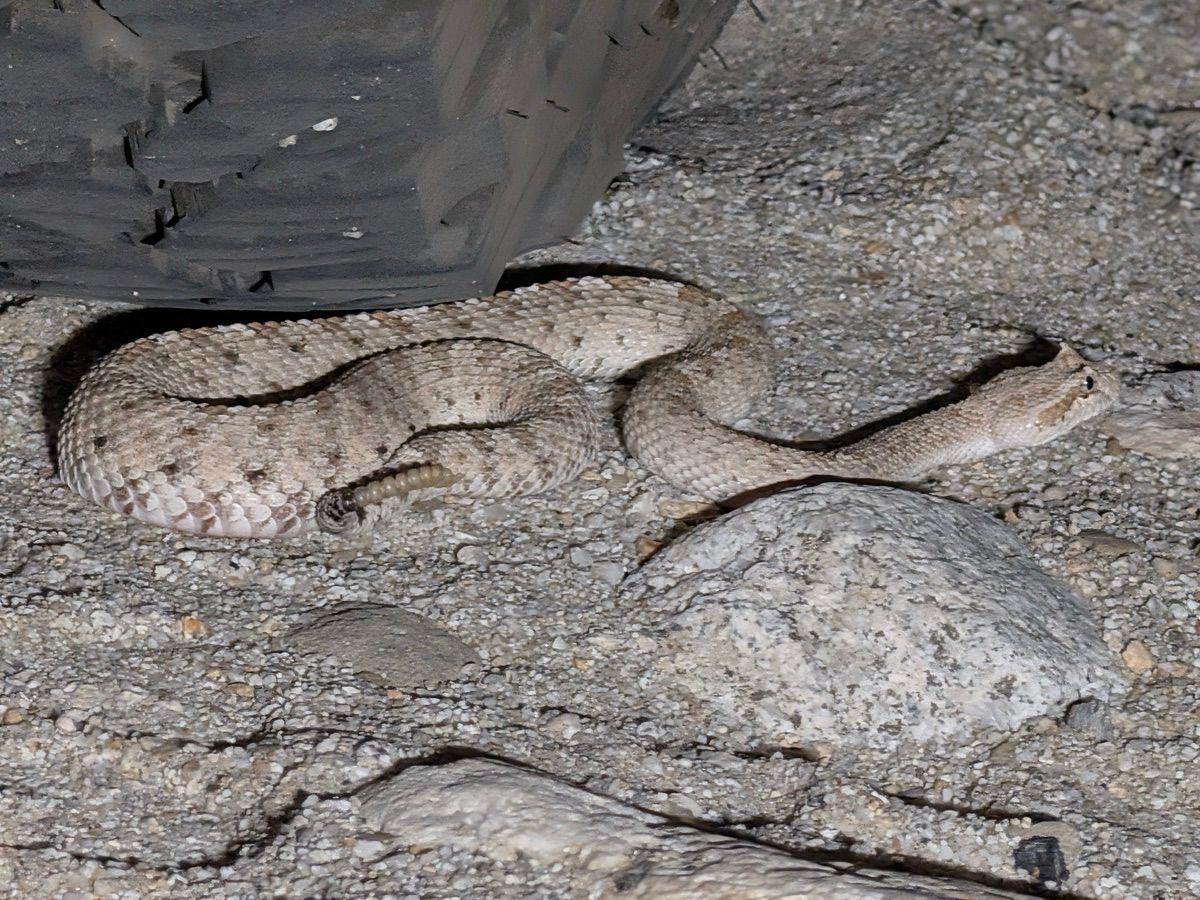
- Sandy cream to pink with faint darker blotches.
- Eyes
- Vertical slit pupil under the raised horn; heat-sensing pit between eye and nostril.
- Pits
- A deep heat-sensing pit on each side of the face, between the eye and the nostril.
- Tail
- Short, with a small rattle.
- What it does
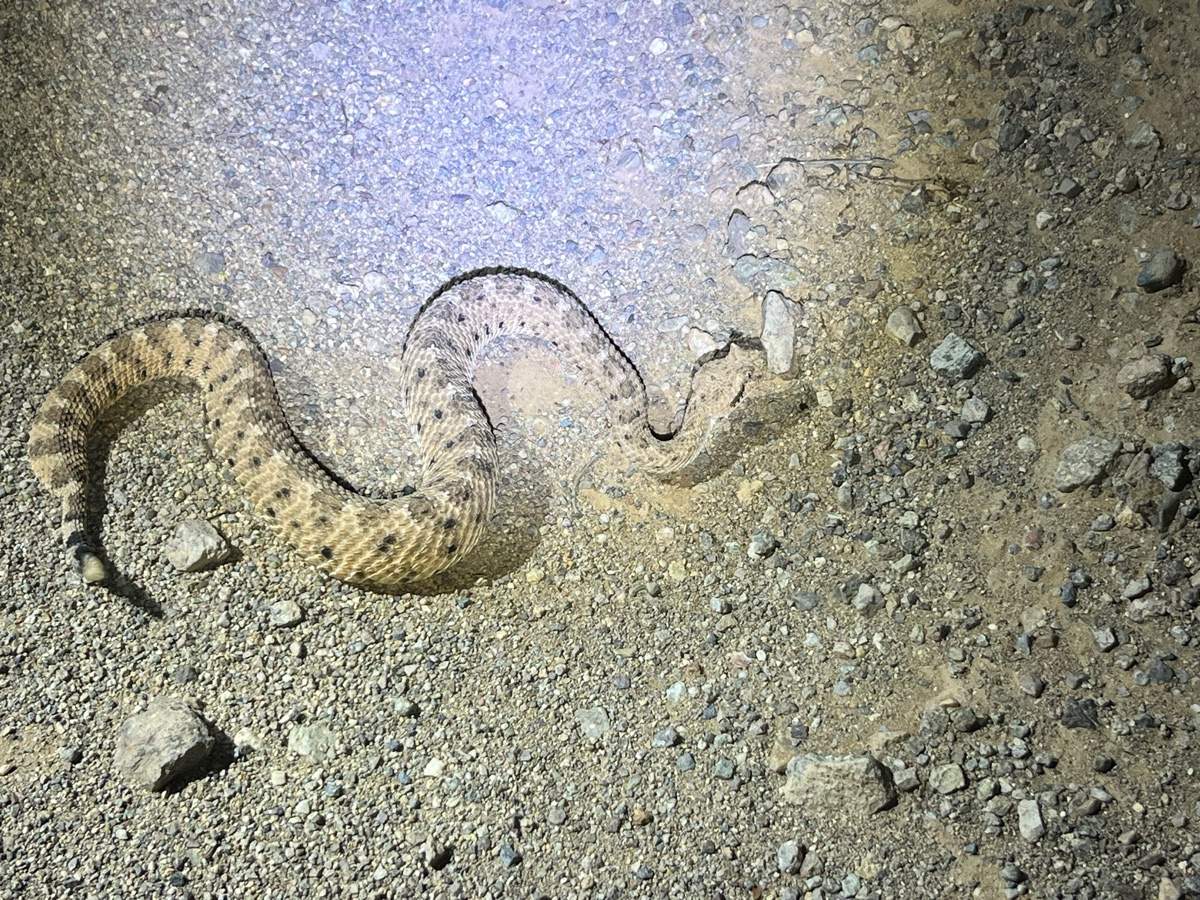
- Buries in sand beside a bush; moves in a sideways loop.
Often confused with
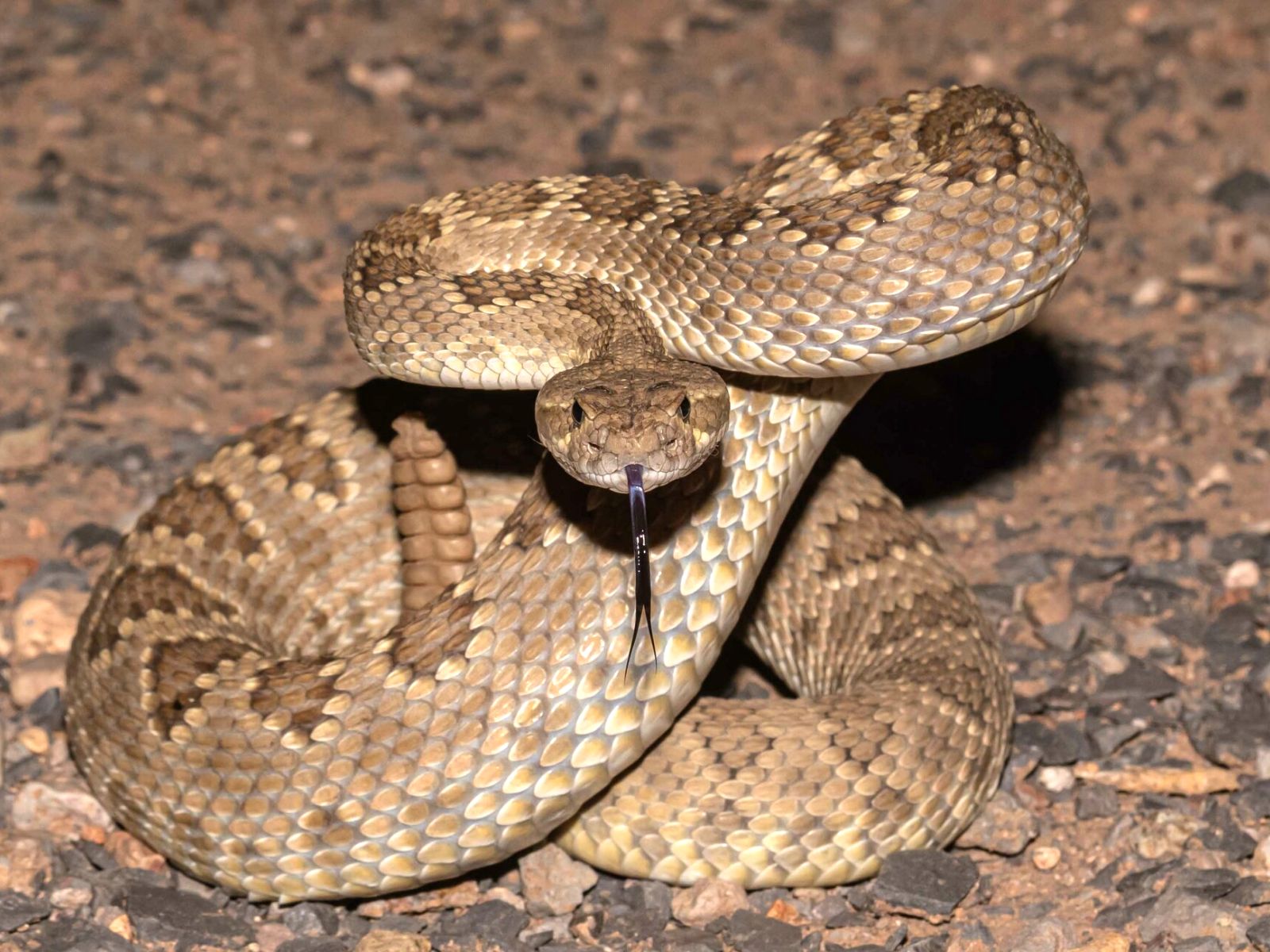
Other desert rattlesnakes that share its range, such as the Speckled and Mohave Rattlesnakes, can look similar, but none has the raised "horns" over the eyes.
How to tell them apart
Sidewinder vs Mohave Rattlesnake›
The quick way to tellLook above the eyes. The Sidewinder has a raised, horn-like scale over each eye. The Mohave has no horns, and its body shows clean diamonds rather than faint blotches.
Sidewinder: Triangular head with a raised horn-like scale above each eye.
Mohave Rattlesnake: Triangle; two big scales between the eyes, cheek stripe passes behind the mouth.
About the Sidewinder›
A specialist of loose sand — dunes, washes and sandy flats — where it moves with the sideways looping crawl that gives it its name. It often buries itself beside a bush with only the eyes and horns showing.
Almost entirely nocturnal in warm months, so it is far more often found by its tracks than by sight.
The details
Size Usually 17–30 inWeight Under 1 lbLifespan About 13 years in the wild
Typical range›
Deserts of southeastern California, southern Nevada, southwestern Utah, western Arizona and northwestern Mexico.
Activity›
Night active in warm weather, day active in spring and fall. Shelters in rodent burrows and buries in sand.
Diet›
Desert mice, kangaroo rats and lizards.
Reproduction›
Gives birth to live young, usually 5–12, in late summer.
Found in parts of 4 states›
Ranges are approximate. It may be found in only part of a state, or be rare there, and snakes can turn up outside of them.
More photos