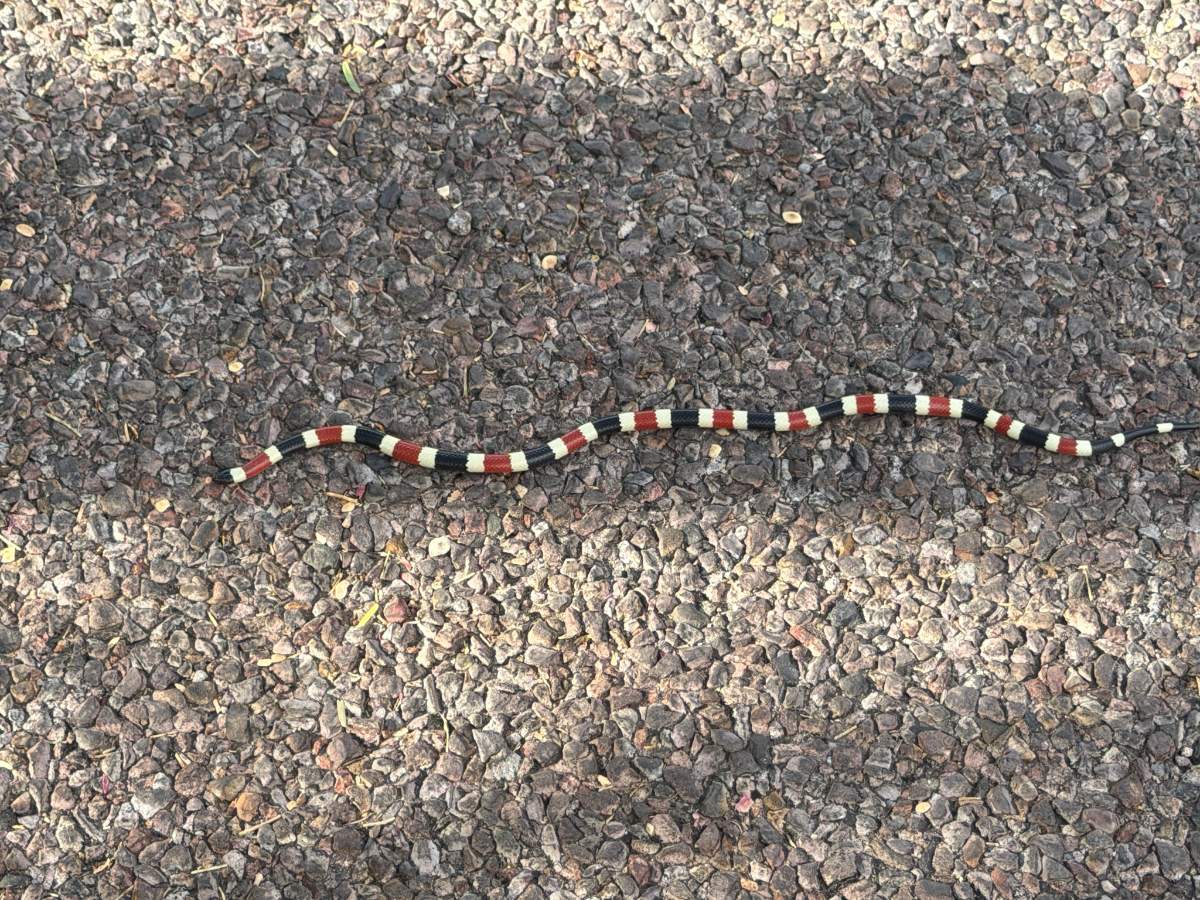
Sonoran Coralsnake
Micruroides euryxanthus · Coral Snakes
Tap a part to see what to look for. Tap it again to turn it off.
Venomous. Shy, and usually hides its head under its coils when bothered; keep well back — a bite is a medical emergency.
How to identify
- Head
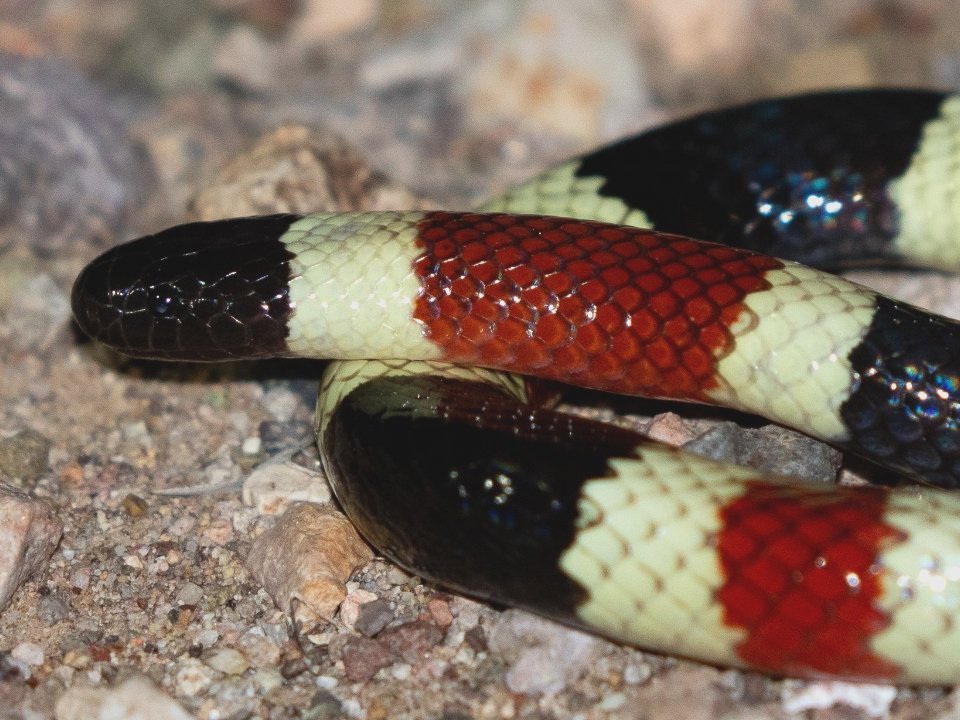
- Small head with a black snout; a pale ring follows, then red.
- Pattern
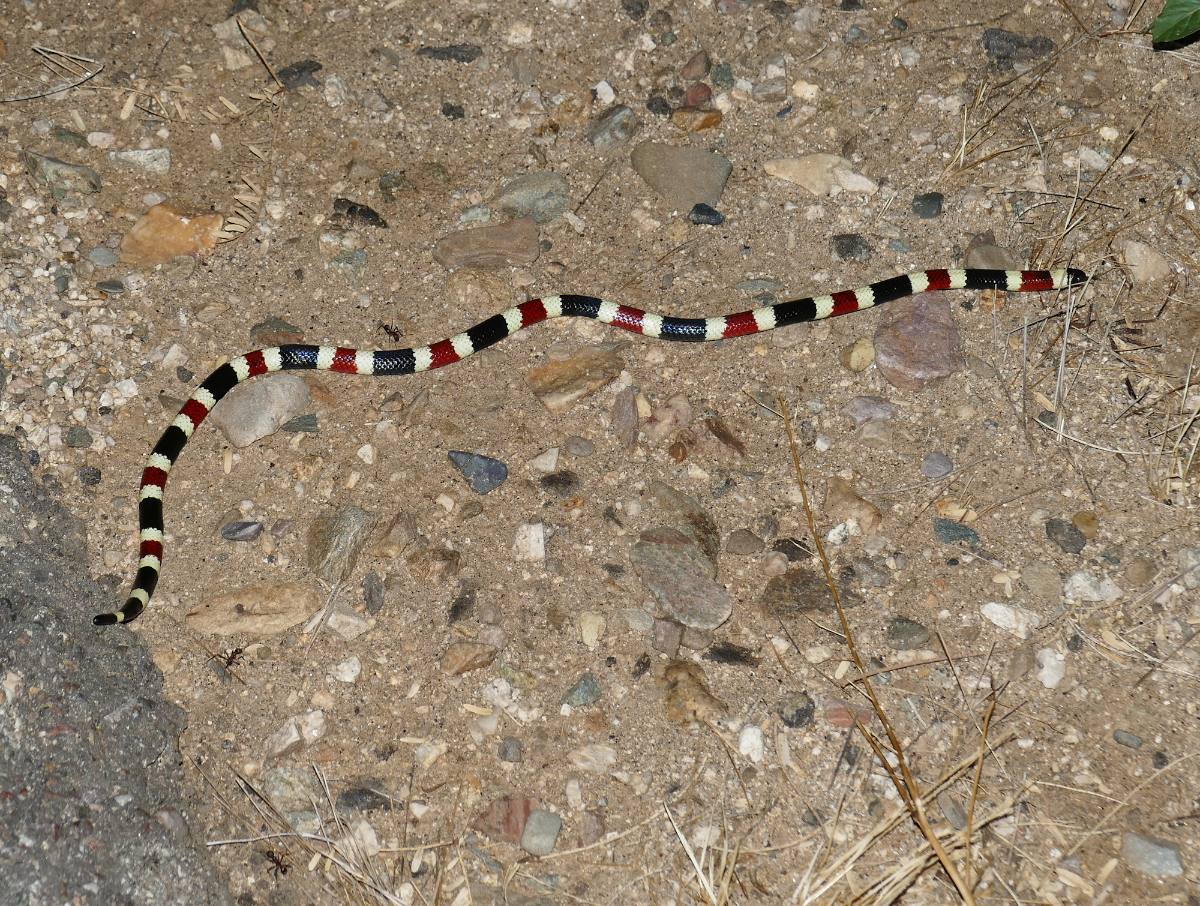
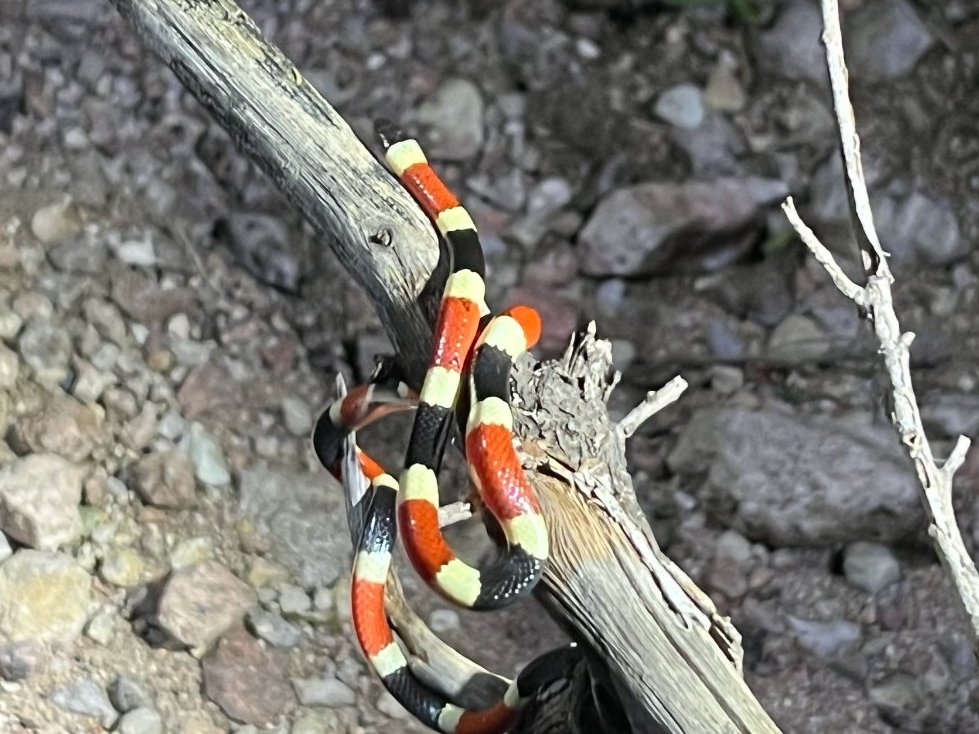
- Complete rings of red, black and wide white or pale yellow, with the red touching the pale rings.
- Eyes
- Small dark eyes; no heat-sensing pit.
- Pits
- None. There is no pit between the eye and the nostril.
- Tail
- Ringed black and pale, usually with no red bands; the scale covering the vent is red in Arizona snakes.
- What it does
- Hides its head under its coils, curls and shows its tail, and may make a popping sound from its vent.
Often confused with
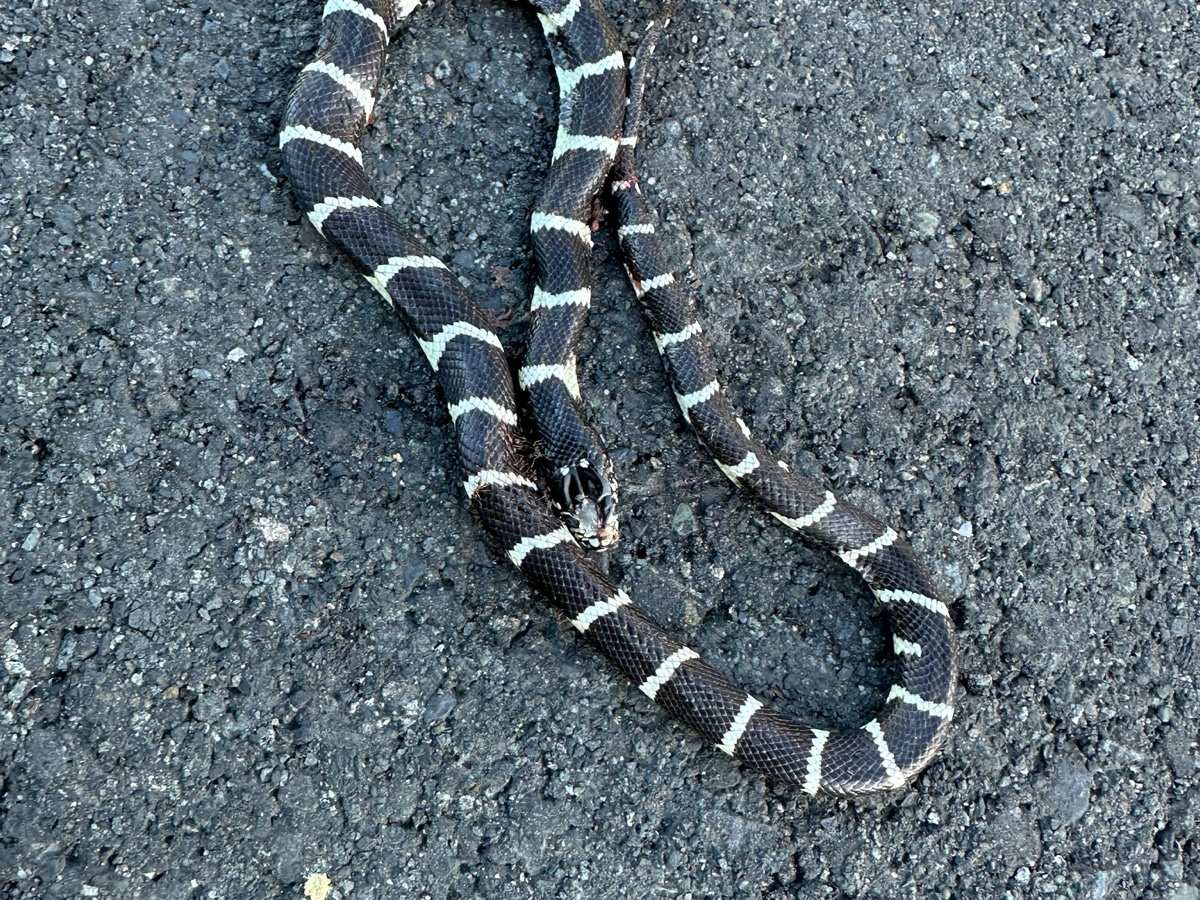
Western Shovel-nosed and Sonoran Shovel-nosed Snakes have similar bands but lack the black snout. The Sonoran Mountain Kingsnake has red bands bordered by black and a white snout. California Kingsnakes are banded but have no red at all.
How to tell them apart
Sonoran Coralsnake vs California Kingsnake›
The quick way to tellLook for red. The Sonoran Coralsnake has red rings touching wide white or pale yellow rings. A California Kingsnake is banded only in black or brown and white or pale yellow, with no red at all.
Sonoran Coralsnake: Complete rings of red, black and wide white or pale yellow, with the red touching the pale rings.
California Kingsnake: Crisp black-and-cream bands right around the body; some are striped instead.
About the Sonoran Coralsnake›
A small, slender coralsnake of rocky canyons, washes and hillsides in the Sonoran and Chihuahuan deserts and nearby grasslands of southern Arizona and southwestern New Mexico. It spends much of its time underground and comes out mostly at dusk and night, especially during summer monsoon rains.
It is Arizona's only member of the cobra family. When bothered it tucks its head under its coils, curls and lifts its tail, and may make a little popping sound from its vent.
The details
Size Up to about 2 ft
Typical range›
Southern Arizona below about 6,000 ft and southwestern New Mexico, south into western Mexico.
Activity›
Mostly at dusk and night from March to November; most often seen during summer monsoon rains.
Diet›
Other small snakes, especially threadsnakes and groundsnakes, plus some lizards.
Reproduction›
Lays a small clutch of about 2–6 eggs in July or August; they hatch in late summer.
Found in parts of 2 states›
Ranges are approximate. It may be found in only part of a state, or be rare there, and snakes can turn up outside of them.