Southwestern Speckled Rattlesnake
Crotalus pyrrhus · Rattlesnakes
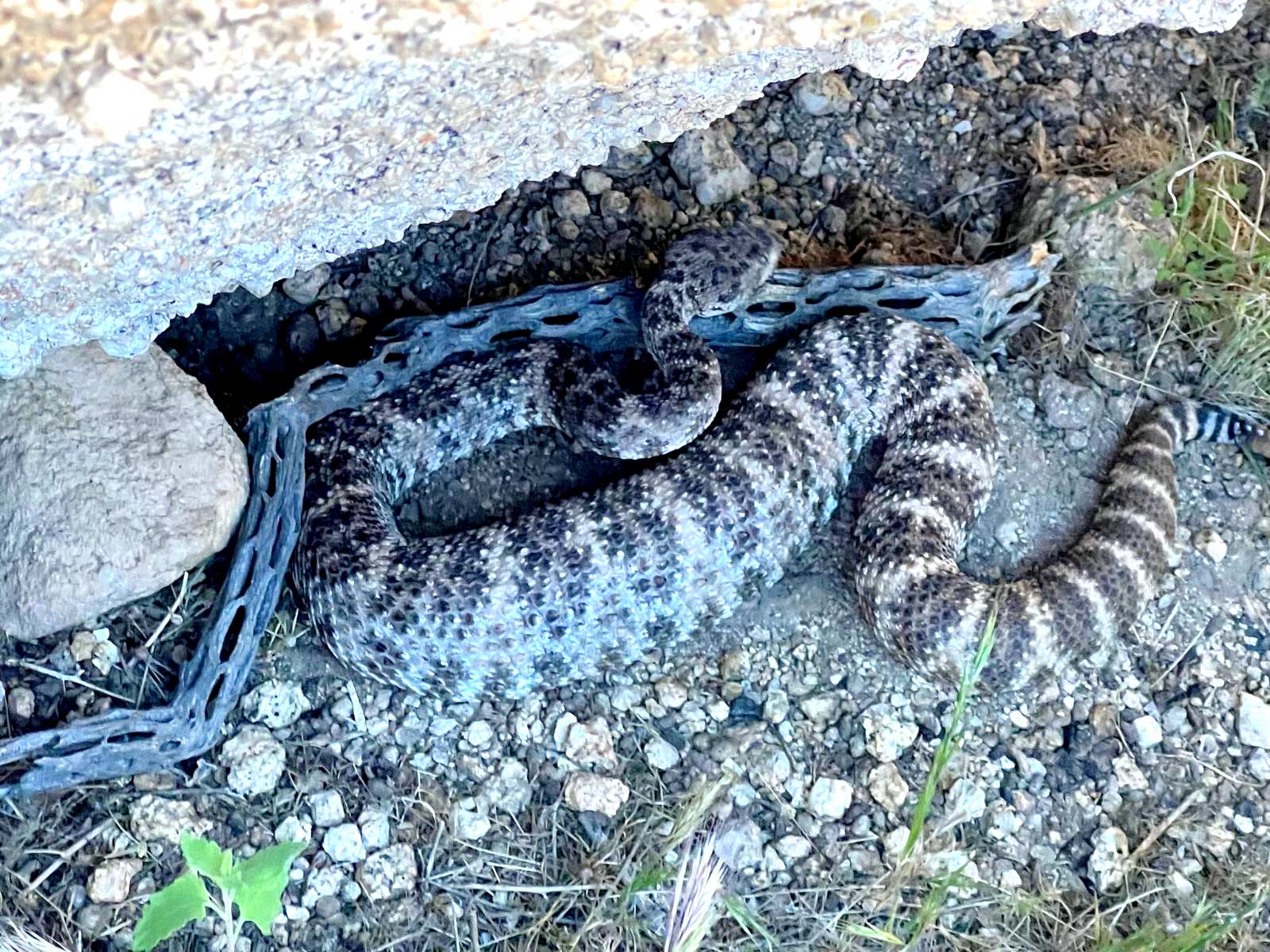
Tap a part to see what to look for. Tap it again to turn it off.
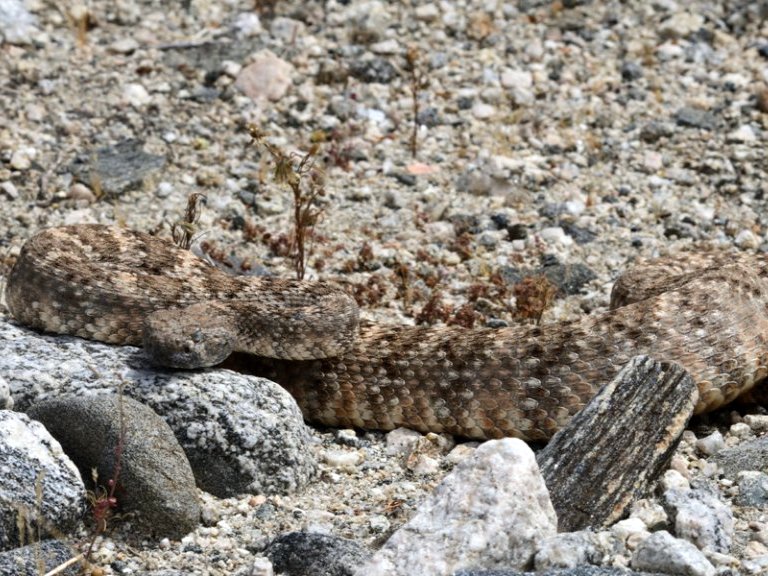
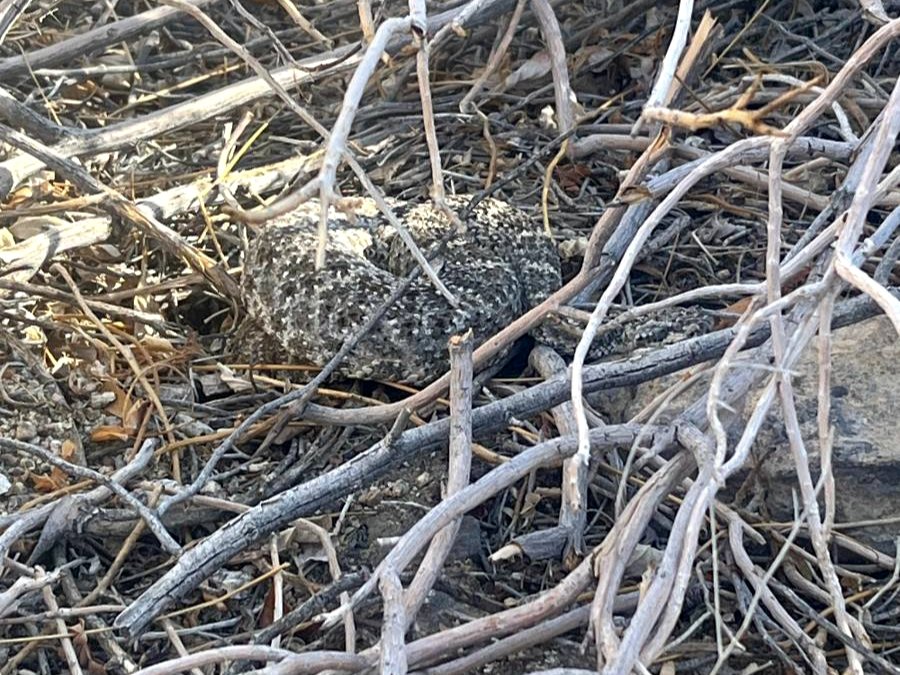
Venomous. It blends in with the rocks it rests on, so it's easy to come close without seeing it; keep well back — a bite is a medical emergency.
How to identify
- Head
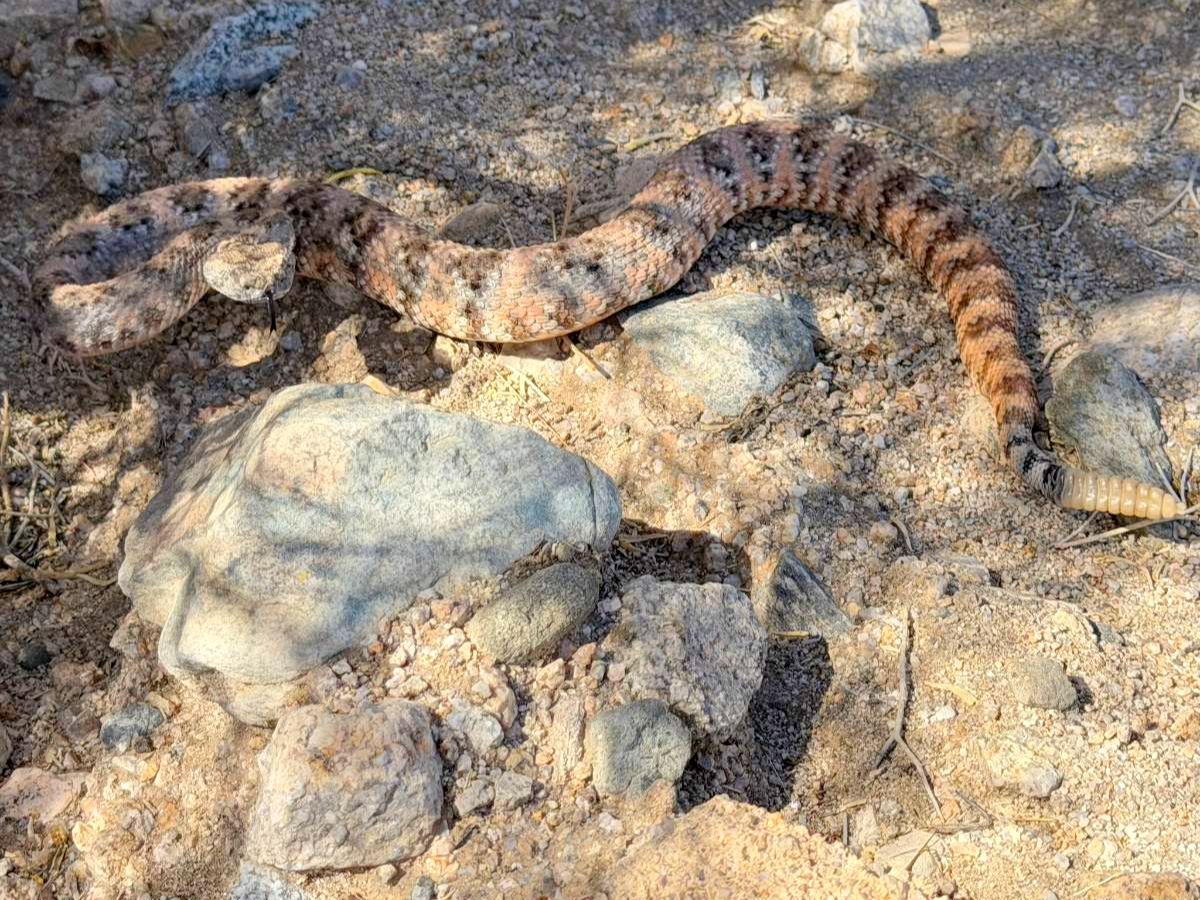
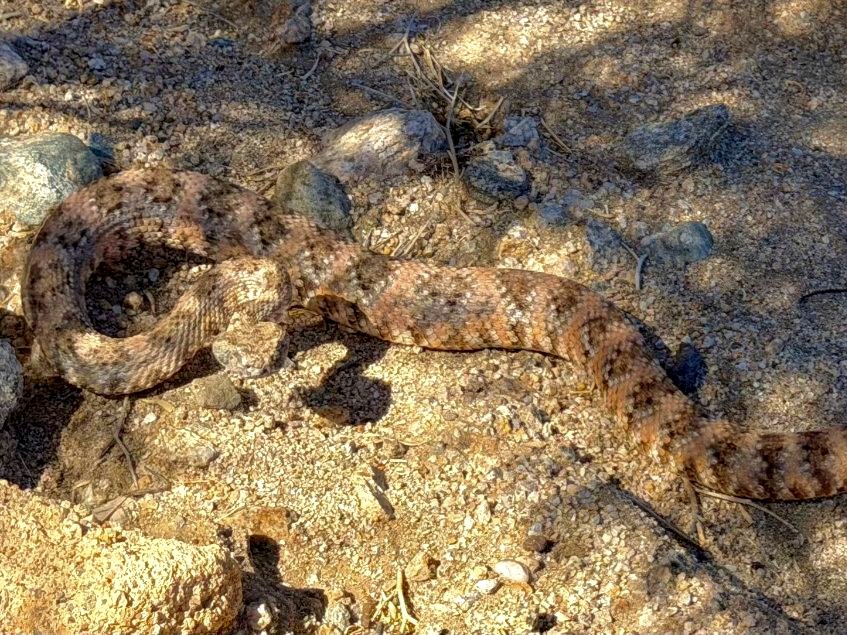
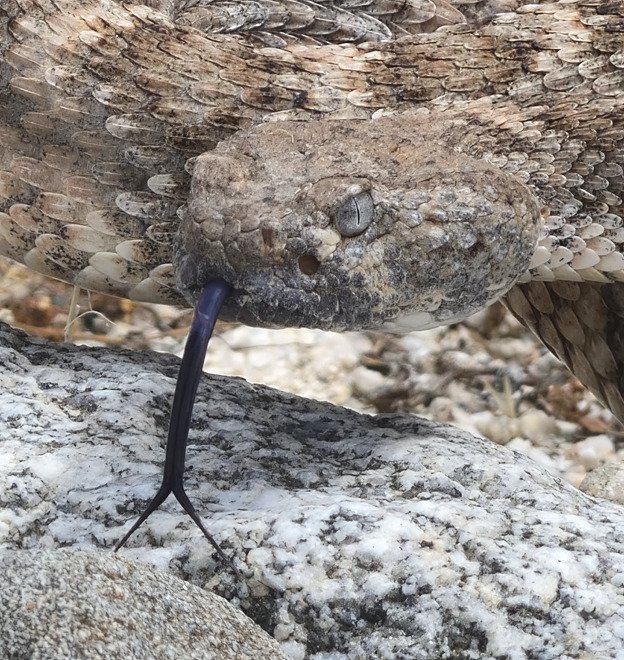
- Large triangular head, wide for the body.
- Pattern
- Fuzzy, speckled blotches or crossbands that become clearer toward the tail.
- Eyes
- Vertical slit pupil; heat-sensing pit between eye and nostril.
- Pits
- A deep heat-sensing pit on each side of the face, between the eye and the nostril.
- Tail
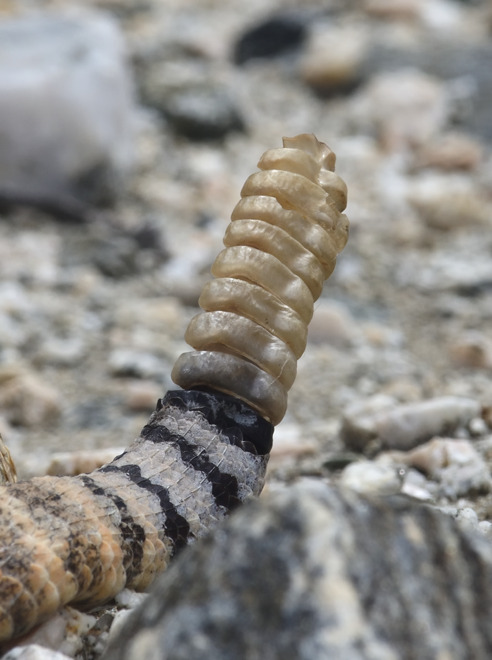
- Dark rings ahead of the rattle.
- What it does
- Relies on camouflage among rocks; temperament varies a lot from snake to snake.
Often confused with
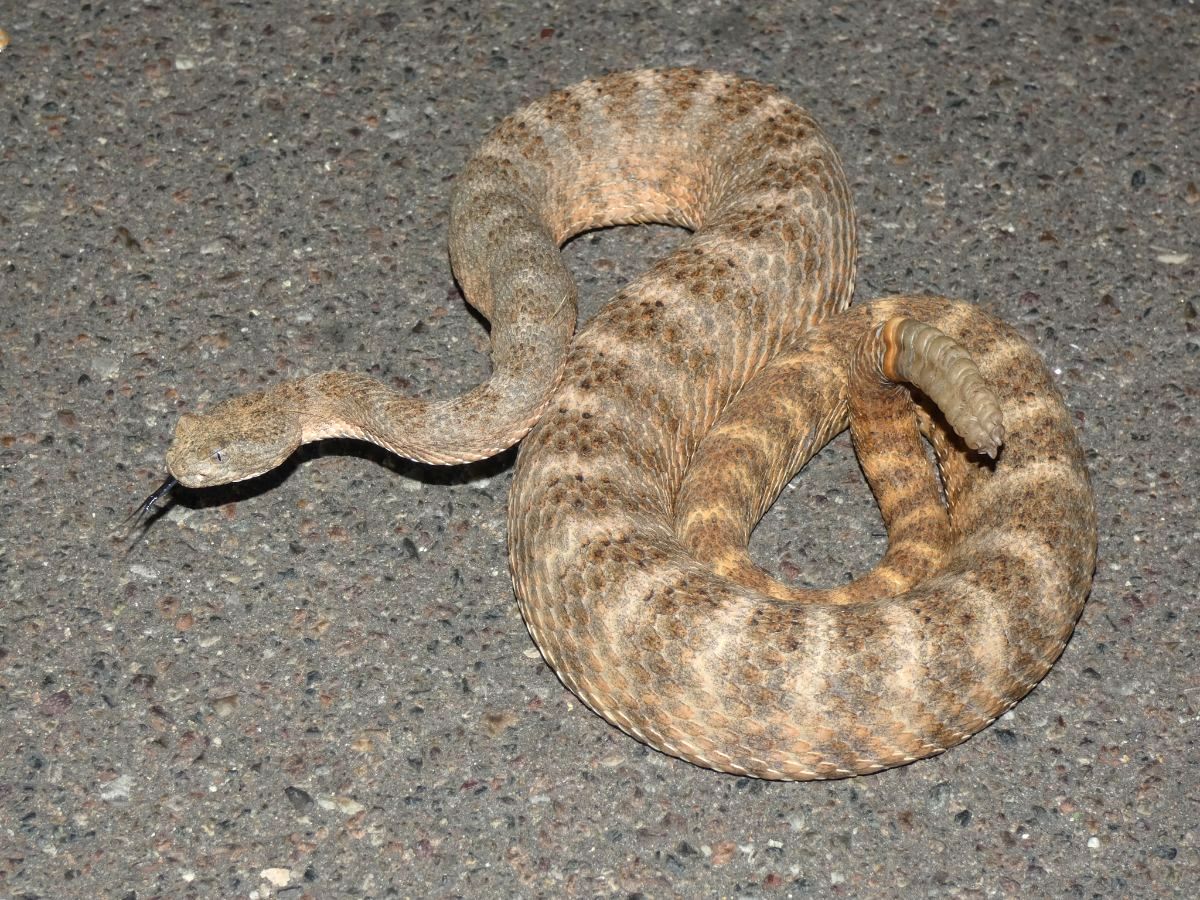
The Tiger Rattlesnake is the closest match, but it has a small head, a big rattle and no dark tail rings. Mohave and Western Diamondback Rattlesnakes also share parts of its range.
How to tell them apart
Southwestern Speckled Rattlesnake vs Tiger Rattlesnake›
The quick way to tellLook at the head. The Southwestern Speckled Rattlesnake has a large head for its body. The Tiger Rattlesnake has a strikingly small head and a big rattle, and lacks the Speckled's dark tail rings.
Southwestern Speckled Rattlesnake: Large triangular head, wide for the body.
Tiger Rattlesnake: Very small head for its body, still wider than the slender neck.
About the Southwestern Speckled Rattlesnake›
A rattlesnake of rocky desert mountains, canyons and boulder-strewn slopes in the Southwest. Its color closely matches the local rock — pink, peach, tan, blue-gray, cream or nearly black-and-white — which makes it very hard to spot.
For years it was known simply as the Speckled Rattlesnake (Crotalus mitchellii), and many guides still use that name. In 2015 scientists split the US snakes off as their own species, the Southwestern Speckled Rattlesnake.
The details
Size Usually 2–3.5 ft; up to about 4.5 ft
Typical range›
Southern California, southern Nevada, southwestern Utah and western Arizona, south into northwestern Mexico.
Activity›
Mostly active by day in spring, shifting to dusk and night in summer; spends winter in dens.
Diet›
Mainly rodents, ground squirrels and rabbits; young snakes eat more lizards, and birds are sometimes taken.
Reproduction›
Gives birth to about 3–12 live young in summer.
Found in parts of 4 states›
Ranges are approximate. It may be found in only part of a state, or be rare there, and snakes can turn up outside of them.
More photos