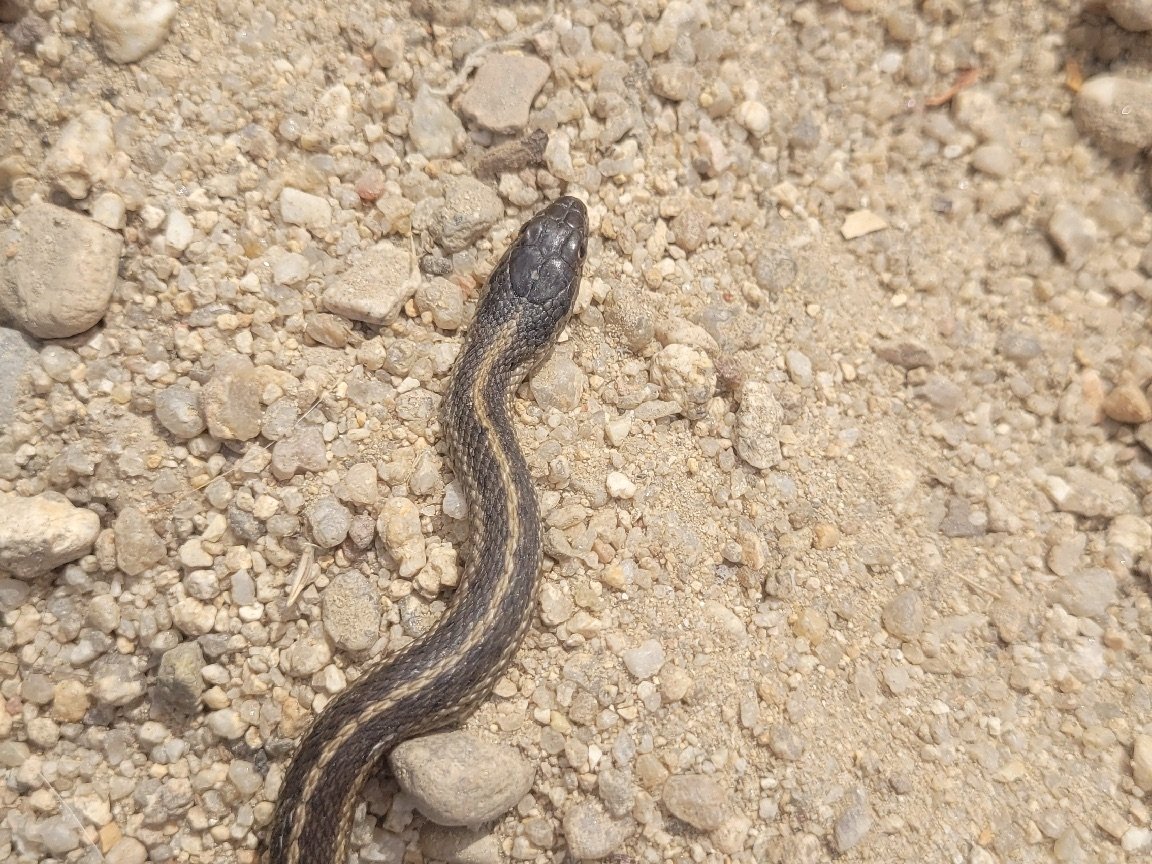
Terrestrial Gartersnake
Thamnophis elegans · Garter & Ribbon Snakes
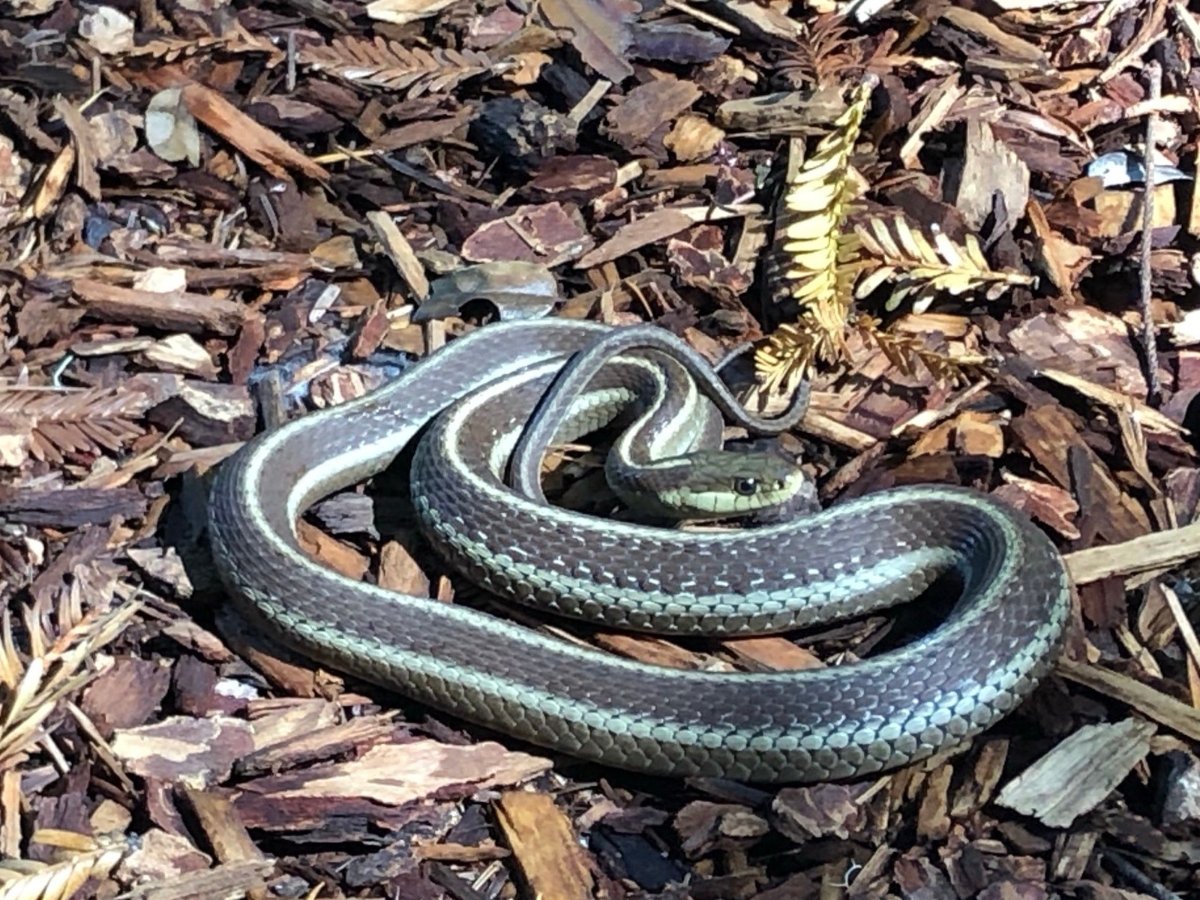
Mild venom, used on prey. It musks and may bite if grabbed. (Generally considered harmless to people.)
How to identify
- Head
- Small head barely wider than the neck.
- Pattern
- Three dull, broken stripes with dark checks between; some nearly plain brown.
- Eyes
- Round pupil, fairly large dark eye; no heat-sensing pit.
- Pits
- None. There is no pit between the eye and the nostril.
- Tail
- Fairly short; no rattle.
- What it does
- Flees to cover; will eat almost anything it can catch.
Often confused with
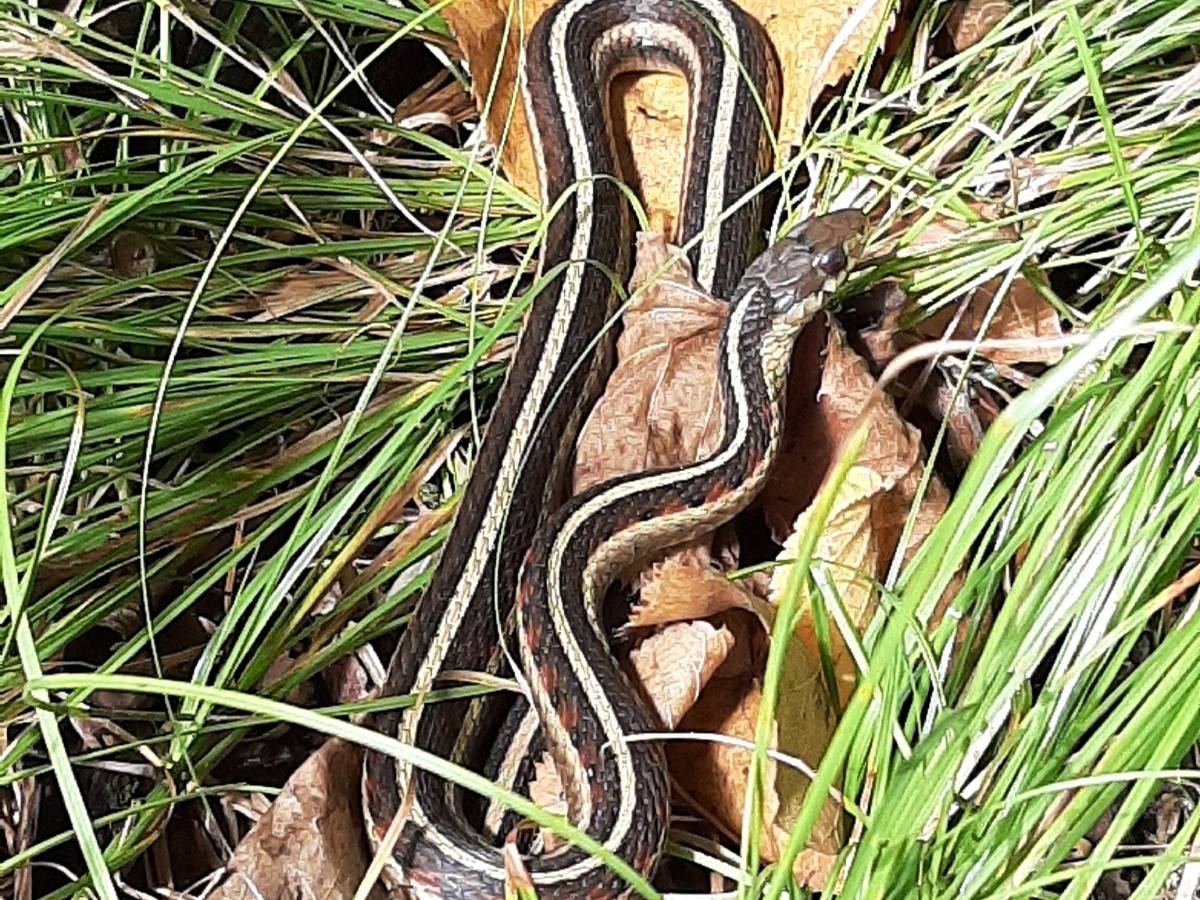
Common Gartersnake overlaps widely in the West; it usually has 7 upper-lip scales instead of 8 and often red bars between the stripes. Plains and Northwestern Gartersnakes are also similar.
How to tell them apart
Terrestrial Gartersnake vs Common Gartersnake›
The quick way to tellLook at the sides between the stripes. The Common Gartersnake often shows red bars or flecks there. The Terrestrial Gartersnake is usually duller, with dark checks and no red bars.
Terrestrial Gartersnake: Three dull, broken stripes with dark checks between; some nearly plain brown.
Common Gartersnake: Three pale stripes - spine and low on each side - often with red flecks between.
About the Terrestrial Gartersnake›
The gartersnake of the West and mountain country, found in meadows, sagebrush, forest edges and lake shores, often far from water.
It is unusually willing to eat whatever is available — including small mammals and other snakes — and some coastal populations dive for fish and tadpoles.
The details
Size Usually 18–36 inWeight Under 1 lbLifespan 6–10 years
Typical range›
Western US and Canada: Pacific coast east through the Rockies to the Dakotas, Nebraska, Colorado, New Mexico and the Oklahoma Panhandle.
Activity›
Day active, out early in spring; winters in rock crevices and burrows, often communally.
Diet›
Frogs, tadpoles, fish, earthworms, slugs, mice and small snakes.
Reproduction›
Gives birth to live young, usually 4–20, in late summer.
Found in parts of 15 states›
Ranges are approximate. It may be found in only part of a state, or be rare there, and snakes can turn up outside of them.