Texas Coralsnake
Micrurus tener · Coral Snakes
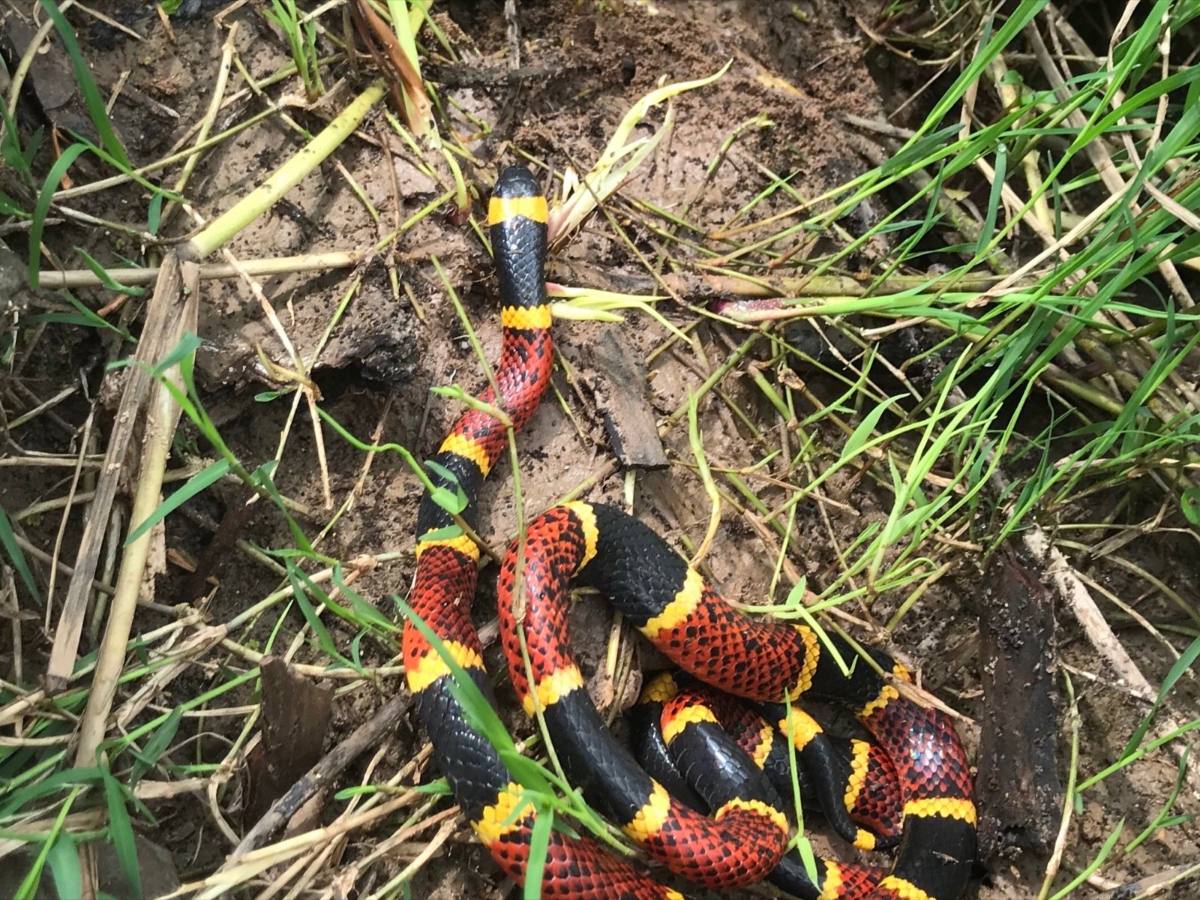
Tap a part to see what to look for. Tap it again to turn it off.
Venomous, with venom that affects the nervous system. Never handle one; a bite is a medical emergency.
How to identify
- Head
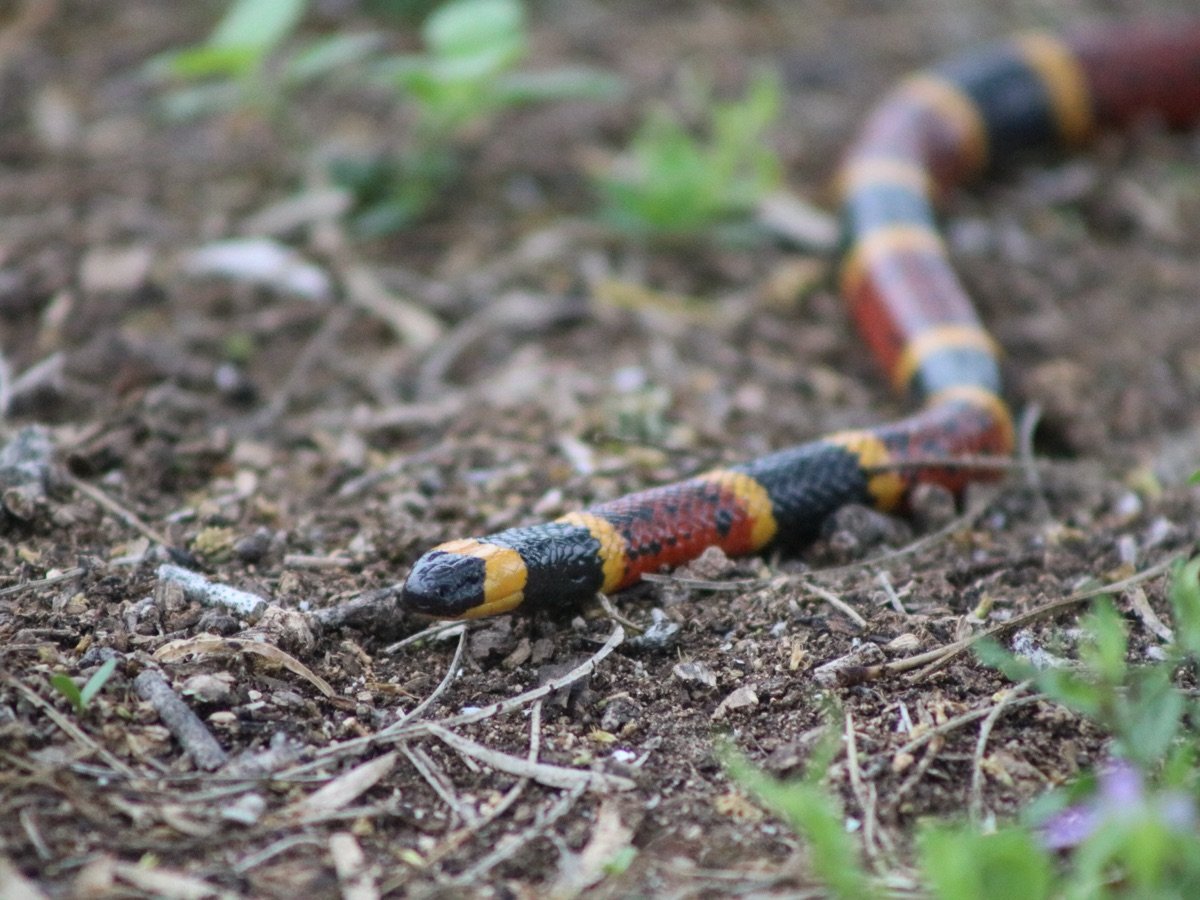
- Small blunt head with a solidly black snout and no distinct neck.
- Pattern
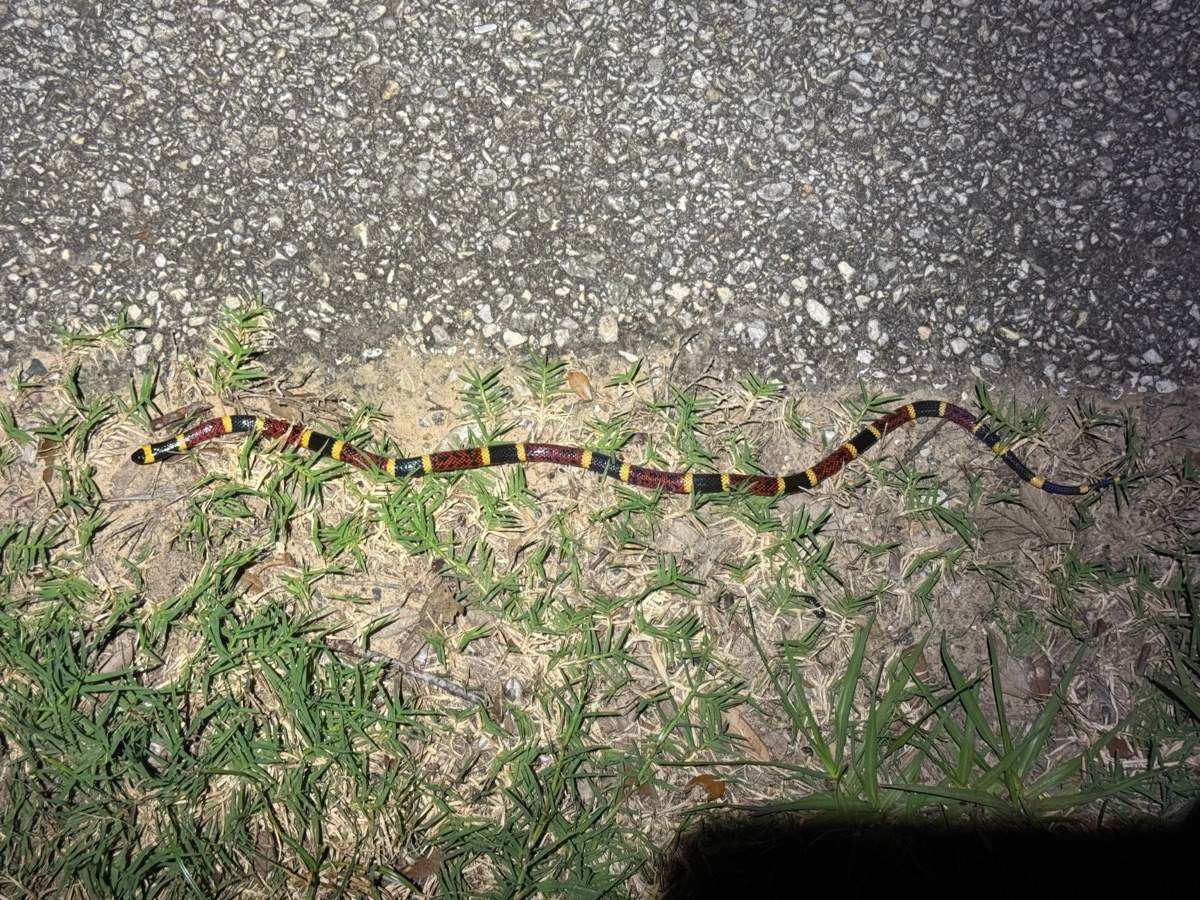
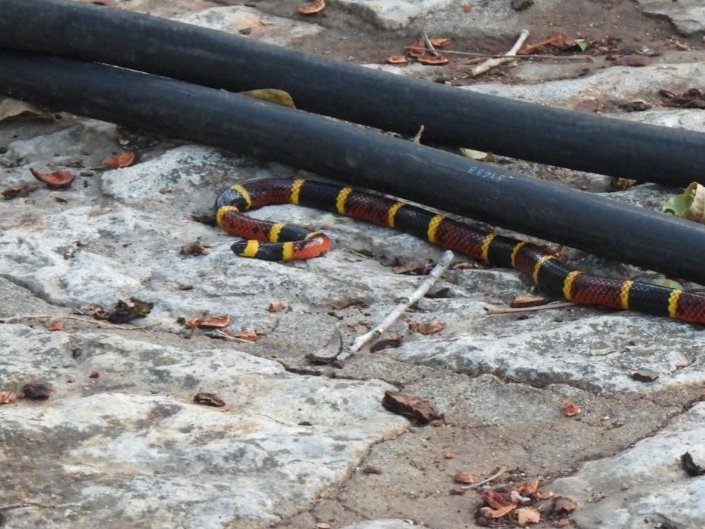
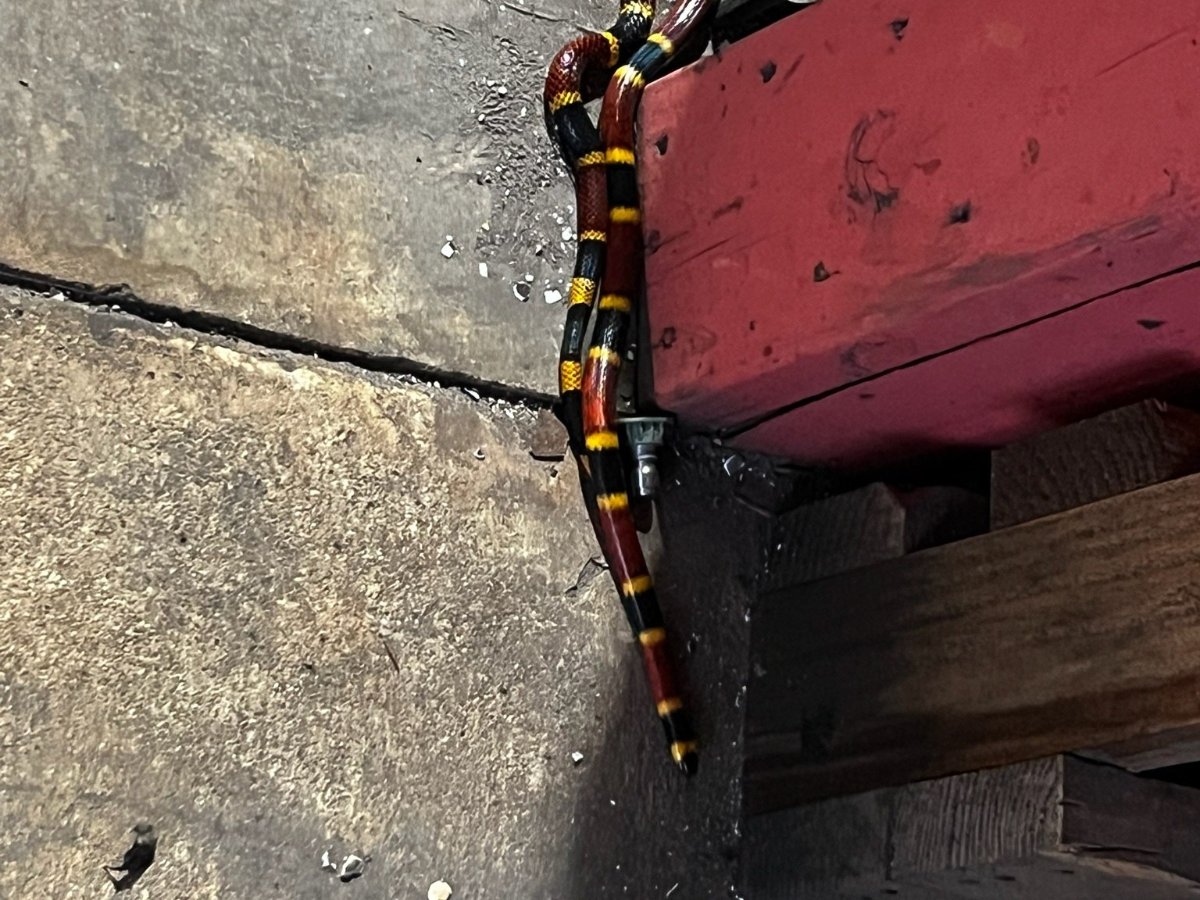
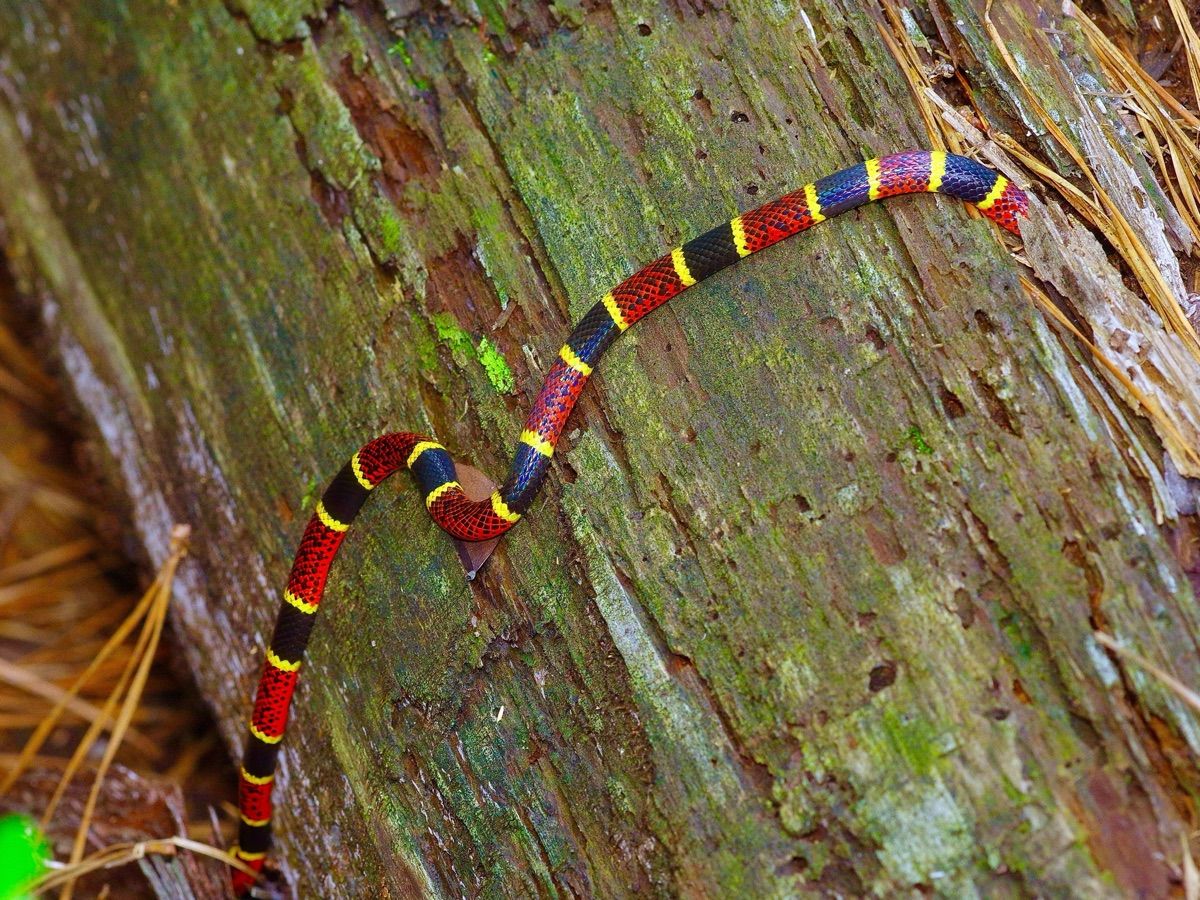
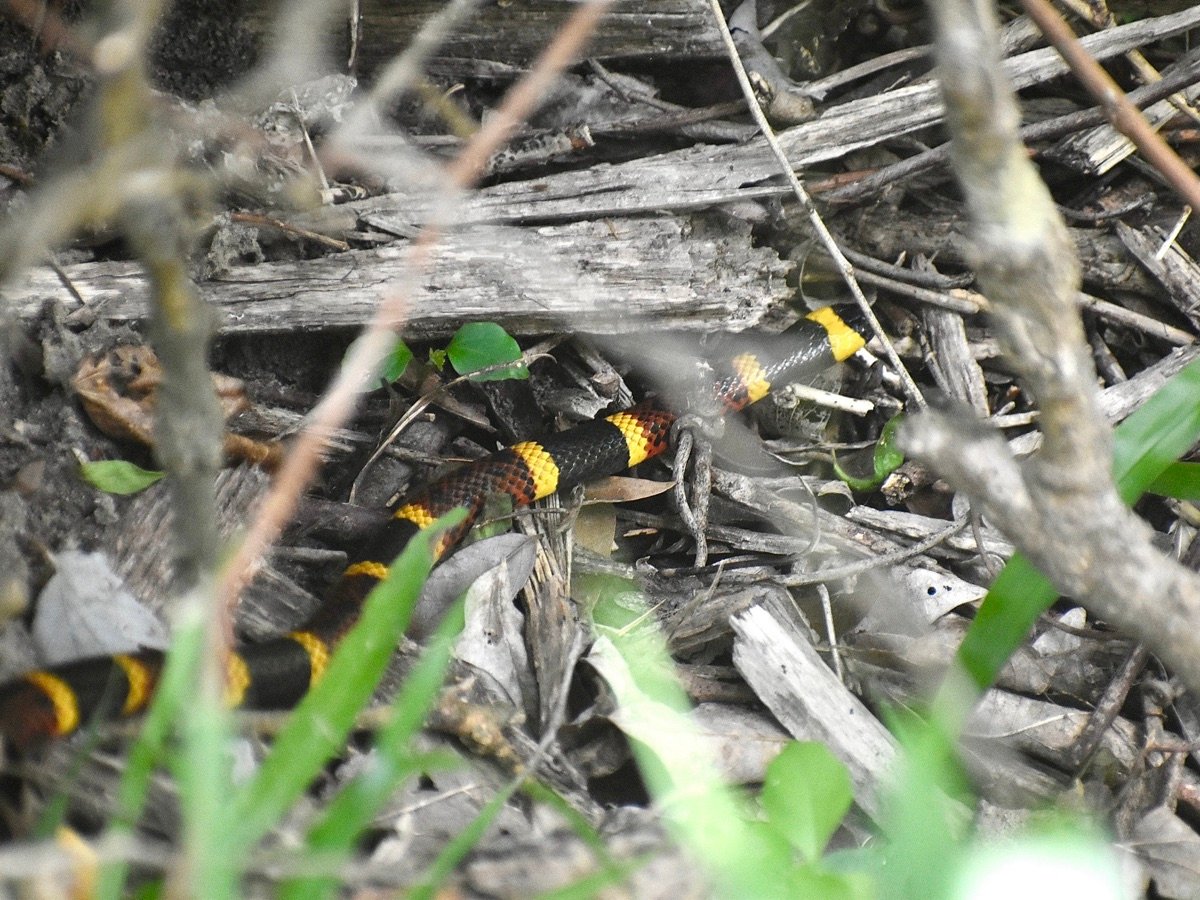
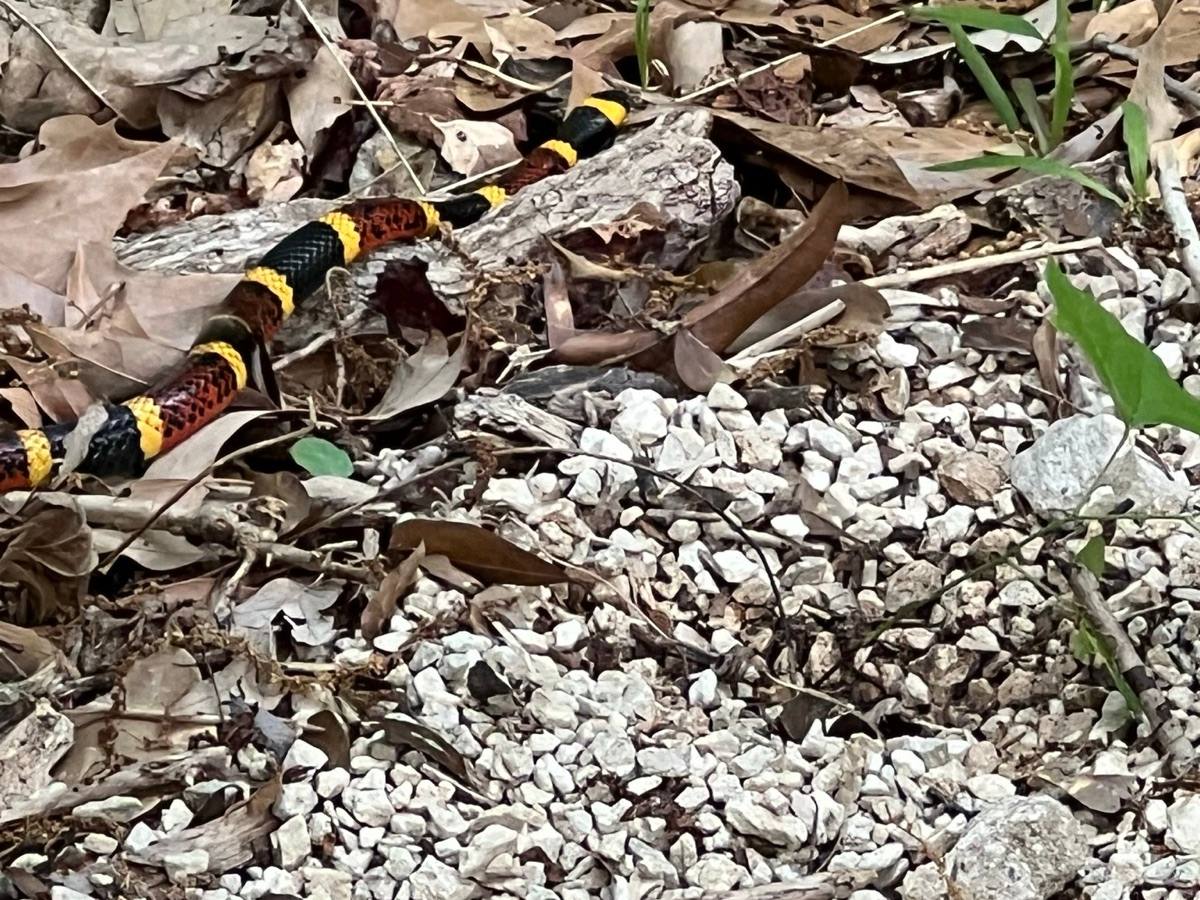
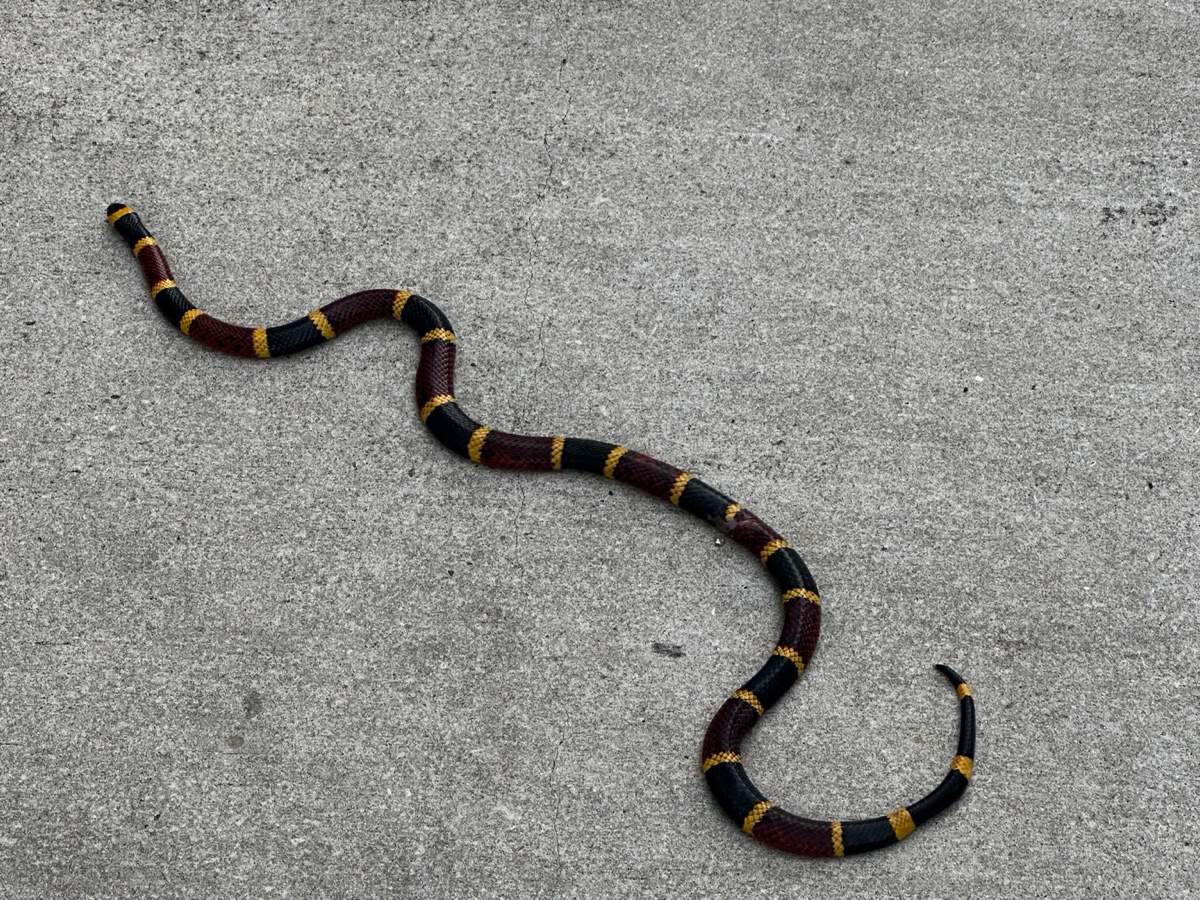
- Rings around the body: red, yellow, black - red touches yellow, with black flecks.
- Eyes
- Very small black eyes, round pupils; no heat-sensing pit.
- Pits
- None. There is no pit between the eye and the nostril.
- Tail
- Short, ringed black and yellow.
- What it does
- Secretive; hides its head rather than defending itself.
About the Texas Coralsnake›
The coralsnake of Texas and the western Gulf, found in wooded creek bottoms, canyon floors, coastal thorn scrub and suburban mulch beds.
Like its eastern cousin it spends most of the time hidden and is usually found when someone moves a board or a pile of leaves. Nearly identical in appearance and just as medically serious.
The details
Size Usually 20–30 inWeight Under 1 lbLifespan About 7 years in the wild
Typical range›
Central, southern and eastern Texas, western Louisiana and southwestern Arkansas, south into northeastern Mexico.
Activity›
Most often out in the open at dawn, dusk and after rain in spring and fall; otherwise underground.
Diet›
Mainly other small snakes and lizards.
Reproduction›
Lays eggs, usually 2–10, in early summer.
Found in parts of 3 states›
Ranges are approximate. It may be found in only part of a state, or be rare there, and snakes can turn up outside of them.
More photos