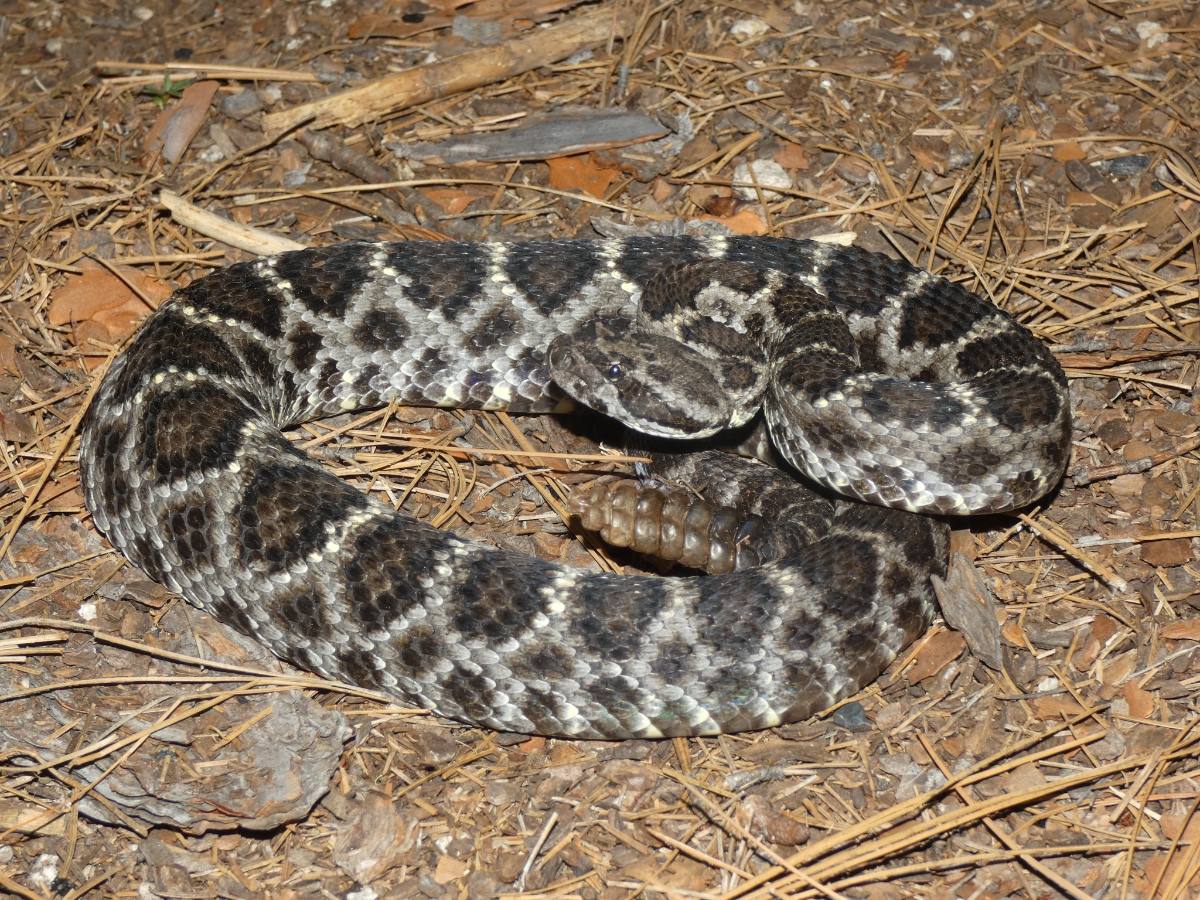
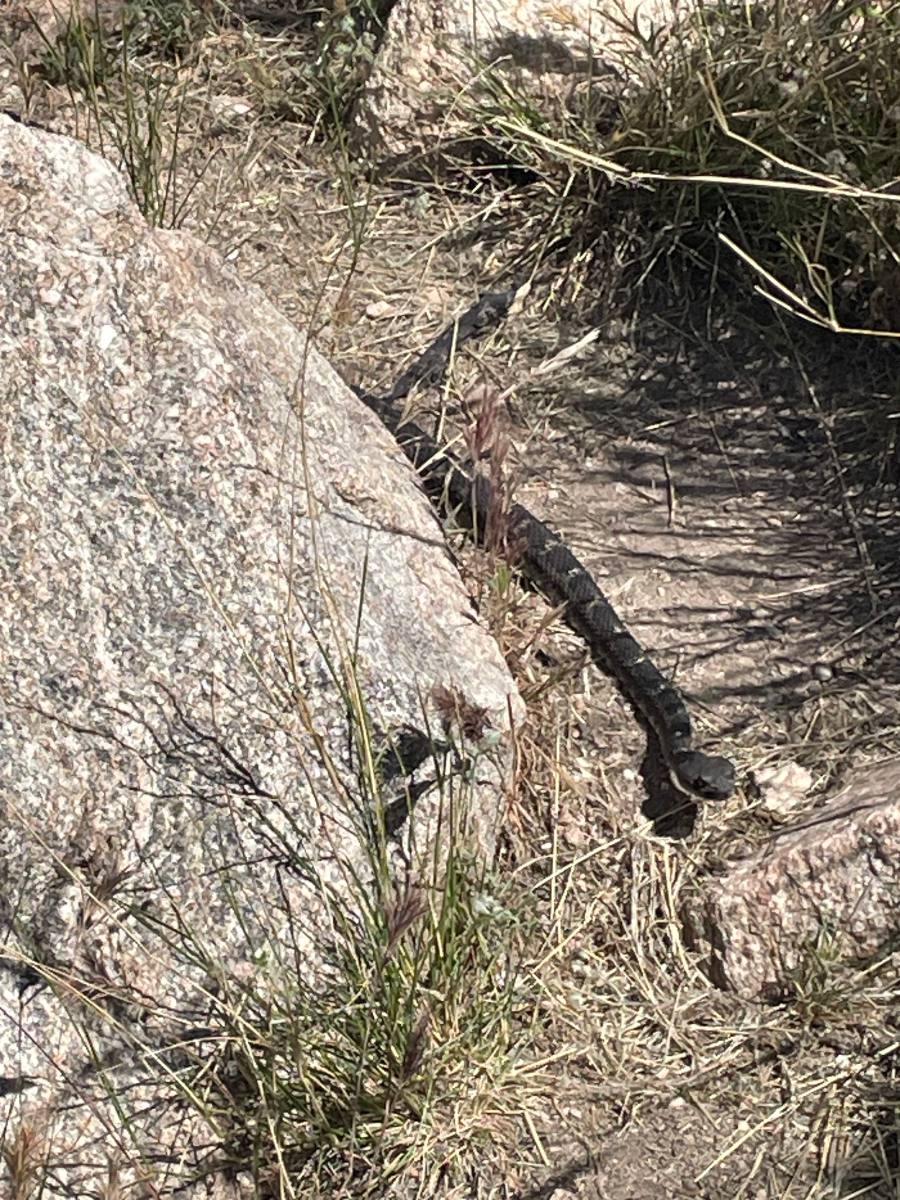
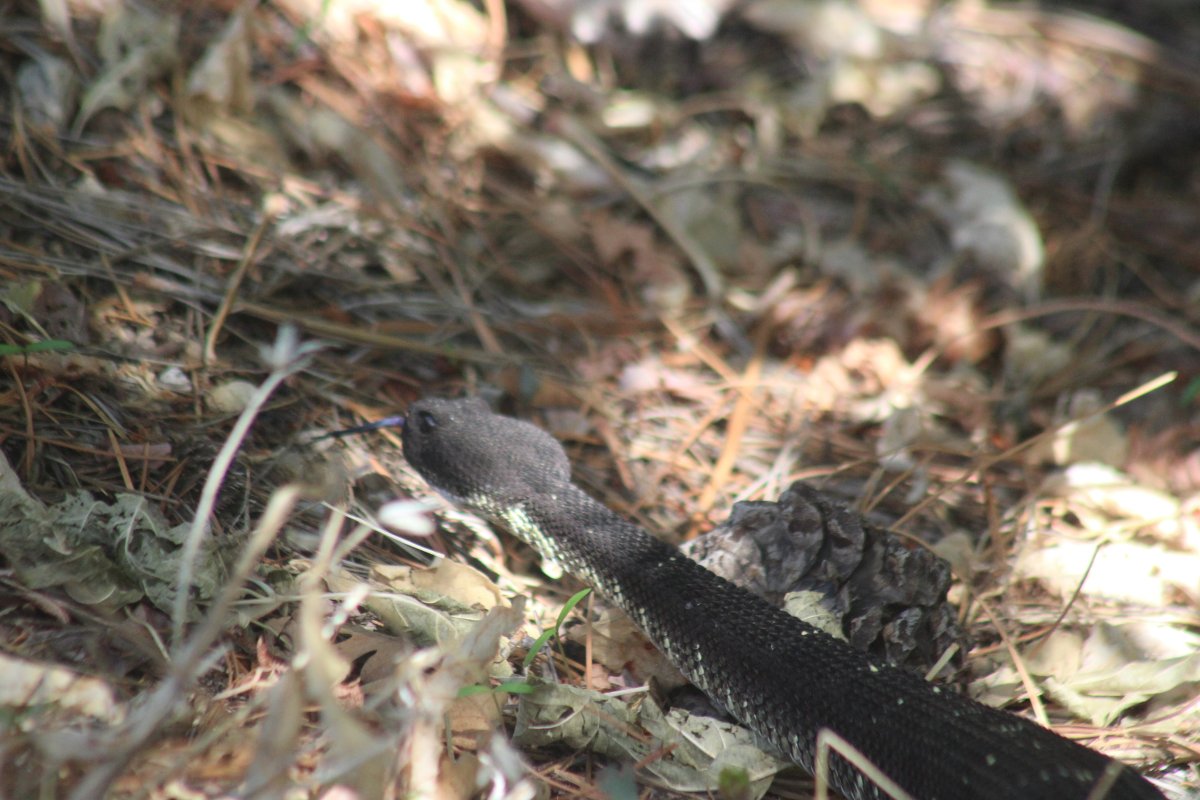
Arizona Black Rattlesnake
Crotalus cerberus · Rattlesnakes
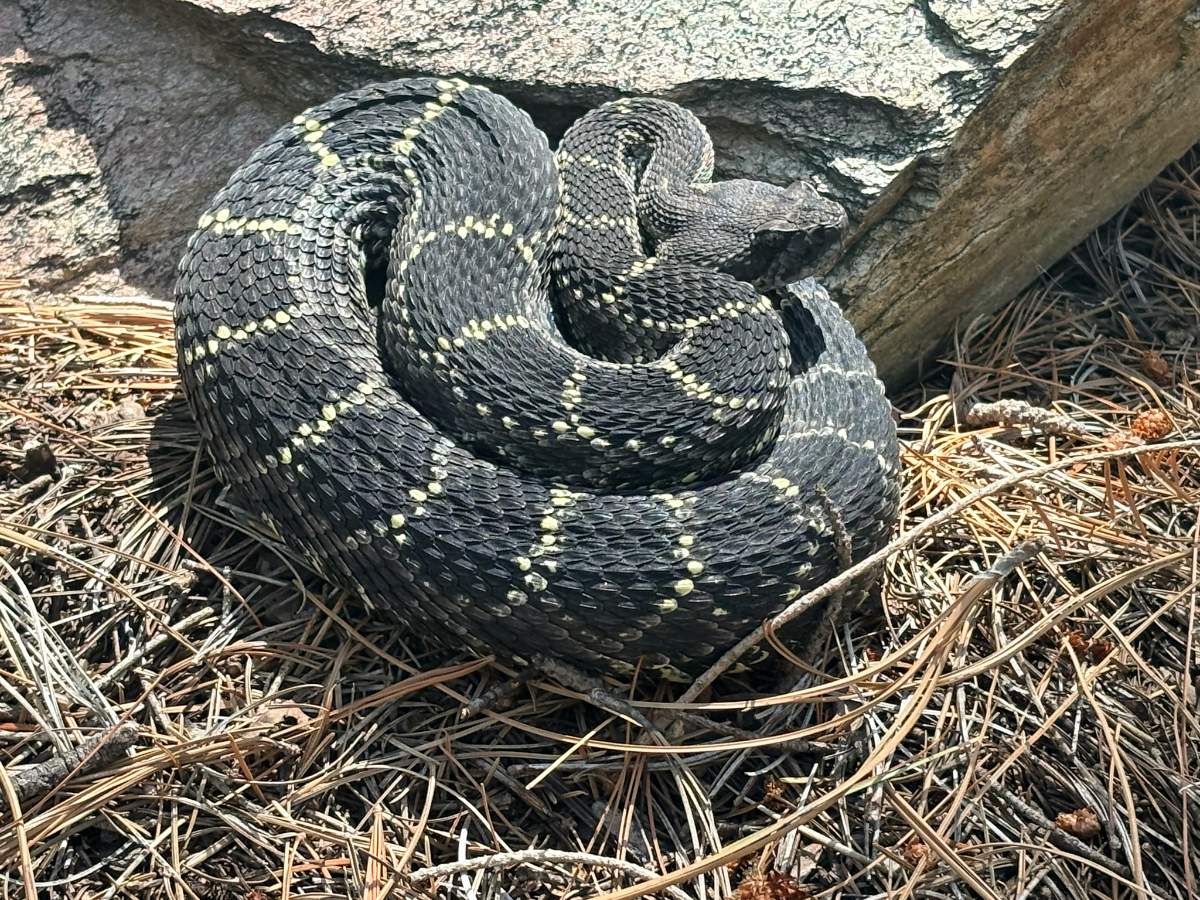
Tap a part to see what to look for. Tap it again to turn it off.
Venomous. Its dark color can make it hard to spot among rocks and leaf litter; keep well back — a bite is a medical emergency.
How to identify
- Head
- A wide, triangular rattlesnake head. Young snakes have bold spots on the head and a dark bar running back from the eye; these fade as the snake darkens with age.
- Pattern
- 25 to 46 dark blotches down the back, separated by lighter gaps. On dark adults the blotches can almost disappear into the dark background.
- Eyes
- Vertical, cat-like pupils, as in other rattlesnakes. A dark bar runs back from each eye, most easily seen on young snakes.
- Pits
- Yes. It has a heat-sensing pit on each side of the head between the eye and the nostril, like all rattlesnakes.
- Tail
- Ends in a rattle. The body blotches turn into dark bands on the tail, and these bands fade as the snake gets older.
- What it does
- Often calm compared with other rattlesnakes. It is social: groups share winter dens, bask together in spring, and mothers stay with their newborn young for about one to two weeks.
Often confused with
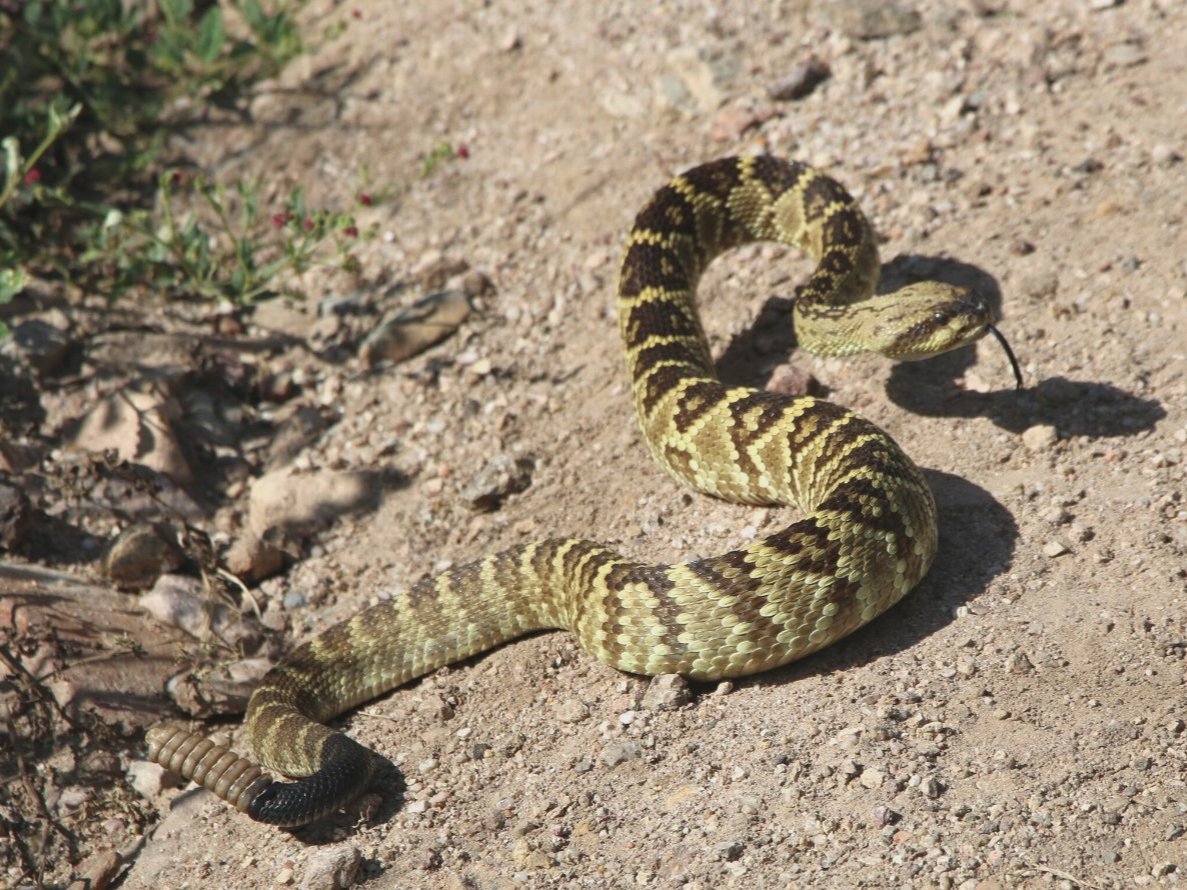
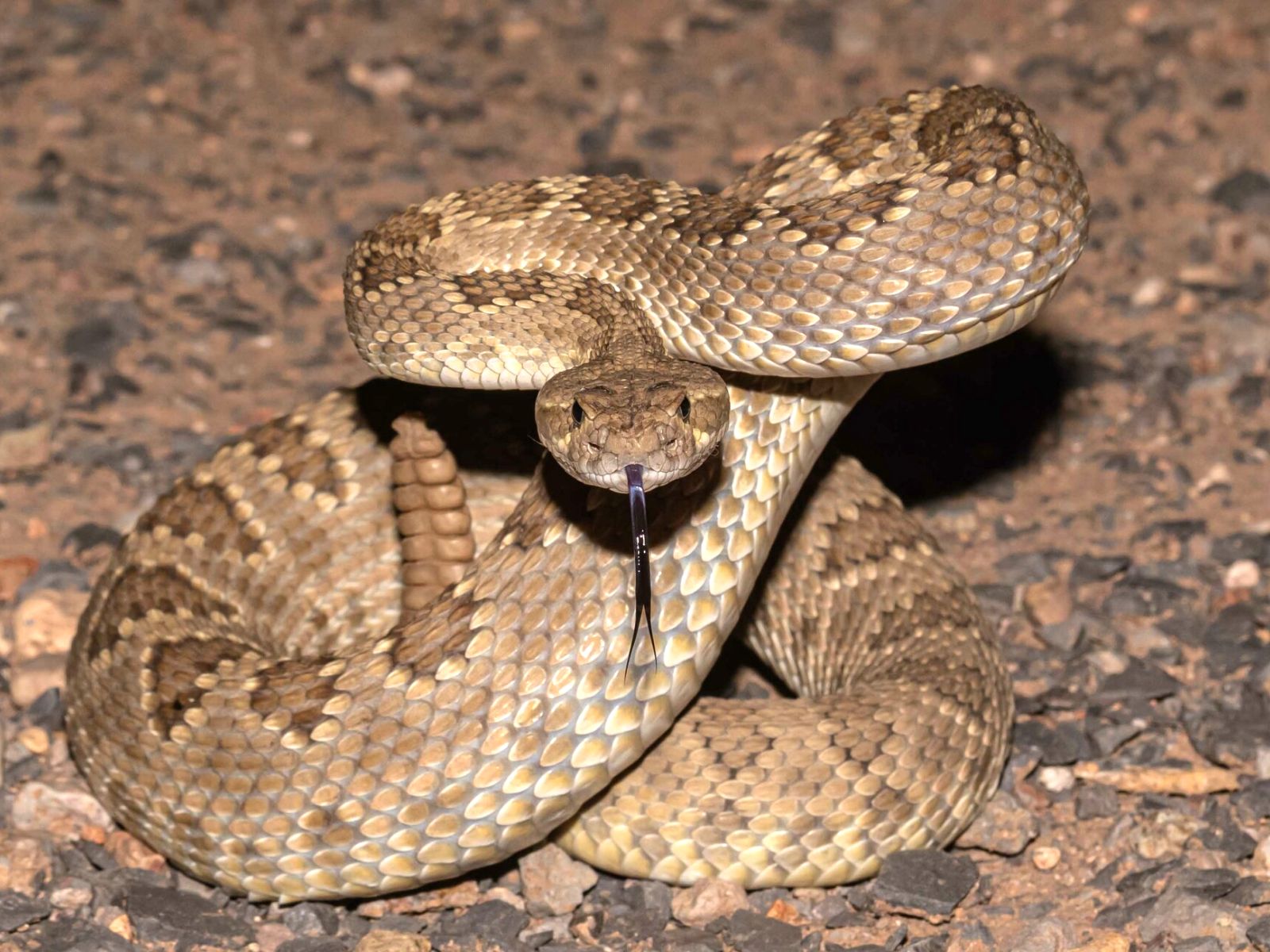
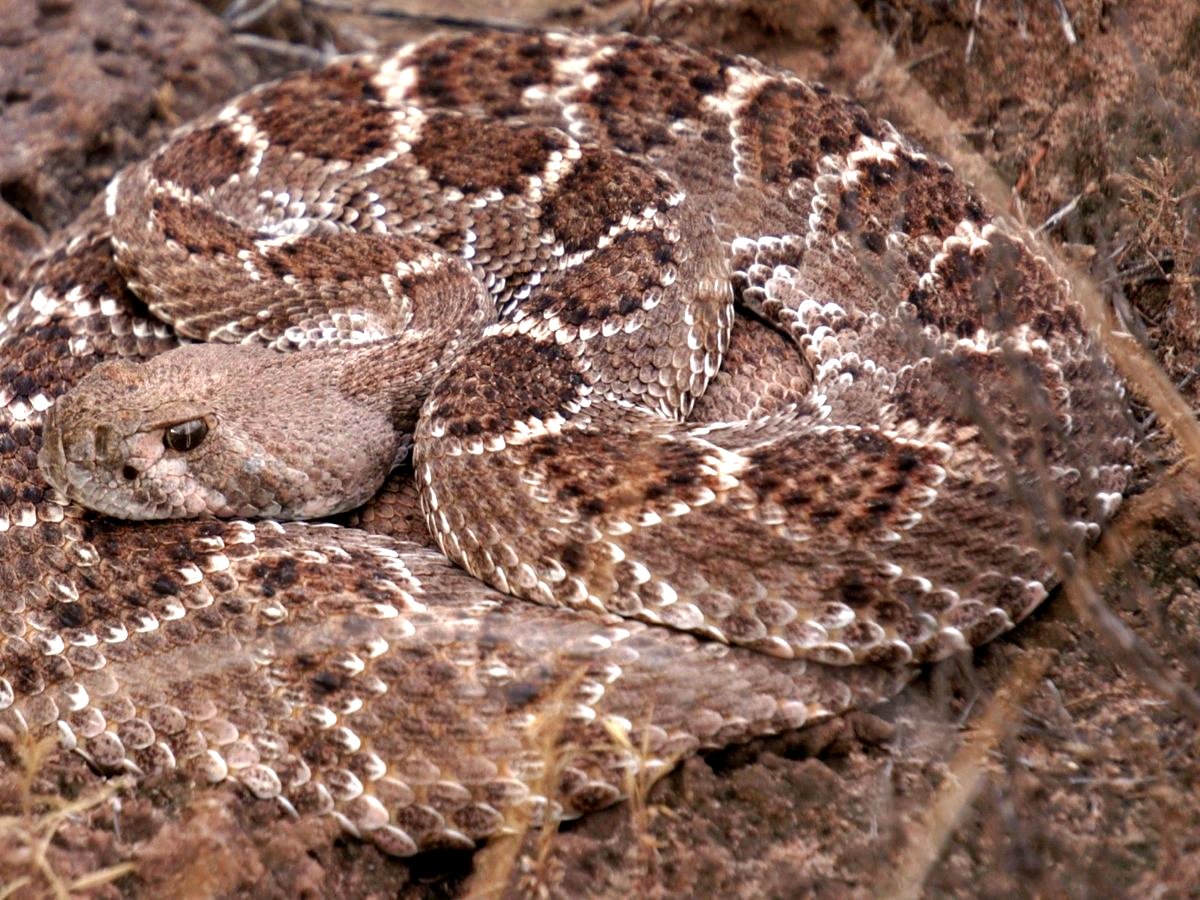
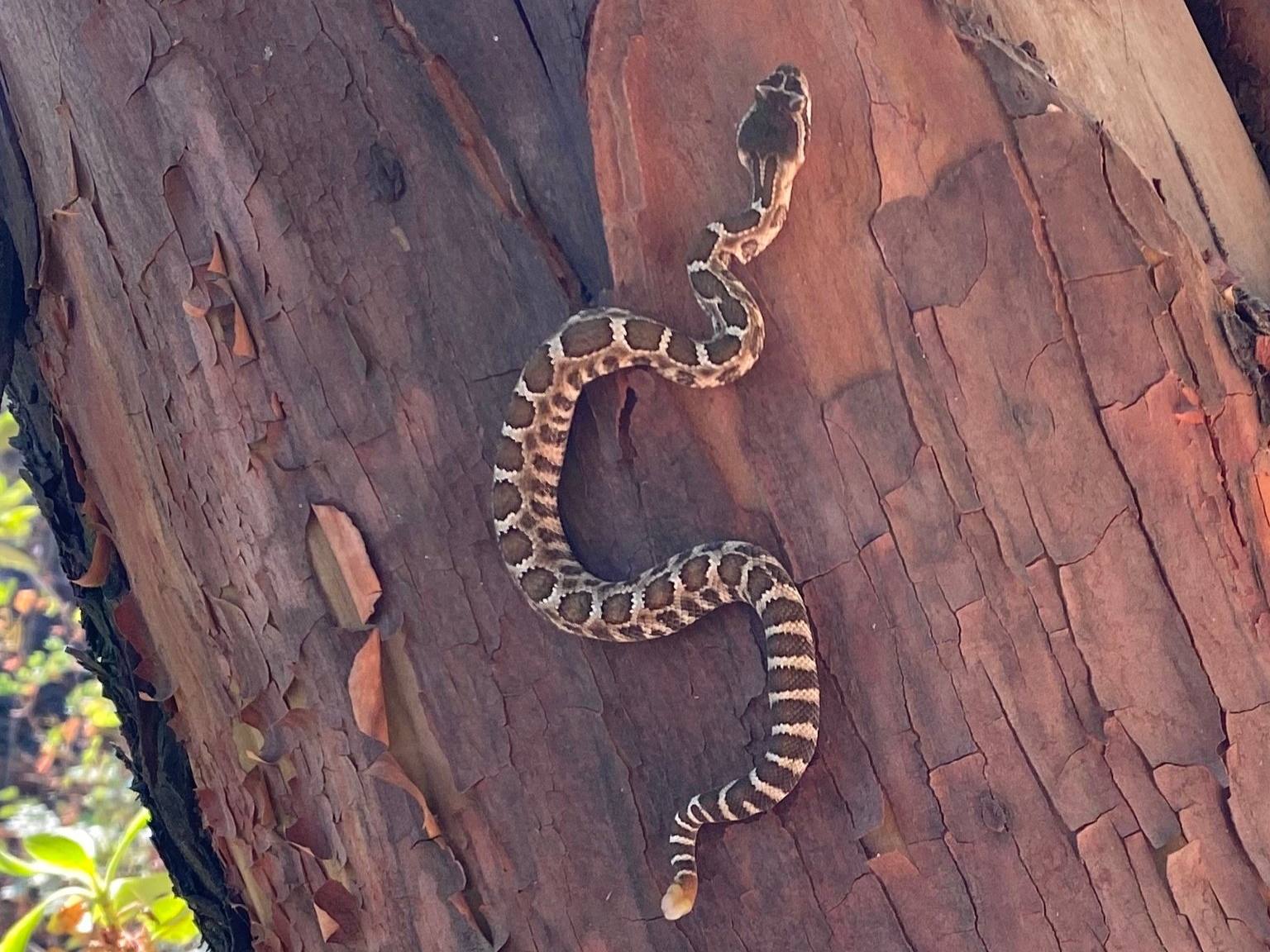
Western Diamondback and Mohave Rattlesnakes have bold black-and-white tail rings, unlike the fading dark tail bands of the Arizona Black. The Black-tailed Rattlesnake has a paler yellow, greenish or gray body with an all-black tail. In northern Arizona, forms of the Western Rattlesnake are paler, usually tan to reddish.
How to tell them apart
Arizona Black Rattlesnake vs Black-tailed Rattlesnake›
The quick way to tellLook at the body color. The Arizona Black Rattlesnake has a dark gray-brown to black body, and adults can look almost solid black with thin pale crossbars. The Black-tailed Rattlesnake has a paler yellow, greenish or gray body with large dark blotches, ending in an all-black tail.
Arizona Black Rattlesnake: 25 to 46 dark blotches down the back, separated by lighter gaps. On dark adults the blotches can almost disappear into the dark background.
Black-tailed Rattlesnake: Dark diamond- or patch-shaped blotches with pale insides, becoming crossbands near the tail.
Arizona Black Rattlesnake vs Mohave Rattlesnake›
The quick way to tellLook at the tail just before the rattle. The Arizona Black Rattlesnake has dark bands that fade with age. The Mohave Rattlesnake has clear, contrasting light and dark tail rings.
Arizona Black Rattlesnake: Ends in a rattle. The body blotches turn into dark bands on the tail, and these bands fade as the snake gets older.
Mohave Rattlesnake: White bands usually wider than the black ones, ahead of the rattle.
Arizona Black Rattlesnake vs Western Diamondback Rattlesnake›
The quick way to tellLook at the tail just before the rattle. The Arizona Black Rattlesnake has dark bands there that fade with age, often leaving the tail dark. The Western Diamondback has bold black-and-white 'coon-tail' rings.
Arizona Black Rattlesnake: Ends in a rattle. The body blotches turn into dark bands on the tail, and these bands fade as the snake gets older.
Western Diamondback Rattlesnake: Bold black and white rings, usually about equal width - the classic coon tail - ahead of the rattle.
Arizona Black Rattlesnake vs Western Rattlesnake›
The quick way to tellLook at the body color and blotches. An adult Arizona Black Rattlesnake is very dark, often nearly black, with blotches that fade into the background. The Western Rattlesnake is usually tan to reddish with clear blotches.
Arizona Black Rattlesnake: 25 to 46 dark blotches down the back, separated by lighter gaps. On dark adults the blotches can almost disappear into the dark background.
Western Rattlesnake: Pale-edged blotches wider than long, banding near the tail; olive to nearly black.
About the Arizona Black Rattlesnake›
A rattlesnake of the mountains and foothills of central Arizona and west-central New Mexico. It lives in oak, pine-oak and mixed-conifer woods and chaparral, often near springs, rock piles, fallen logs and leaf litter. It can be out by day or at night, and groups often share winter dens and basking spots in spring.
Adults are very dark, often looking almost black, while young snakes are much paler with clear blotches. It was long treated as a type of Western Rattlesnake, but is now counted as its own species.
The details
Size Usually about 3 ft (1 m); up to about 4 ft (122 cm). Newborns are about 9–10 in (23–26 cm).
Typical range›
Central Arizona, from the Mogollon Rim south to mountain ranges near Tucson, and west-central New Mexico. Mostly found at about 2,800–9,150 ft (853–2,789 m).
Activity›
Active from about March or April into October, sometimes later. Out by day or night, and more active at night at warmer, lower sites in summer. Spends winter in shared dens.
Diet›
Lizards, birds and small mammals such as mice, woodrats and ground squirrels.
Reproduction›
Mates in late summer and fall. Gives birth to live young (no eggs) the next summer, usually about 4 to 11 babies. The mother stays with them until their first shed.
Found in parts of 2 states›
Ranges are approximate. It may be found in only part of a state, or be rare there, and snakes can turn up outside of them.