‹ Compare two snakes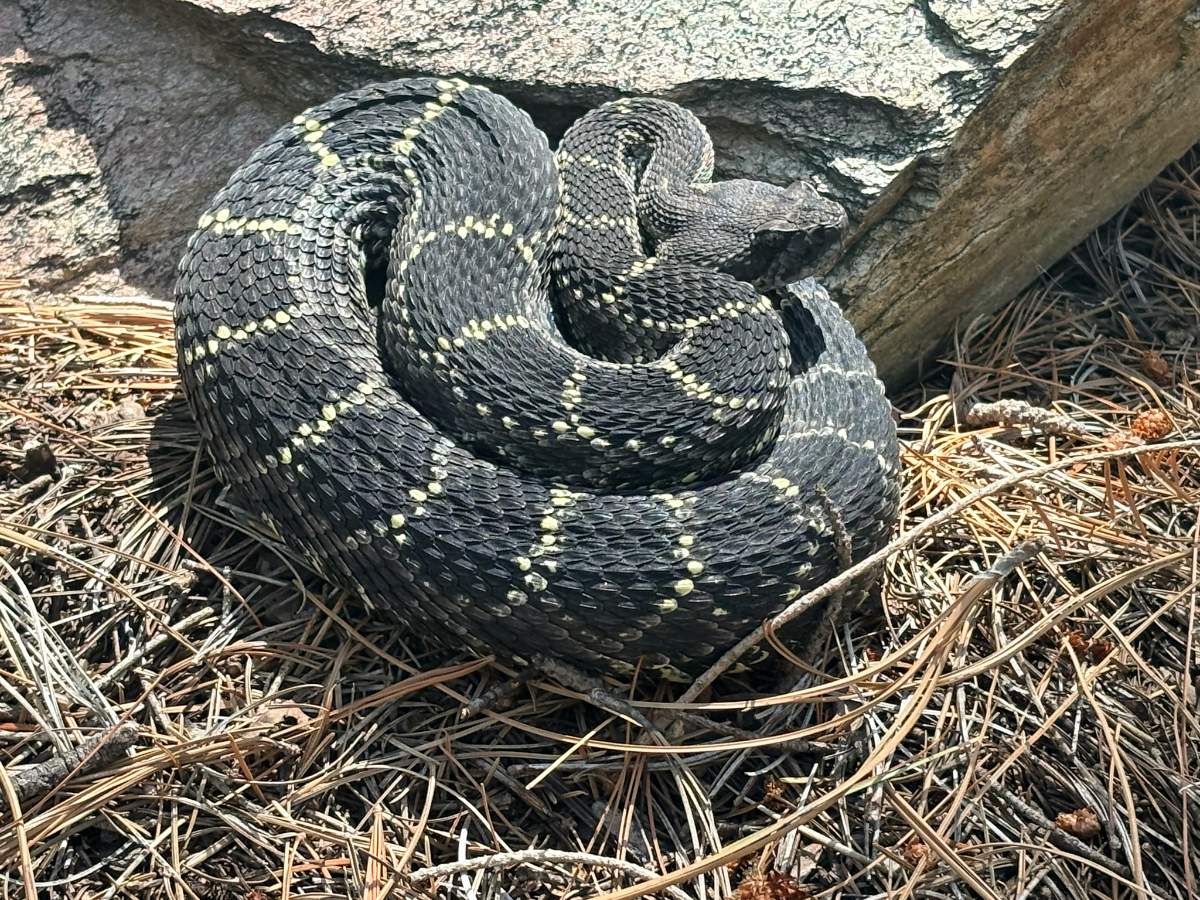
Arizona Black Rattlesnake vs Mohave Rattlesnake
Tap a part to see it on both. Tap it again to turn it off.
(c) tzeducation, some rights reserved (CC BY)
Arizona Black Rattlesnake
Crotalus cerberus
Venomous(c) Jeremiah Degenhardt, some rights reserved (CC BY)
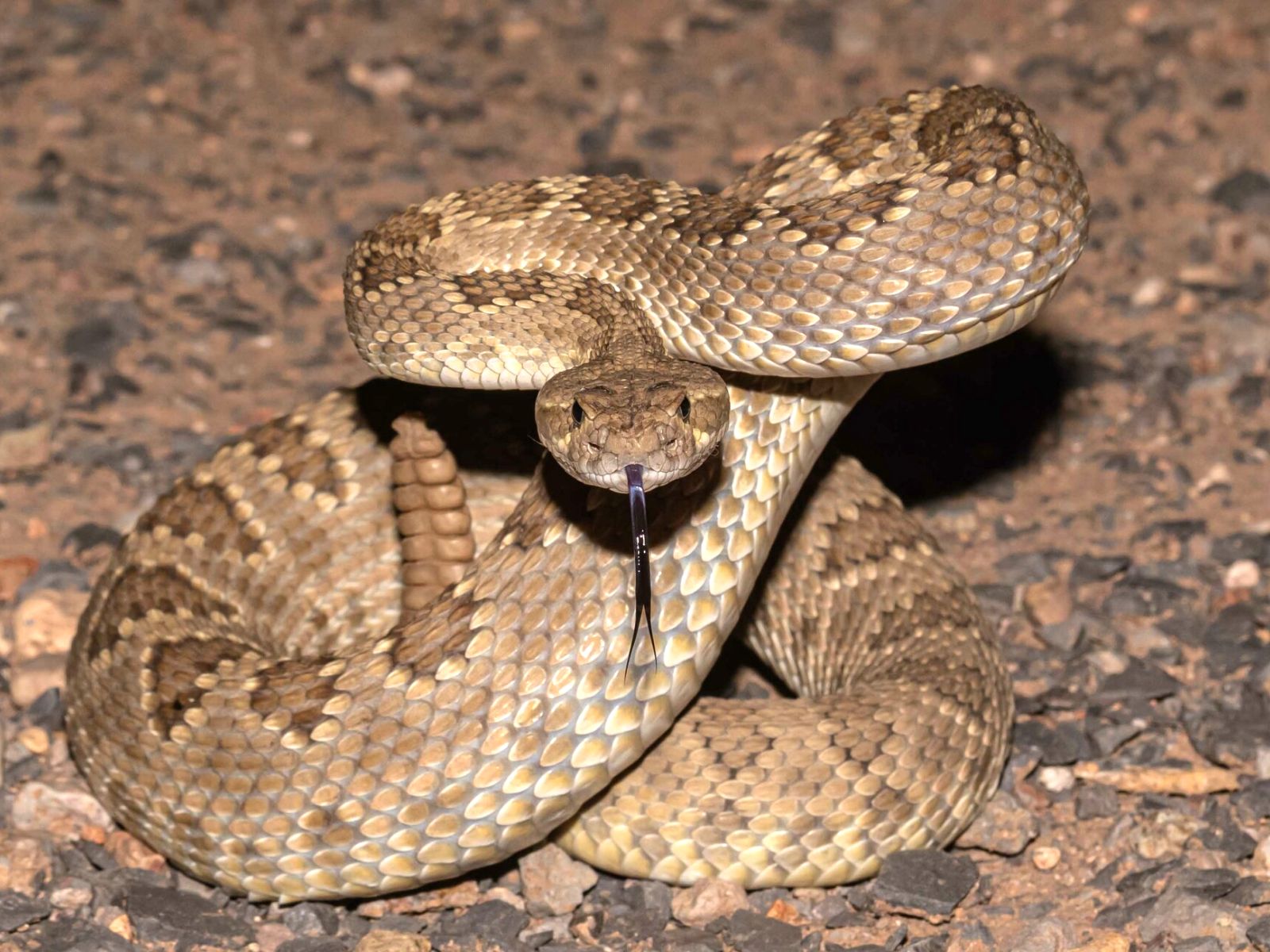
Mohave Rattlesnake
Crotalus scutulatus
VenomousThe quick way to tell
Look at the tail just before the rattle. The Arizona Black Rattlesnake has dark bands that fade with age. The Mohave Rattlesnake has clear, contrasting light and dark tail rings.
Tail ★ This settles it
Ends in a rattle. The body blotches turn into dark bands on the tail, and these bands fade as the snake gets older.
White bands usually wider than the black ones, ahead of the rattle.
Head
A wide, triangular rattlesnake head. Young snakes have bold spots on the head and a dark bar running back from the eye; these fade as the snake darkens with age.
Triangle; two big scales between the eyes, cheek stripe passes behind the mouth.
Pattern
25 to 46 dark blotches down the back, separated by lighter gaps. On dark adults the blotches can almost disappear into the dark background.
Clean pale-edged diamonds on gray-green to brown.
Eyes
Vertical, cat-like pupils, as in other rattlesnakes. A dark bar runs back from each eye, most easily seen on young snakes.
Vertical slit pupil; heat-sensing pit between eye and nostril.
Pits
Yes. It has a heat-sensing pit on each side of the head between the eye and the nostril, like all rattlesnakes.
A deep heat-sensing pit on each side of the face, between the eye and the nostril.
What it does
Often calm compared with other rattlesnakes. It is social: groups share winter dens, bask together in spring, and mothers stay with their newborn young for about one to two weeks.
Rattles and holds ground; often found on roads at night.
Where it lives
Central Arizona, from the Mogollon Rim south to mountain ranges near Tucson, and west-central New Mexico. Mostly found at about 2,800–9,150 ft (853–2,789 m).
Southwest: southeastern California, southern Nevada, extreme southwestern Utah, Arizona, southern New Mexico and west Texas, south into central Mexico.