Black-tailed Rattlesnake
Crotalus molossus · Rattlesnakes
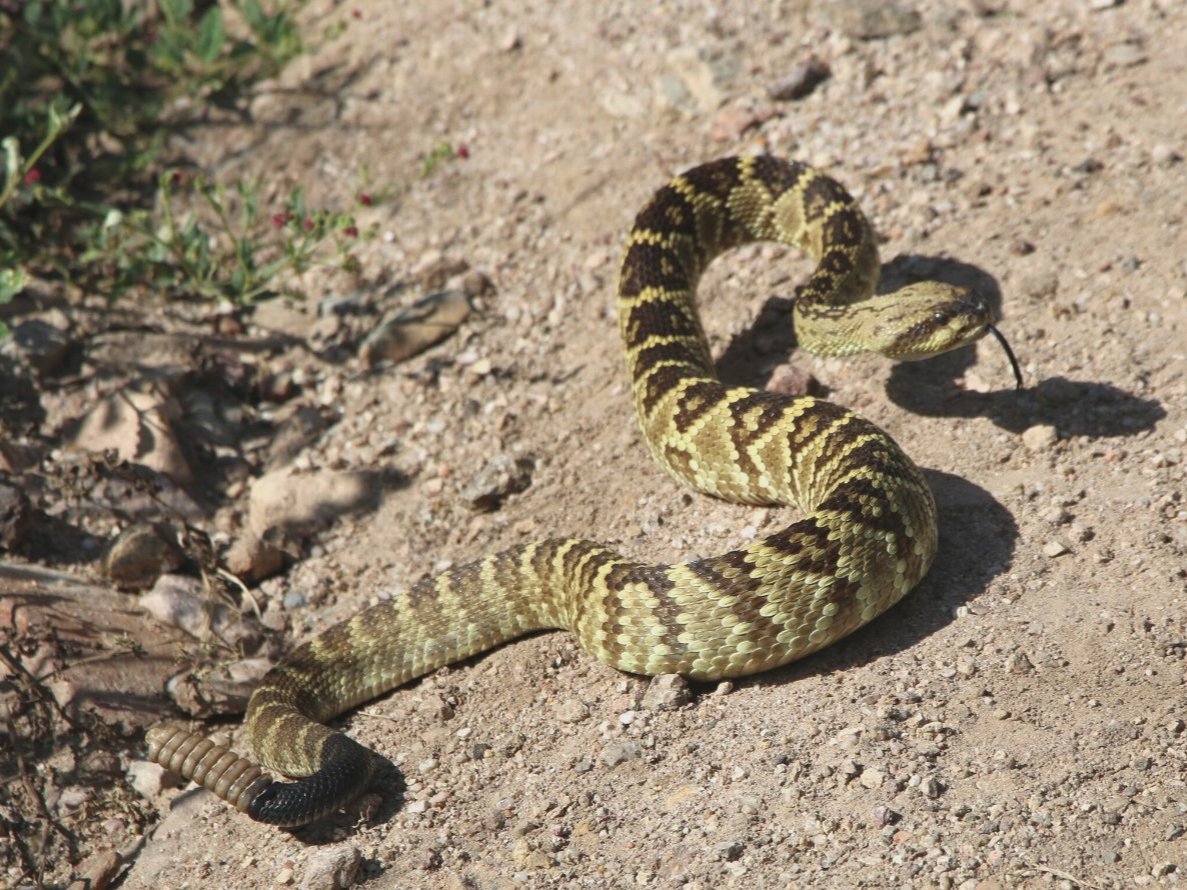
Tap a part to see what to look for. Tap it again to turn it off.
Venomous. A good climber that often rests on rocks or in brush; keep well back — a bite is a medical emergency.
How to identify
- Head
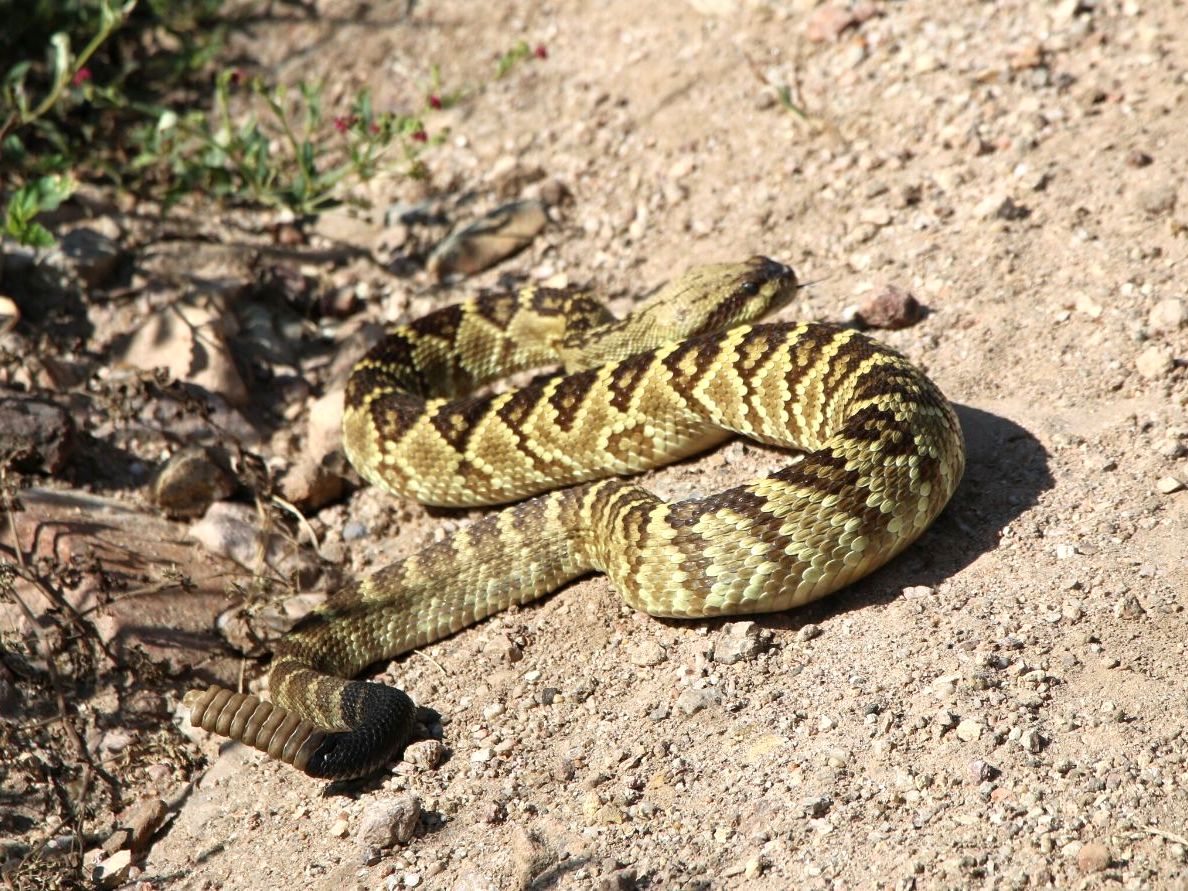
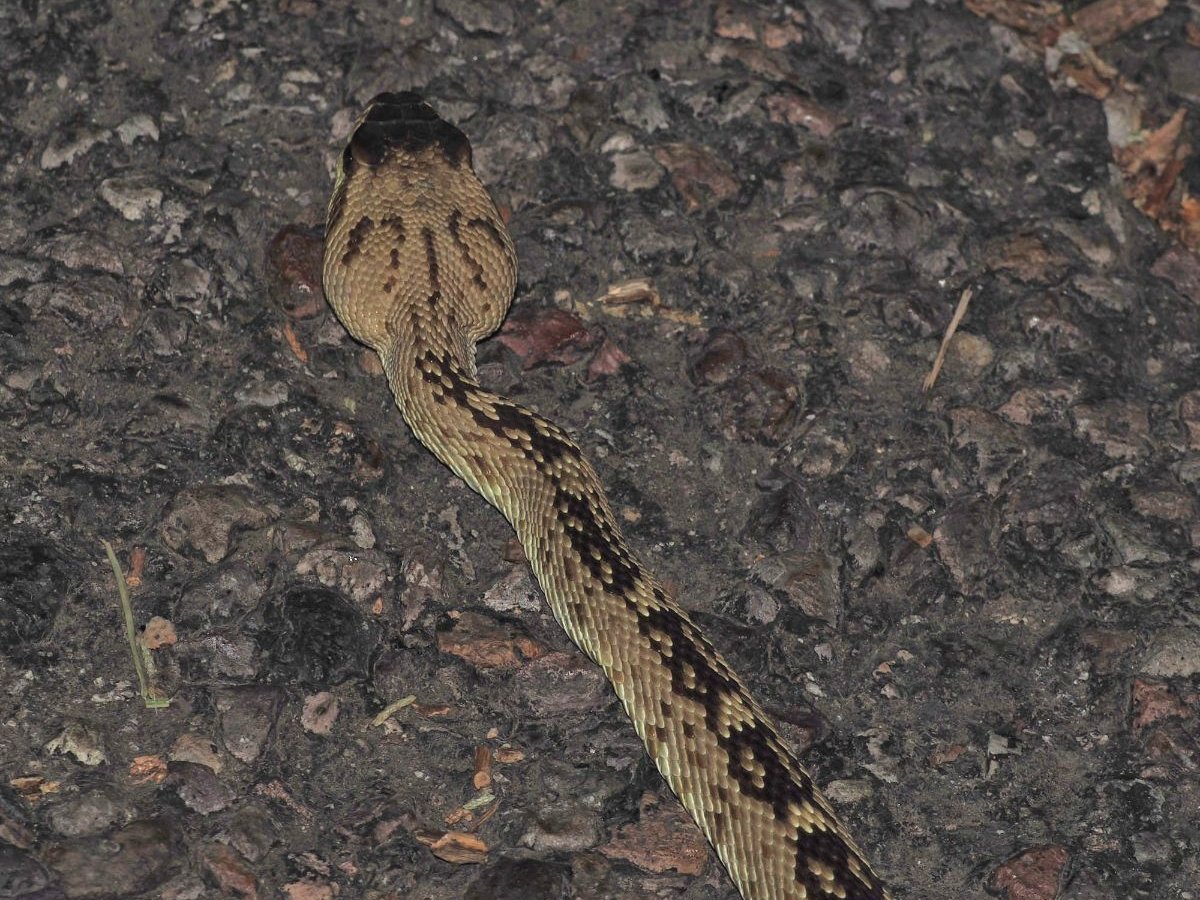
- Broad triangular head; the front of the snout is usually black or dark brown, often with a dark band between the eyes.
- Pattern
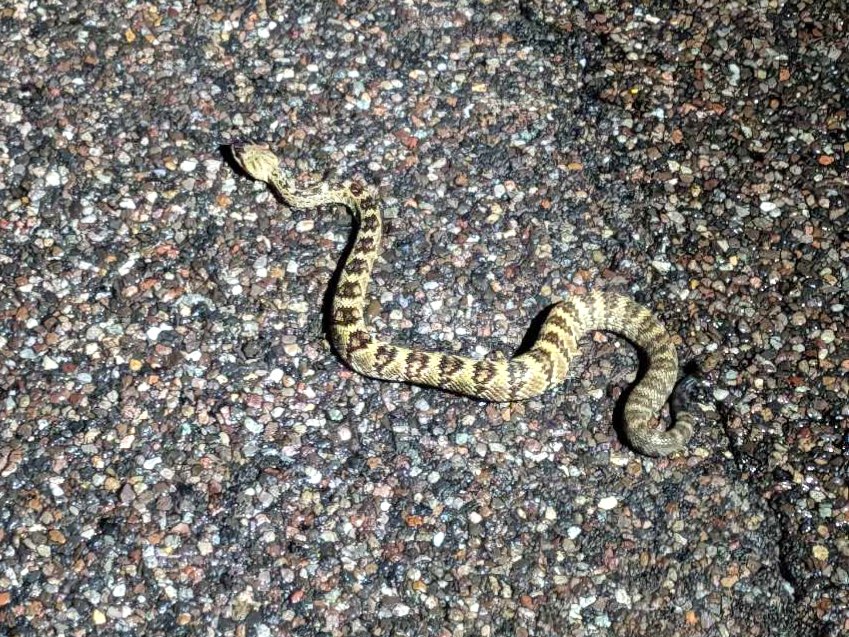
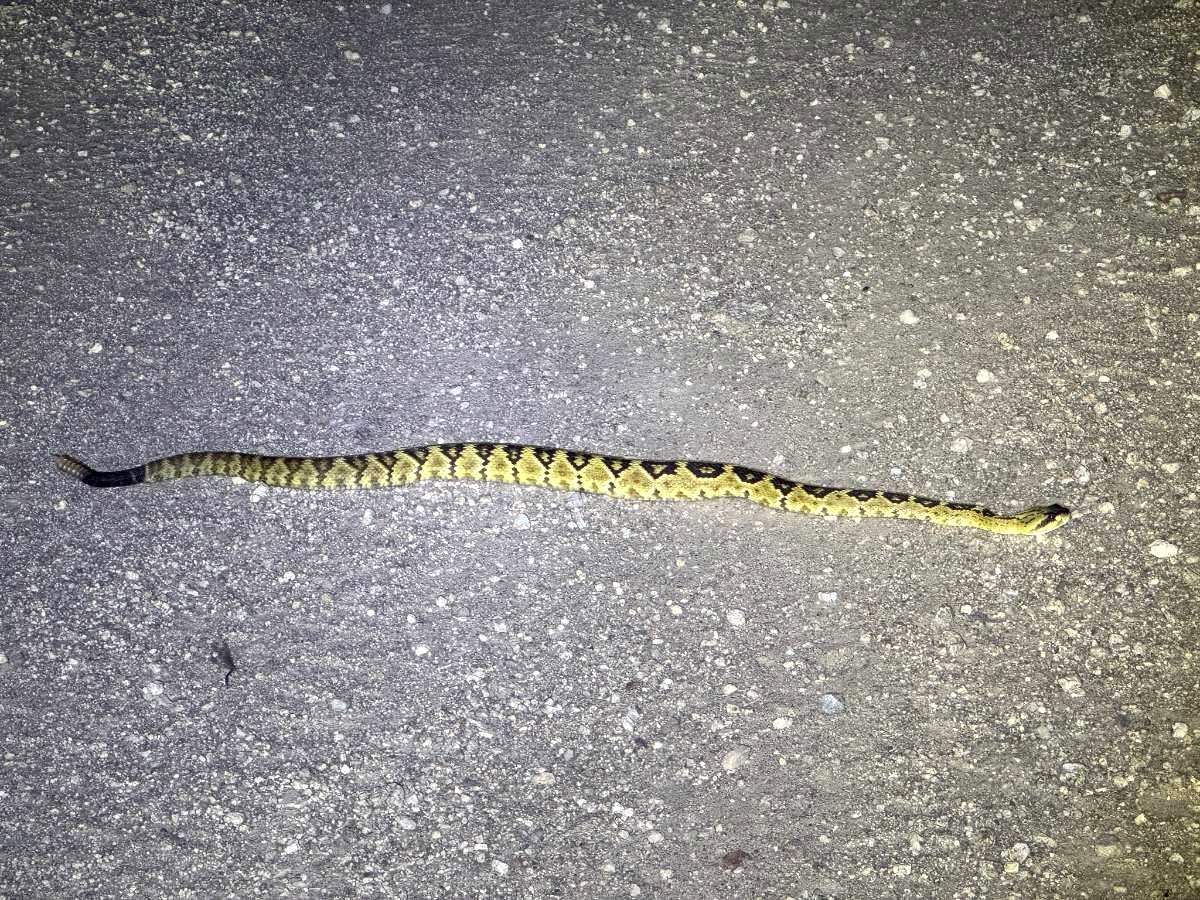
- Dark diamond- or patch-shaped blotches with pale insides, becoming crossbands near the tail.
- Eyes
- Vertical slit pupil; heat-sensing pit between eye and nostril.
- Pits
- A deep heat-sensing pit on each side of the face, between the eye and the nostril.
- Tail
- Solid black or dark gray ahead of the rattle, with few or no bands.
- What it does
- Often calm and slow to rattle, though some rattle quickly; climbs well.
Often confused with
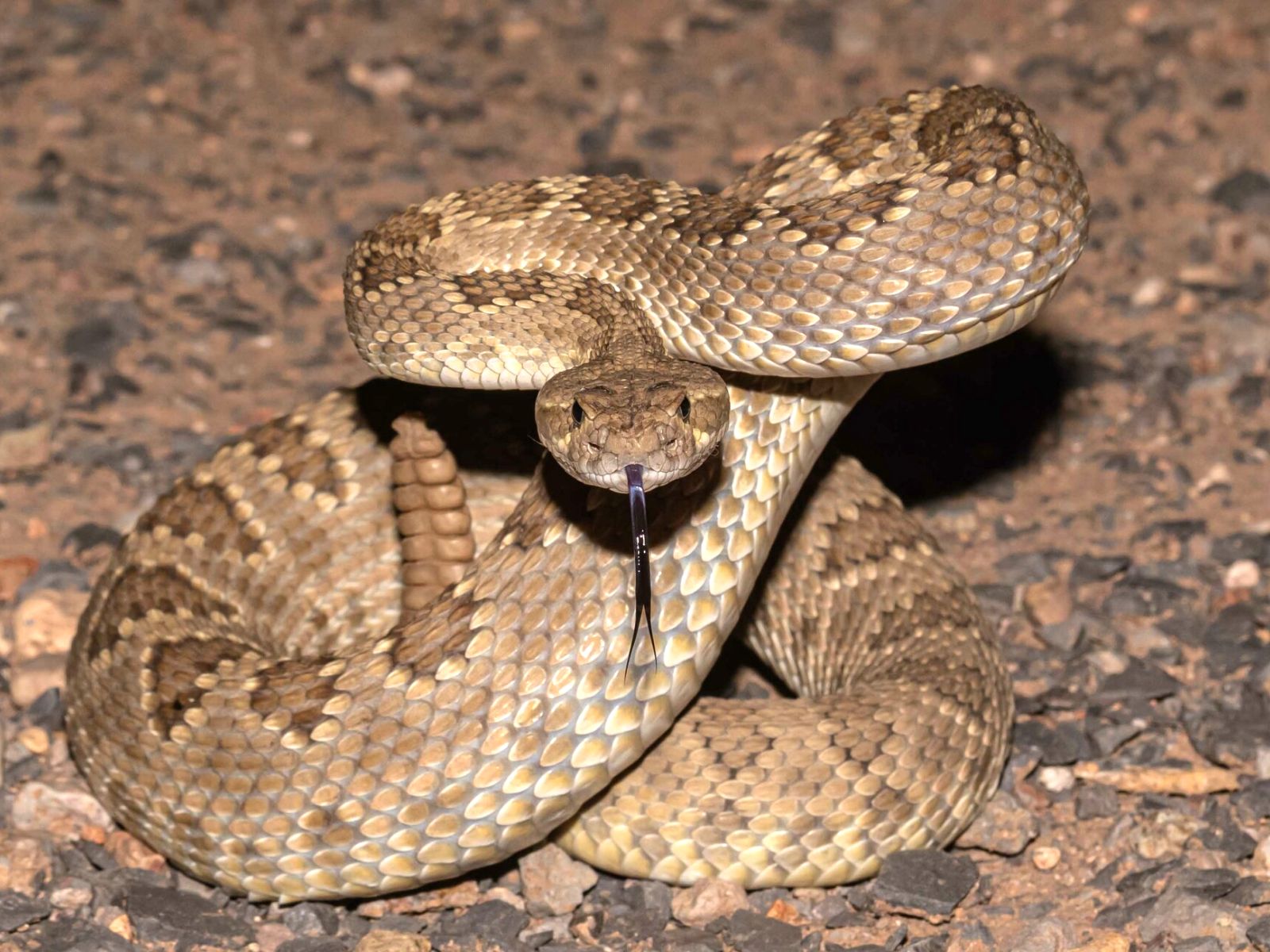
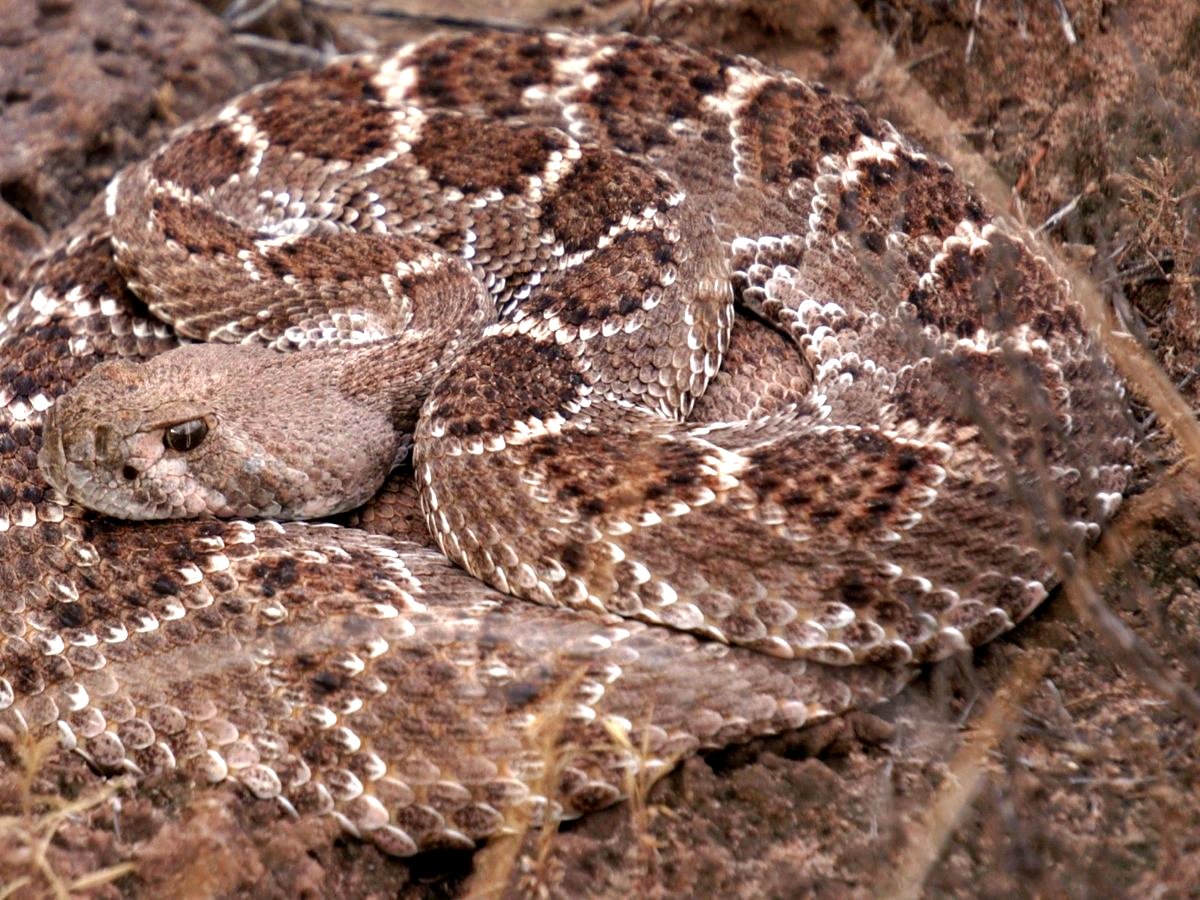
Western Diamondback and Mohave Rattlesnakes share its range, but both have black-and-white rings on the tail instead of a solid black tail.
How to tell them apart
Black-tailed Rattlesnake vs Mohave Rattlesnake›
The quick way to tellLook at the tail. The Black-tailed Rattlesnake's tail is solid black. The Mohave's tail has light and dark rings ahead of the rattle.
Black-tailed Rattlesnake: Solid black or dark gray ahead of the rattle, with few or no bands.
Mohave Rattlesnake: White bands usually wider than the black ones, ahead of the rattle.
Black-tailed Rattlesnake vs Western Diamondback Rattlesnake›
The quick way to tellLook at the tail just before the rattle. The Black-tailed Rattlesnake's tail is solid black or dark gray. The Western Diamondback has bold black-and-white 'coon-tail' rings.
Black-tailed Rattlesnake: Solid black or dark gray ahead of the rattle, with few or no bands.
Western Diamondback Rattlesnake: Bold black and white rings, usually about equal width - the classic coon tail - ahead of the rattle.
About the Black-tailed Rattlesnake›
A striking rattlesnake of rocky mountains, canyons and foothills in the Southwest, often greenish, yellow or gray with a solid black tail. It is a good climber and is sometimes found in shrubs and low trees.
There are eastern and western forms that look almost the same. Scientists now treat them as two species — the Western Black-tailed Rattlesnake (Crotalus molossus), mainly in Arizona and New Mexico, and the Eastern Black-tailed Rattlesnake (Crotalus ornatus) in New Mexico and Texas — and this page covers both.
The details
Size Usually 2.5–3.5 ft; rarely 4–5 ftLifespan About 15–20 years; captive record near 21 years
Typical range›
Western and southern Arizona east through New Mexico to west and central Texas, south into Mexico.
Activity›
Active by day in spring and fall, mostly at dusk and night in summer heat.
Diet›
Mainly rodents such as woodrats and rock squirrels, plus rabbits, birds and lizards.
Reproduction›
Gives birth to about 3–16 live young in summer.
Found in parts of 3 states›
Ranges are approximate. It may be found in only part of a state, or be rare there, and snakes can turn up outside of them.
More photos