‹ Compare two snakes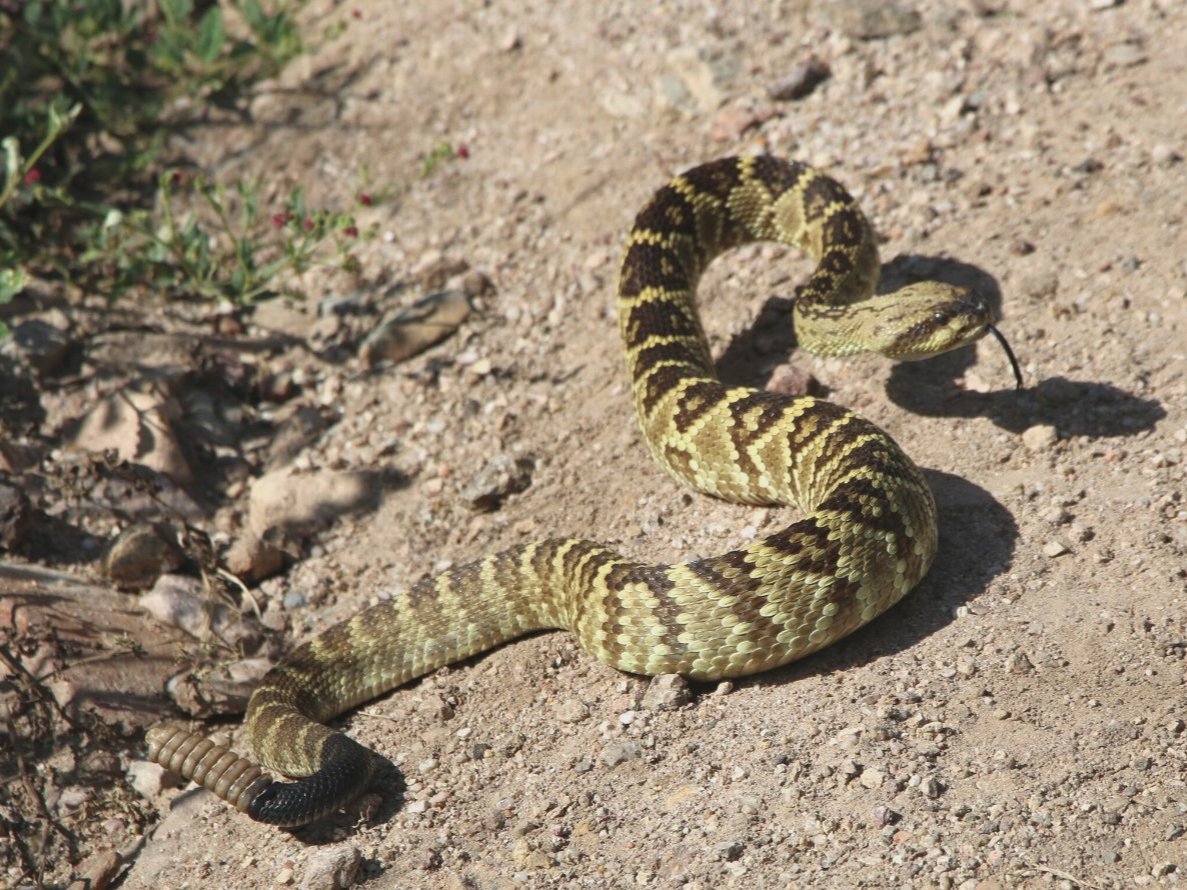
Black-tailed Rattlesnake vs Mohave Rattlesnake
Tap a part to see it on both. Tap it again to turn it off.
(c) Zihao Wang, some rights reserved (CC BY)
Black-tailed Rattlesnake
Crotalus molossus
Venomous(c) Jeremiah Degenhardt, some rights reserved (CC BY)
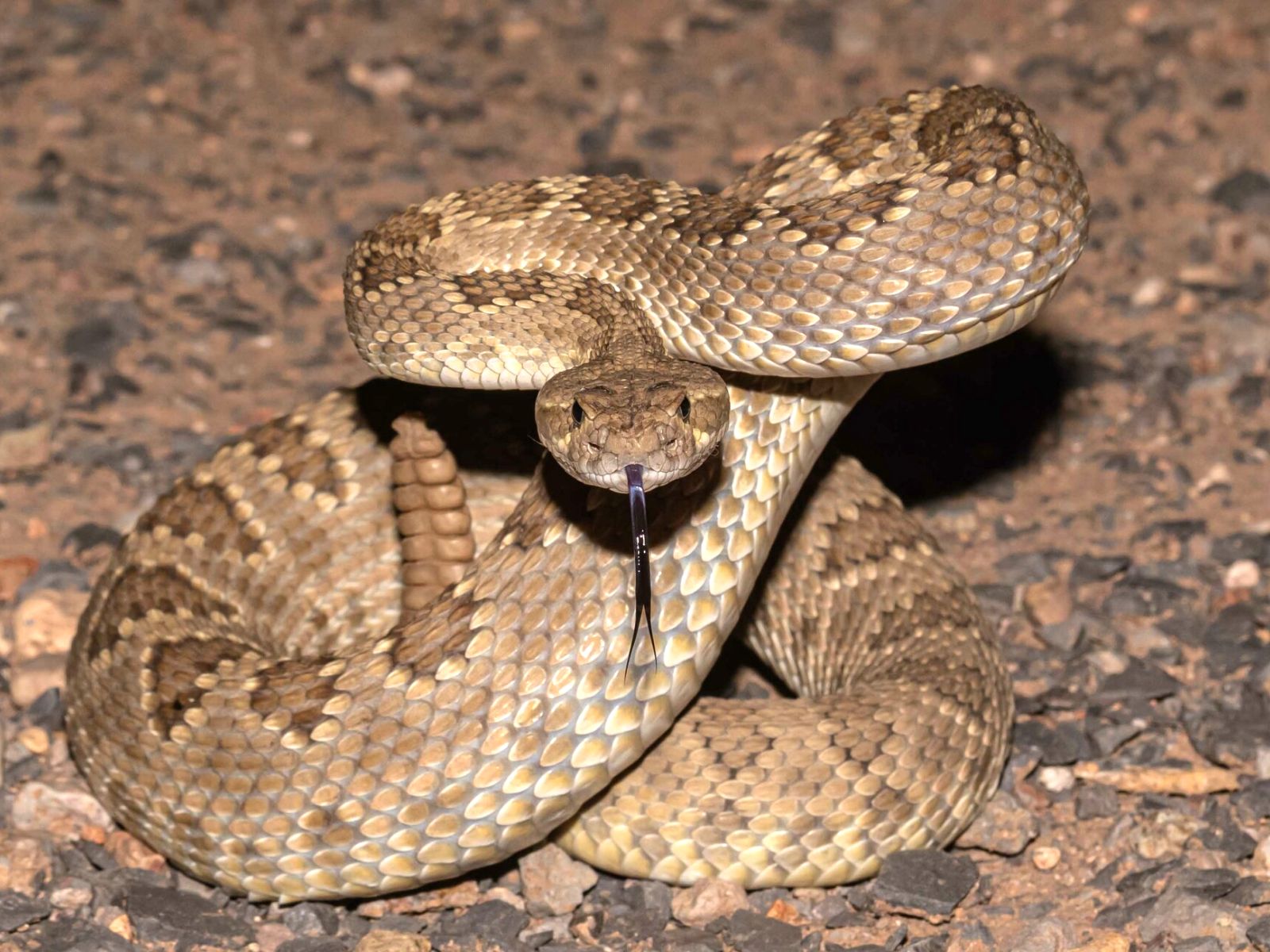
Mohave Rattlesnake
Crotalus scutulatus
VenomousThe quick way to tell
Look at the tail. The Black-tailed Rattlesnake's tail is solid black. The Mohave's tail has light and dark rings ahead of the rattle.
Tail ★ This settles it
Solid black or dark gray ahead of the rattle, with few or no bands.
White bands usually wider than the black ones, ahead of the rattle.
Head
Broad triangular head; the front of the snout is usually black or dark brown, often with a dark band between the eyes.
Triangle; two big scales between the eyes, cheek stripe passes behind the mouth.
Pattern
Dark diamond- or patch-shaped blotches with pale insides, becoming crossbands near the tail.
Clean pale-edged diamonds on gray-green to brown.
Eyes
Vertical slit pupil; heat-sensing pit between eye and nostril.
Vertical slit pupil; heat-sensing pit between eye and nostril.
Pits
A deep heat-sensing pit on each side of the face, between the eye and the nostril.
A deep heat-sensing pit on each side of the face, between the eye and the nostril.
What it does
Often calm and slow to rattle, though some rattle quickly; climbs well.
Rattles and holds ground; often found on roads at night.
Where it lives
Western and southern Arizona east through New Mexico to west and central Texas, south into Mexico.
Southwest: southeastern California, southern Nevada, extreme southwestern Utah, Arizona, southern New Mexico and west Texas, south into central Mexico.