Broad-banded Copperhead
Agkistrodon laticinctus · Copperheads & Cottonmouths
Tap a part to see what to look for. Tap it again to turn it off.
Venomous. Bites are painful and need emergency hospital care; give it room and leave it alone.
How to identify
- Head
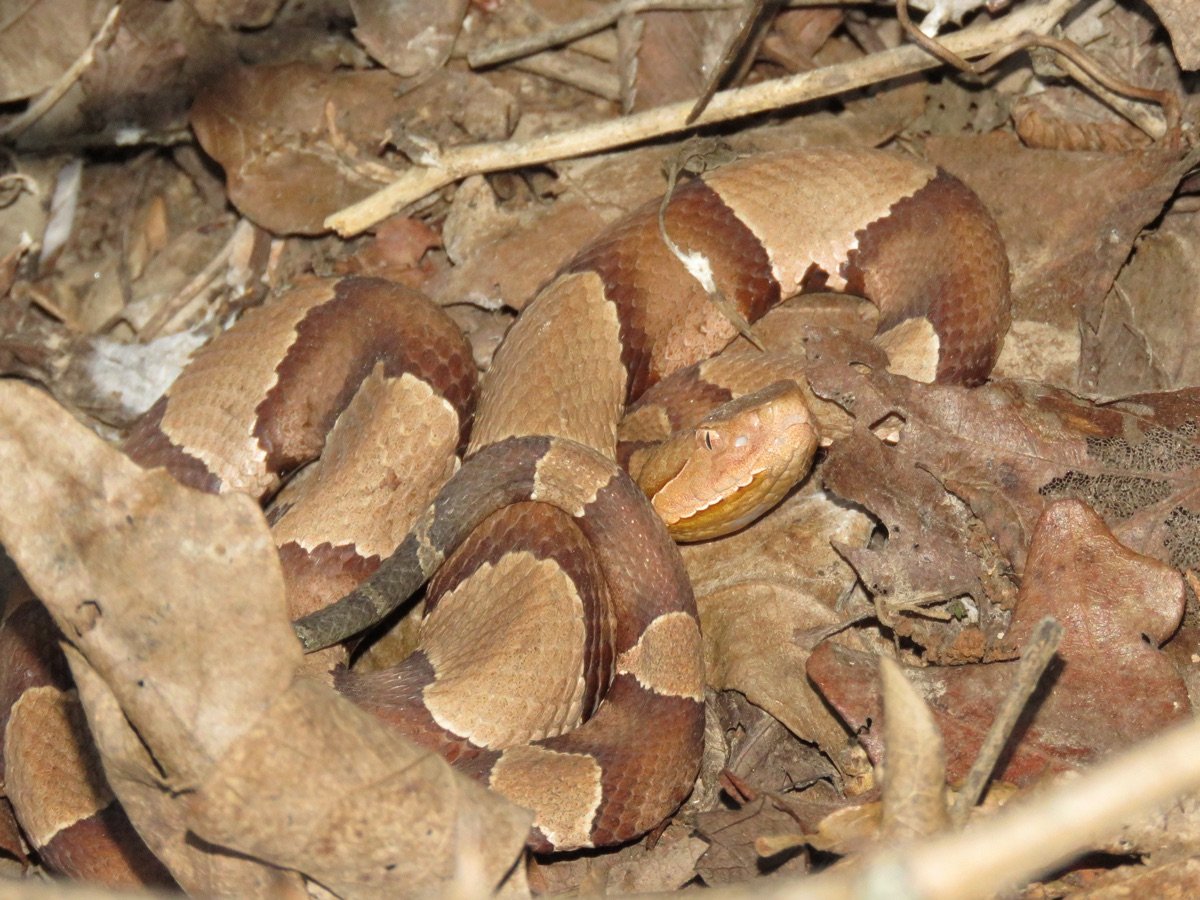
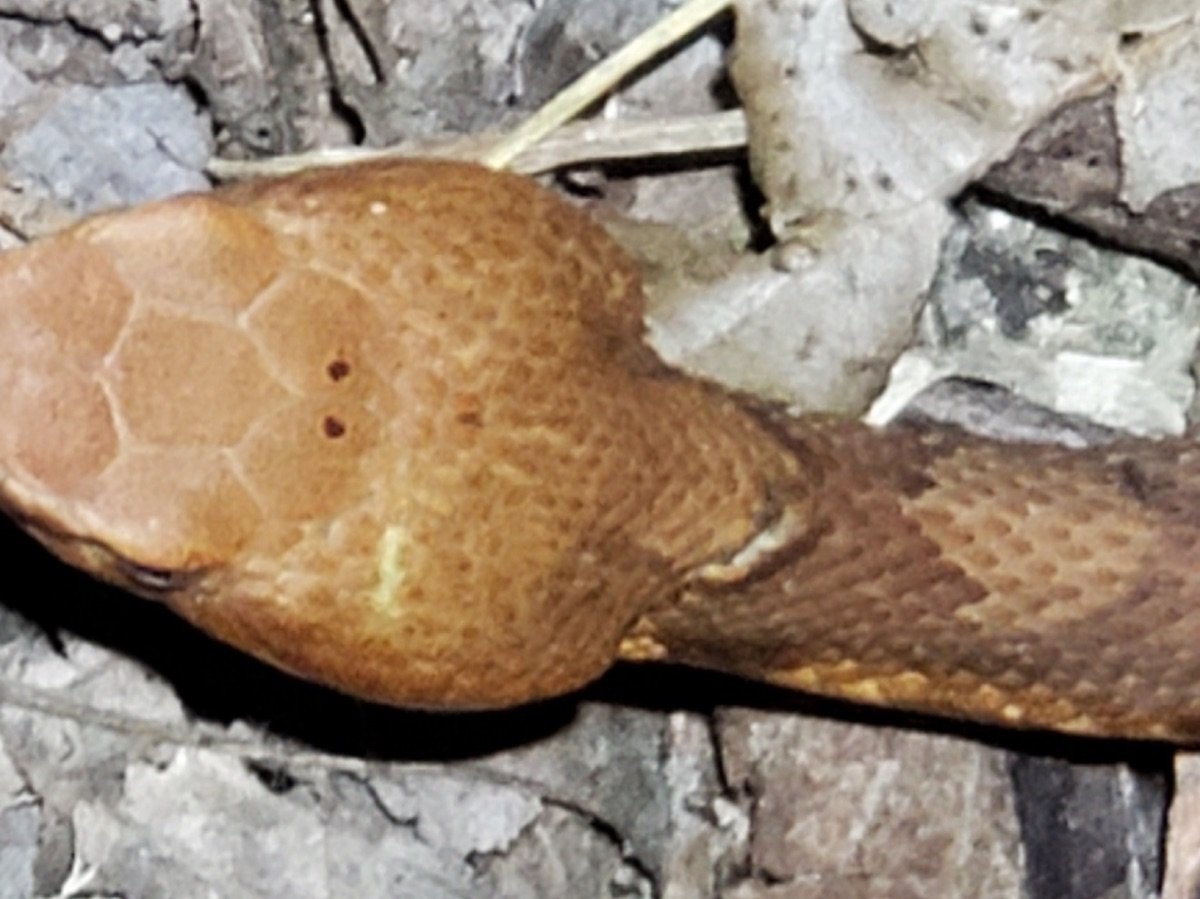
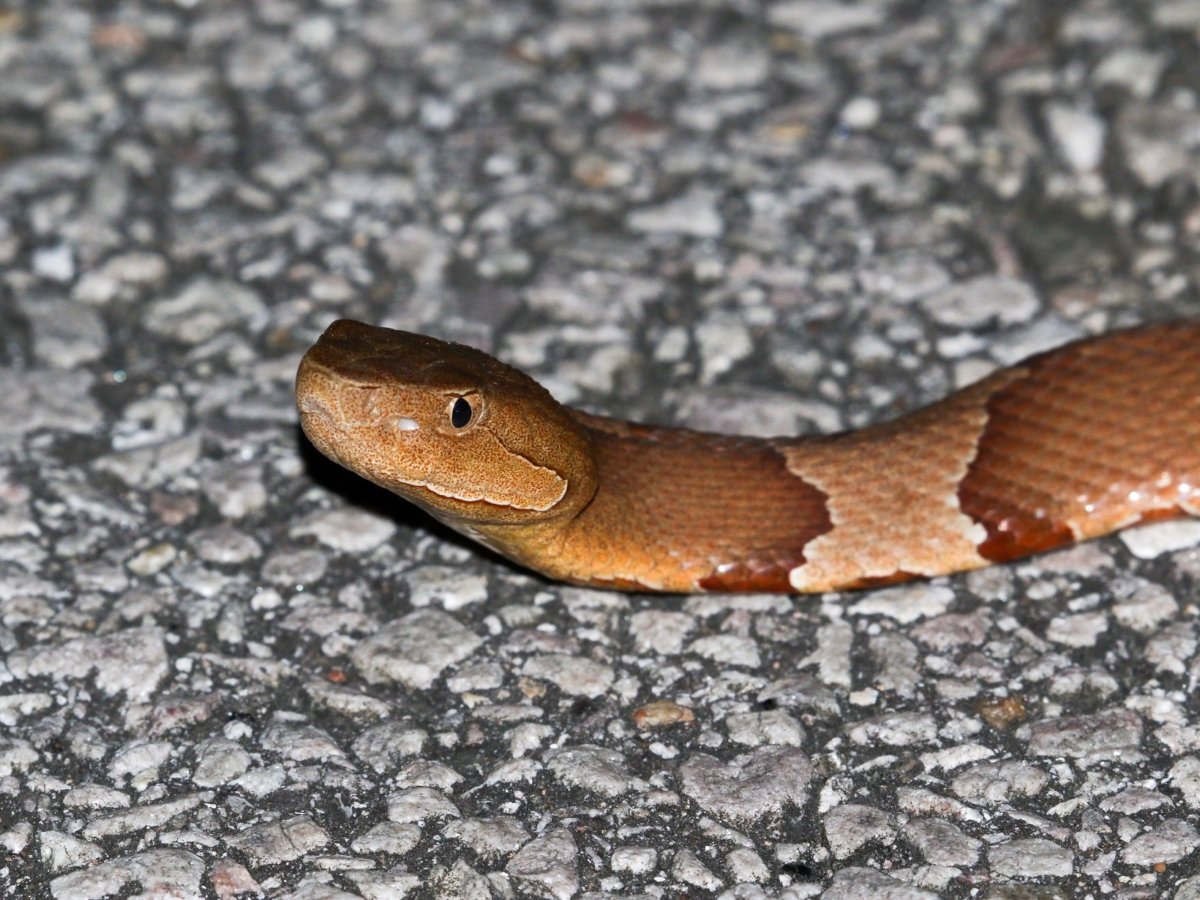
- Coppery, unmarked, triangular head clearly wider than the neck.
- Pattern
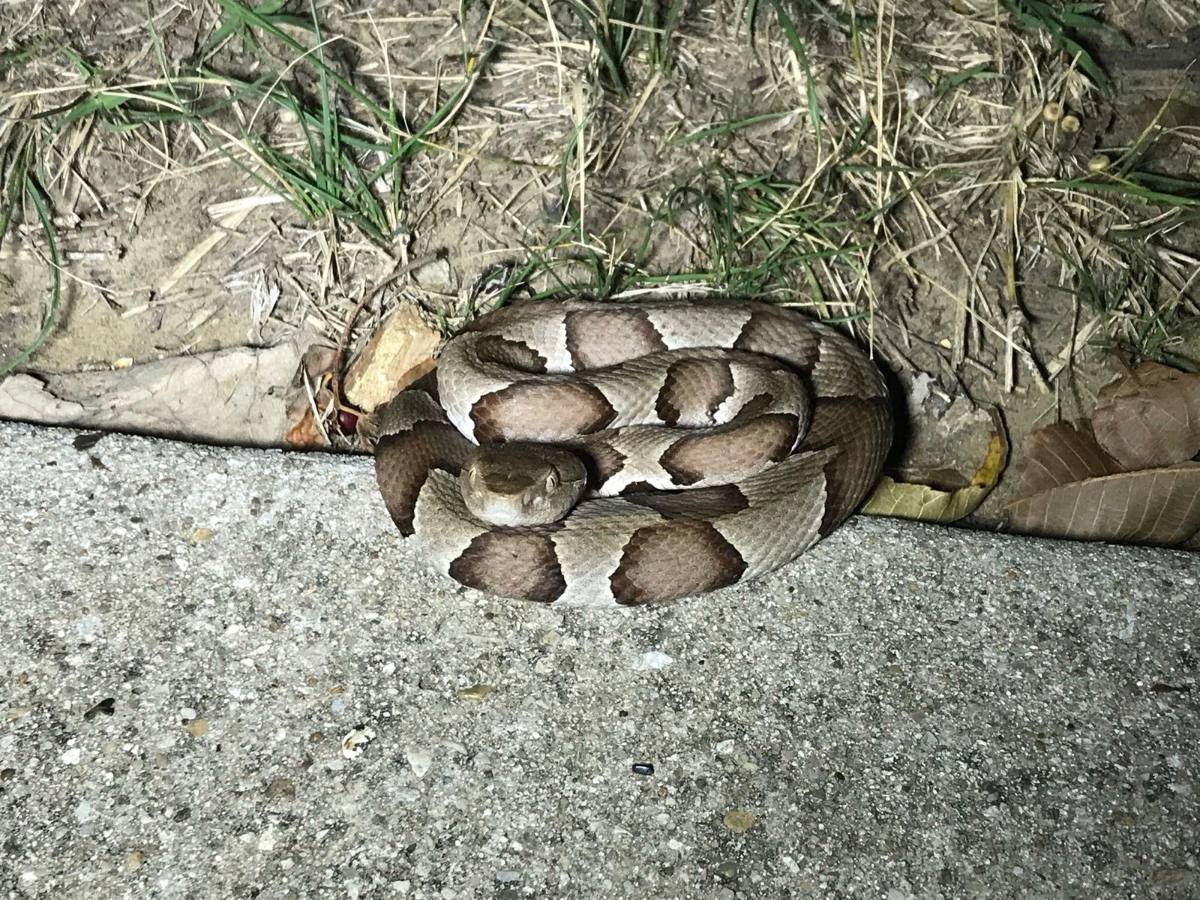
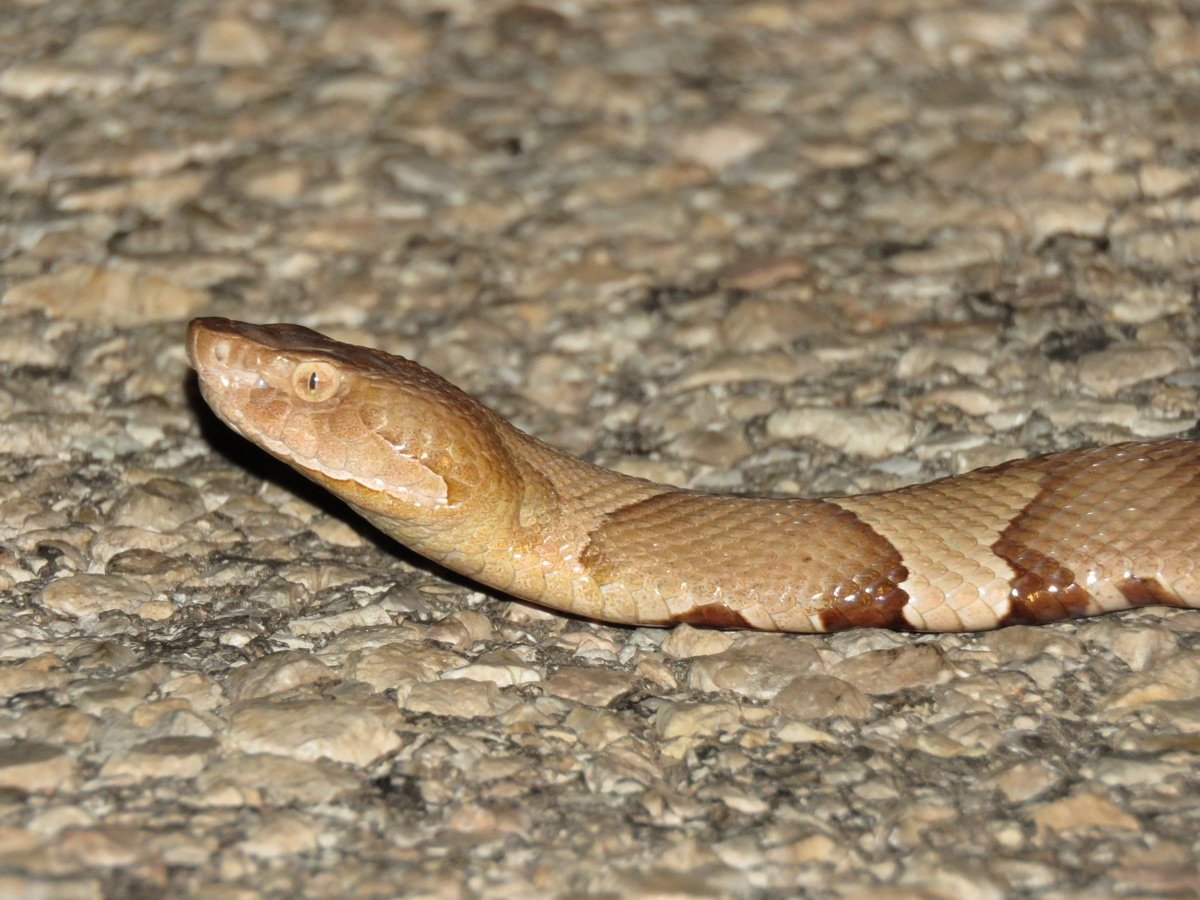
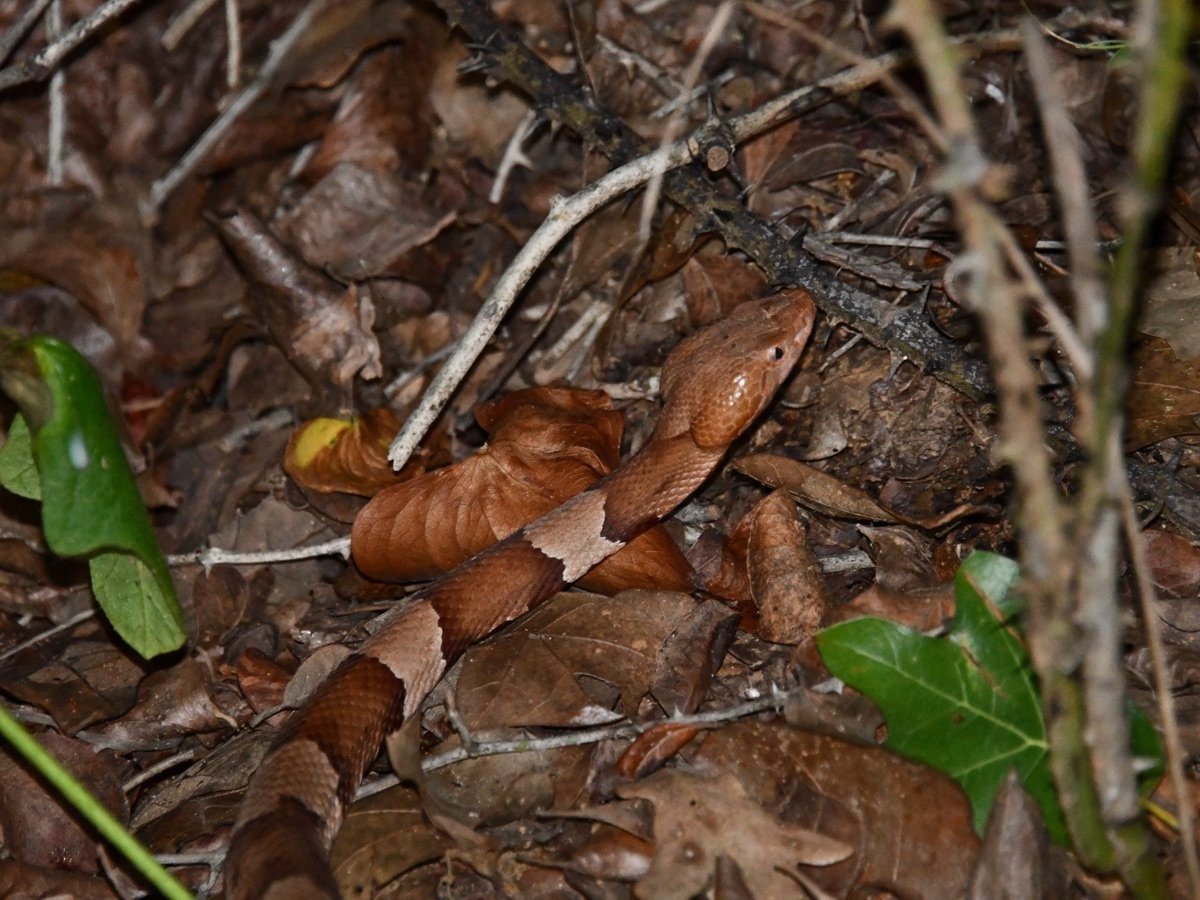
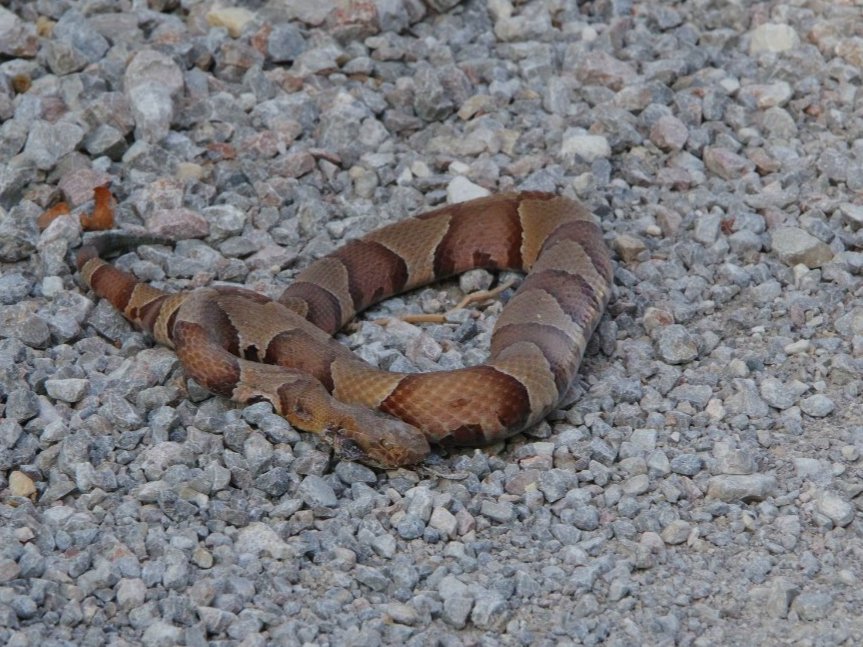
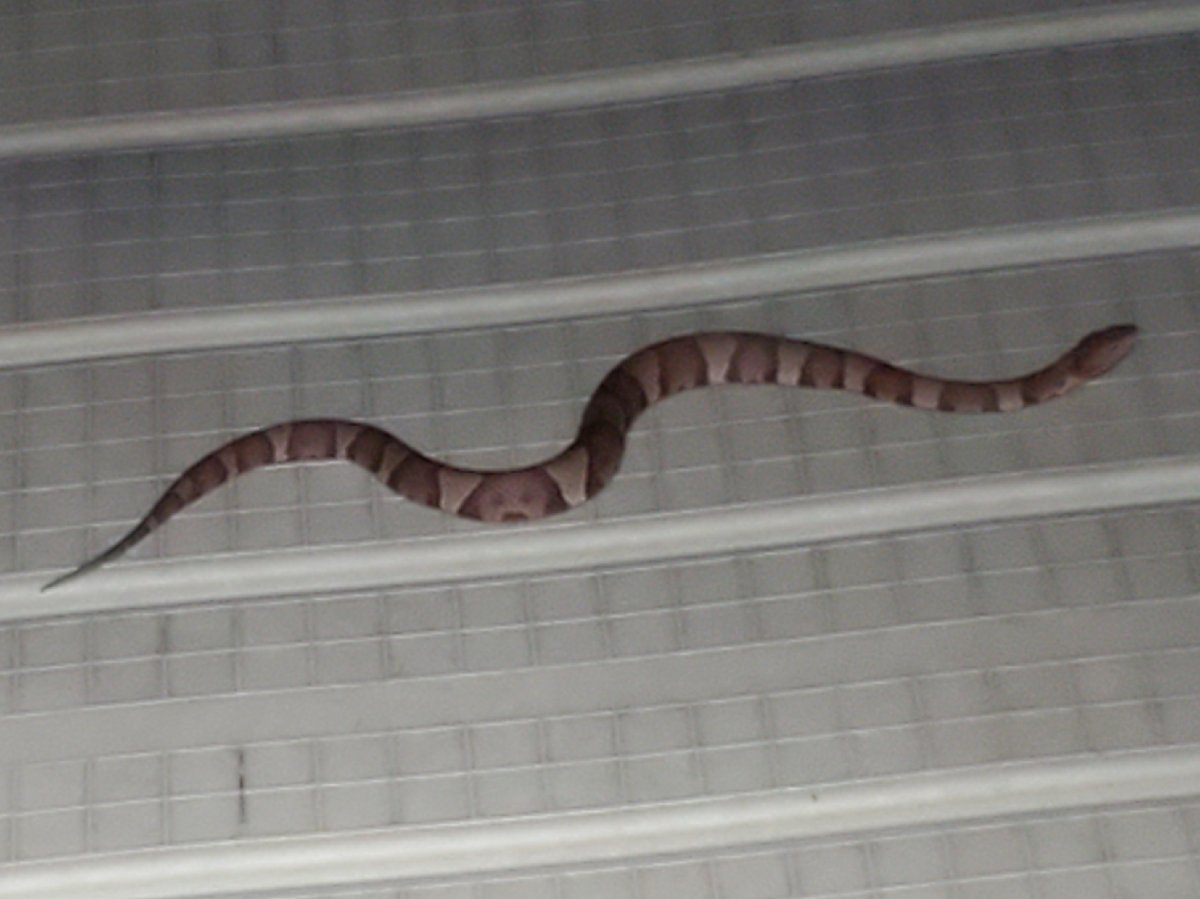
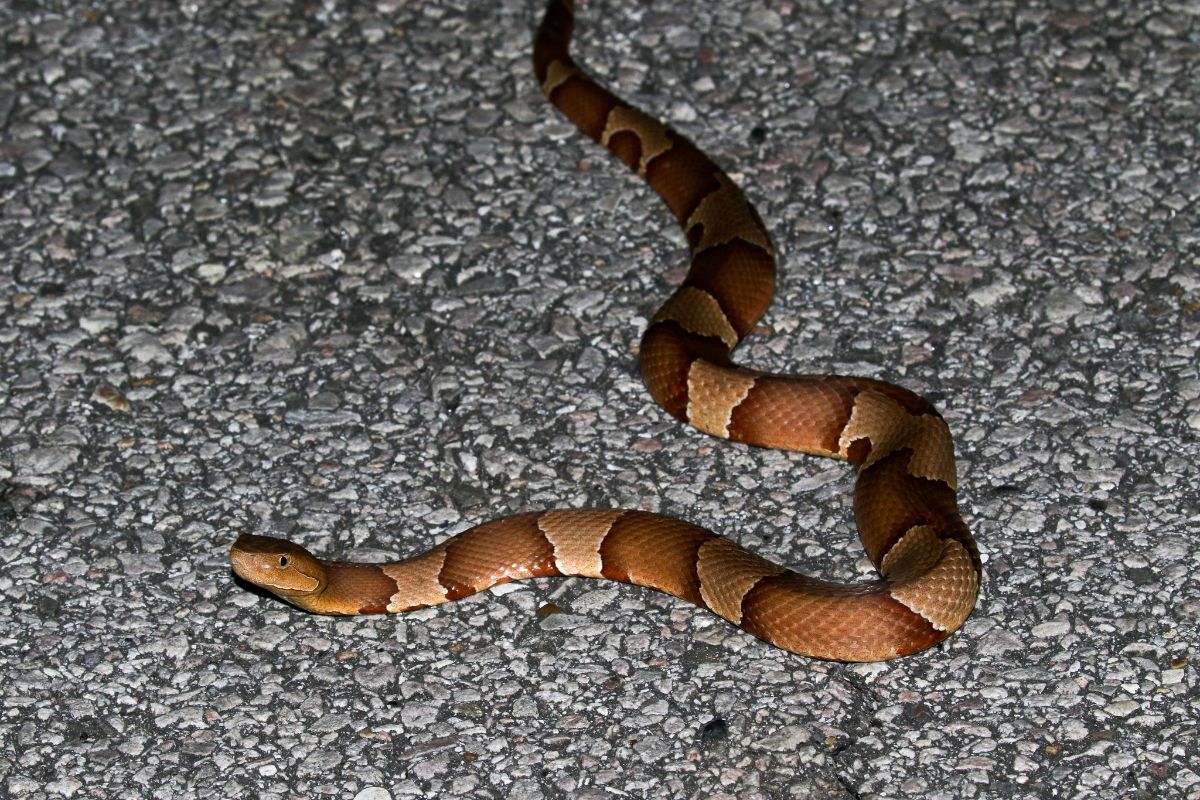
- Wide dark crossbands that stay about the same width all the way across the back.
- Eyes
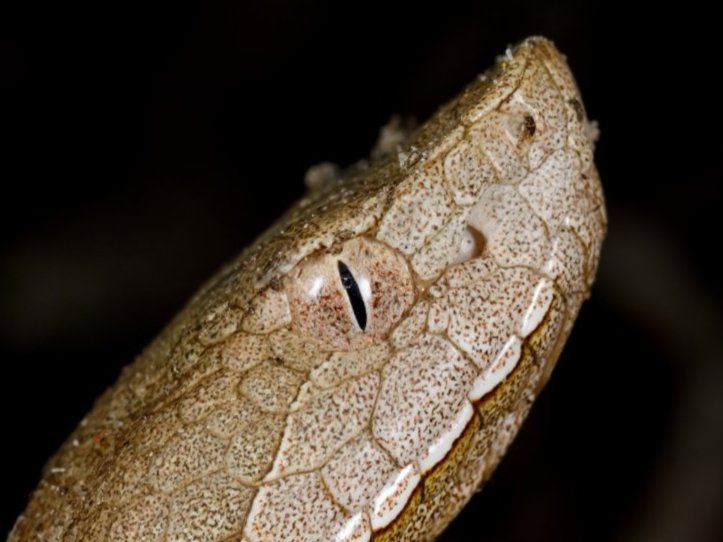
- Vertical slit pupil; heat-sensing pit between eye and nostril.
- Pits
- A deep heat-sensing pit on each side of the face, between the eye and the nostril.
- Tail
- Plain; young have a bright yellow tail tip.
- What it does
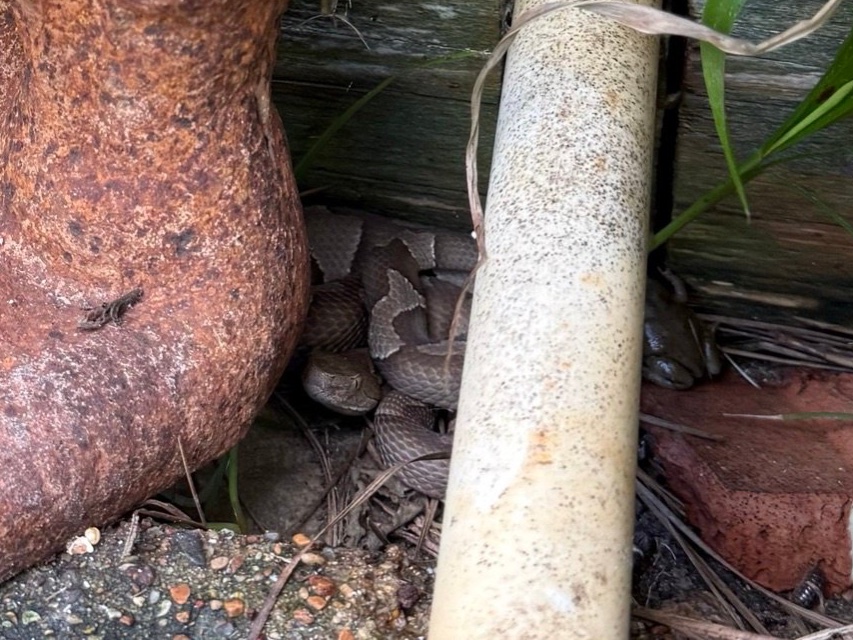
- Freezes and relies on camouflage; may vibrate its tail.
Often confused with
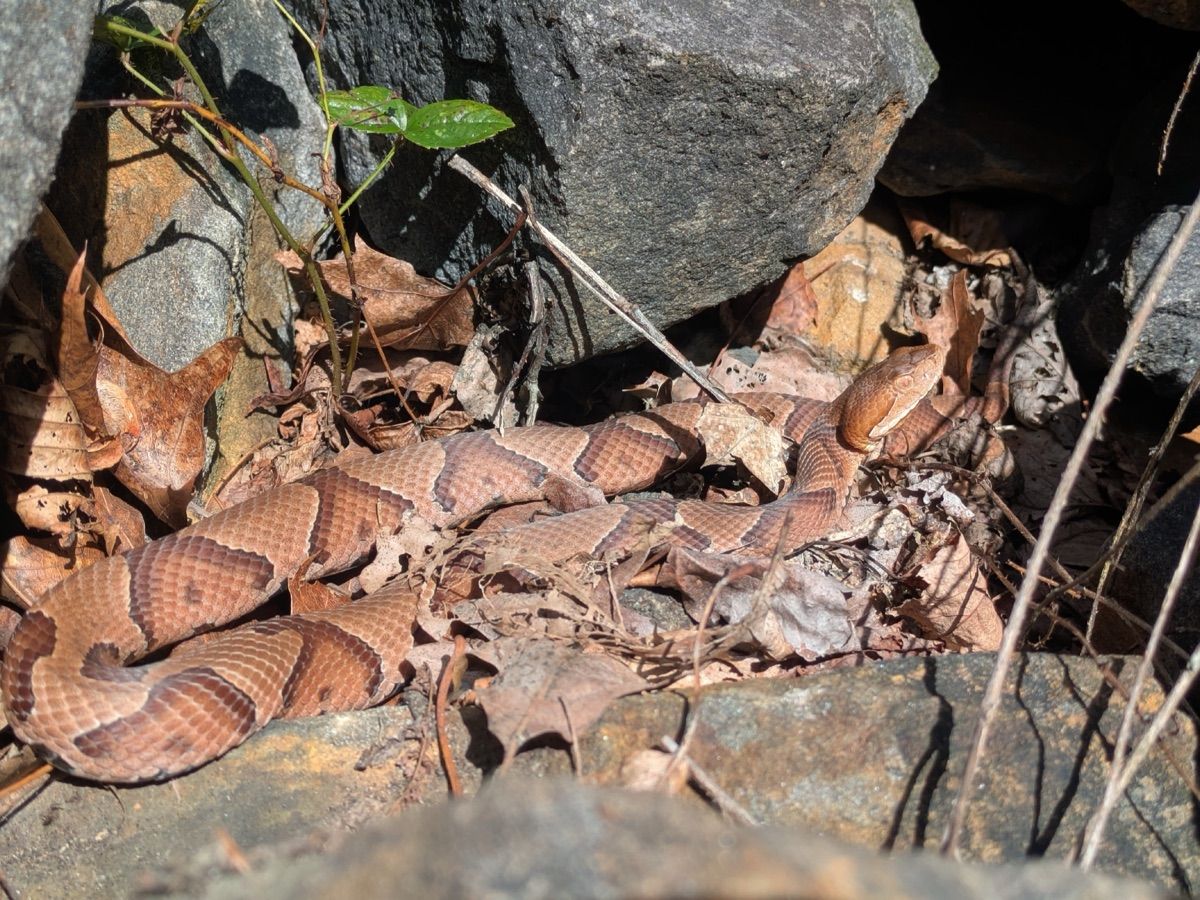
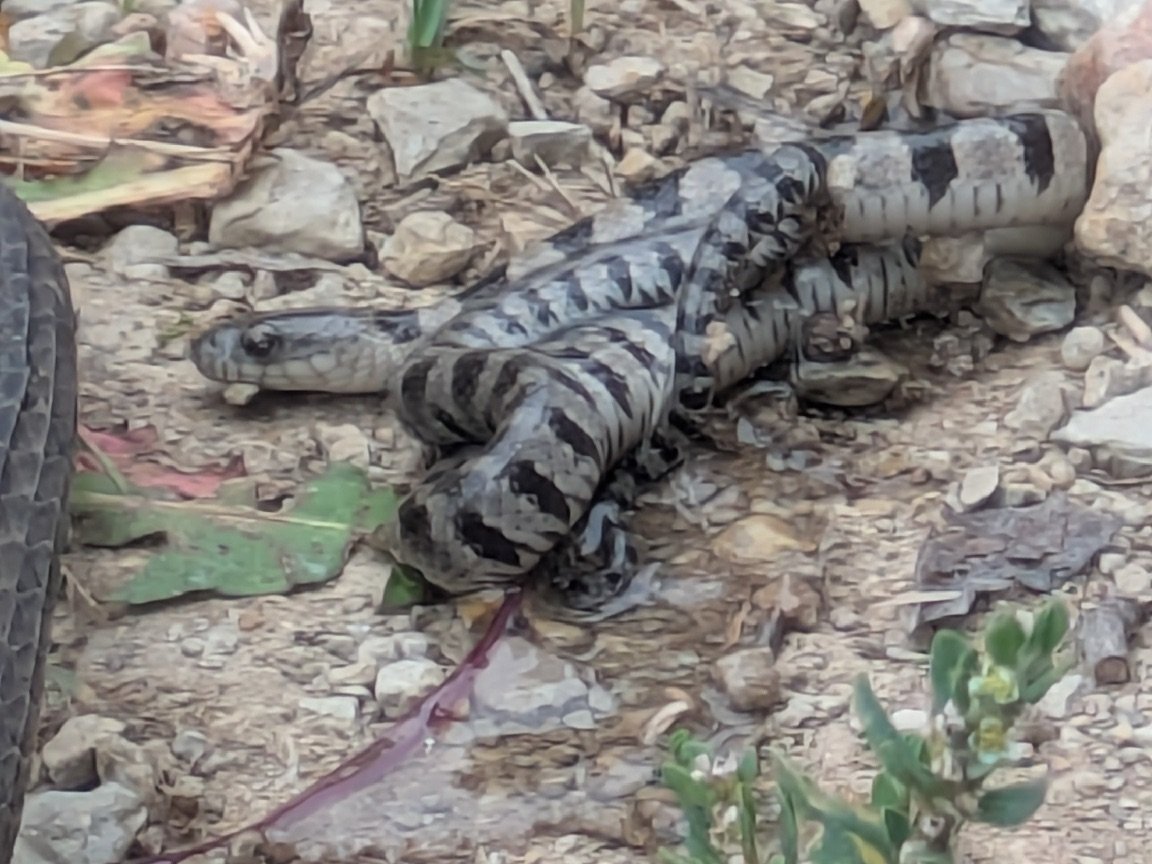
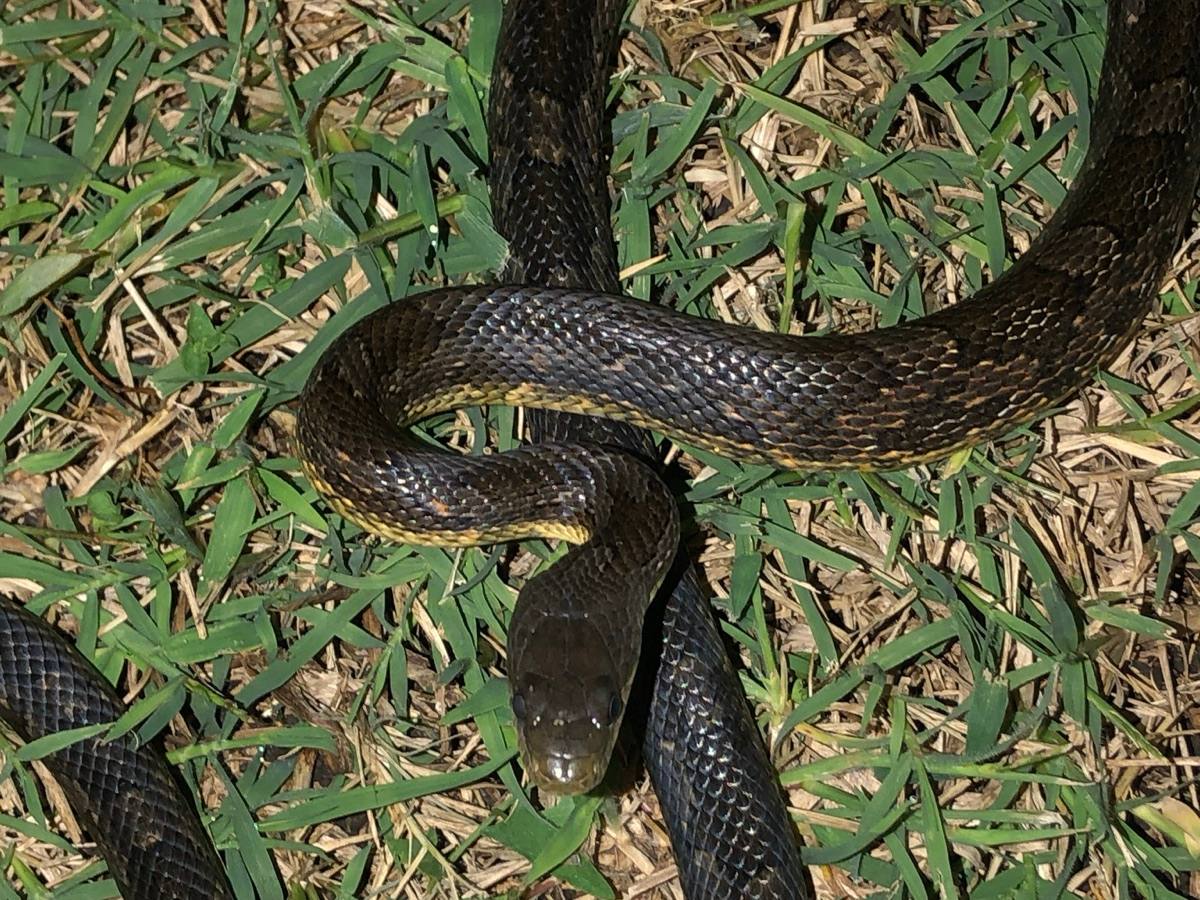
Eastern Copperhead, whose bands narrow to a thin waist over the spine and flare at the sides. Young Northern Watersnakes and Western Ratsnakes also get called copperheads.
How to tell them apart
Broad-banded Copperhead vs Eastern Copperhead›
The quick way to tellLook at the bands from above. The Broad-banded's stay wide across the back. The Eastern's pinch to a thin waist over the spine.
Broad-banded Copperhead: Wide dark crossbands that stay about the same width all the way across the back.
Eastern Copperhead: Dark hourglass bands - wide at the sides, pinched to a narrow waist over the spine.
Broad-banded Copperhead vs Northern Watersnake›
The quick way to tellFollow the bands toward the tail. The Broad-banded Copperhead's wide bands run the whole body. The Northern Watersnake's bands only cover the front third, then break into staggered blotches. They overlap only at the edge of their ranges in Kansas and Oklahoma.
Broad-banded Copperhead: Wide dark crossbands that stay about the same width all the way across the back.
Northern Watersnake: Crossbands up front breaking into blotches toward the tail; reddish half-moons on the belly.
Broad-banded Copperhead vs Western Ratsnake›
The quick way to tellLook at where the dark marks run. The Broad-banded Copperhead's wide bands wrap down its sides. Young Western Ratsnakes, and blotched Texas adults, have blotches mostly on top of the back, with smaller, separate spots low on the sides.
Broad-banded Copperhead: Wide dark crossbands that stay about the same width all the way across the back.
Western Ratsnake: Adults black in the north, blotched on yellowish or gray in Texas; young boldly blotched.
About the Broad-banded Copperhead›
The copperhead of the south-central states, found in rocky canyons, wooded creek bottoms, mesquite brush and the edges of farmland.
Where its range meets the Eastern Copperhead the two blend together, and snakes in that zone can show either pattern.
The details
Size Usually 2–3 ftWeight About 0.5–1.5 lbLifespan 15–20 years
Typical range›
South-central US: central and west Texas, central Oklahoma and south-central Kansas, south into northern Mexico.
Activity›
Day active in spring and fall, night active in summer. Shelters under rock ledges and brush piles.
Diet›
Mice, lizards, frogs, small birds and large insects, especially cicadas.
Reproduction›
Gives birth to live young, usually 4–8, in late summer.
Found in parts of 3 states›
Ranges are approximate. It may be found in only part of a state, or be rare there, and snakes can turn up outside of them.
More photos