‹ Compare two snakes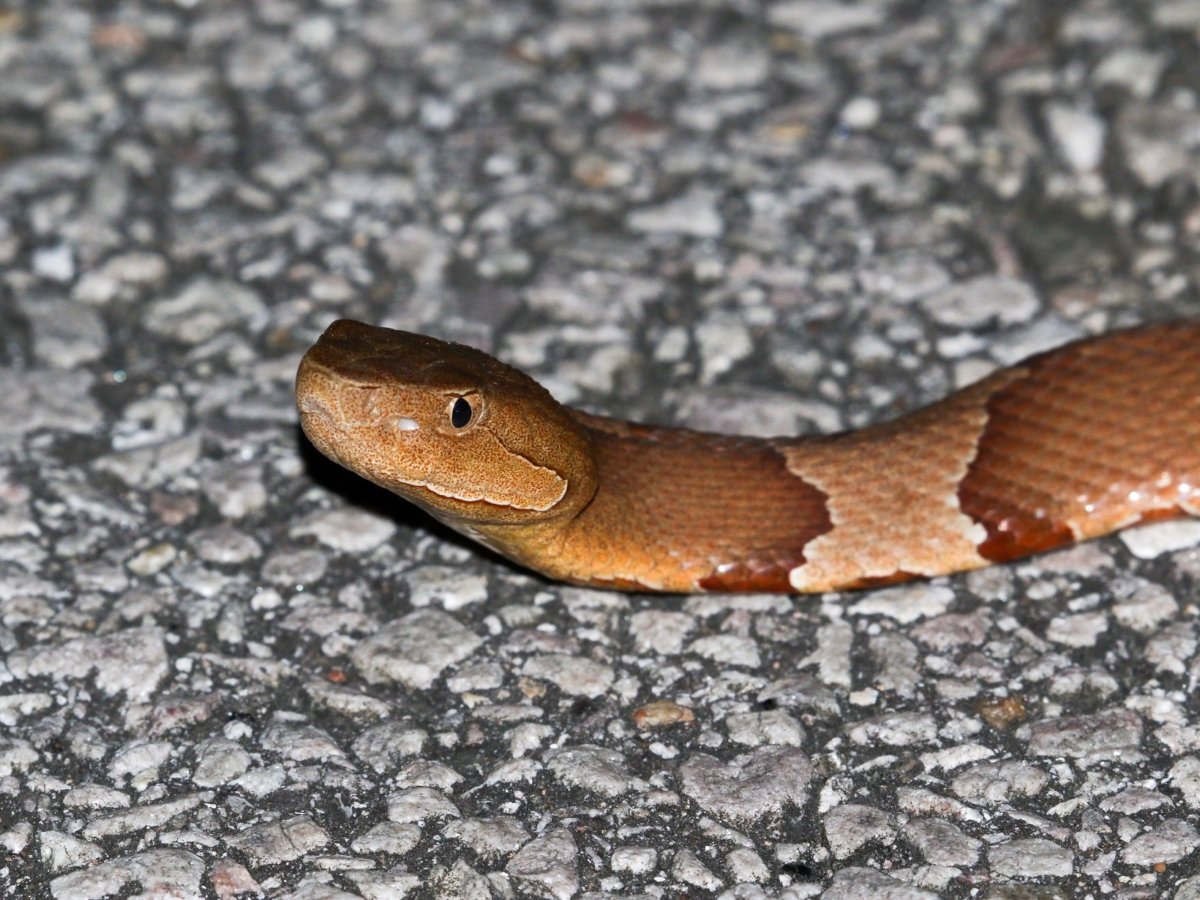
Broad-banded Copperhead vs Western Ratsnake
Tap a part to see it on both. Tap it again to turn it off.
(c) Tom Field, some rights reserved (CC BY)
Broad-banded Copperhead
Agkistrodon laticinctus
Venomous(c) Francis, some rights reserved (CC BY)
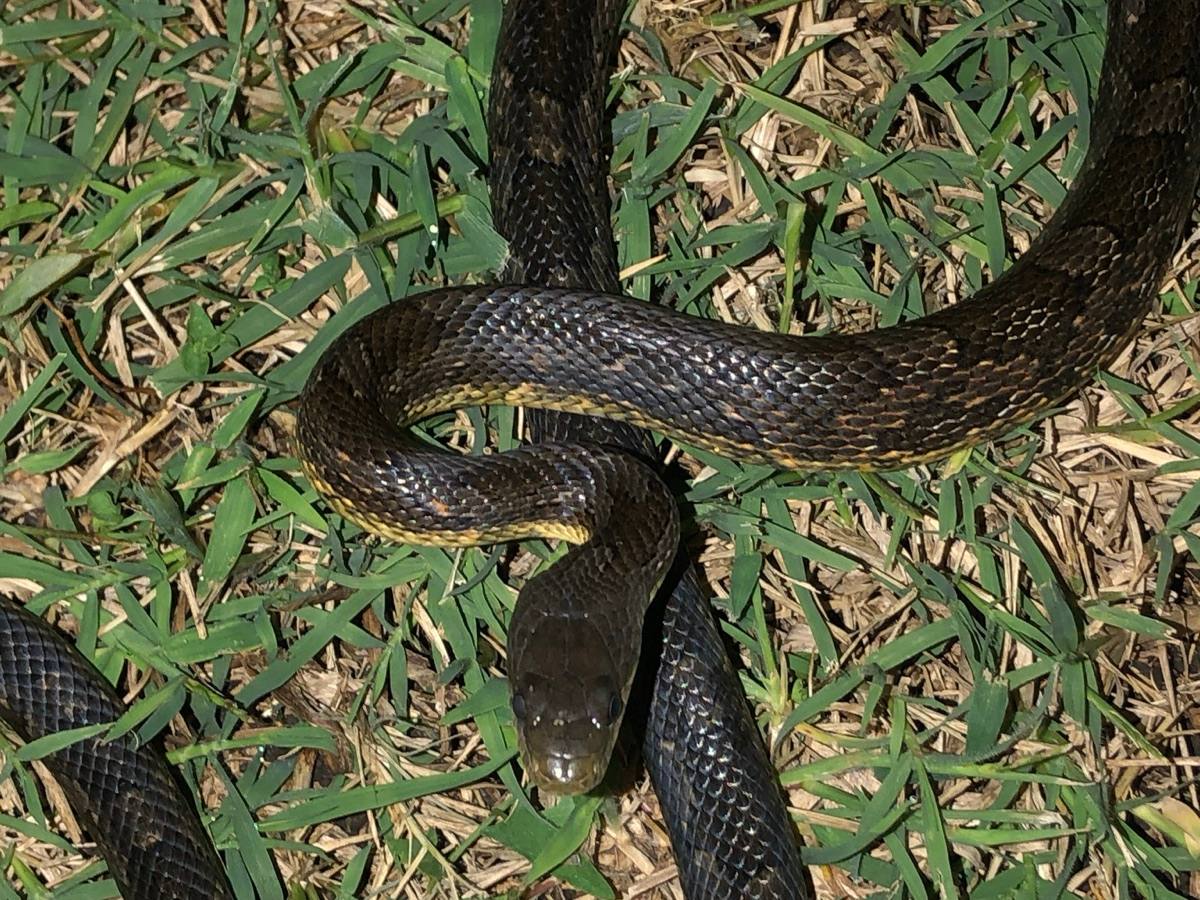
Western Ratsnake
Pantherophis obsoletus
Non-venomousThe quick way to tell
Look at where the dark marks run. The Broad-banded Copperhead's wide bands wrap down its sides. Young Western Ratsnakes, and blotched Texas adults, have blotches mostly on top of the back, with smaller, separate spots low on the sides.
Pattern ★ This settles it
Wide dark crossbands that stay about the same width all the way across the back.
Adults black in the north, blotched on yellowish or gray in Texas; young boldly blotched.
Head
Coppery, unmarked, triangular head clearly wider than the neck.
Narrow head only a little wider than the neck; white to gray chin and throat.
Eyes
Vertical slit pupil; heat-sensing pit between eye and nostril.
Round pupil, fairly large dark eye; no heat-sensing pit.
Pits
A deep heat-sensing pit on each side of the face, between the eye and the nostril.
None. There is no pit between the eye and the nostril.
Tail
Plain; young have a bright yellow tail tip.
Tapers evenly; no rattle - but it vibrates the tip in dry leaves.
What it does
Freezes and relies on camouflage; may vibrate its tail.
Kinks its body and rattles its tail in leaves as a bluff; climbs to escape.
Where it lives
South-central US: central and west Texas, central Oklahoma and south-central Kansas, south into northern Mexico.
Central US west of the Mississippi River: southeastern Minnesota, Iowa, Nebraska and Kansas south through Missouri, Arkansas, Oklahoma, Louisiana and Texas.