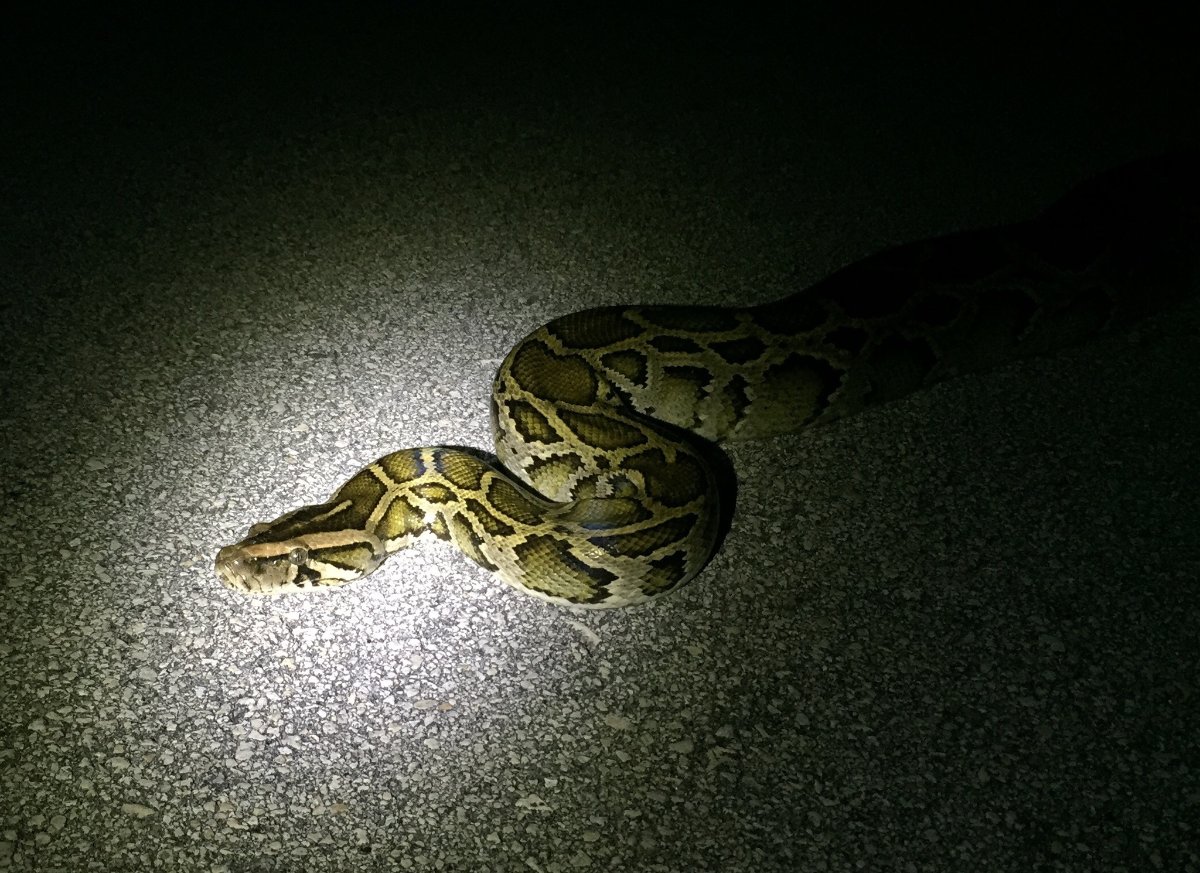
Burmese Python
Python bivittatus · Boas & Pythons
Tap a part to see what to look for. Tap it again to turn it off.
Not venomous, but a large one is genuinely strong and its bite can cause serious wounds. Do not approach or attempt to capture one — report it to Florida wildlife officials.
How to identify
- Head
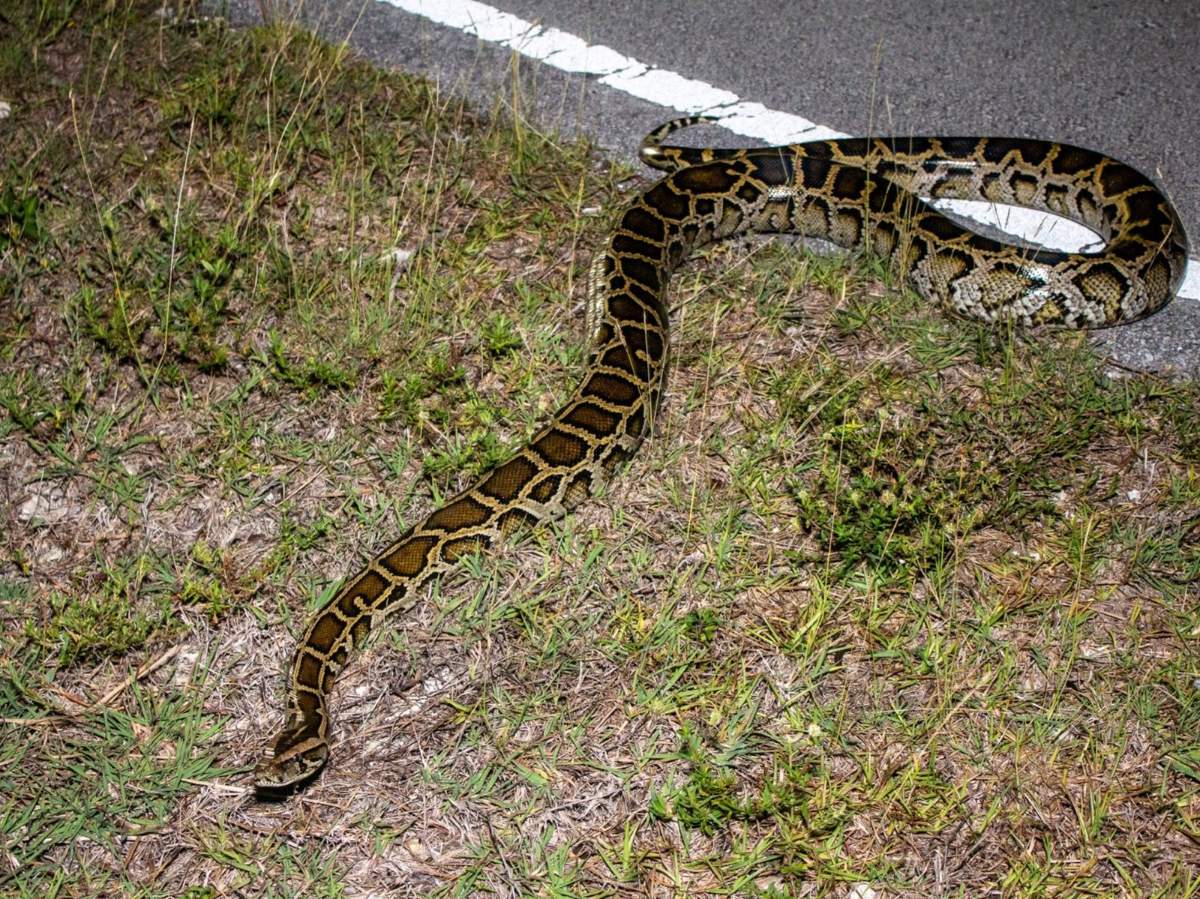
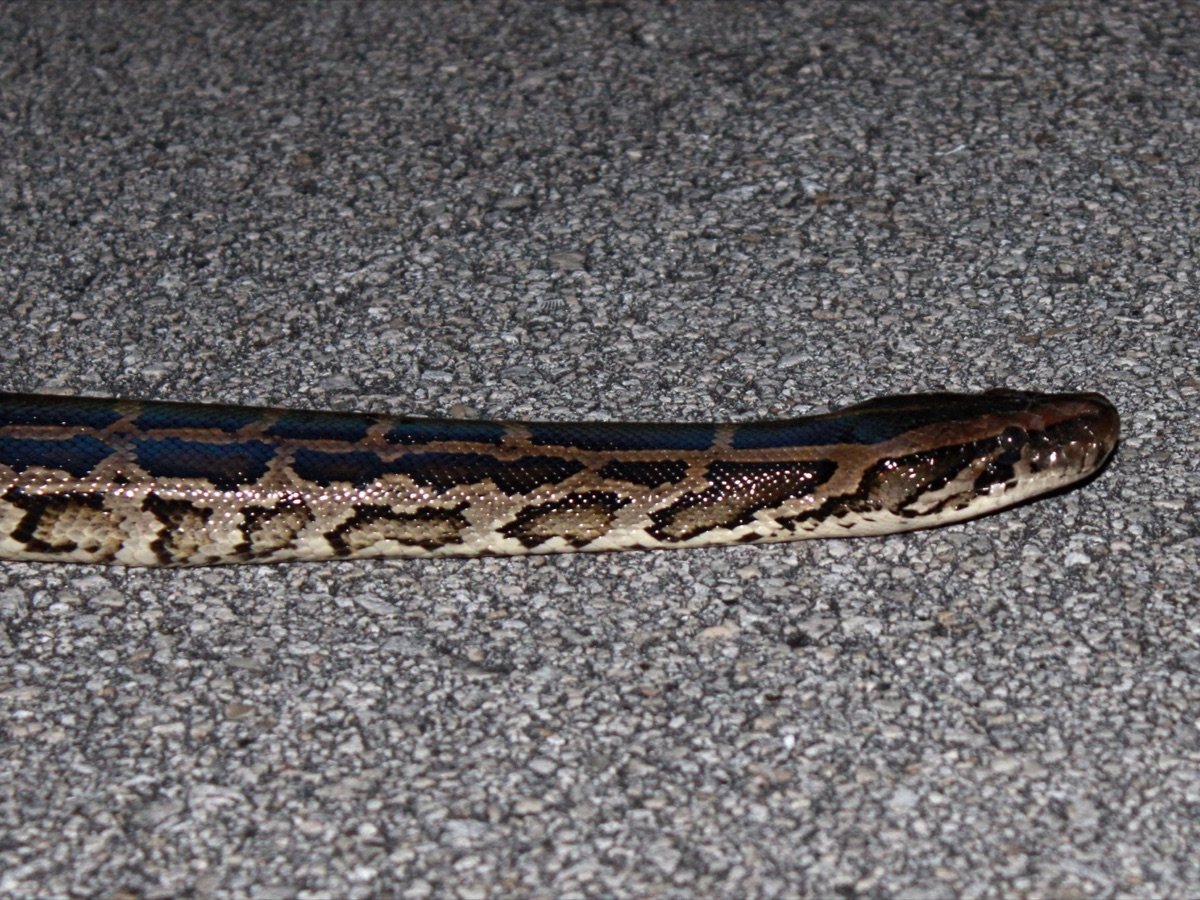
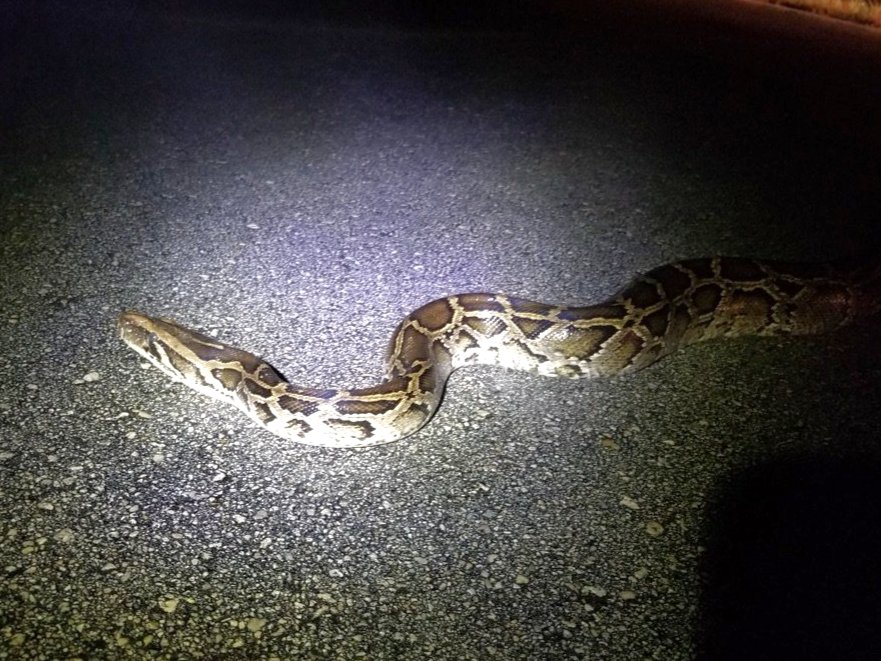
- Big and blocky; dark arrow points forward on top, dark stripe through each eye.
- Pattern
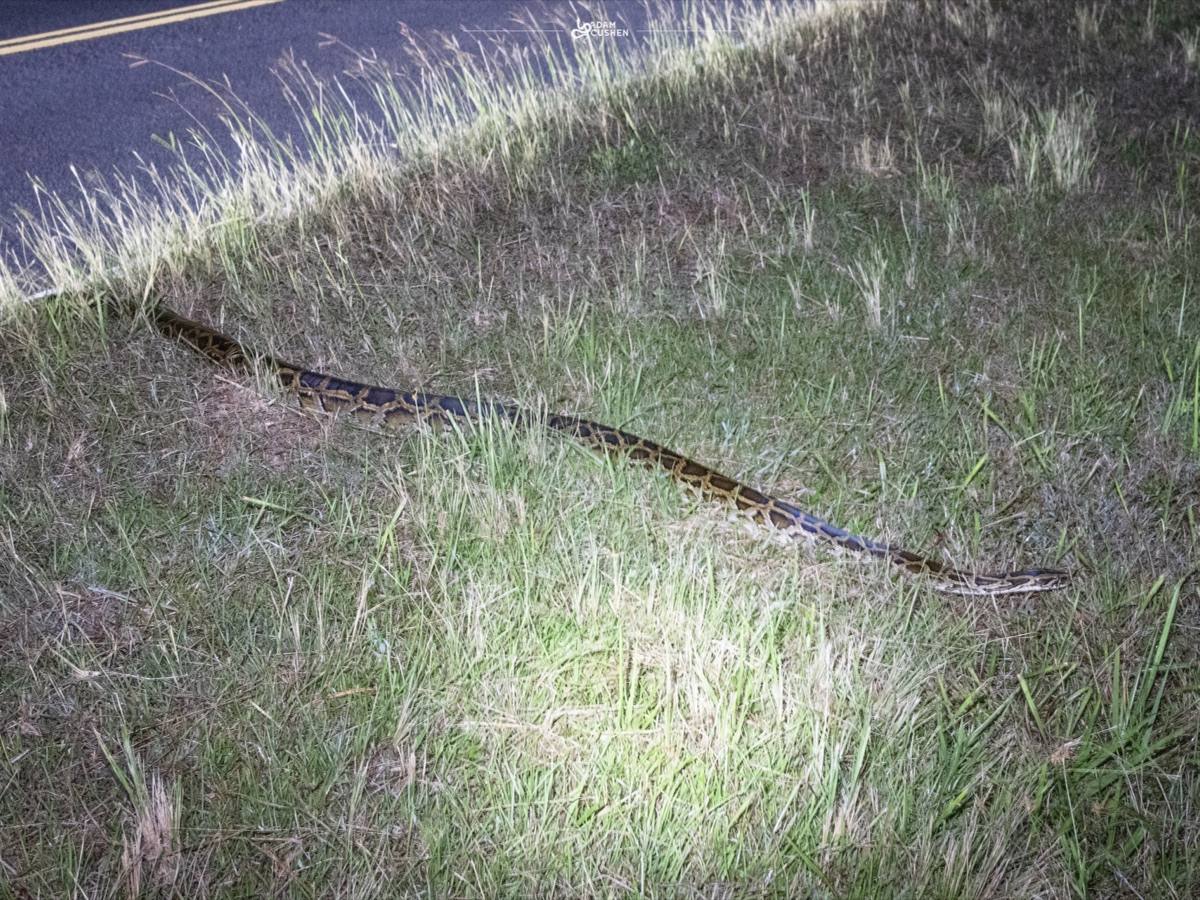
- Dark brown puzzle-piece blotches edged in black on tan.
- Eyes
- Vertical slit pupil; heat-sensing pits along the lip scales rather than one facial pit.
- Pits
- Heat-sensing pits in the scales along the lips — not between the eye and the nostril.
- Tail
- Thick and muscular, tapering; no rattle.
- What it does
- Lies still in cover; a large one is strong and will bite if handled.
Often confused with
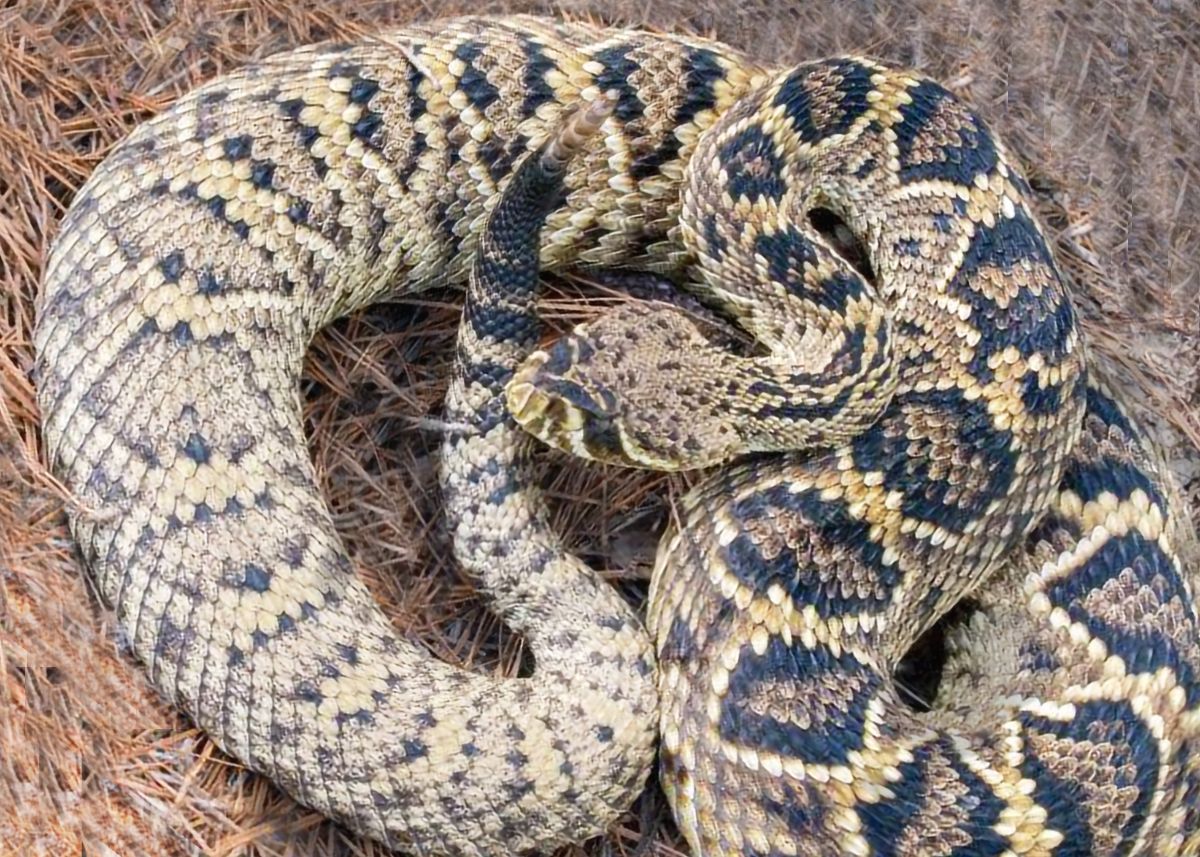
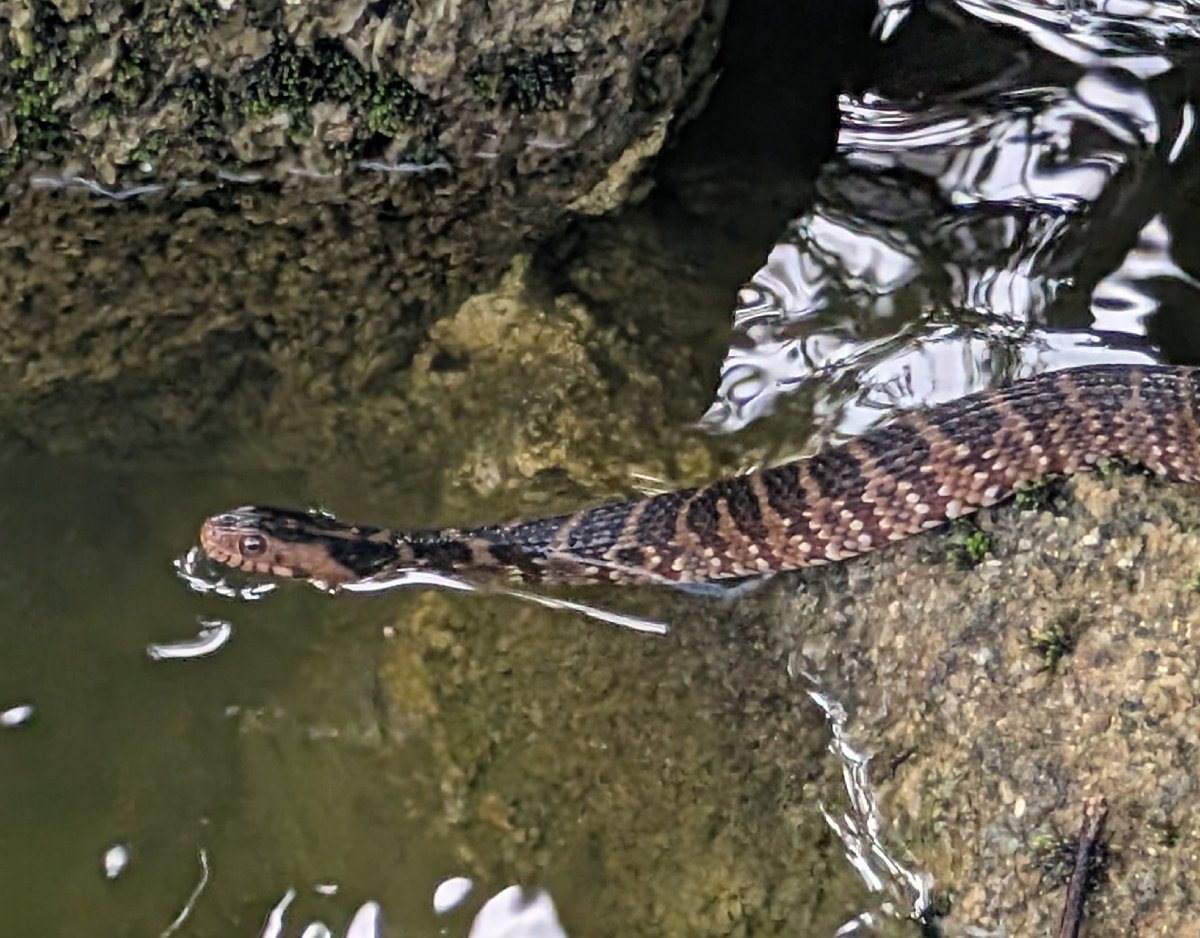
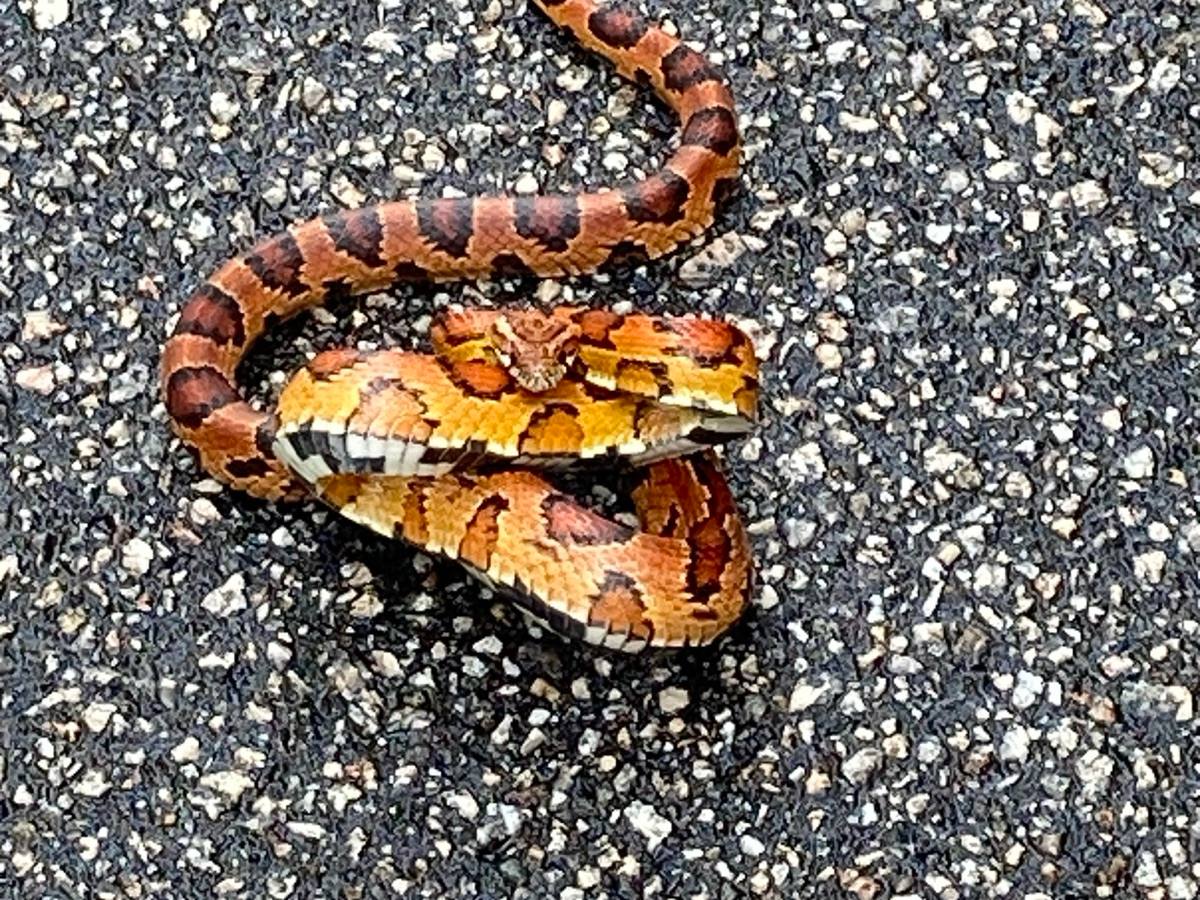
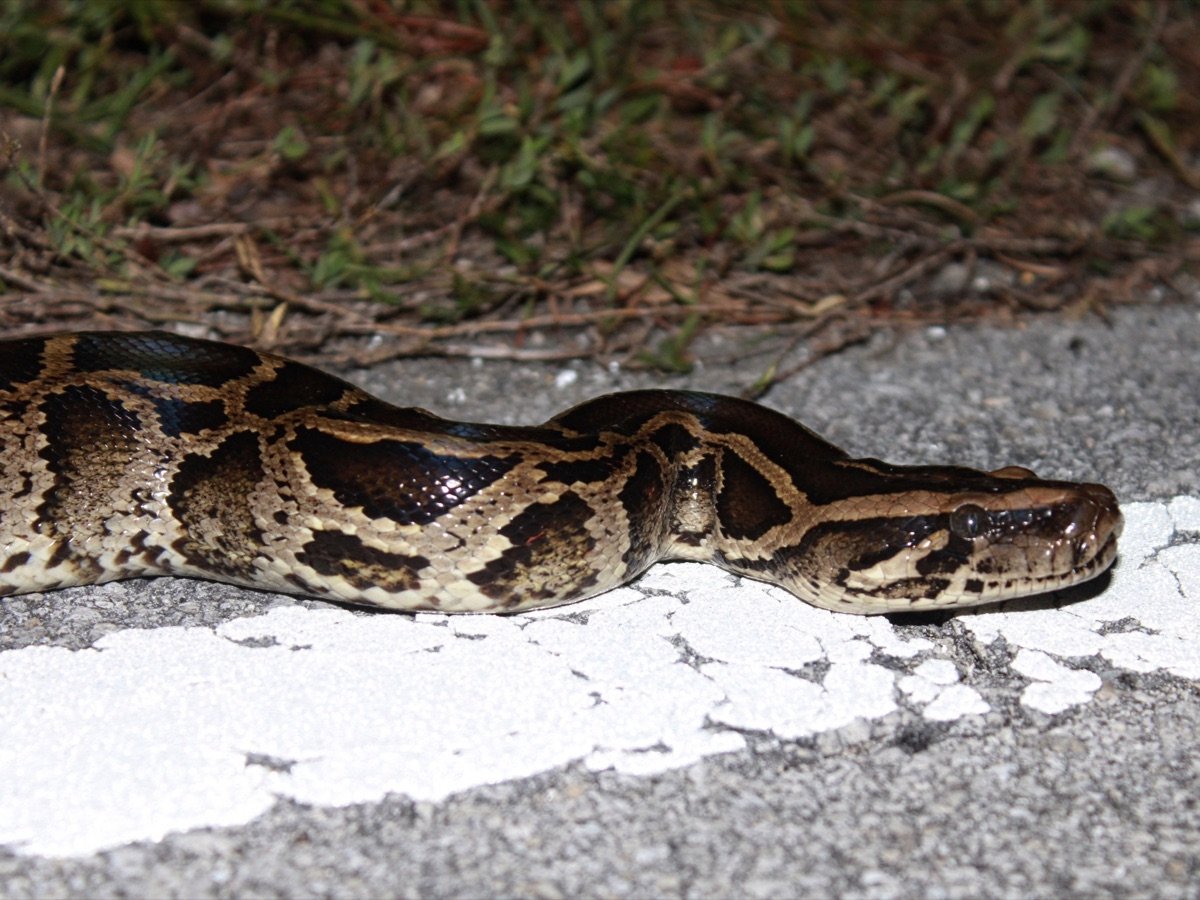
Red Cornsnake is smaller, with orange-red blotches edged in black, and the Eastern Diamondback Rattlesnake has diamonds and a rattle. Banded Watersnakes have crossbands, not the python's giraffe-like blotches and dark wedge on the head.
How to tell them apart
Burmese Python vs Eastern Diamondback Rattlesnake›
The quick way to tellCheck the tail tip. The Eastern Diamondback ends in a rattle, often with dark bands just before it. The Burmese Python's tail just tapers, and its back has puzzle-piece blotches, not cream-edged diamonds.
Burmese Python: Thick and muscular, tapering; no rattle.
Eastern Diamondback Rattlesnake: Black and white bands ahead of a large rattle.
Burmese Python vs Banded Watersnake›
The quick way to tellLook at the back markings. The Burmese Python has big, irregular puzzle-piece blotches on a smooth, shiny tan body. The Banded Watersnake has dark crossbands running over the back and duller, rougher-looking scales.
Burmese Python: Dark brown puzzle-piece blotches edged in black on tan.
Banded Watersnake: Dark crossbands widest across the back; belly has dark square marks.
Burmese Python vs Red Cornsnake›
The quick way to tellCheck the color and blotch shape. The Red Cornsnake has neat red-orange saddles edged in black, plus a black-and-white checkerboard belly. The Burmese Python is tan with big, irregular dark brown puzzle-piece blotches.
Burmese Python: Dark brown puzzle-piece blotches edged in black on tan.
Red Cornsnake: Bold red-orange saddles edged in black on orange to gray; black-and-white checkerboard belly.
About the Burmese Python›
Native to Southeast Asia and not a natural part of American wildlife — the population in Florida began with escaped and released pets and is now established across the southern Everglades.
It is one of the most damaging invasive species in the country, having wiped out much of the marsh's small mammal population. Florida encourages removal, and it is legal to capture and kill them there year-round.
The details
Size Commonly 6–12 ft in Florida; the state record is over 18 ftWeight Often 30–100 lb; record animals over 200 lbLifespan 20–25 years
Typical range›
Introduced and established in south Florida, mainly the Everglades and surrounding wetlands. Native to Southeast Asia.
Activity›
Active at night in warm months and by day in cool weather. Swims and climbs well; hides in dense cover and burrows.
Diet›
Mammals and birds killed by constriction — raccoons, opossums, rabbits, deer, wading birds and even alligators.
Reproduction›
Lays eggs, often 20–60, and the female coils around them until they hatch.
Found in parts of 1 state›
Ranges are approximate. It may be found in only part of a state, or be rare there, and snakes can turn up outside of them.