‹ Compare two snakes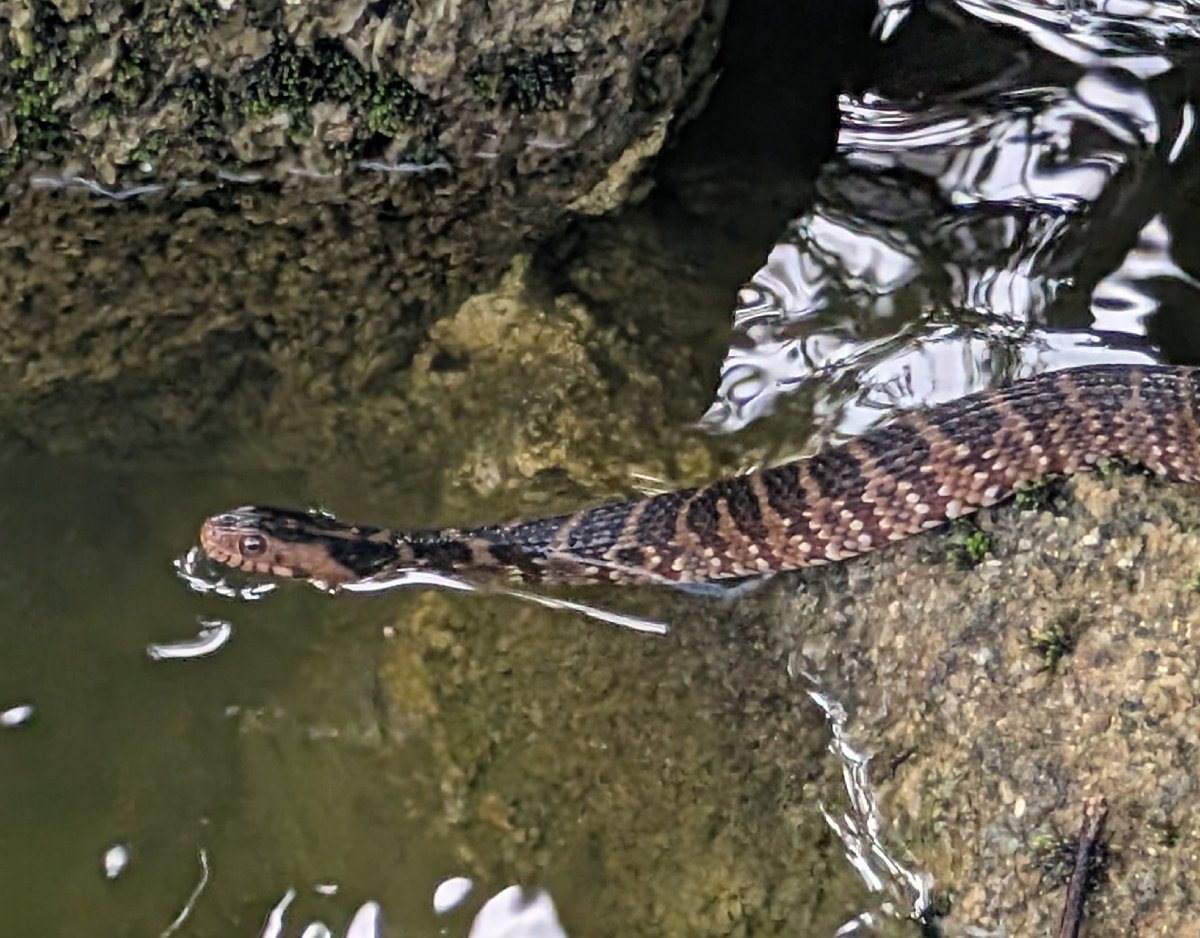
Banded Watersnake vs Burmese Python
Tap a part to see it on both. Tap it again to turn it off.
(c) Alan Prather, some rights reserved (CC BY)
Banded Watersnake
Nerodia fasciata
Non-venomous(c) Teá Montagna, some rights reserved (CC BY)
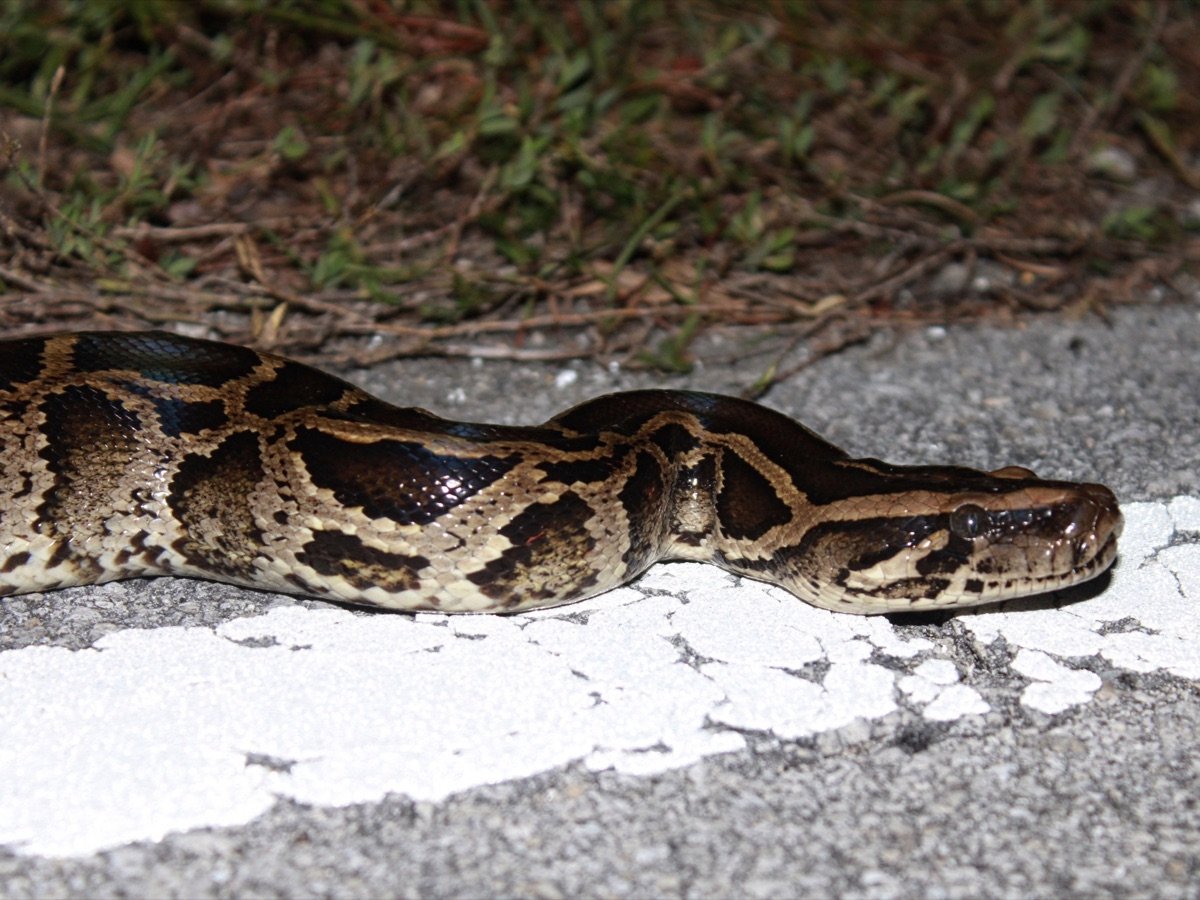
Burmese Python
Python bivittatus
Non-venomousThe quick way to tell
Look at the back markings. The Burmese Python has big, irregular puzzle-piece blotches on a smooth, shiny tan body. The Banded Watersnake has dark crossbands running over the back and duller, rougher-looking scales.
Pattern ★ This settles it
Dark crossbands widest across the back; belly has dark square marks.
Dark brown puzzle-piece blotches edged in black on tan.
Head
Narrow head that flattens when alarmed; a dark stripe often runs from eye to jaw.
Big and blocky; dark arrow points forward on top, dark stripe through each eye.
Eyes
Round pupil, eyes set high on the head; no heat-sensing pit.
Vertical slit pupil; heat-sensing pits along the lip scales rather than one facial pit.
Pits
None. There is no pit between the eye and the nostril.
Heat-sensing pits in the scales along the lips — not between the eye and the nostril.
Tail
Tapers evenly; no rattle.
Thick and muscular, tapering; no rattle.
What it does
Flattens its head and may strike if cornered; flees to water first.
Lies still in cover; a large one is strong and will bite if handled.
Where it lives
Southeast coastal plain from North Carolina through Florida, west to eastern Texas and Oklahoma, and up the Mississippi valley to southern Illinois; introduced in California.
Introduced and established in south Florida, mainly the Everglades and surrounding wetlands. Native to Southeast Asia.