Checkered Gartersnake
Thamnophis marcianus · Garter & Ribbon Snakes
Tap a part to see what to look for. Tap it again to turn it off.
No venom, but it may bite and smear musk if handled.
How to identify
- Head
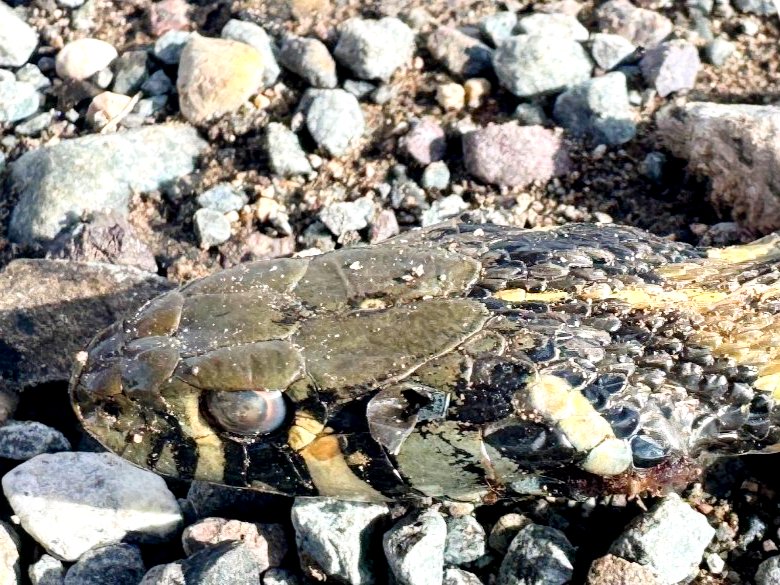
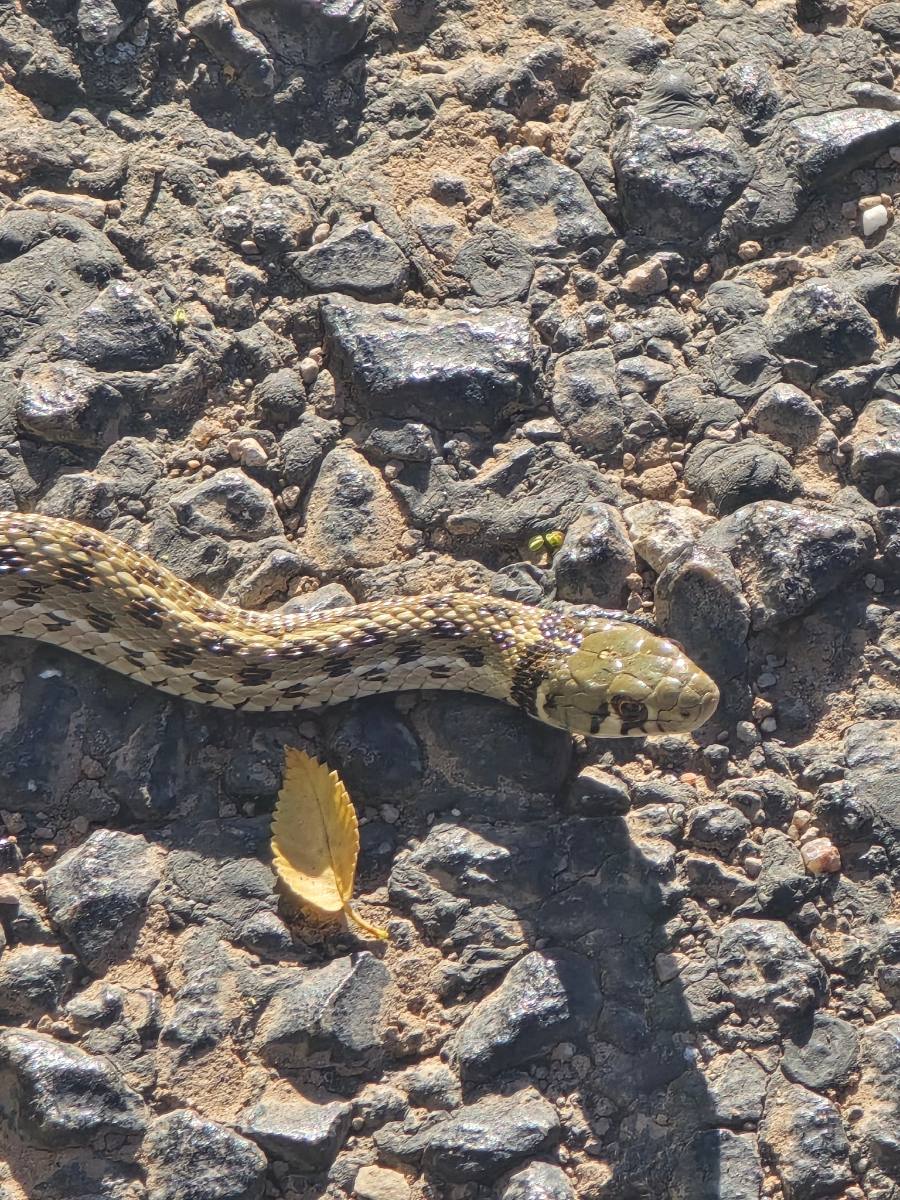
- A cream or yellow crescent at the back of each side of the head, with a dark blotch on the neck just behind it. The lips have light and dark vertical bars, and there is a small light spot on top of the head.
- Pattern
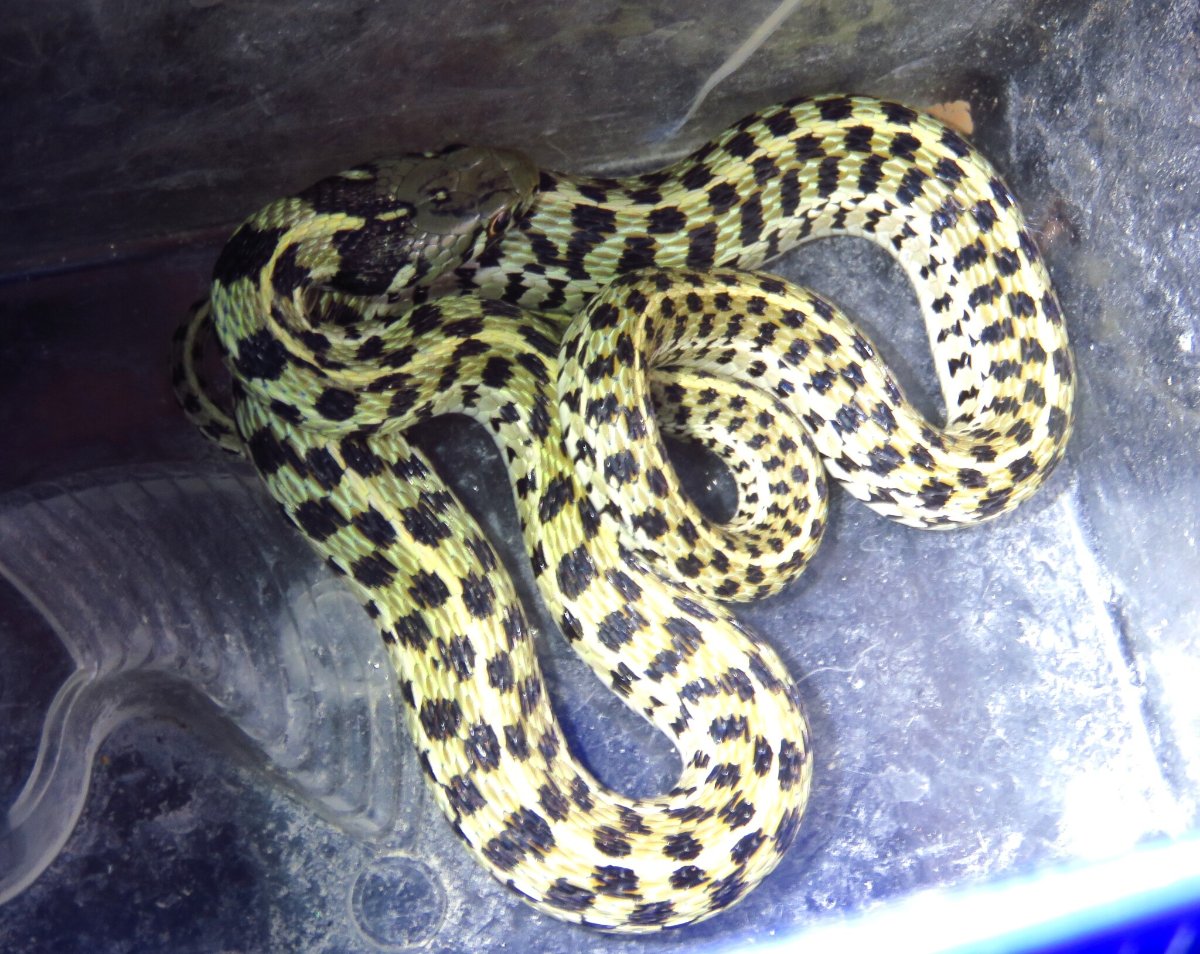
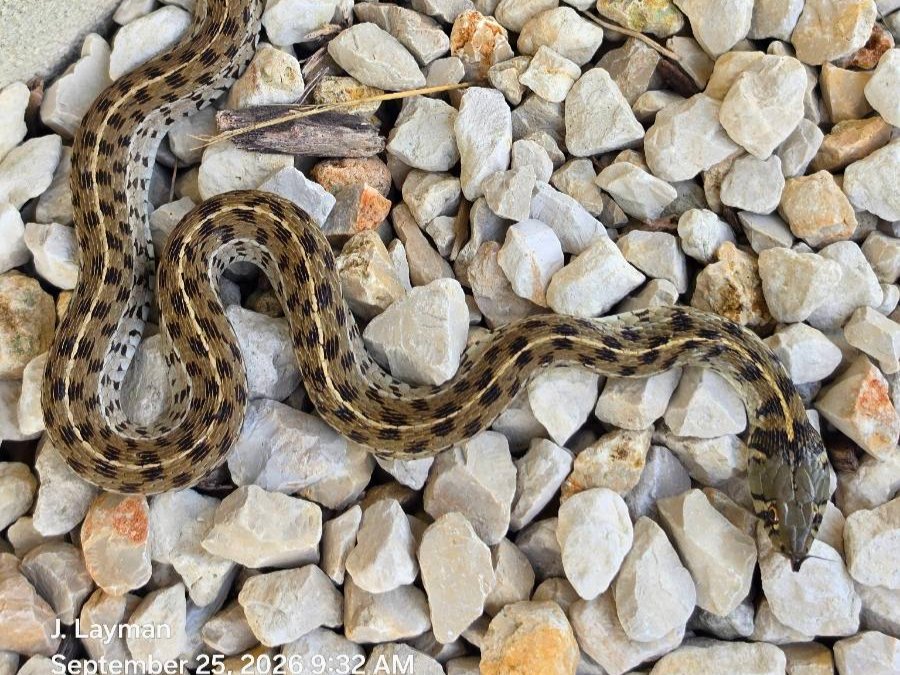
- Thin yellow, cream or orange stripe down the middle of the back, and a pale stripe low on each side (near the head it sits on the third row of scales up from the belly). Between the stripes are black squarish spots in an alternating checkerboard. The belly is cream to light gray with few or no markings. The scales are keeled.
- Eyes
- Round pupils.
- Pits
- None. There is no pit between the eye and the nostril.
- What it does
- May bite when first caught and may smear musk and droppings on the handler. Good at finding new water sources such as isolated cattle tanks. Groups may spend winter together.
Often confused with
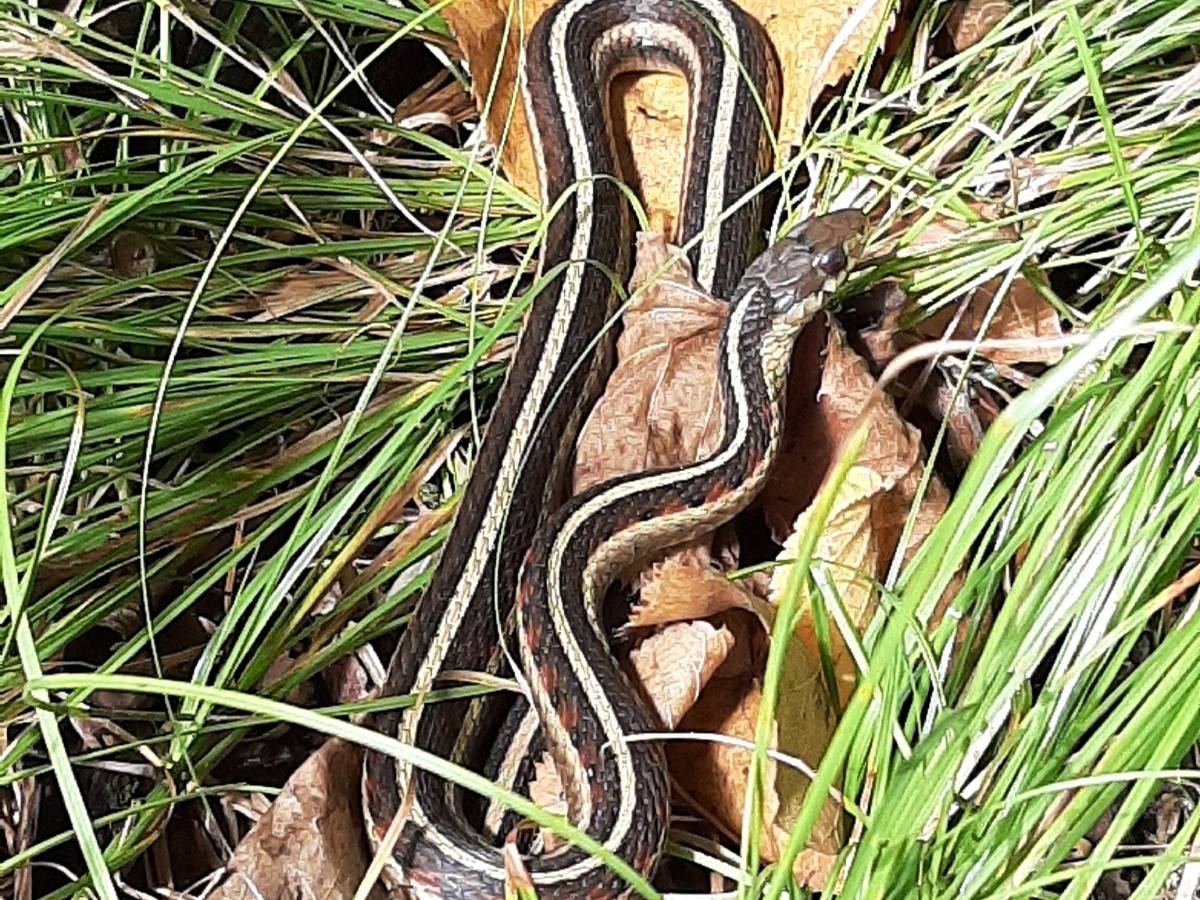
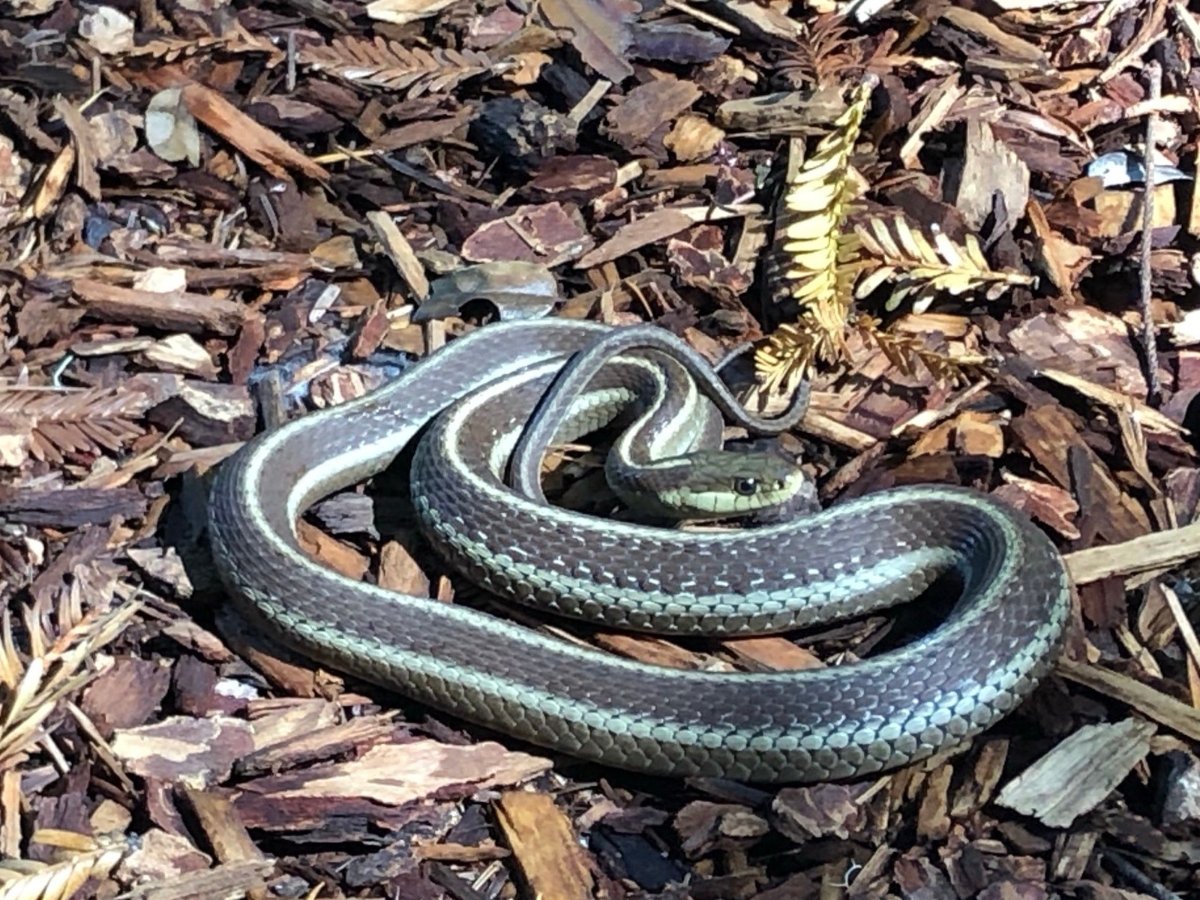
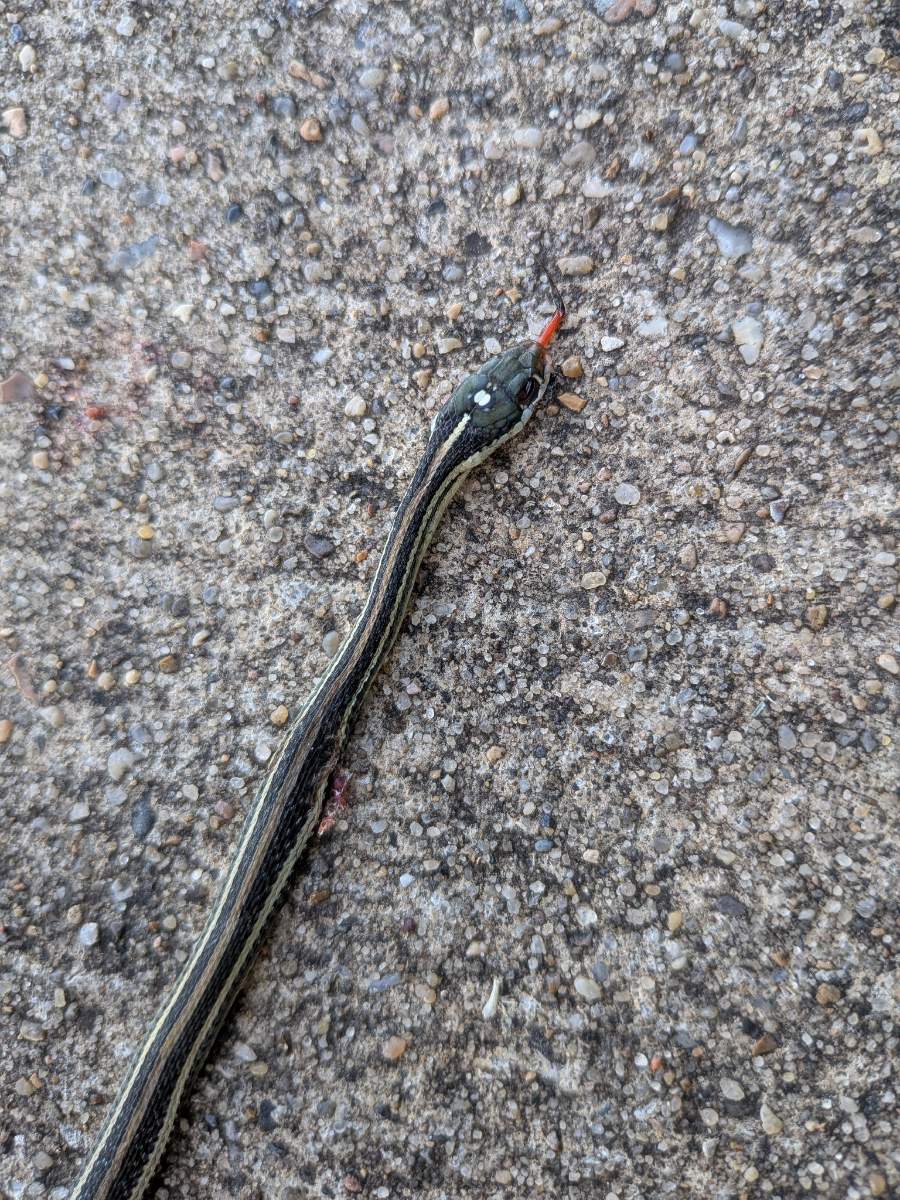
Other gartersnakes and ribbonsnakes have stripes too, but lack the bold side checkerboard and the pale crescent with a black neck blotch. In the Common and Terrestrial Gartersnakes the side stripe sits lower, on the second and third scale rows. In Arizona, the Black-necked and Mexican Gartersnakes are also look-alikes; in California, the Two-striped Gartersnake.
How to tell them apart
Checkered Gartersnake vs Common Gartersnake›
The quick way to tellLook at where the pale side stripe sits near the head. The Checkered Gartersnake's side stripe is on the third row of scales up from the belly, with bold black checkerboard squares above it. The Common Gartersnake's side stripe is lower, on the second and third rows.
Checkered Gartersnake: Thin yellow, cream or orange stripe down the middle of the back, and a pale stripe low on each side (near the head it sits on the third row of scales up from the belly). Between the stripes are black squarish spots in an alternating checkerboard. The belly is cream to light gray with few or no markings. The scales are keeled.
Common Gartersnake: Three pale stripes - spine and low on each side - often with red flecks between.
Checkered Gartersnake vs Terrestrial Gartersnake›
The quick way to tellLook at where the pale side stripe sits near the head. The Checkered Gartersnake's side stripe is on the third row of scales up from the belly. The Terrestrial Gartersnake's side stripe is lower, on the second and third rows.
Checkered Gartersnake: Thin yellow, cream or orange stripe down the middle of the back, and a pale stripe low on each side (near the head it sits on the third row of scales up from the belly). Between the stripes are black squarish spots in an alternating checkerboard. The belly is cream to light gray with few or no markings. The scales are keeled.
Terrestrial Gartersnake: Three dull, broken stripes with dark checks between; some nearly plain brown.
Checkered Gartersnake vs Western Ribbonsnake›
The quick way to tellLook at the lips. The Checkered Gartersnake has light and dark vertical bars on its lips and a pale crescent with a black blotch behind the head. The Western Ribbonsnake has plain white or pale green upper lips with no black bars.
Checkered Gartersnake: A cream or yellow crescent at the back of each side of the head, with a dark blotch on the neck just behind it. The lips have light and dark vertical bars, and there is a small light spot on top of the head.
Western Ribbonsnake: Black or dark head with an orange, yellow or white spot (often two joined pale spots) on top. The upper lip scales are plain white or pale green with no black bars. There is a pale spot in front of the eye.
About the Checkered Gartersnake›
The Checkered Gartersnake lives in the Southwest and southern Great Plains, from southeastern California, southern Arizona and New Mexico east through Texas and Oklahoma to southern Kansas, and south into Mexico and Central America. It is found near water in dry country: rivers, springs, ponds, cattle tanks, marshes, canals, irrigation ditches and farm fields.
Its name comes from the bold black squares in a checkerboard pattern along its sides, between a thin yellow or orange stripe down the back and a pale stripe on each side. A pale crescent at the back of the head with a black blotch behind it on the neck is another good clue.
The details
Size Adults usually 18–36 in (45–90 cm); maximum about 42–43 in (107–109 cm). Females are larger. Newborns about 5–11 in.Weight About 31–122 g (1–4.3 oz) (from Animal Diversity Web; only one source found).Lifespan About 7 years in the wild, up to 10 in captivity (from Animal Diversity Web; only one source found).
Typical range›
Southwestern and south-central US (southeastern California, Arizona, New Mexico, Texas, Oklahoma, southern Kansas) south through Mexico to Central America (Costa Rica).
Activity›
Active by day or at night; night activity becomes more common in the heat of summer. Mostly active April through October.
Diet›
Frogs, toads, spadefoots and tadpoles, fish, lizards, earthworms and slugs; also salamanders, small snakes, crayfish and small mice.
Reproduction›
Gives birth to live young. Mates in spring soon after leaving winter shelter; litters of about 3–35 (usually about 13–15) are born from late spring to fall, mostly June–September. Females may have two litters in good years.
Found in parts of 6 states›
Ranges are approximate. It may be found in only part of a state, or be rare there, and snakes can turn up outside of them.