‹ Compare two snakes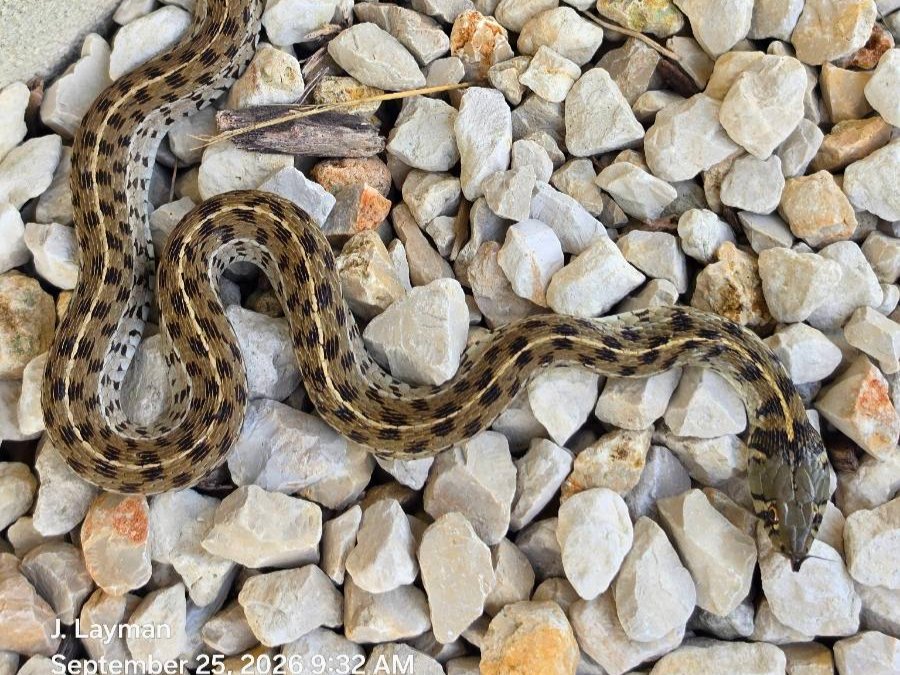
Checkered Gartersnake vs Western Ribbonsnake
Tap a part to see it on both. Tap it again to turn it off.
(c) Jason Layman, some rights reserved (CC BY-SA)
Checkered Gartersnake
Thamnophis marcianus
Non-venomous(c) Taylor Seybert, some rights reserved (CC BY)
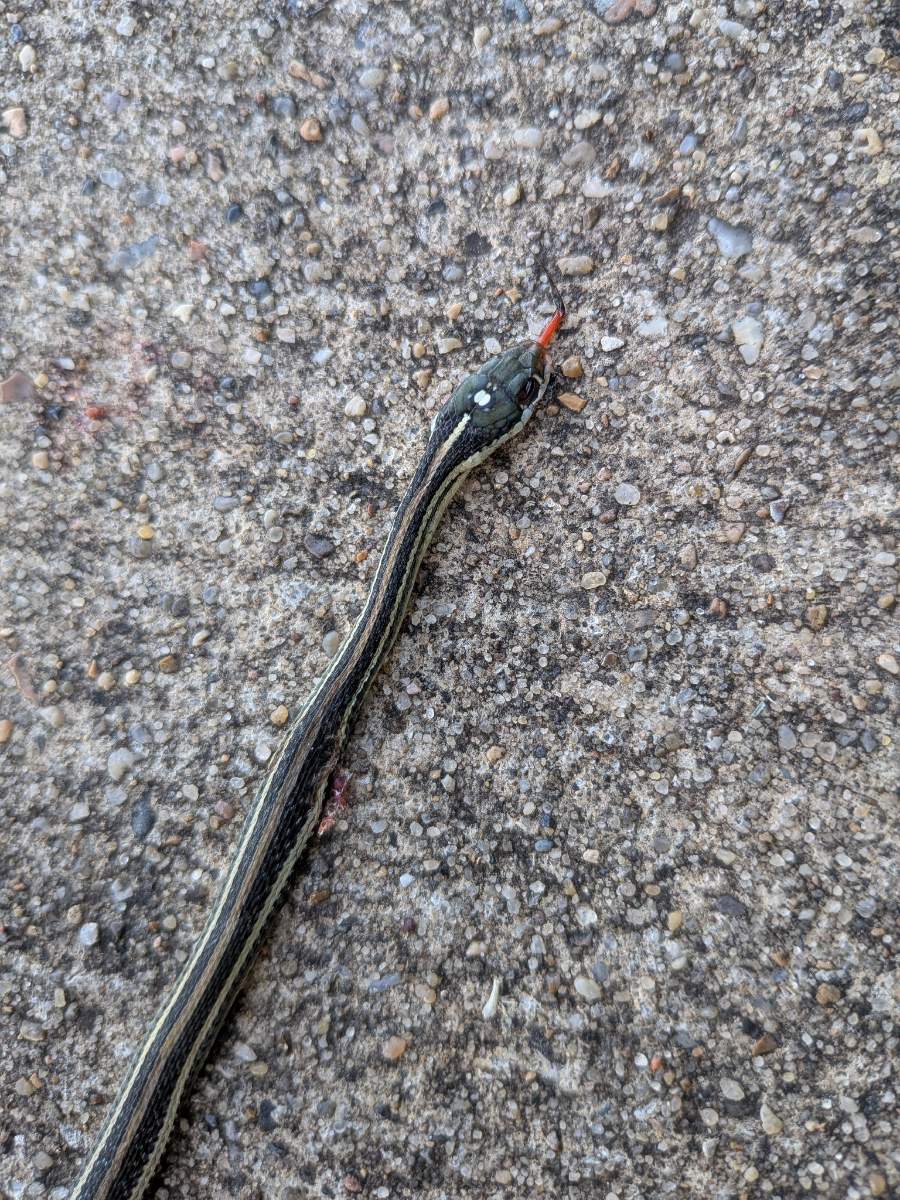
Western Ribbonsnake
Thamnophis proximus
Non-venomousThe quick way to tell
Look at the lips. The Checkered Gartersnake has light and dark vertical bars on its lips and a pale crescent with a black blotch behind the head. The Western Ribbonsnake has plain white or pale green upper lips with no black bars.
Head ★ This settles it
A cream or yellow crescent at the back of each side of the head, with a dark blotch on the neck just behind it. The lips have light and dark vertical bars, and there is a small light spot on top of the head.
Black or dark head with an orange, yellow or white spot (often two joined pale spots) on top. The upper lip scales are plain white or pale green with no black bars. There is a pale spot in front of the eye.
Pattern
Thin yellow, cream or orange stripe down the middle of the back, and a pale stripe low on each side (near the head it sits on the third row of scales up from the belly). Between the stripes are black squarish spots in an alternating checkerboard. The belly is cream to light gray with few or no markings. The scales are keeled.
Dark brown to black back with an orange or yellow stripe down the middle and a narrow yellow stripe low on each side (on the third and fourth rows of scales up from the belly). The belly is cream or light green with no markings.
Eyes
Round pupils.
—
Pits
None. There is no pit between the eye and the nostril.
None. There is no pit between the eye and the nostril.
Tail
—
Very long and thin, about a third of the total length.
What it does
May bite when first caught and may smear musk and droppings on the handler. Good at finding new water sources such as isolated cattle tanks. Groups may spend winter together.
Quick and agile. When disturbed it dives into water or hides in plants along the bank. Often climbs into low shrubs. Groups may spend the winter together in crevices, burrows and rotten stumps.
Where it lives
Southwestern and south-central US (southeastern California, Arizona, New Mexico, Texas, Oklahoma, southern Kansas) south through Mexico to Central America (Costa Rica).
Central and south-central US from southern Wisconsin and Indiana south to Texas, Louisiana and Mississippi and west to eastern New Mexico (and at least historically southeastern Colorado); also eastern Mexico and Central America to Costa Rica.