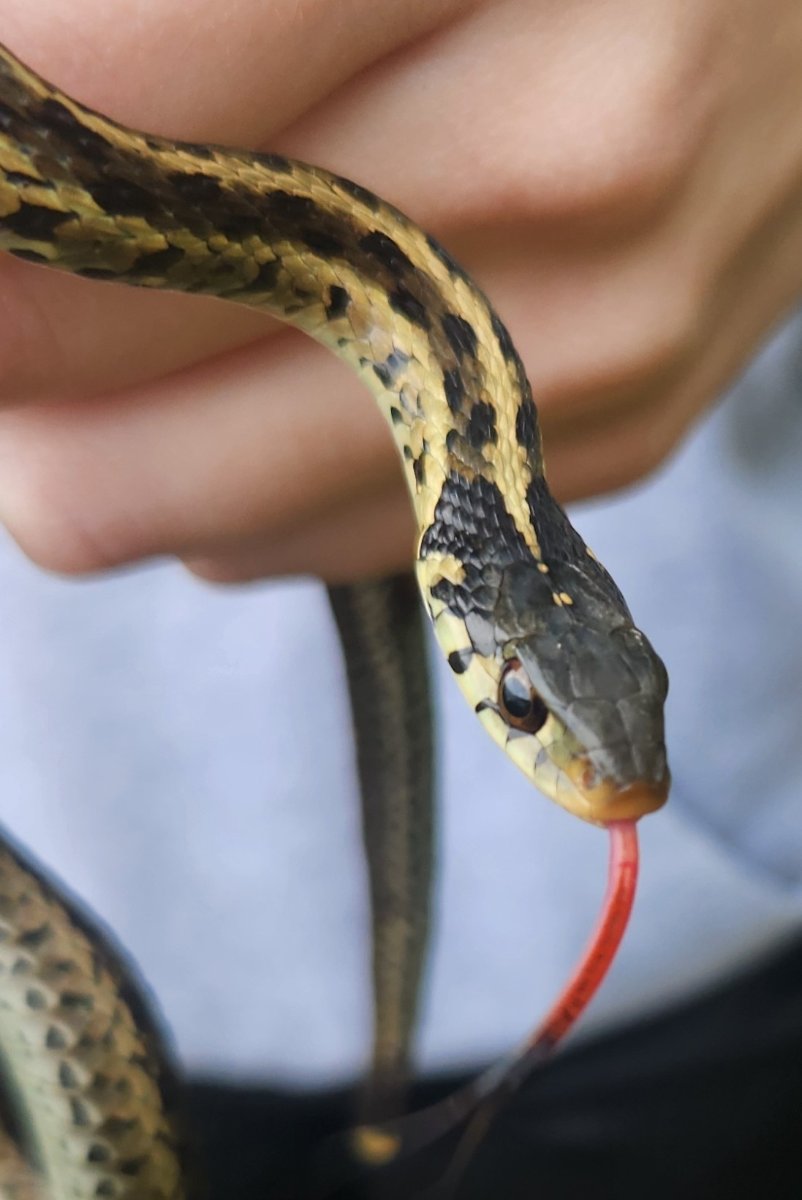
Common Gartersnake
Thamnophis sirtalis · Garter & Ribbon Snakes
Tap a part to see what to look for. Tap it again to turn it off.
Mild venom, used on prey. If picked up it musks and may give a scratchy bite. (Generally considered harmless to people.)
How to identify
- Head
- Small head barely wider than the neck; often with pale jaw markings.
- Pattern
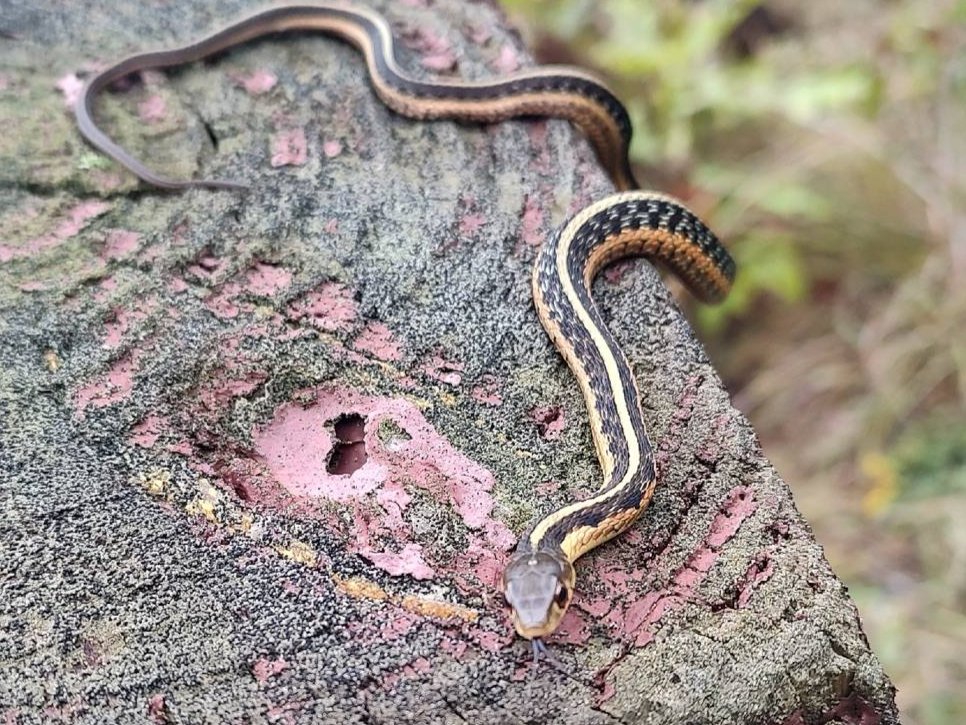
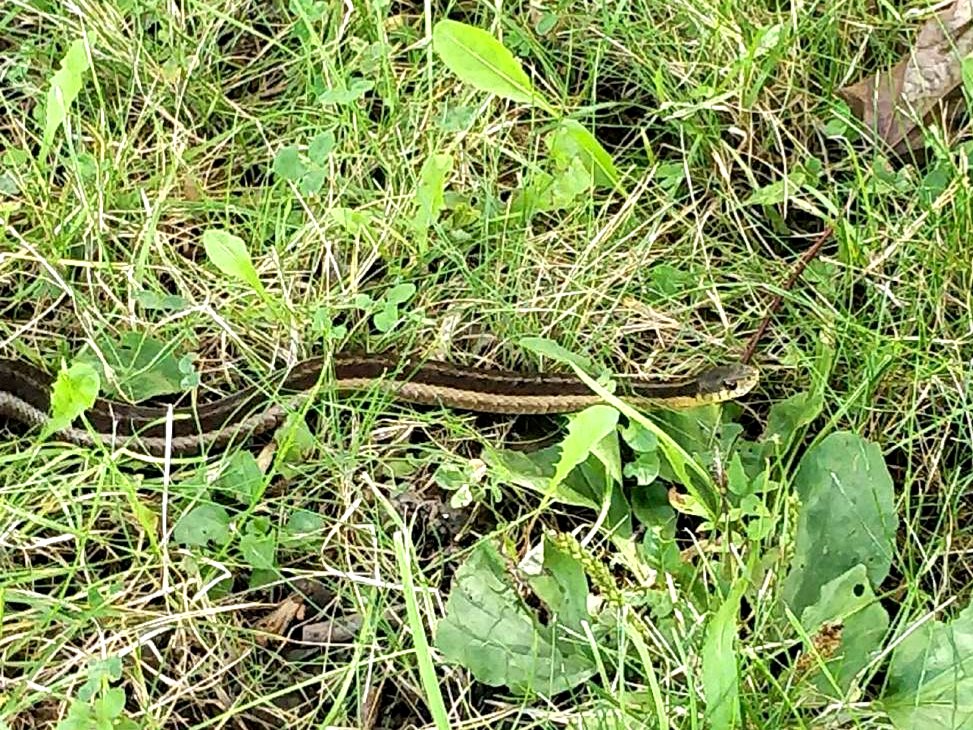
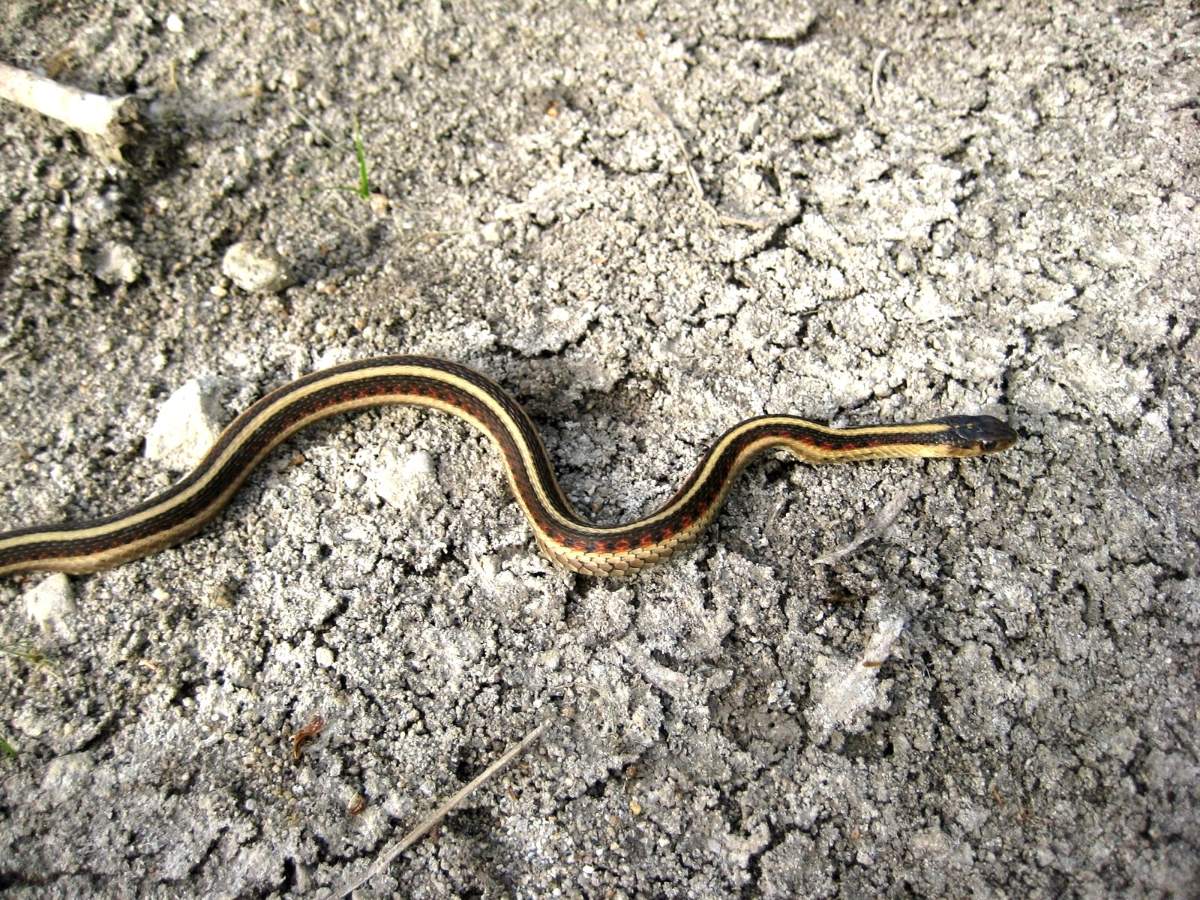
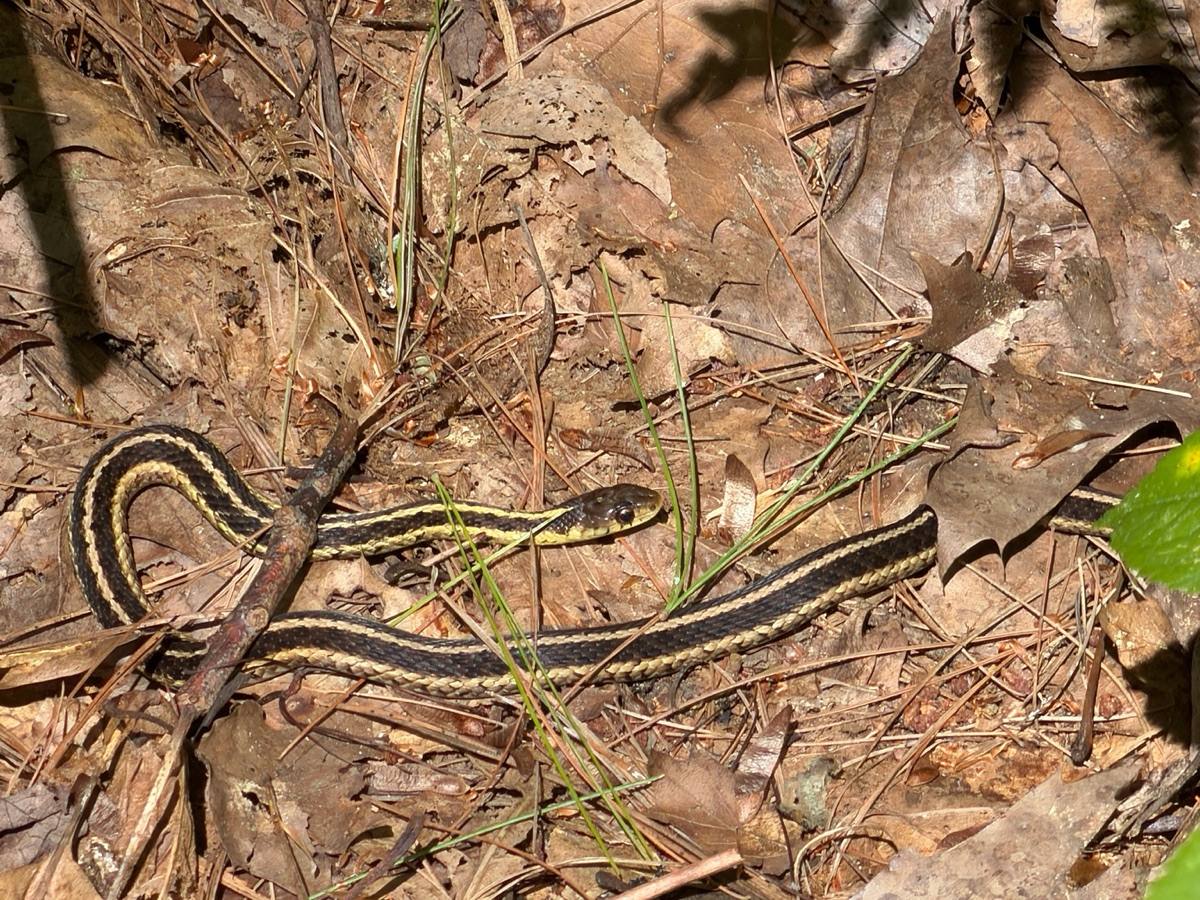
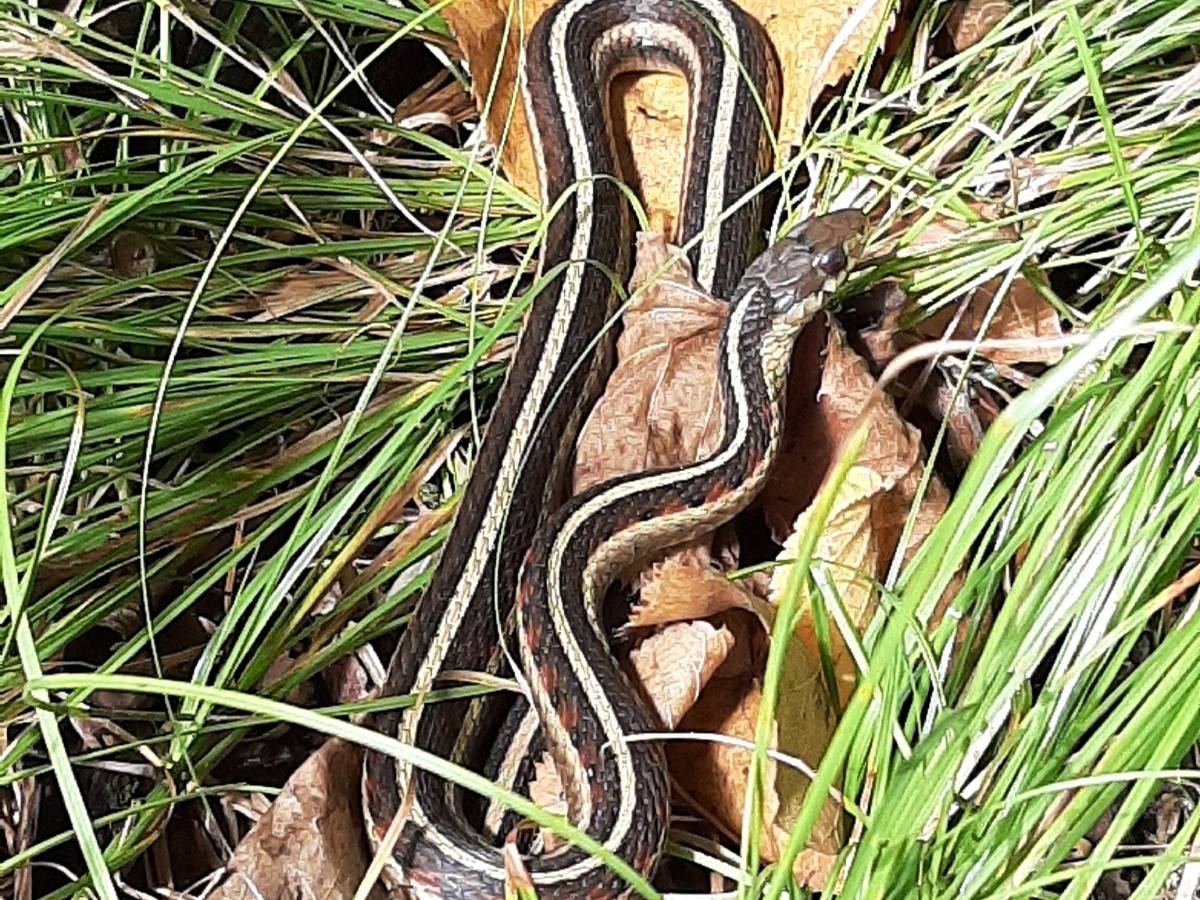
- Three pale stripes - spine and low on each side - often with red flecks between.
- Eyes
- Round pupil, fairly large dark eye; no heat-sensing pit.
- Pits
- None. There is no pit between the eye and the nostril.
- Tail
- Fairly short, about a quarter of its length; no rattle.
- What it does
- Flees for cover; musks and may give a scratchy bite if held.
Often confused with
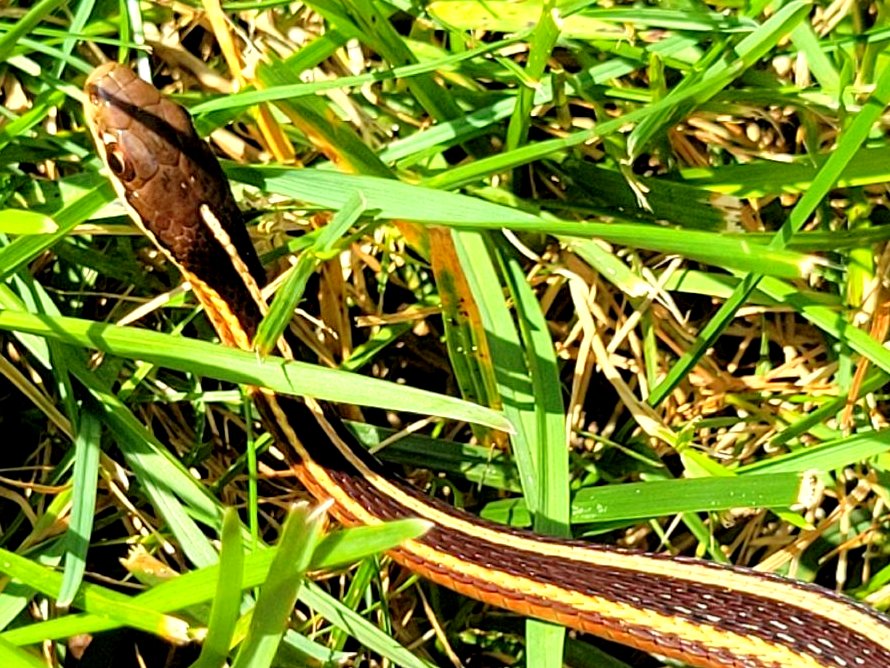
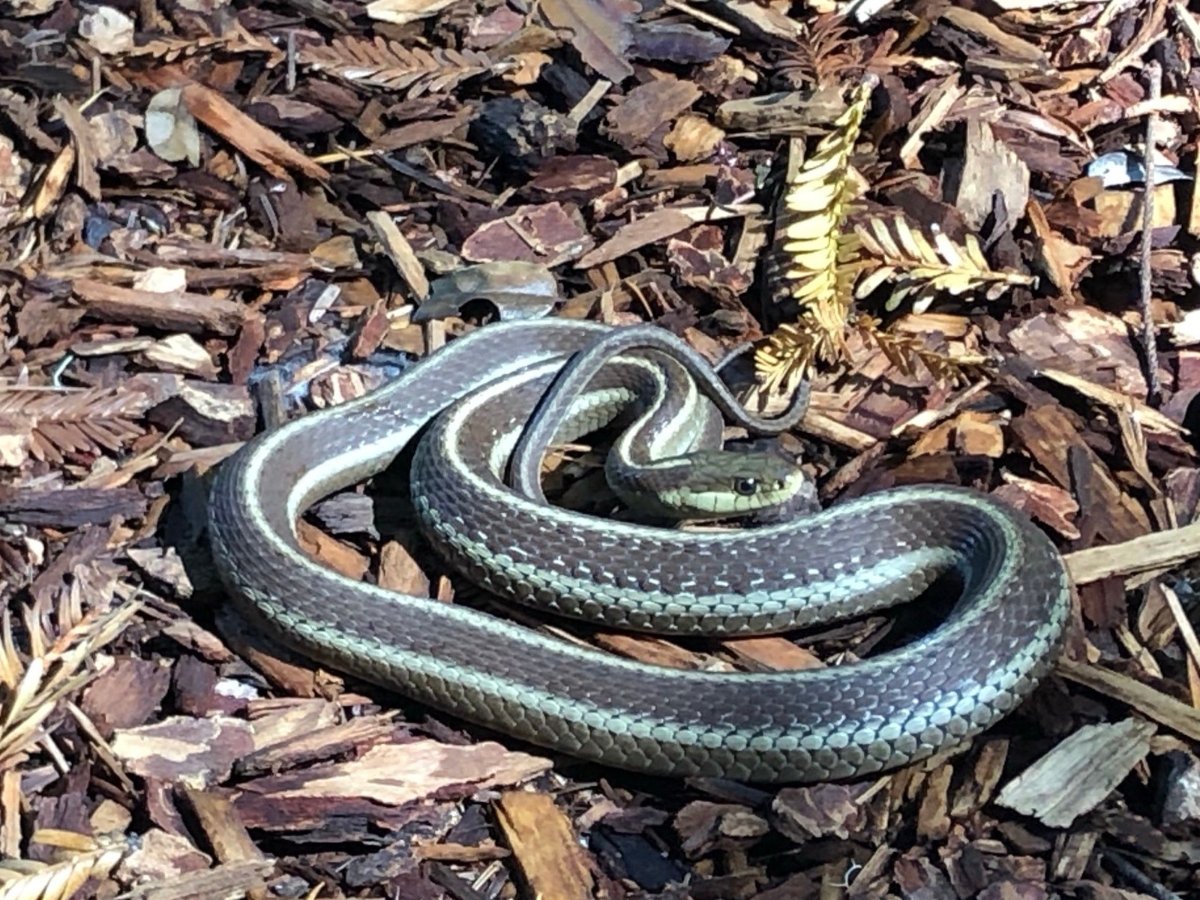
Eastern Ribbonsnake is slimmer, with a longer tail, side stripes on scale rows 3–4 rather than 2–3, and no black bars on the lips. Terrestrial Gartersnake overlaps in the West and usually has 8 upper lip scales instead of 7.
How to tell them apart
Common Gartersnake vs Eastern Ribbonsnake›
The quick way to tellLook just in front of the eye. The ribbonsnake has a pale bar there, and a much longer, thinner tail. The Common Gartersnake doesn't.
Common Gartersnake: Small head barely wider than the neck; often with pale jaw markings.
Eastern Ribbonsnake: Small narrow head with a white or yellow bar just in front of the eye.
Common Gartersnake vs Terrestrial Gartersnake›
The quick way to tellLook at the sides between the stripes. The Common Gartersnake often shows red bars or flecks there. The Terrestrial Gartersnake is usually duller, with dark checks and no red bars.
Common Gartersnake: Three pale stripes - spine and low on each side - often with red flecks between.
Terrestrial Gartersnake: Three dull, broken stripes with dark checks between; some nearly plain brown.
About the Common Gartersnake›
The snake most Americans meet first — in gardens, ditches, parks and field edges from coast to coast, and the only snake found as far north as Alaska's neighbors in Canada.
Color varies enormously by region, from black-and-yellow in the Midwest to the red-sided and San Francisco forms, which are among the most striking snakes in North America.
The details
Size Usually 18–36 in; occasionally 4 ftWeight Under 1 lbLifespan 6–10 years wild
Typical range›
Nearly all of the United States and southern Canada, except the driest Southwest.
Activity›
Day active, and out earlier in spring and later in fall than most snakes. Winters in communal dens, sometimes by the hundreds.
Diet›
Earthworms, frogs, toads, fish and slugs.
Reproduction›
Gives birth to live young, often 10–40, in late summer.
Found in parts of 47 states›
Ranges are approximate. It may be found in only part of a state, or be rare there, and snakes can turn up outside of them.
More photos