DeKay's Brownsnake
Storeria dekayi · Brownsnakes & Red-bellied Snakes
Tap a part to see what to look for. Tap it again to turn it off.
No venom and too small to bite meaningfully.
How to identify
- Head
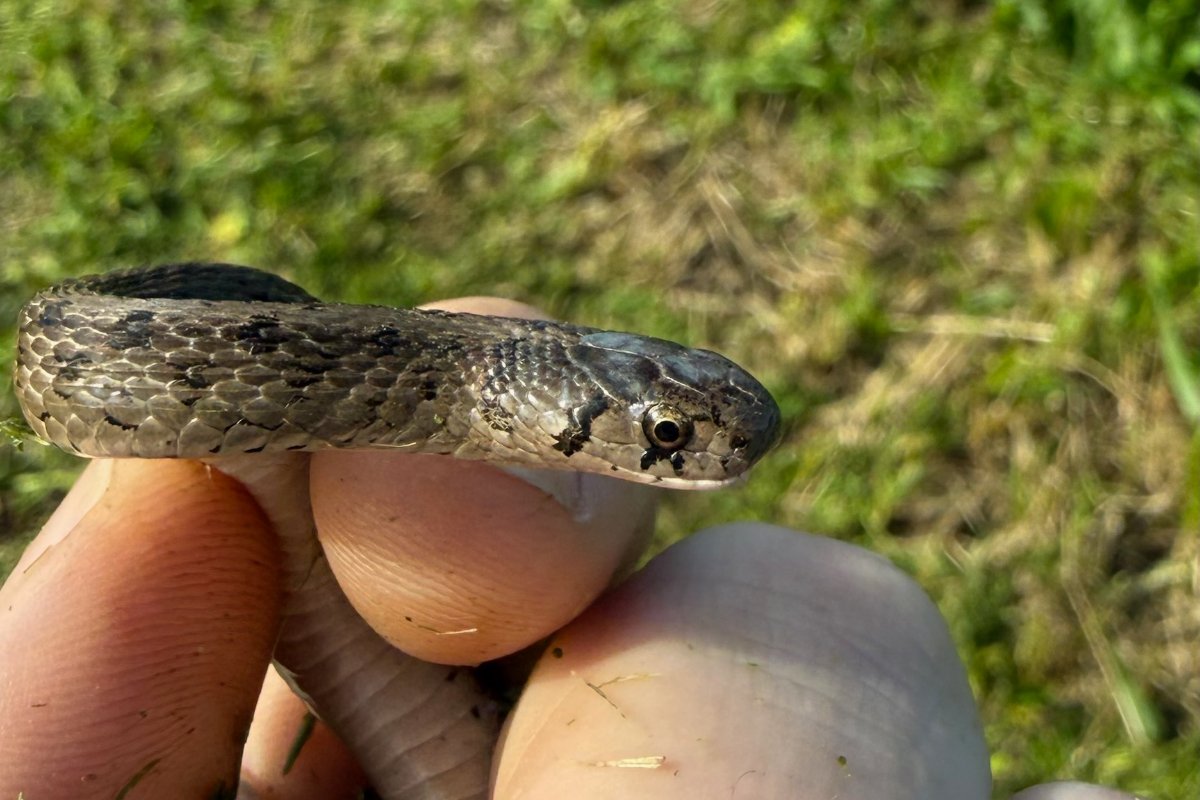
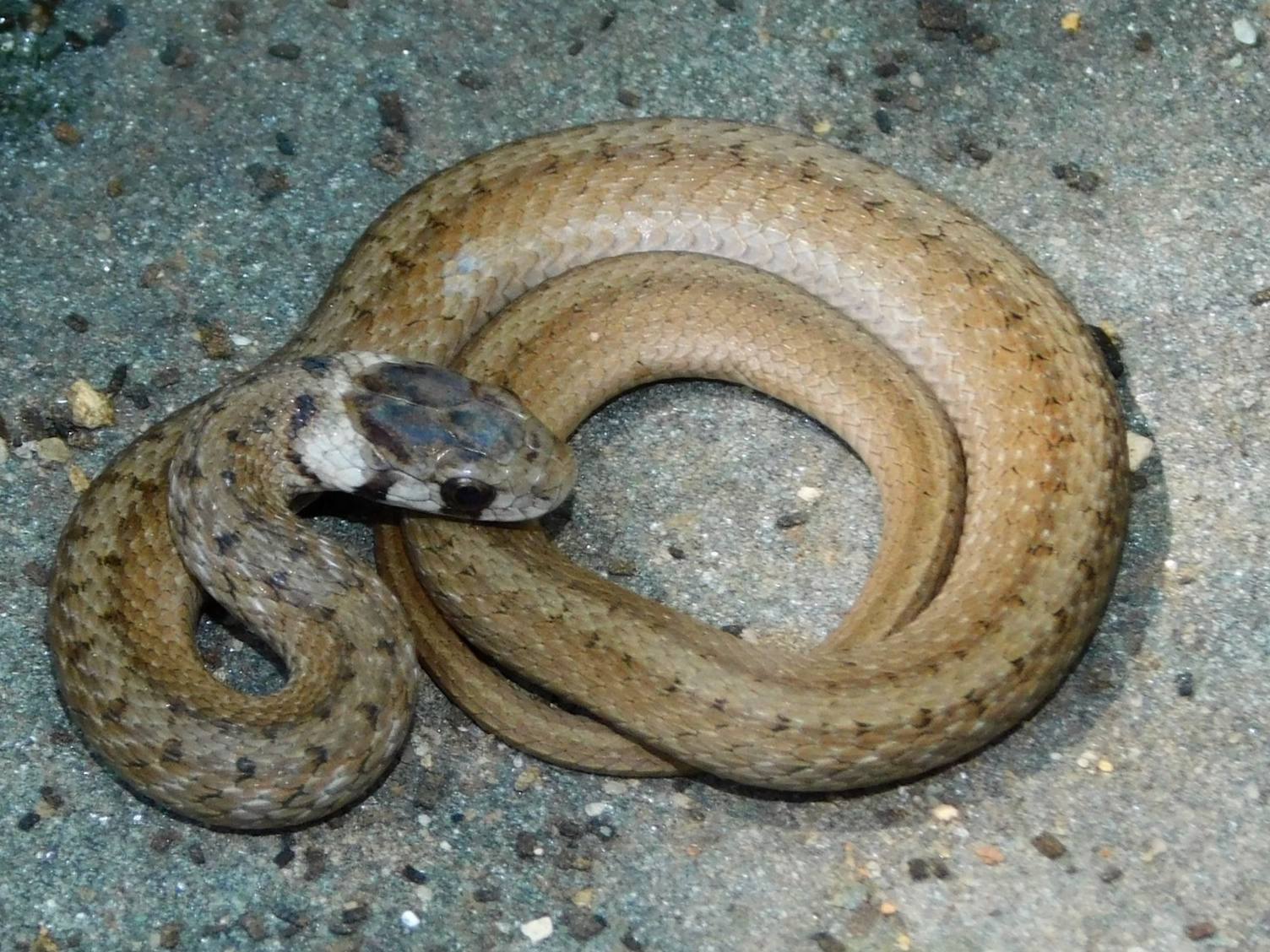
- Small head, often with a dark mark behind the jaw.
- Pattern
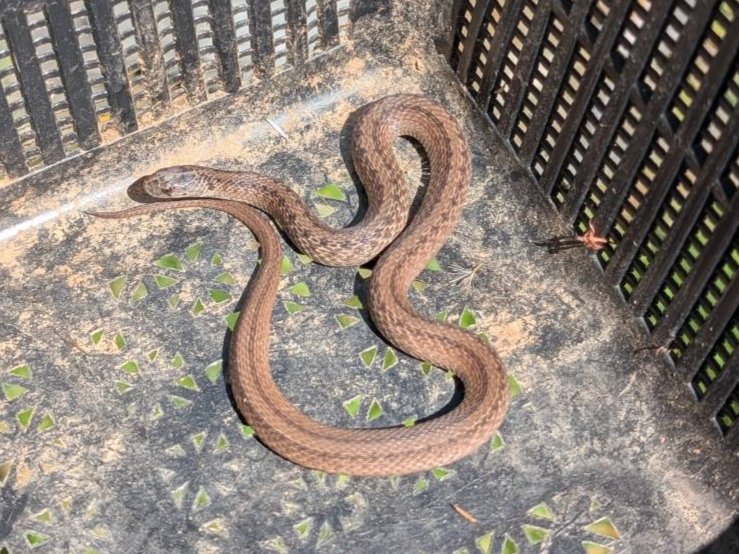
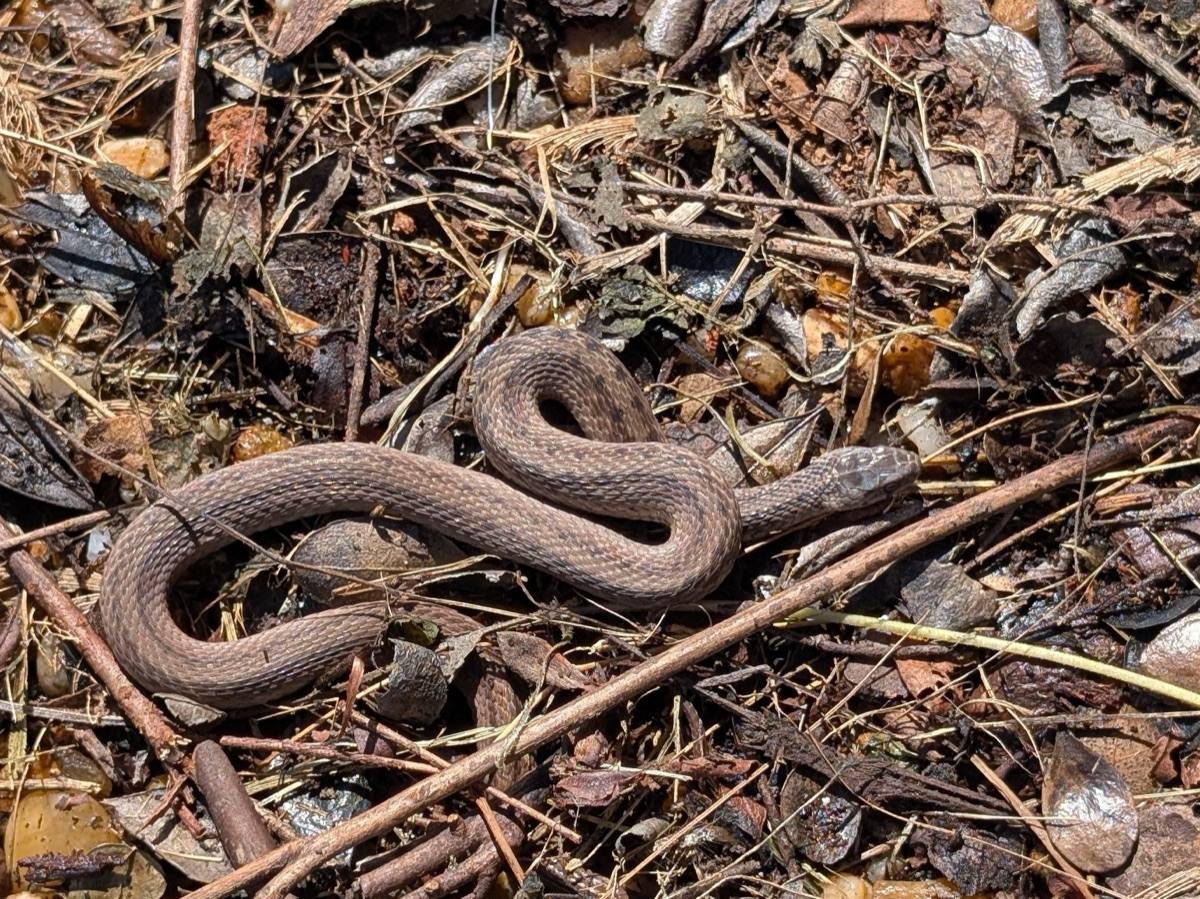
- Pale stripe down a brown back between two rows of small dark spots.
- Eyes
- Round pupil, small dark eye; no heat-sensing pit.
- Pits
- None. There is no pit between the eye and the nostril.
- Tail
- Short; no rattle.
- What it does
- Slow and inoffensive; hides under boards and bricks.
Often confused with
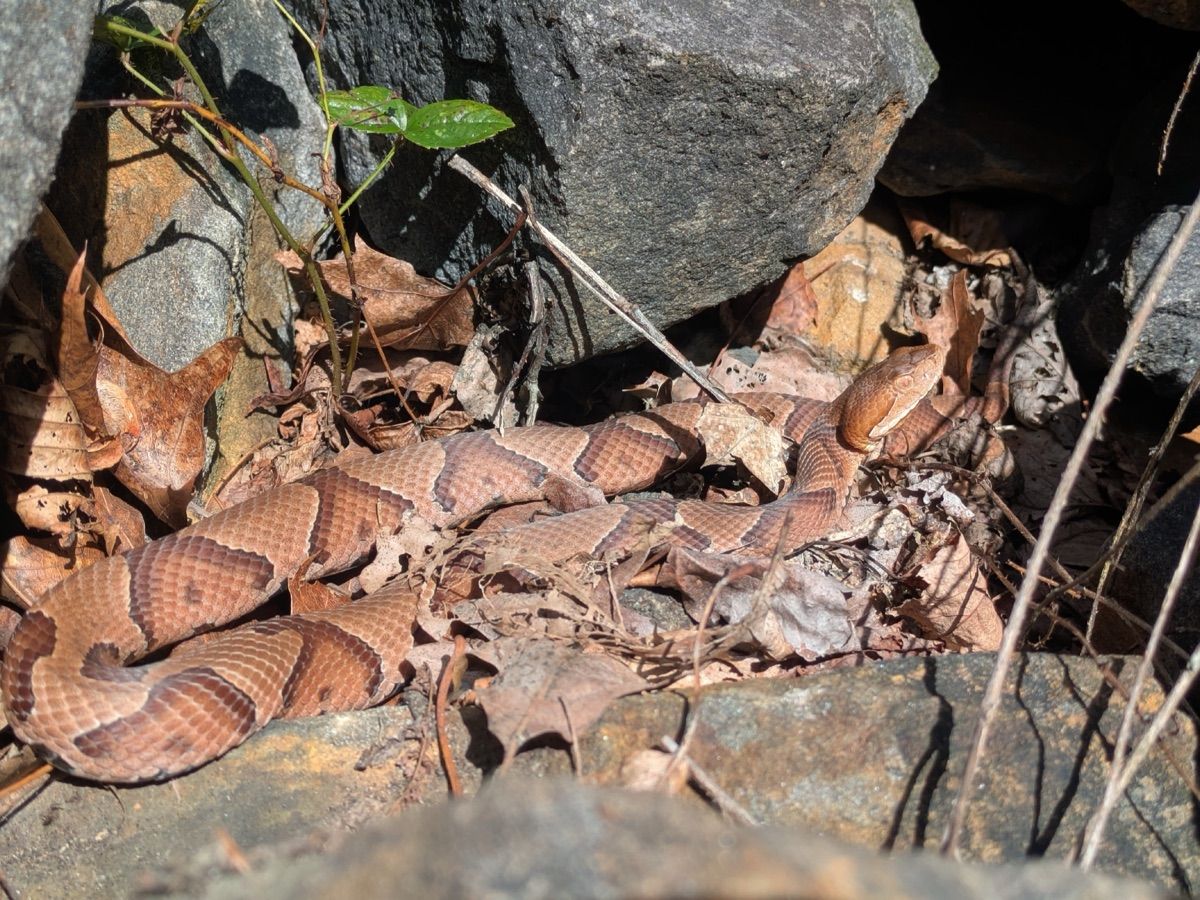
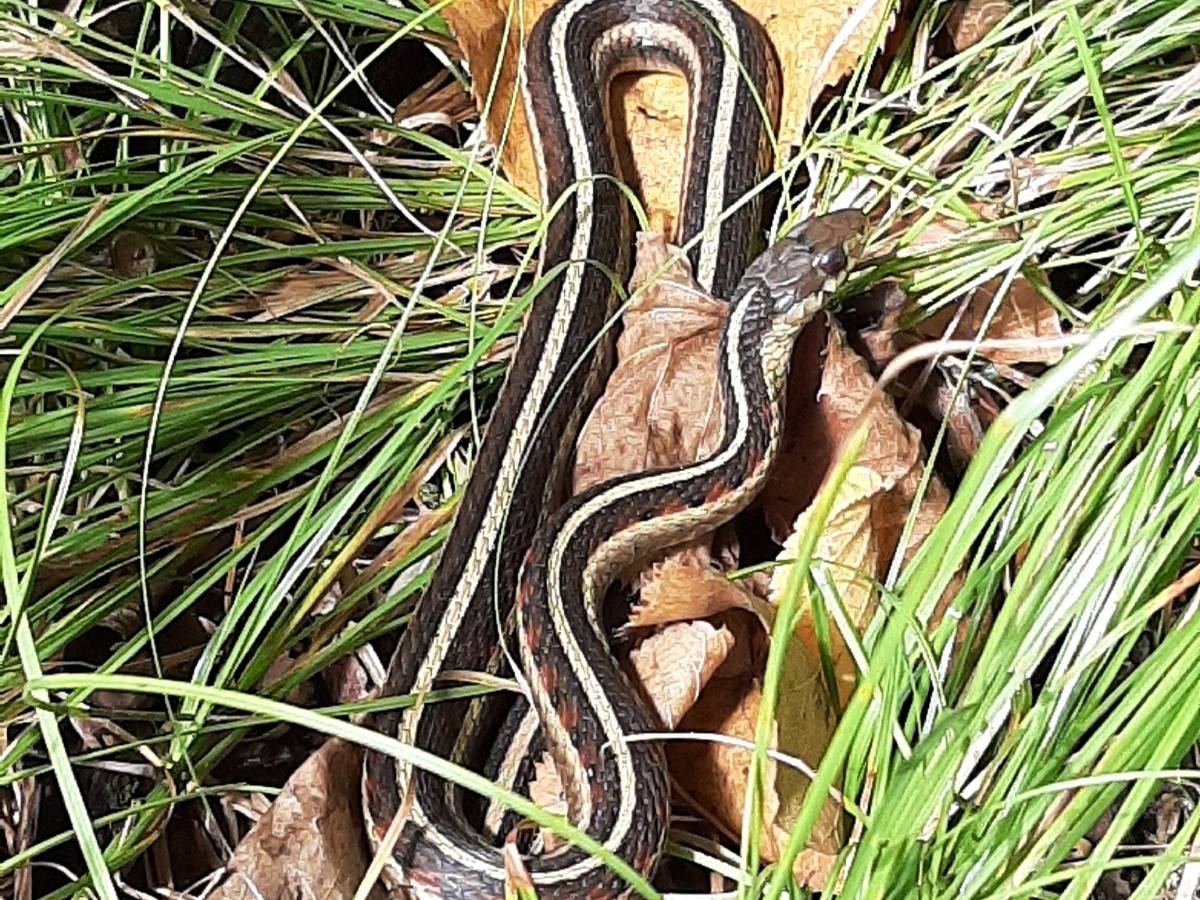
Redbelly Snake has a plain bright red belly, and young Common Gartersnakes have clear pale stripes. It is often mistaken for a young Eastern Copperhead, which has bold hourglass bands and a yellow tail tip.
How to tell them apart
DeKay's Brownsnake vs Eastern Copperhead›
The quick way to tellLook at the back pattern. DeKay's Brownsnake has a pale stripe down the back edged by two rows of tiny dark dots. The Eastern Copperhead has bold hourglass bands that are wide on the sides and pinched over the spine.
DeKay's Brownsnake: Pale stripe down a brown back between two rows of small dark spots.
Eastern Copperhead: Dark hourglass bands - wide at the sides, pinched to a narrow waist over the spine.
DeKay's Brownsnake vs Common Gartersnake›
The quick way to tellLook low on the sides. The Common Gartersnake has a pale stripe along each side as well as one down the back. DeKay's Brownsnake has just a faint pale back stripe, edged by two rows of small dark dots.
DeKay's Brownsnake: Pale stripe down a brown back between two rows of small dark spots.
Common Gartersnake: Three pale stripes - spine and low on each side - often with red flecks between.
About the DeKay's Brownsnake›
A city-and-suburb survivor, common under boards, bricks, mulch and trash in vacant lots and gardens — often the only snake left in built-up areas.
It is small, slow and completely inoffensive, and hundreds can live in a few blocks without anyone noticing. Many are killed by lawn mowers and cats rather than by predators.
The details
Size Usually 9–13 inWeight Well under 0.5 lbLifespan About 7 years
Typical range›
Eastern and central US: southern Maine and southern Canada south through Florida, west to Minnesota, Nebraska, Kansas and Texas.
Activity›
Active at dusk and night, and after rain; hides by day. Winters in groups, sometimes in building foundations.
Diet›
Earthworms, slugs and snails, which it pulls from their shells.
Reproduction›
Gives birth to live young, usually 10–15, in summer.
Found in parts of 35 states›
Ranges are approximate. It may be found in only part of a state, or be rare there, and snakes can turn up outside of them.
More photos