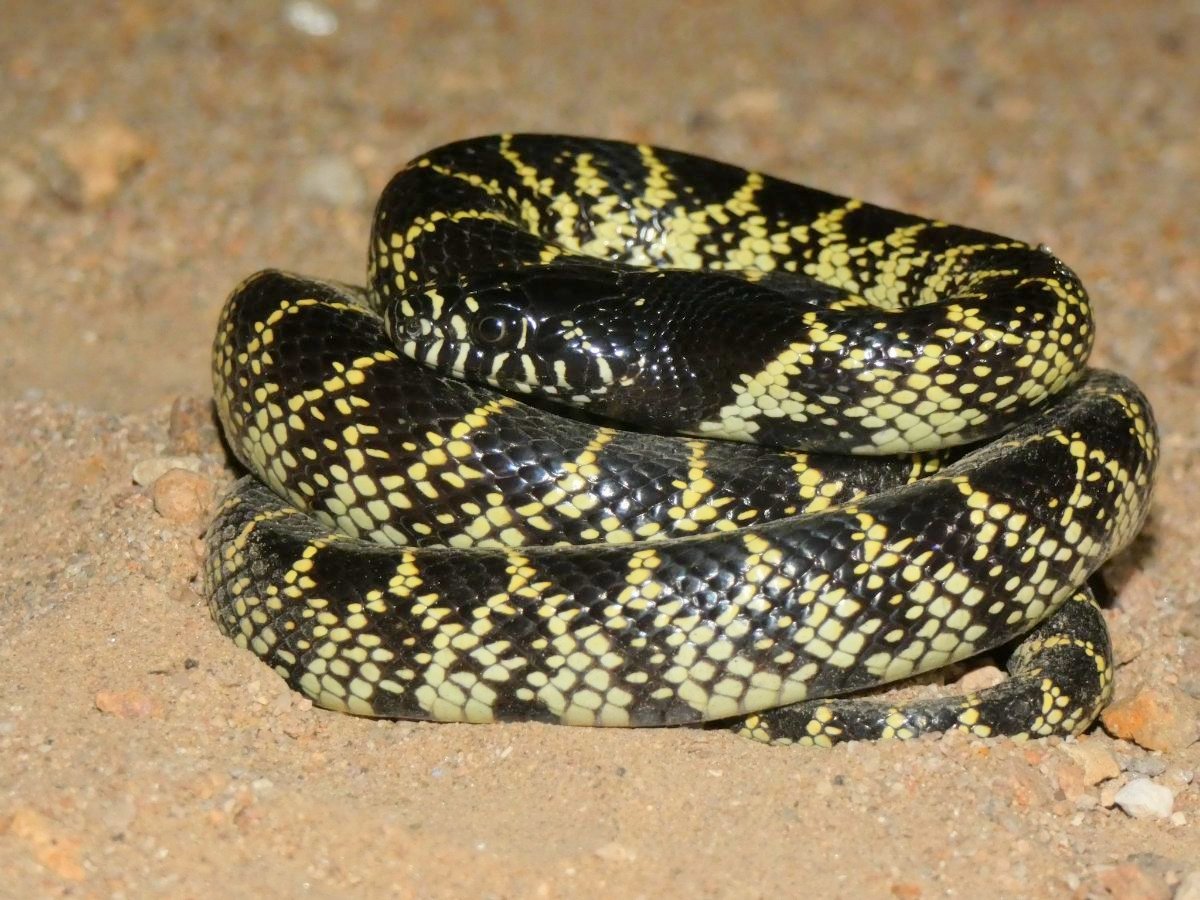
Desert Kingsnake
Lampropeltis splendida · Kingsnakes & Milksnakes
Tap a part to see what to look for. Tap it again to turn it off.
No venom. Usually tries to escape, but may bite if handled.
How to identify
- Head
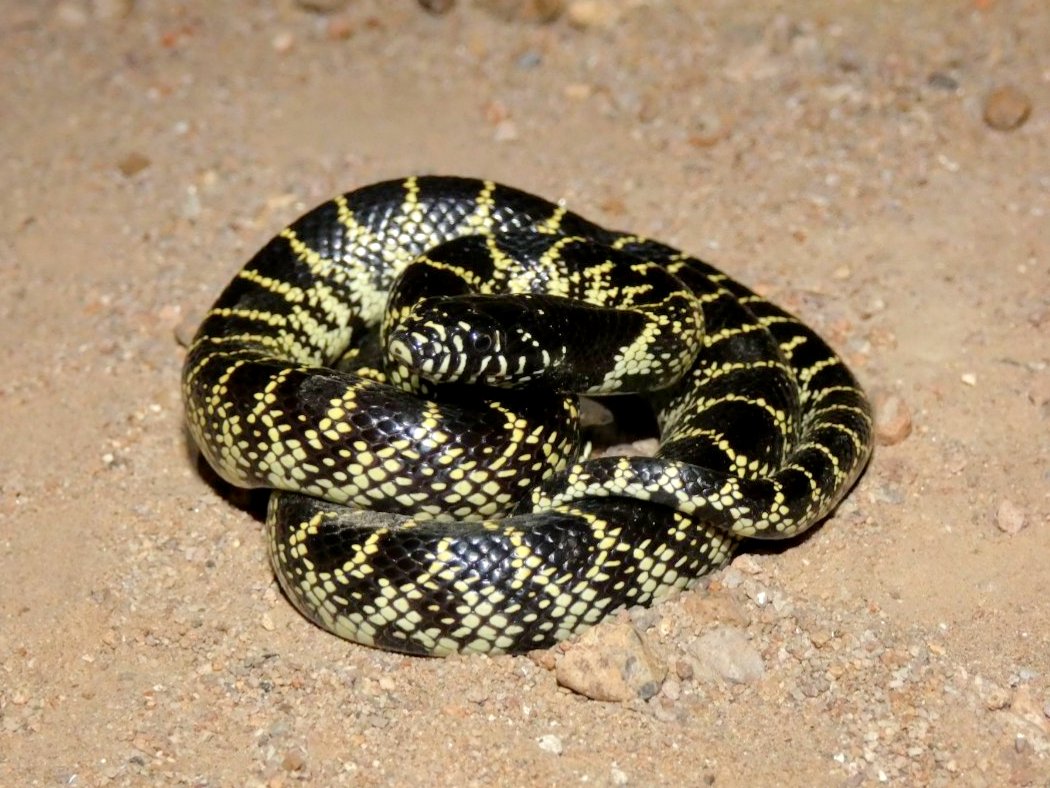
- Black or dark brown, with yellow speckles on the sides and in front of the eyes. The head is not much wider than the neck.
- Pattern
- Dark back with many dark blotches (about 42 to 97) separated by thin, speckled light bars. The sides are heavily speckled with yellow or white. Young snakes have bold, clear blotches and less speckling.
- Eyes
- Round pupils.
- Pits
- None. There is no pit between the eye and the nostril.
- Tail
- Tapers to a point with no rattle. The scales under the tail are in two rows.
- What it does
- Usually calm with people and tries to escape when threatened. A strong constrictor that eats other snakes.
Often confused with
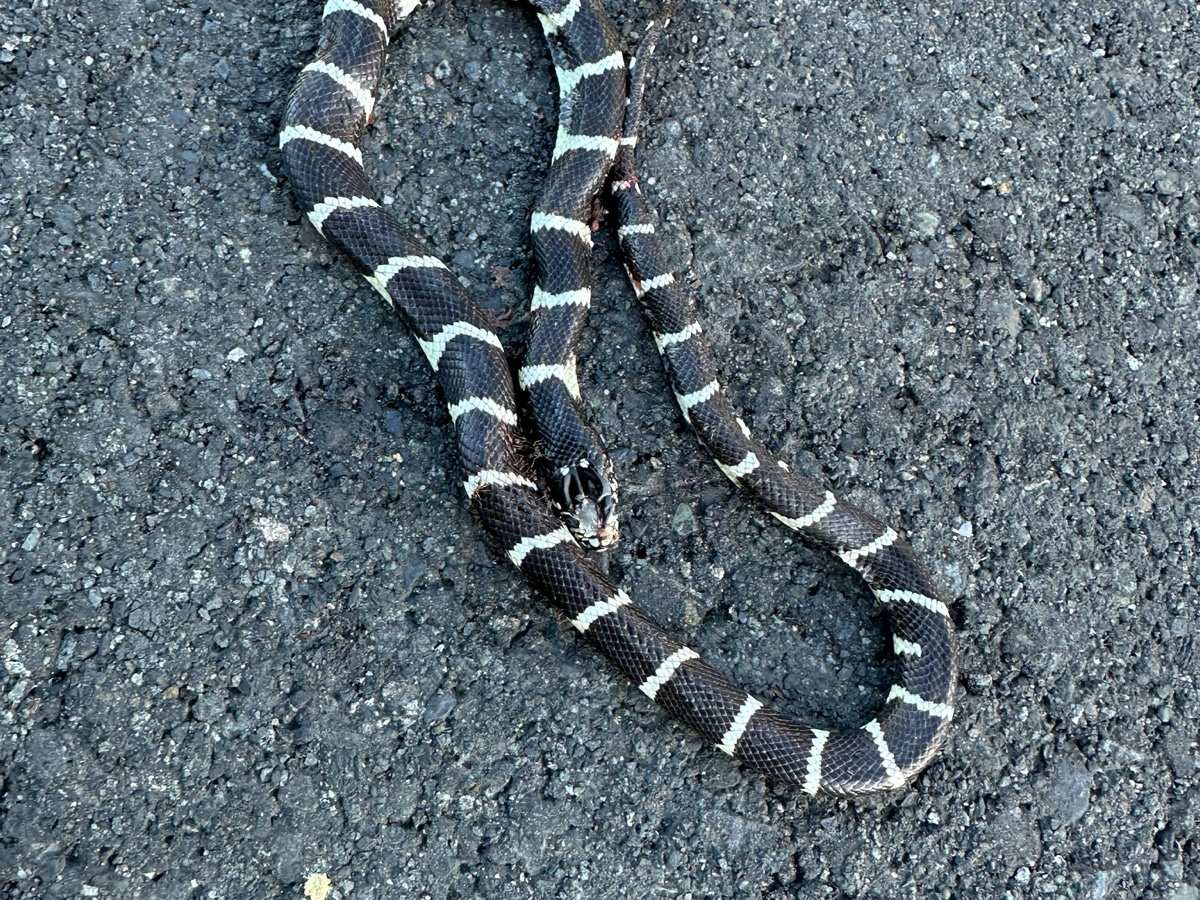
The California Kingsnake has clean light bands across its body rather than speckles. In southeastern Arizona the all-dark Mexican Black Kingsnake form can occur, and in-between snakes are found.
How to tell them apart
Desert Kingsnake vs California Kingsnake›
The quick way to tellLook at the light markings on the body. The Desert Kingsnake is dark with yellow speckles and thin speckled bars. The California Kingsnake has clean, solid light bands across the body.
Desert Kingsnake: Dark back with many dark blotches (about 42 to 97) separated by thin, speckled light bars. The sides are heavily speckled with yellow or white. Young snakes have bold, clear blotches and less speckling.
California Kingsnake: Crisp black-and-cream bands right around the body; some are striped instead.
About the Desert Kingsnake›
A large, glossy kingsnake of the desert Southwest, from central Texas to southeastern Arizona. It lives in desert scrub, grassland, brushy canyons and streamside areas, and often turns up near farms and ranches. It can be active by day or at night and sometimes climbs.
It looks very dark from a distance, but up close it is covered in yellow or white speckles, with thin light bars across the back. It was long treated as part of the Common Kingsnake and was made its own species in 2009.
The details
Size Usually about 3–4 ft (90–114 cm); up to about 5 ft (152 cm). Hatchlings are about 7–14 in (18–36 cm).
Typical range›
Central and west Texas, southern New Mexico and southeastern Arizona, into northern Mexico (Sonora and southward). Found up to about 5,100 ft (1,560 m).
Activity›
Active by day or night; mostly at night in hot summer weather. Seen in every month except January in Arizona, but mostly May to September.
Diet›
Rodents, lizards, other snakes, birds, frogs, and reptile and bird eggs.
Reproduction›
Lays eggs: about 5 to 12 eggs, laid from late spring to mid-summer.
Found in parts of 3 states›
Ranges are approximate. It may be found in only part of a state, or be rare there, and snakes can turn up outside of them.
More photos