‹ Compare two snakes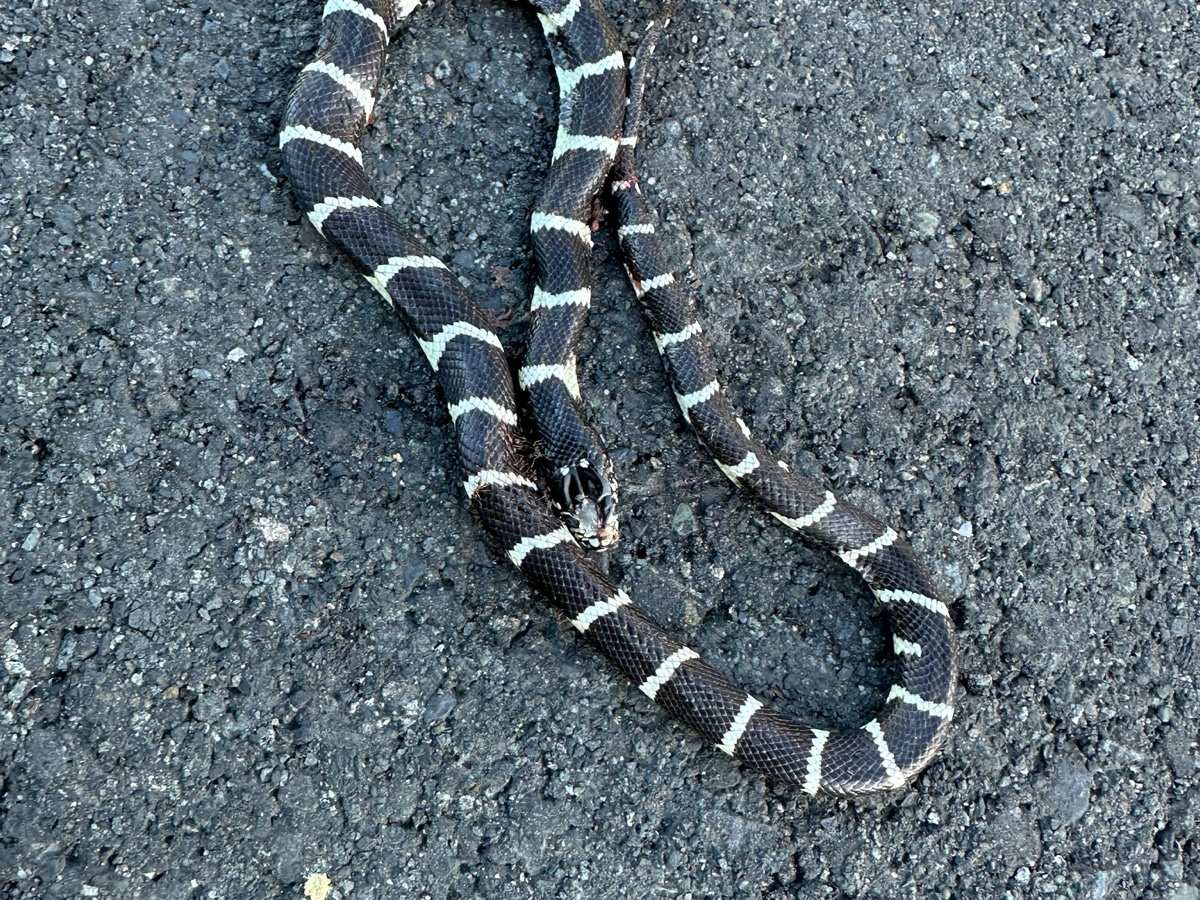
California Kingsnake vs Desert Kingsnake
Tap a part to see it on both. Tap it again to turn it off.
(c) gretchenparadis, some rights reserved (CC BY)
California Kingsnake
Lampropeltis californiae
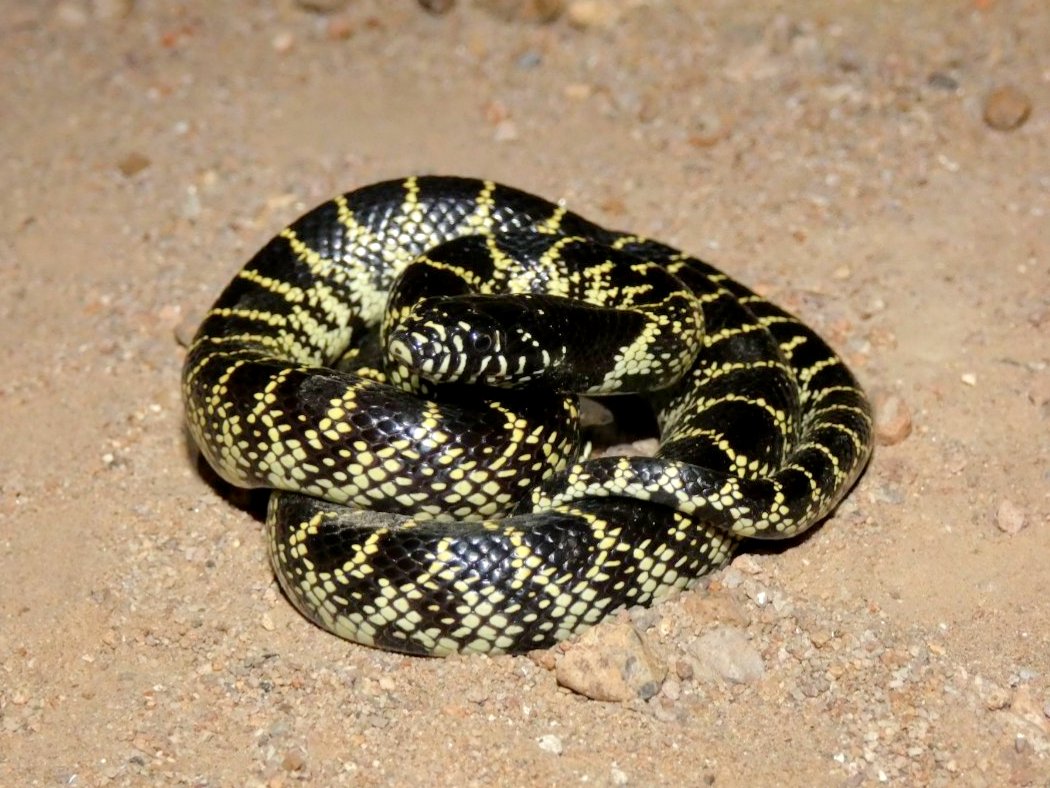
Non-venomousEtienne Falquet, no rights reserved
Desert Kingsnake
Lampropeltis splendida
Non-venomousThe quick way to tell
Look at the light markings on the body. The Desert Kingsnake is dark with yellow speckles and thin speckled bars. The California Kingsnake has clean, solid light bands across the body.
Pattern ★ This settles it
Crisp black-and-cream bands right around the body; some are striped instead.
Dark back with many dark blotches (about 42 to 97) separated by thin, speckled light bars. The sides are heavily speckled with yellow or white. Young snakes have bold, clear blotches and less speckling.
Head
Small head barely wider than the neck; smooth and glossy.
Black or dark brown, with yellow speckles on the sides and in front of the eyes. The head is not much wider than the neck.
Eyes
Round pupil, small dark eye; no heat-sensing pit.
Round pupils.
Pits
None. There is no pit between the eye and the nostril.
None. There is no pit between the eye and the nostril.
Tail
Tapers evenly, banded to the tip; no rattle.
Tapers to a point with no rattle. The scales under the tail are in two rows.
What it does
Hisses, shakes its tail and may roll into a ball.
Usually calm with people and tries to escape when threatened. A strong constrictor that eats other snakes.
Where it lives
California, southern Oregon, Nevada, Utah and Arizona, just reaching extreme southwestern Colorado and northwestern New Mexico, and south into Baja California and Sonora.
Central and west Texas, southern New Mexico and southeastern Arizona, into northern Mexico (Sonora and southward). Found up to about 5,100 ft (1,560 m).