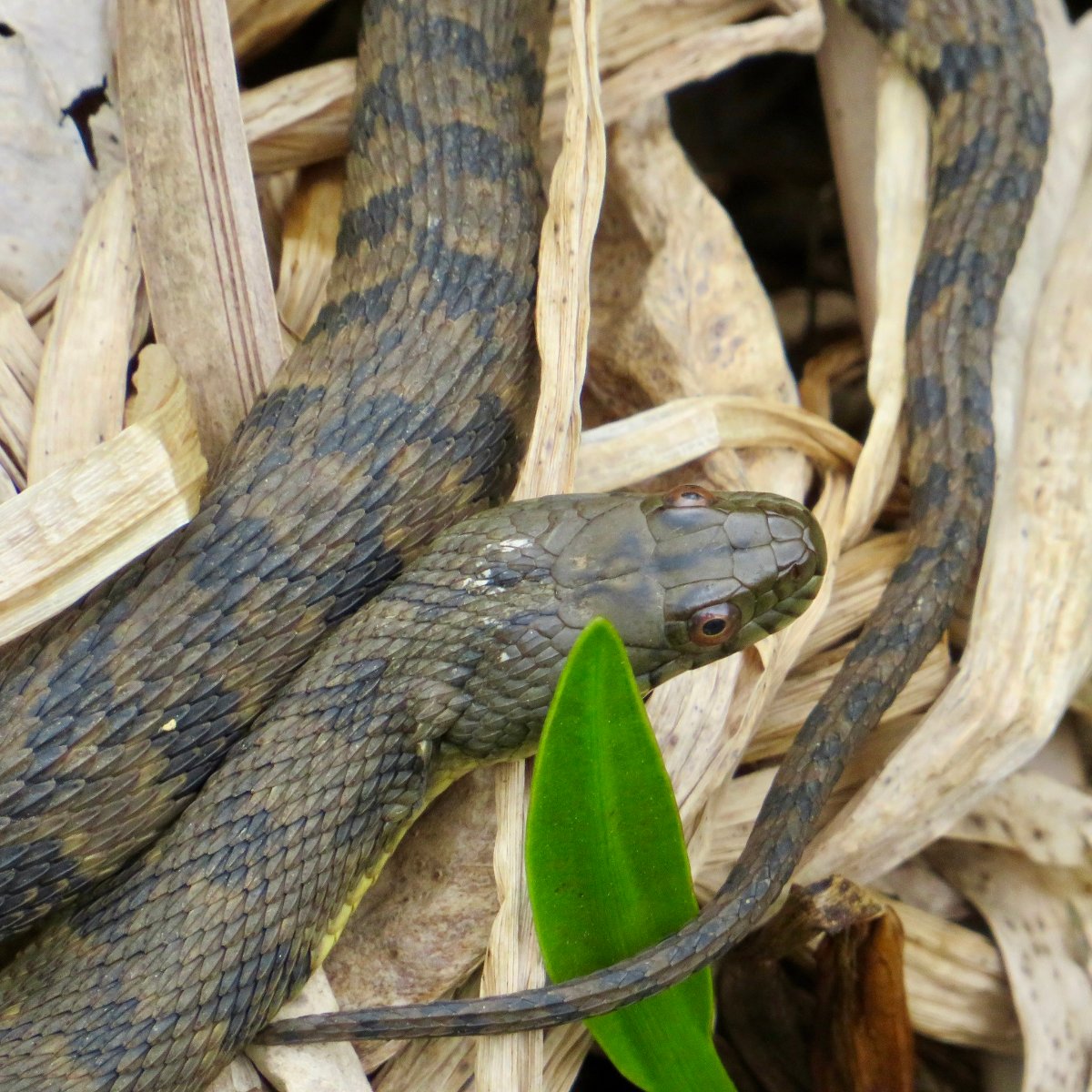
Diamond-backed Watersnake
Nerodia rhombifer · Water Snakes
Tap a part to see what to look for. Tap it again to turn it off.
No venom, but a big one bites hard and musks when handled.
How to identify
- Head
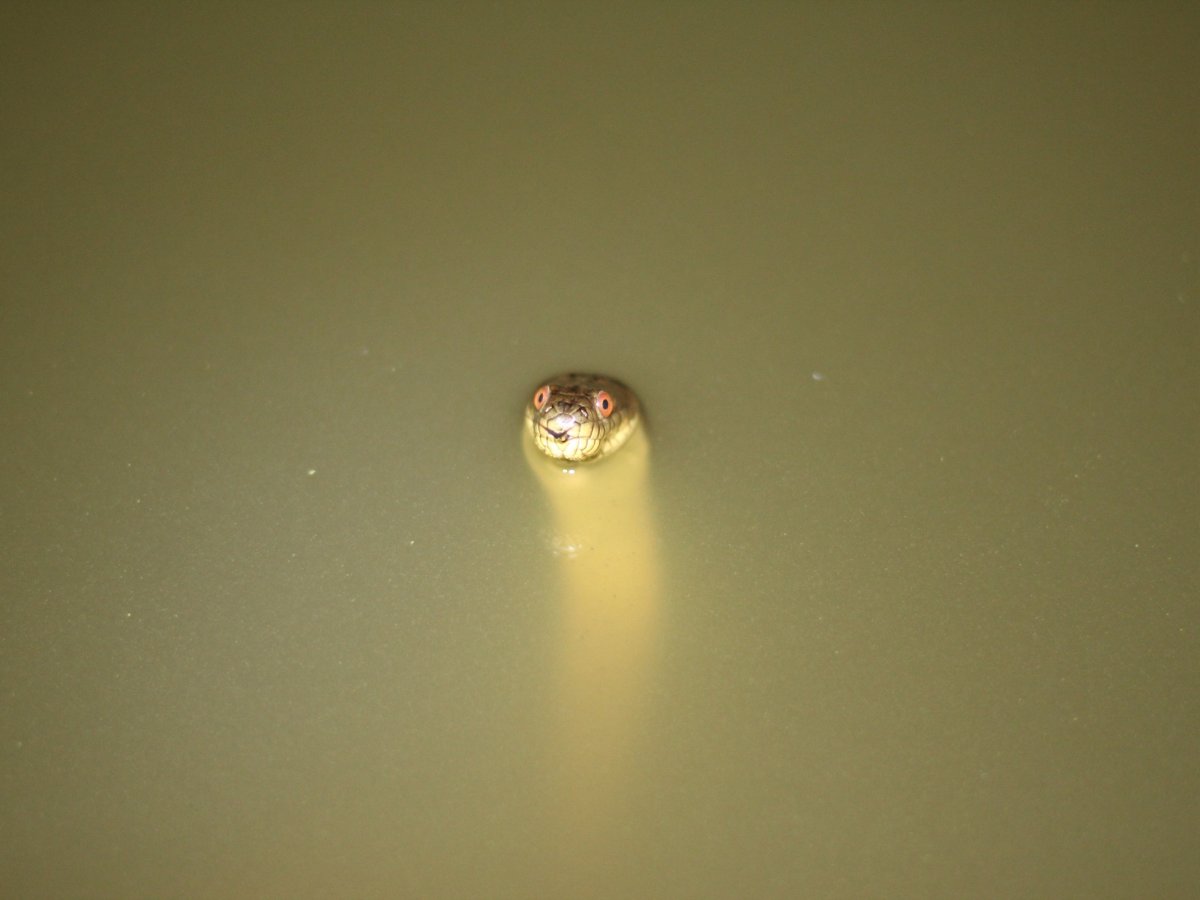
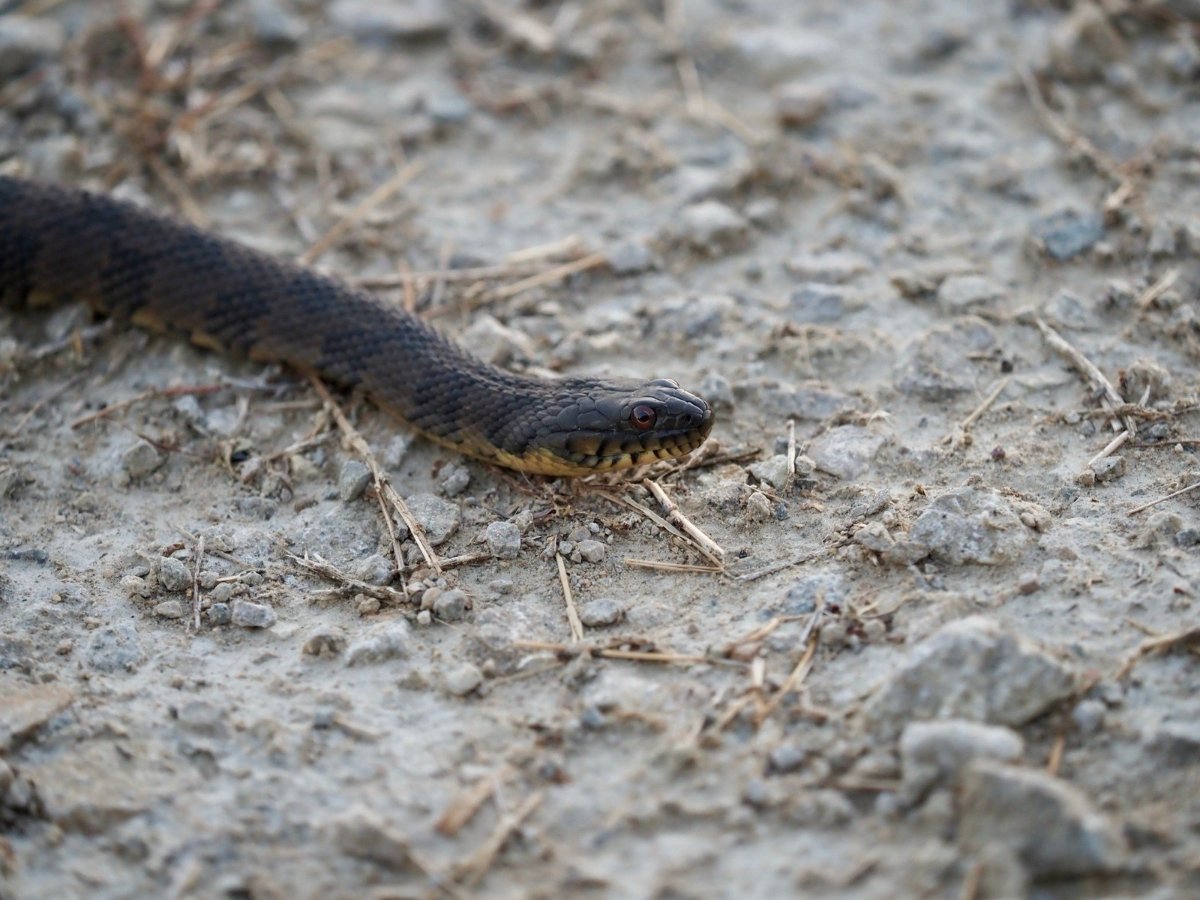
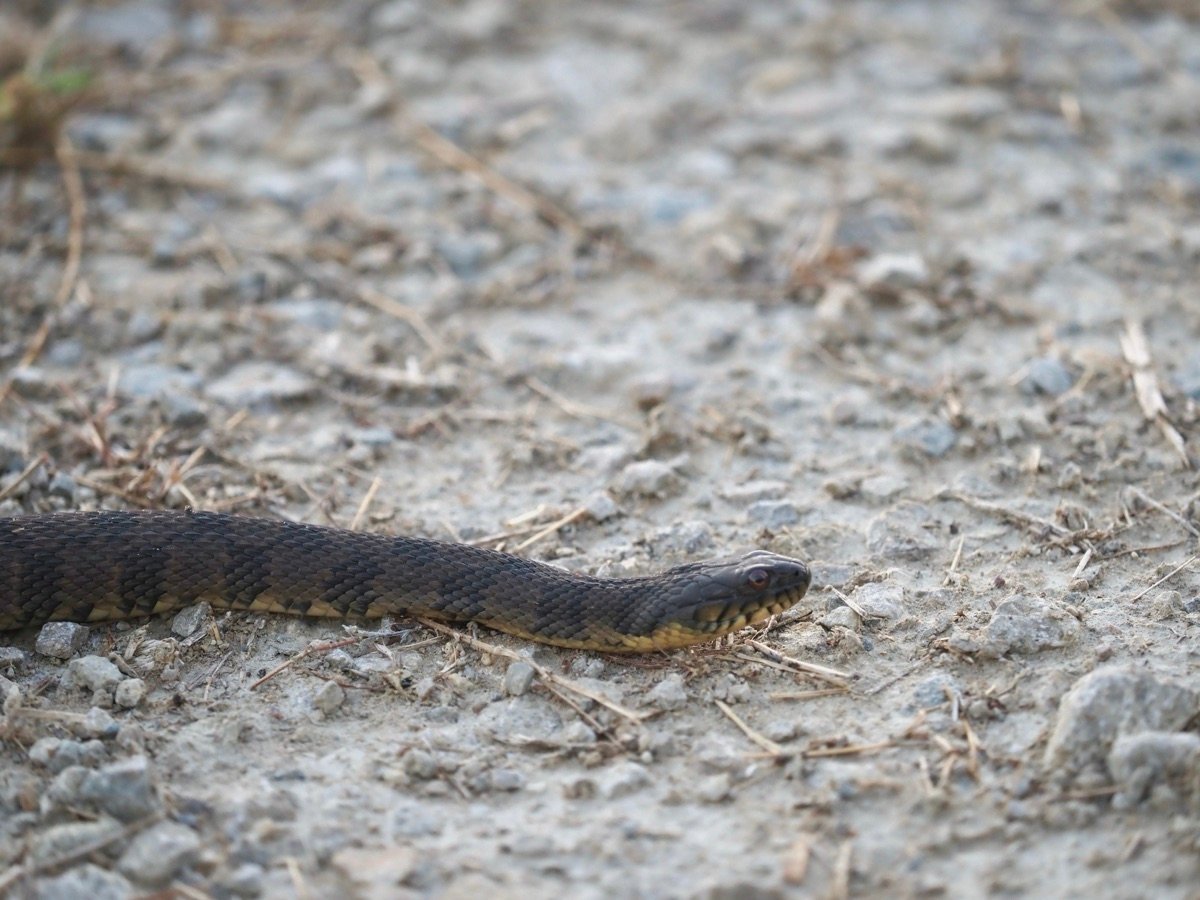
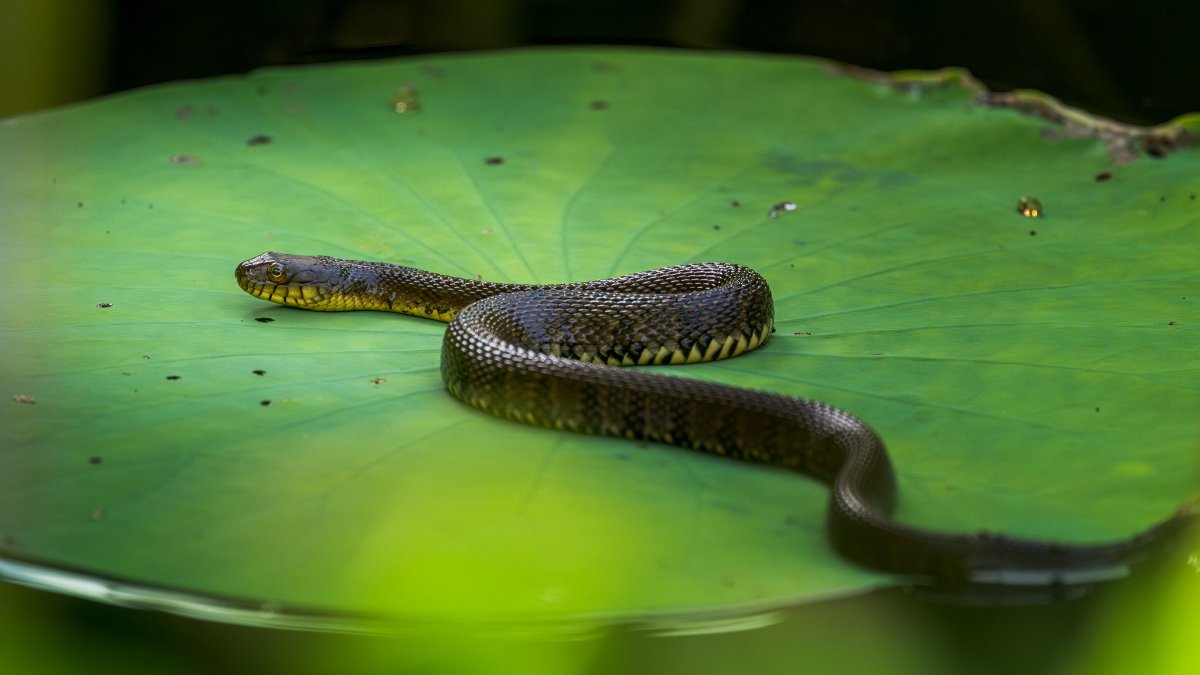
- Narrow head with a pale, heavily marked jaw.
- Pattern
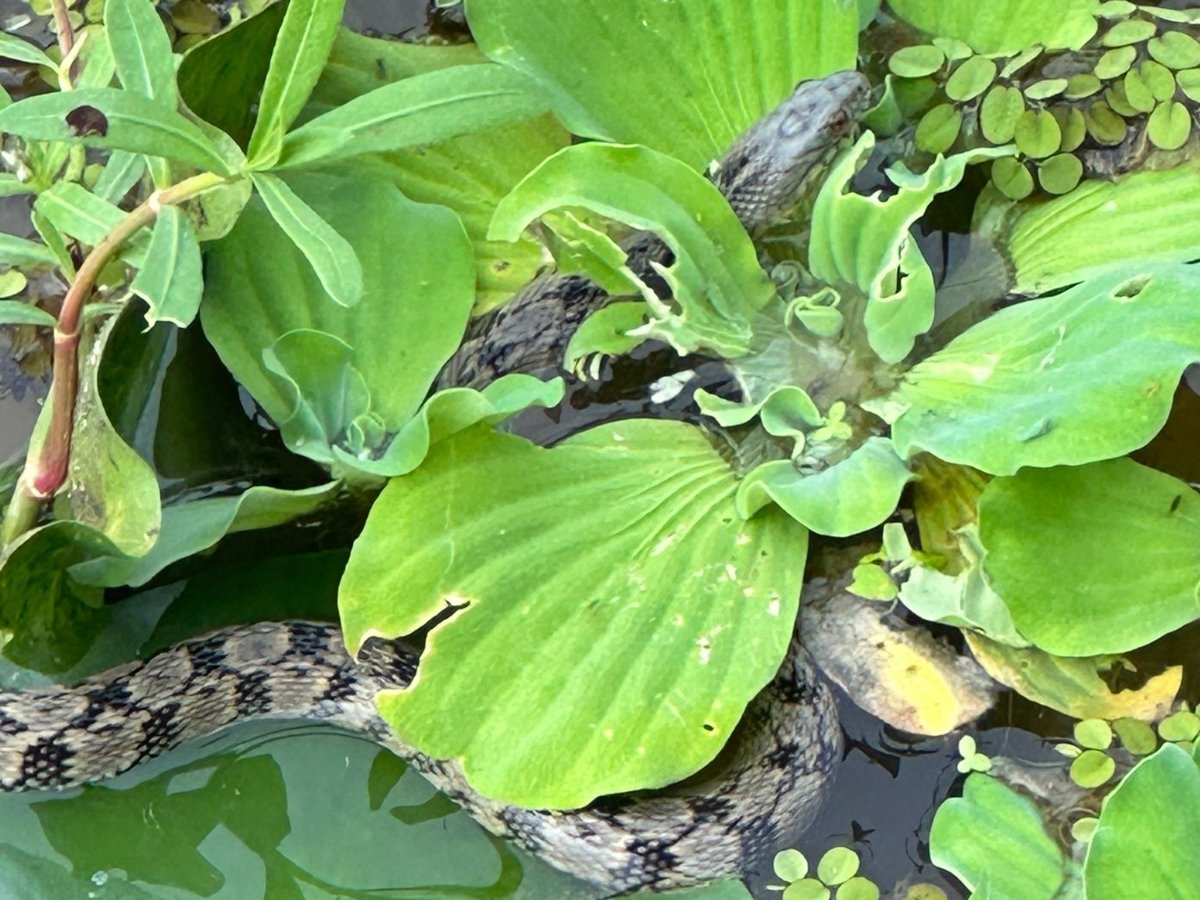
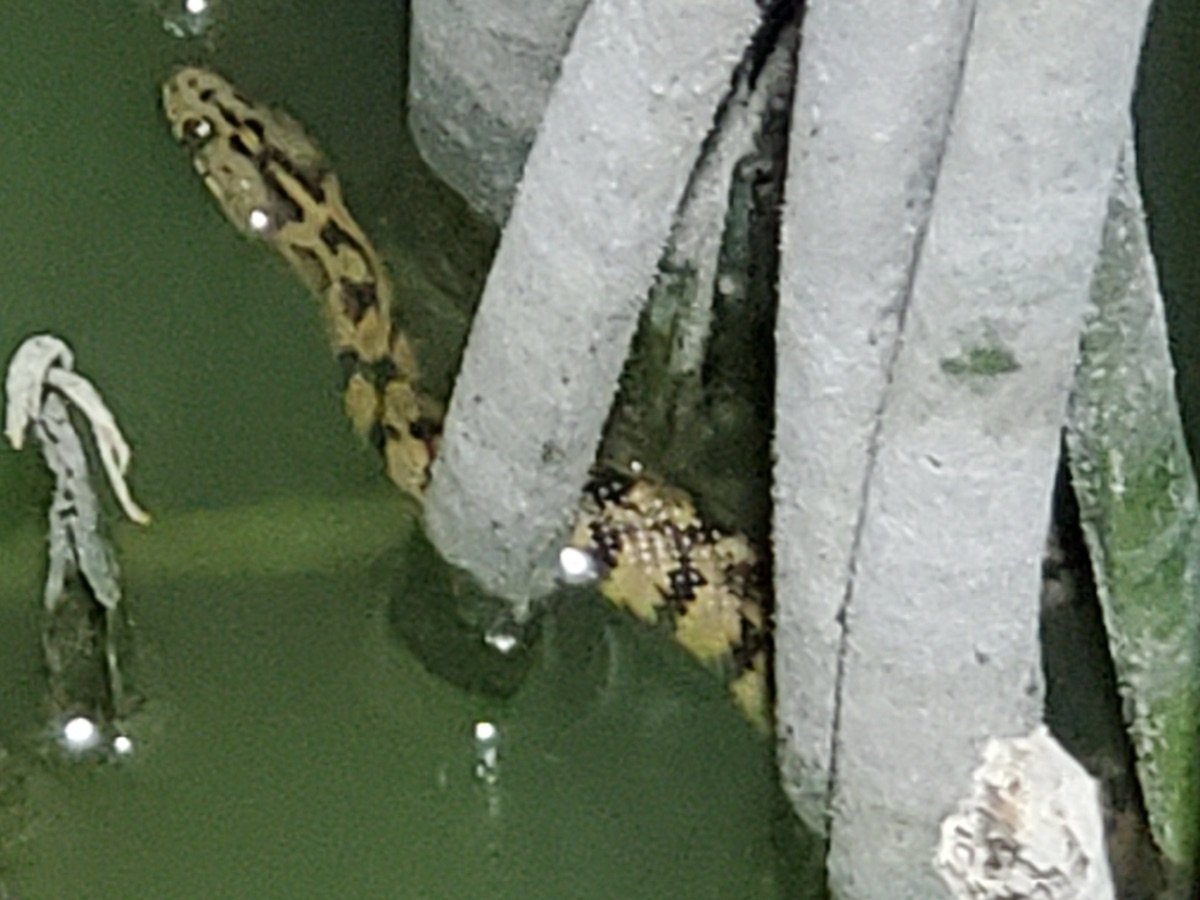
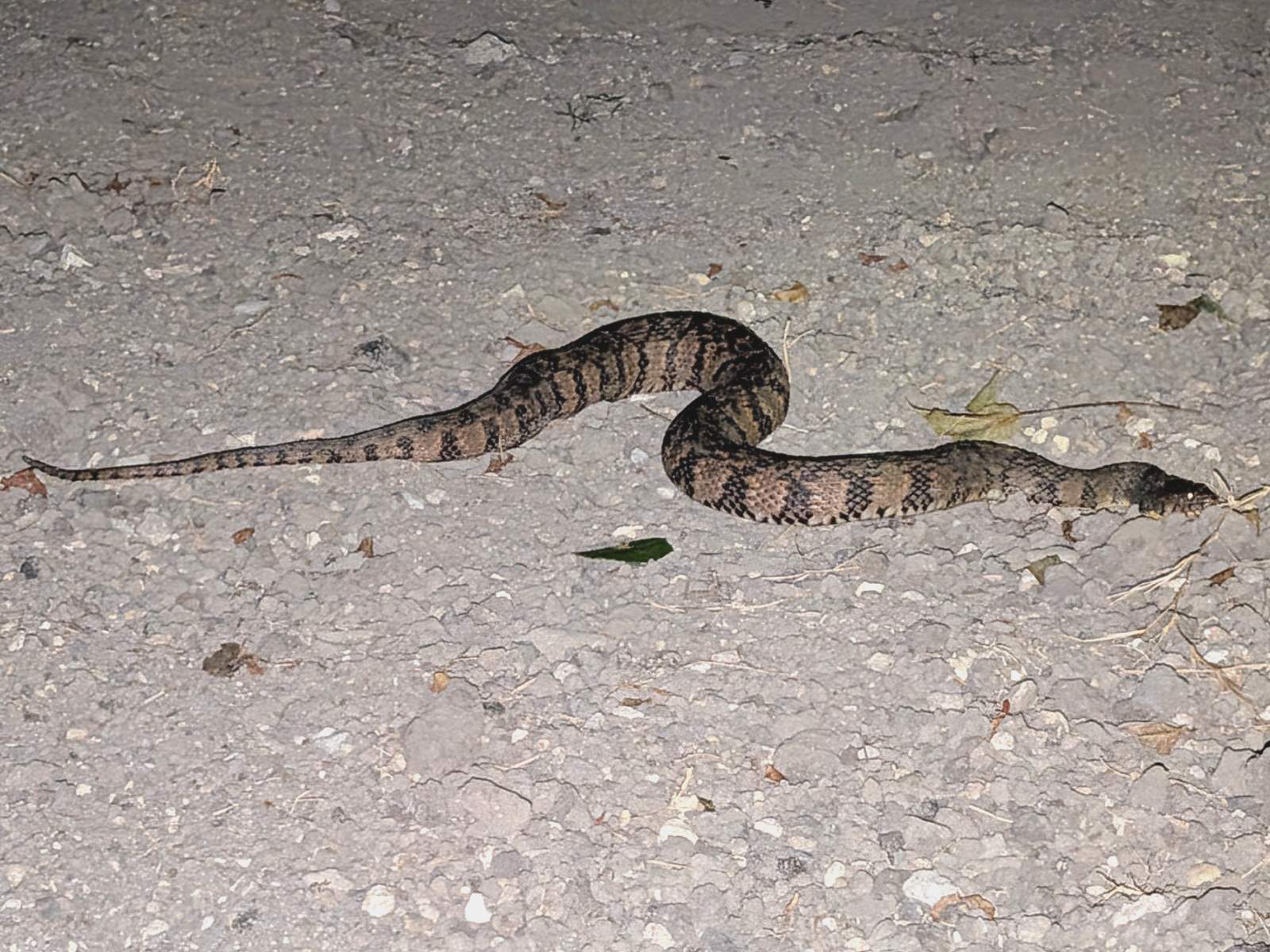
- Dark chain-link or diamond-mesh pattern on olive to yellow-brown, with dark side bars.
- Eyes
- Round pupil, eyes set high on the head; no heat-sensing pit.
- Pits
- None. There is no pit between the eye and the nostril.
- Tail
- Thick-based, tapering; no rattle.
- What it does
- Hangs in brush above water and drops in when approached.
Often confused with
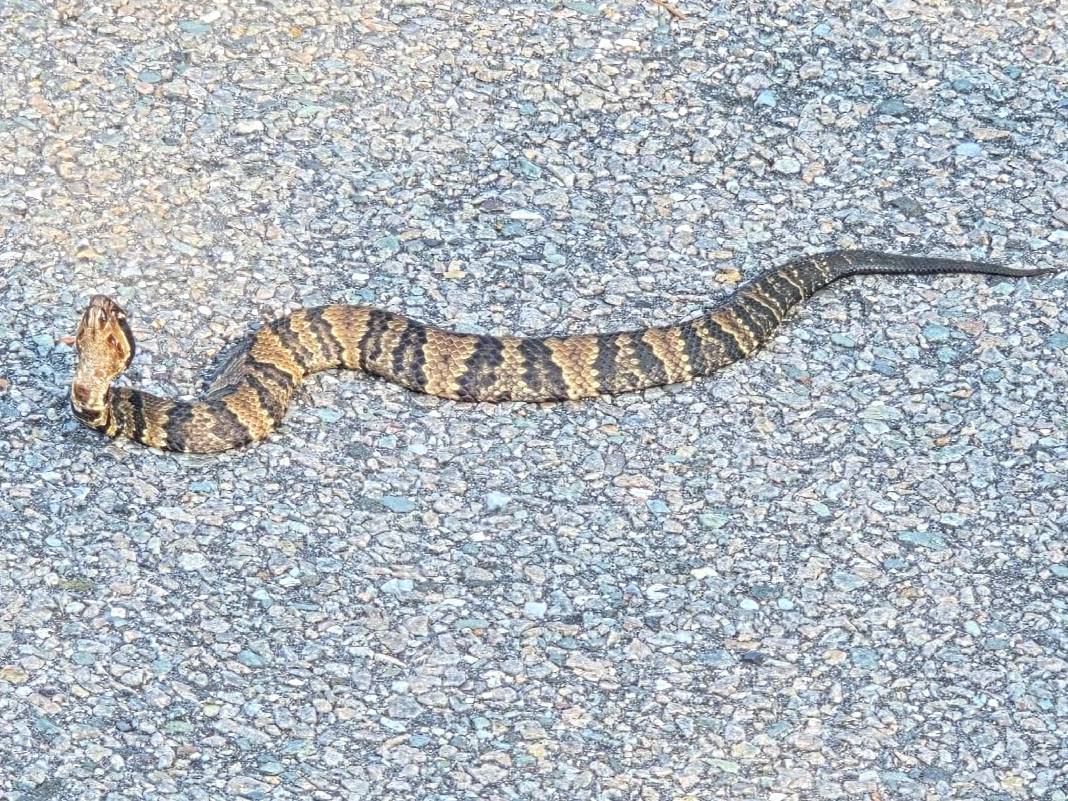
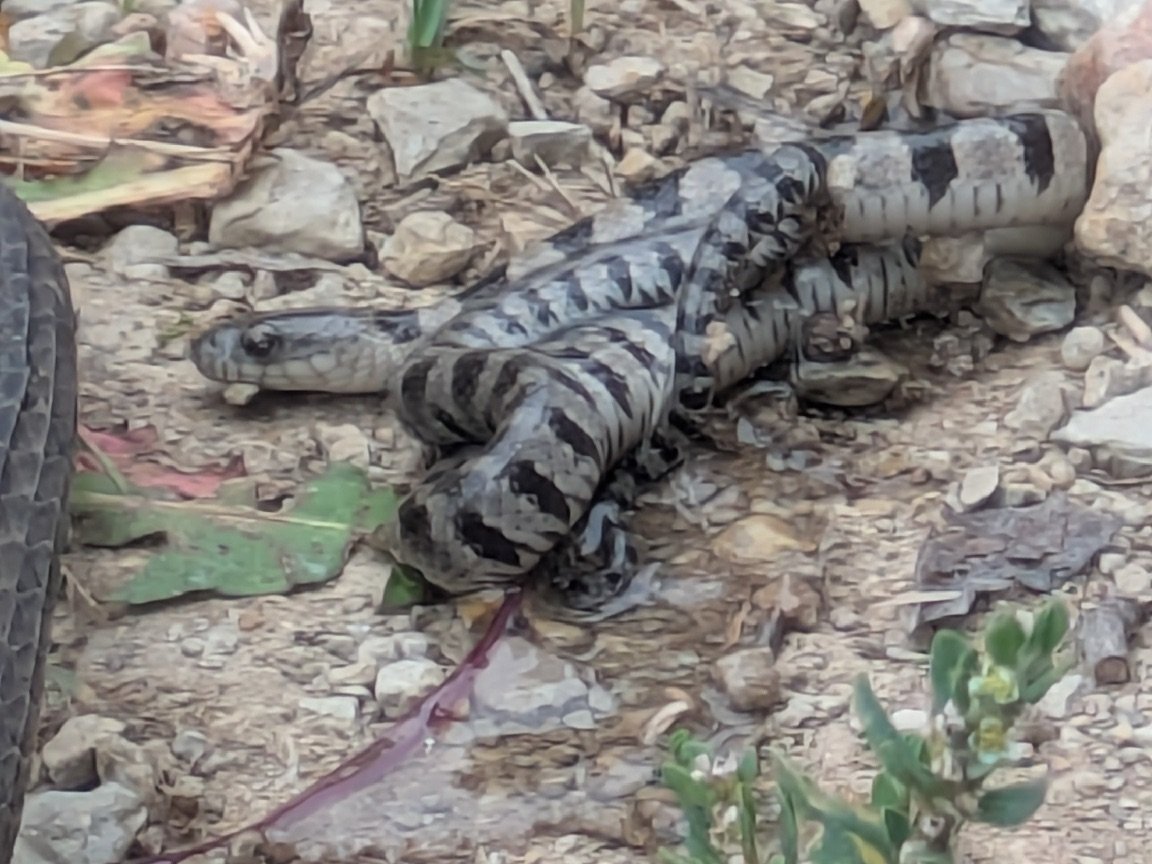
Northern Cottonmouth has a vertical pupil and a dark eye mask. Northern Watersnake has large dark blotches and bands instead of a dark chain-link net enclosing pale diamonds.
How to tell them apart
Diamond-backed Watersnake vs Northern Cottonmouth›
The quick way to tellCheck the face. The cottonmouth has a vertical pupil and a dark eye mask. The Diamond-backed Watersnake has round pupils and a net-like pattern.
Diamond-backed Watersnake: Round pupil, eyes set high on the head; no heat-sensing pit.
Northern Cottonmouth: Vertical slit pupil; heat-sensing pit between eye and nostril.
Diamond-backed Watersnake vs Northern Watersnake›
The quick way to tellLook at the back pattern. The Diamond-backed Watersnake has a dark chain-link net that leaves pale diamonds down the back. The Northern Watersnake has crossbands up front that break into blotches, with no chain.
Diamond-backed Watersnake: Dark chain-link or diamond-mesh pattern on olive to yellow-brown, with dark side bars.
Northern Watersnake: Crossbands up front breaking into blotches toward the tail; reddish half-moons on the belly.
About the Diamond-backed Watersnake›
A large, thick watersnake of the Mississippi valley and southern plains, found in rivers, oxbows, reservoirs and cattle tanks.
Often seen hanging in brush above water, where it drops to escape. Adults are bulky enough that they are regularly reported as cottonmouths or even small pythons.
The details
Size Usually 2.5–4 ft; occasionally 5 ftWeight Commonly 1–4 lbLifespan About 10 years
Typical range›
Central US: Mississippi valley from Illinois and Indiana south to the Gulf, west across Texas, Oklahoma and Kansas.
Activity›
Active day and night in warm months; basks on branches and banks.
Diet›
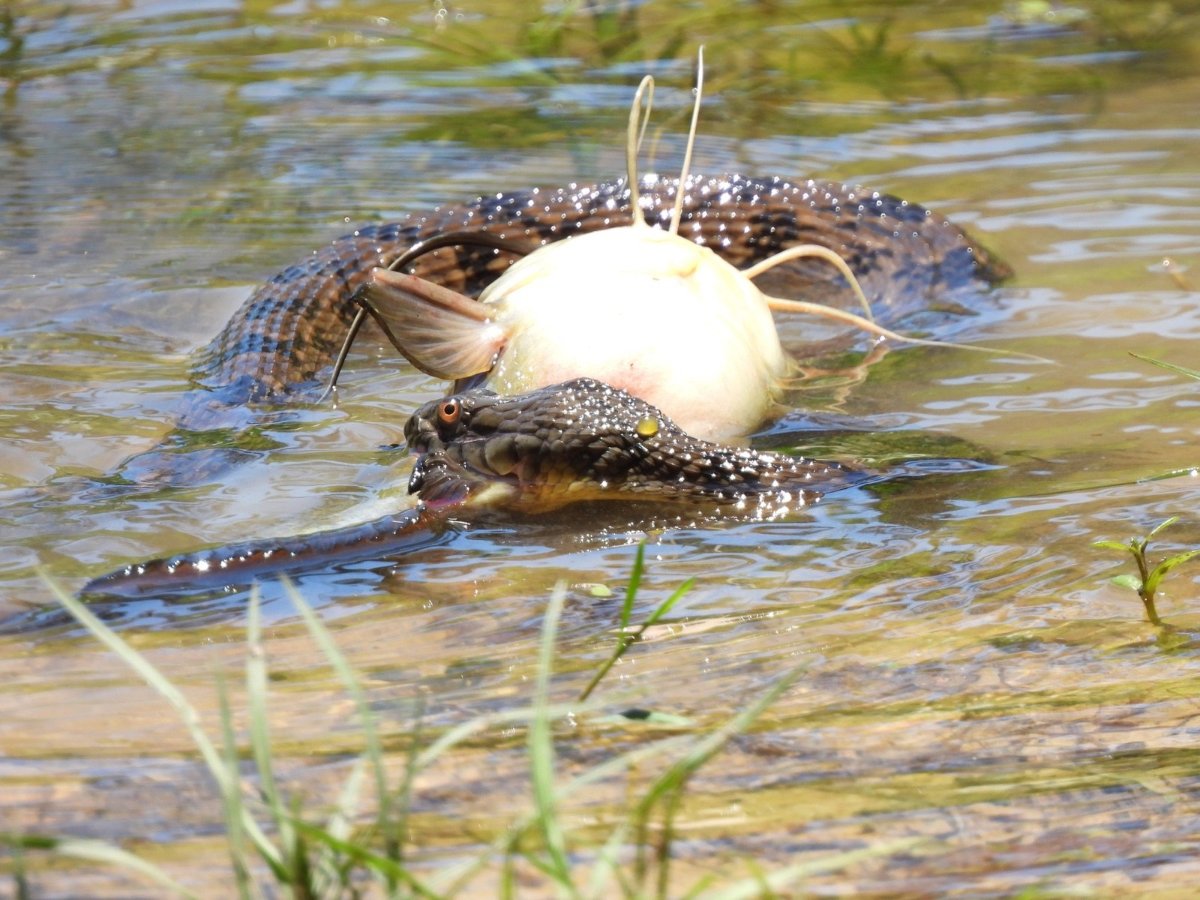
Mostly fish, plus frogs and tadpoles.
Reproduction›
Gives birth to live young, often 20–60, in late summer.
Found in parts of 13 states›
Ranges are approximate. It may be found in only part of a state, or be rare there, and snakes can turn up outside of them.
More photos