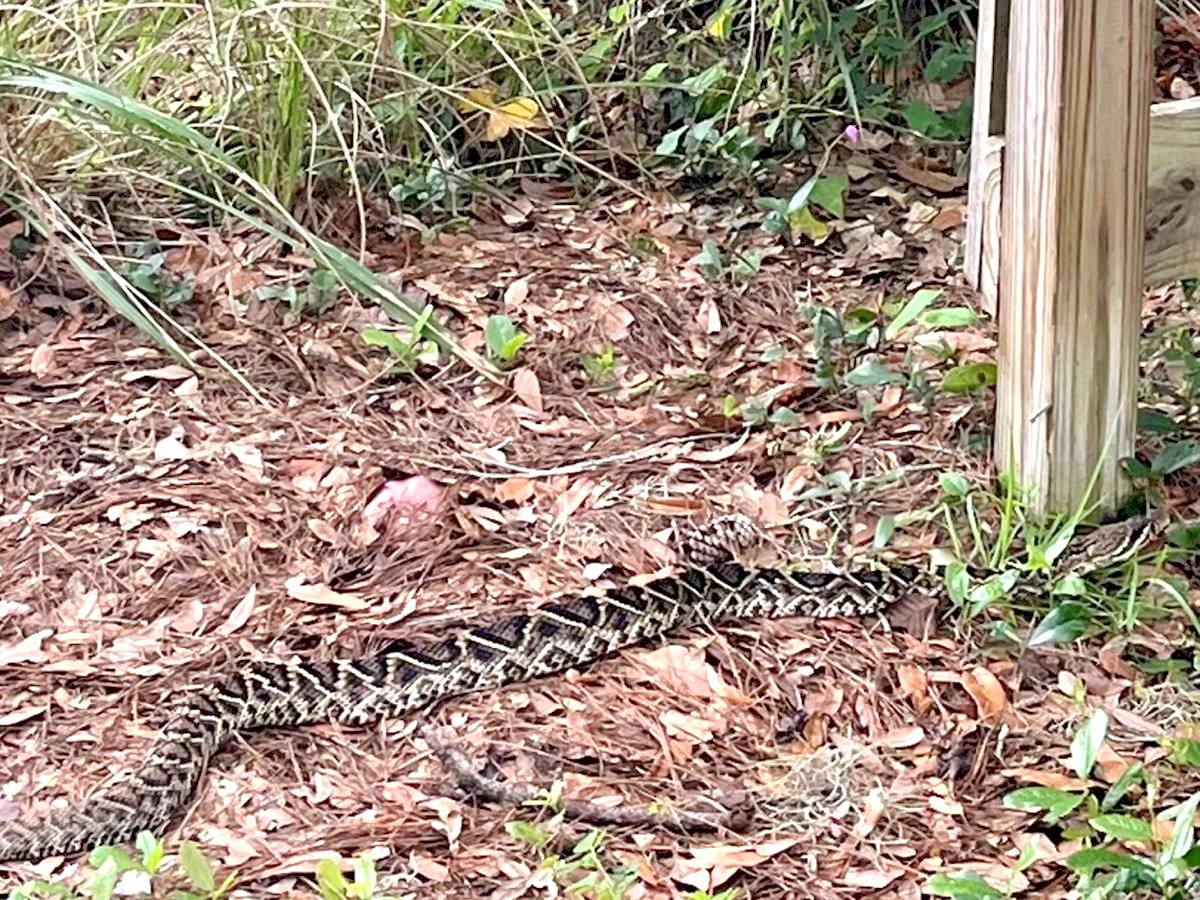
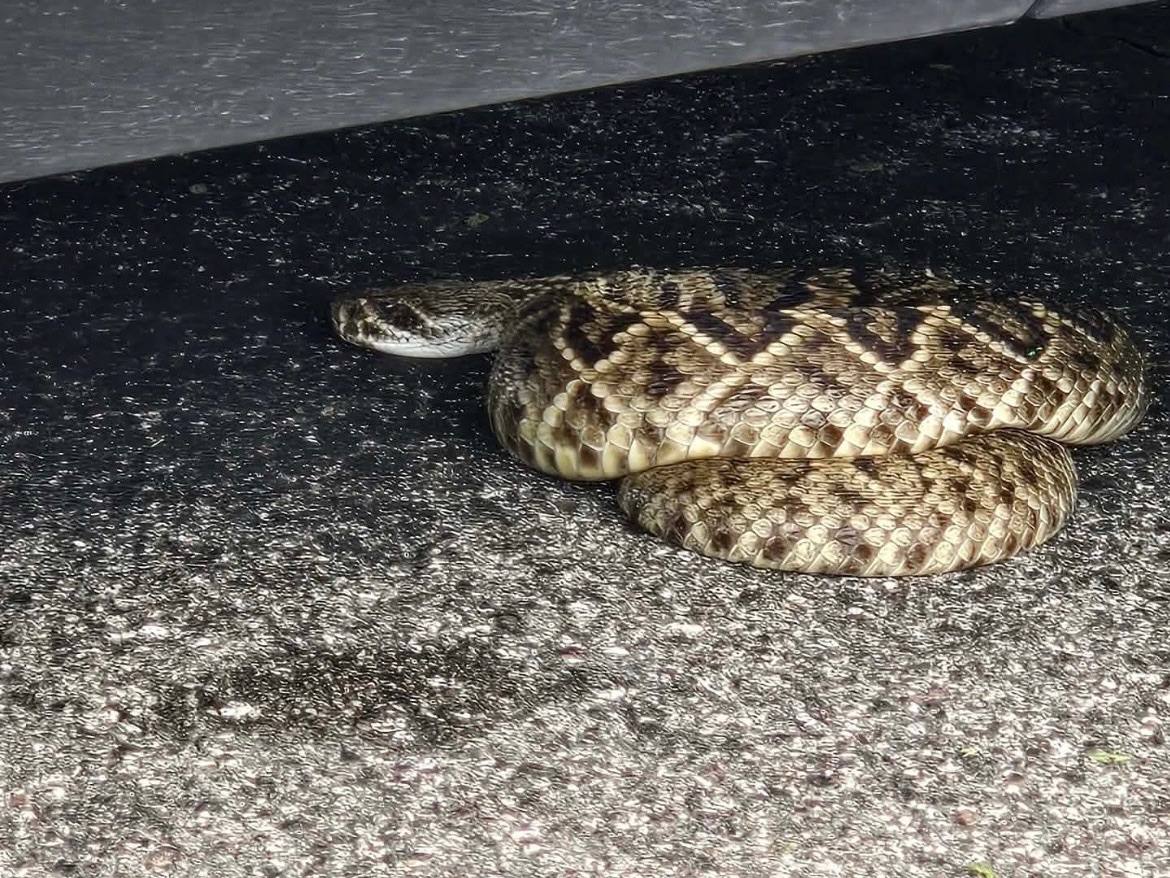
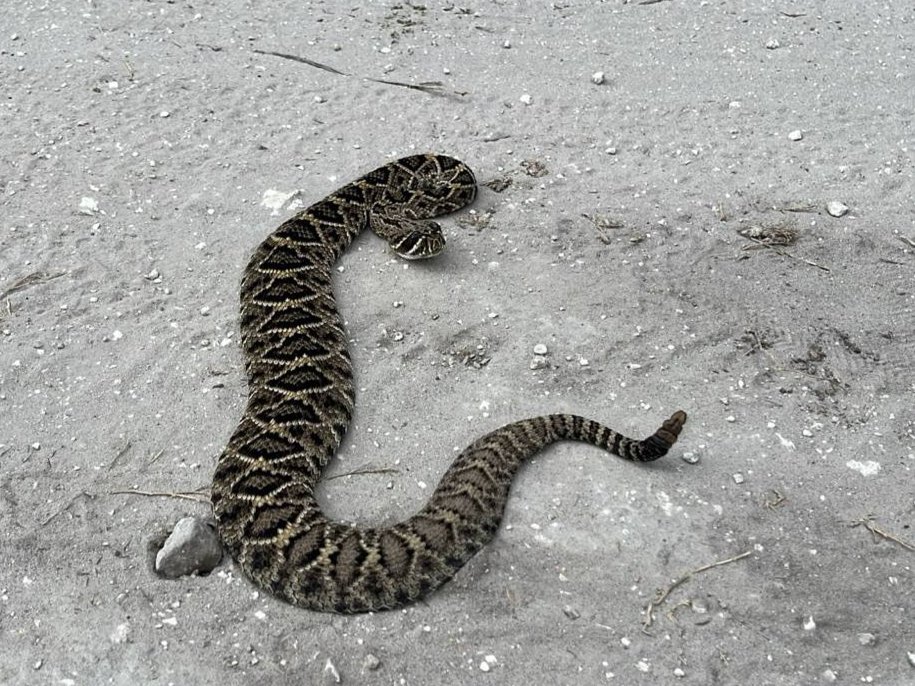
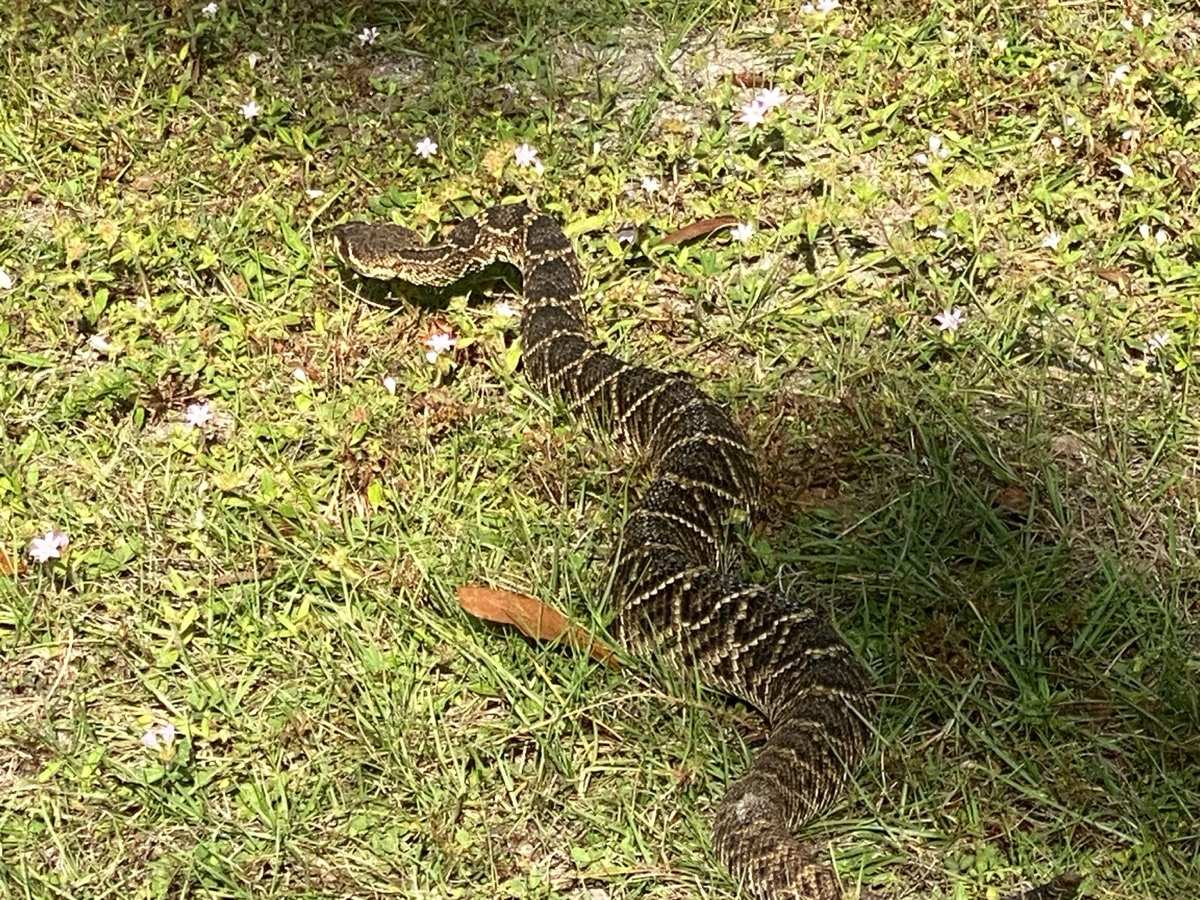
Eastern Diamondback Rattlesnake
Crotalus adamanteus · Rattlesnakes
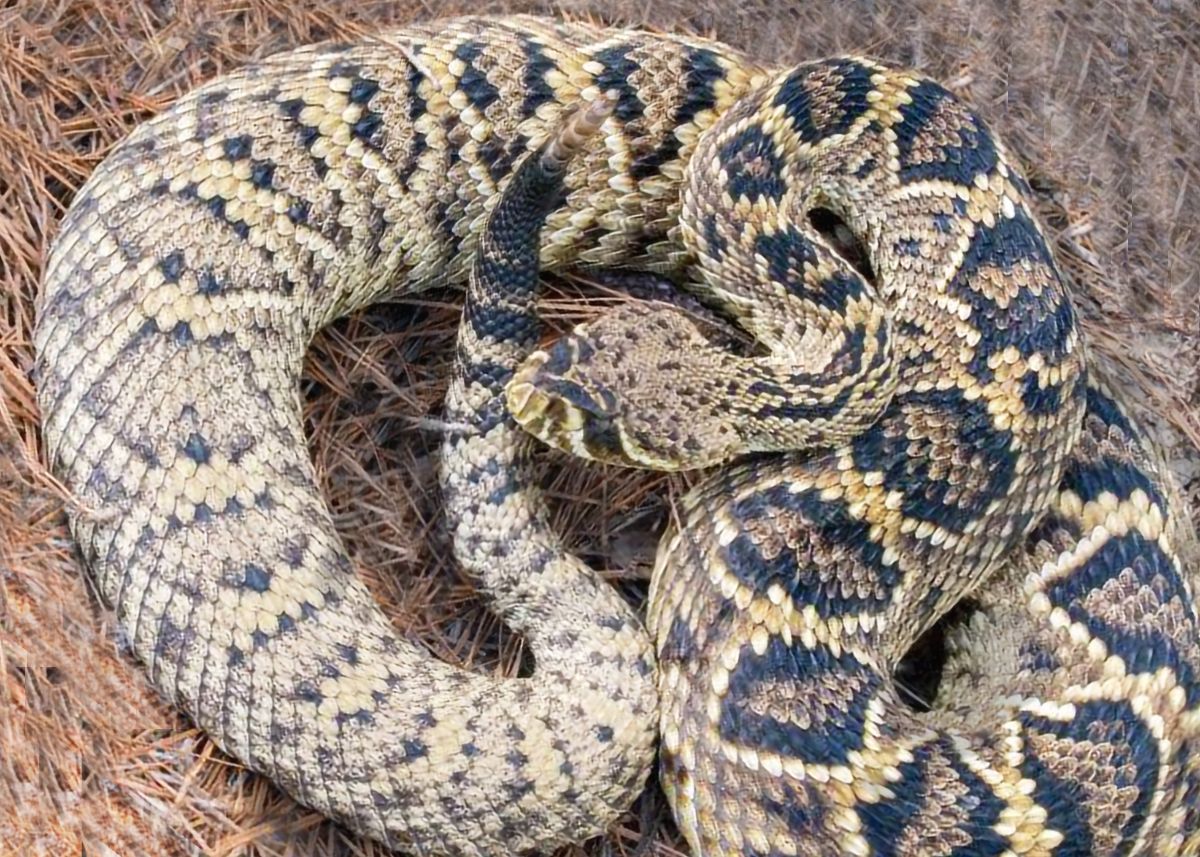
Tap a part to see what to look for. Tap it again to turn it off.
Venomous, and drop for drop one of the most dangerous snakes in the United States. Keep well back; a bite is a medical emergency.
How to identify
- Head
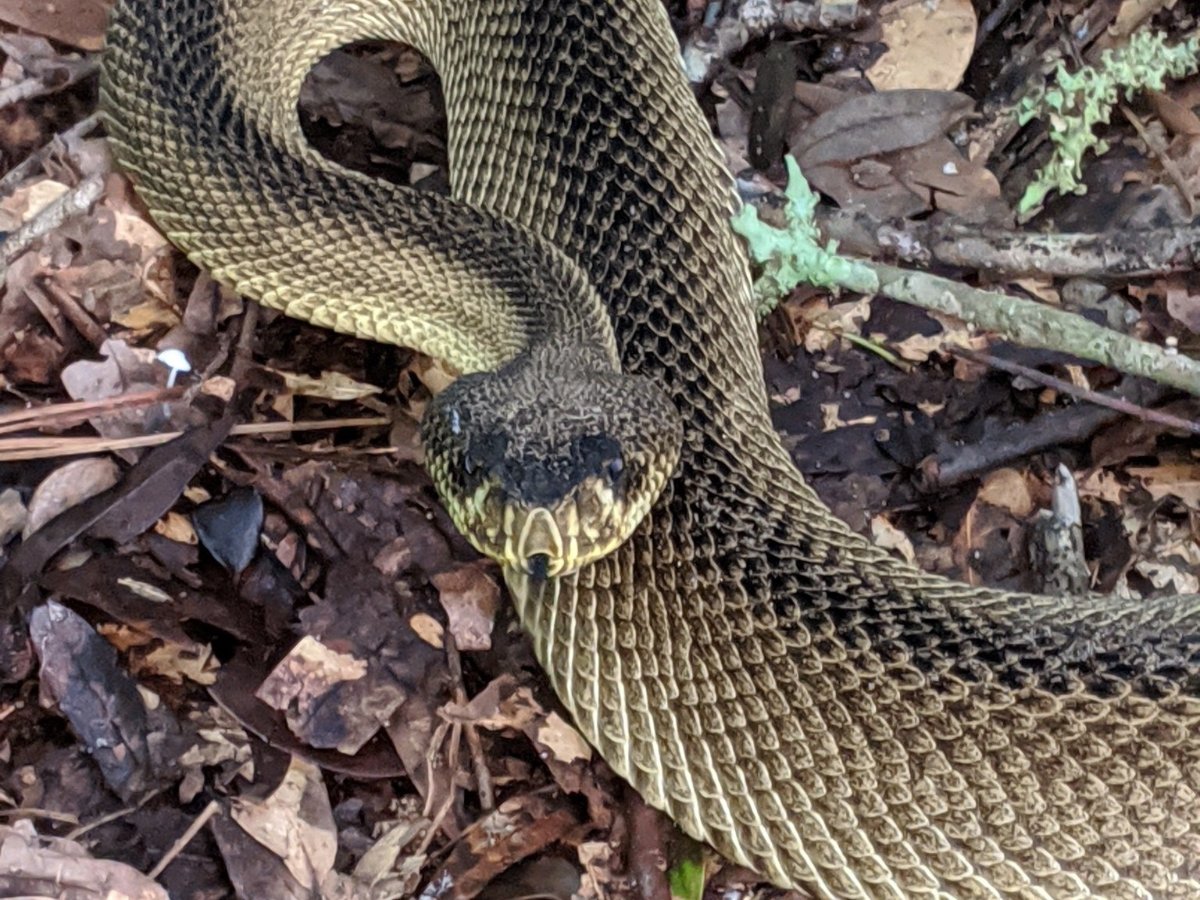
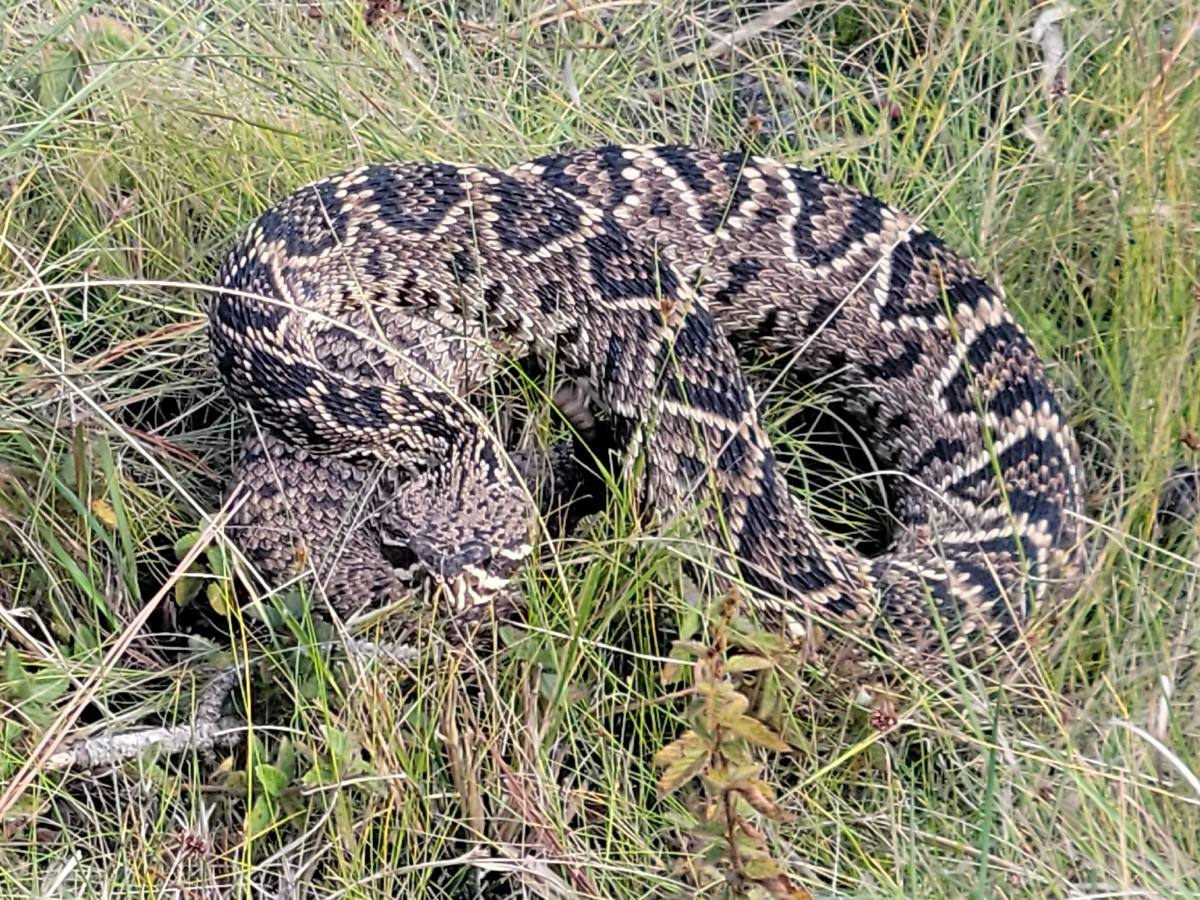
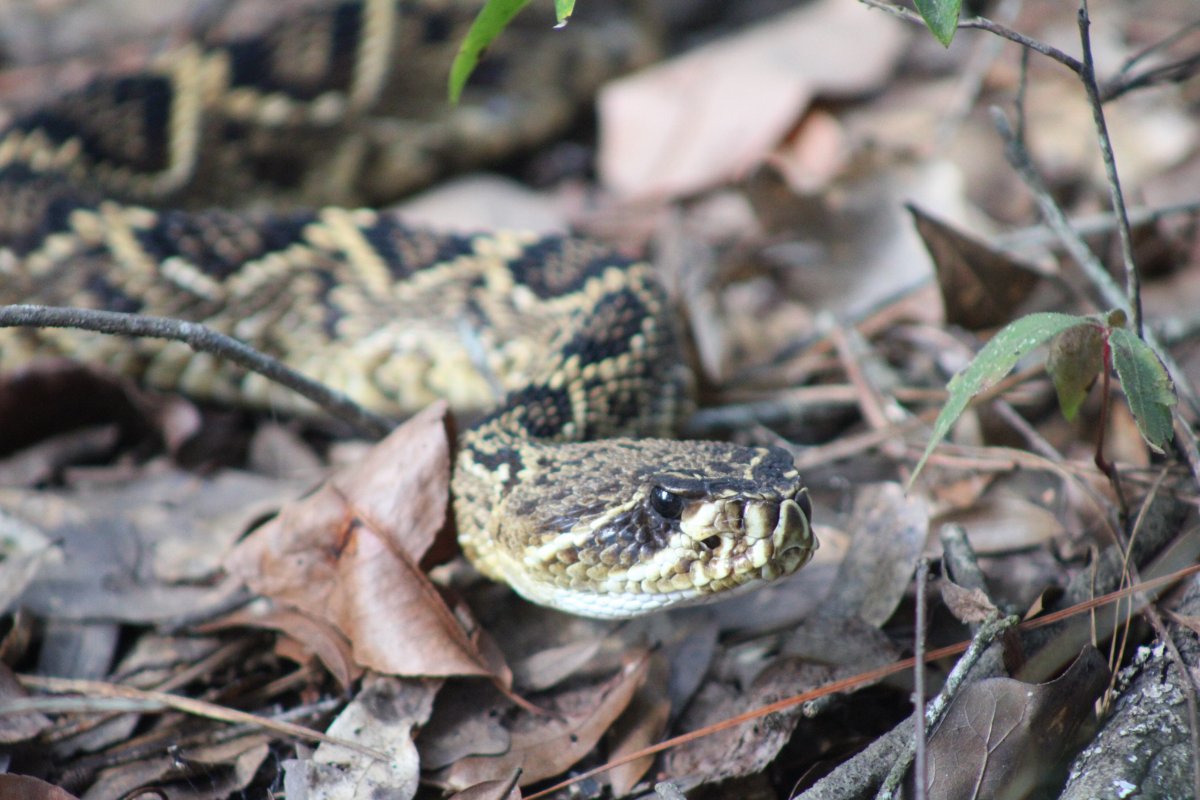
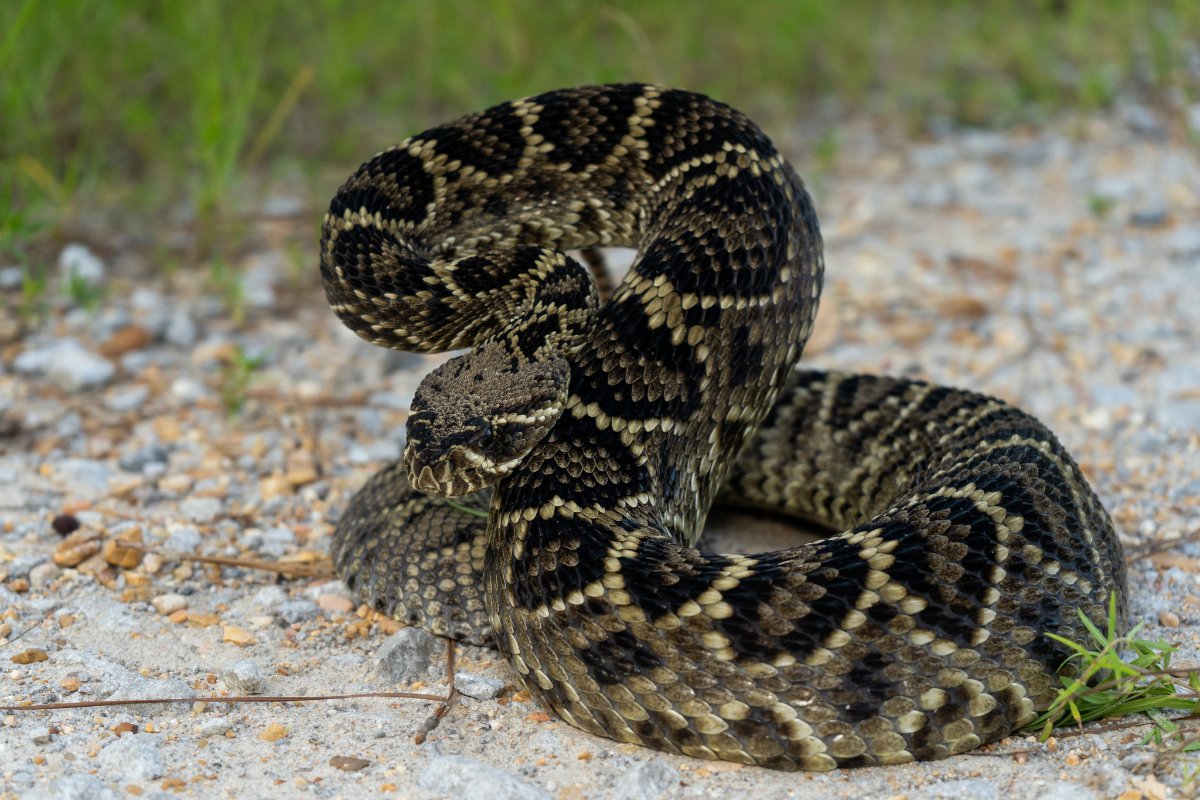
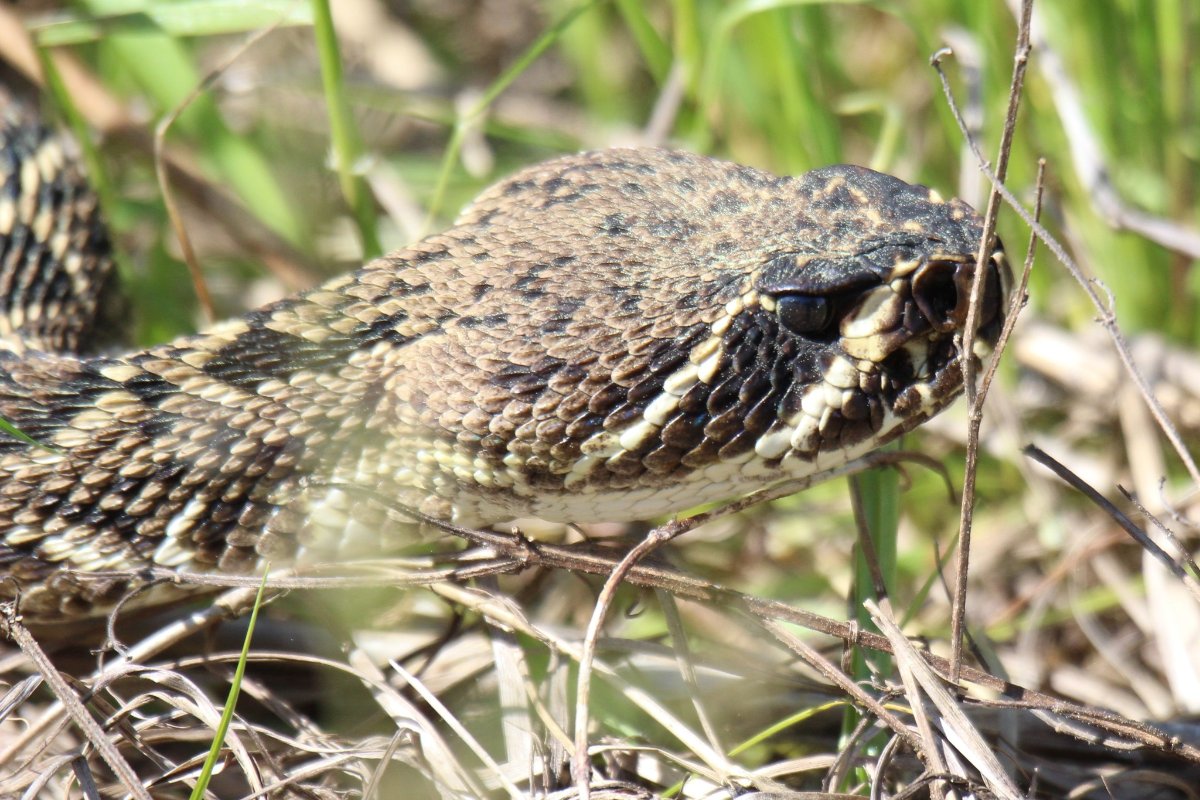
- Very broad triangular head with a bold dark cheek stripe bordered above and below by white.
- Pattern
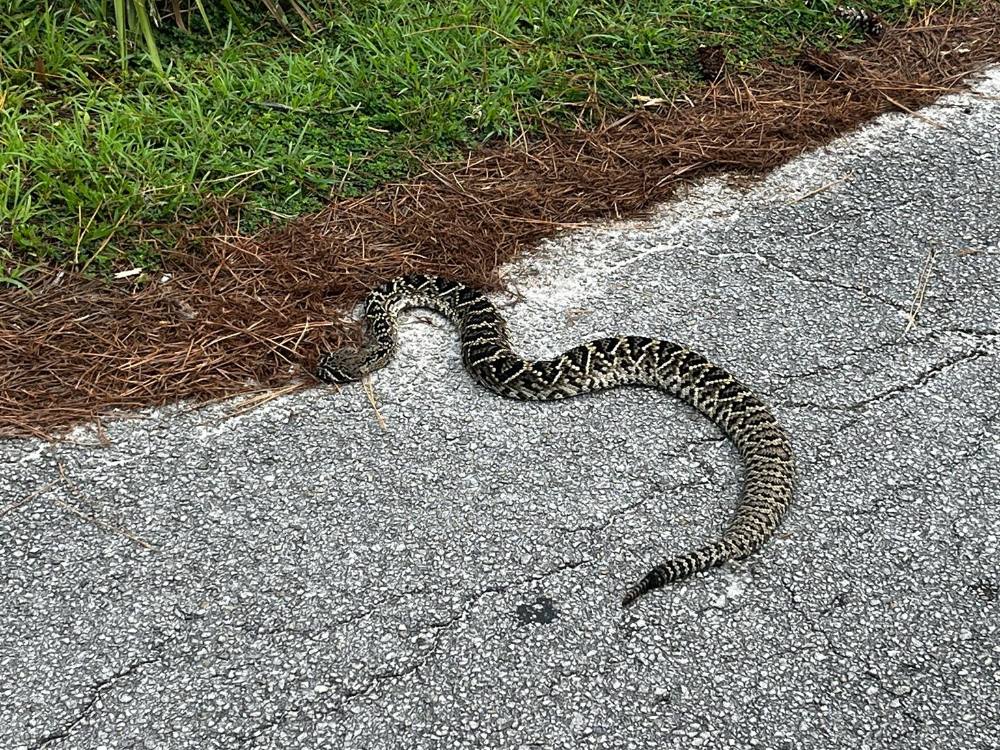
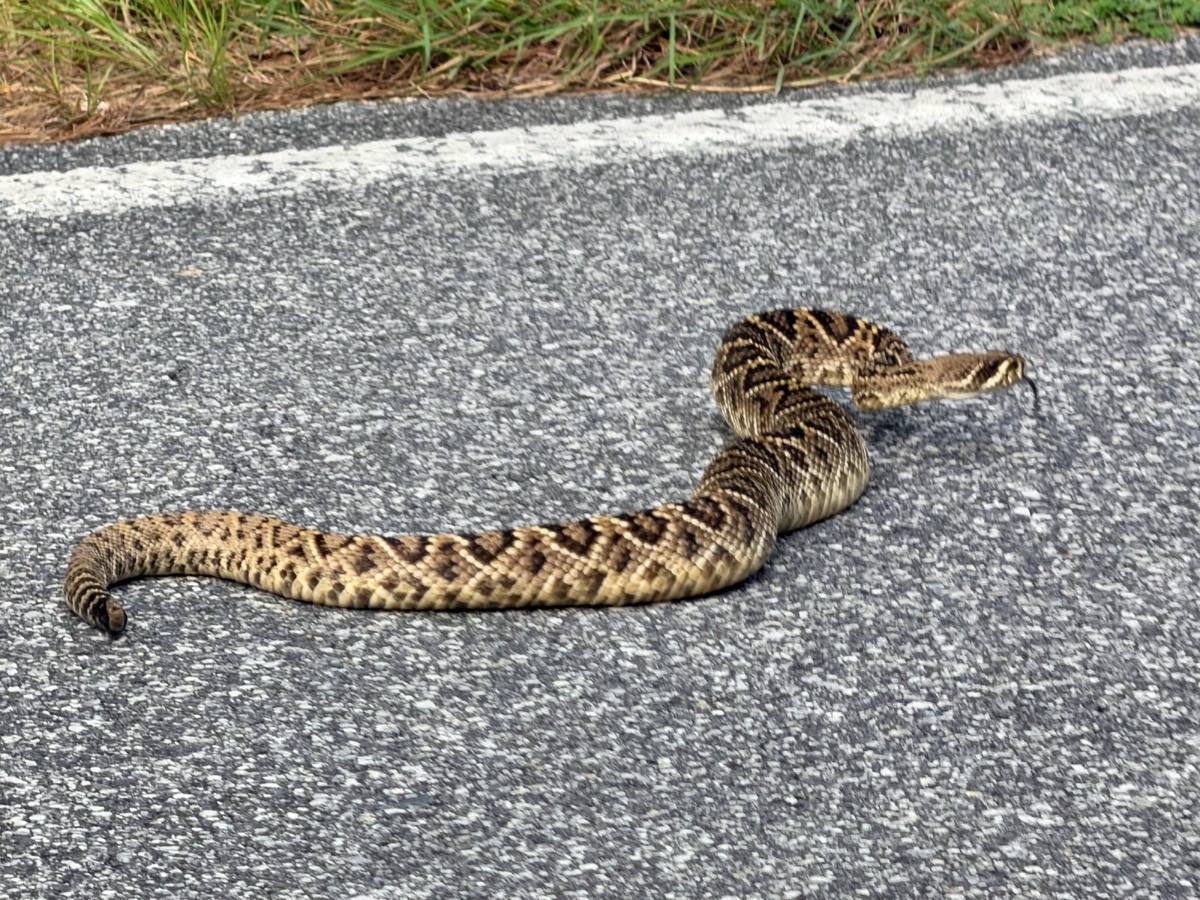
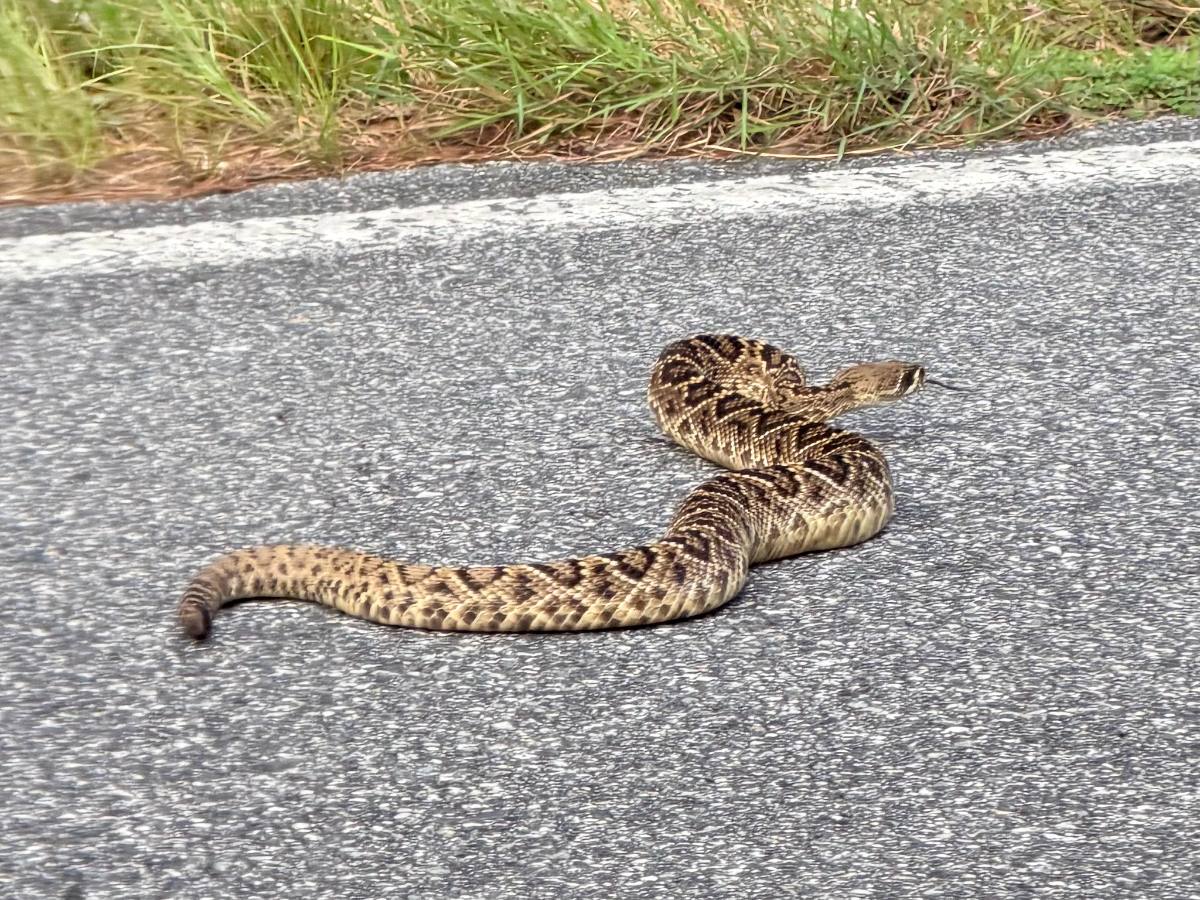
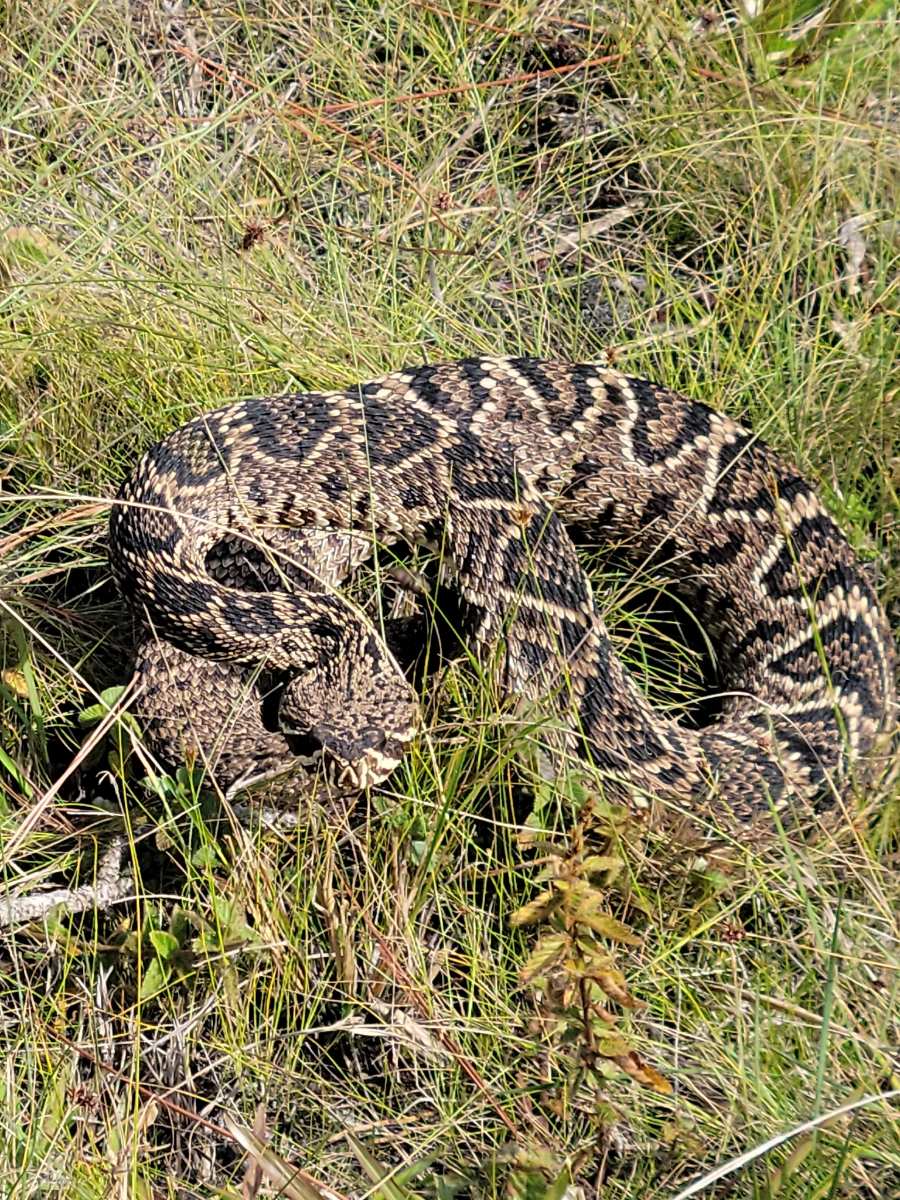
- Sharply outlined dark diamonds, each edged in cream, on brown to olive.
- Eyes
- Vertical slit pupil; heat-sensing pit between eye and nostril.
- Pits
- A deep heat-sensing pit on each side of the face, between the eye and the nostril.
- Tail
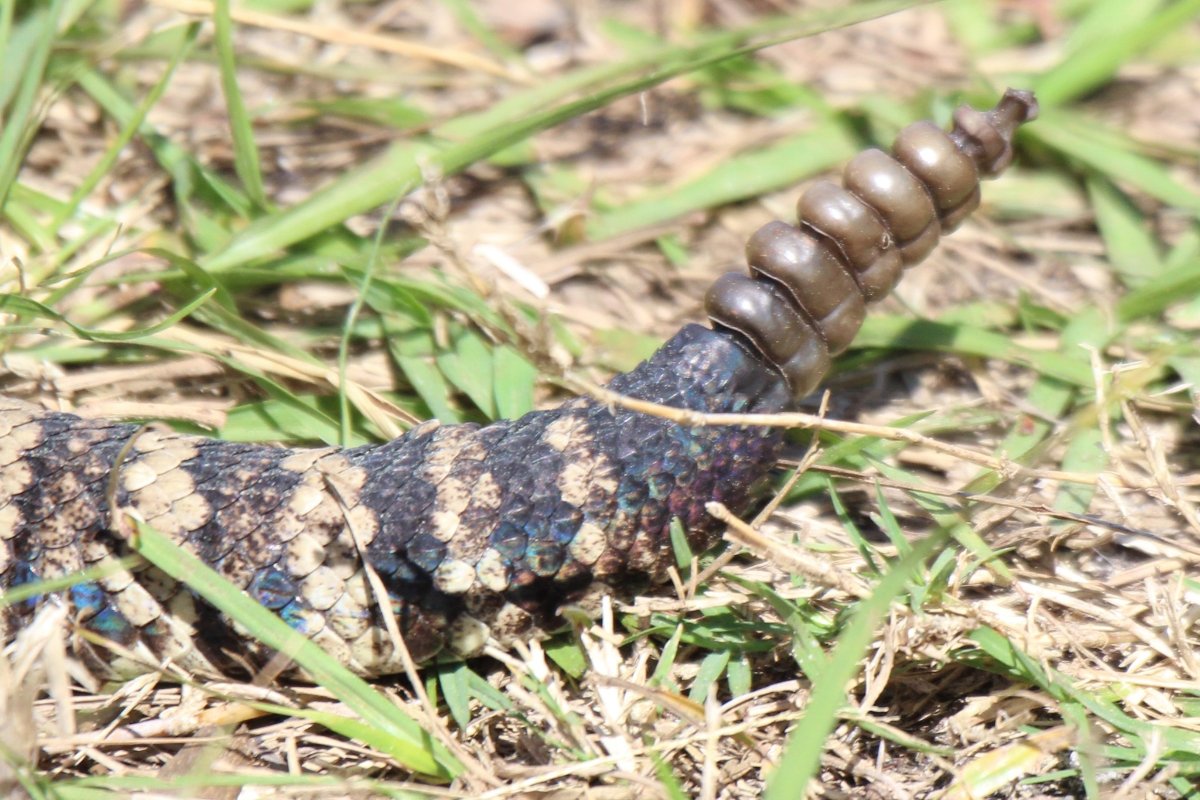
- Black and white bands ahead of a large rattle.
- What it does
- Rattles from a coil; will stand its ground.
Often confused with
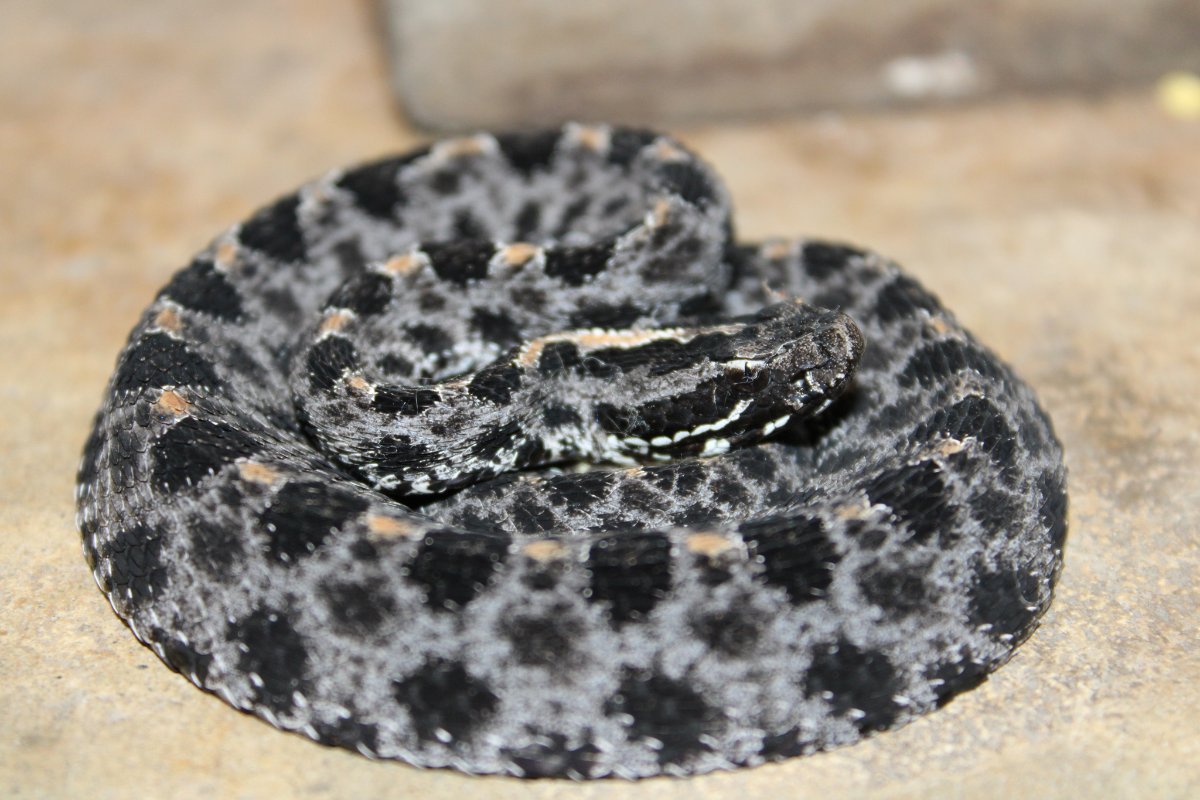
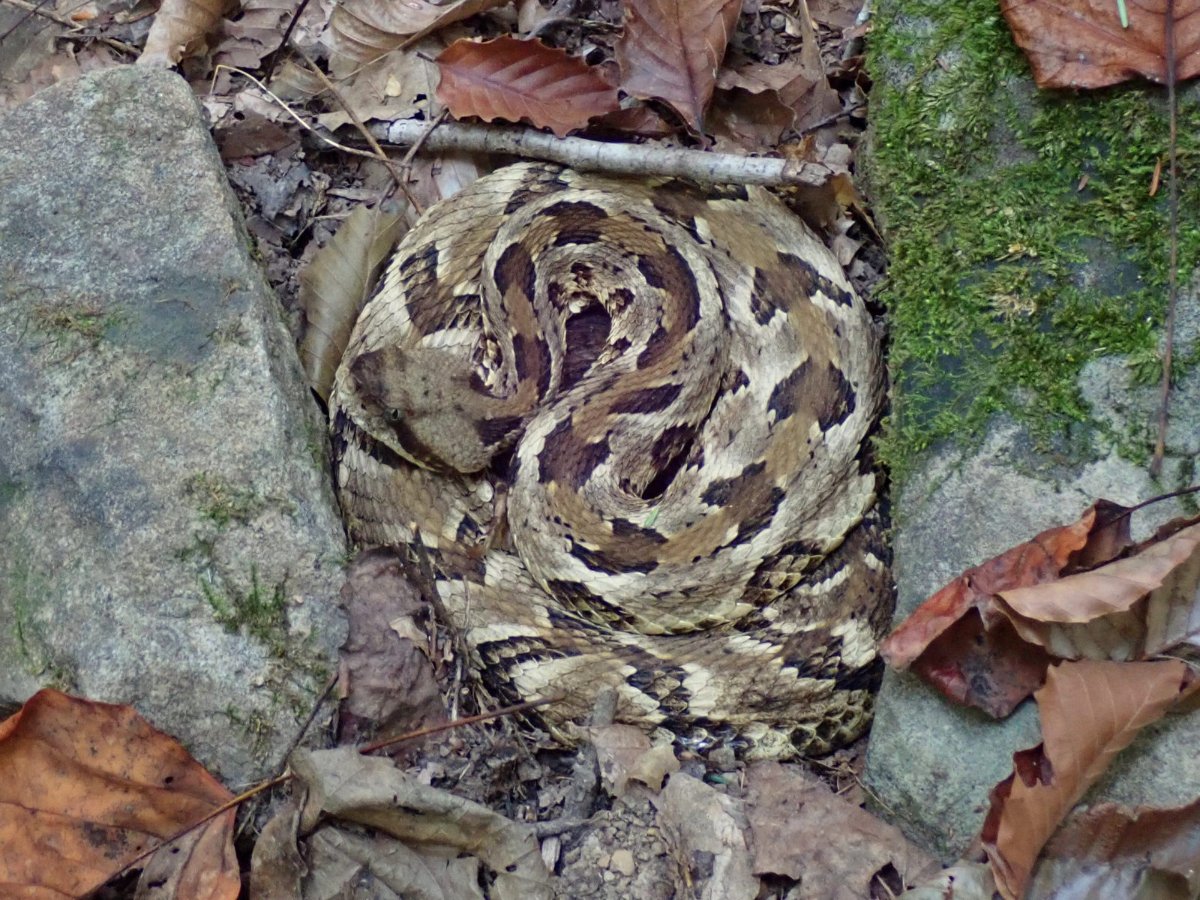
Timber Rattlesnake is the usual mix-up. It has dark chevron crossbands instead of diamonds, often a rusty stripe down the back, and a solid black tail. Pygmy Rattlesnake is far smaller, with round black blotches and a tiny rattle.
How to tell them apart
Eastern Diamondback Rattlesnake vs Pygmy Rattlesnake›
The quick way to tellLook at the back. The Eastern Diamondback has a row of large dark diamonds with cream borders. The Pygmy is much smaller, with a row of round dark spots and often a rusty stripe down the spine.
Eastern Diamondback Rattlesnake: Sharply outlined dark diamonds, each edged in cream, on brown to olive.
Pygmy Rattlesnake: Round dark spots down the back, often with a rusty stripe between them.
Eastern Diamondback Rattlesnake vs Timber Rattlesnake›
The quick way to tellLook at the back markings. The Eastern Diamondback has cream-edged diamonds. The Timber has black V-shaped crossbands, often a rusty stripe down the spine, and a solid black tail.
Eastern Diamondback Rattlesnake: Sharply outlined dark diamonds, each edged in cream, on brown to olive.
Timber Rattlesnake: Dark chevrons - V shapes pointing forward - and often a rusty spine stripe.
About the Eastern Diamondback Rattlesnake›
The largest rattlesnake in the world by weight, at home in southeastern pine flatwoods, palmetto scrub and coastal islands. Gopher tortoise burrows and stump holes are favorite retreats.
Numbers have dropped a lot with the loss of longleaf pine habitat and decades of organized hunts, so it is now a conservation concern across much of its range.
The details
Size Usually 3.5–5.5 ft; rarely over 7 ftWeight Commonly 4–10 lb; big ones much heavierLifespan 15–20 years
Typical range›
Coastal plain from South Carolina through Georgia and all of Florida, west along the Gulf to Alabama and Mississippi; now likely gone from North Carolina and Louisiana.
Activity›
Mostly active by day in spring and fall, and at night in the heat of summer. Does not truly hibernate in the far south.
Diet›
Rabbits, cotton rats, squirrels and ground-nesting birds.
Reproduction›
Gives birth to live young, usually 6–20, in late summer or early fall.
Found in parts of 7 states›
Ranges are approximate. It may be found in only part of a state, or be rare there, and snakes can turn up outside of them.
More photos