‹ Compare two snakes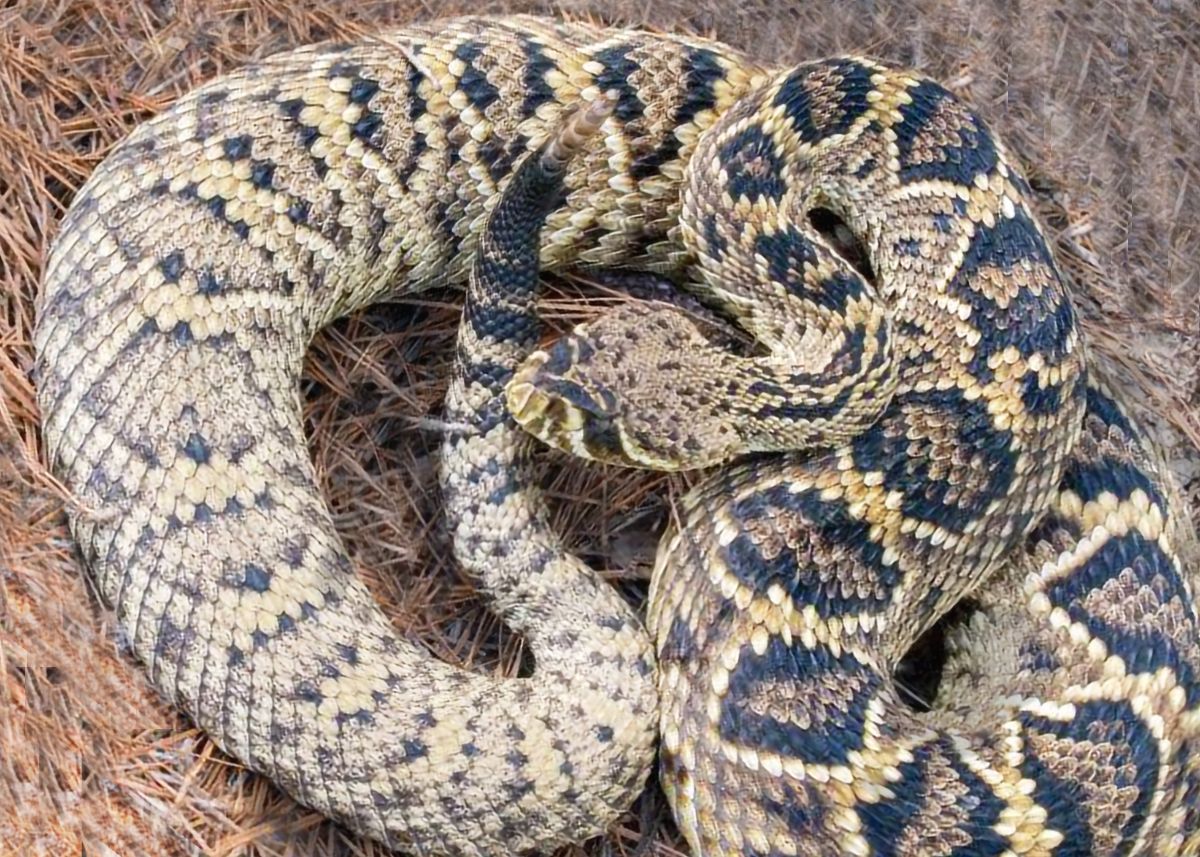
Eastern Diamondback Rattlesnake vs Timber Rattlesnake
Tap a part to see it on both. Tap it again to turn it off.
DJC
Eastern Diamondback Rattlesnake
Crotalus adamanteus
Venomous(c) Evan M. Raskin, some rights reserved (CC BY)
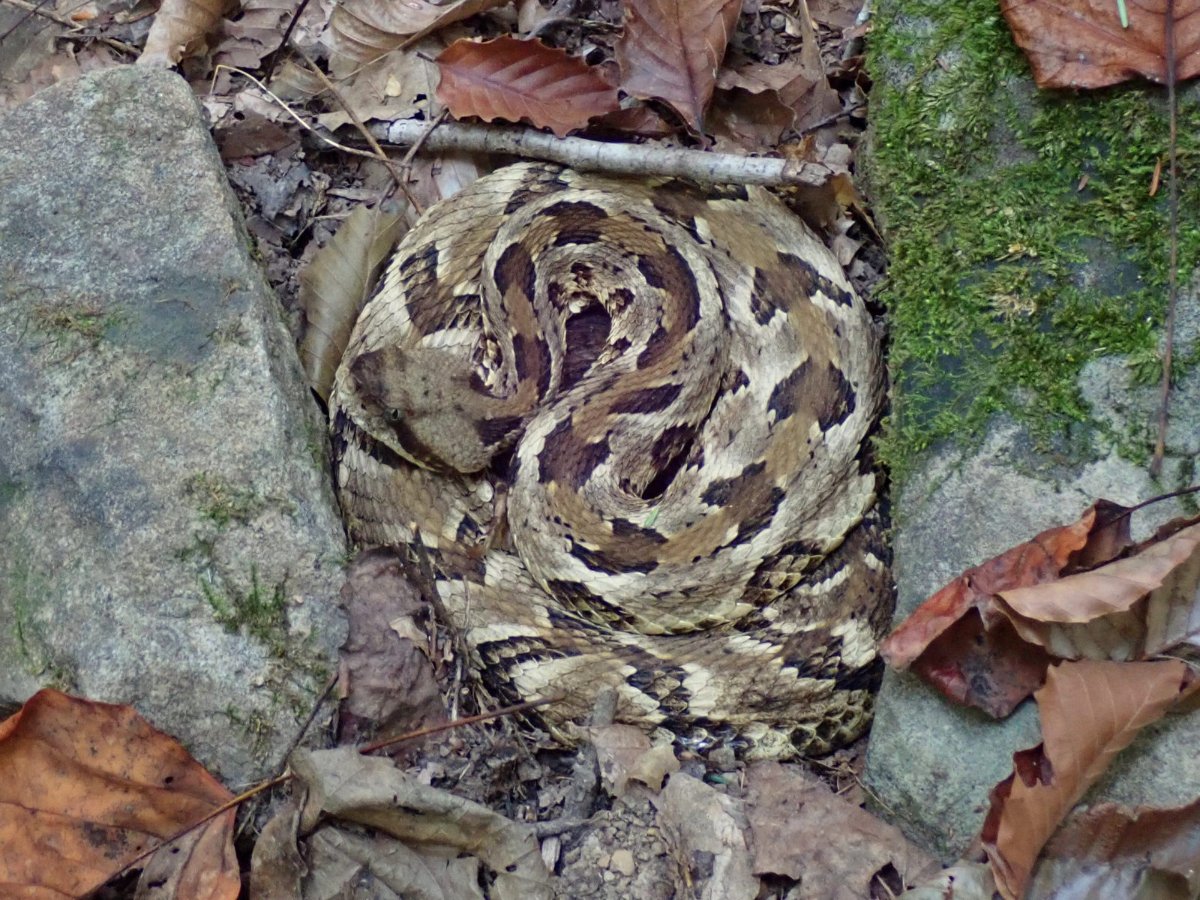
Timber Rattlesnake
Crotalus horridus
VenomousThe quick way to tell
Look at the back markings. The Eastern Diamondback has cream-edged diamonds. The Timber has black V-shaped crossbands, often a rusty stripe down the spine, and a solid black tail.
Pattern ★ This settles it
Sharply outlined dark diamonds, each edged in cream, on brown to olive.
Dark chevrons - V shapes pointing forward - and often a rusty spine stripe.
Head
Very broad triangular head with a bold dark cheek stripe bordered above and below by white.
Heavy triangular head, much wider than the neck, usually with no bold cheek stripe.
Eyes
Vertical slit pupil; heat-sensing pit between eye and nostril.
Vertical slit pupil; heat-sensing pit between eye and nostril.
Pits
A deep heat-sensing pit on each side of the face, between the eye and the nostril.
A deep heat-sensing pit on each side of the face, between the eye and the nostril.
Tail
Black and white bands ahead of a large rattle.
Solid black ahead of the rattle.
What it does
Rattles from a coil; will stand its ground.
Very reluctant; usually lies still or rattles long before striking.
Where it lives
Coastal plain from South Carolina through Georgia and all of Florida, west along the Gulf to Alabama and Mississippi; now likely gone from North Carolina and Louisiana.
Eastern US from New Hampshire and New York south to northern Florida, west to Minnesota, Iowa, Kansas and east Texas.