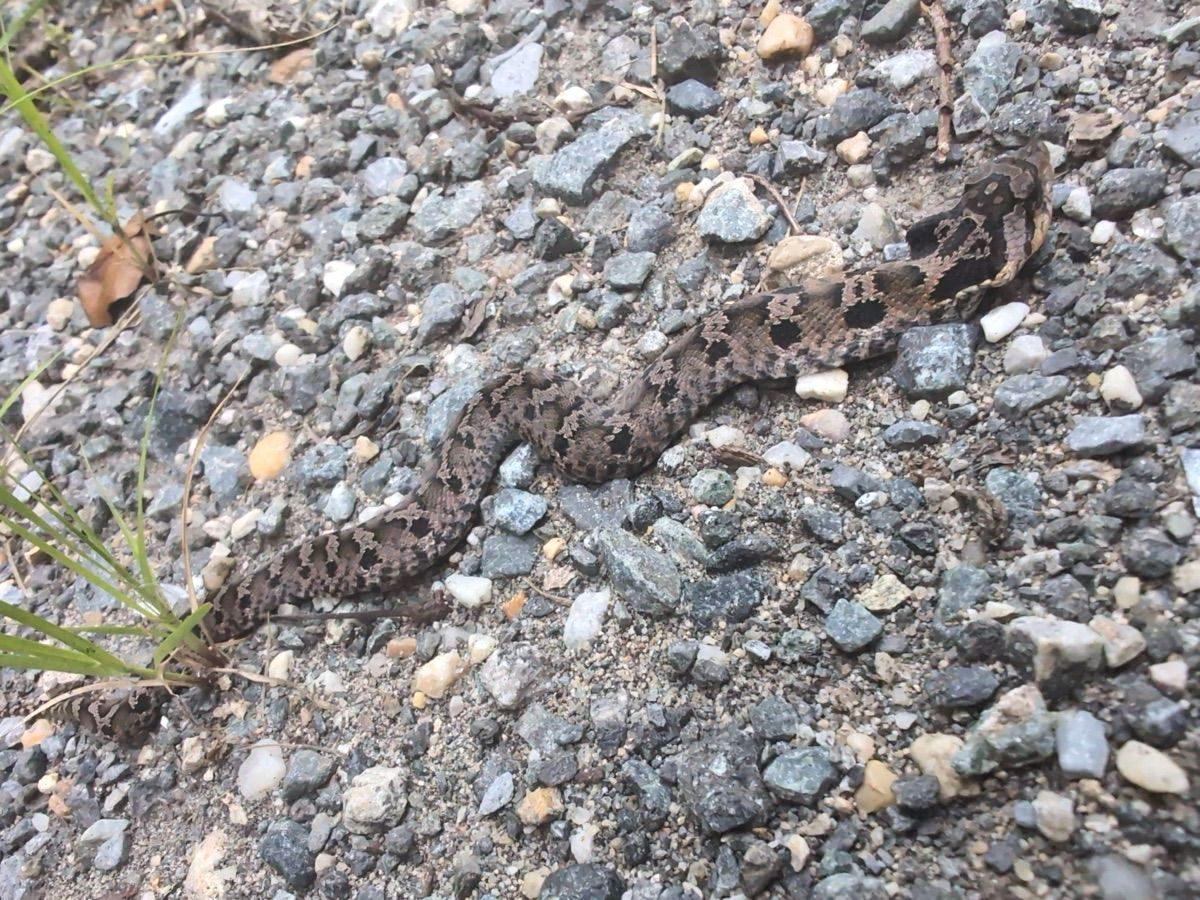
Eastern Hog-nosed Snake
Heterodon platirhinos · Hognose Snakes
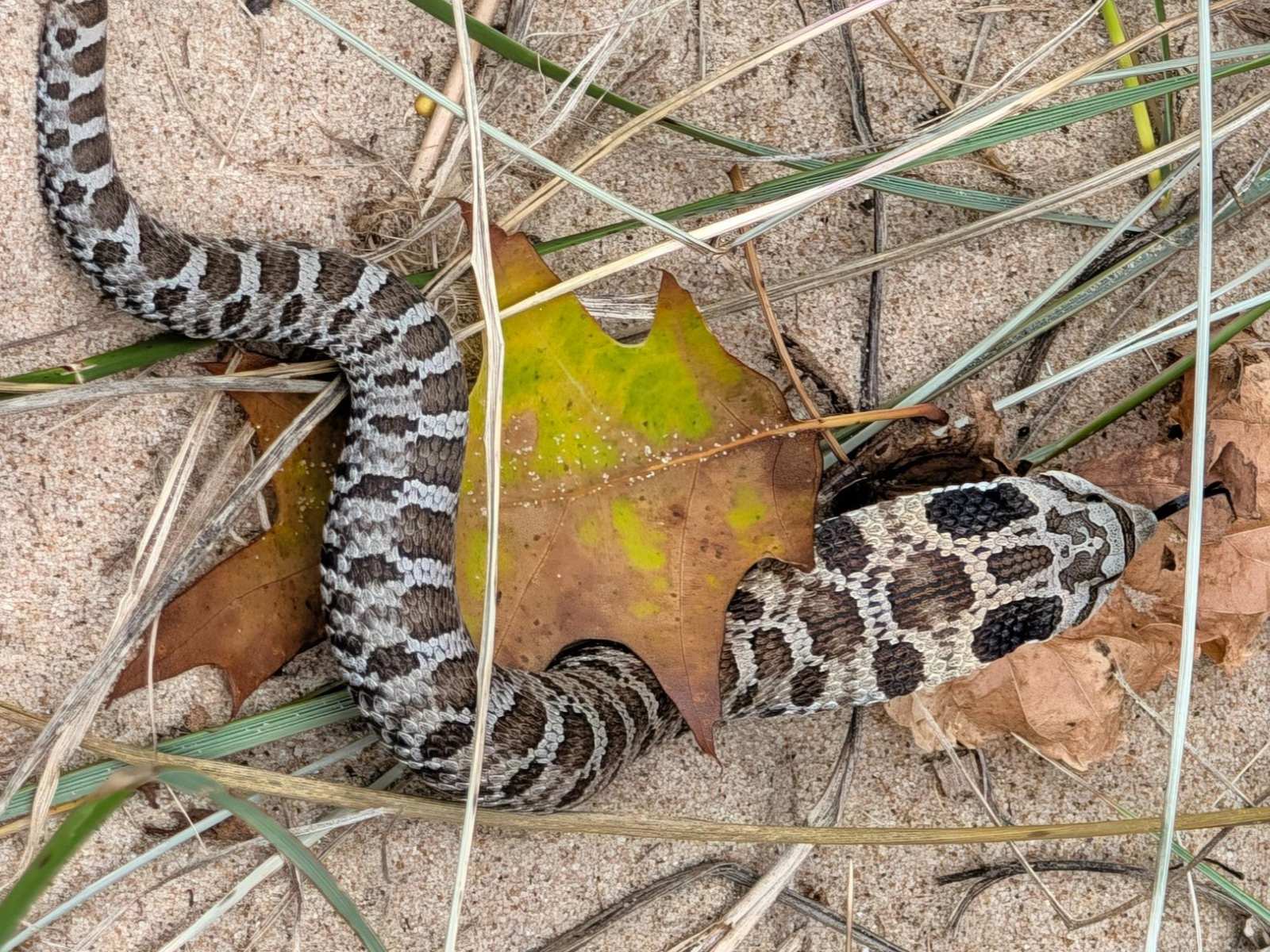
Tap a part to see what to look for. Tap it again to turn it off.
Mild venom from its enlarged rear teeth, used on toads. It hisses, spreads its neck and strikes with its mouth shut. (Generally considered harmless to people.)
How to identify
- Head
- Sharply upturned snout; spreads its neck wide like a cobra when alarmed.
- Pattern
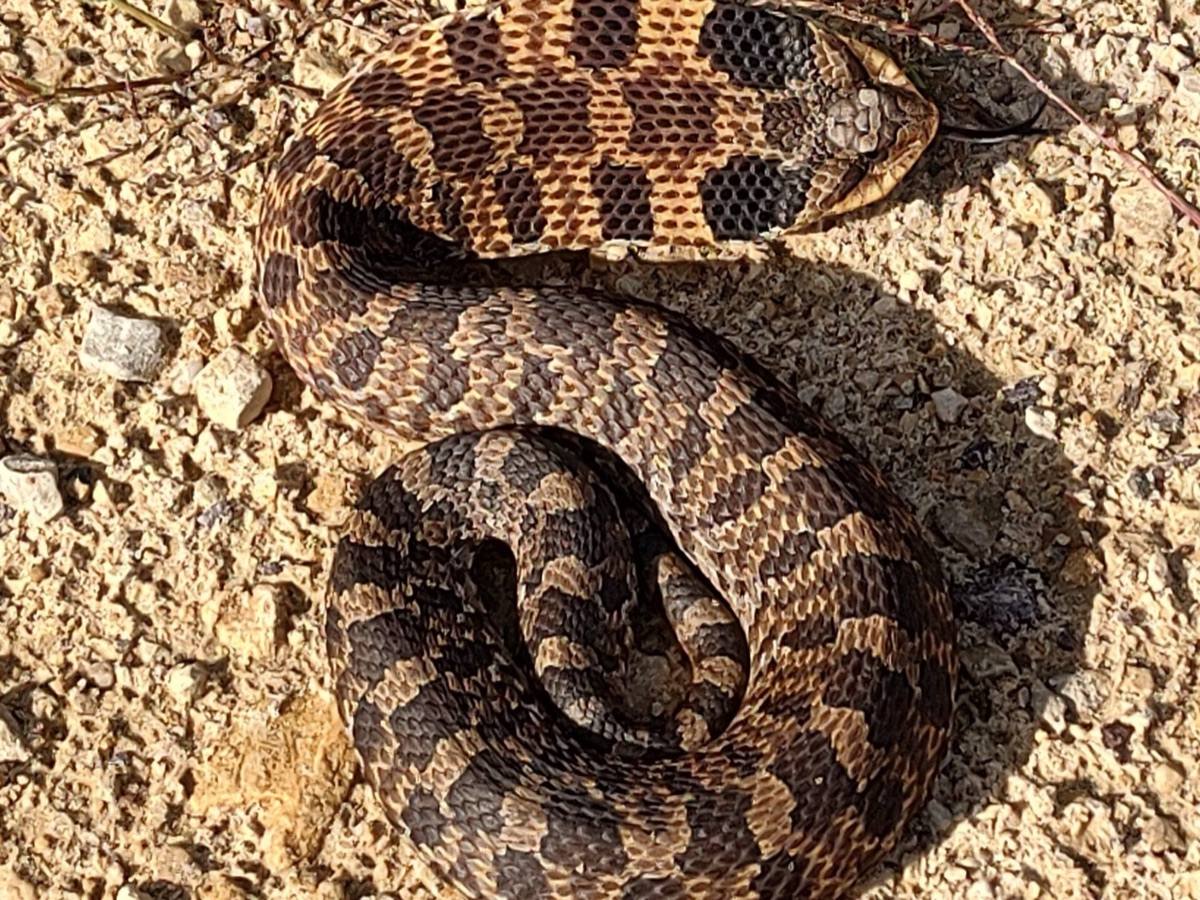
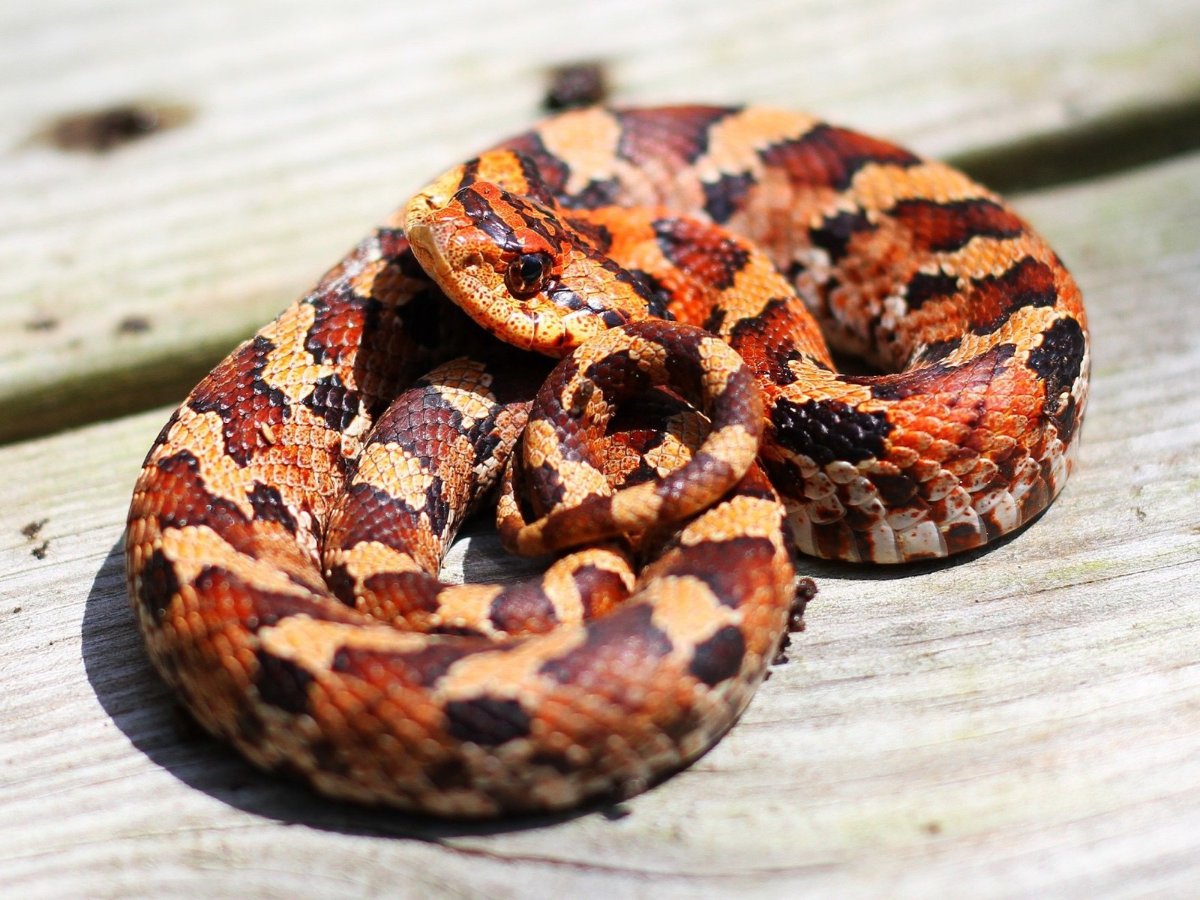
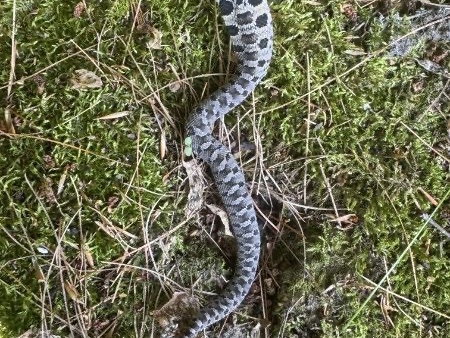
- Very variable - blotched orange, brown, gray or olive, or plain black with no pattern.
- Eyes
- Round pupil, with the upturned snout above; no heat-sensing pit.
- Pits
- None. There is no pit between the eye and the nostril.
- Tail
- Underside of the tail is lighter than the belly; no rattle.
- What it does
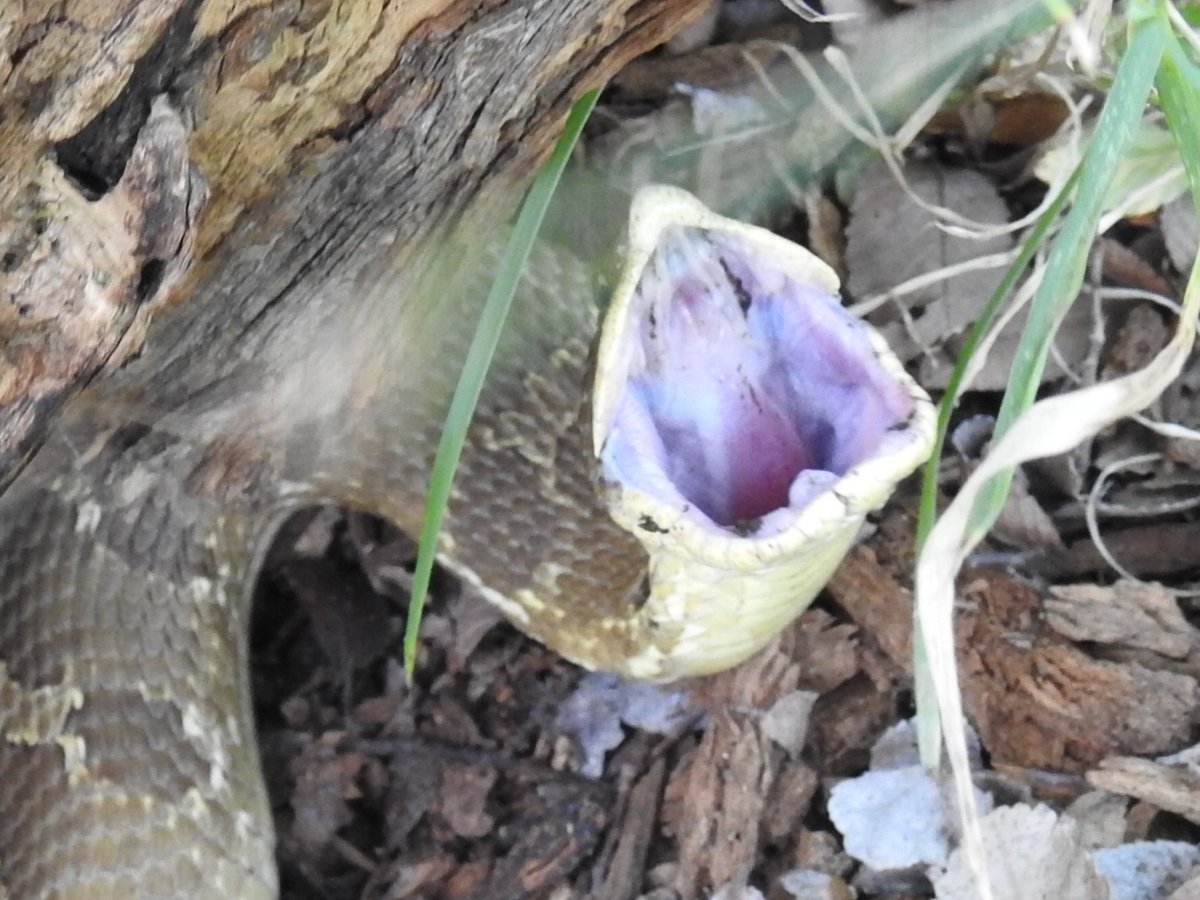
- Hisses loudly, strikes with its mouth shut, then flops over and plays dead.
Often confused with
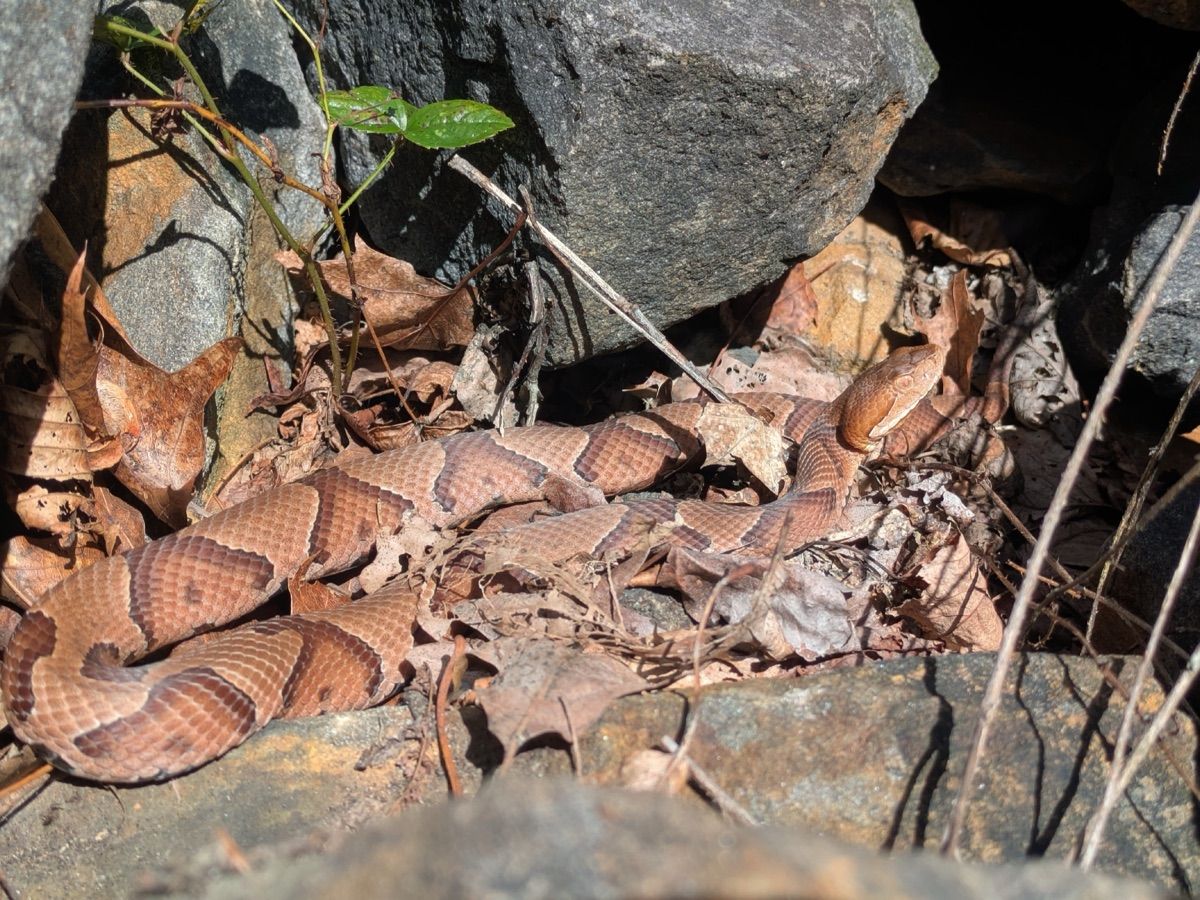
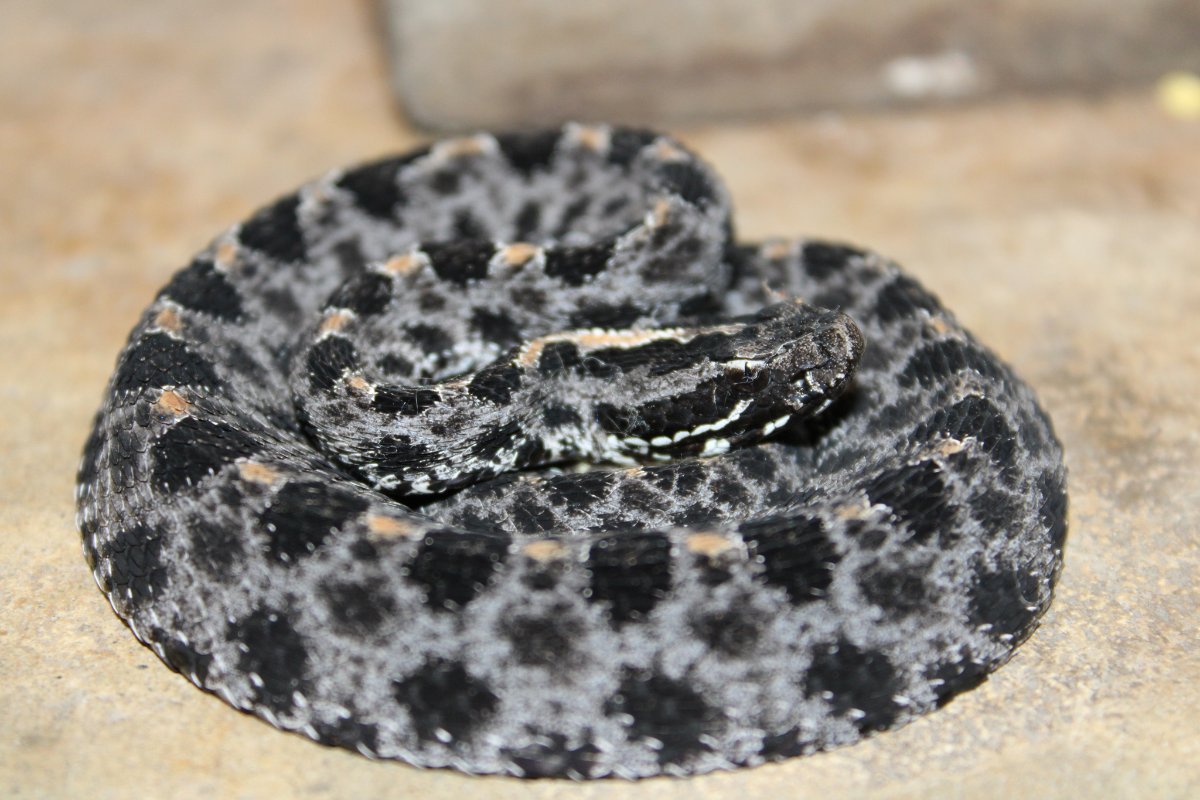
Eastern Copperhead and Pygmy Rattlesnake, because of the blotches and its enormous bluffing display; the upturned snout and round pupil settle it.
How to tell them apart
Eastern Hog-nosed Snake vs Eastern Copperhead›
The quick way to tellLook at the snout. The hog-nosed snake's is upturned like a shovel, and its pupils are round. The copperhead's snout is normal and its pupils are vertical.
Eastern Hog-nosed Snake: Sharply upturned snout; spreads its neck wide like a cobra when alarmed.
Eastern Copperhead: Plain coppery triangular head with no stripes or blotches, clearly wider than the neck.
Eastern Hog-nosed Snake vs Pygmy Rattlesnake›
The quick way to tellCheck the snout. The Eastern Hog-nosed's tip is upturned and pointed. The Pygmy has a blunt nose, a dark bar from the eye to the mouth corner, and a tiny rattle on its tail.
Eastern Hog-nosed Snake: Sharply upturned snout; spreads its neck wide like a cobra when alarmed.
Pygmy Rattlesnake: Small head, only a little wider than the neck, with a dark stripe through the eye.
About the Eastern Hog-nosed Snake›
The famous "puff adder" or "hognose" of eastern woods and sandy fields — and all bluff. It spreads its neck like a cobra, hisses loudly and strikes with its mouth shut.
If the bluff fails it writhes, musks, and flops belly-up with its mouth open, playing dead so convincingly that it will right itself and flip back over if you turn it the other way.
The details
Size Usually 20–33 inWeight About 0.5–1.5 lbLifespan 10–15 years
Typical range›
Eastern US: southern New Hampshire and Ontario south through Florida, west to Minnesota, southeastern South Dakota, Kansas and Texas.
Activity›
Day active in warm months, most often seen in spring and early summer; burrows in sandy soil.
Diet›
Almost entirely toads, which it deflates with enlarged rear teeth before swallowing.
Reproduction›
Lays eggs, usually 8–40, in early summer.
Found in parts of 34 states›
Ranges are approximate. It may be found in only part of a state, or be rare there, and snakes can turn up outside of them.