Eastern Indigo Snake
Drymarchon couperi · Indigo Snakes
Also called Indigo Snake
Tap a part to see what to look for. Tap it again to turn it off.
No venom. It is not aggressive and rarely bites, but if cornered it may flatten its head, hiss and shake its tail. It is a federally protected threatened species.
How to identify
- Head
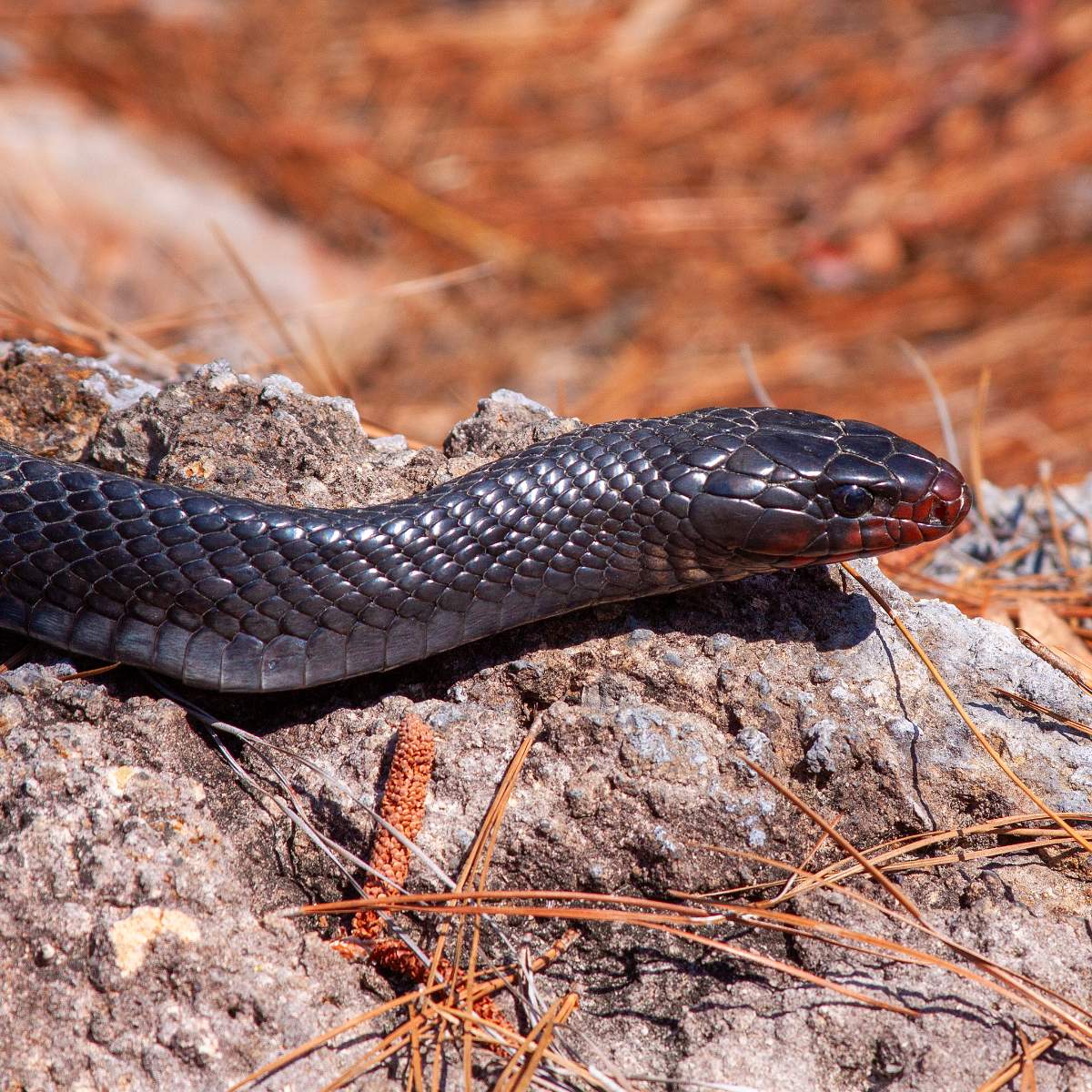
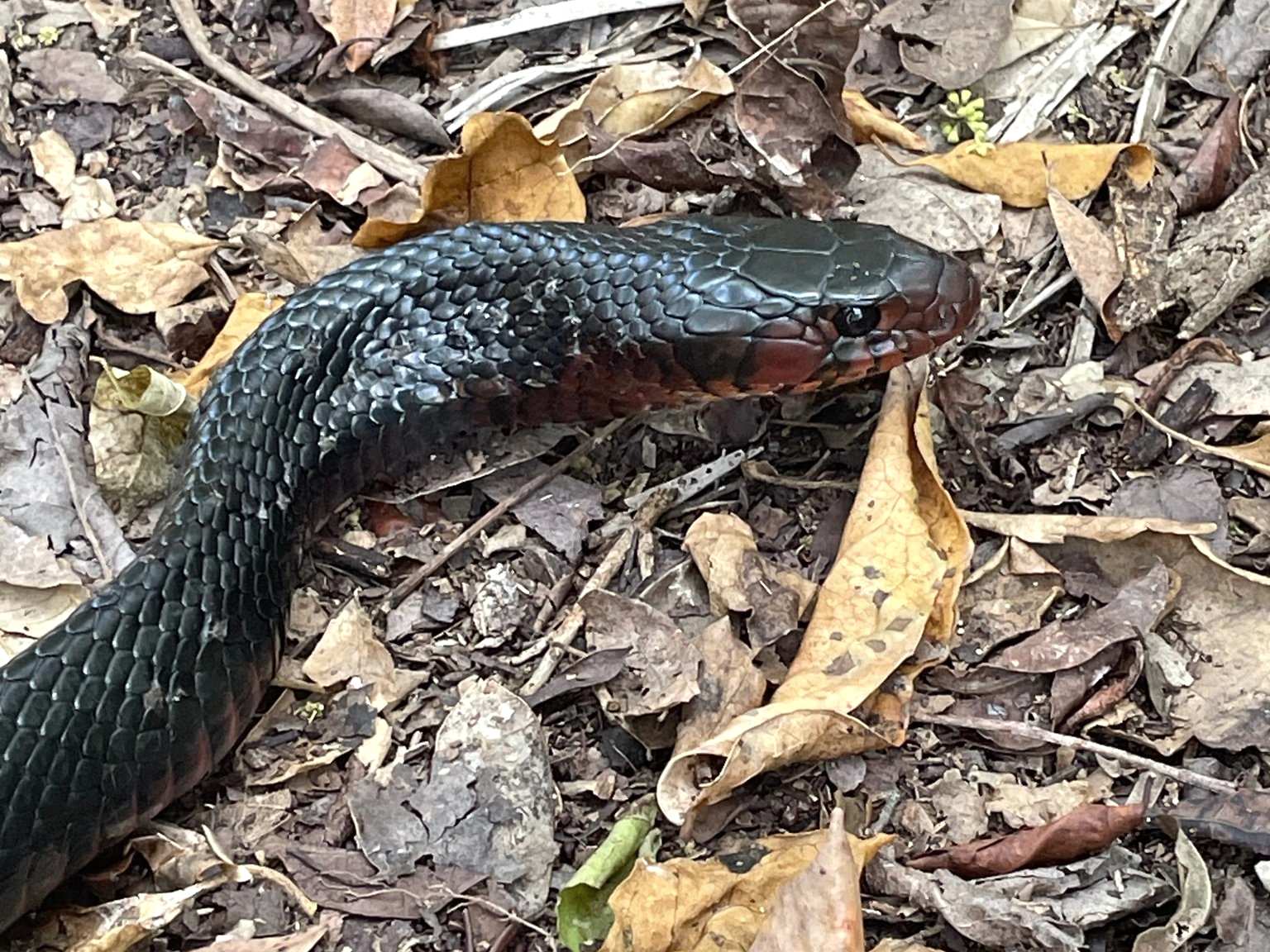
- Black head; the chin, throat and sides of the head are often reddish, orange-brown or cream.
- Pattern
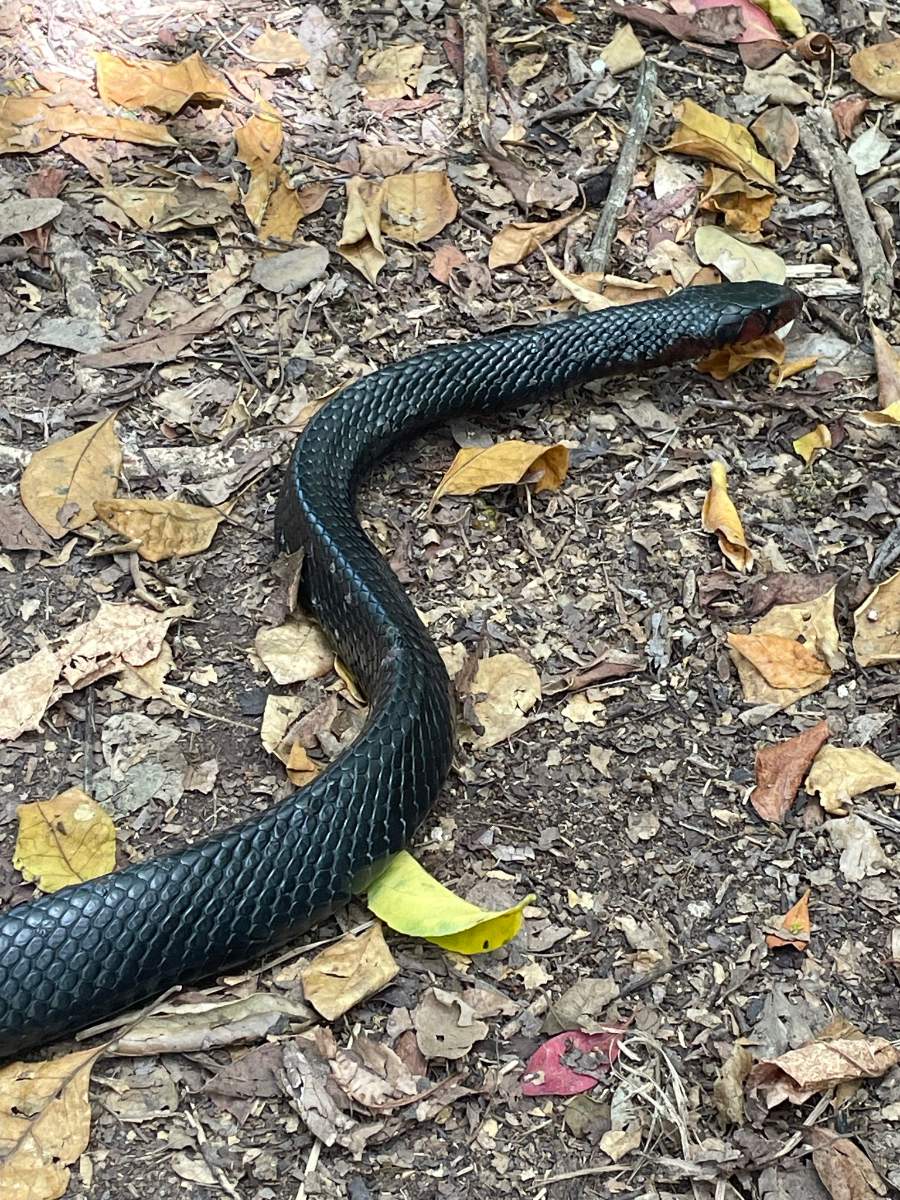
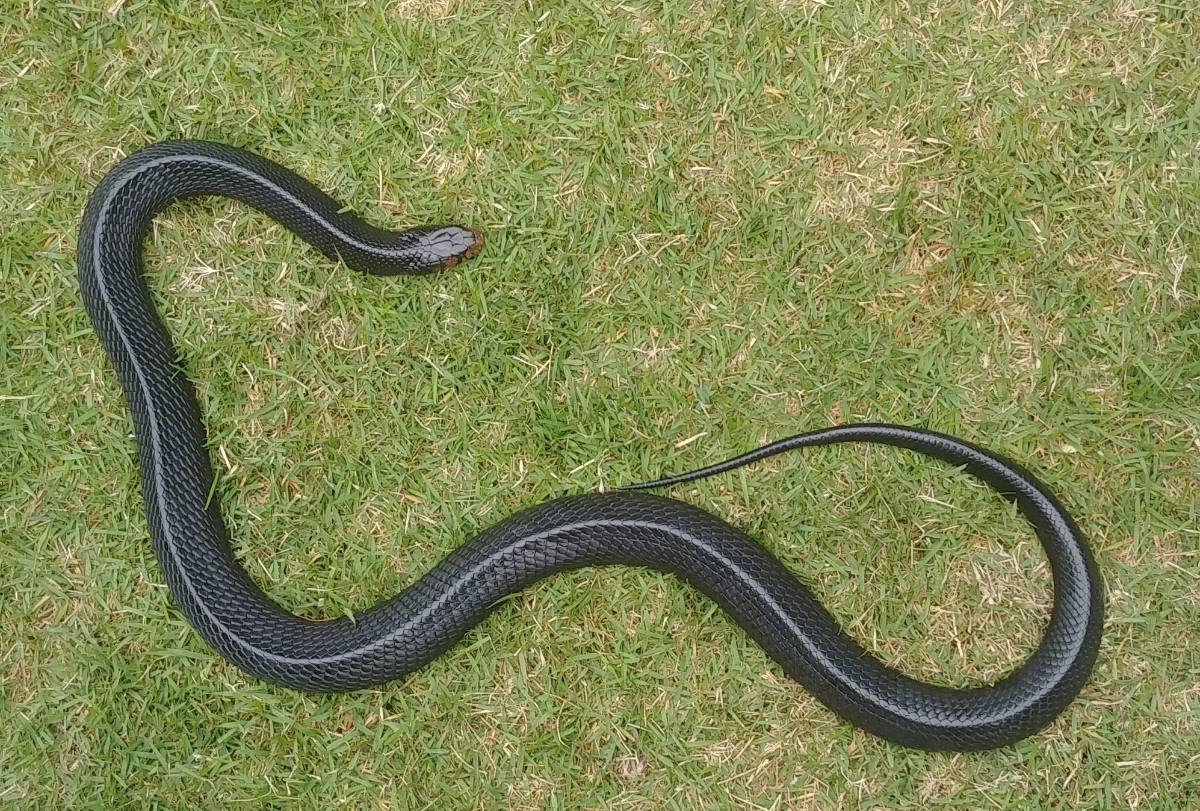
- Solid glossy blue-black all over, including the belly, with blue or purple shine in sunlight. Young snakes are glossy black with narrow whitish-blue bands.
- Pits
- None. There is no pit between the eye and the nostril.
- What it does
- Not aggressive and avoids people. If threatened it may flatten its head, hiss and vibrate its tail, but it rarely bites. It is an active hunter that often searches along the edges of wetlands.
Often confused with
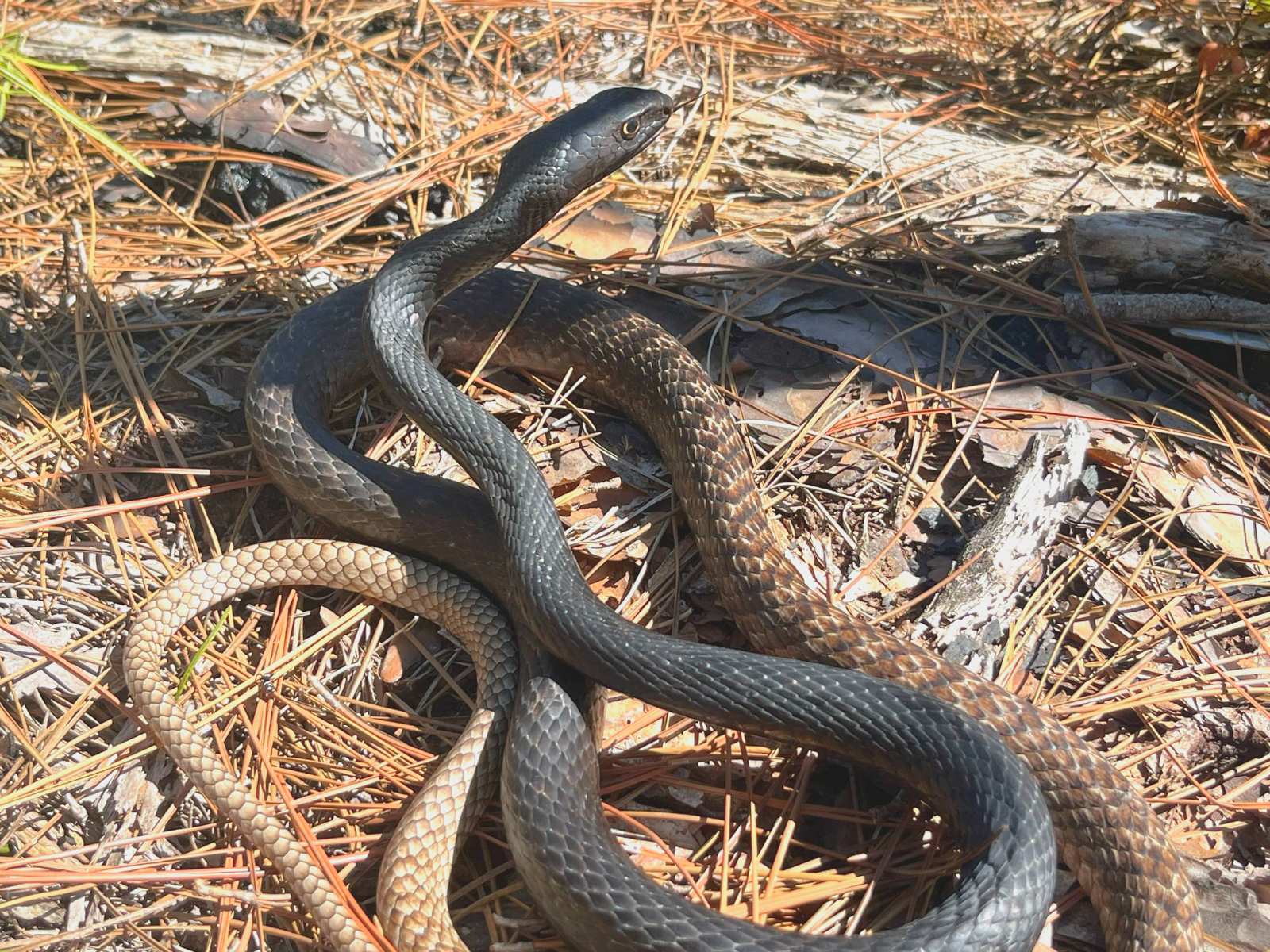
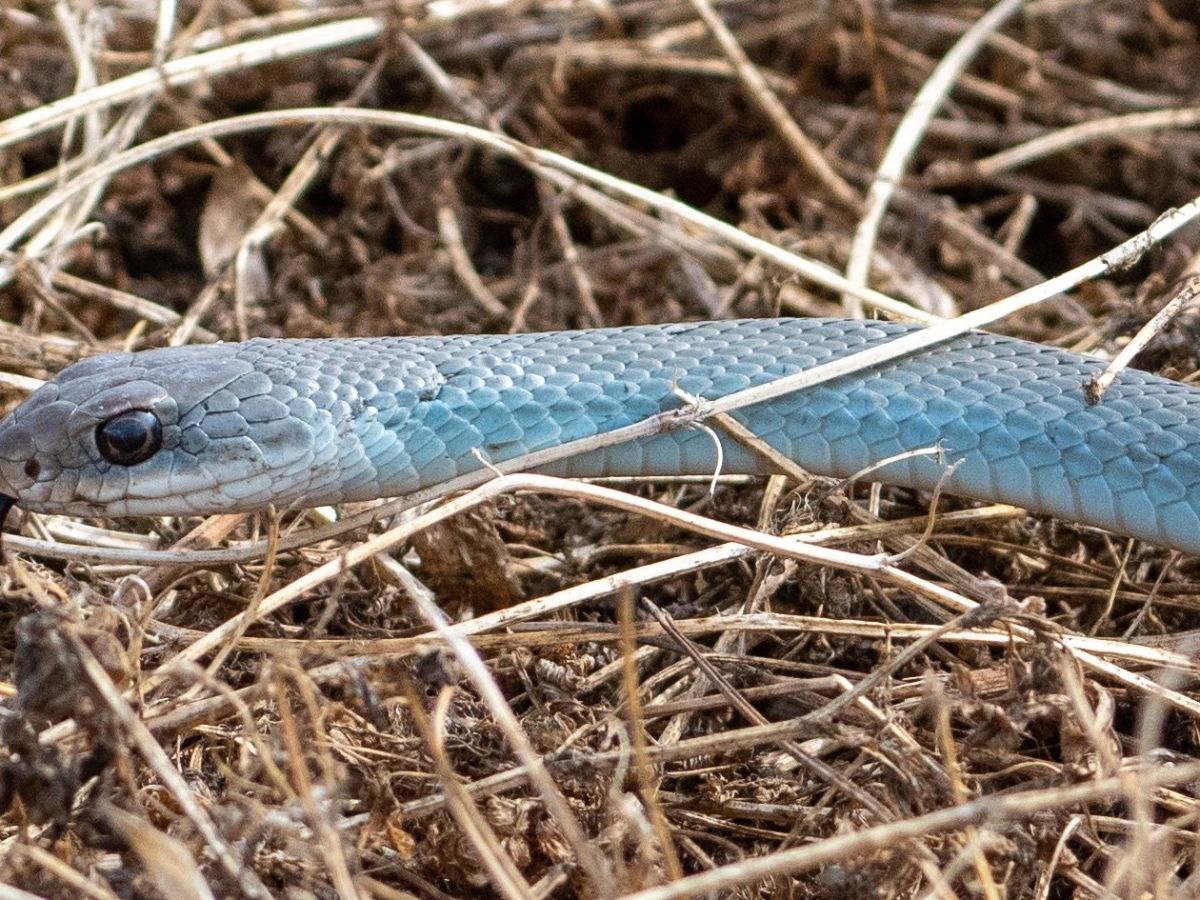
The North American Racer is also black but is thinner, duller black and has a white chin and throat. The Coachwhip in Florida has a black head and neck but a tan body and tail. The Texas Indigo Snake is a different species that lives only in south Texas and Mexico, far outside this snake's range.
How to tell them apart
Eastern Indigo Snake vs Coachwhip›
The quick way to tellLook at the back half of the body. The Eastern Indigo Snake is glossy blue-black from head to tail. The Coachwhip is black only on the head and neck and turns tan toward the tail.
Eastern Indigo Snake: Solid glossy blue-black all over, including the belly, with blue or purple shine in sunlight. Young snakes are glossy black with narrow whitish-blue bands.
Coachwhip: Two-tone - dark head and neck fading to tan, pink or cream toward the tail, or the reverse.
Eastern Indigo Snake vs North American Racer›
The quick way to tellLook at the chin and throat. The Eastern Indigo Snake is glossy blue-black and often has red, orange-brown or cream on the chin and sides of the head. The North American Racer is duller black with a white chin and throat, and it is much thinner.
Eastern Indigo Snake: Black head; the chin, throat and sides of the head are often reddish, orange-brown or cream.
North American Racer: Small head only a little wider than the neck; large eyes.
About the Eastern Indigo Snake›
The Eastern Indigo Snake lives in the far Southeast: across Florida, in southeastern Georgia, and in one reintroduced population in southern Alabama. It is the longest native snake in the US. It favors dry sandhills with longleaf pine and oak, scrub and flatwoods, often near wetlands, and it shelters in gopher tortoise burrows, especially in winter. It is active by day and roams over very large areas.
Look for a very big, thick, glossy blue-black snake with no pattern, often with red, orange-brown or cream on the chin and sides of the head. It is the only snake in its range that is this big, this shiny and solid black.
The details
Size Adults usually 60–84 in (152–213 cm); record about 8.6 ft (263 cm). Hatchlings about 17–24 in.Weight Adults about 2 to over 10 lb (from USFWS; only one source found).Lifespan About 8–12 years in the wild (from USFWS; only one source found).
Typical range›
US Southeast only: Florida (throughout, very rare in the Keys), southeastern Georgia, and a reintroduced population in southern Alabama. Once found in southern Mississippi and possibly southern South Carolina.
Activity›
Active by day, and active even in cool winter weather.
Diet›
Almost any animal it can overpower: small mammals, birds, frogs, toads, lizards, turtles, eggs and other snakes, including rattlesnakes and cottonmouths.
Reproduction›
Lays eggs. Mating is mainly in fall and winter; females lay about 4–14 eggs (usually 5–10) from late April to June.
Found in parts of 3 states›
Ranges are approximate. It may be found in only part of a state, or be rare there, and snakes can turn up outside of them.