‹ Compare two snakes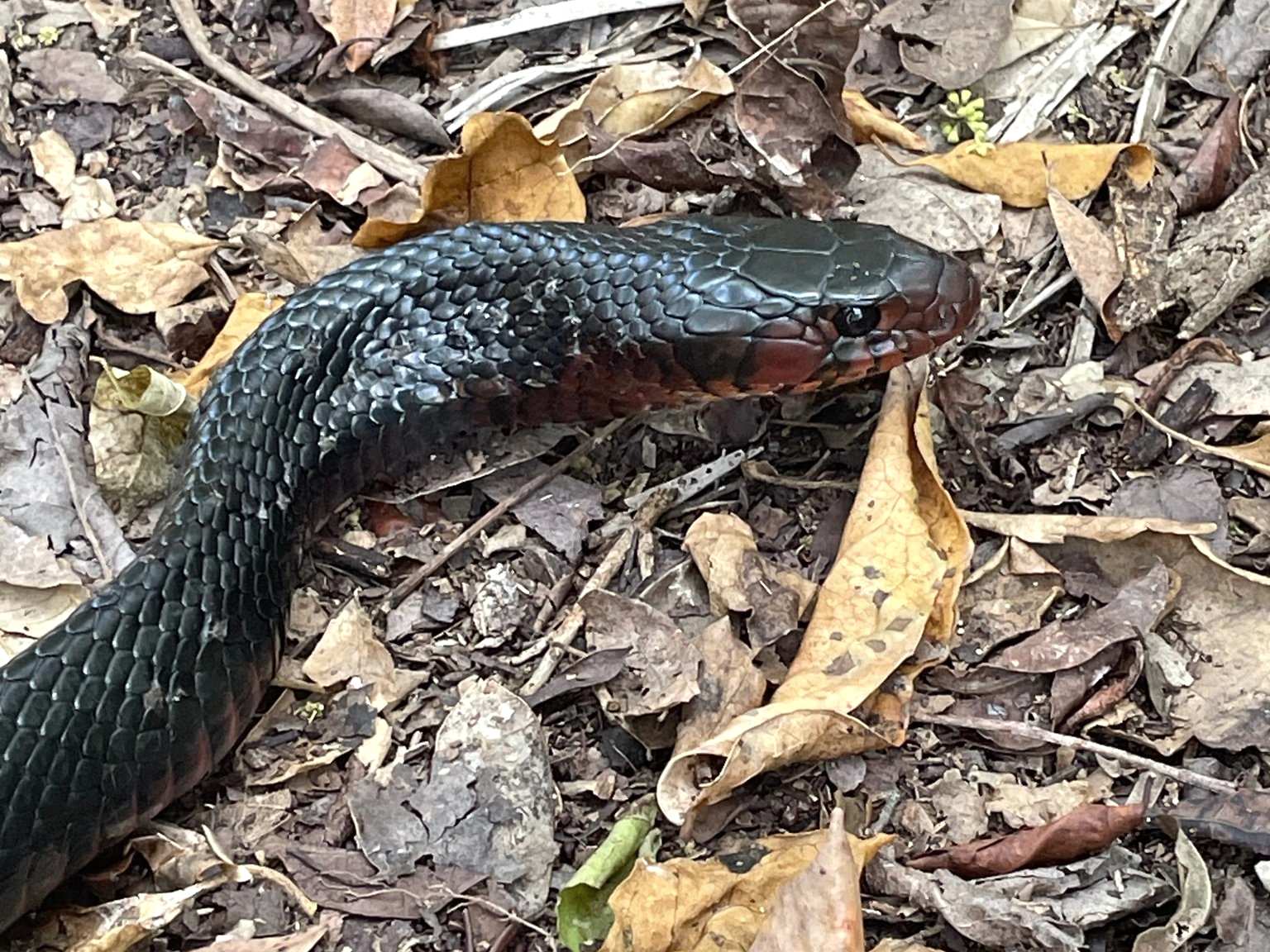
Eastern Indigo Snake vs North American Racer
(c) Jacqueline Raiford, some rights reserved (CC BY)
Eastern Indigo Snake
Drymarchon couperi
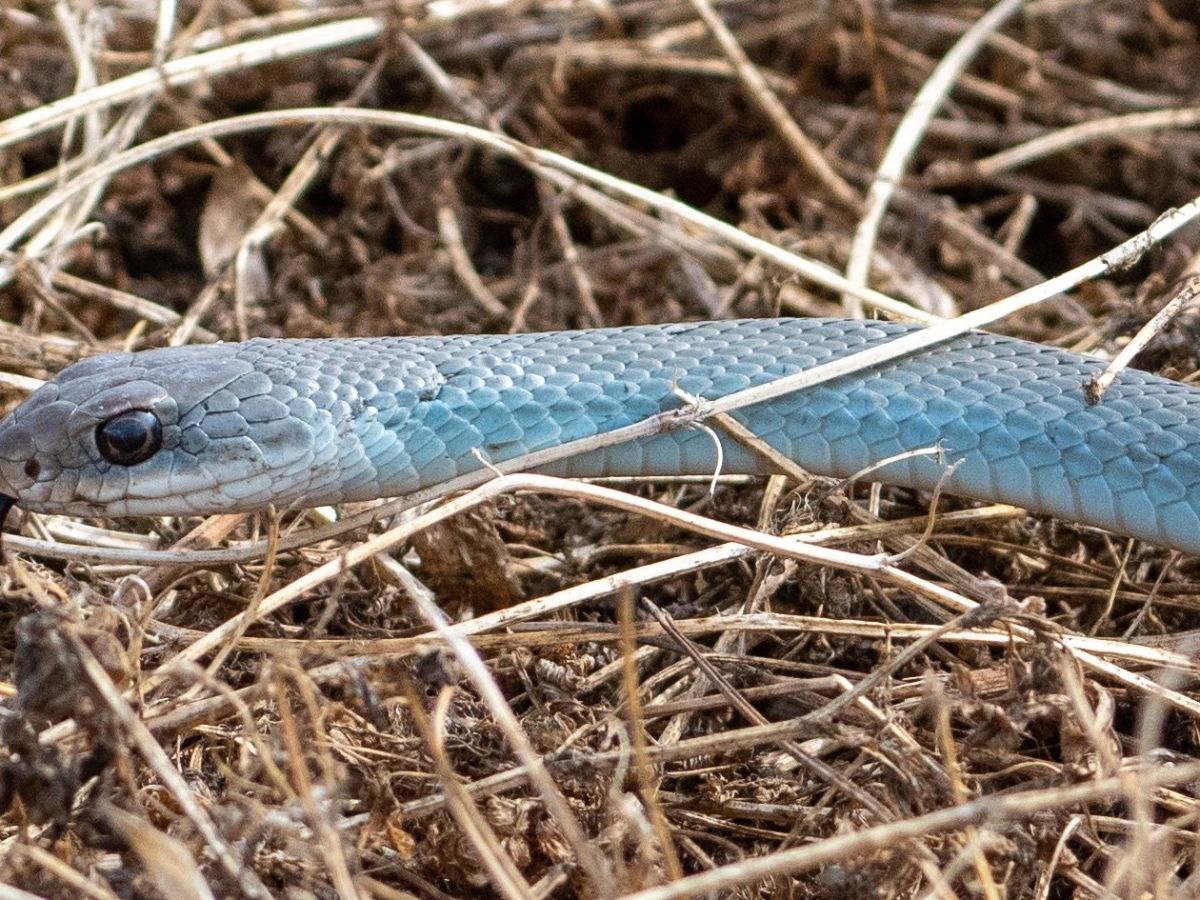
Non-venomous(c) Jonathan Eisen, some rights reserved (CC BY)
North American Racer
Coluber constrictor
Non-venomousThe quick way to tell
Look at the chin and throat. The Eastern Indigo Snake is glossy blue-black and often has red, orange-brown or cream on the chin and sides of the head. The North American Racer is duller black with a white chin and throat, and it is much thinner.
Head ★ This settles it
Black head; the chin, throat and sides of the head are often reddish, orange-brown or cream.
Small head only a little wider than the neck; large eyes.
Pattern
Solid glossy blue-black all over, including the belly, with blue or purple shine in sunlight. Young snakes are glossy black with narrow whitish-blue bands.
Plain black, blue-gray, olive or tan; belly pale to gray; young strongly blotched.
Eyes
—
Round pupil in a large eye - a sight hunter; no heat-sensing pit.
Pits
None. There is no pit between the eye and the nostril.
None. There is no pit between the eye and the nostril.
Tail
—
Long and slender; no rattle.
What it does
Not aggressive and avoids people. If threatened it may flatten its head, hiss and vibrate its tail, but it rarely bites. It is an active hunter that often searches along the edges of wetlands.
Fast and nervous; vanishes at speed, bites when held.
Where it lives
US Southeast only: Florida (throughout, very rare in the Keys), southeastern Georgia, and a reintroduced population in southern Alabama. Once found in southern Mississippi and possibly southern South Carolina.
Nearly nationwide: every lower-48 state except Arizona, and into southern Canada, but absent from most of the desert Southwest.