Eastern Kingsnake
Lampropeltis getula · Kingsnakes & Milksnakes
No venom; a valuable snake to have around since it preys on rattlesnakes.
How to identify
- Head
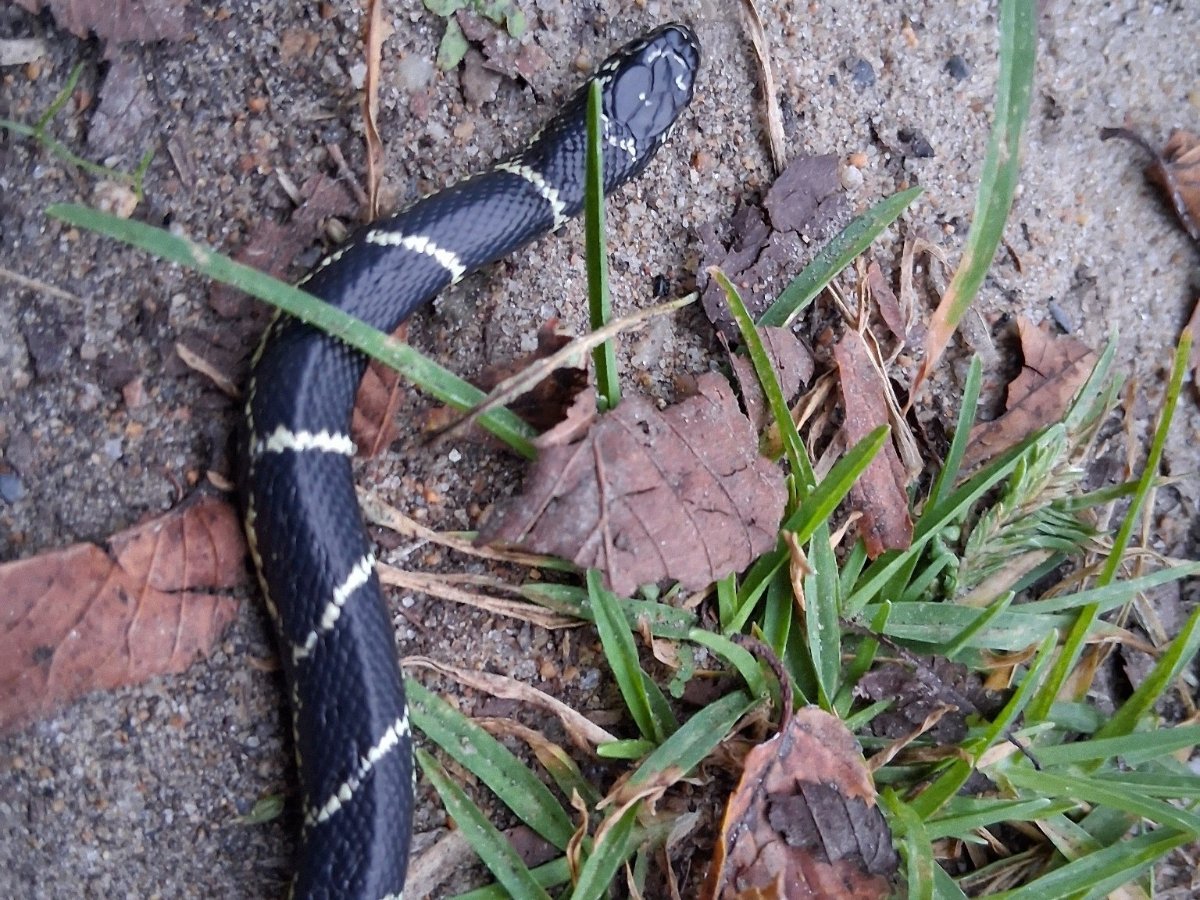
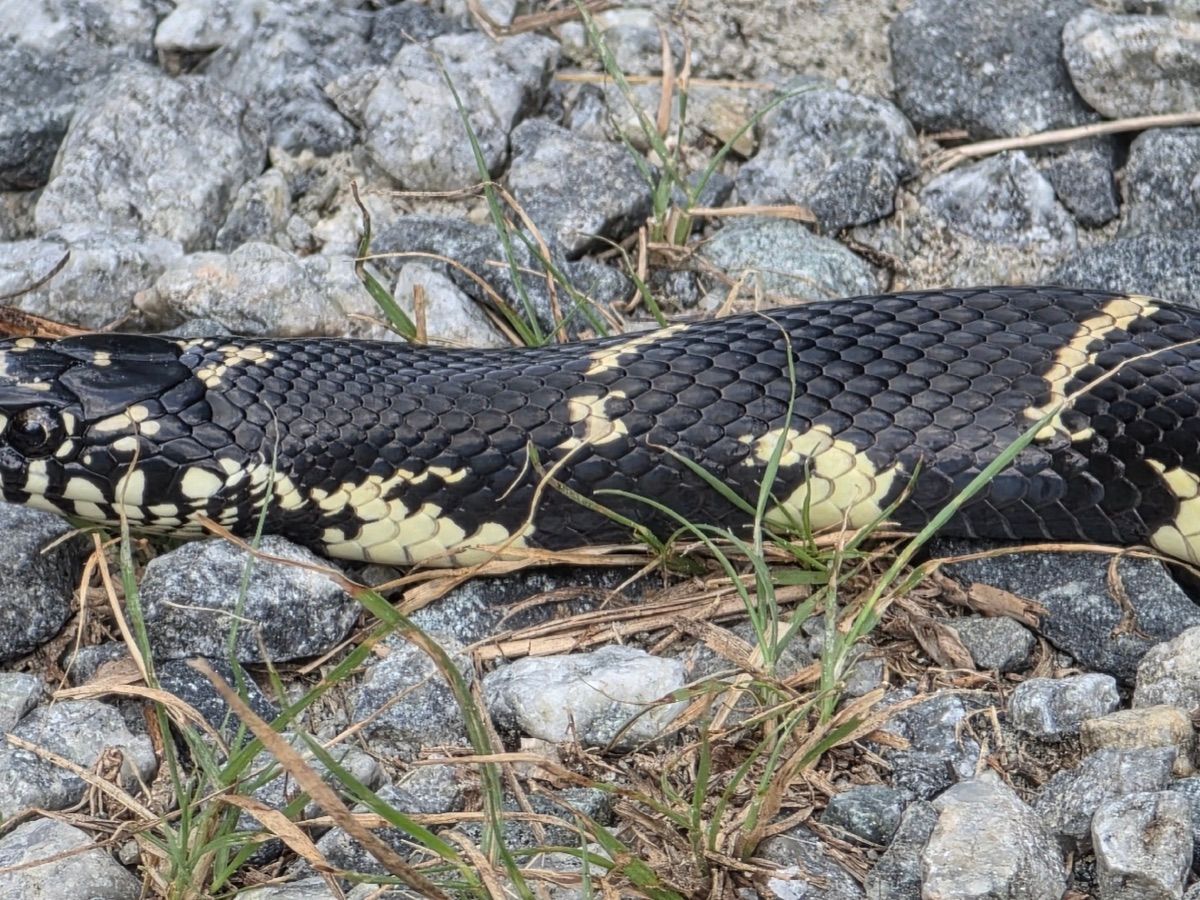
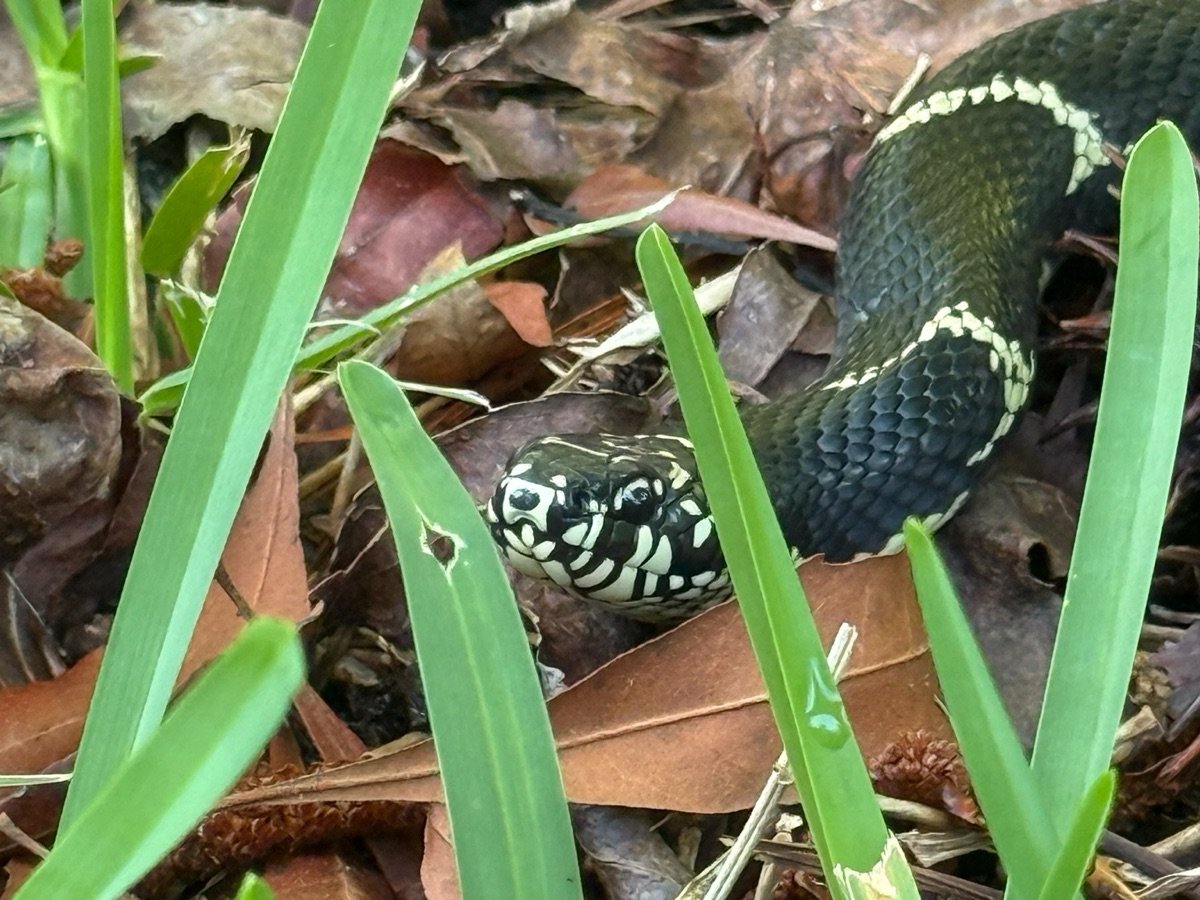
- Small glossy head barely wider than the neck.
- Pattern
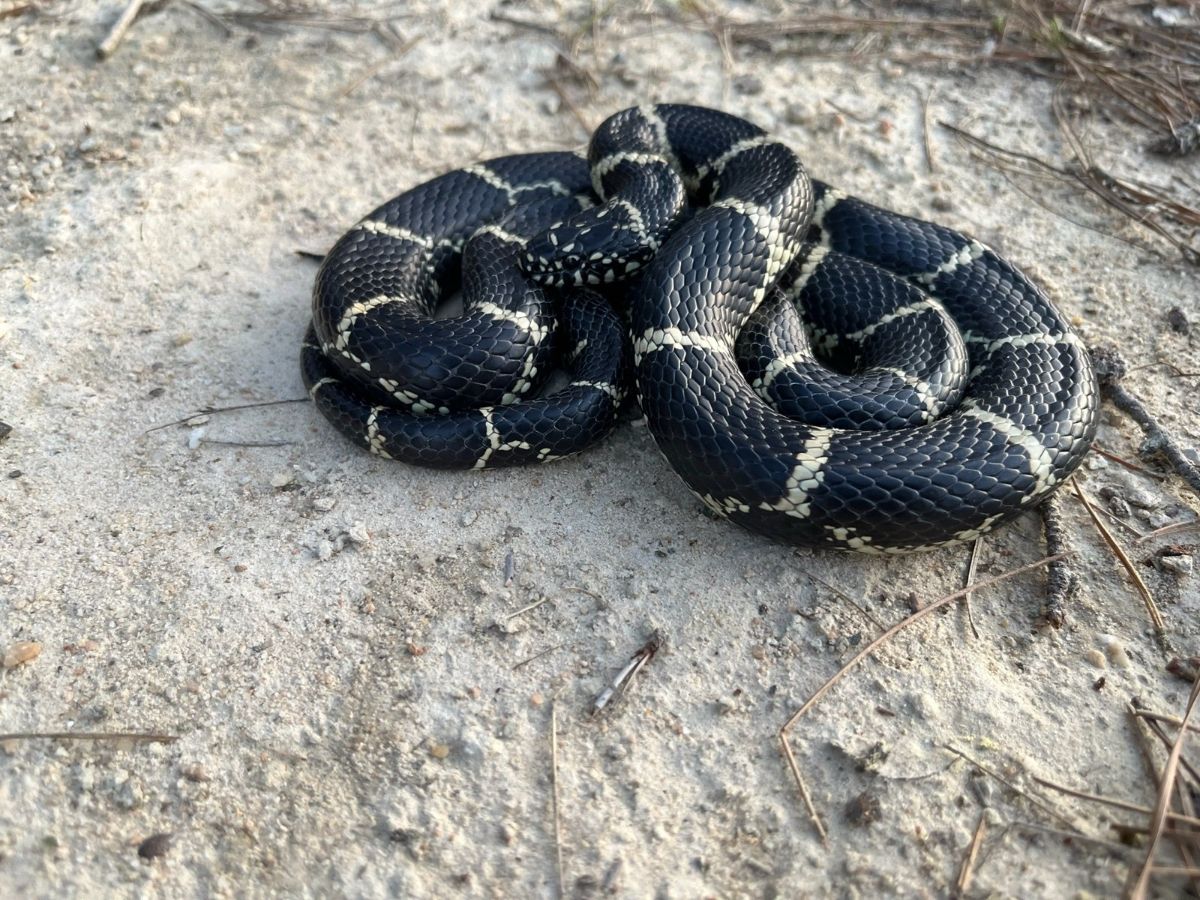
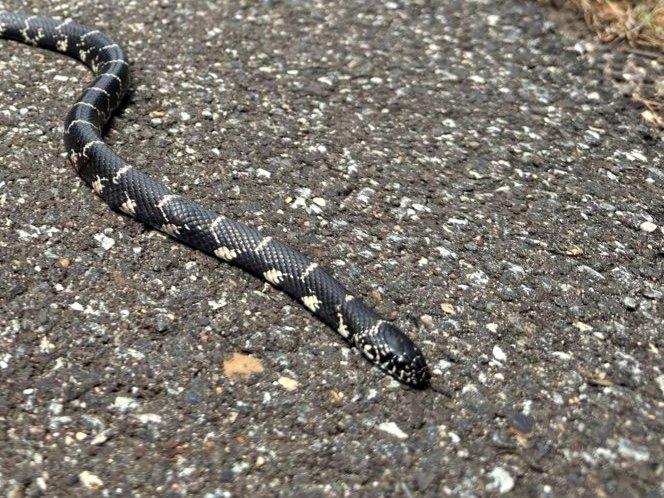
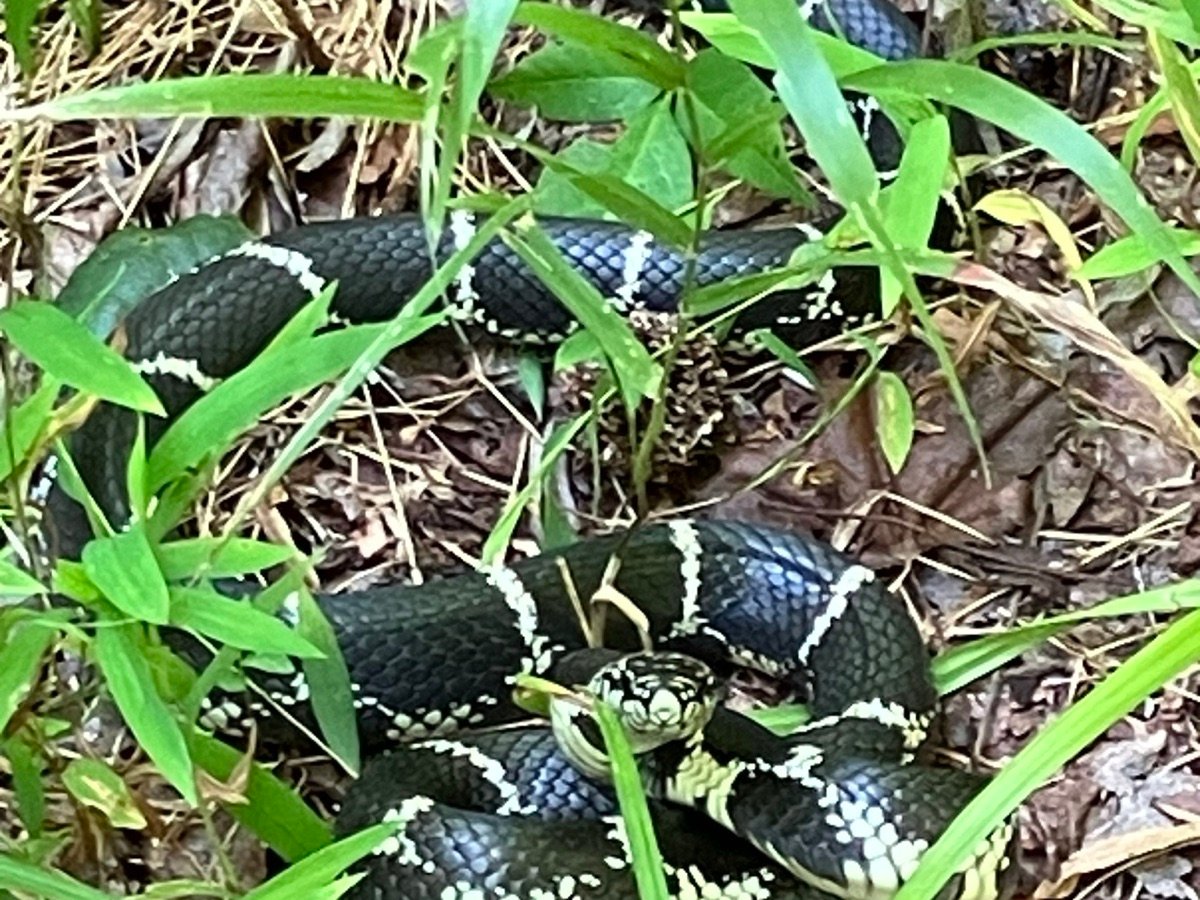
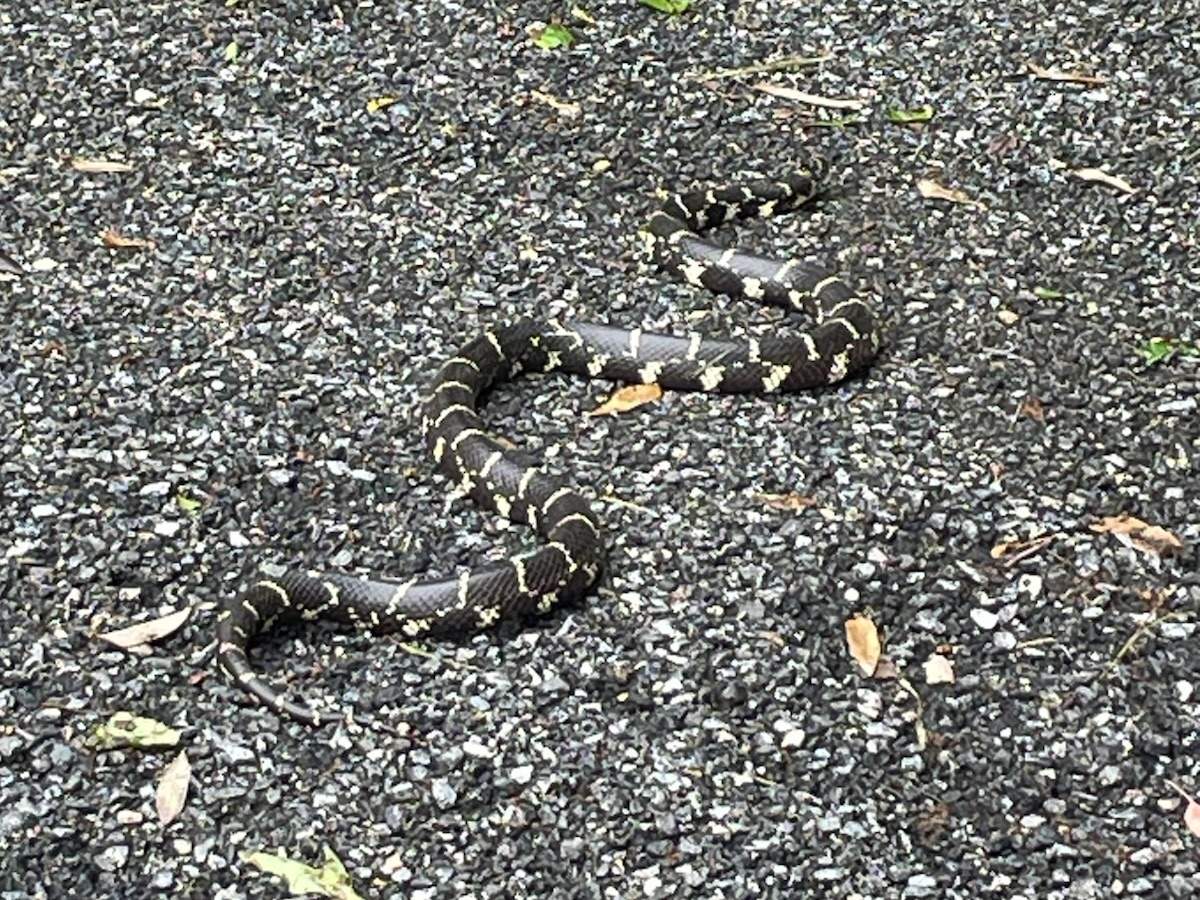
- Thin white or cream chain-link bands linking along the sides of a blue-black body.
- Eyes
- Round pupil, small dark eye; no heat-sensing pit.
- Pits
- None. There is no pit between the eye and the nostril.
- Tail
- Tapers evenly, chain pattern continuing; no rattle.
- What it does
- Musks and may vibrate its tail; hunts other snakes.
Often confused with
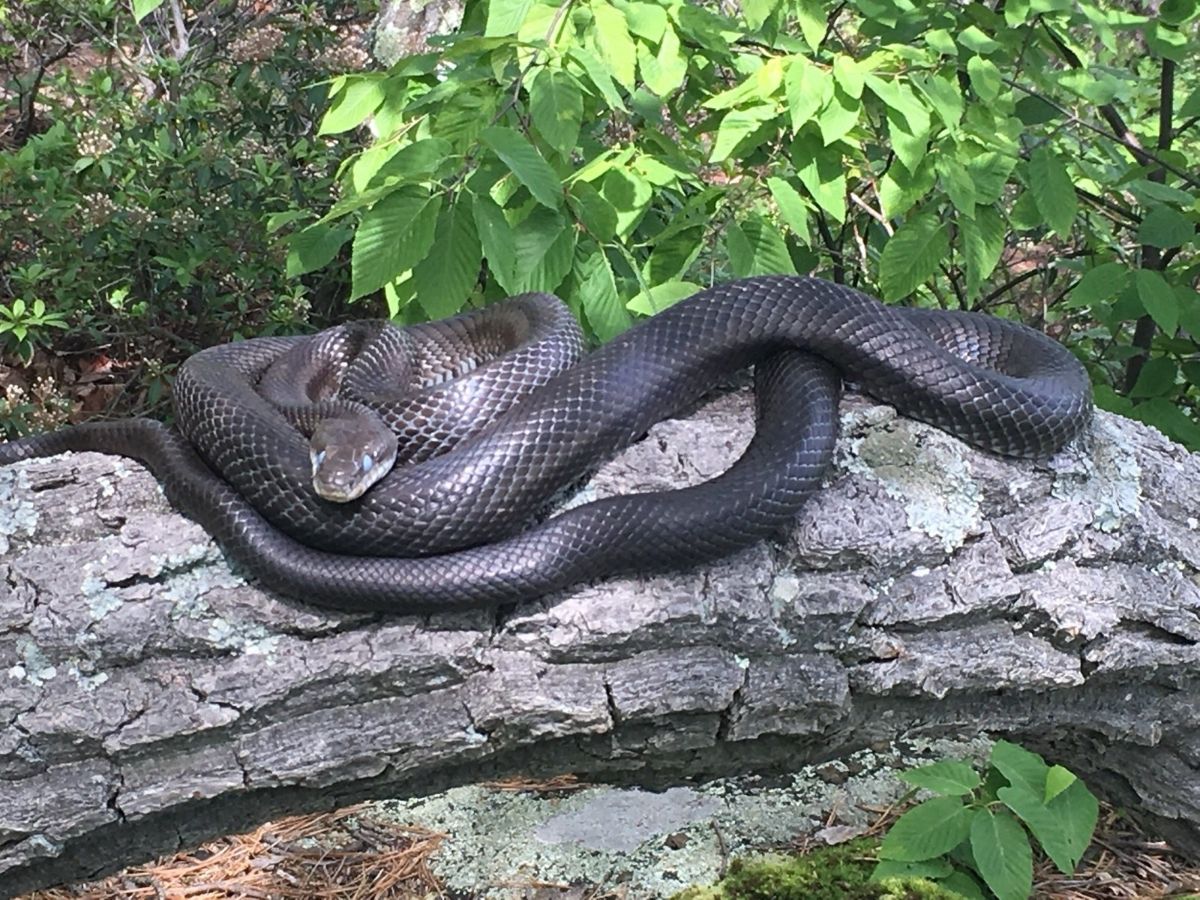
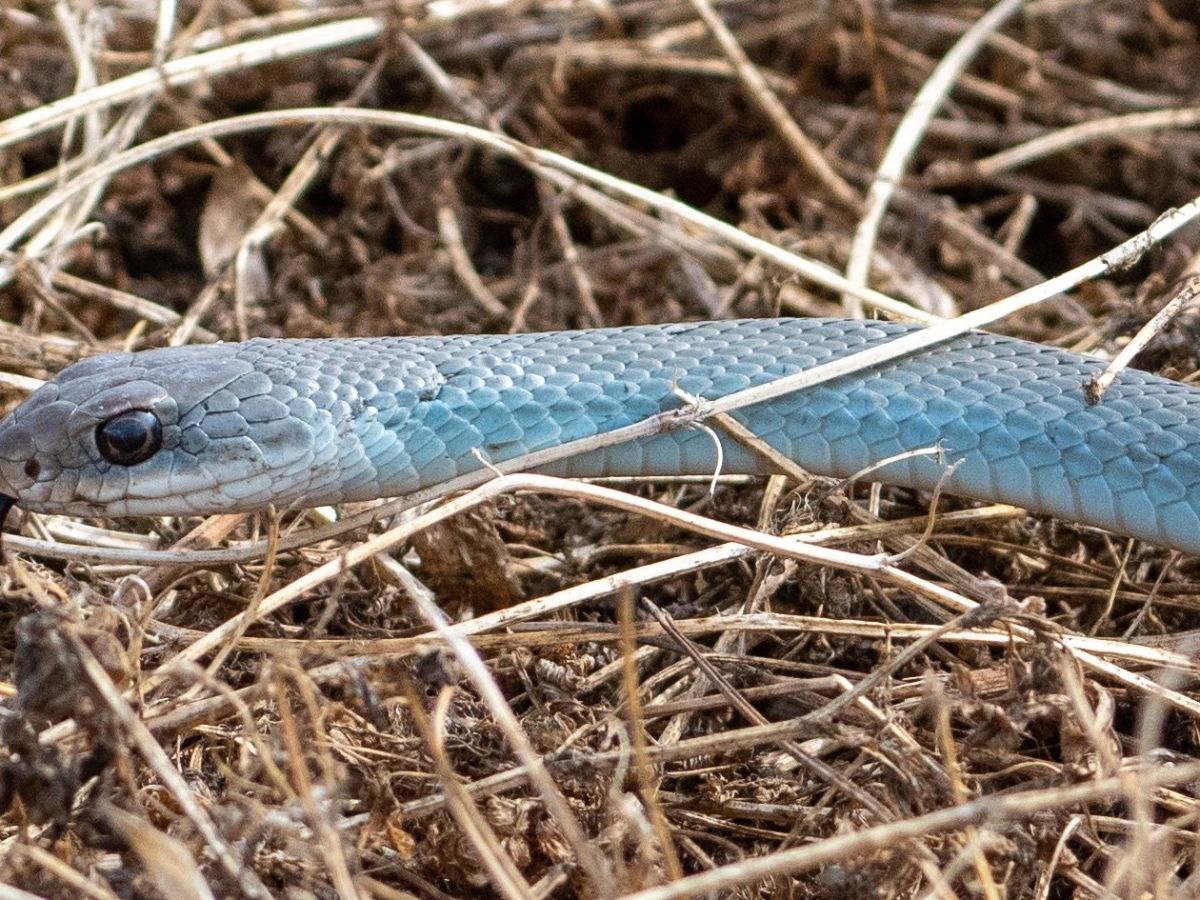
Other dark snakes — North American Racers and Eastern Ratsnakes — but neither has the white chain pattern.
How to tell them apart
Eastern Kingsnake vs Eastern Ratsnake›
The quick way to tellThe Eastern Kingsnake has a white chain-link pattern on a black body. The ratsnake has no chain pattern.
Eastern Kingsnake: Thin white or cream chain-link bands linking along the sides of a blue-black body.
Eastern Ratsnake: Adults black, often with pale skin showing between scales; young gray and blotched.
Eastern Kingsnake vs North American Racer›
The quick way to tellLook for crossbands. The Eastern Kingsnake has thin white or yellowish bands forming a chain pattern on black. An adult racer is plain black with no bands, apart from a white chin.
Eastern Kingsnake: Thin white or cream chain-link bands linking along the sides of a blue-black body.
North American Racer: Plain black, blue-gray, olive or tan; belly pale to gray; young strongly blotched.
About the Eastern Kingsnake›
A heavy, muscular constrictor of the Southeast, found in pine woods, river swamps, farmland and suburban edges. Well known for eating other snakes, rattlesnakes included, and largely immune to their venom.
Populations have declined sharply in parts of the Southeast for reasons still being studied, so it is less common than it once was.
The details
Size Usually 3–4 ft; occasionally 5 ftWeight Commonly 1–4 lbLifespan 15–20 years wild, longer captive
Typical range›
Southeast: southern New Jersey south through northern Florida, west across Georgia into Alabama.
Activity›
Mostly day active in spring and fall, early morning and evening in summer.
Diet›
Other snakes including venomous ones, plus turtle eggs, rodents, lizards and birds.
Reproduction›
Lays eggs, usually 5–17, in early summer.
Found in parts of 9 states›
Ranges are approximate. It may be found in only part of a state, or be rare there, and snakes can turn up outside of them.
More photos