‹ Compare two snakes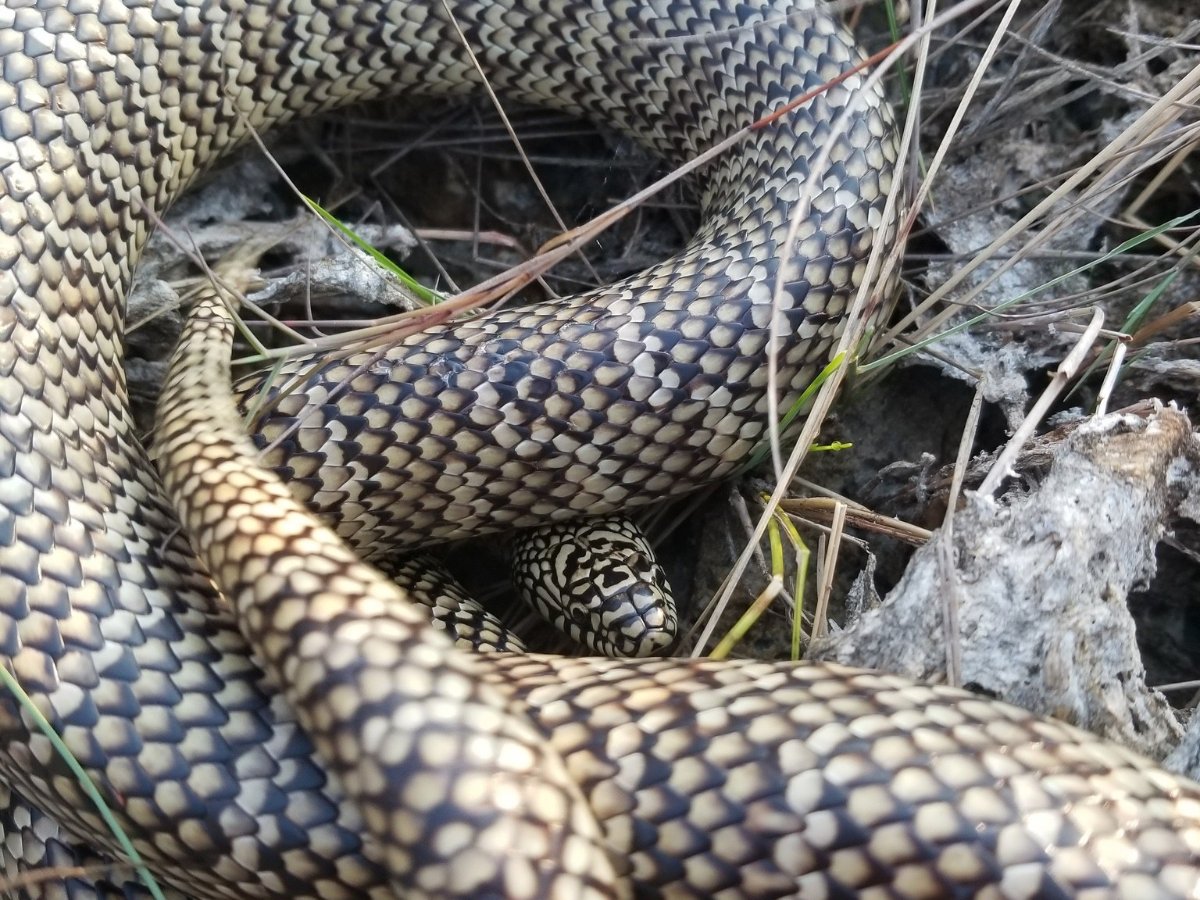
Eastern Kingsnake vs Eastern Ratsnake
(c) Court Harding, some rights reserved (CC BY)
Eastern Kingsnake
Lampropeltis getula
Non-venomousAlejandro Santillana, no rights reserved
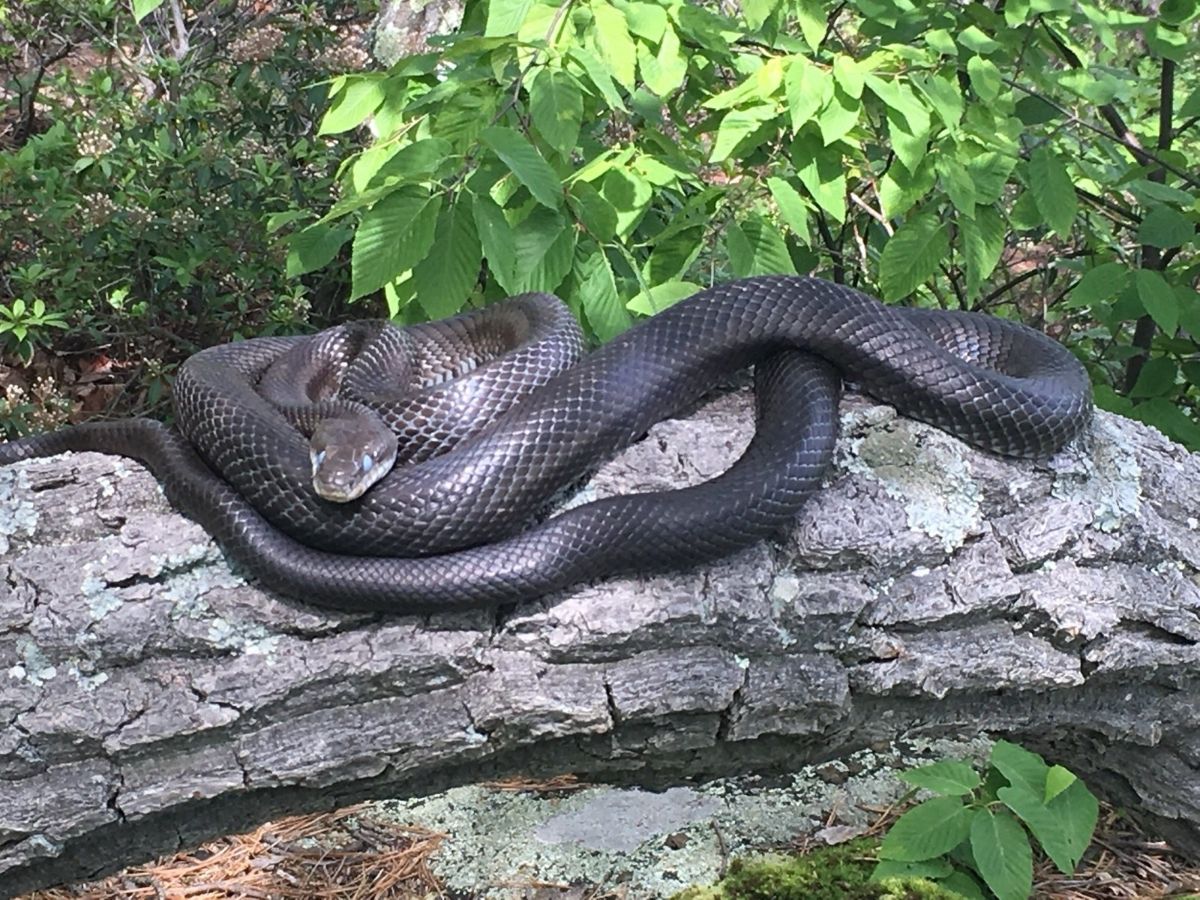
Eastern Ratsnake
Pantherophis alleghaniensis
Non-venomousThe quick way to tell
The Eastern Kingsnake has a white chain-link pattern on a black body. The ratsnake has no chain pattern.
Pattern ★ This settles it
Thin white or cream chain-link bands linking along the sides of a blue-black body.
Adults black, often with pale skin showing between scales; young gray and blotched.
Head
Small glossy head barely wider than the neck.
Narrow head barely wider than the neck; white or cream chin and throat.
Eyes
Round pupil, small dark eye; no heat-sensing pit.
Round pupil, fairly large dark eye; no heat-sensing pit.
Pits
None. There is no pit between the eye and the nostril.
None. There is no pit between the eye and the nostril.
Tail
Tapers evenly, chain pattern continuing; no rattle.
Tapers evenly; no rattle.
What it does
Musks and may vibrate its tail; hunts other snakes.
Climbs trees and walls; vibrates its tail in leaves when cornered.
Where it lives
Southeast: southern New Jersey south through northern Florida, west across Georgia into Alabama.
Atlantic states east of the Appalachians: western Vermont and southern New England south through New York, Pennsylvania, Virginia and the Carolinas to Georgia and all of Florida east of the Apalachicola River, including the Keys.