Eastern Massasauga
Sistrurus catenatus · Rattlesnakes
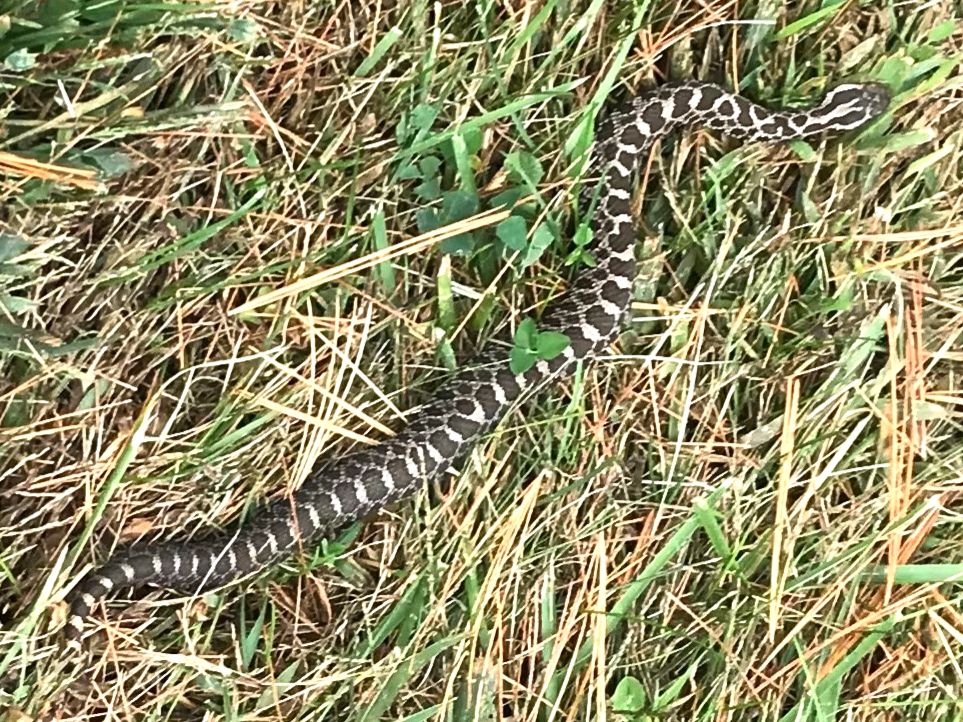
Tap a part to see what to look for. Tap it again to turn it off.
Venomous. It would rather stay still than strike, but keep your distance; a bite is a medical emergency.
How to identify
- Head
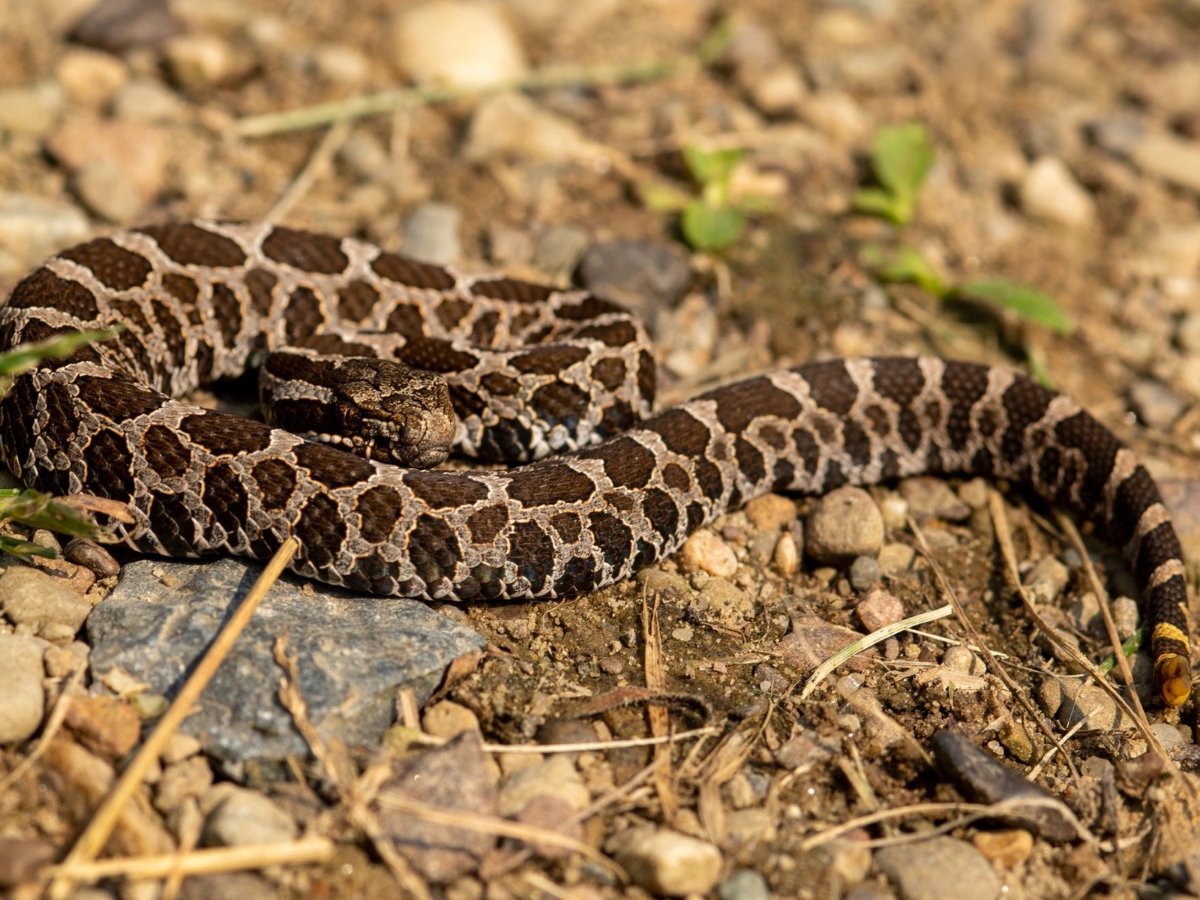
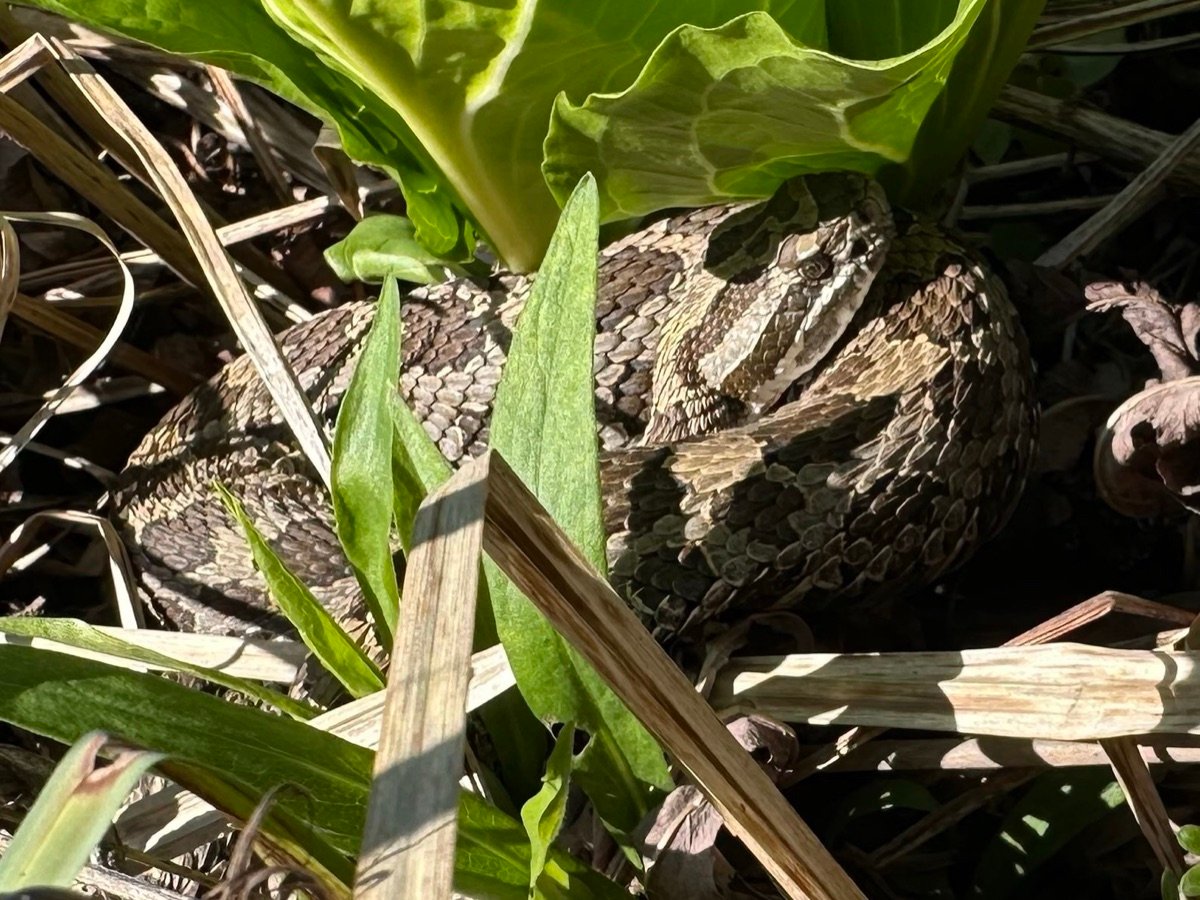
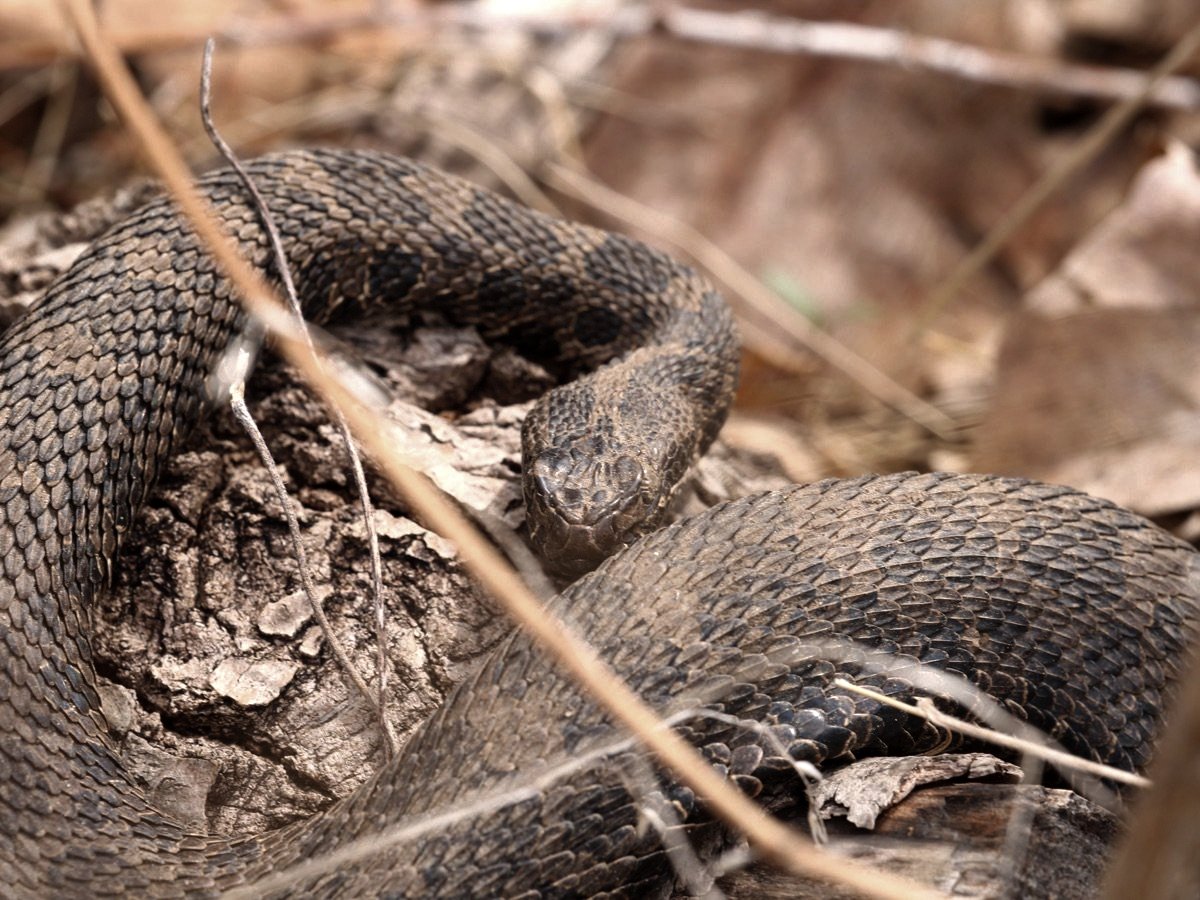
- Small triangular head with nine large plates on top and a dark stripe through the eye.
- Pattern
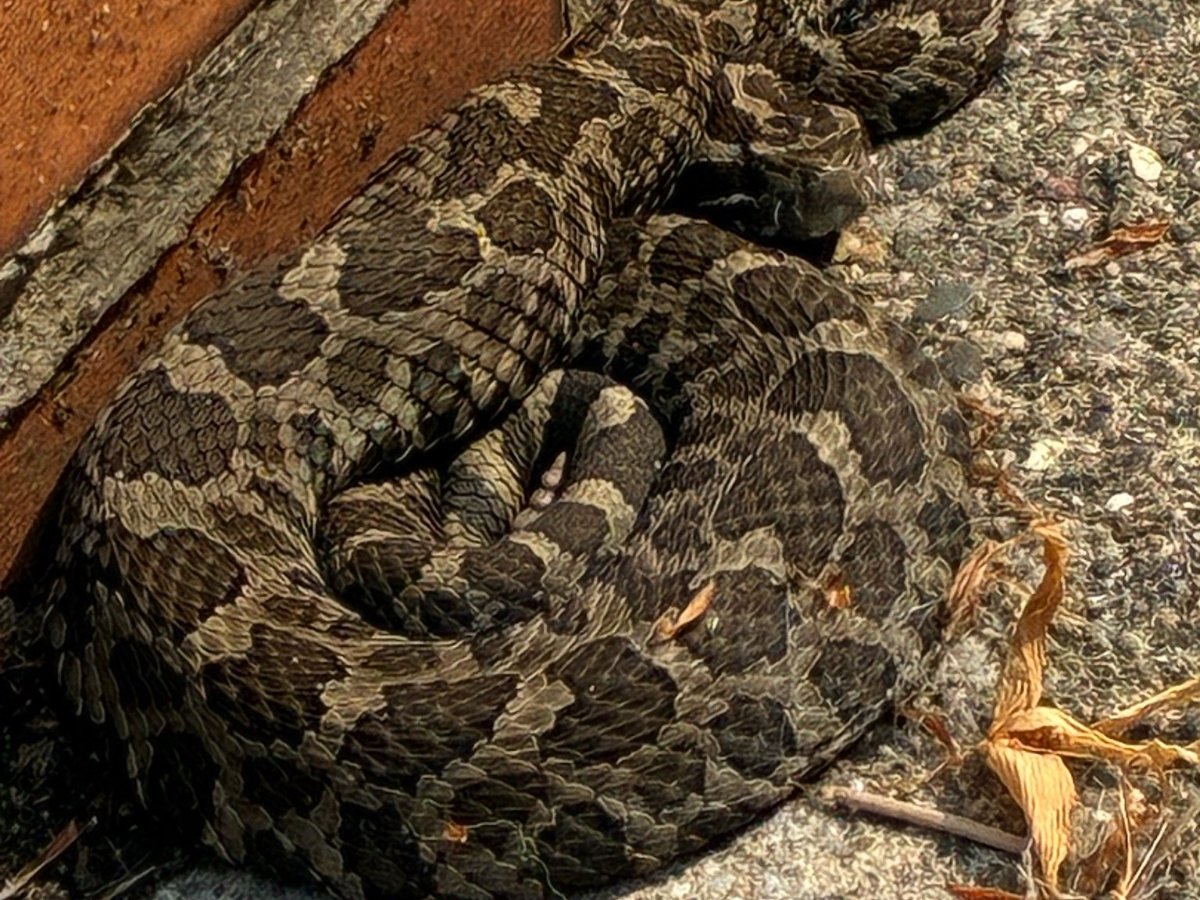
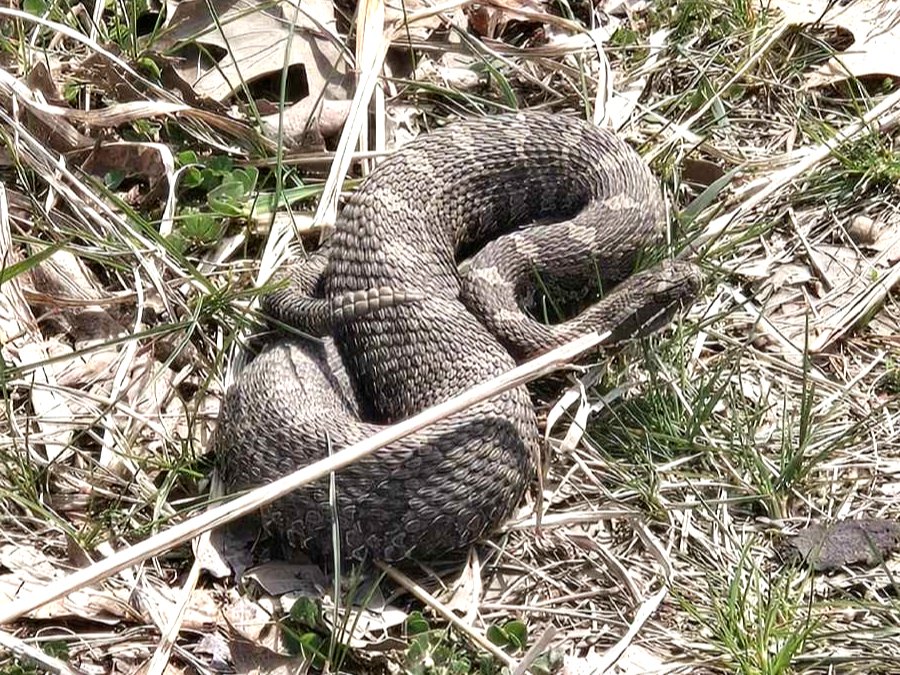
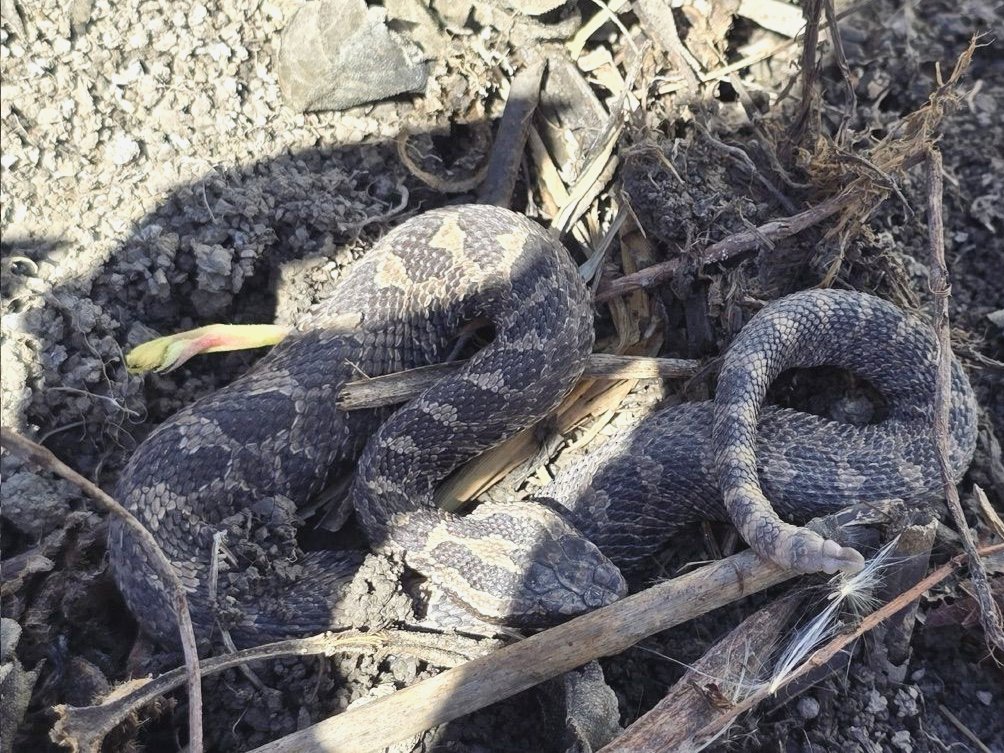
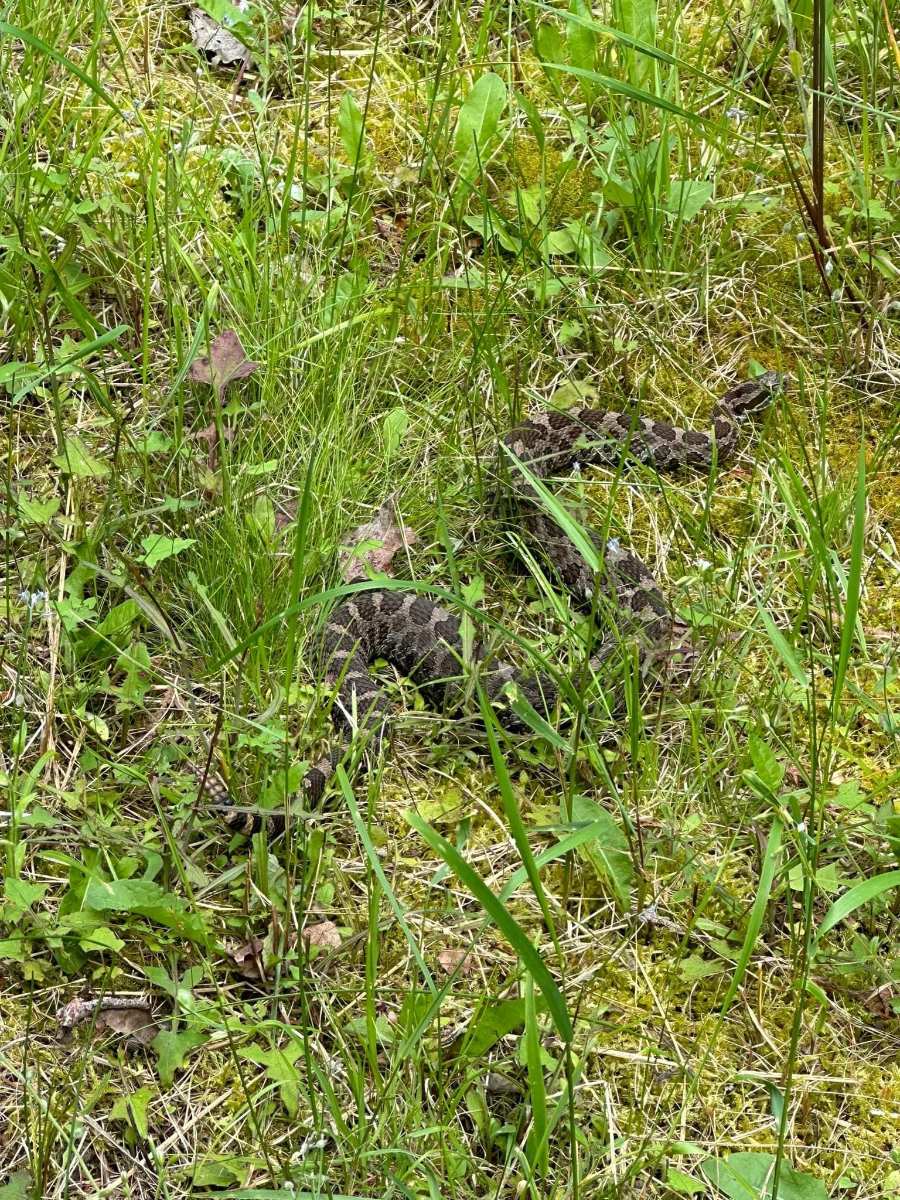
- Large dark brown squarish blotches down a gray back, smaller spots along the sides.
- Eyes
- Vertical slit pupil; heat-sensing pit between eye and nostril.
- Pits
- A deep heat-sensing pit on each side of the face, between the eye and the nostril.
- Tail
- Small, with a tiny buzzy rattle.
- What it does
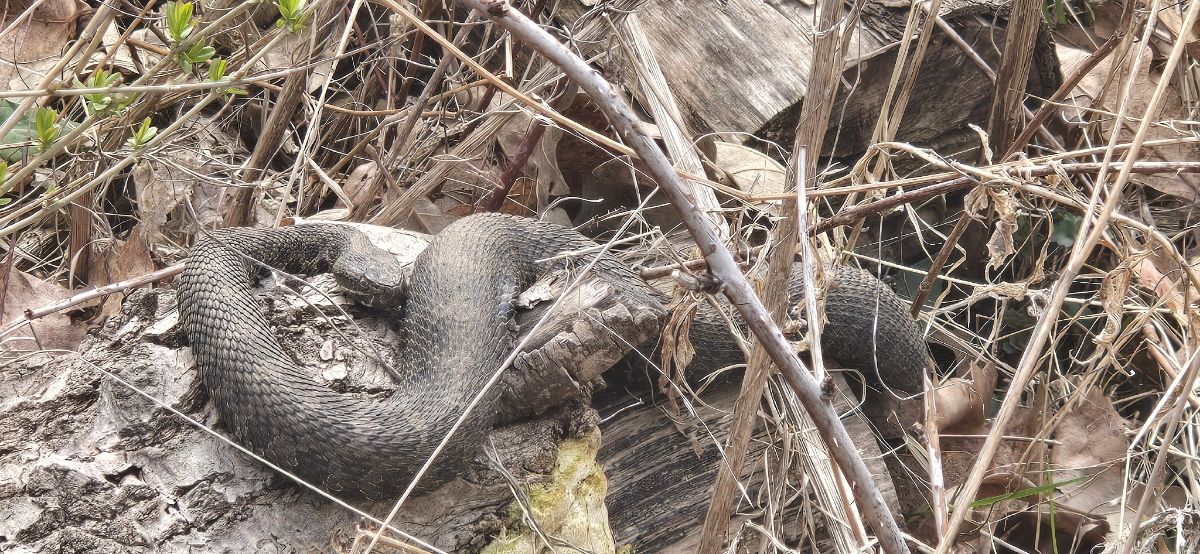
- Freezes and stays still; rarely rattles or strikes.
Often confused with
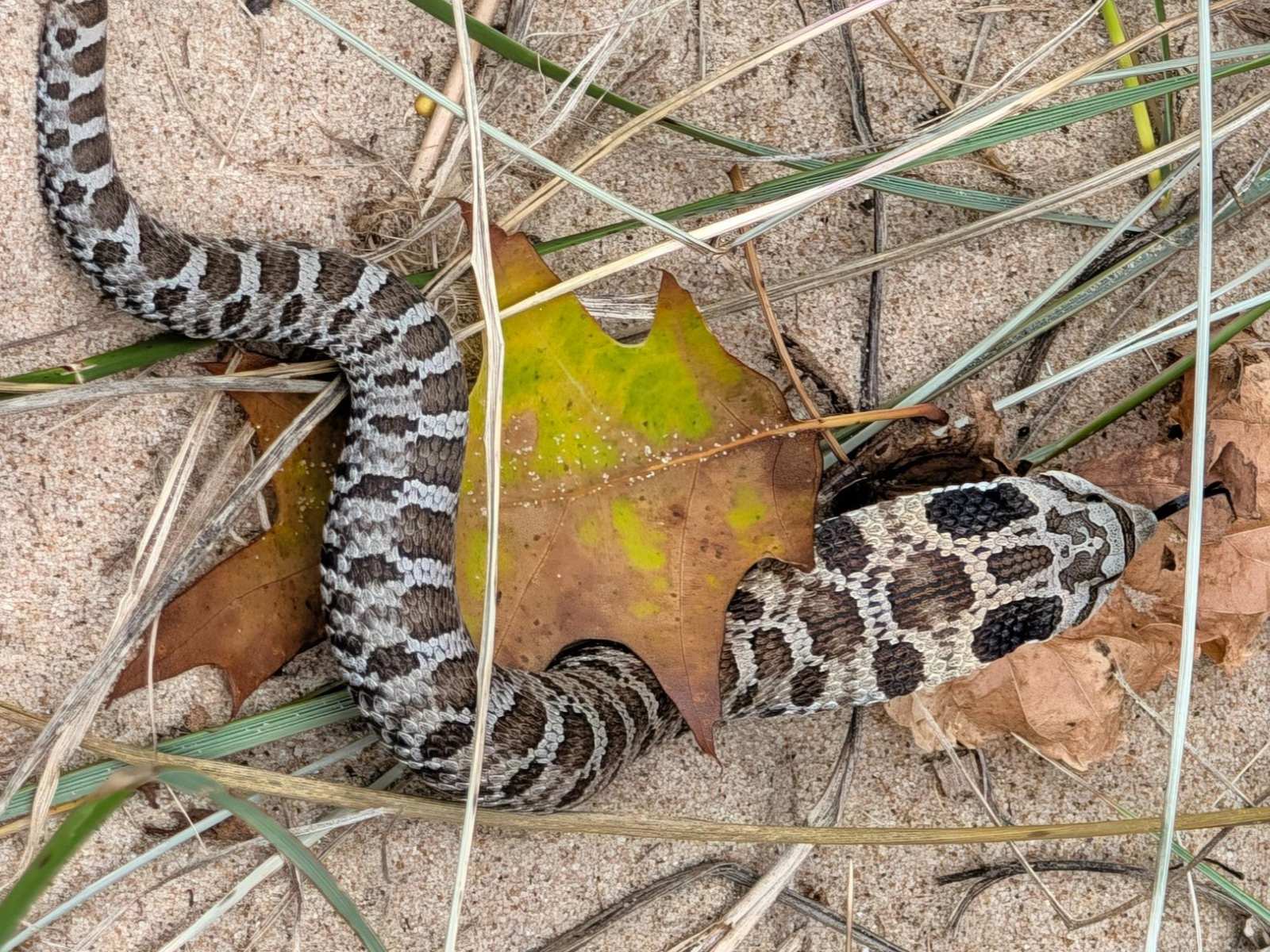
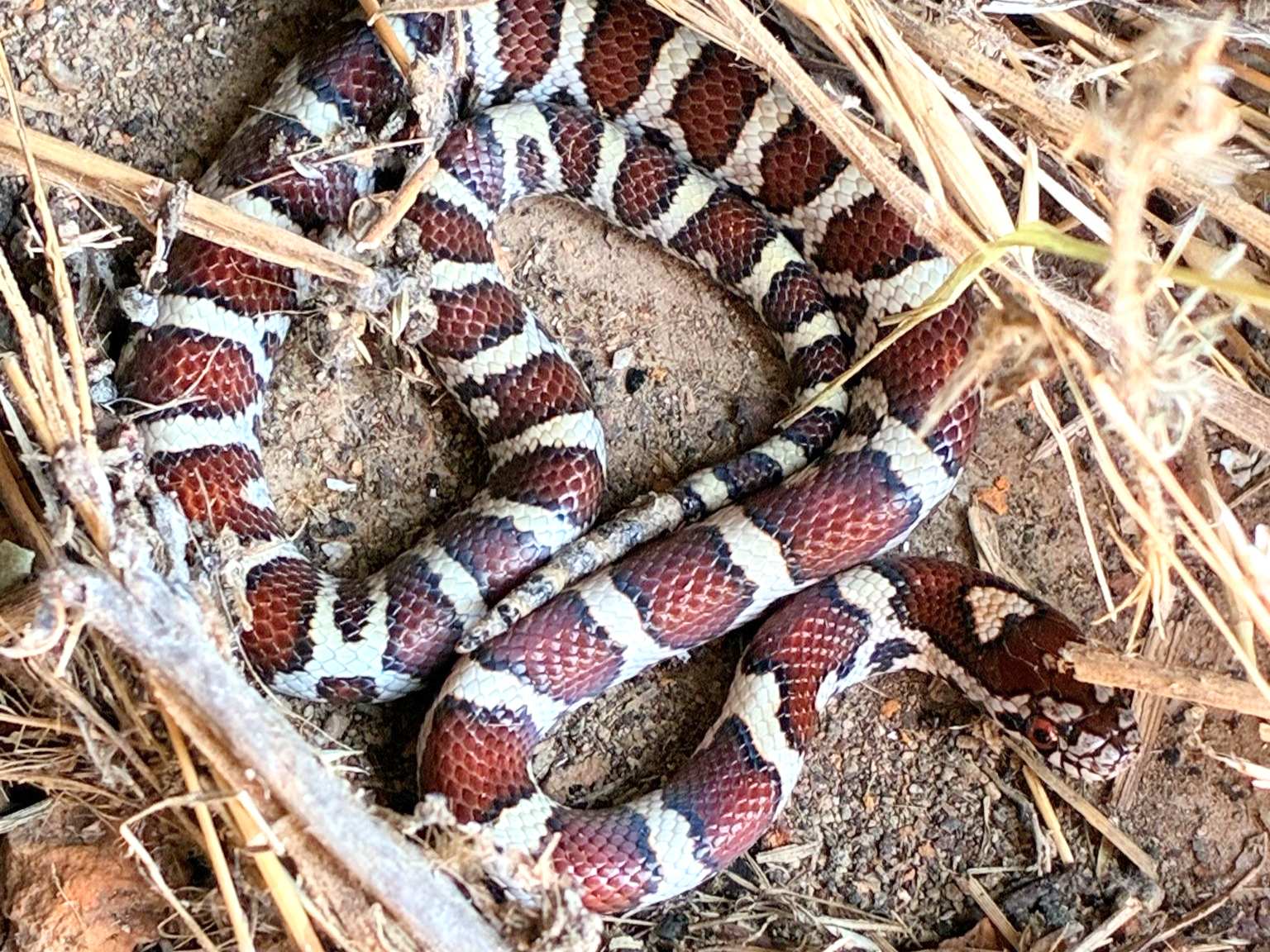
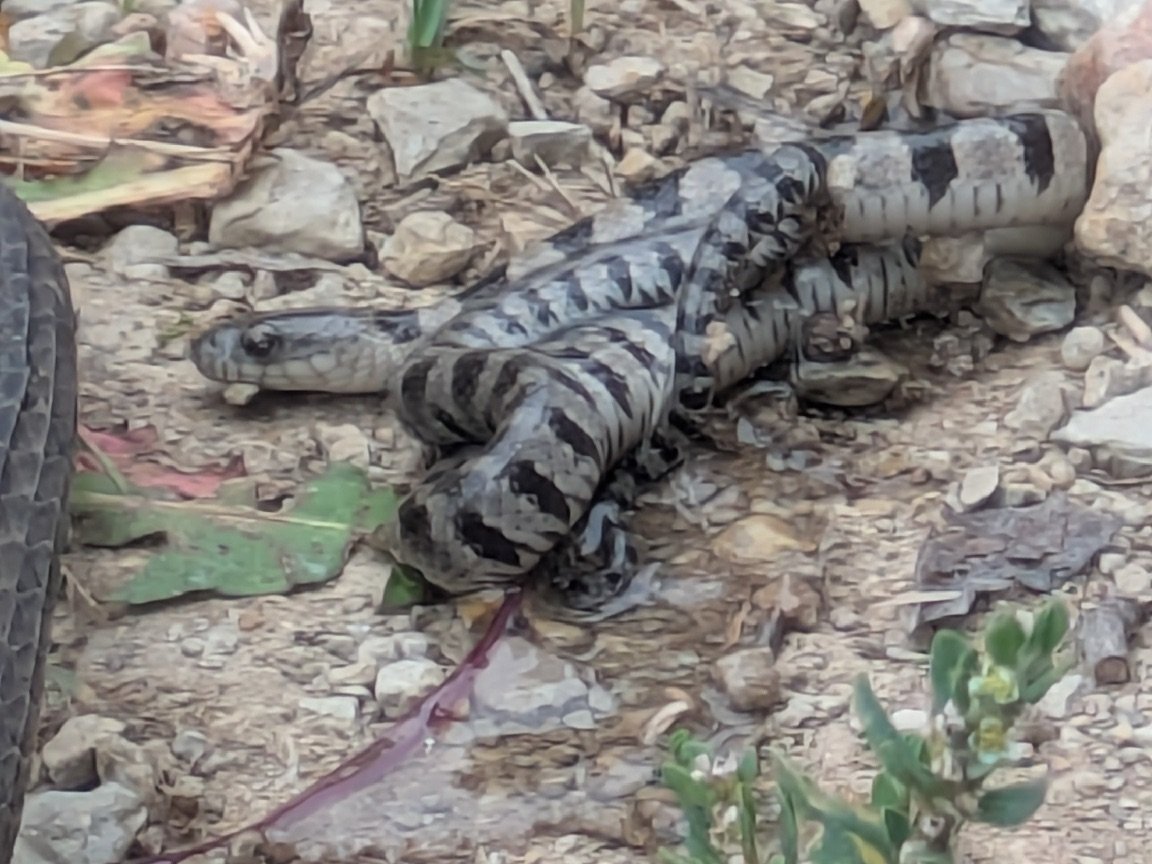
Eastern Milksnake and Northern Watersnake share the blotchy pattern but have round pupils and no rattle. Eastern Hog-nosed Snake flattens and hisses but has an upturned snout.
How to tell them apart
Eastern Massasauga vs Eastern Hog-nosed Snake›
The quick way to tellCheck the snout. The Eastern Hog-nosed has an upturned, pointed tip like a pig's nose. The massasauga has a blunt, rounded snout on a broad triangular head, plus a rattle on its tail.
Eastern Massasauga: Small triangular head with nine large plates on top and a dark stripe through the eye.
Eastern Hog-nosed Snake: Sharply upturned snout; spreads its neck wide like a cobra when alarmed.
Eastern Massasauga vs Eastern Milksnake›
The quick way to tellLook at the tail and eyes. The massasauga has a rattle and vertical pupils. The milksnake has a tapering tail and round pupils.
Eastern Massasauga: Small, with a tiny buzzy rattle.
Eastern Milksnake: Tapers evenly; no rattle - but it vibrates the tip.
Eastern Massasauga vs Northern Watersnake›
The quick way to tellLook at the tail tip. The Eastern Massasauga has a blunt tail ending in a small rattle, plus a wide triangular head. The Northern Watersnake's tail tapers to a point, and its head is narrower.
Eastern Massasauga: Small, with a tiny buzzy rattle.
Northern Watersnake: Tapers evenly; no rattle.
About the Eastern Massasauga›
A shy, slow-moving rattlesnake of wet prairie, fen and marsh edges — not the dry rocky country most people picture. It spends much of the year in crayfish burrows and other wet ground holes.
Habitat loss has made it rare across most of its range, and it is federally listed as threatened; many populations now survive only in scattered preserves.
The details
Size Usually 18–30 inWeight Under 1 lbLifespan 10–15 years
Typical range›
Great Lakes region and upper Midwest: western New York, western Pennsylvania and Ontario west through Ohio, Michigan, Indiana, Illinois and Wisconsin to eastern Iowa (now gone from Missouri and Minnesota).
Activity›
Active spring through fall, mostly by day in cool weather. Winters alone in crayfish burrows, often below the water table.
Diet›
Voles, mice, shrews and small snakes.
Reproduction›
Gives birth to live young, usually 8–20, in late summer.
Found in parts of 8 states›
Ranges are approximate. It may be found in only part of a state, or be rare there, and snakes can turn up outside of them.
More photos