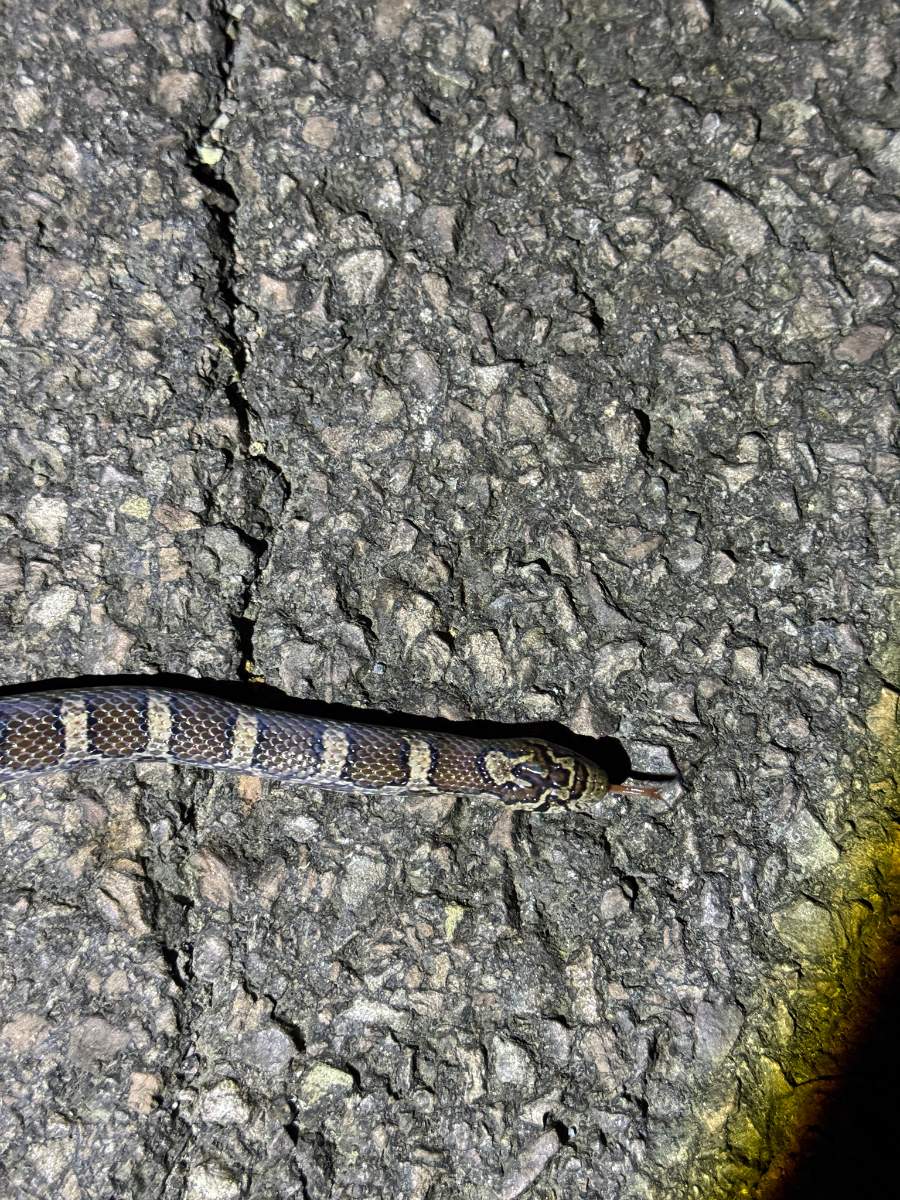
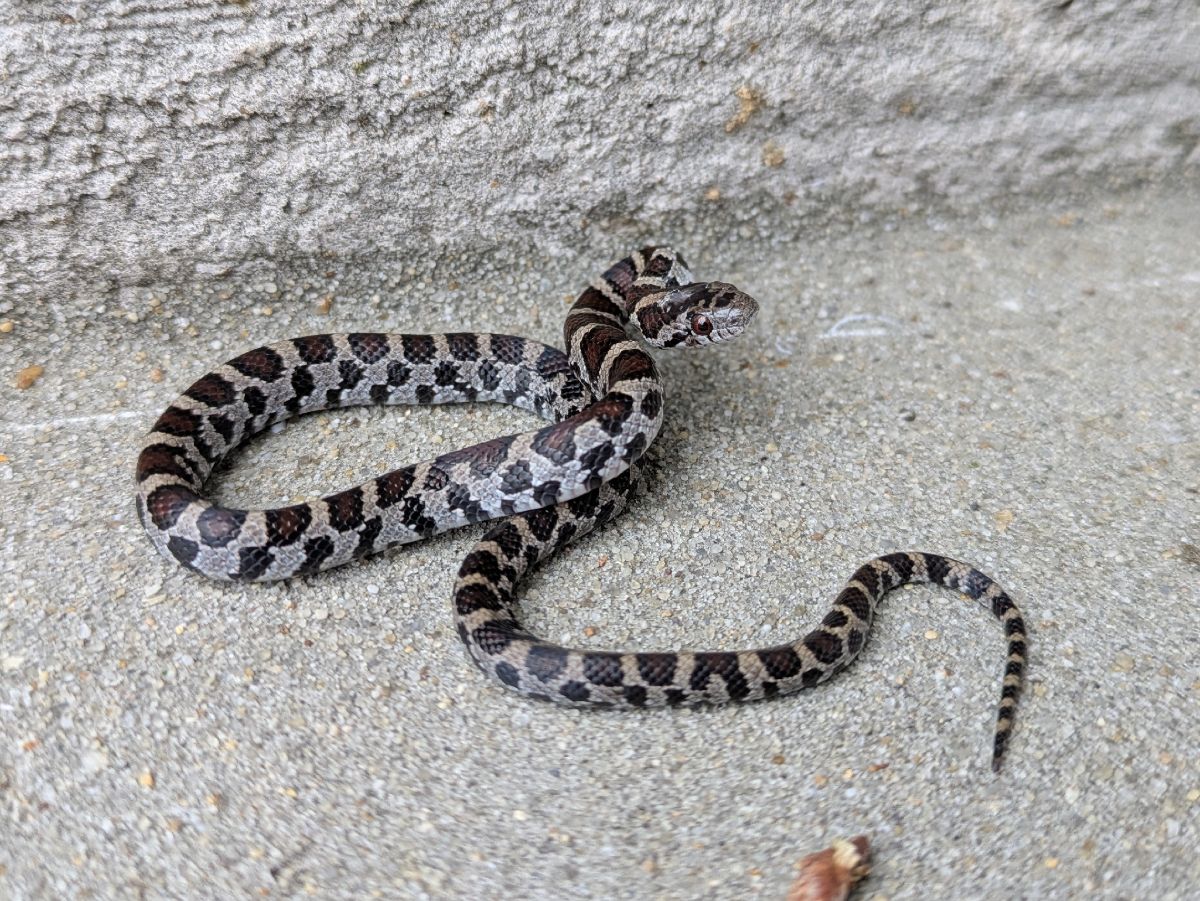
Eastern Milksnake
Lampropeltis triangulum · Kingsnakes & Milksnakes
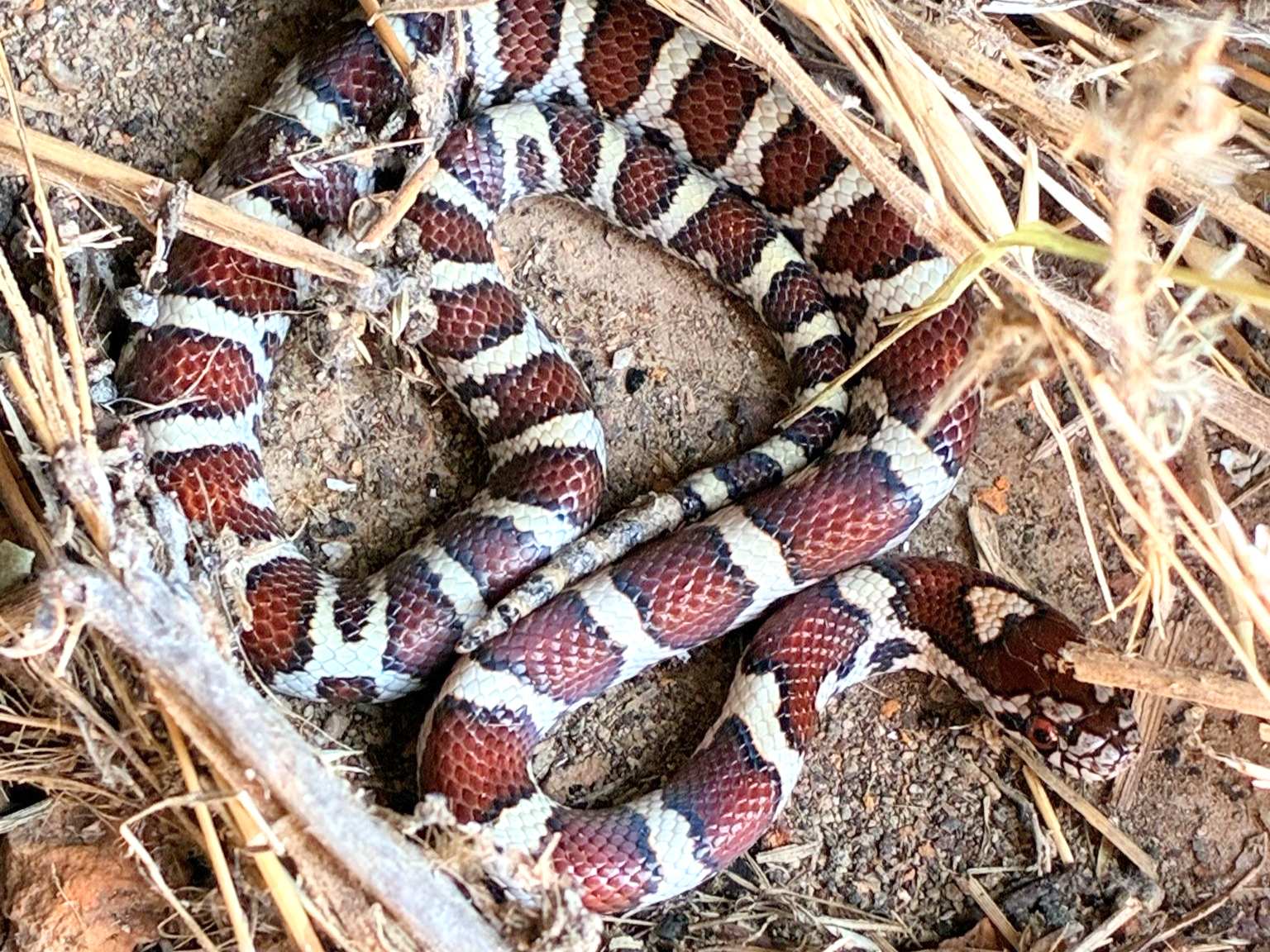
Tap a part to see what to look for. Tap it again to turn it off.
No venom; it may musk and vibrate its tail if cornered.
How to identify
- Head
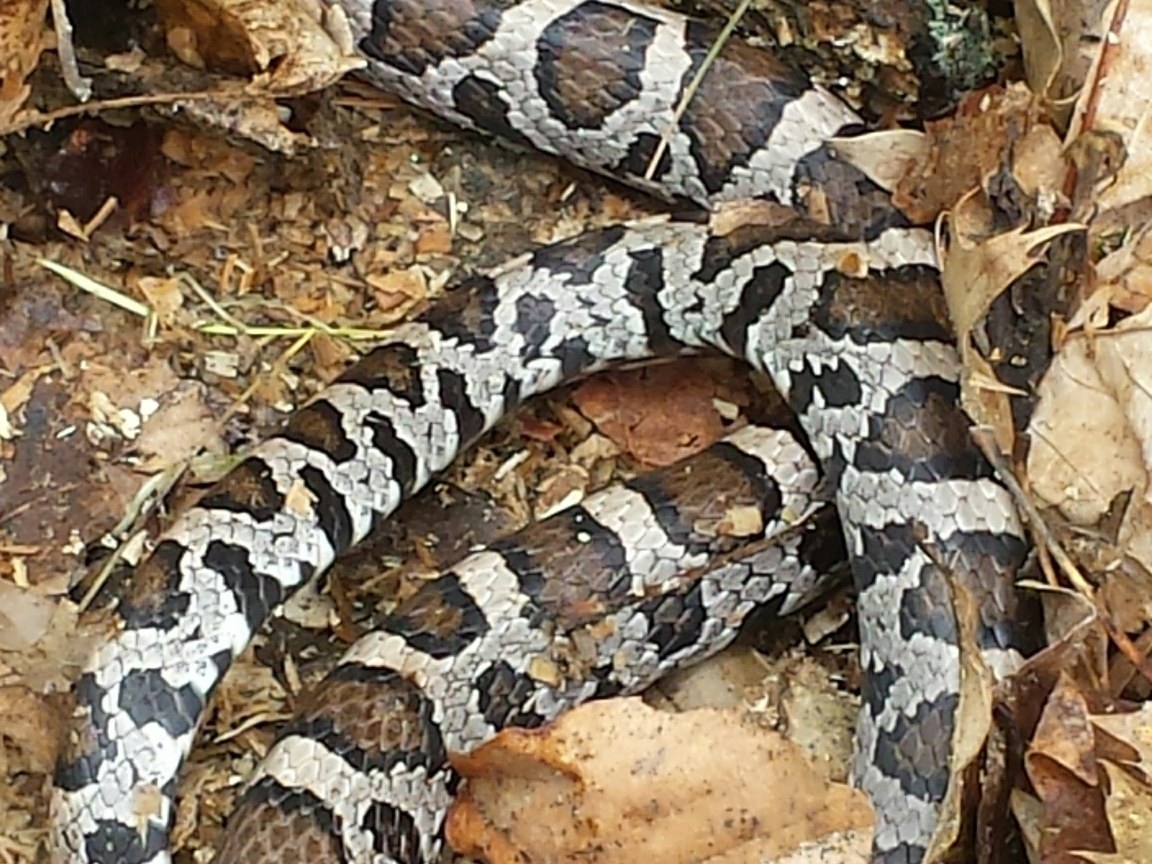
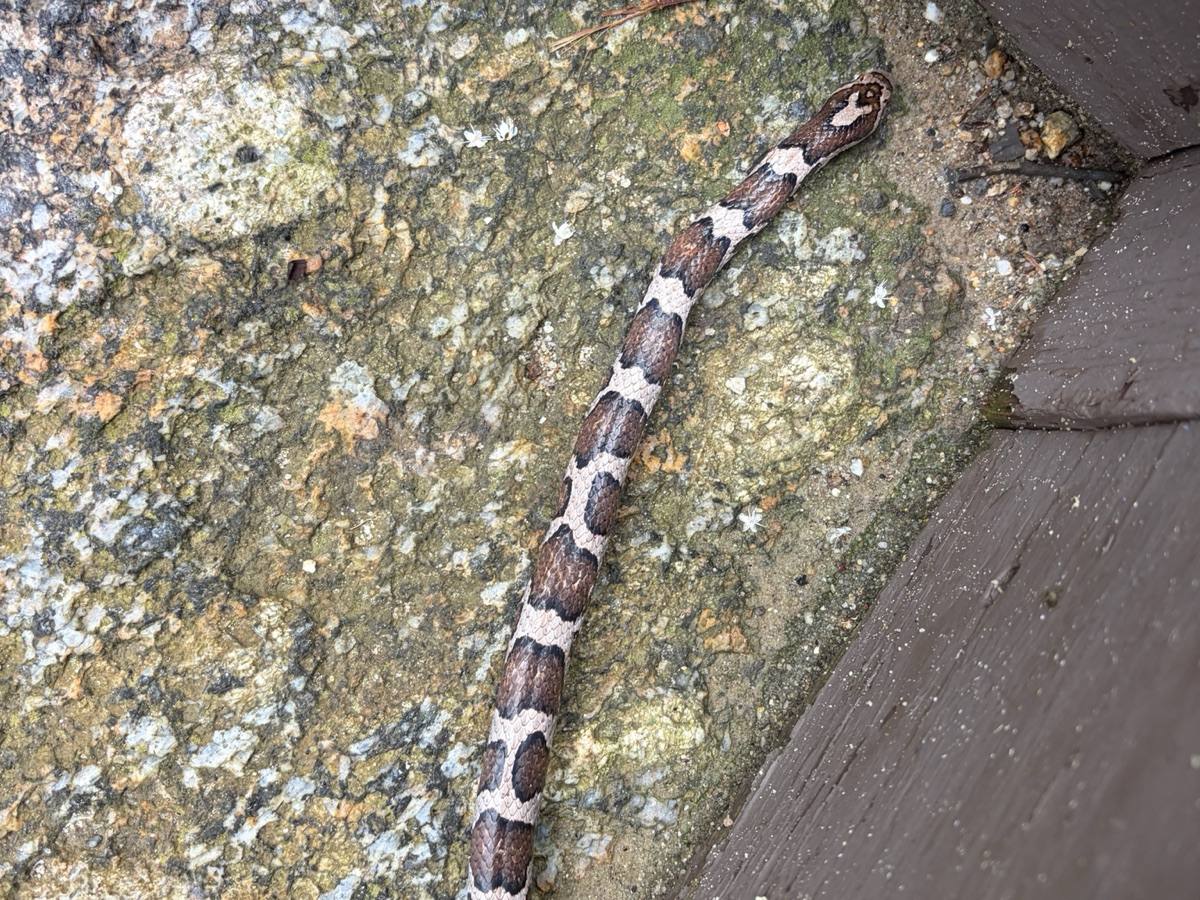
- Small head, often with a pale Y or V mark on the back of it.
- Pattern
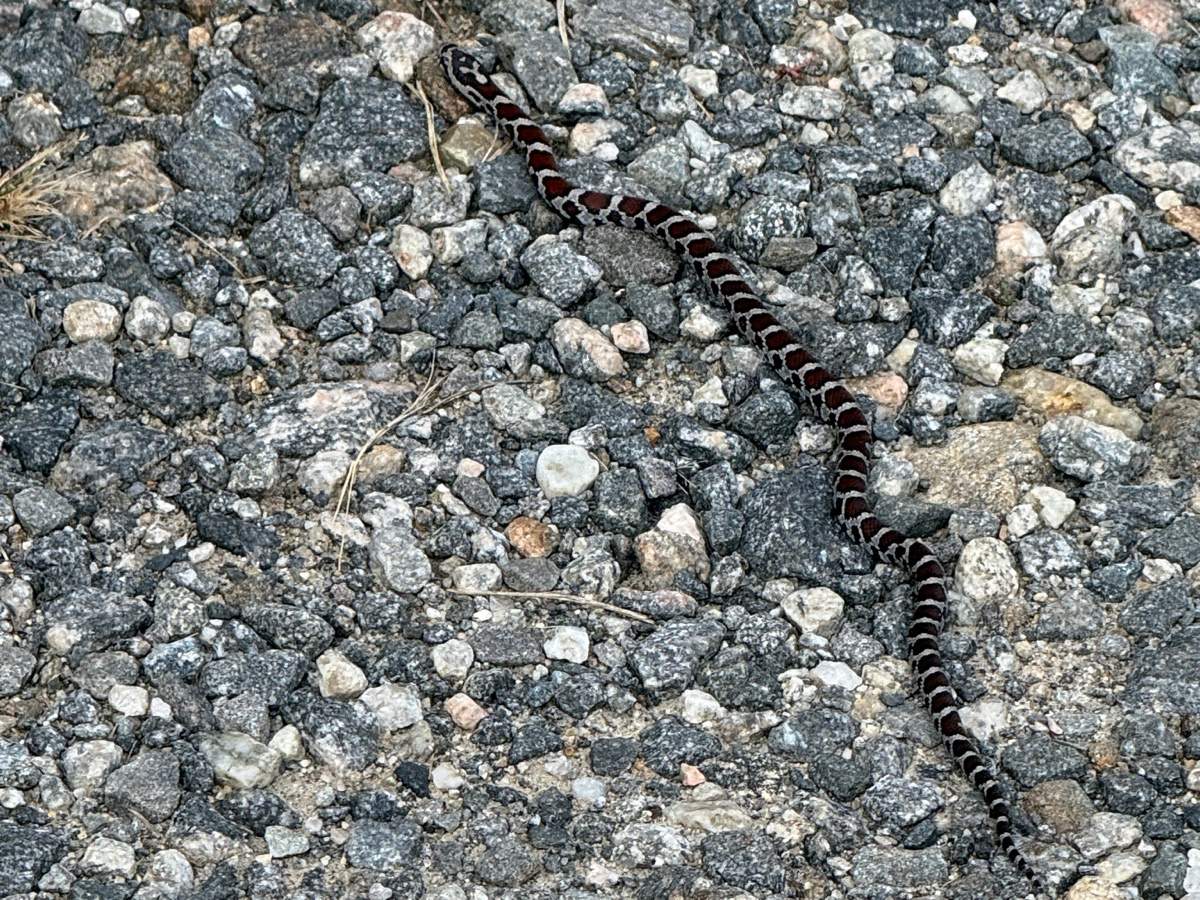
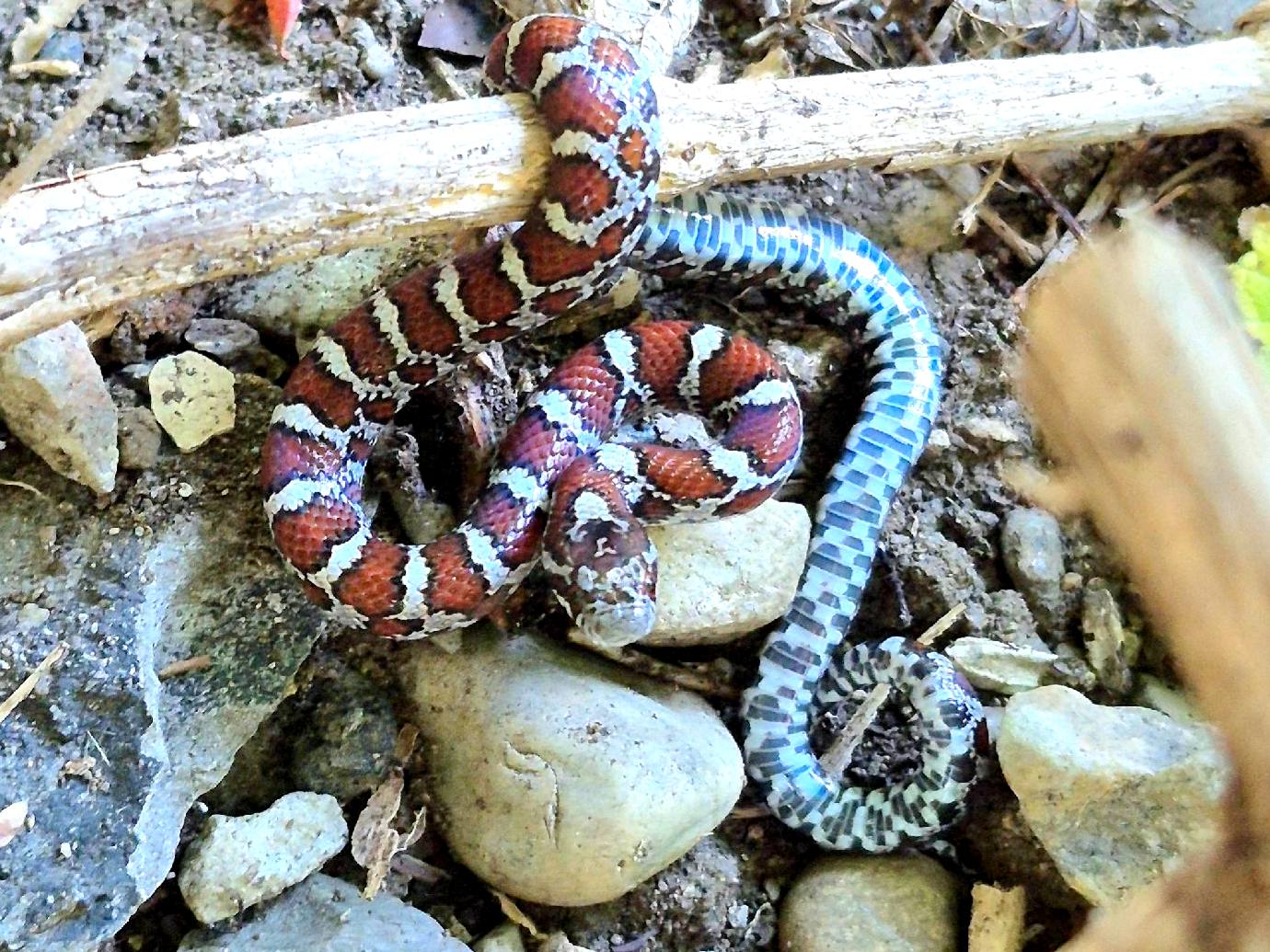
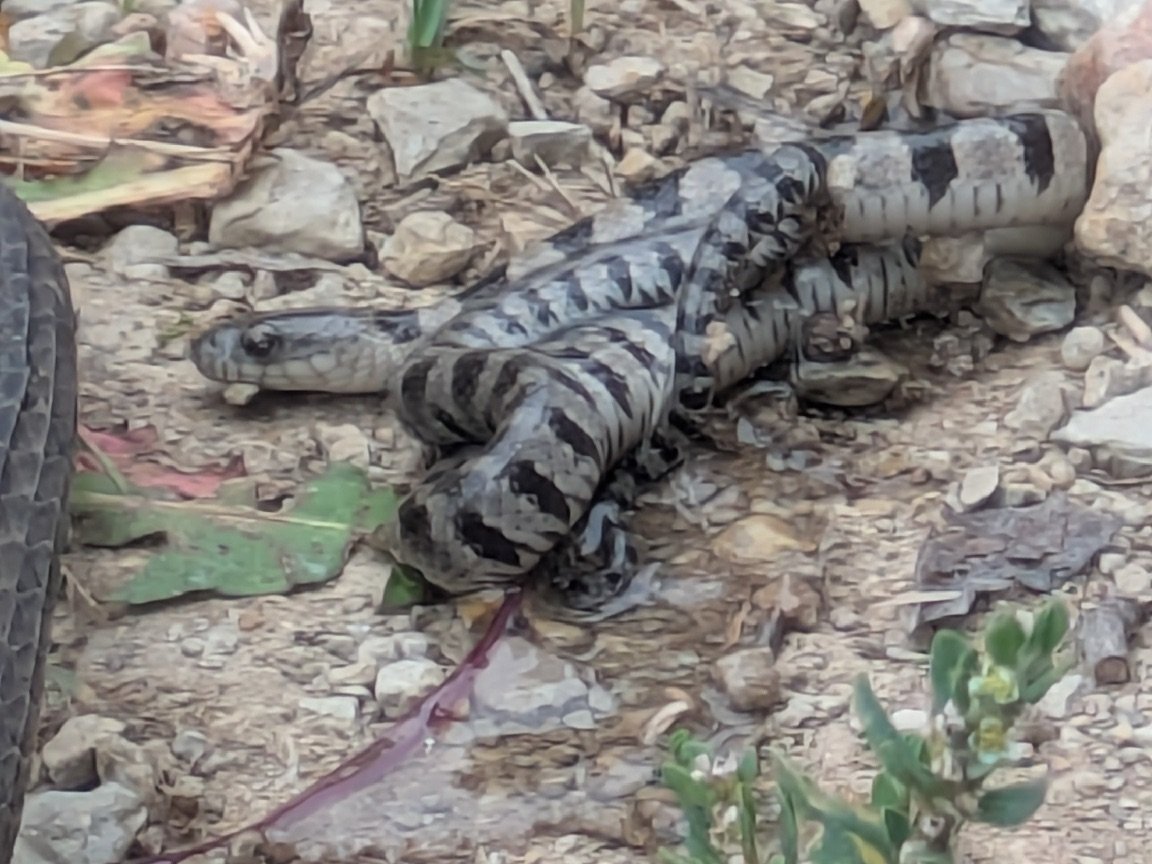
- Reddish-brown saddles edged in black on gray; checkerboard belly.
- Eyes
- Round pupil, small dark eye; no heat-sensing pit.
- Pits
- None. There is no pit between the eye and the nostril.
- Tail
- Tapers evenly; no rattle - but it vibrates the tip.
- What it does
- Vibrates its tail and musks; often found in basements and walls.
Often confused with
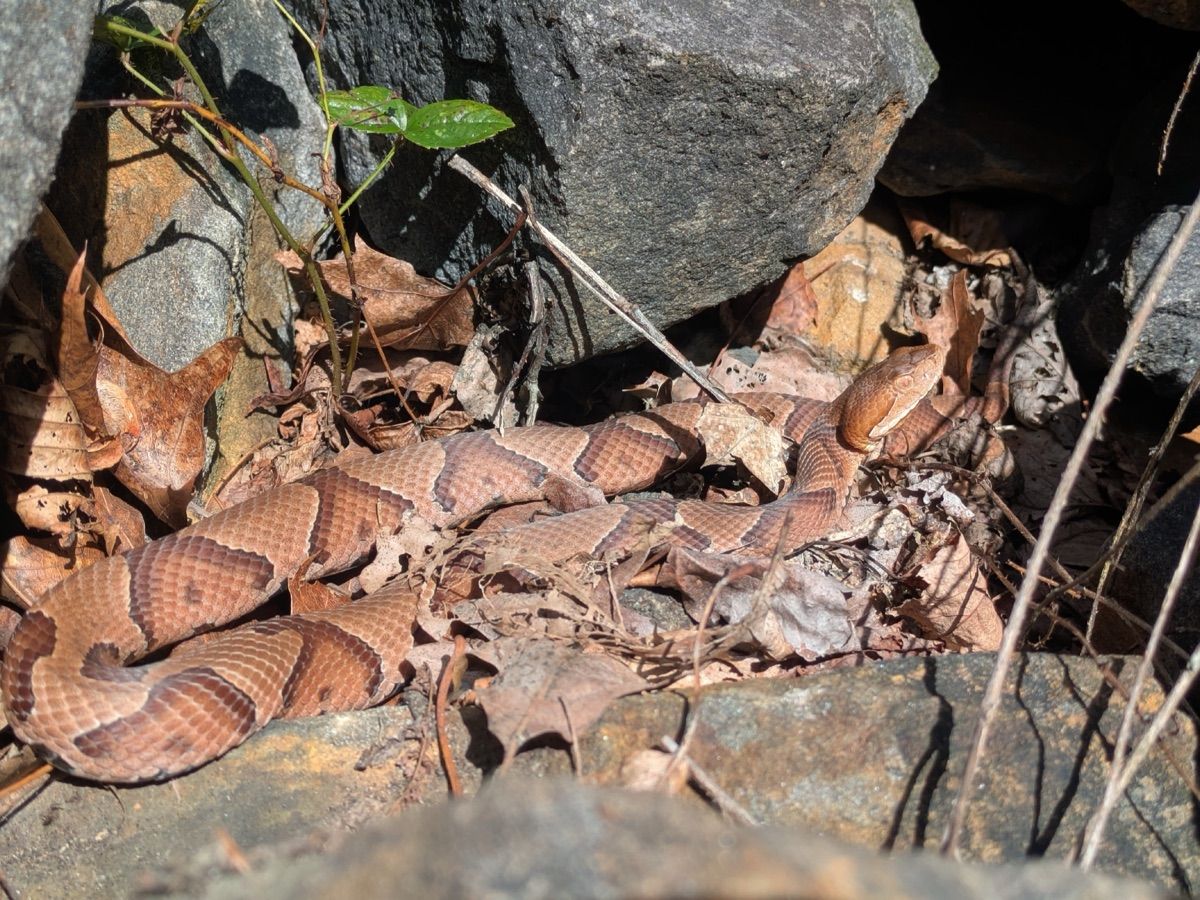
Eastern Copperhead is the common false alarm — its bands cross the whole back and pinch at the spine, and it has a vertical pupil and plain copper head. Northern Watersnake is bulkier and keeled.
How to tell them apart
Eastern Milksnake vs Eastern Copperhead›
The quick way to tellThe milksnake has black-edged reddish saddles on a gray body. The copperhead has hourglass bands pinched at the spine and a plain copper head.
Eastern Milksnake: Reddish-brown saddles edged in black on gray; checkerboard belly.
Eastern Copperhead: Dark hourglass bands - wide at the sides, pinched to a narrow waist over the spine.
Eastern Milksnake vs Northern Watersnake›
The quick way to tellCheck the back of the head. The Eastern Milksnake usually has a pale Y or V patch on the neck and neat black-edged blotches. The Northern Watersnake has no neck patch and rougher, duller bands that turn to blotches.
Eastern Milksnake: Small head, often with a pale Y or V mark on the back of it.
Northern Watersnake: Narrow head barely wider than the neck; flattens when threatened.
About the Eastern Milksnake›
A widespread and adaptable snake of woods, fields, barns and old stone walls across the Northeast and Midwest. Frequently found in basements and outbuildings hunting mice.
Its patterned look varies a lot from state to state, and several forms once treated separately are now grouped under one name.
The details
Size Usually 2–3 ft; occasionally 4 ftWeight About 0.5–1.5 lbLifespan 15–20 years
Typical range›
Northeast and Midwest: Maine and Ontario west to Minnesota and Iowa, south through the Appalachians to northern Georgia and Alabama, and down the Mississippi valley to Missouri, northern Arkansas and eastern Kansas.
Activity›
Mostly active at dusk and night; hides by day under rocks, boards and bark.
Diet›
Mice and voles, plus small snakes and lizards, killed by constriction.
Reproduction›
Lays eggs, usually 6–12, in early summer.
Found in parts of 32 states›
Ranges are approximate. It may be found in only part of a state, or be rare there, and snakes can turn up outside of them.
More photos