Eastern Ratsnake
Pantherophis alleghaniensis · Rat Snakes
Tap a part to see what to look for. Tap it again to turn it off.
No venom; it may rattle its tail in leaves as a bluff, and musk if handled.
How to identify
- Head
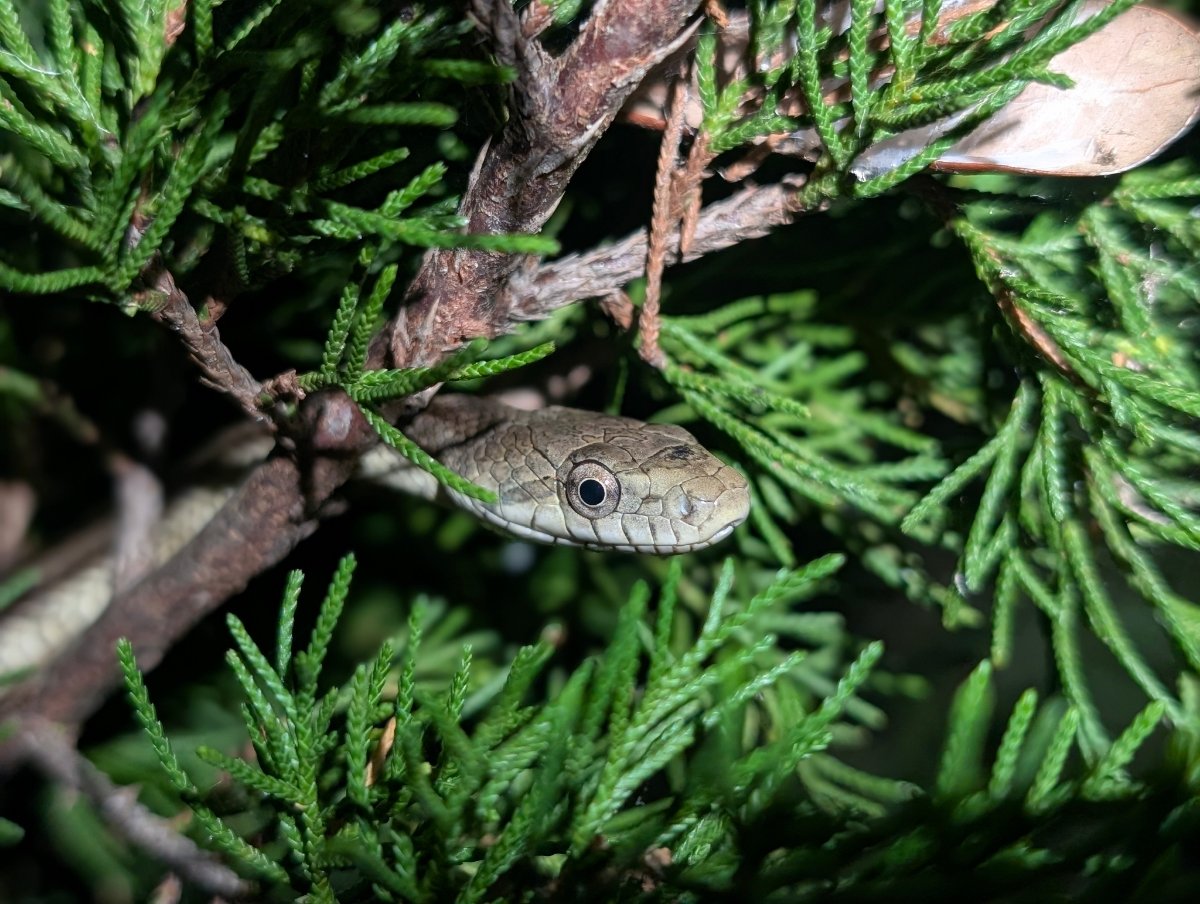
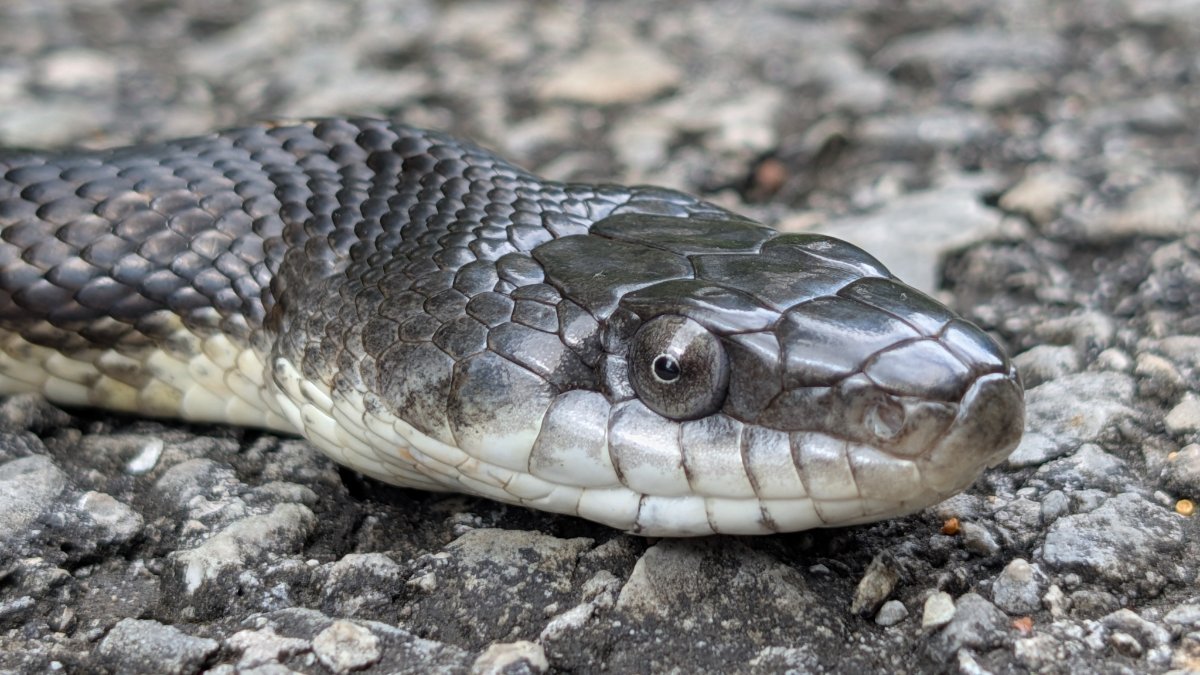
- Narrow head barely wider than the neck; white or cream chin and throat.
- Pattern
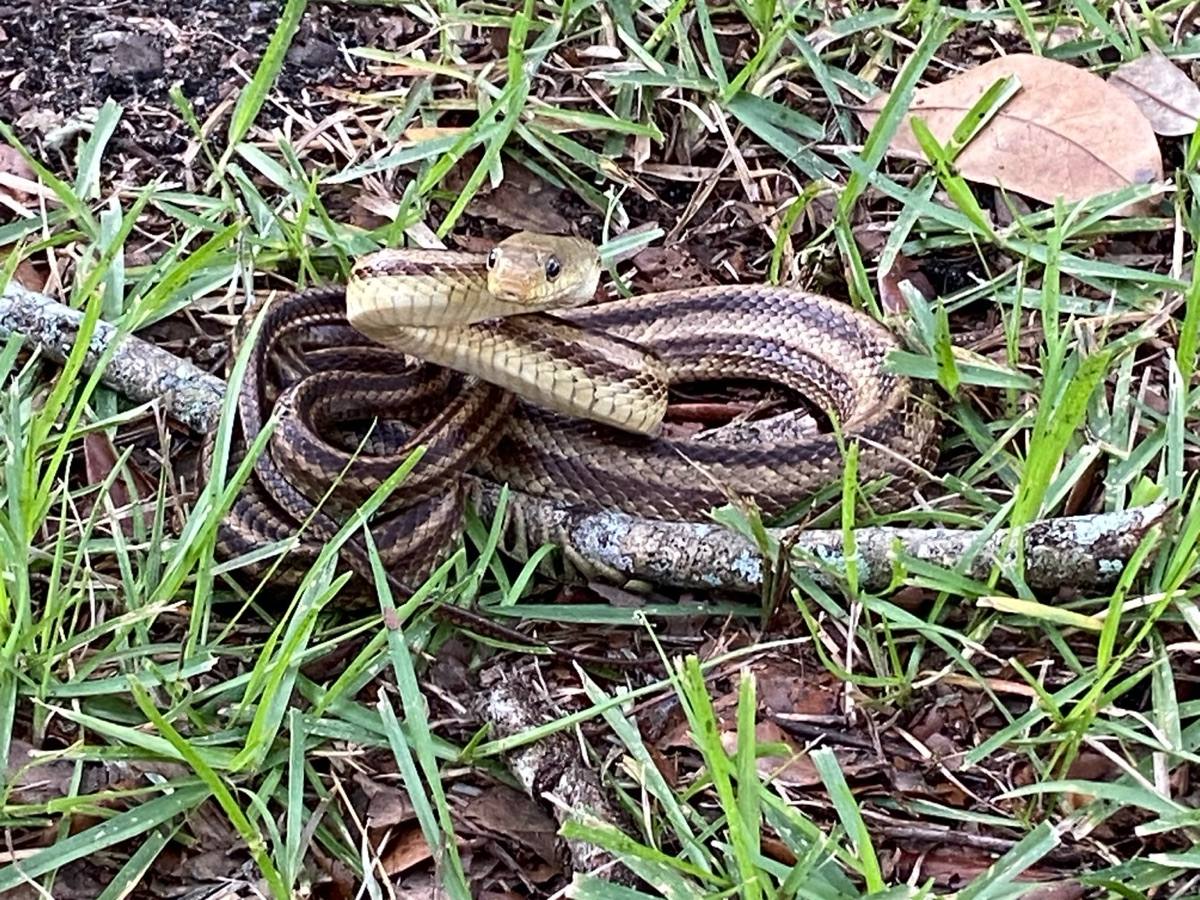
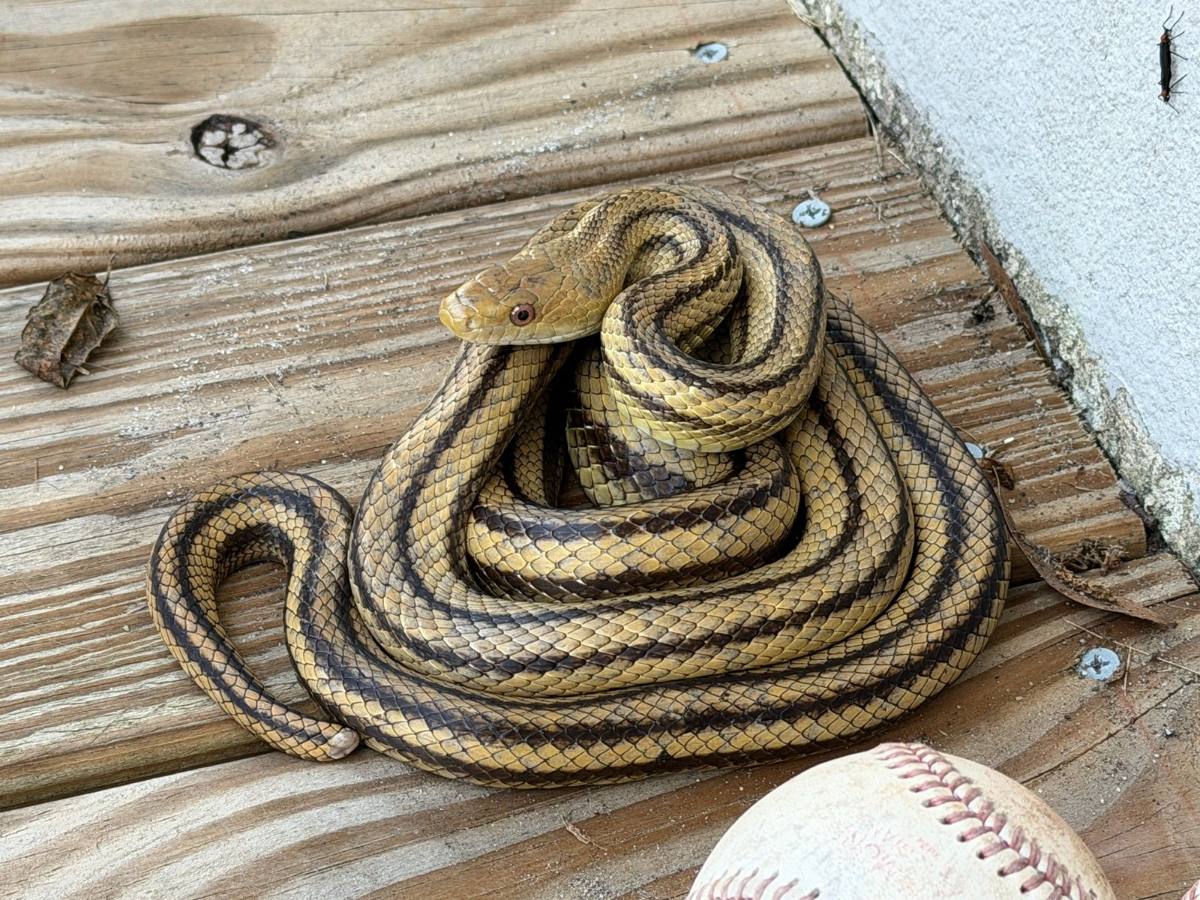
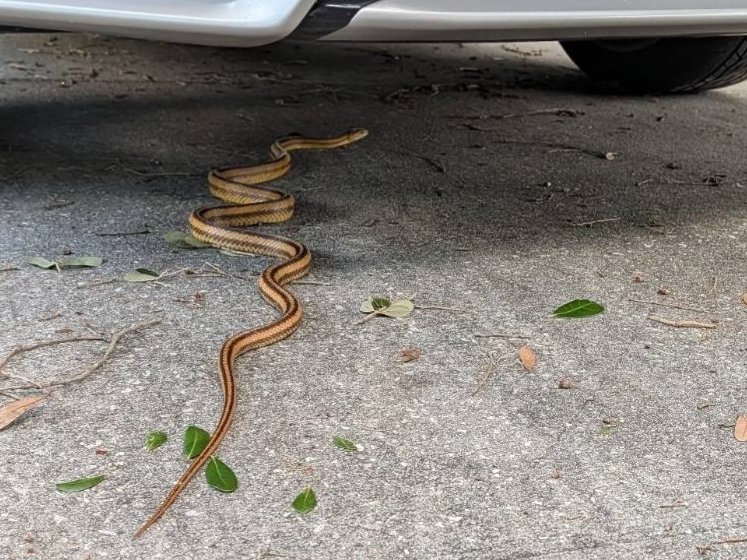
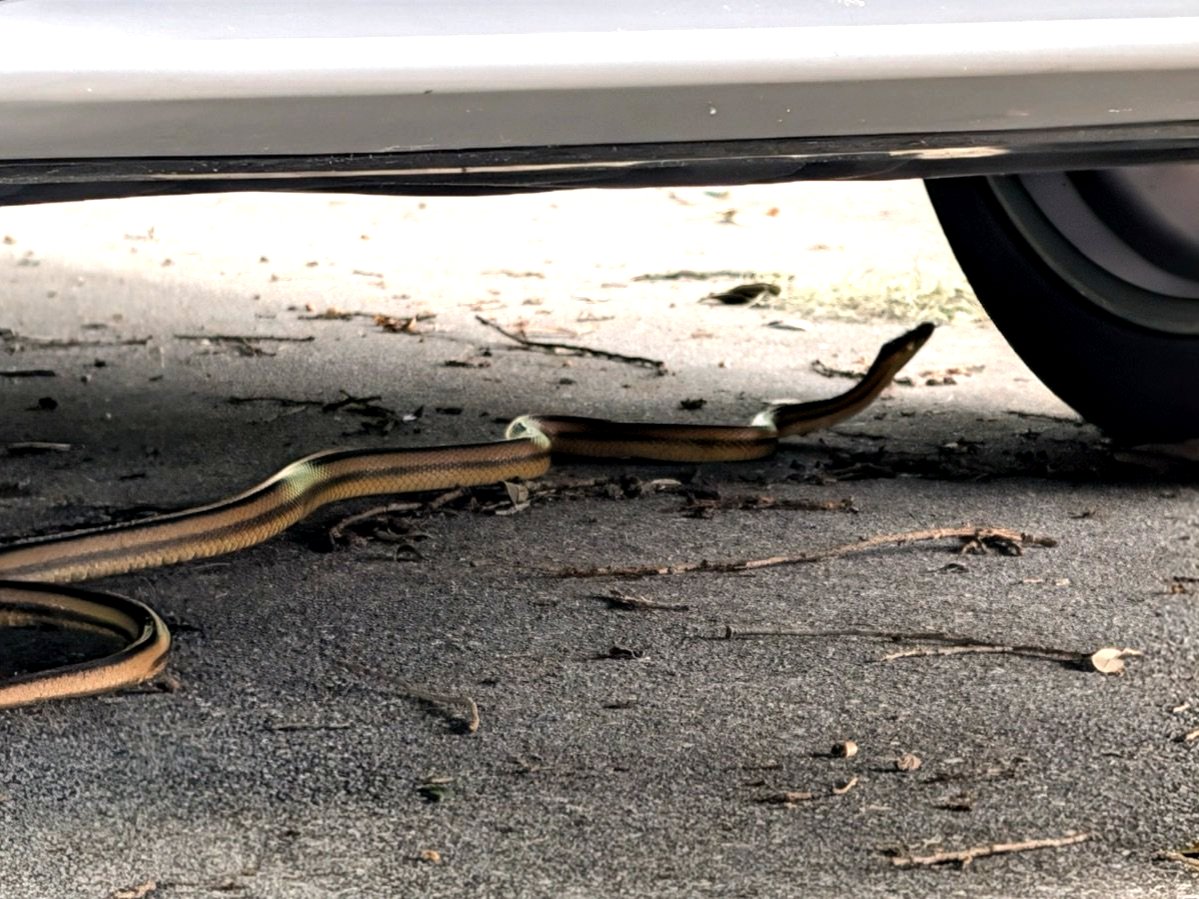
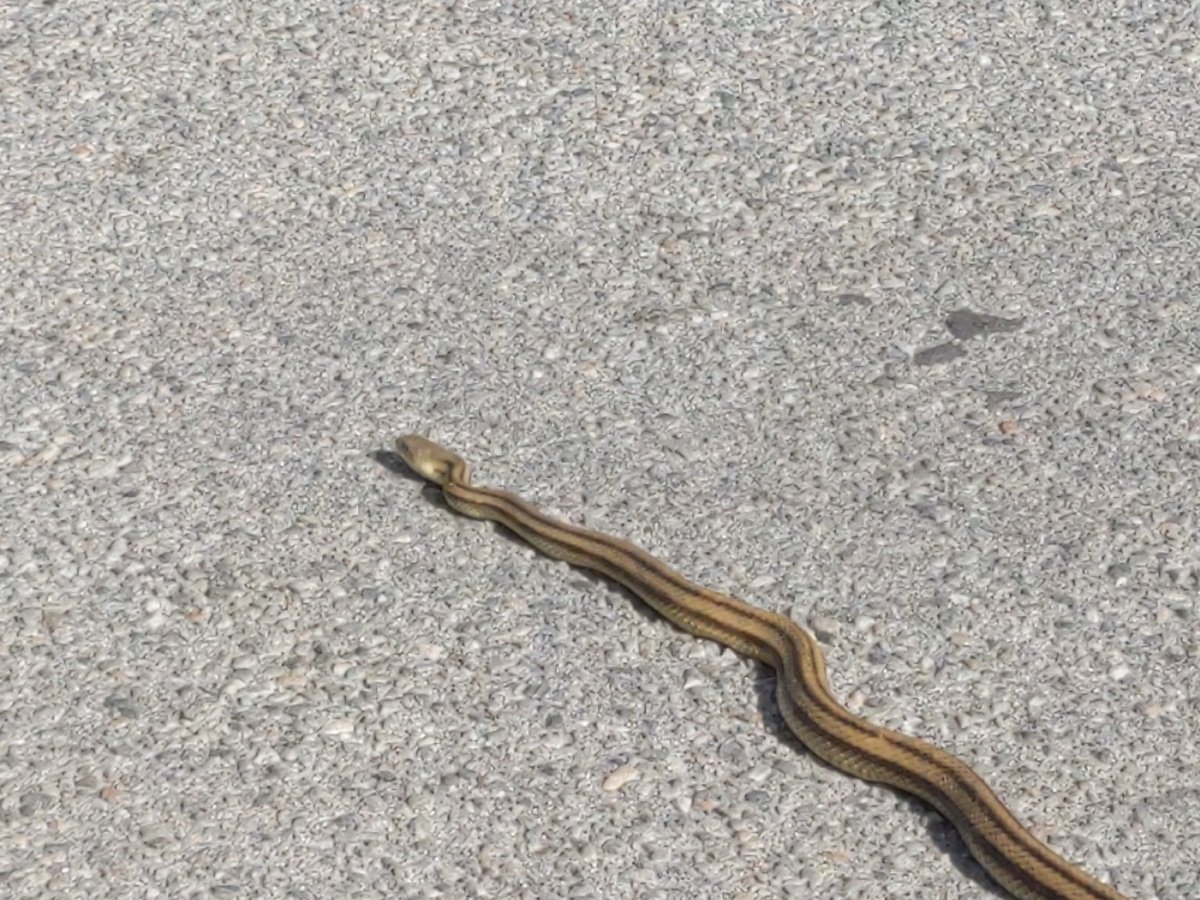
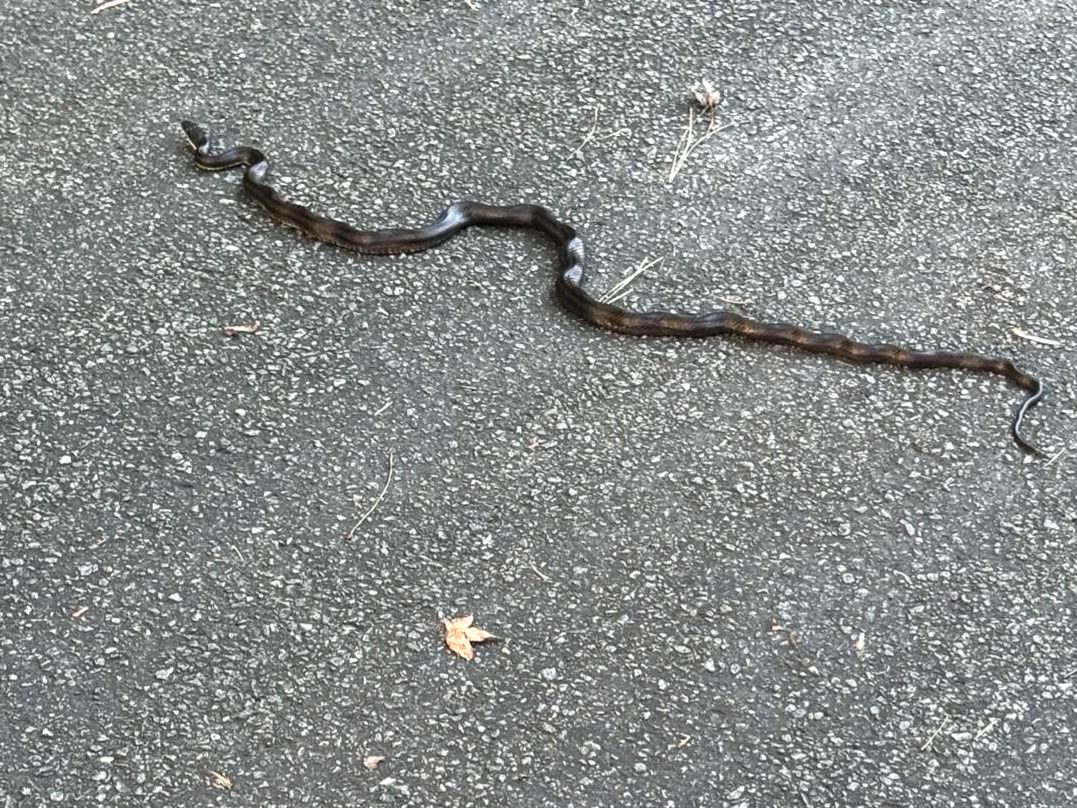
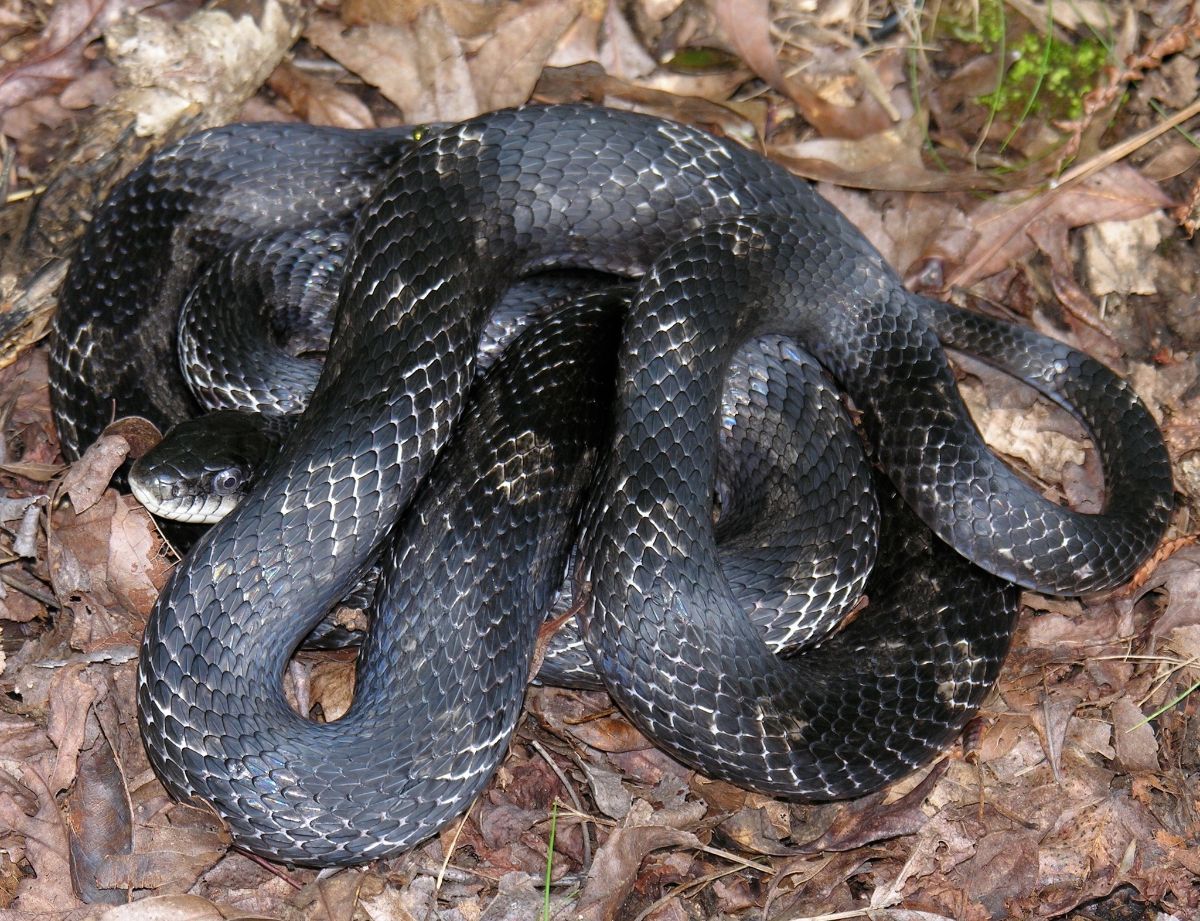
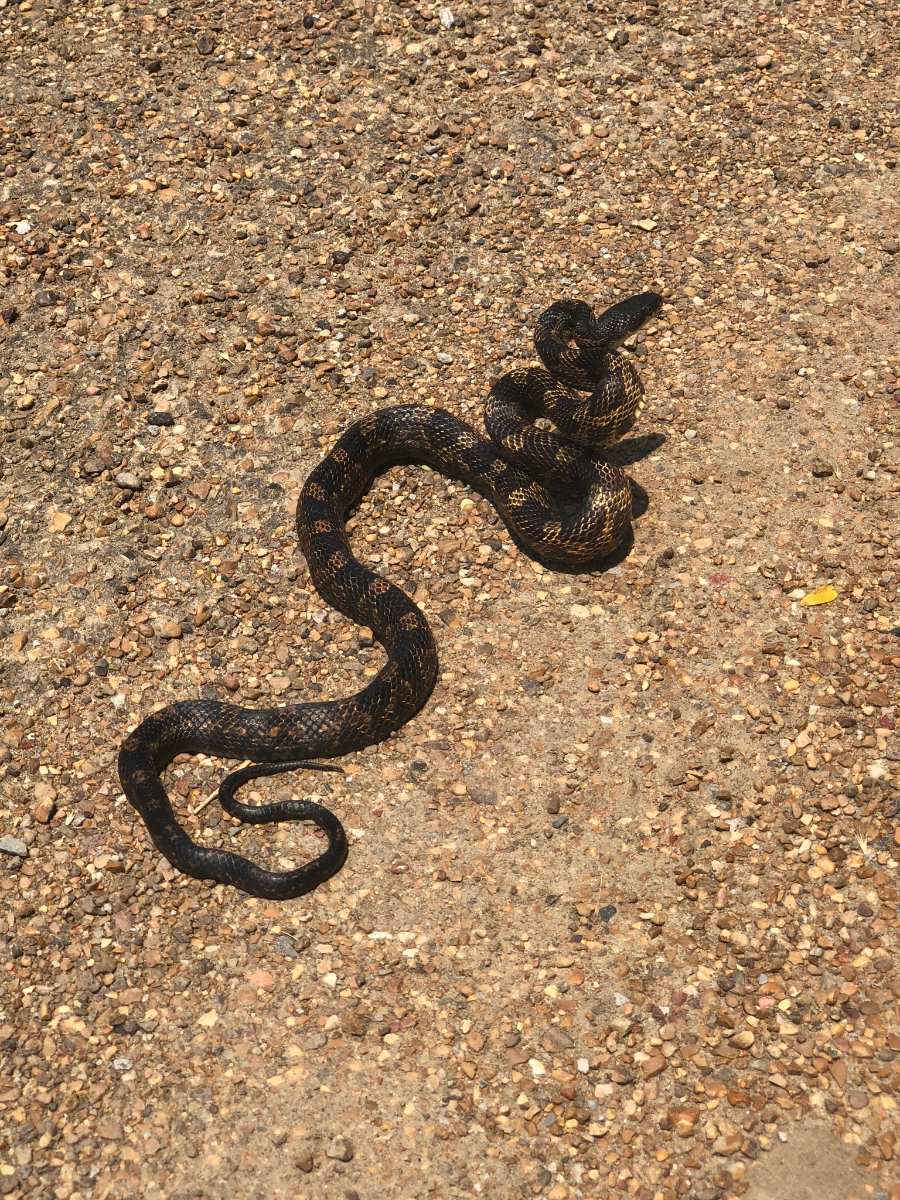
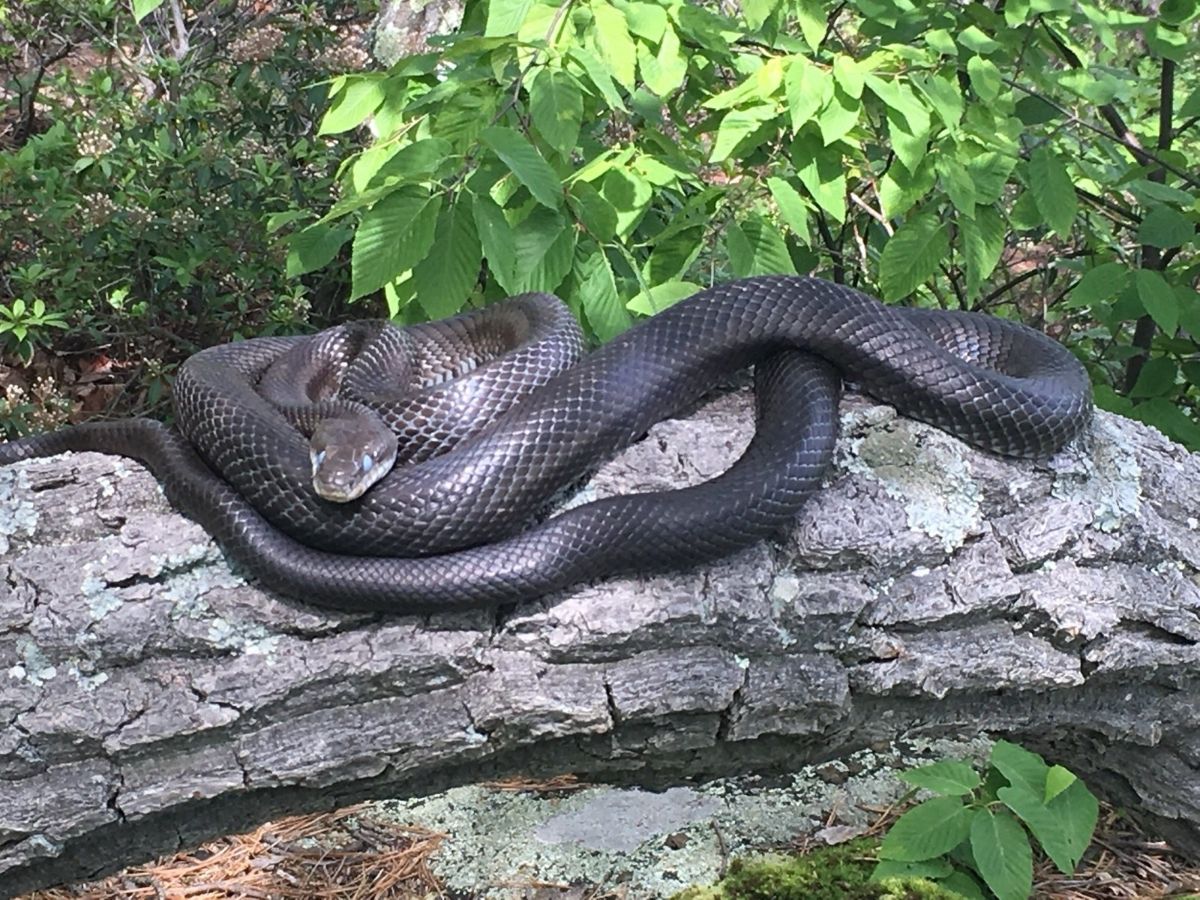
- Adults black, often with pale skin showing between scales; young gray and blotched.
- Eyes
- Round pupil, fairly large dark eye; no heat-sensing pit.
- Pits
- None. There is no pit between the eye and the nostril.
- Tail
- Tapers evenly; no rattle.
- What it does
- Climbs trees and walls; vibrates its tail in leaves when cornered.
Often confused with
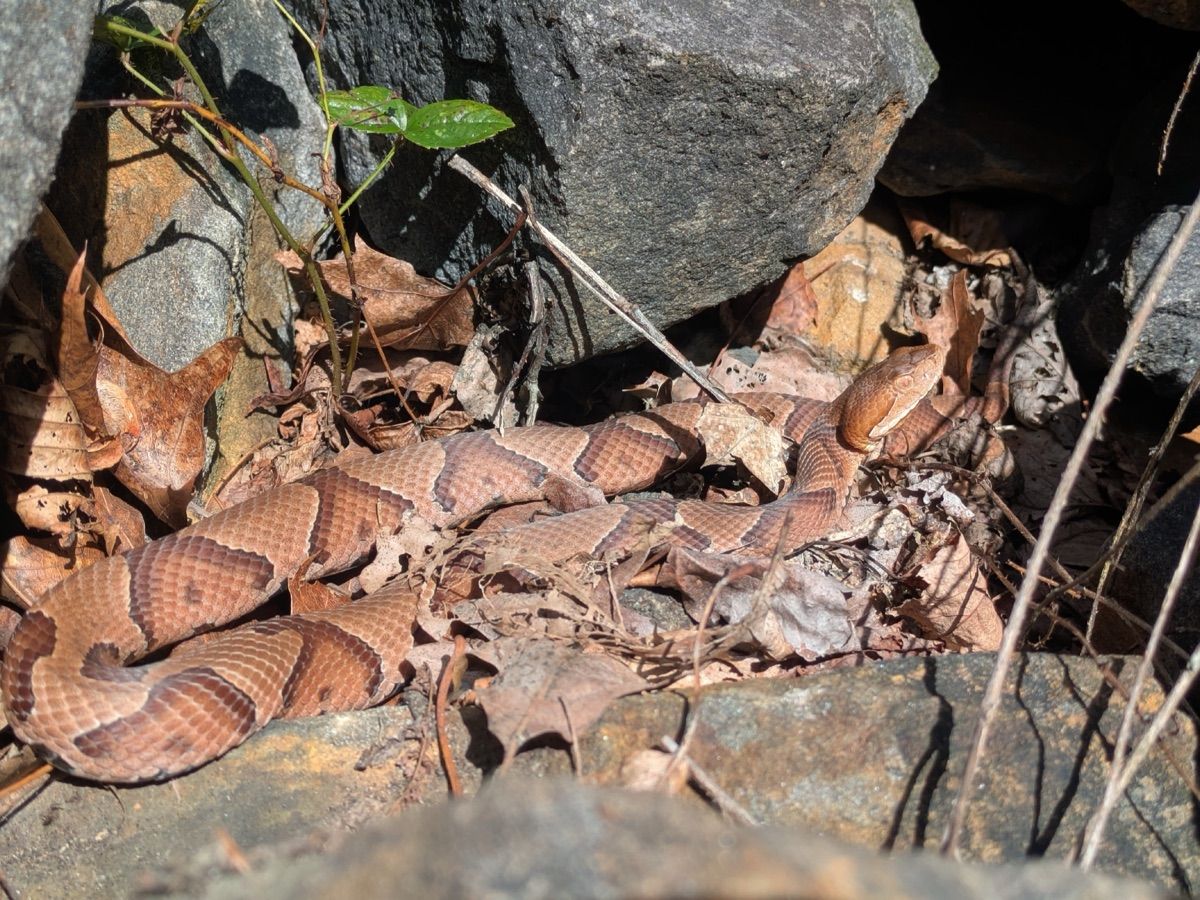
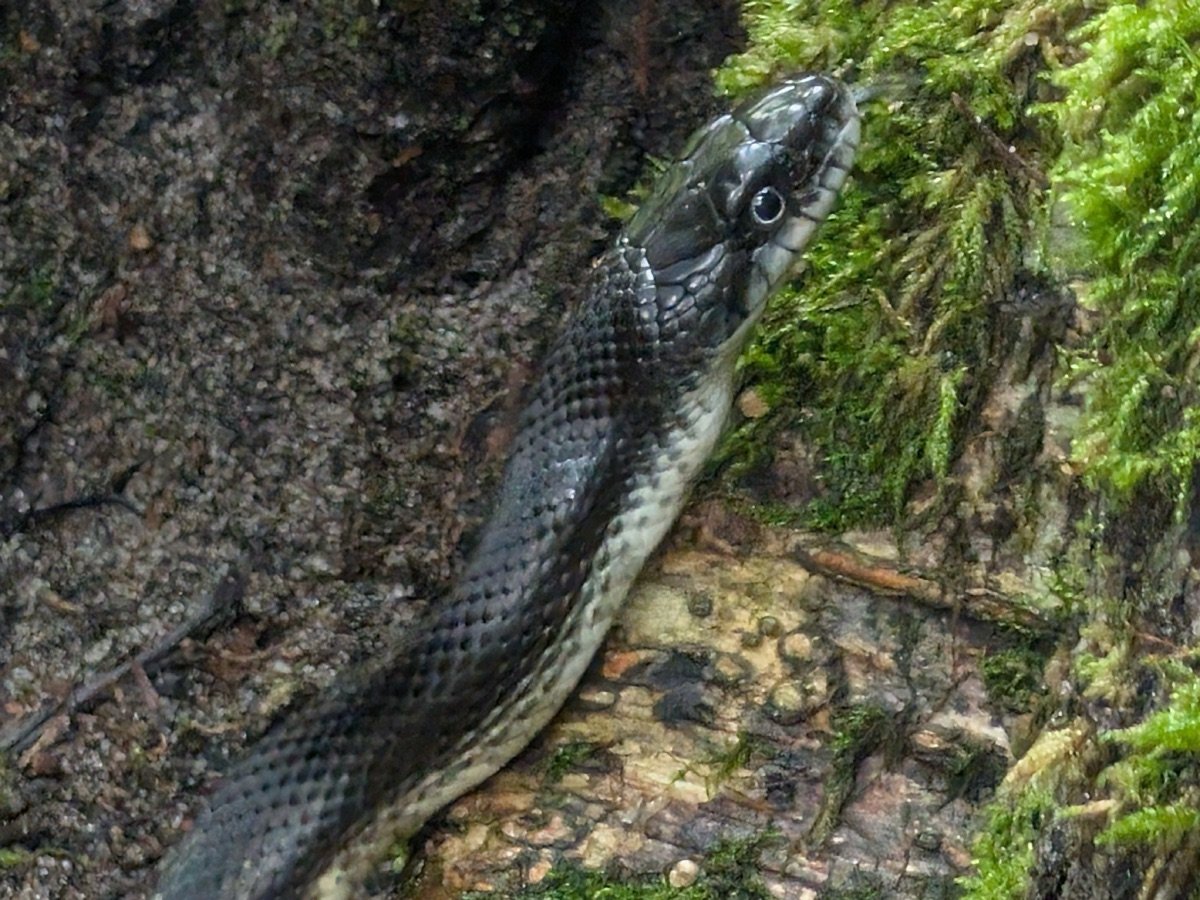
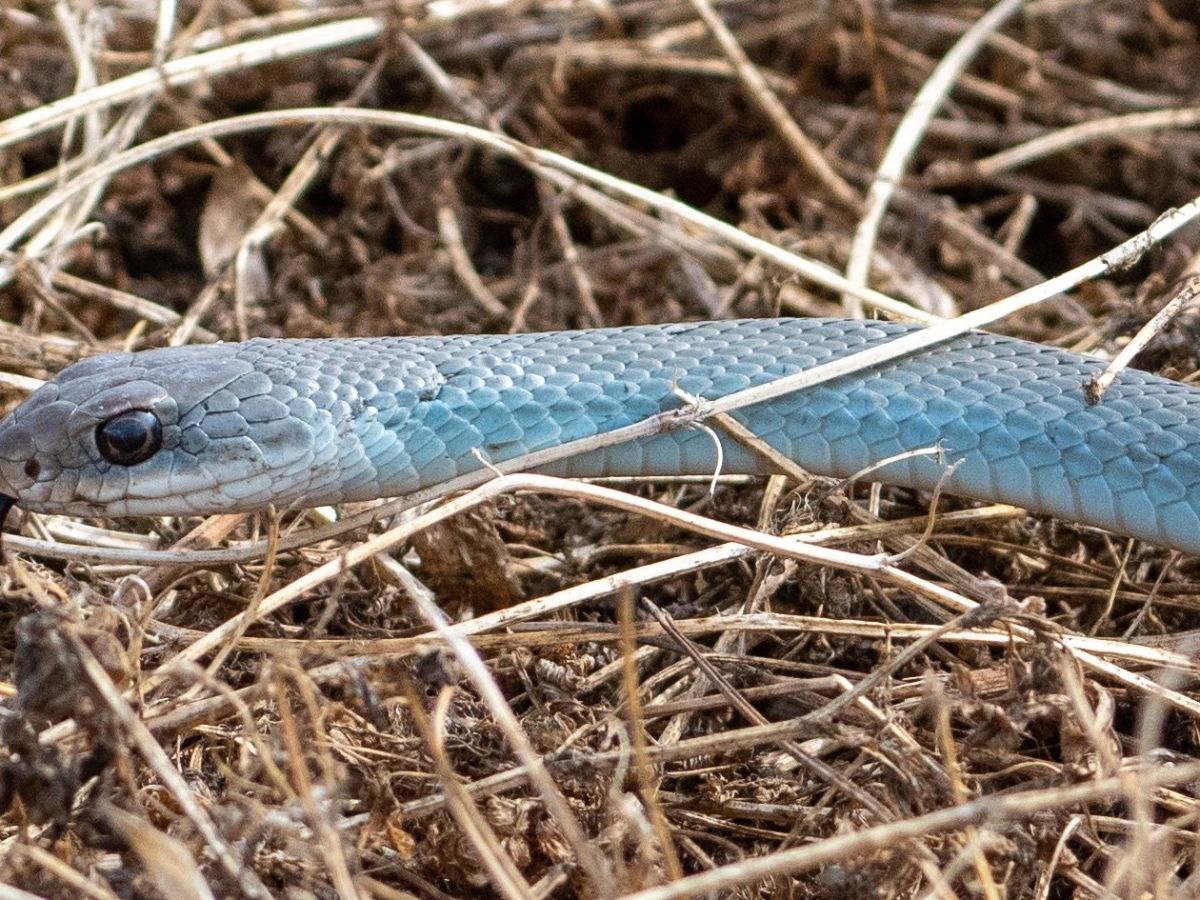
North American Racer is the classic mix-up; it has smooth, glossy scales and a plain gray belly instead of a checkerboard. Blotched young get mistaken for Eastern Copperhead, which has hourglass crossbands and a yellow tail tip. Gray Ratsnake looks nearly identical where the two meet.
How to tell them apart
Eastern Ratsnake vs Eastern Copperhead›
The quick way to tellFor young ratsnakes, look at the shape of the marks. The Eastern Copperhead's hourglass bands are wide on the sides and pinched over the spine. A young Eastern Ratsnake's blotches sit on top of the back and don't reach down the sides.
Eastern Ratsnake: Adults black, often with pale skin showing between scales; young gray and blotched.
Eastern Copperhead: Dark hourglass bands - wide at the sides, pinched to a narrow waist over the spine.
Eastern Ratsnake vs Gray Ratsnake›
The quick way to tellMostly go by where it was found. Eastern Ratsnakes live east of the Appalachians and the Apalachicola River; Gray Ratsnakes live west of that line to the Mississippi. The young look almost identical, and the two interbreed where they meet.
Eastern Ratsnake: Atlantic states east of the Appalachians: western Vermont and southern New England south through New York, Pennsylvania, Virginia and the Carolinas to Georgia and all of Florida east of the Apalachicola River, including the Keys.
Gray Ratsnake: Appalachians west to the Mississippi: Florida panhandle, Alabama and Mississippi north through Tennessee, Kentucky, Illinois, Indiana, Ohio and Michigan to Wisconsin and Ontario.
Eastern Ratsnake vs North American Racer›
The quick way to tellFor adults, check the shine and the belly. A black racer is smooth, glossy and evenly dark, with a gray belly. An adult Eastern Ratsnake looks duller, often shows pale flecks between its scales, and has a whitish belly with dark markings.
Eastern Ratsnake: Adults black, often with pale skin showing between scales; young gray and blotched.
North American Racer: Plain black, blue-gray, olive or tan; belly pale to gray; young strongly blotched.
About the Eastern Ratsnake›
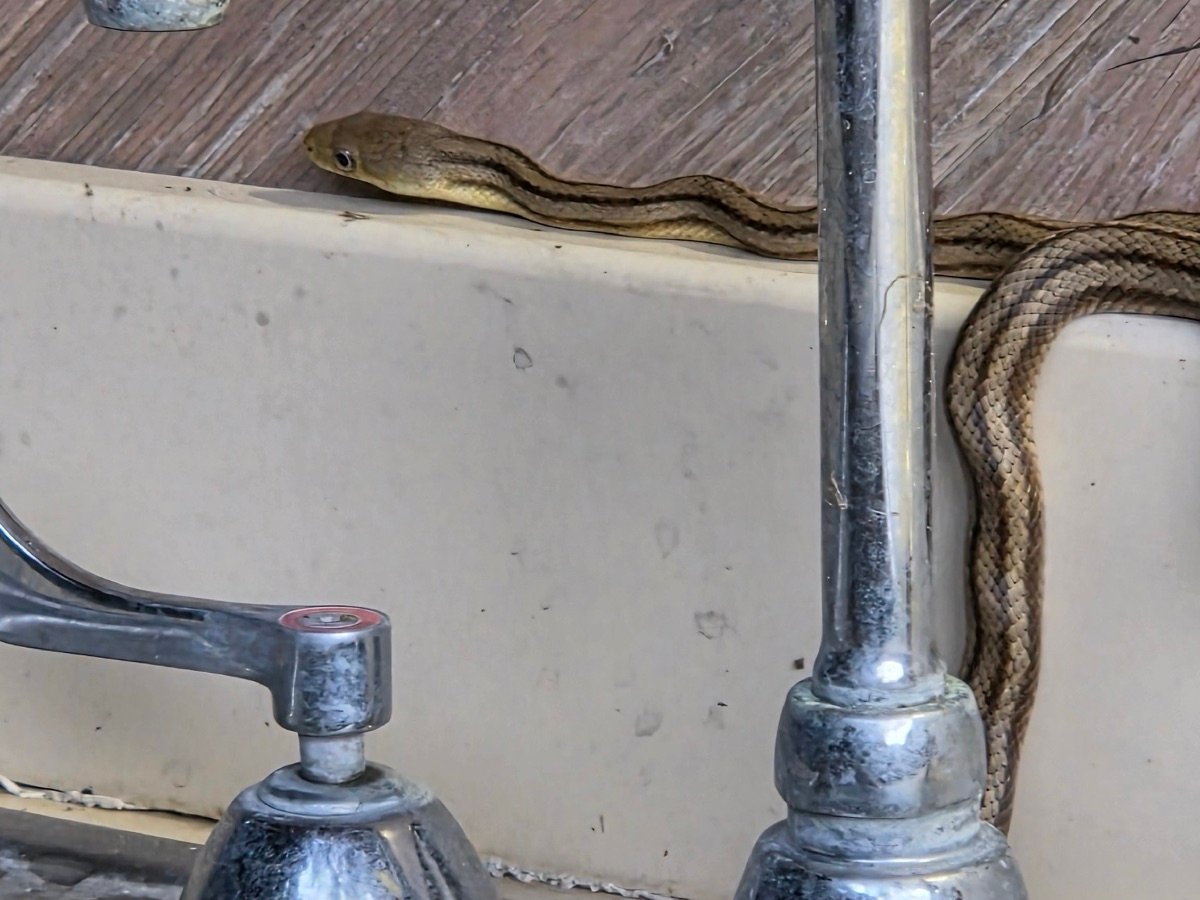
The big black climbing snake of the Atlantic states, found from coastal woods to suburban attics. Look for it flattened along a limb or working up a tree trunk after birds and squirrels.
Field guides split the old "black rat snake" into several species, and the scientific names for these are still argued over — iNaturalist and print guides disagree.
The details
Size Usually 3.5–6 ftWeight Commonly 1–5 lbLifespan 15–25 years
Typical range›
Atlantic states east of the Appalachians: western Vermont and southern New England south through New York, Pennsylvania, Virginia and the Carolinas to Georgia and all of Florida east of the Apalachicola River, including the Keys.
Activity›
Day active in spring and fall, night active in summer. Climbs well; winters in rock crevices and hollow trees.
Diet›
Rodents, birds and eggs, killed by constriction.
Reproduction›
Lays eggs, usually 5–20, in early summer.
Found in parts of 15 states›
Ranges are approximate. It may be found in only part of a state, or be rare there, and snakes can turn up outside of them.
More photos