‹ Compare two snakes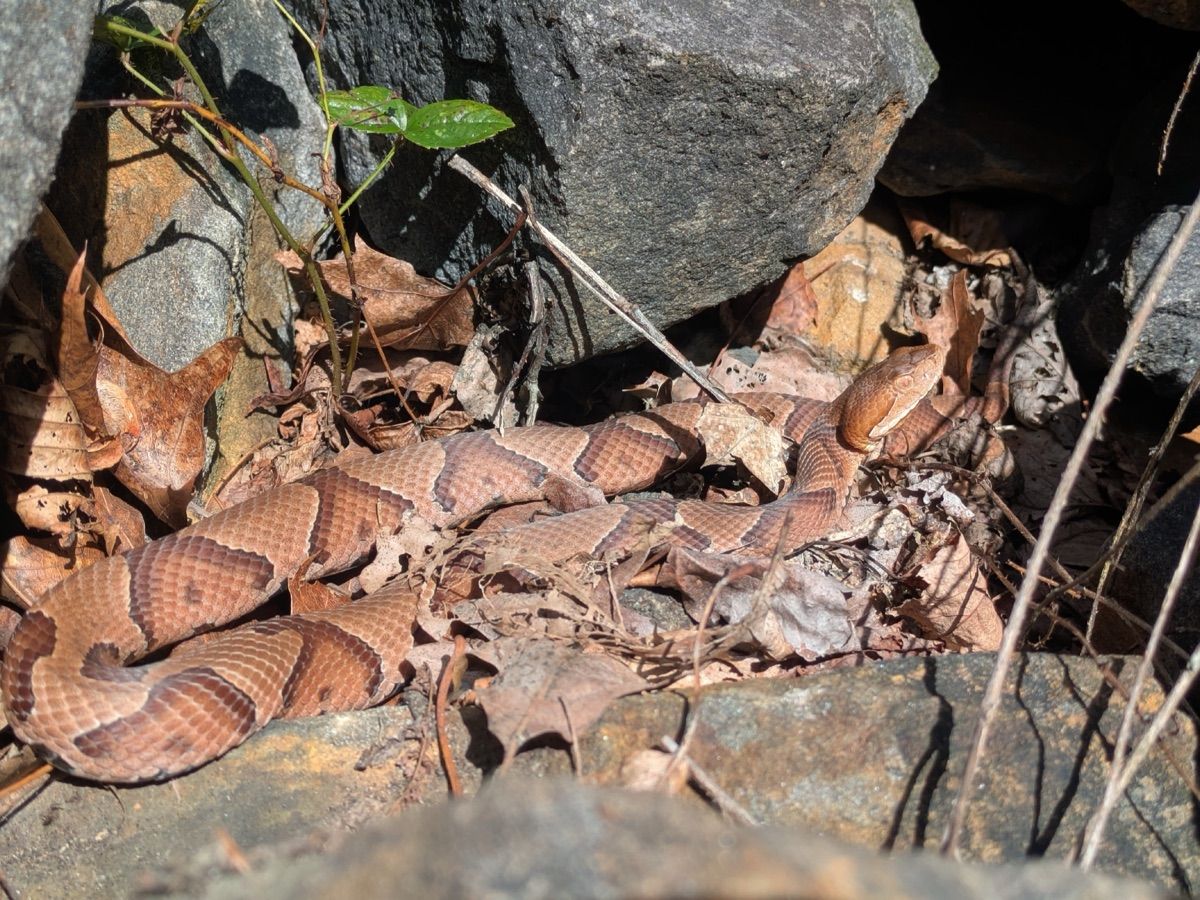
Eastern Copperhead vs Eastern Ratsnake
Tap a part to see it on both. Tap it again to turn it off.
(c) Court Harding, some rights reserved (CC BY)
Eastern Copperhead
Agkistrodon contortrix
VenomousAlejandro Santillana, no rights reserved
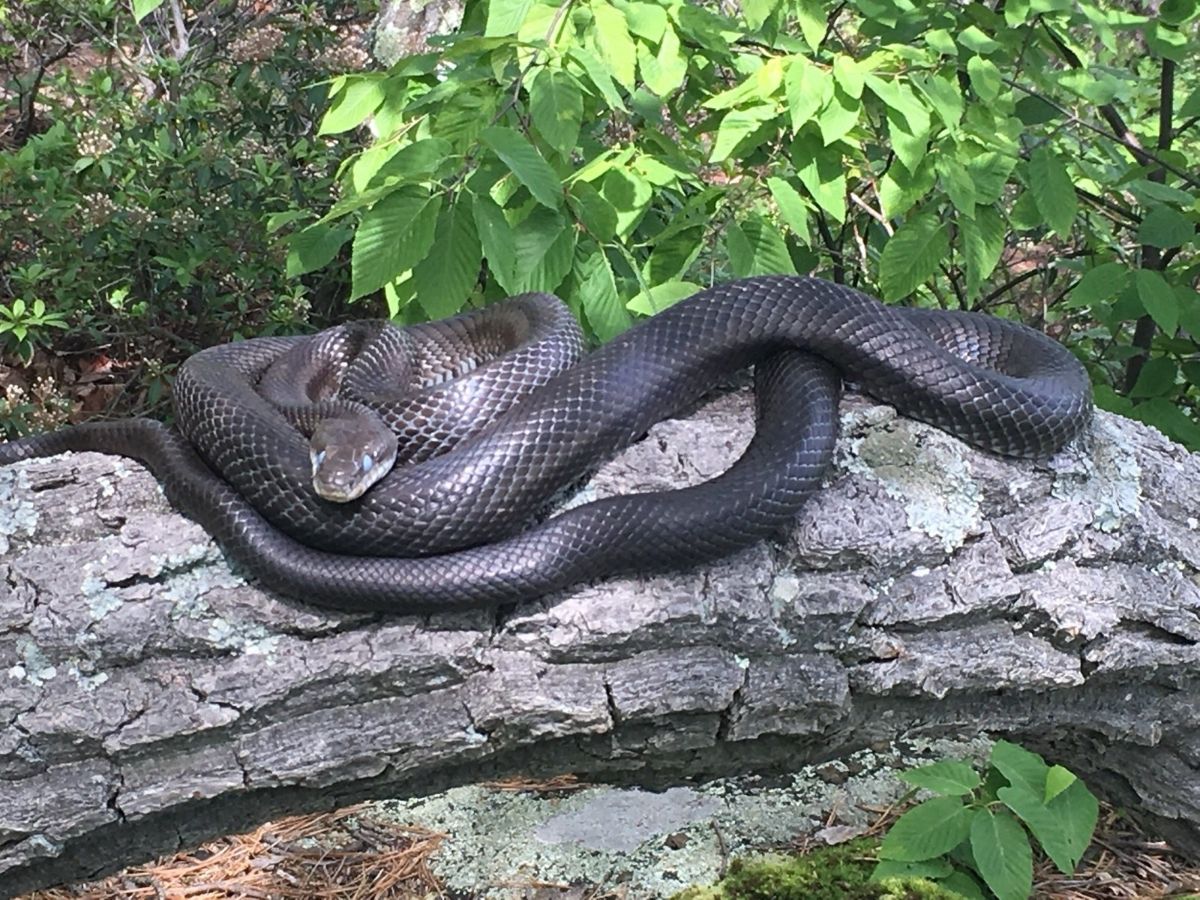
Eastern Ratsnake
Pantherophis alleghaniensis
Non-venomousThe quick way to tell
For young ratsnakes, look at the shape of the marks. The Eastern Copperhead's hourglass bands are wide on the sides and pinched over the spine. A young Eastern Ratsnake's blotches sit on top of the back and don't reach down the sides.
Pattern ★ This settles it
Dark hourglass bands - wide at the sides, pinched to a narrow waist over the spine.
Adults black, often with pale skin showing between scales; young gray and blotched.
Head
Plain coppery triangular head with no stripes or blotches, clearly wider than the neck.
Narrow head barely wider than the neck; white or cream chin and throat.
Eyes
Vertical slit pupil; heat-sensing pit between eye and nostril.
Round pupil, fairly large dark eye; no heat-sensing pit.
Pits
A deep heat-sensing pit on each side of the face, between the eye and the nostril.
None. There is no pit between the eye and the nostril.
Tail
Plain; young have a bright yellow tail tip.
Tapers evenly; no rattle.
What it does
Freezes rather than fleeing - which is why people step on them.
Climbs trees and walls; vibrates its tail in leaves when cornered.
Where it lives
Eastern US from Massachusetts and New York south to the Florida panhandle, west to Iowa, eastern Kansas, Oklahoma and eastern Texas.
Atlantic states east of the Appalachians: western Vermont and southern New England south through New York, Pennsylvania, Virginia and the Carolinas to Georgia and all of Florida east of the Apalachicola River, including the Keys.