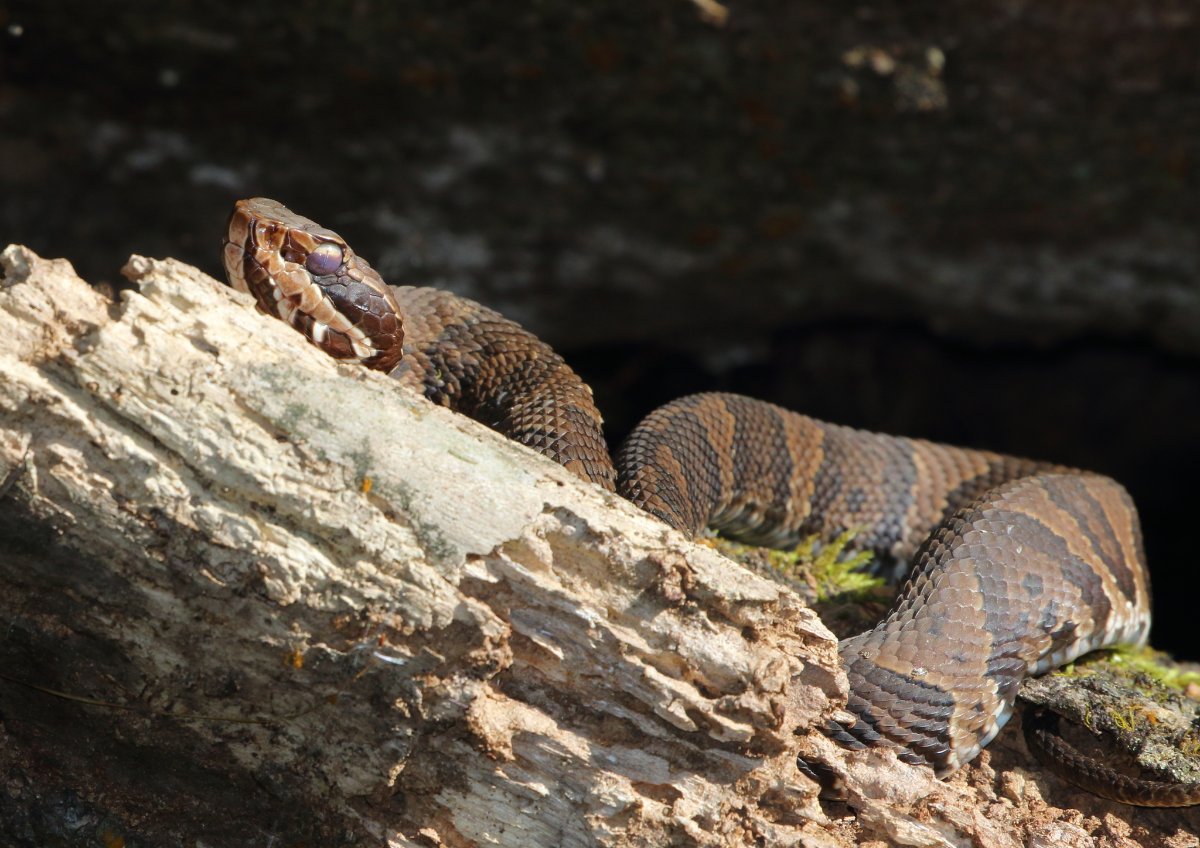
Florida Cottonmouth
Agkistrodon conanti · Copperheads & Cottonmouths
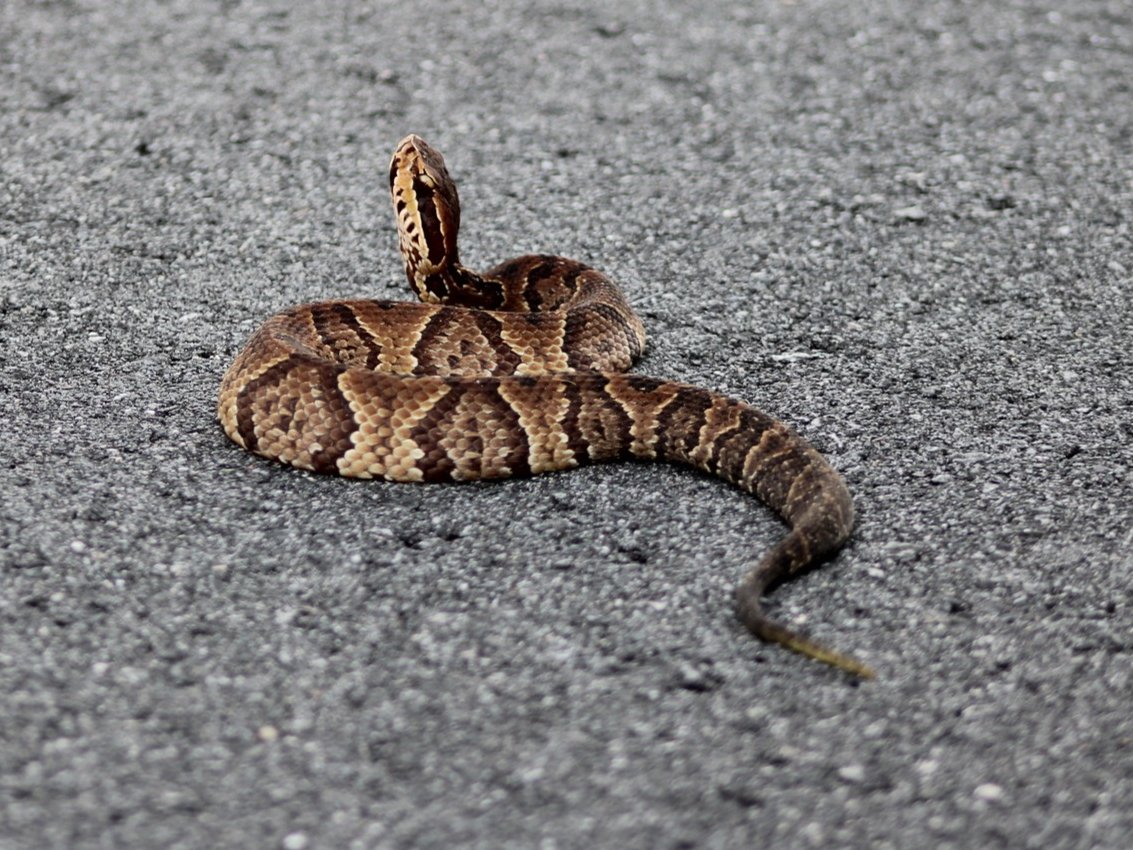
Tap a part to see what to look for. Tap it again to turn it off.
Venomous. Often holds its ground and gapes to show the white inside of its mouth; keep well back — a bite is a medical emergency.
How to identify
- Head
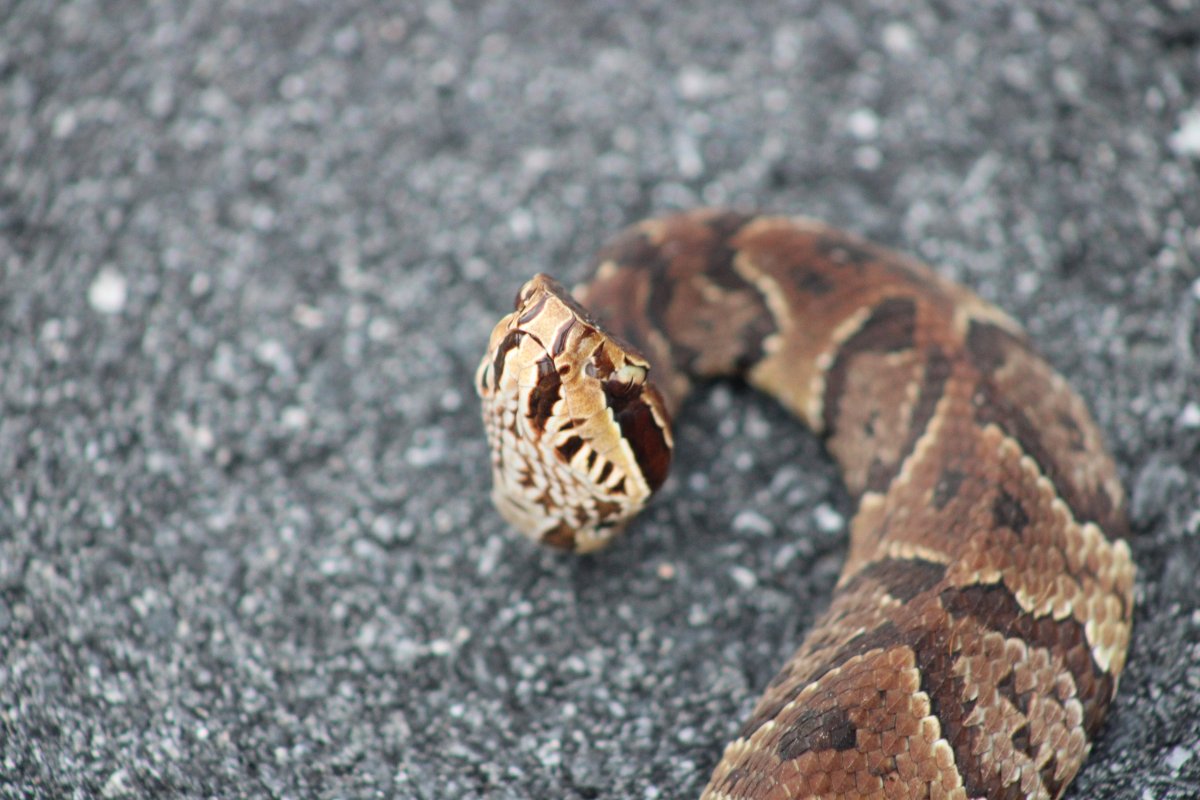
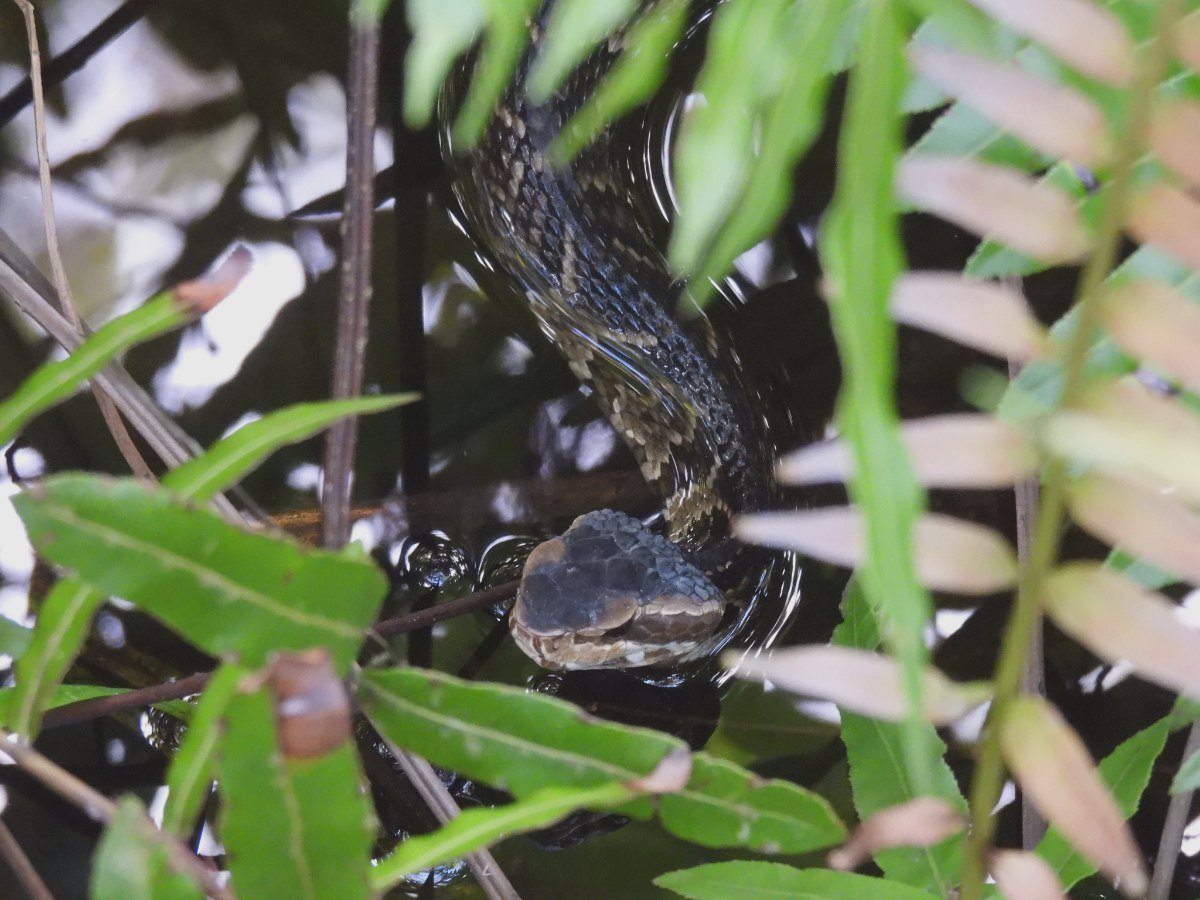
- Broad, blocky triangular head, much wider than the neck, with a heavy brow. Bold dark cheek stripe with pale edges, and often two dark vertical lines on the tip of the snout.
- Pattern
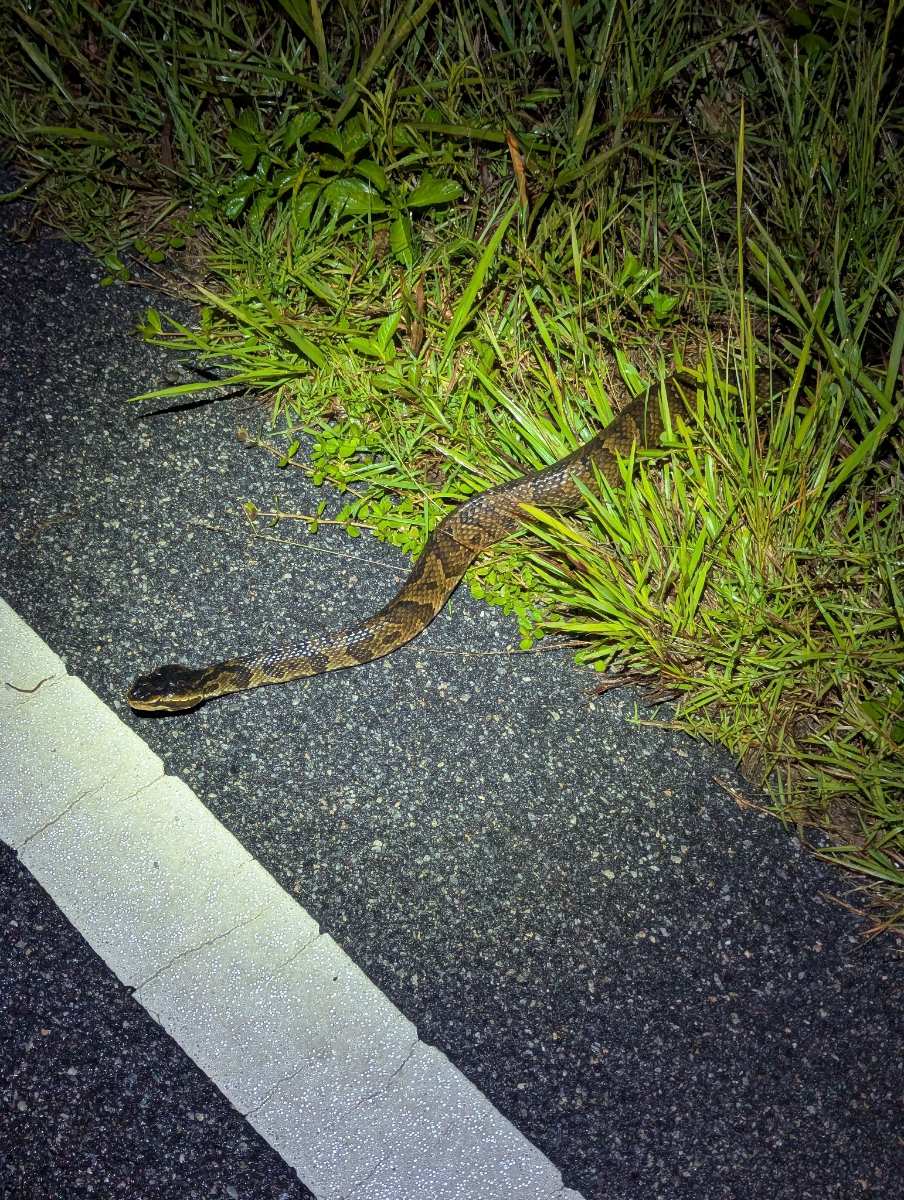
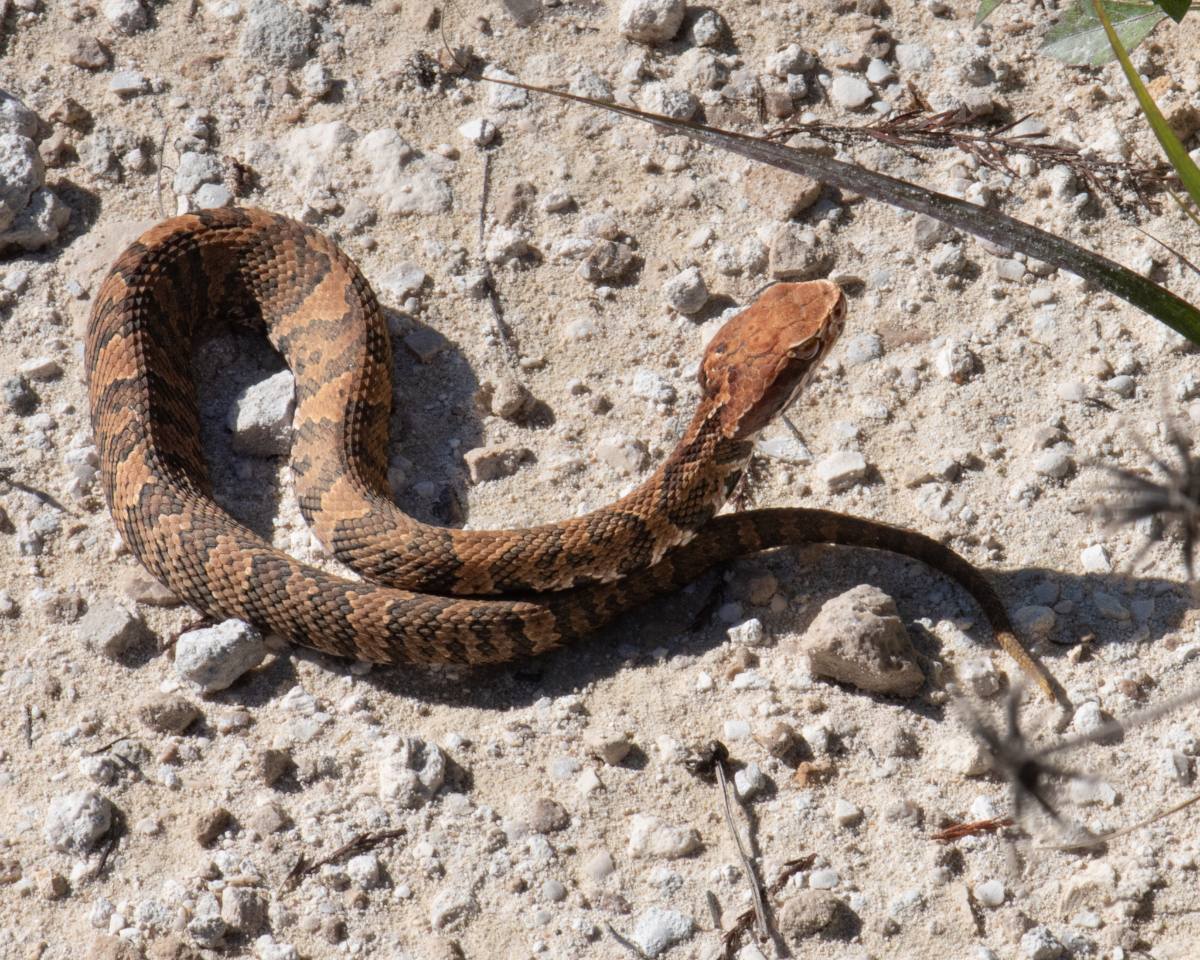
- Dark, jagged crossbands on olive, brown or black; young snakes are reddish-brown and brightly banded.
- Eyes
- Vertical slit pupil, hidden by a dark stripe; the overhanging brow means you can't see the eyes from directly above.
- Pits
- A deep heat-sensing pit on each side of the face, between the eye and the nostril.
- Tail
- Dark in adults; babies have a bright sulfur-yellow tail tip.
- What it does
- Not aggressive, but often stands its ground, gaping its white mouth, vibrating its tail and releasing a strong musk.
Often confused with
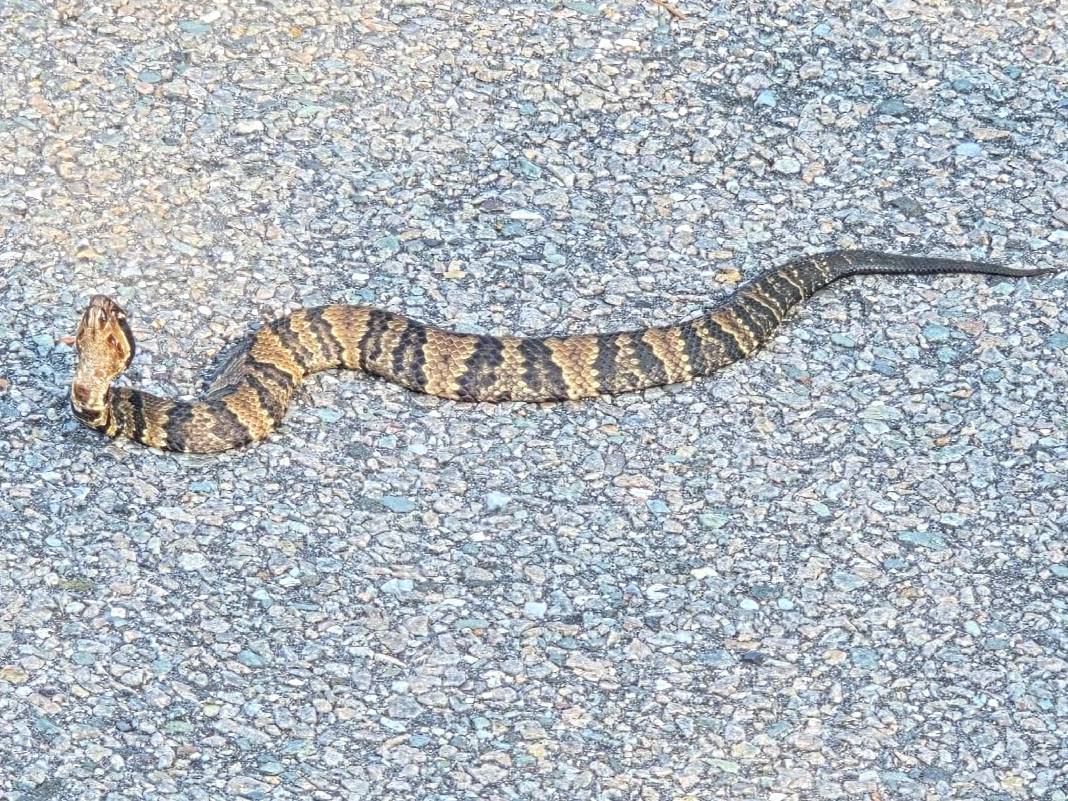
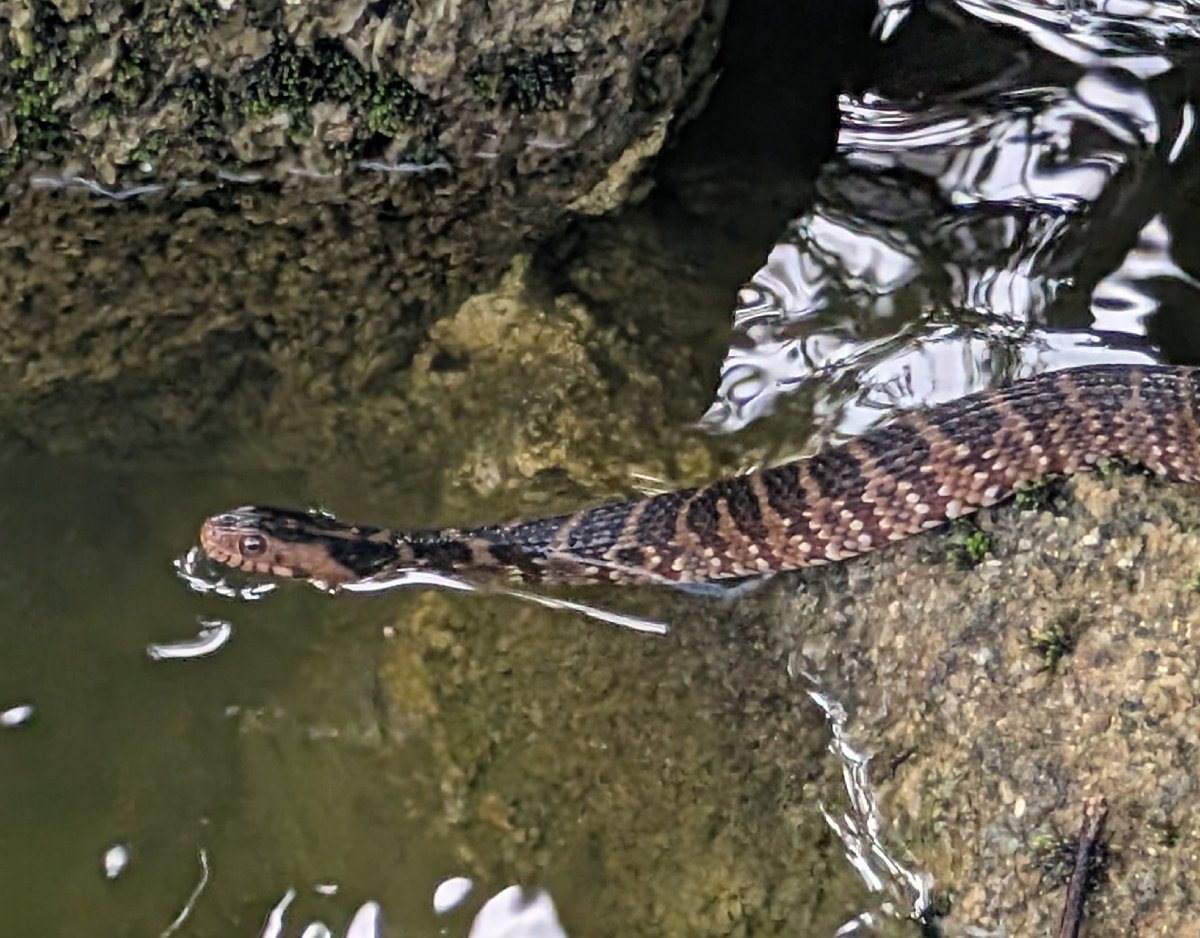
Banded Watersnake and Brown Watersnake are the usual mix-ups, but they have round pupils, no pit, and eyes you can see from above. Eastern Copperhead is also sometimes confused with it. Where its range meets the Northern Cottonmouth, the two mix and can't be told apart.
How to tell them apart
Florida Cottonmouth vs Northern Cottonmouth›
The quick way to tellLook at where you are first, then at the snout. In peninsular Florida it is the Florida Cottonmouth, which often has two dark vertical lines on the tip of the snout and a bold, pale-edged cheek stripe. Where the two ranges meet — southern Georgia, southern Alabama and the Florida Panhandle — they mix and can't be told apart by looks.
Florida Cottonmouth: Broad, blocky triangular head, much wider than the neck, with a heavy brow. Bold dark cheek stripe with pale edges, and often two dark vertical lines on the tip of the snout.
Northern Cottonmouth: Blocky, heavy brow, dark mask through each eye, pale snout.
Florida Cottonmouth vs Banded Watersnake›
The quick way to tellLook at the eyes from above. You can't see a cottonmouth's eyes from directly above because of its heavy brow, and its pupils are vertical slits. A Banded Watersnake's eyes are easy to see from above and have round pupils.
Florida Cottonmouth: Vertical slit pupil, hidden by a dark stripe; the overhanging brow means you can't see the eyes from directly above.
Banded Watersnake: Round pupil, eyes set high on the head; no heat-sensing pit.
About the Florida Cottonmouth›
The big, dark water snake of Florida's swamps, marshes, ponds, ditches and canals, reaching north into southern Georgia and southeastern Alabama. It is found in nearly every Florida county, including the upper Keys and coastal islands, and sometimes wanders well away from water.
It was treated as a subspecies of the Northern Cottonmouth until 2015, when DNA work split it into its own species. Where the two ranges meet — across southern Georgia, southern Alabama and the Florida Panhandle — they mix, and those snakes can't be told apart by looks.
The details
Size Usually 2.5–4 ft; rarely over 6 ftLifespan Cottonmouths have lived about 24 years in captivity
Typical range›
All of Florida including the upper Keys, north into southern Georgia and west into southeastern Alabama.
Activity›
Often active at night, but also basks on logs and banks by day.
Diet›
Fish, frogs, snakes, turtles, small mammals, birds and even baby alligators.
Reproduction›
Gives birth to live young, usually about 5–11, in late summer or early fall.
Found in parts of 3 states›
Ranges are approximate. It may be found in only part of a state, or be rare there, and snakes can turn up outside of them.