‹ Compare two snakes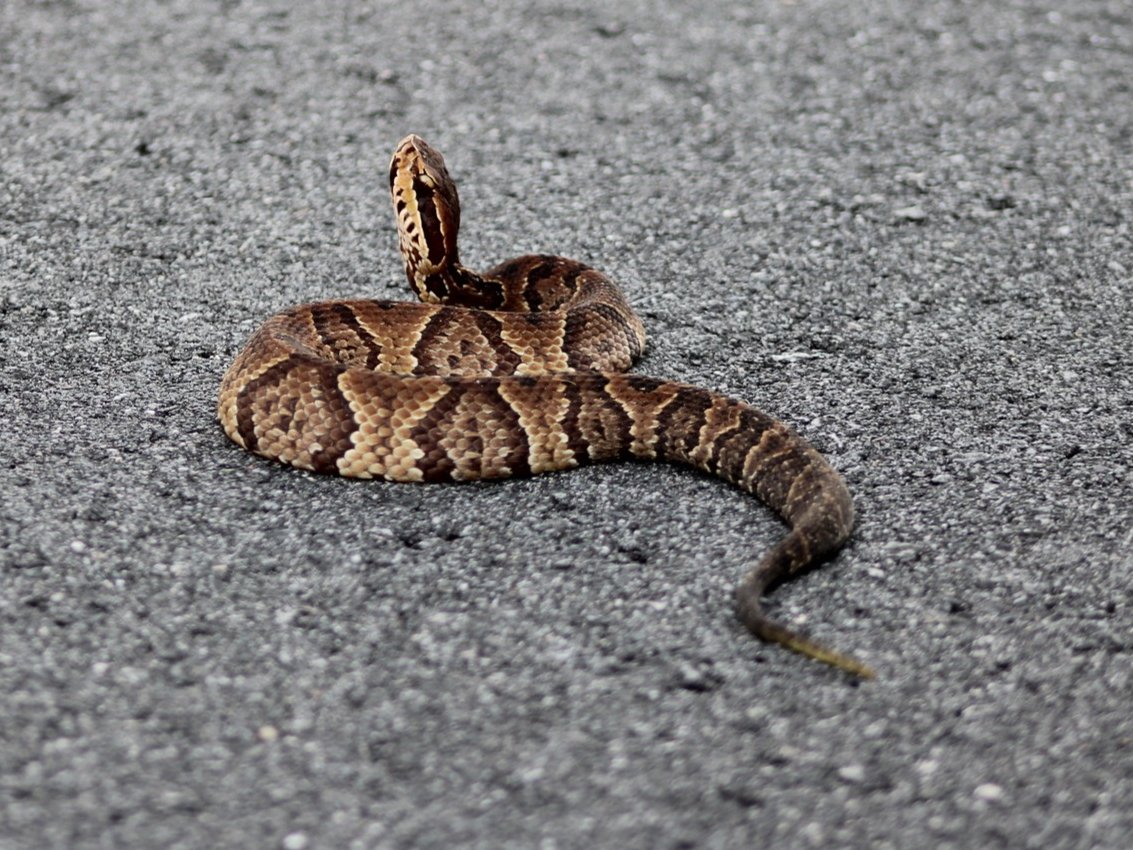
Florida Cottonmouth vs Banded Watersnake
Tap a part to see it on both. Tap it again to turn it off.
(c) Jolieokefenokee, some rights reserved (CC BY)
Florida Cottonmouth
Agkistrodon conanti
Venomous(c) Alan Prather, some rights reserved (CC BY)
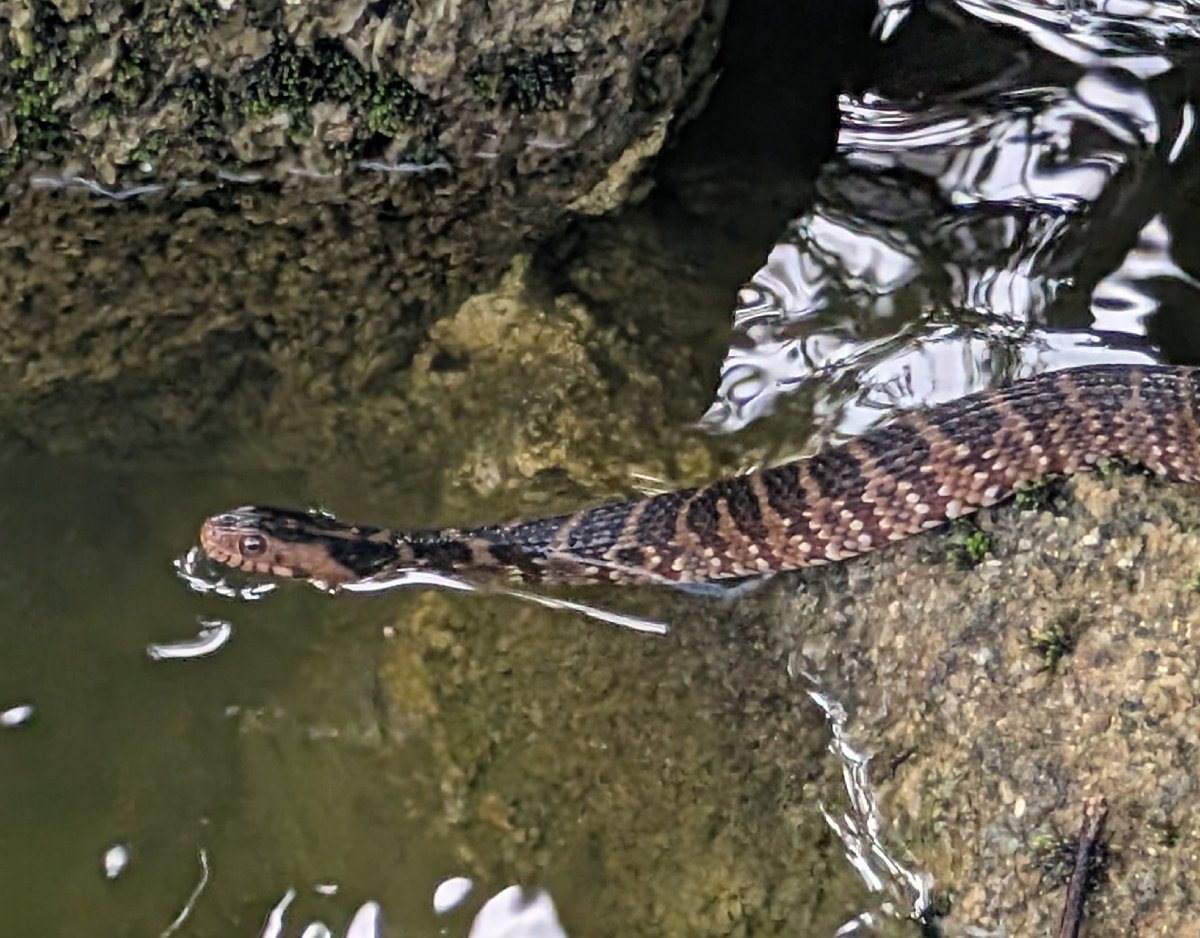
Banded Watersnake
Nerodia fasciata
Non-venomousThe quick way to tell
Look at the eyes from above. You can't see a cottonmouth's eyes from directly above because of its heavy brow, and its pupils are vertical slits. A Banded Watersnake's eyes are easy to see from above and have round pupils.
Eyes ★ This settles it
Vertical slit pupil, hidden by a dark stripe; the overhanging brow means you can't see the eyes from directly above.
Round pupil, eyes set high on the head; no heat-sensing pit.
Head
Broad, blocky triangular head, much wider than the neck, with a heavy brow. Bold dark cheek stripe with pale edges, and often two dark vertical lines on the tip of the snout.
Narrow head that flattens when alarmed; a dark stripe often runs from eye to jaw.
Pattern
Dark, jagged crossbands on olive, brown or black; young snakes are reddish-brown and brightly banded.
Dark crossbands widest across the back; belly has dark square marks.
Pits
A deep heat-sensing pit on each side of the face, between the eye and the nostril.
None. There is no pit between the eye and the nostril.
Tail
Dark in adults; babies have a bright sulfur-yellow tail tip.
Tapers evenly; no rattle.
What it does
Not aggressive, but often stands its ground, gaping its white mouth, vibrating its tail and releasing a strong musk.
Flattens its head and may strike if cornered; flees to water first.
Where it lives
All of Florida including the upper Keys, north into southern Georgia and west into southeastern Alabama.
Southeast coastal plain from North Carolina through Florida, west to eastern Texas and Oklahoma, and up the Mississippi valley to southern Illinois; introduced in California.