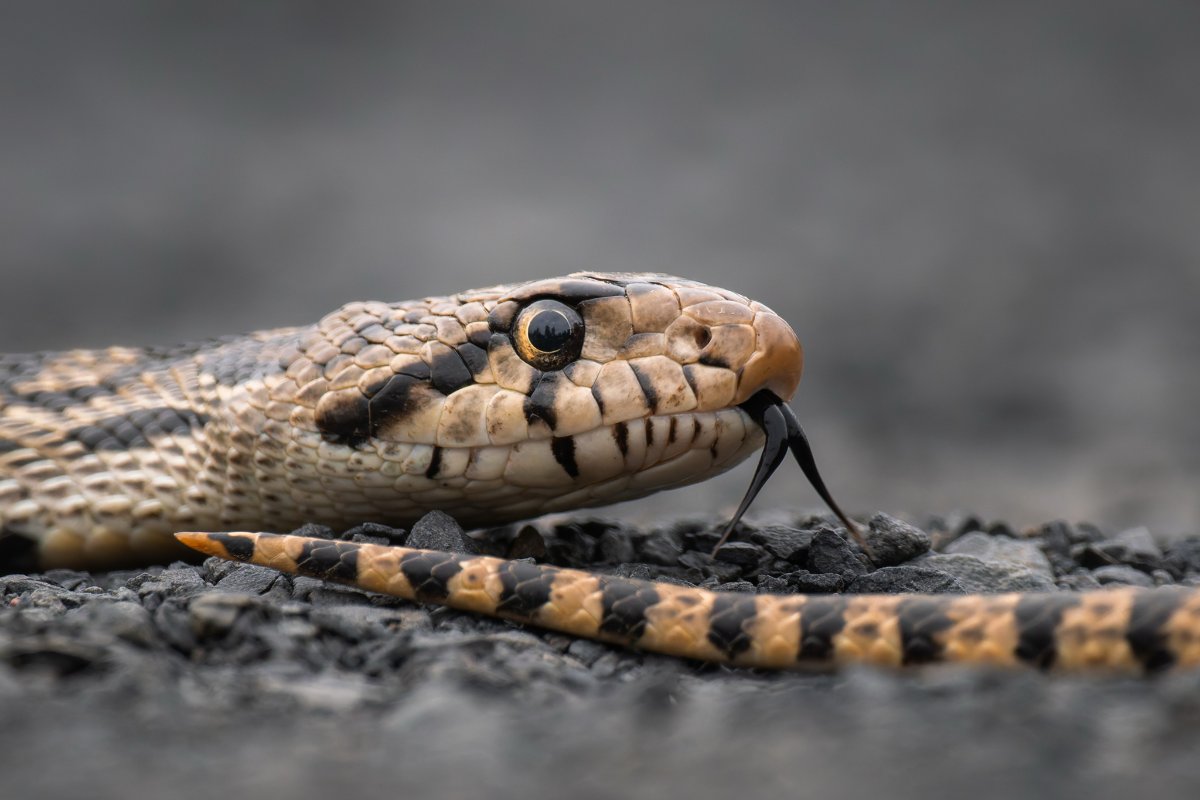
Gophersnake
Pituophis catenifer · Gophersnakes & Pinesnakes
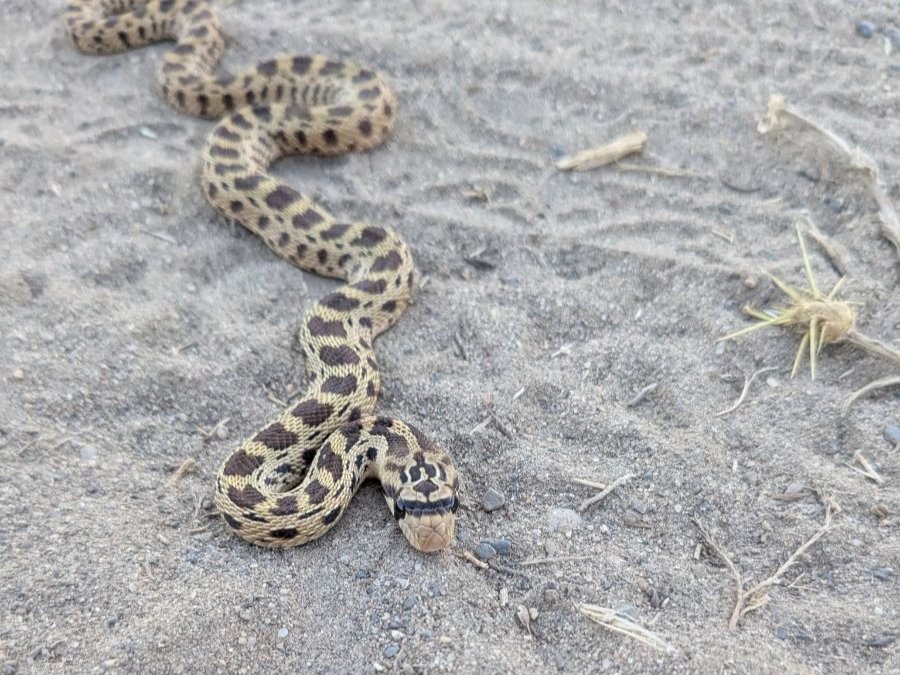
Tap a part to see what to look for. Tap it again to turn it off.
No venom — the loud hiss and tail-shaking are a bluff, and it kills far more rodents than it causes trouble.
How to identify
- Head
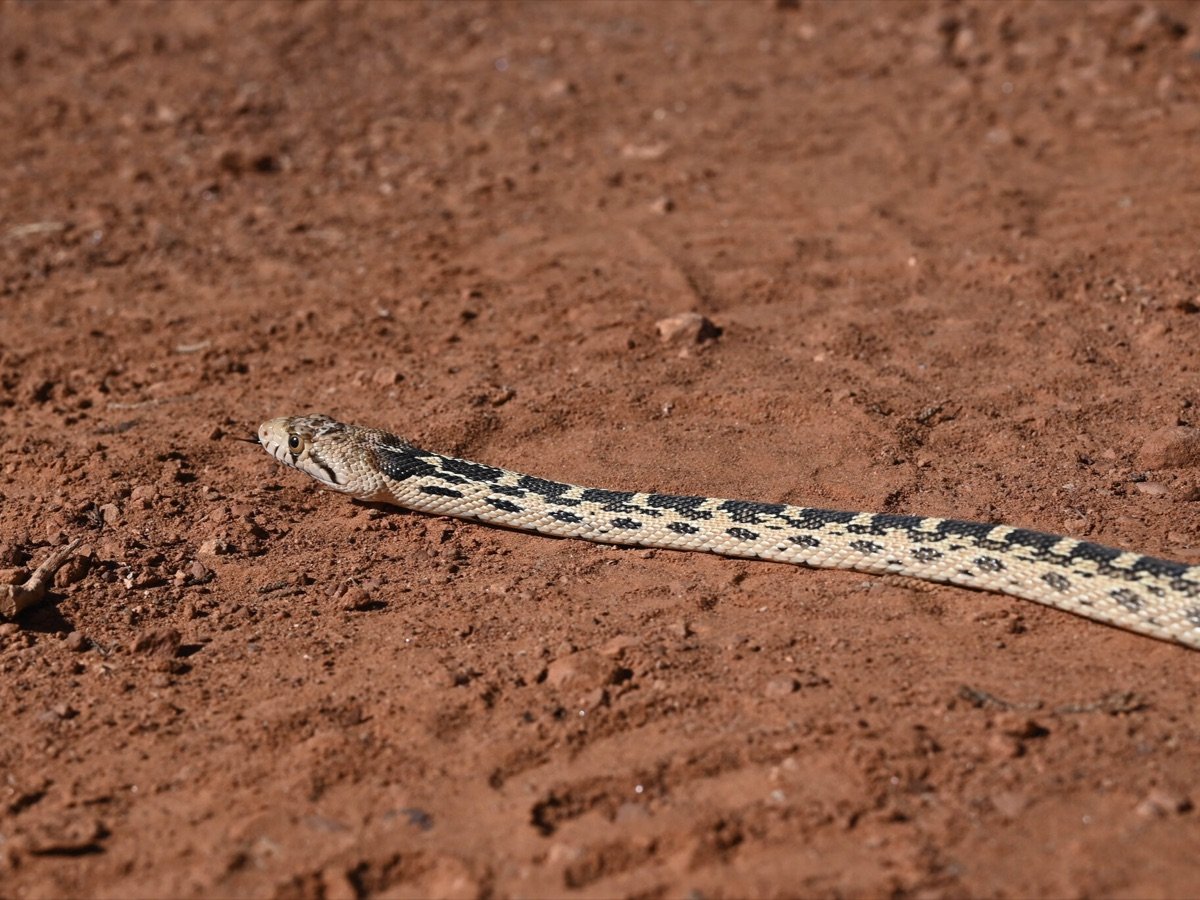
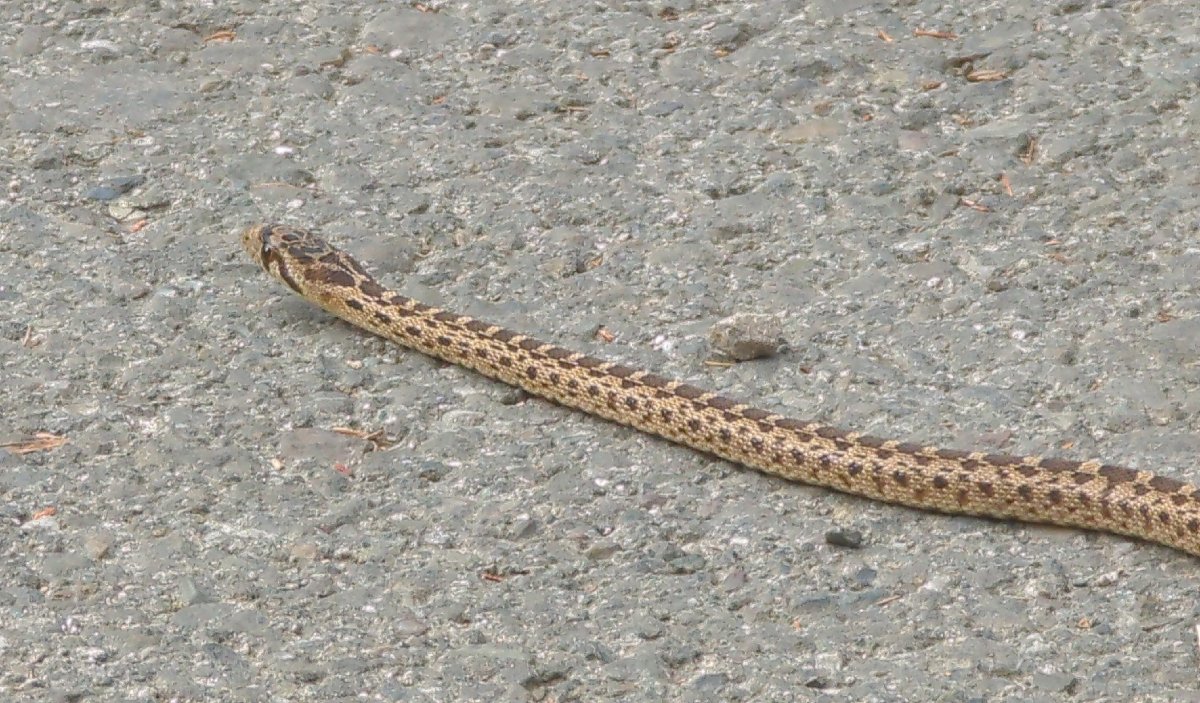
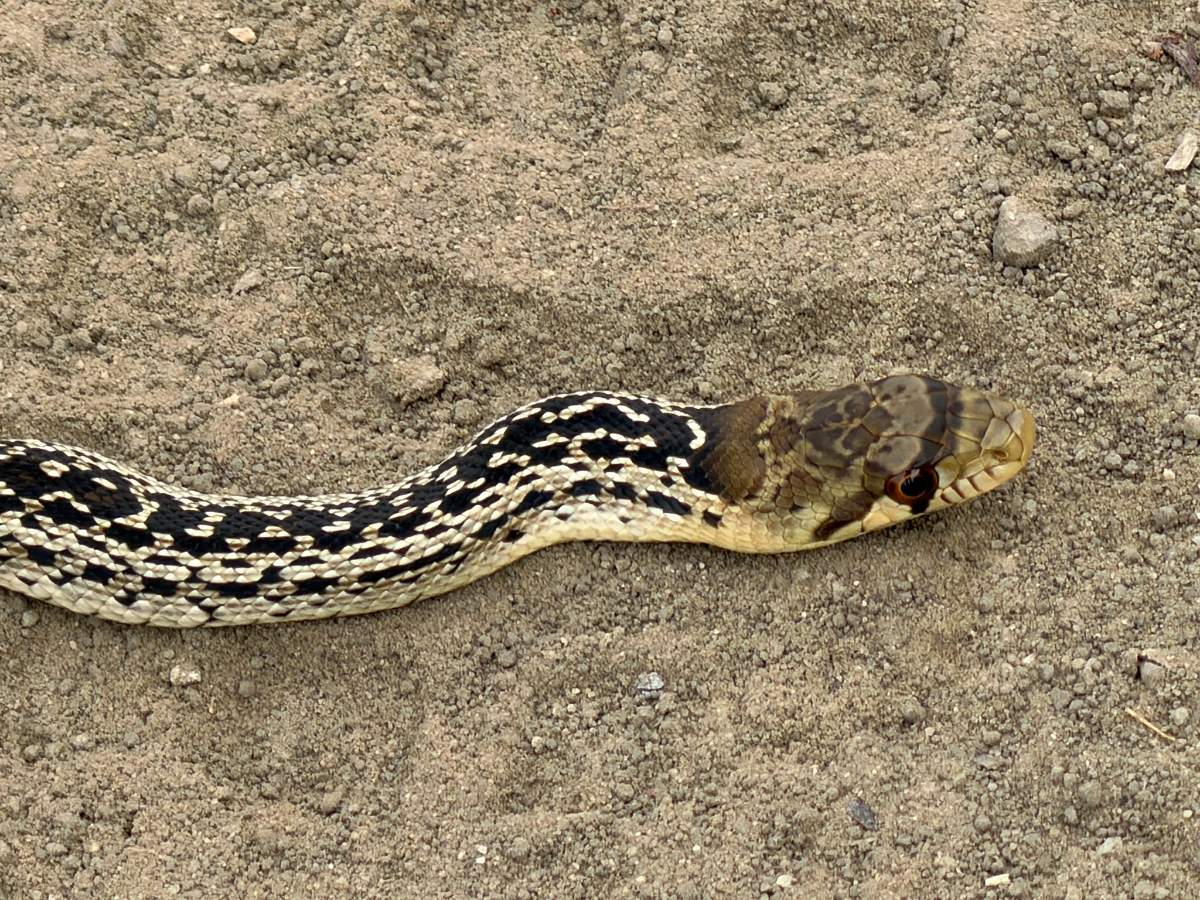
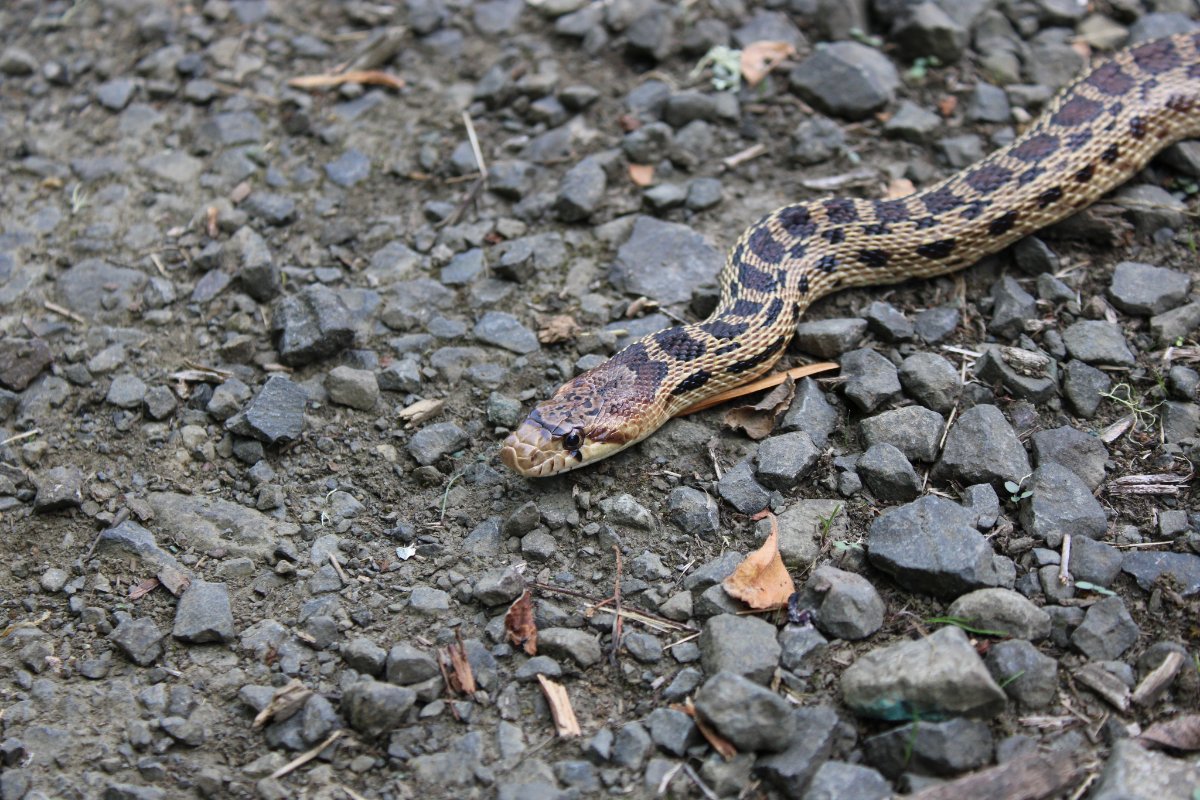
- Narrow head with a pointed snout and a dark line through the eye; it can flatten it to look triangular.
- Pattern
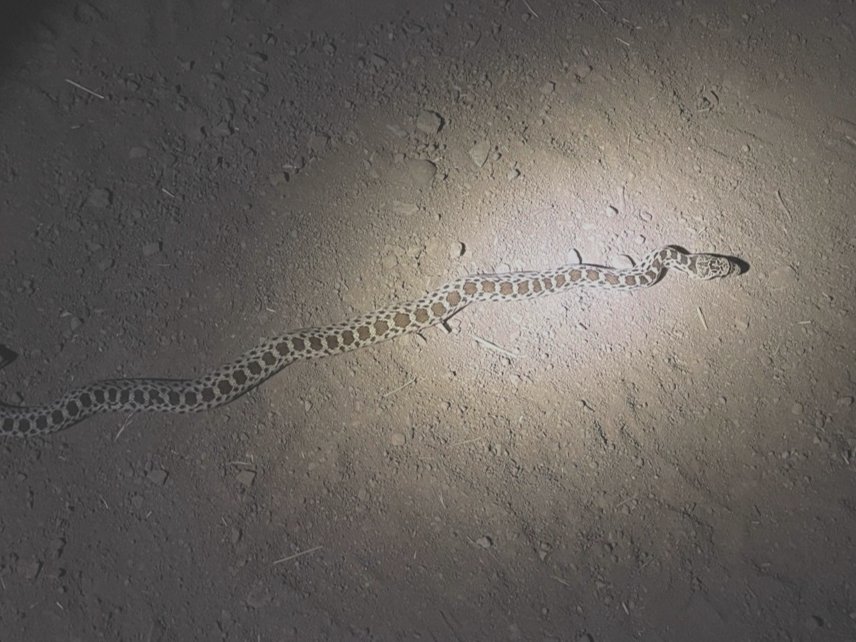
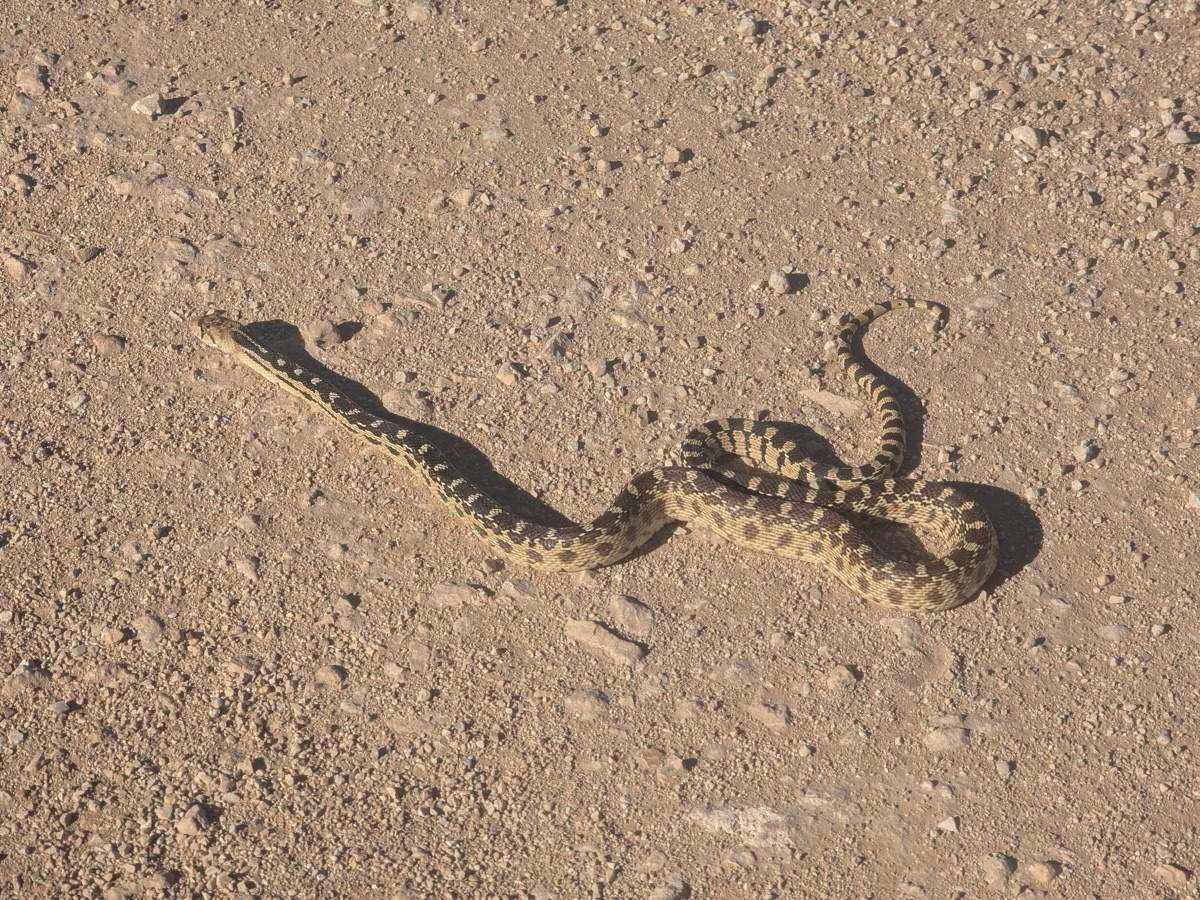
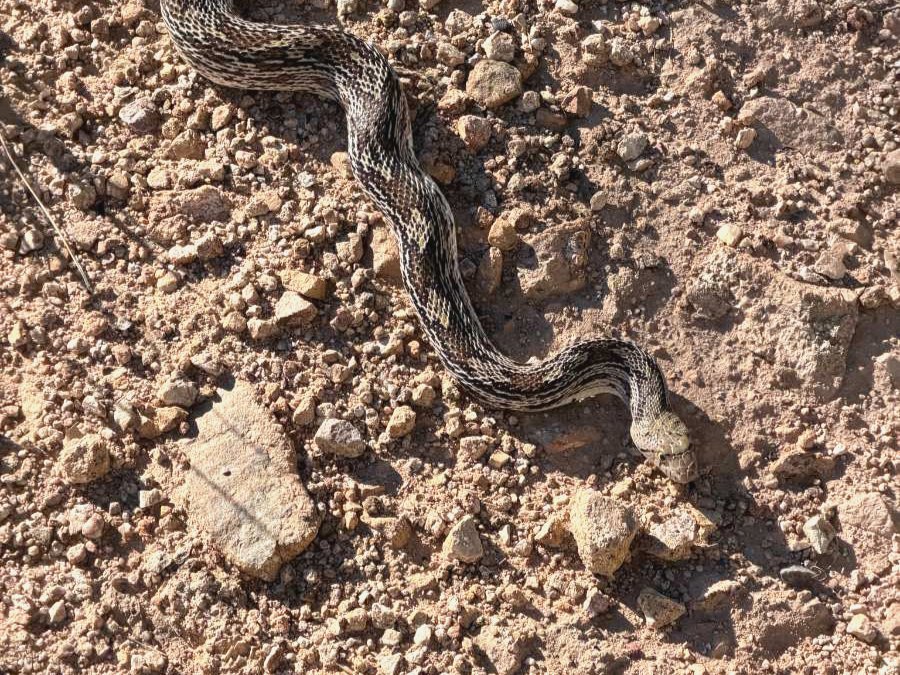
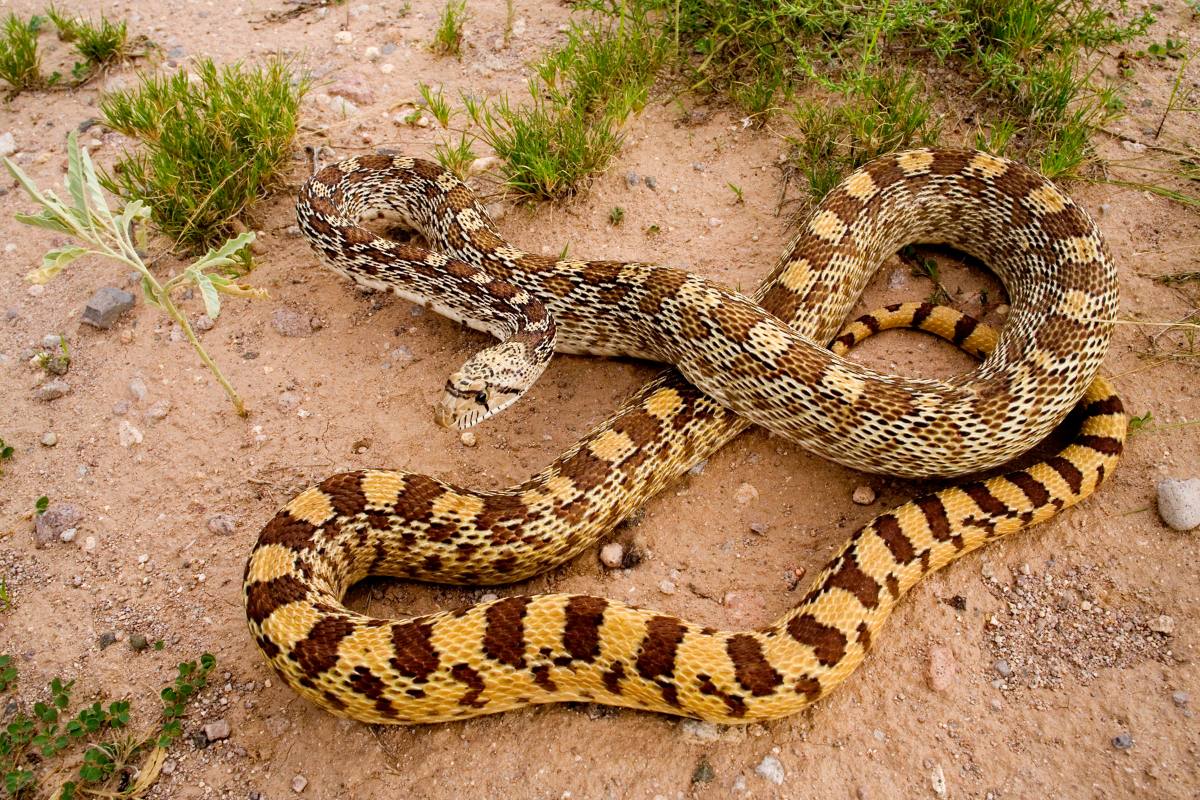
- Dark blotches on yellow to cream, turning into clean crossbands near the tail.
- Eyes
- Round pupil, small dark eye; no heat-sensing pit.
- Pits
- None. There is no pit between the eye and the nostril.
- Tail
- Tapers evenly; no rattle - but it shakes the tip hard in leaves.
- What it does
- Hisses very loudly, flattens its head and strikes with its mouth closed - all bluff.
Often confused with
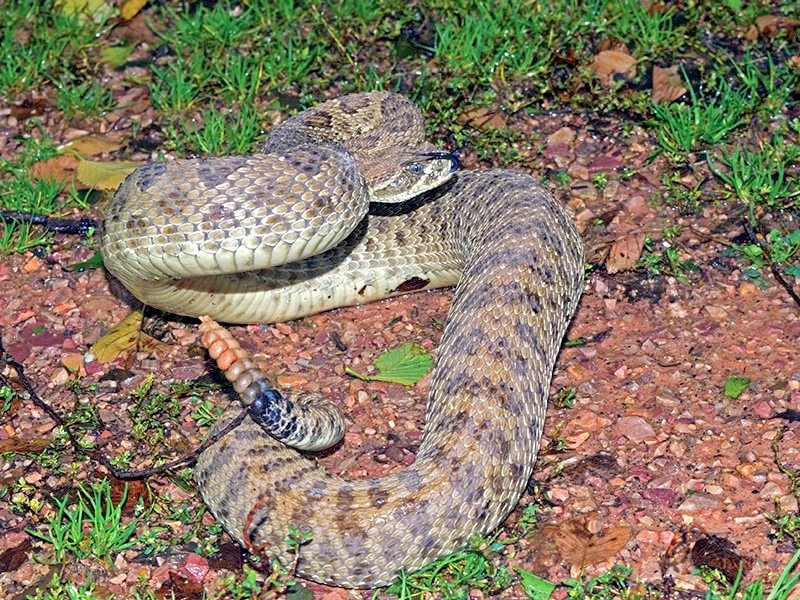
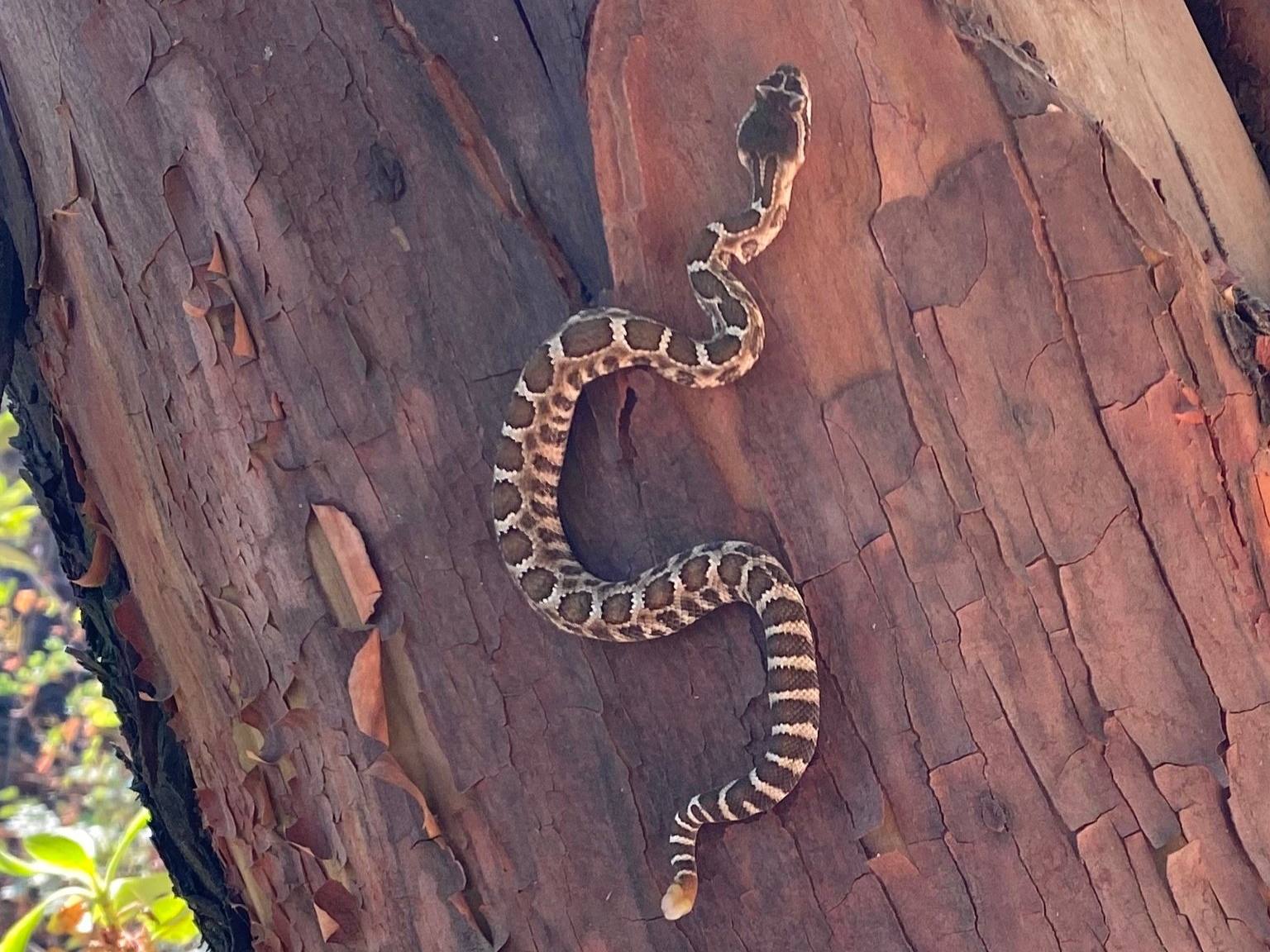
Western and Prairie Rattlesnakes, constantly — it hisses loudly, flattens its head and vibrates its tail. But it has a round pupil, a narrow head and no rattle.
How to tell them apart
Gophersnake vs Prairie Rattlesnake›
The quick way to tellLook at the tail. The rattlesnake has a rattle. The gophersnake's tail tapers to a point, even when it shakes it, and its head is narrow with round pupils.
Gophersnake: Tapers evenly; no rattle - but it shakes the tip hard in leaves.
Prairie Rattlesnake: Thinner than the body; tail rings dull, not bold black and white, ahead of the rattle.
Gophersnake vs Western Rattlesnake›
The quick way to tellLook at the tail. The rattlesnake has a rattle. The gophersnake's tail tapers to a point, even when it shakes it, and its head is narrow with round pupils.
Gophersnake: Tapers evenly; no rattle - but it shakes the tip hard in leaves.
Western Rattlesnake: Thin ahead of the rattle.
About the Gophersnake›
Also called the bullsnake on the plains, this is one of the largest snakes in the West, found in prairie, farmland, desert and open woodland where rodents are plentiful.
Its bluff is impressive: it forces air past a flap in the windpipe to produce a deep hiss, then strikes with a closed mouth. That performance gets a great many non-venomous gophersnakes killed as rattlesnakes every year.
The details
Size Usually 3–5.5 ft; bullsnakes on the plains can exceed 7 ftWeight Commonly 2–5 lbLifespan 15–20 years
Typical range›
Western and central US: Pacific coast east to Indiana and Wisconsin, south through Texas, into Canada and Mexico.
Activity›
Day active in spring and fall, at dusk and night in summer heat. Digs and uses rodent burrows.
Diet›
Pocket gophers, ground squirrels, mice, rabbits, birds and eggs, killed by constriction.
Reproduction›
Lays eggs, usually 3–24, in early summer.
Found in parts of 23 states›
Ranges are approximate. It may be found in only part of a state, or be rare there, and snakes can turn up outside of them.
More photos