Great Plains Ratsnake
Pantherophis emoryi · Rat Snakes
Also called Emory's Ratsnake
Tap a part to see what to look for. Tap it again to turn it off.
No venom, but it may vibrate its tail, bite and release musk if handled.
How to identify
- Head
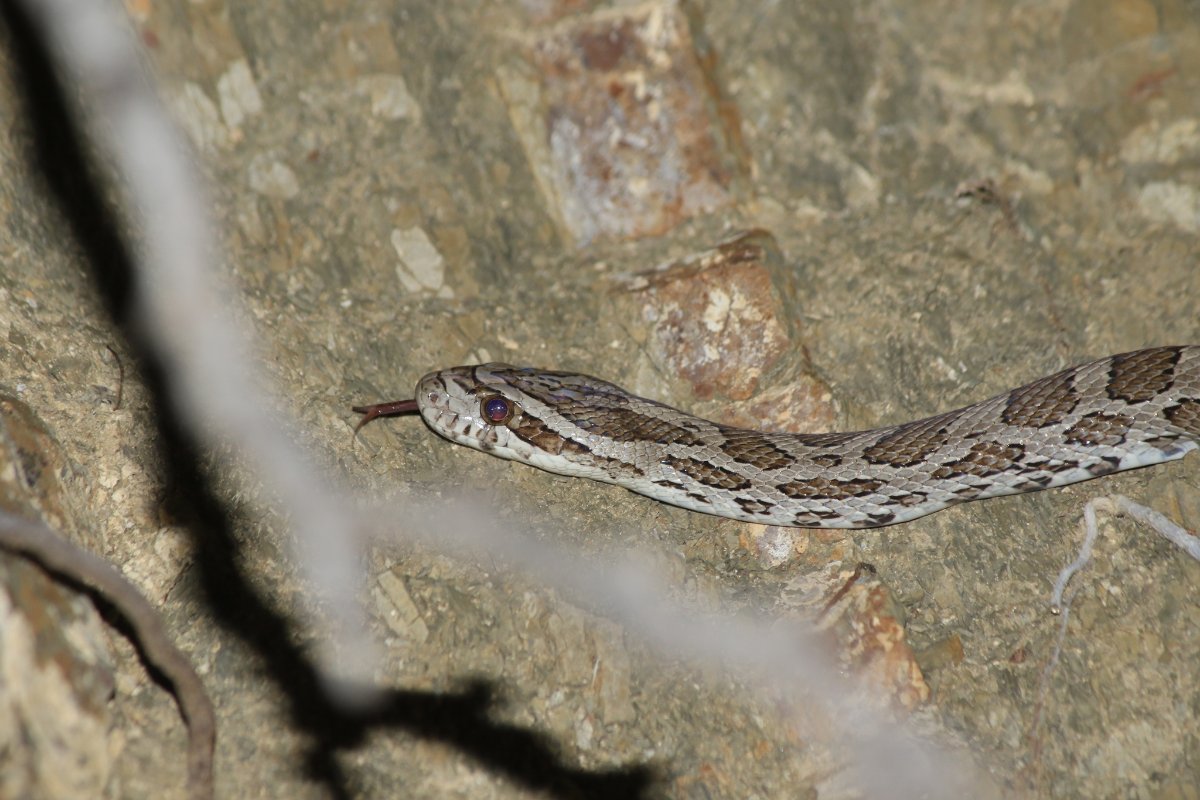
- A dark spear-point or V-shaped mark on top of the head, its point between the eyes. A dark brown stripe runs from the eye back onto the neck.
- Pattern
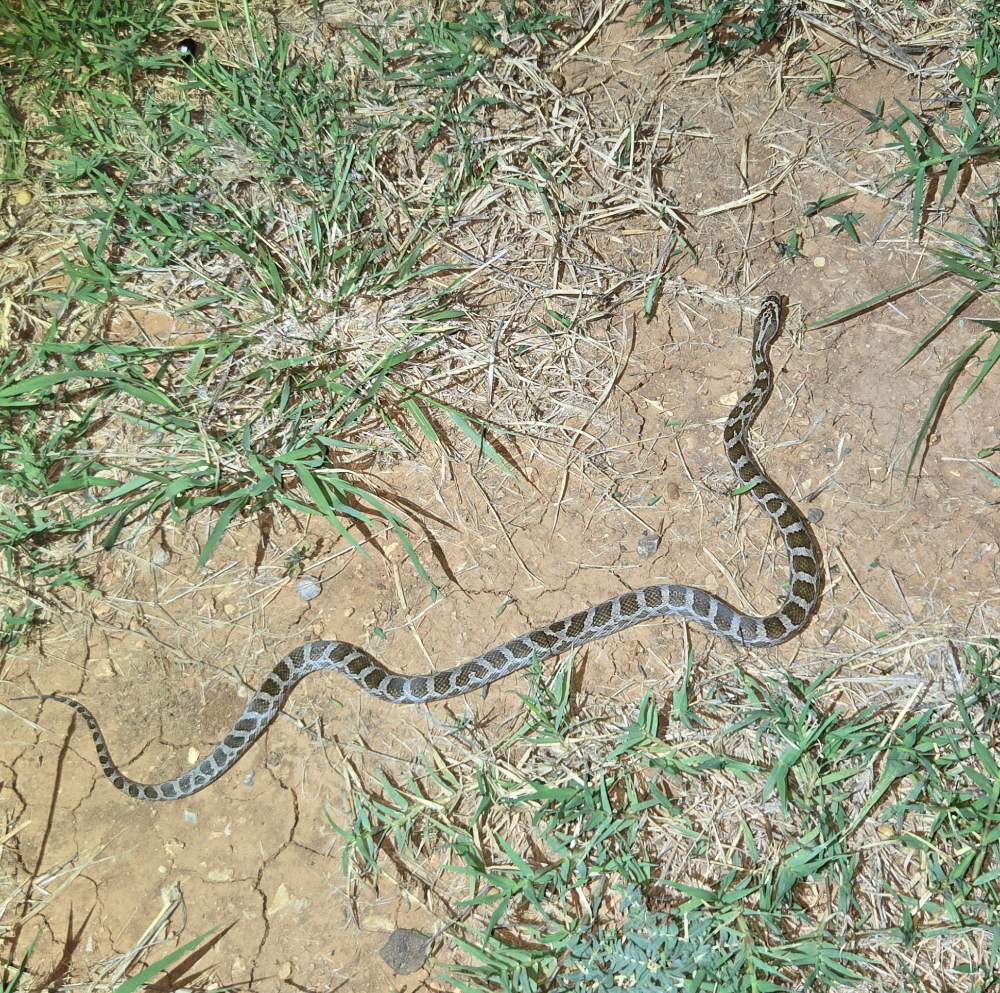
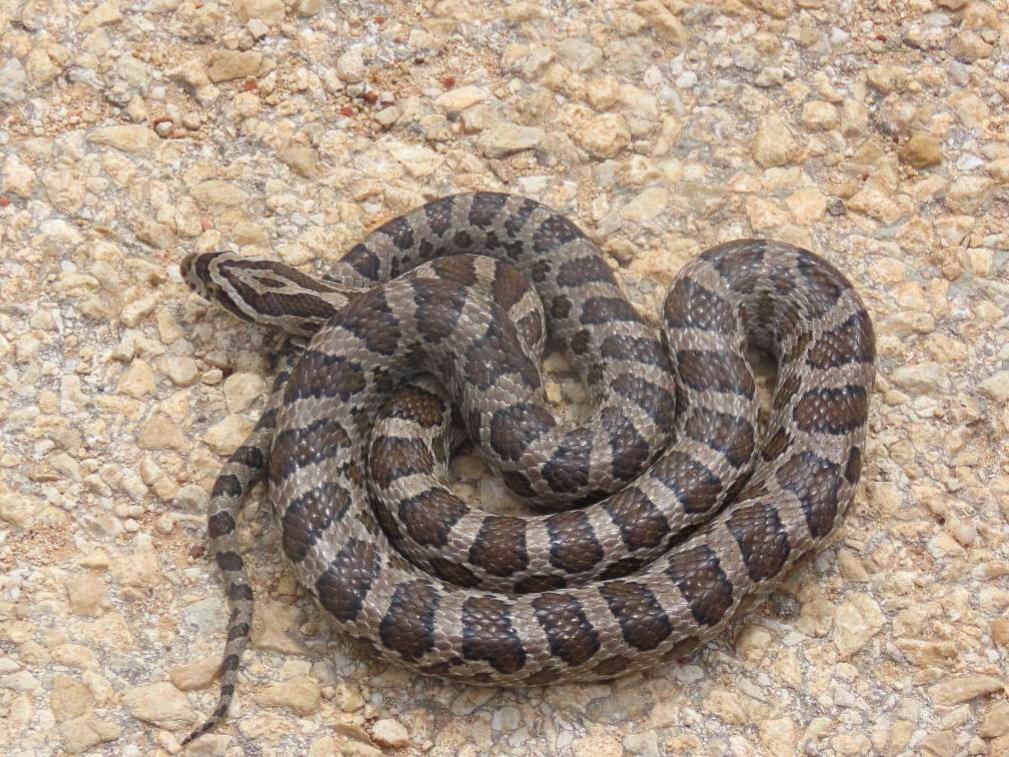
- Gray to light brown with 25–50 large dark brown or reddish-brown blotches, each edged in black, plus smaller blotches along the sides. Belly white with bold black squares like a checkerboard. Scales are weakly keeled (ridged).
- Eyes
- A dark brown stripe runs through each eye and back toward the neck.
- Pits
- None. There is no pit between the eye and the nostril.
- Tail
- The underside of the tail has dark stripes. It vibrates its tail when alarmed.
- What it does
- Mostly active at night, hiding under rocks and logs by day. It climbs well and can swim. When alarmed it vibrates its tail and may bite; it kills prey by constriction.
Often confused with
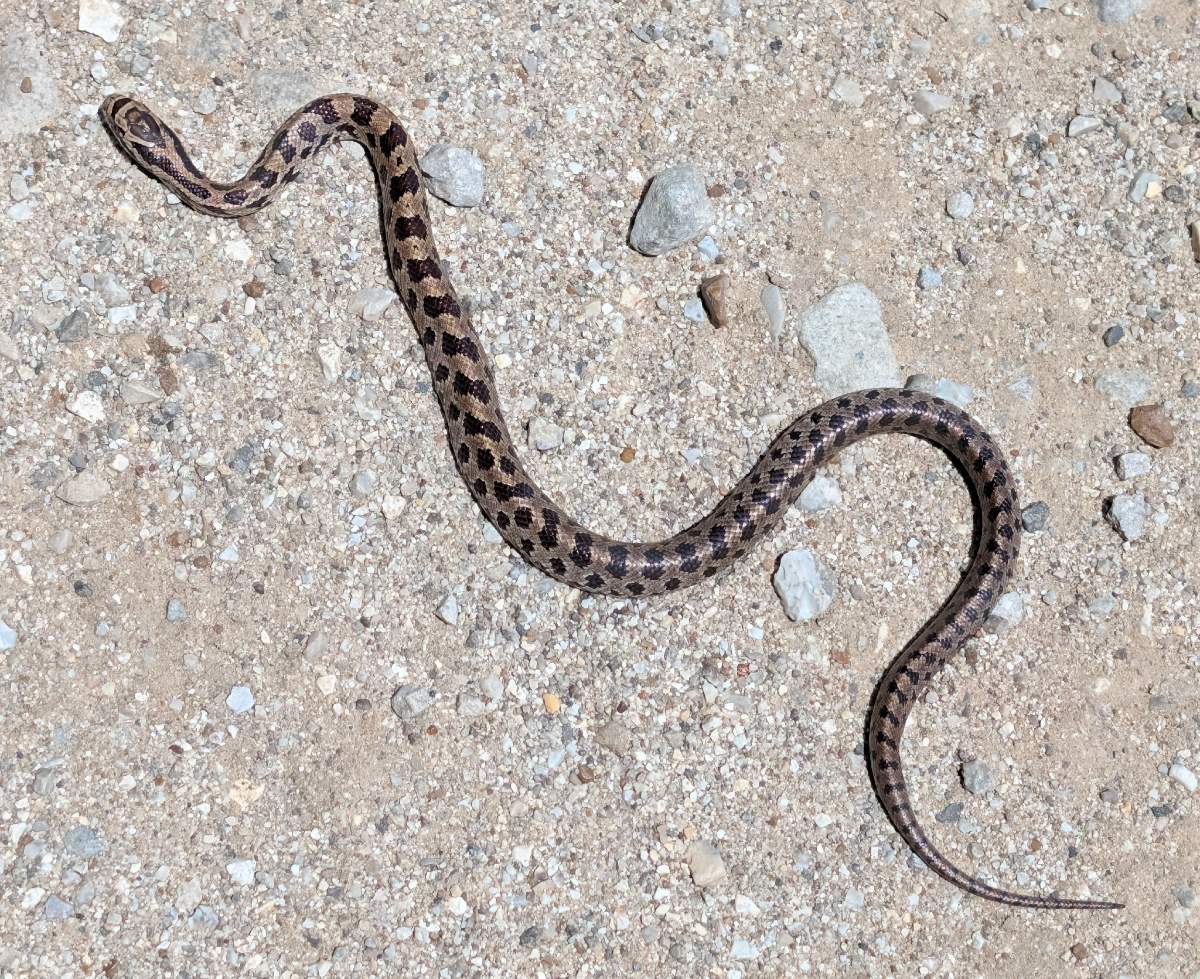
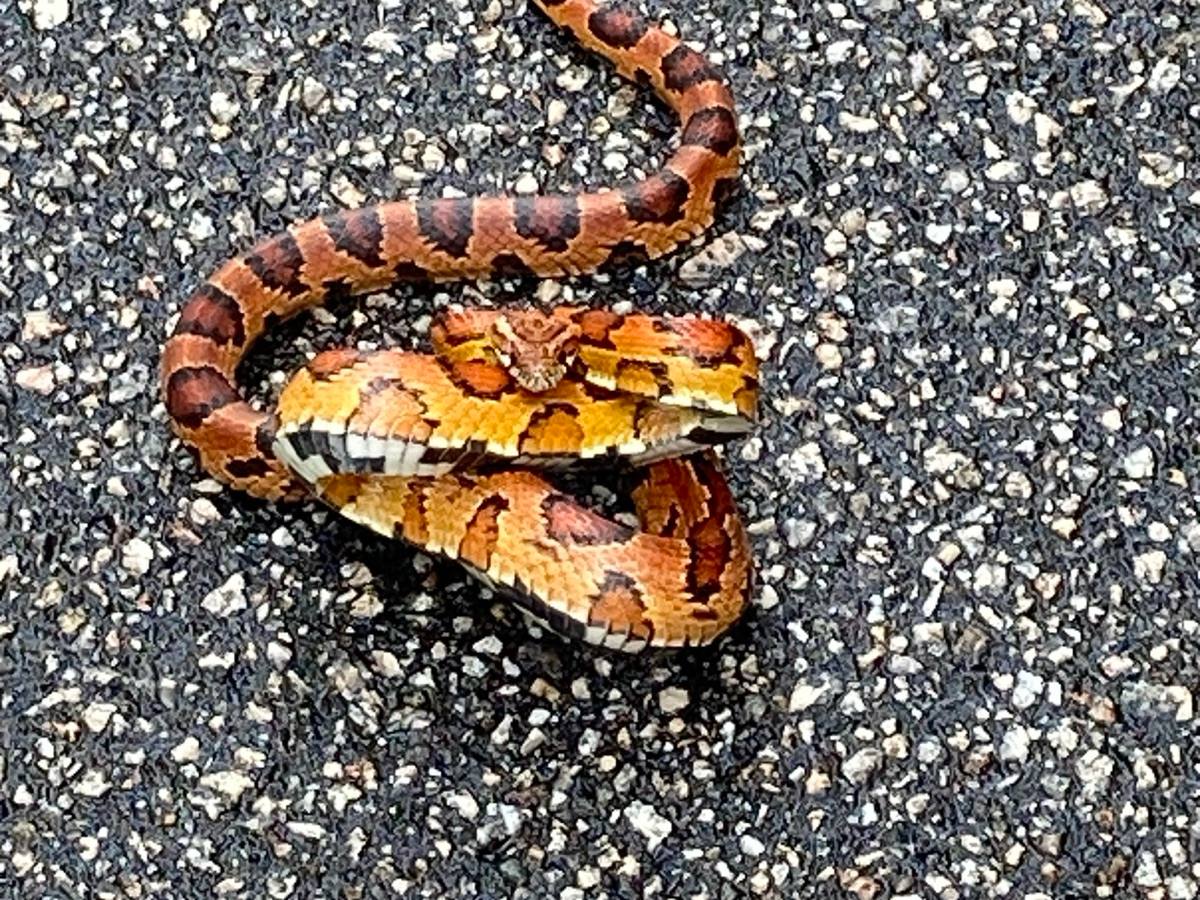
The Prairie Kingsnake is often more common in the same areas; it has a yellowish belly and a different head marking, without the spear point. Young Western Ratsnakes are also gray and blotched. Illinois biologists also list the Eastern Milksnake, Eastern Foxsnake and Gray Ratsnake as look-alikes, and the Red Cornsnake is its orange-and-red eastern cousin.
How to tell them apart
Great Plains Ratsnake vs Prairie Kingsnake›
The quick way to tellLook at the top of the head. The Great Plains Ratsnake has a dark spear-point mark between the eyes and a dark stripe through each eye. The Prairie Kingsnake lacks the spear-point mark, and its belly is yellowish rather than black-and-white checkered.
Great Plains Ratsnake: A dark spear-point or V-shaped mark on top of the head, its point between the eyes. A dark brown stripe runs from the eye back onto the neck.
Prairie Kingsnake: Head barely wider than the neck, often with an arrowhead-shaped mark on top.
Great Plains Ratsnake vs Red Cornsnake›
The quick way to tellLook at the body colors. The Great Plains Ratsnake is gray or light brown with dark brown blotches. The Red Cornsnake is orange with red blotches edged in black.
Great Plains Ratsnake: Gray to light brown with 25–50 large dark brown or reddish-brown blotches, each edged in black, plus smaller blotches along the sides. Belly white with bold black squares like a checkerboard. Scales are weakly keeled (ridged).
Red Cornsnake: Bold red-orange saddles edged in black on orange to gray; black-and-white checkerboard belly.
About the Great Plains Ratsnake›
A medium-sized ratsnake of the central and southern Great Plains, from southwestern Illinois and Missouri west to Colorado, New Mexico and Texas, with an isolated group in eastern Utah. It lives on rocky wooded hillsides, bluffs, glades, prairies and farmland, and often turns up around barns and houses. It is mostly active at night and hides under rocks and logs by day.
It is a close cousin of the Red Cornsnake and shares its spear-point head mark and black-and-white checkered belly, but it is gray or light brown with brown blotches instead of orange and red.
The details
Size Usually 24–36 inches (61–91 cm); up to about 60 inches (153 cm). Hatchlings about 8–14 inches.Lifespan Up to about 21 years in captivity (one source).
Typical range›
Central and southern US from southwestern Illinois, Missouri and Arkansas west through Kansas, Nebraska and Oklahoma to Colorado, New Mexico and Texas, with an isolated group in eastern Utah; also northern Mexico.
Activity›
Mostly nocturnal. Active from late March through October; spends winter underground.
Diet›
Mainly rodents; also bats, small birds and bird eggs, and now and then frogs, lizards and small snakes. It kills larger prey by constriction.
Reproduction›
Lays eggs. Mates in spring; females lay one clutch of about 3–37 eggs in late May–July, and the young hatch in August–September.
Found in parts of 10 states›
Ranges are approximate. It may be found in only part of a state, or be rare there, and snakes can turn up outside of them.