‹ Compare two snakes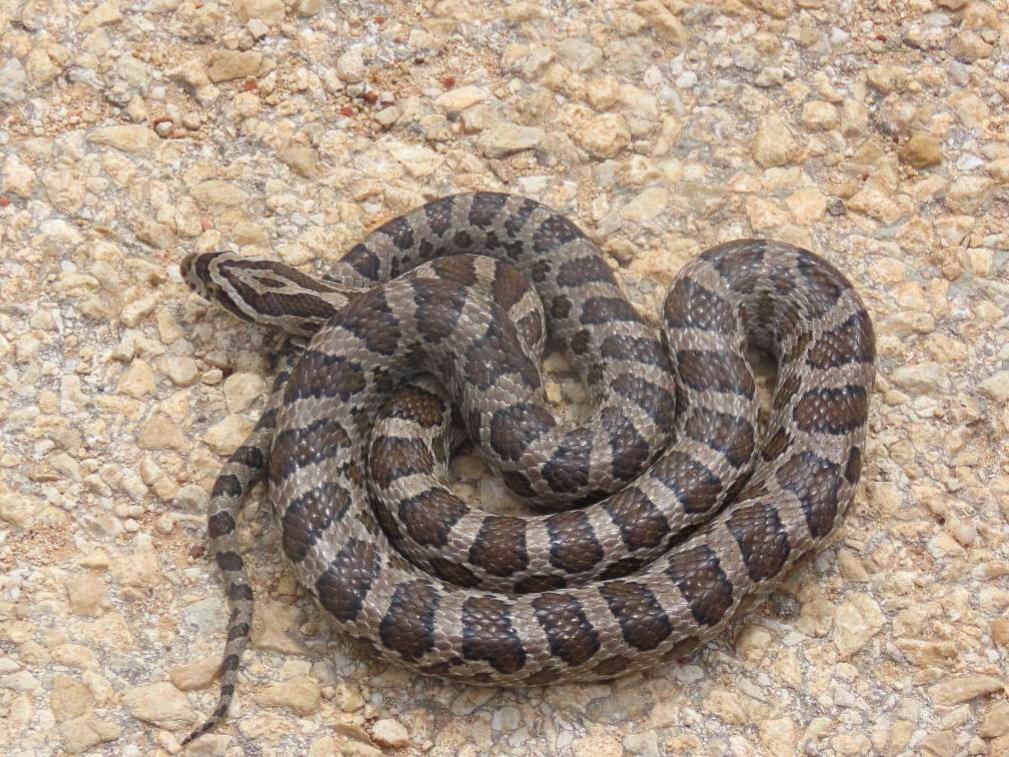
Great Plains Ratsnake vs Red Cornsnake
Tap a part to see it on both. Tap it again to turn it off.
(c) Brad Banner, some rights reserved (CC BY)
Great Plains Ratsnake
Pantherophis emoryi
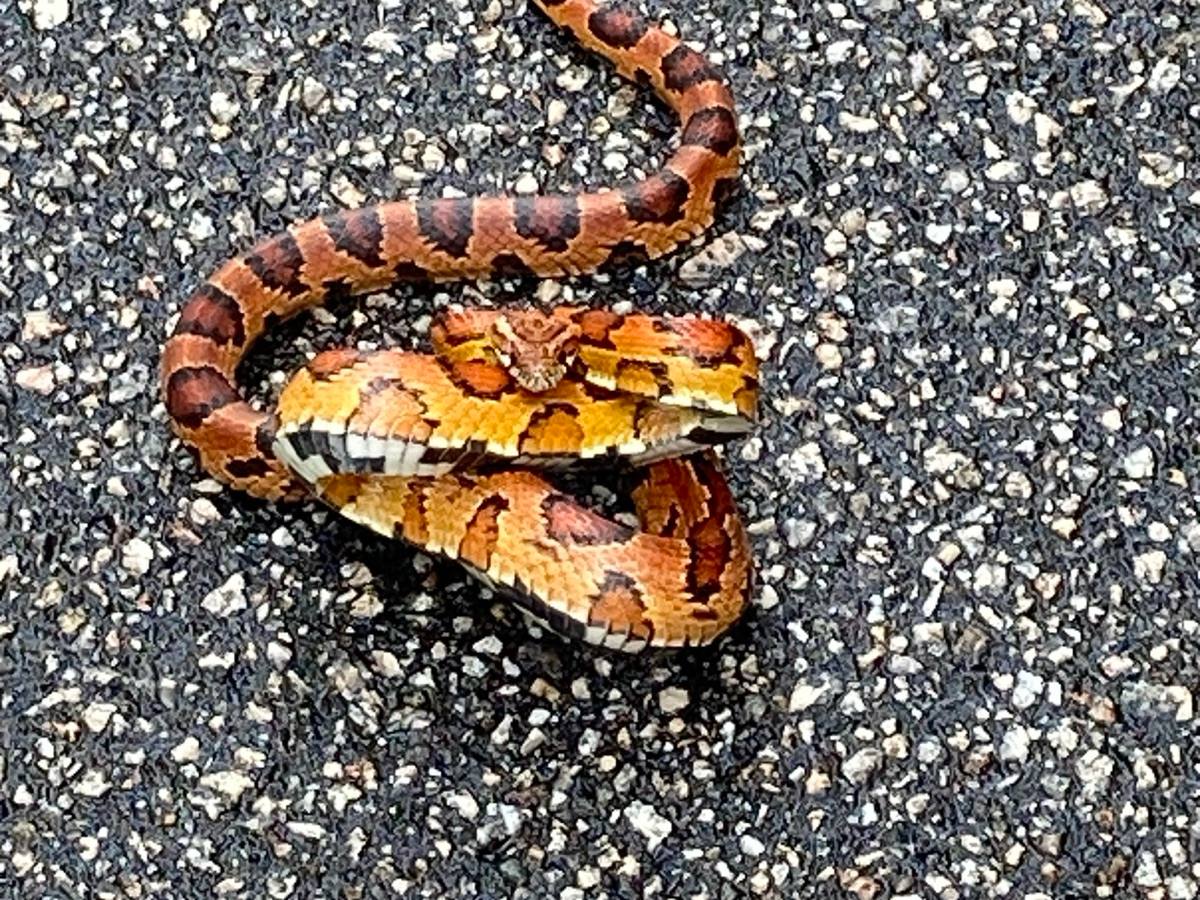
Non-venomousDia D, no rights reserved
Red Cornsnake
Pantherophis guttatus
Non-venomousThe quick way to tell
Look at the body colors. The Great Plains Ratsnake is gray or light brown with dark brown blotches. The Red Cornsnake is orange with red blotches edged in black.
Pattern ★ This settles it
Gray to light brown with 25–50 large dark brown or reddish-brown blotches, each edged in black, plus smaller blotches along the sides. Belly white with bold black squares like a checkerboard. Scales are weakly keeled (ridged).
Bold red-orange saddles edged in black on orange to gray; black-and-white checkerboard belly.
Head
A dark spear-point or V-shaped mark on top of the head, its point between the eyes. A dark brown stripe runs from the eye back onto the neck.
Narrow head with a spear-point marking running forward between the eyes.
Eyes
A dark brown stripe runs through each eye and back toward the neck.
Round pupil, orange-brown iris; no heat-sensing pit.
Pits
None. There is no pit between the eye and the nostril.
None. There is no pit between the eye and the nostril.
Tail
The underside of the tail has dark stripes. It vibrates its tail when alarmed.
Tapers evenly, often striped underneath; no rattle.
What it does
Mostly active at night, hiding under rocks and logs by day. It climbs well and can swim. When alarmed it vibrates its tail and may bite; it kills prey by constriction.
Calm and slow to bite; freezes or slips into cover.
Where it lives
Central and southern US from southwestern Illinois, Missouri and Arkansas west through Kansas, Nebraska and Oklahoma to Colorado, New Mexico and Texas, with an isolated group in eastern Utah; also northern Mexico.
Southeast: New Jersey south through Florida, west to Louisiana, Tennessee and Kentucky.