North American Racer
Coluber constrictor · Racers & Whipsnakes
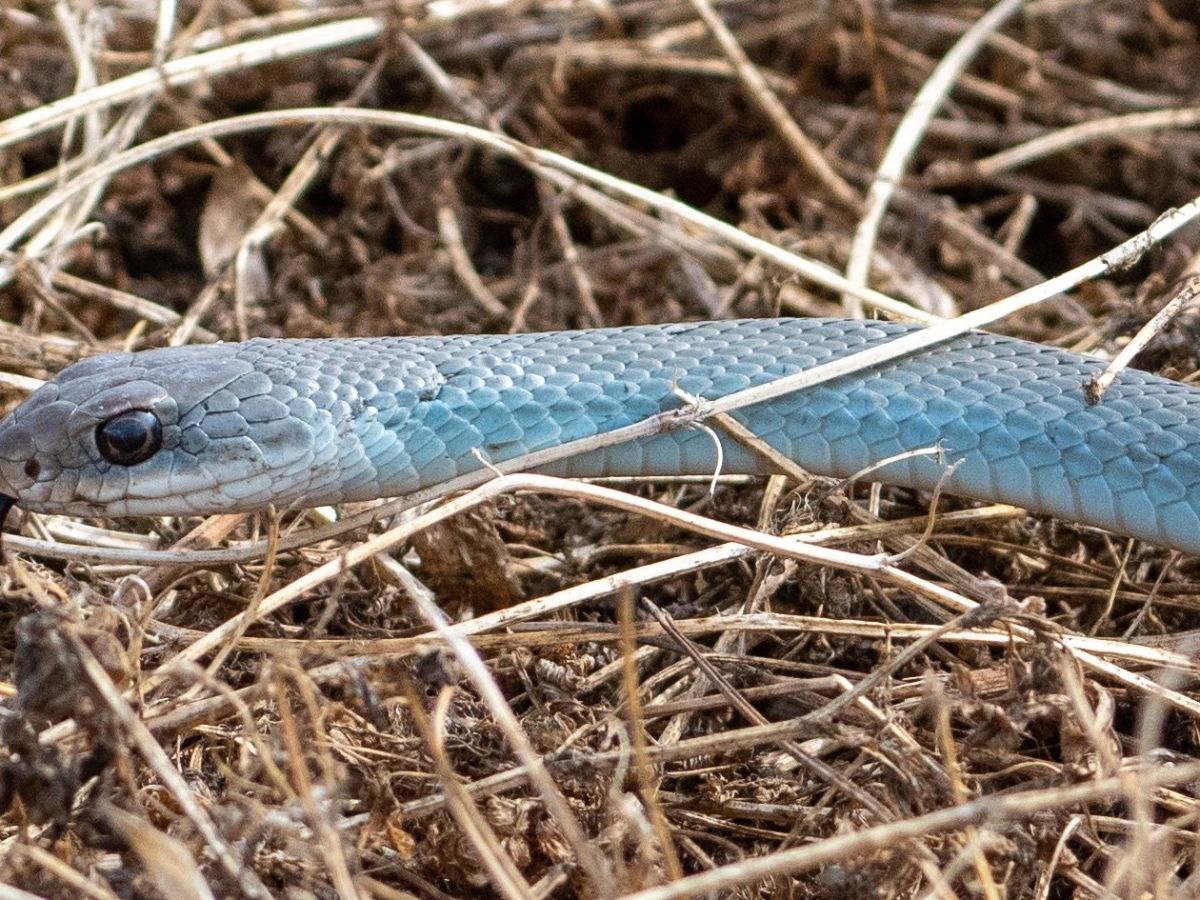
No venom, but it is nervous and quick to bite when held.
How to identify
- Head
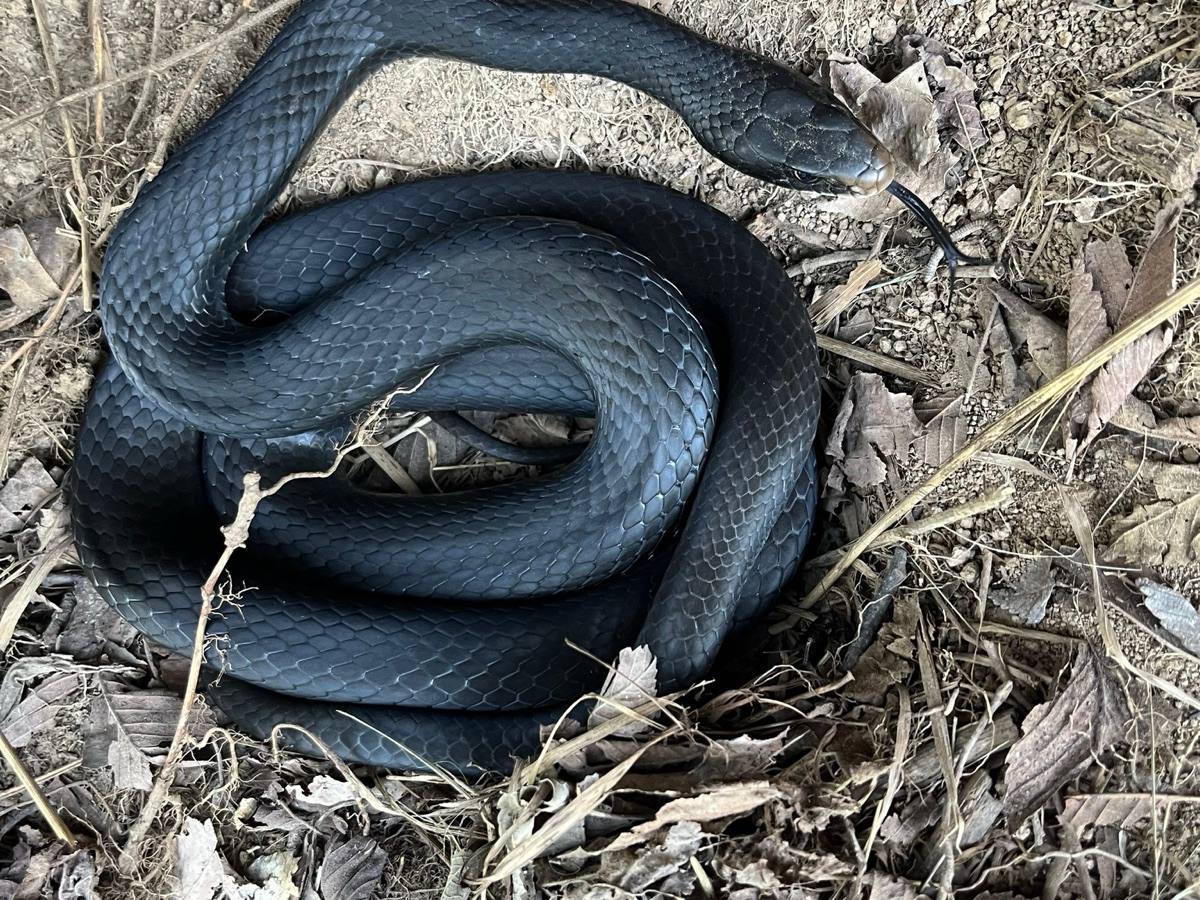
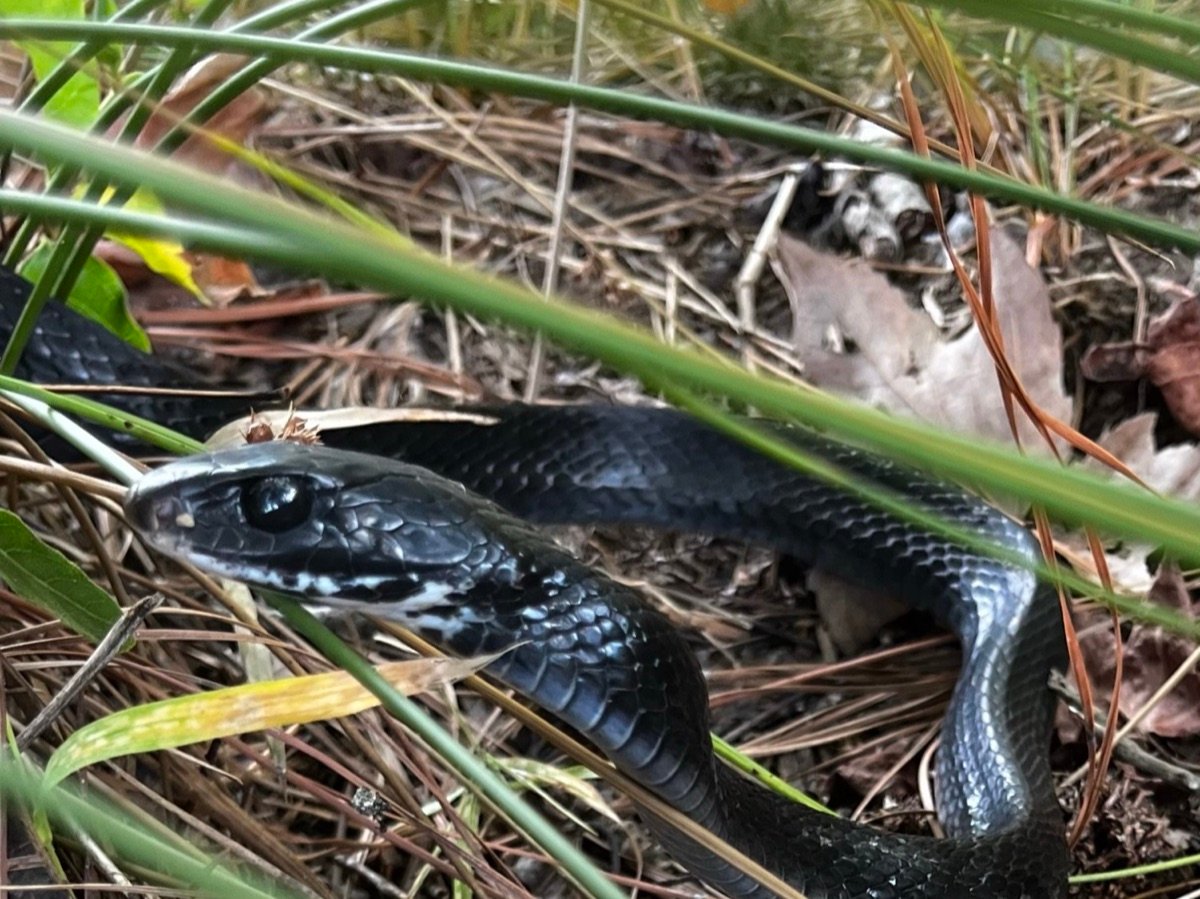
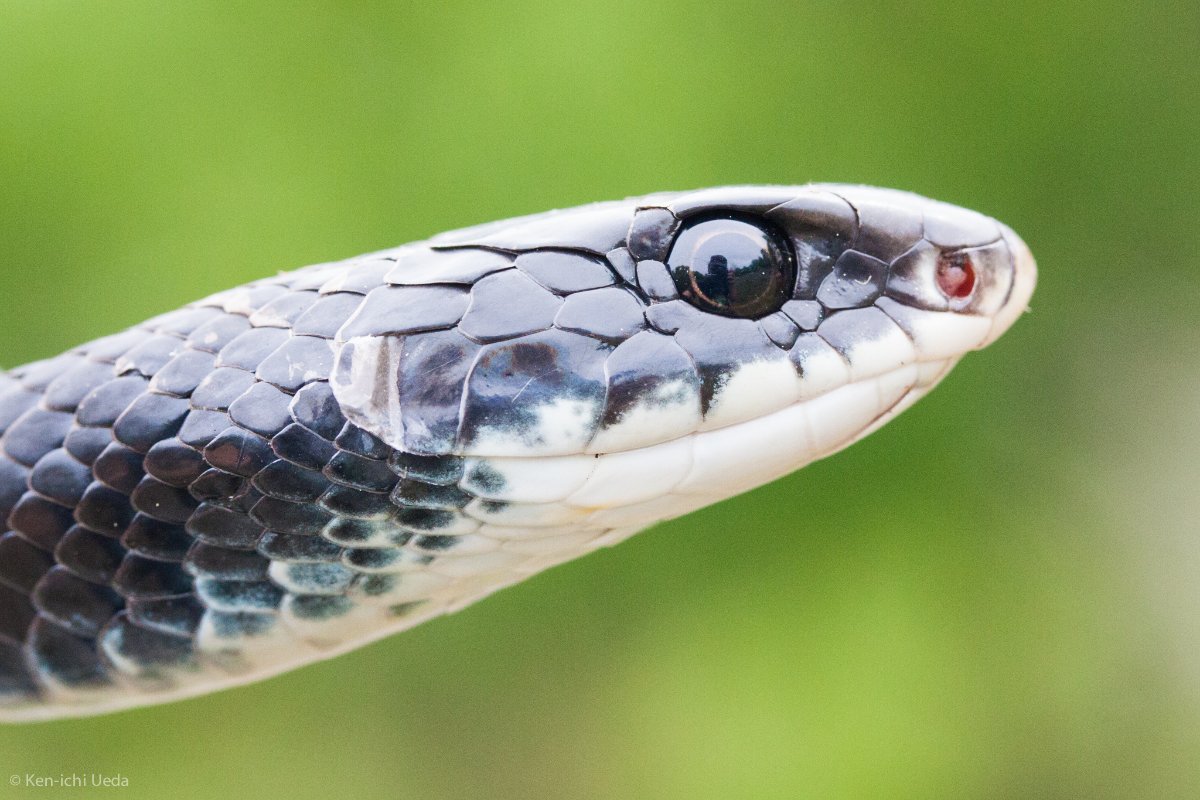
- Small head only a little wider than the neck; large eyes.
- Pattern
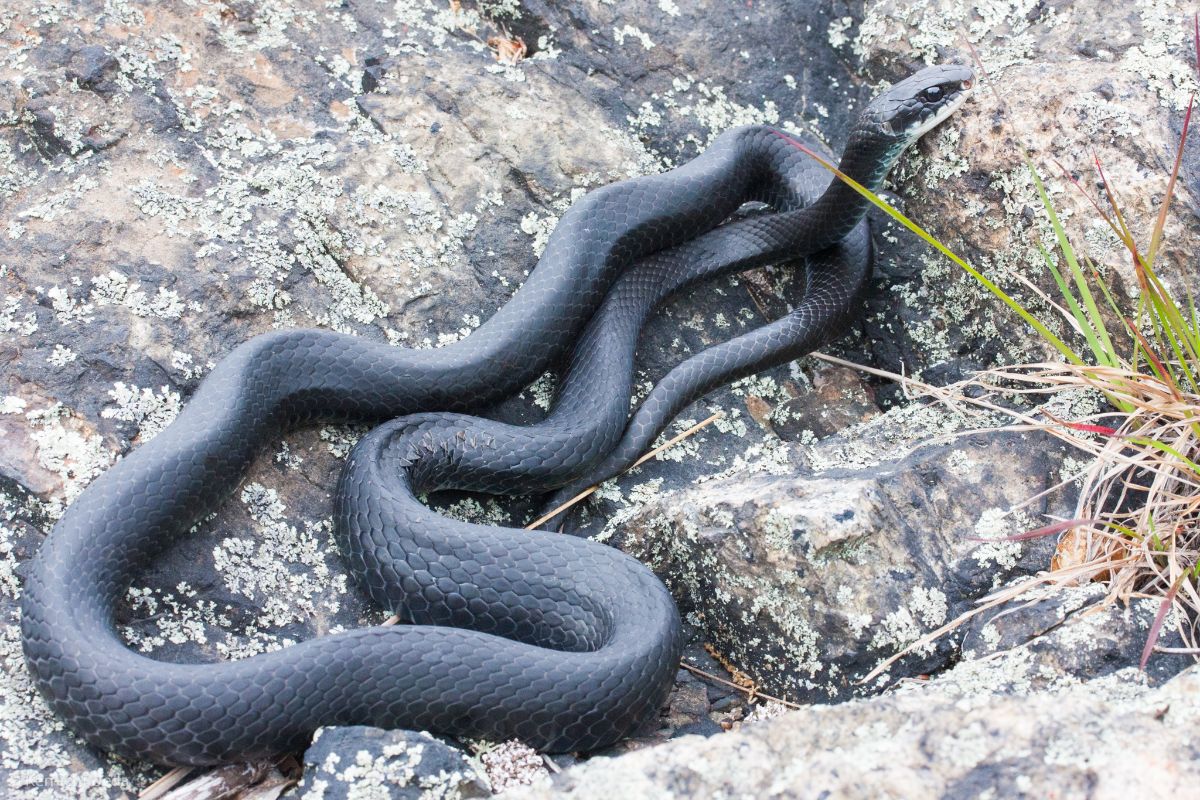
- Plain black, blue-gray, olive or tan; belly pale to gray; young strongly blotched.
- Eyes
- Round pupil in a large eye - a sight hunter; no heat-sensing pit.
- Pits
- None. There is no pit between the eye and the nostril.
- Tail
- Long and slender; no rattle.
- What it does
- Fast and nervous; vanishes at speed, bites when held.
Often confused with
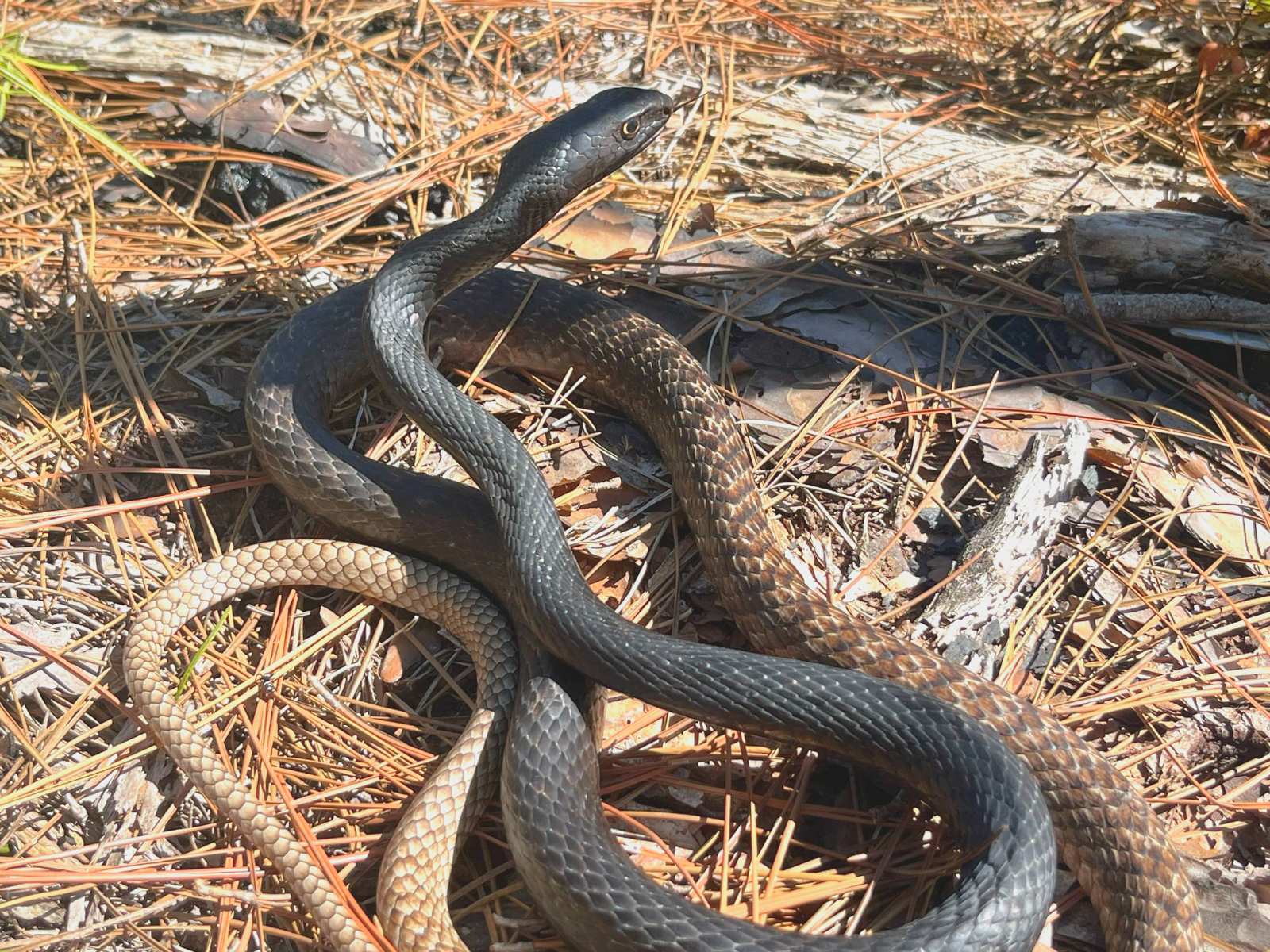
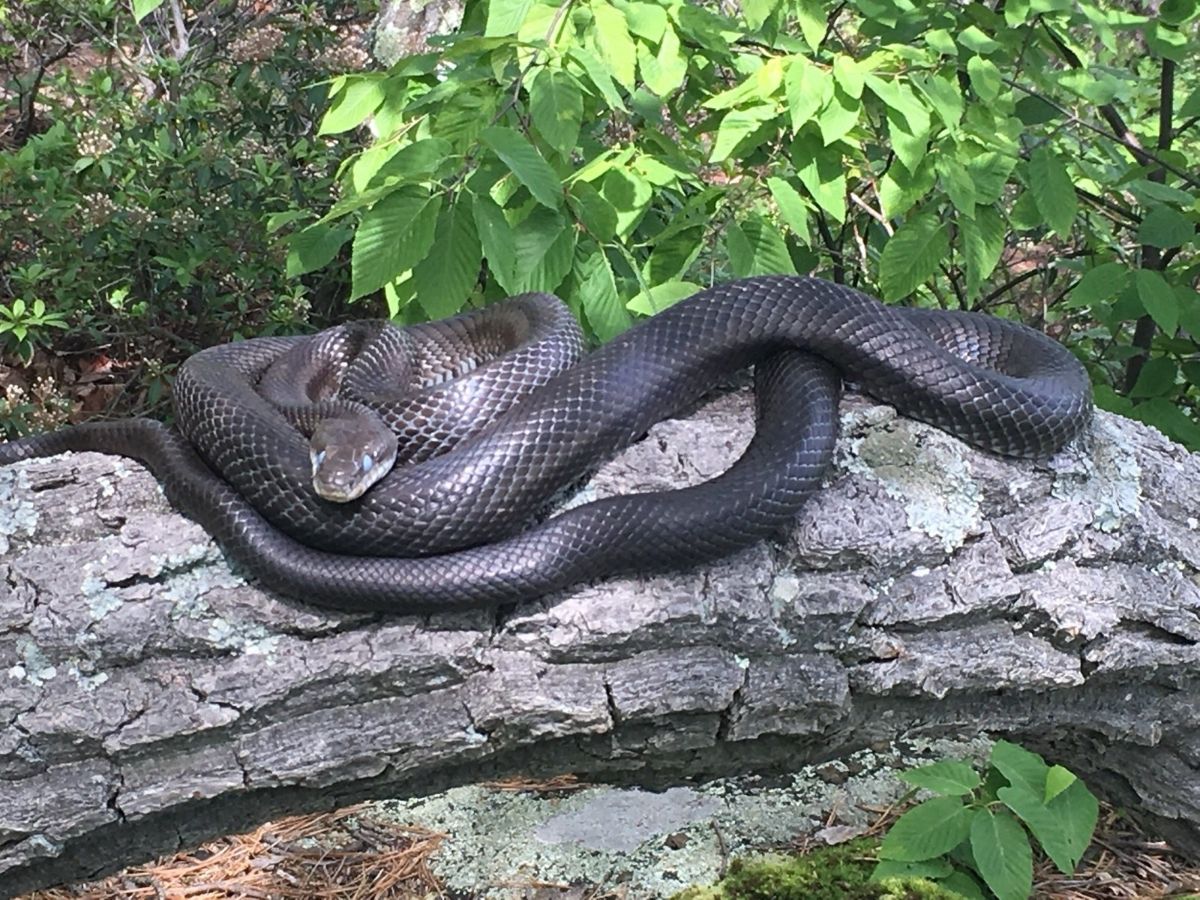
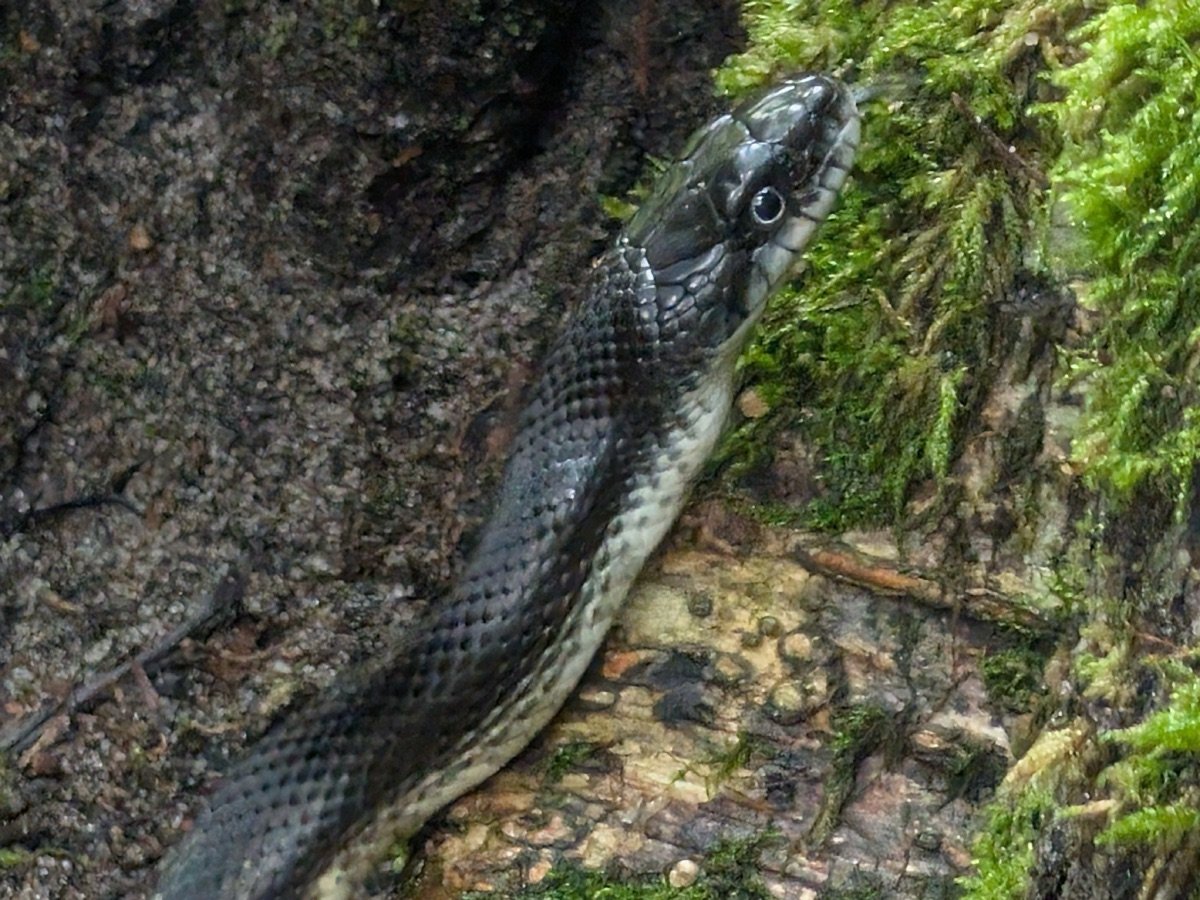
Eastern and Gray Ratsnakes are heavier, with a squarish body and weakly keeled scales. Coachwhip is two-toned.
How to tell them apart
North American Racer vs Coachwhip›
The quick way to tellThe coachwhip is two-toned: dark up front, fading lighter toward a braided-looking tail. The racer is one even color.
North American Racer: Plain black, blue-gray, olive or tan; belly pale to gray; young strongly blotched.
Coachwhip: Two-tone - dark head and neck fading to tan, pink or cream toward the tail, or the reverse.
North American Racer vs Eastern Ratsnake›
The quick way to tellFor adults, check the shine and the belly. A black racer is smooth, glossy and evenly dark, with a gray belly. An adult Eastern Ratsnake looks duller, often shows pale flecks between its scales, and has a whitish belly with dark markings.
North American Racer: Plain black, blue-gray, olive or tan; belly pale to gray; young strongly blotched.
Eastern Ratsnake: Adults black, often with pale skin showing between scales; young gray and blotched.
North American Racer vs Gray Ratsnake›
The quick way to tellLook at the back. An adult racer is plain and satiny, with no blotches, and is slim all over. A Gray Ratsnake usually shows darker blotches, even faint ones, and its body is shaped like a loaf of bread, flat underneath.
North American Racer: Plain black, blue-gray, olive or tan; belly pale to gray; young strongly blotched.
Gray Ratsnake: Dark gray or brown blotches on a gray to brownish back; some northern adults turn nearly black.
About the North American Racer›
A fast, alert hunter found in nearly every open habitat in the country — fields, woodland edges, marshes and roadsides — often seen crossing a road at speed with its head up.
Regional forms look so different that they carry their own names: Black Racer in the East, Blue Racer in the Midwest, Yellow-bellied Racer on the plains.
The details
Size Usually 3–5 ftWeight About 1–2.5 lbLifespan 10–15 years
Typical range›
Nearly nationwide: every lower-48 state except Arizona, and into southern Canada, but absent from most of the desert Southwest.
Activity›
Strictly day active in warm months; basks in the open and vanishes fast when disturbed.
Diet›
Rodents, lizards, frogs, insects, birds and other snakes, swallowed without constriction.
Reproduction›
Lays eggs, usually 5–25, in early summer.
Found in parts of 47 states›
Ranges are approximate. It may be found in only part of a state, or be rare there, and snakes can turn up outside of them.