Northern Watersnake
Nerodia sipedon · Water Snakes
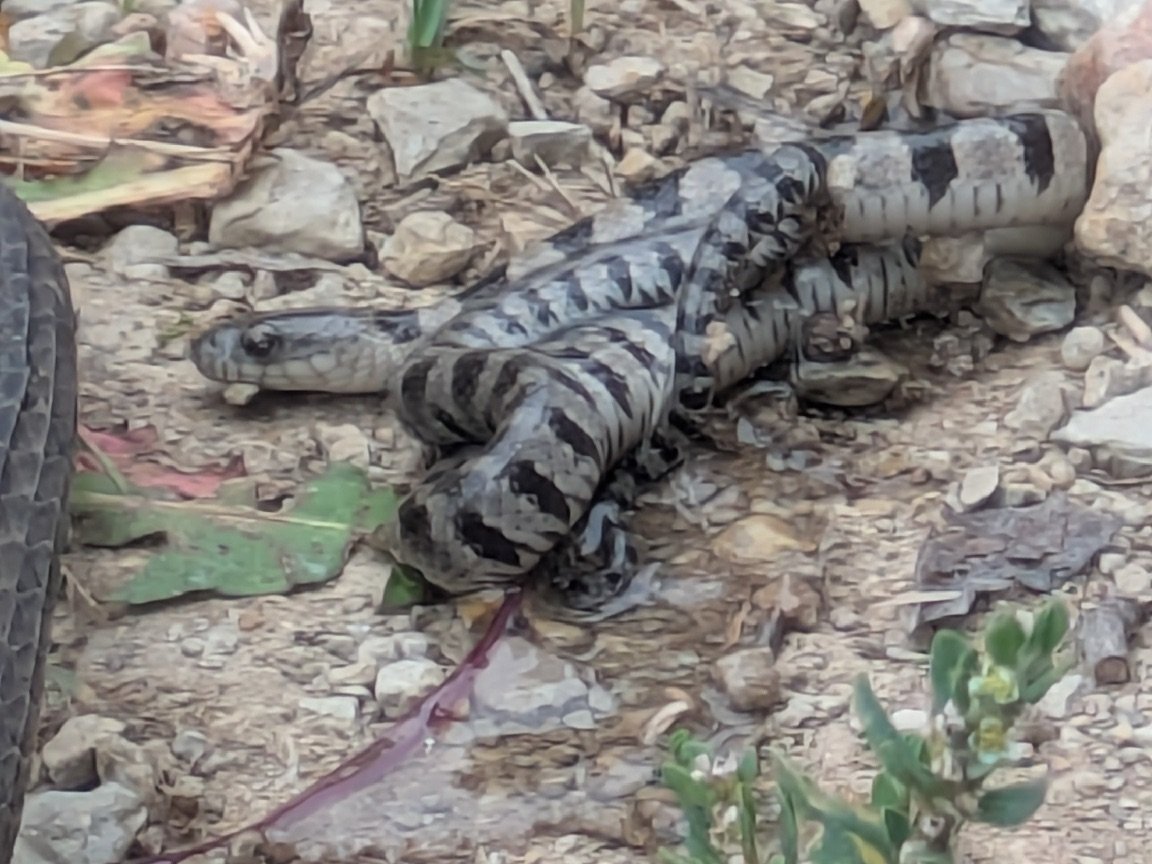
Tap a part to see what to look for. Tap it again to turn it off.
No venom, but it will bite hard and musk if picked up.
How to identify
- Head
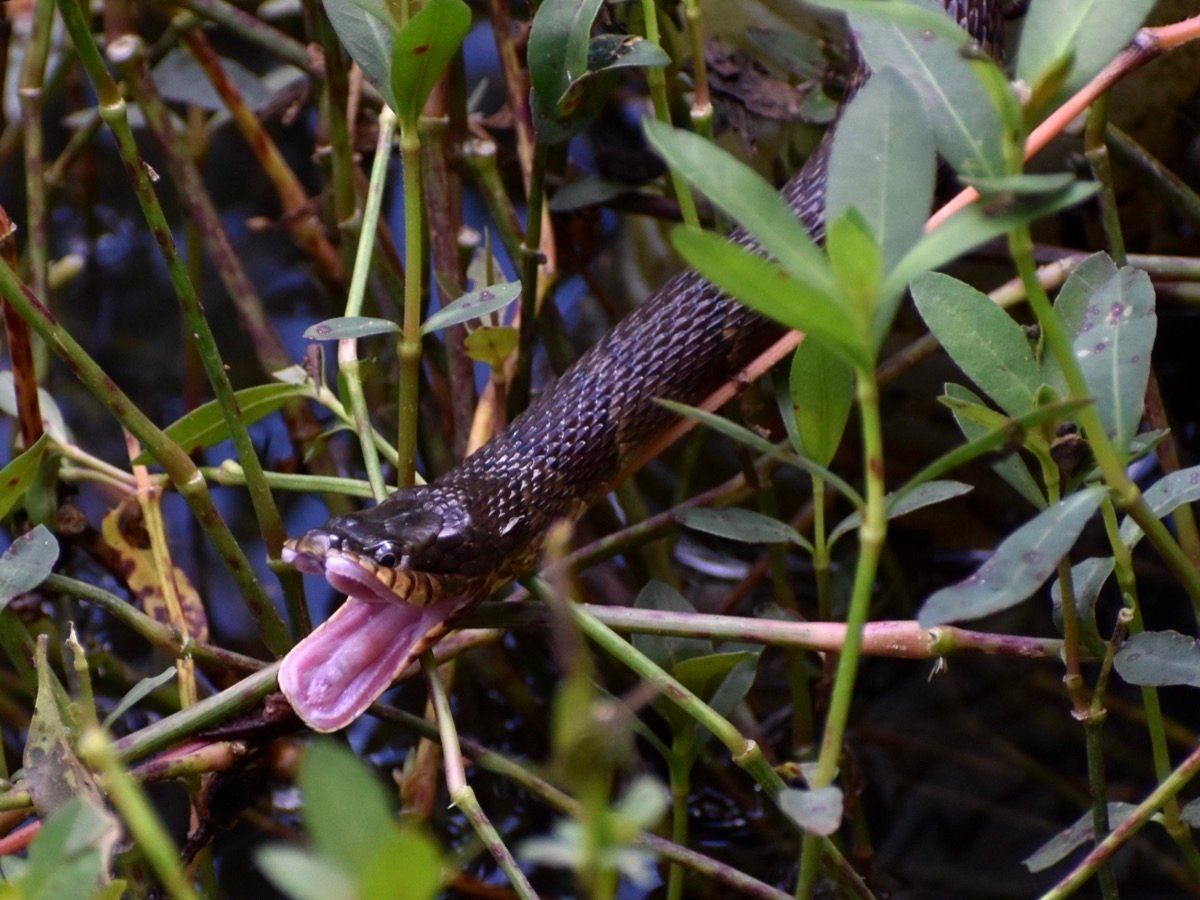
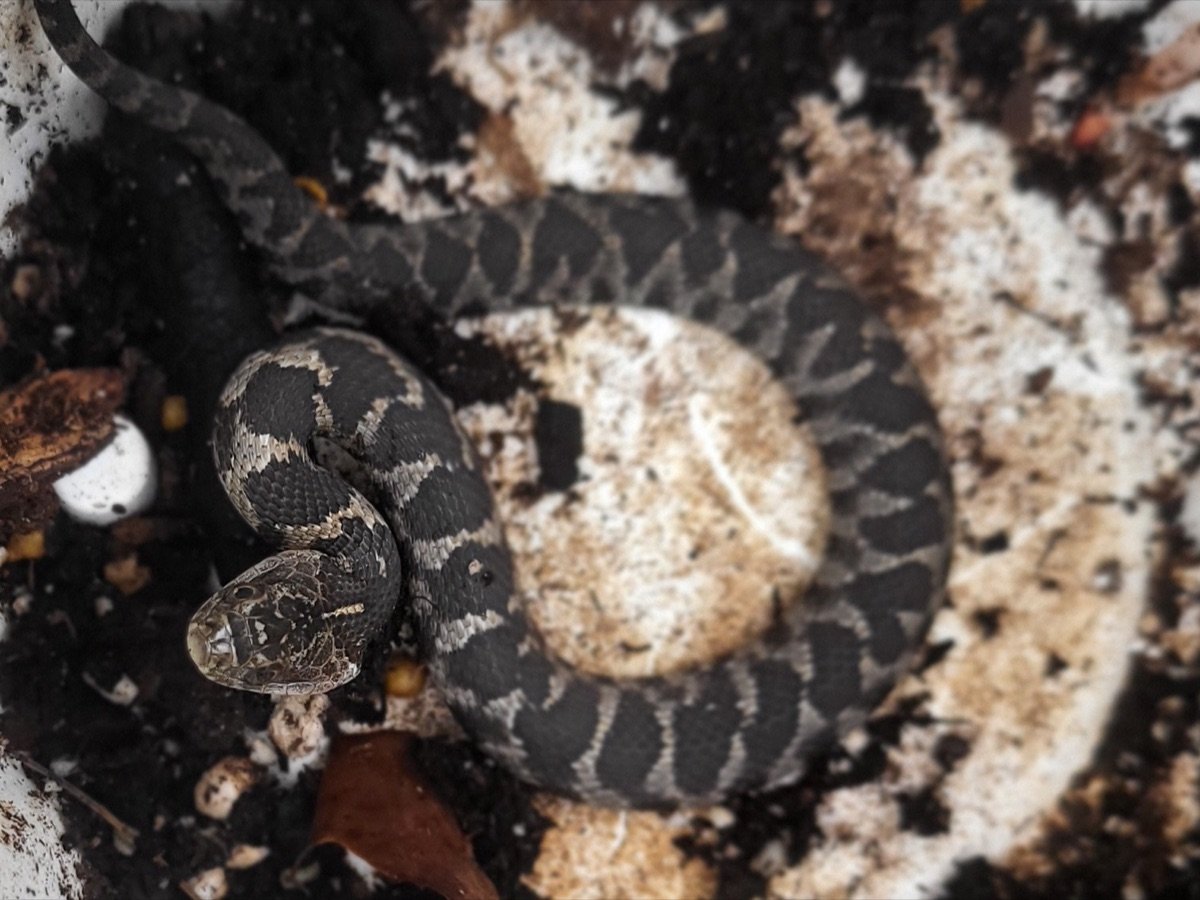
- Narrow head barely wider than the neck; flattens when threatened.
- Pattern
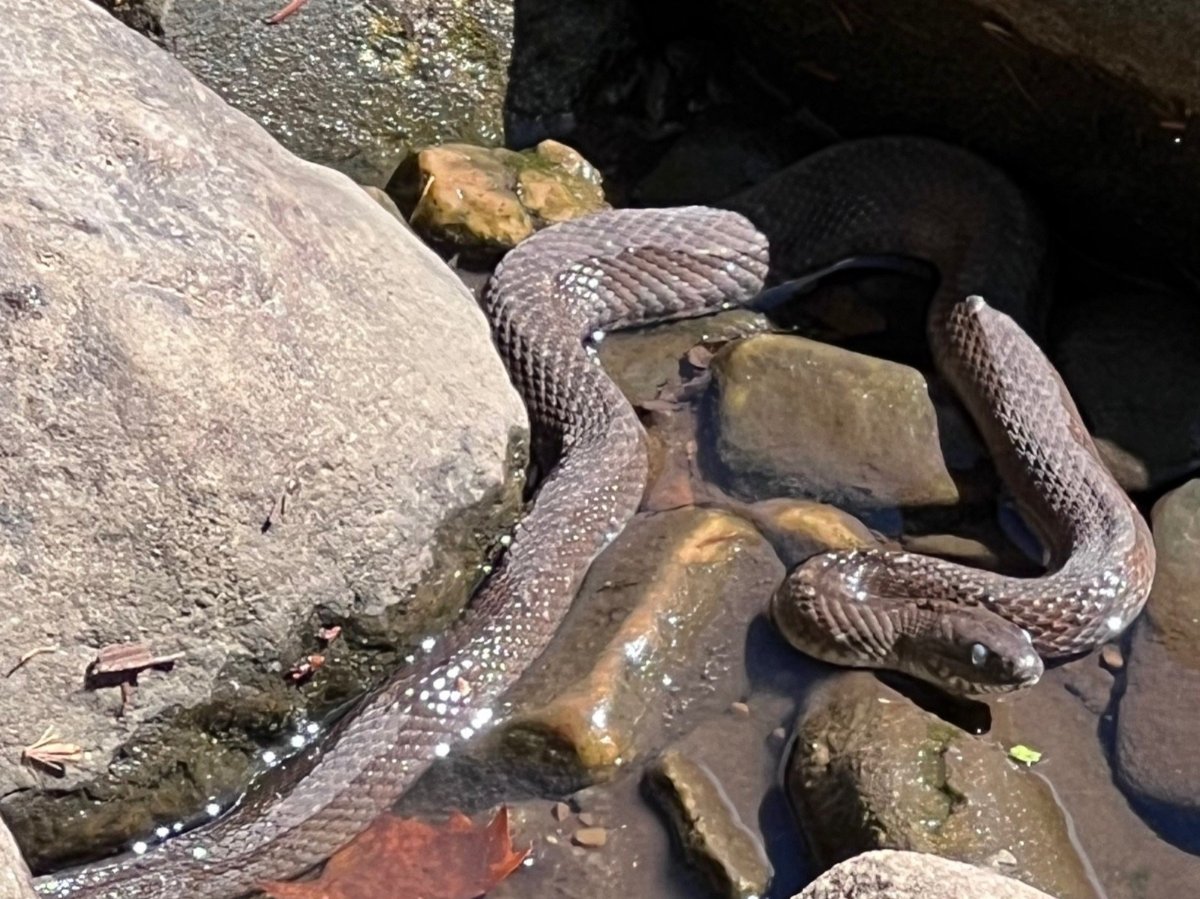
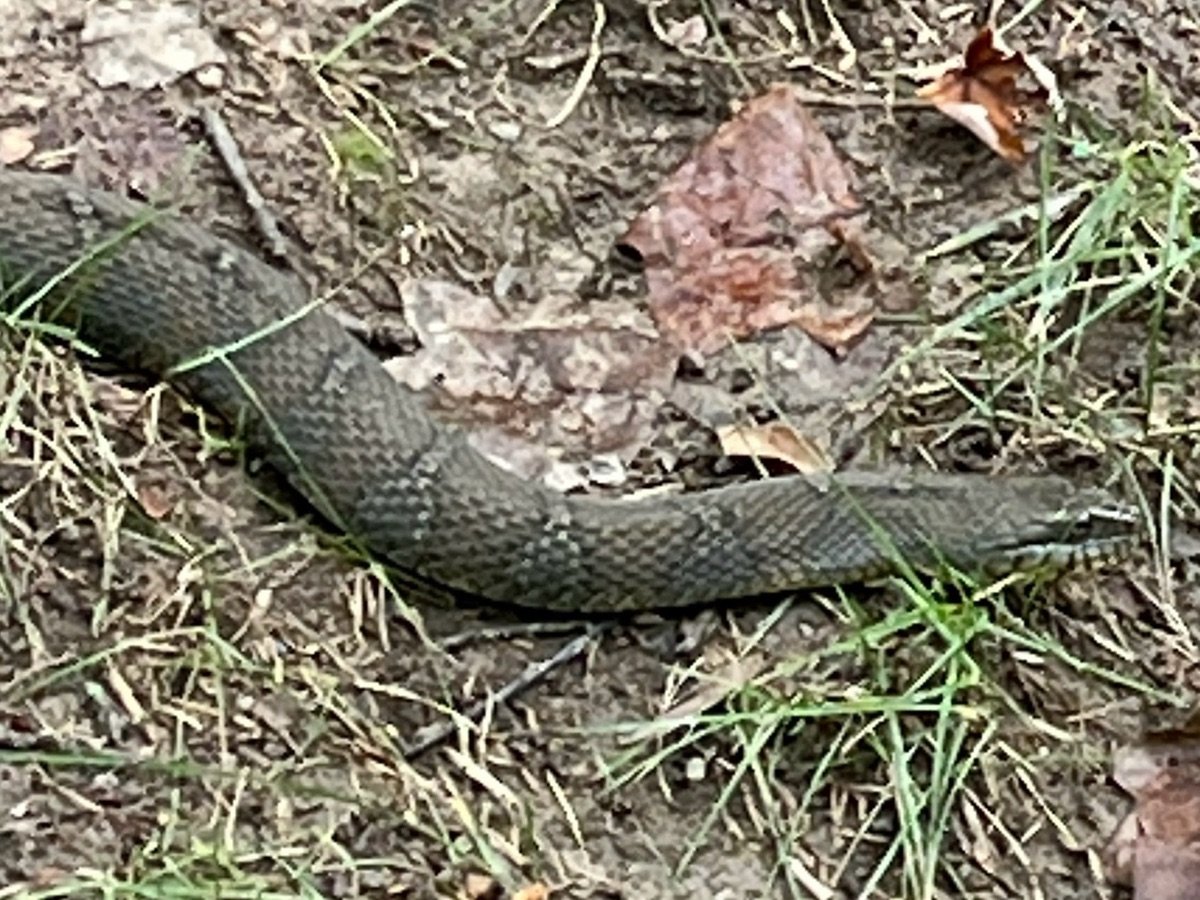
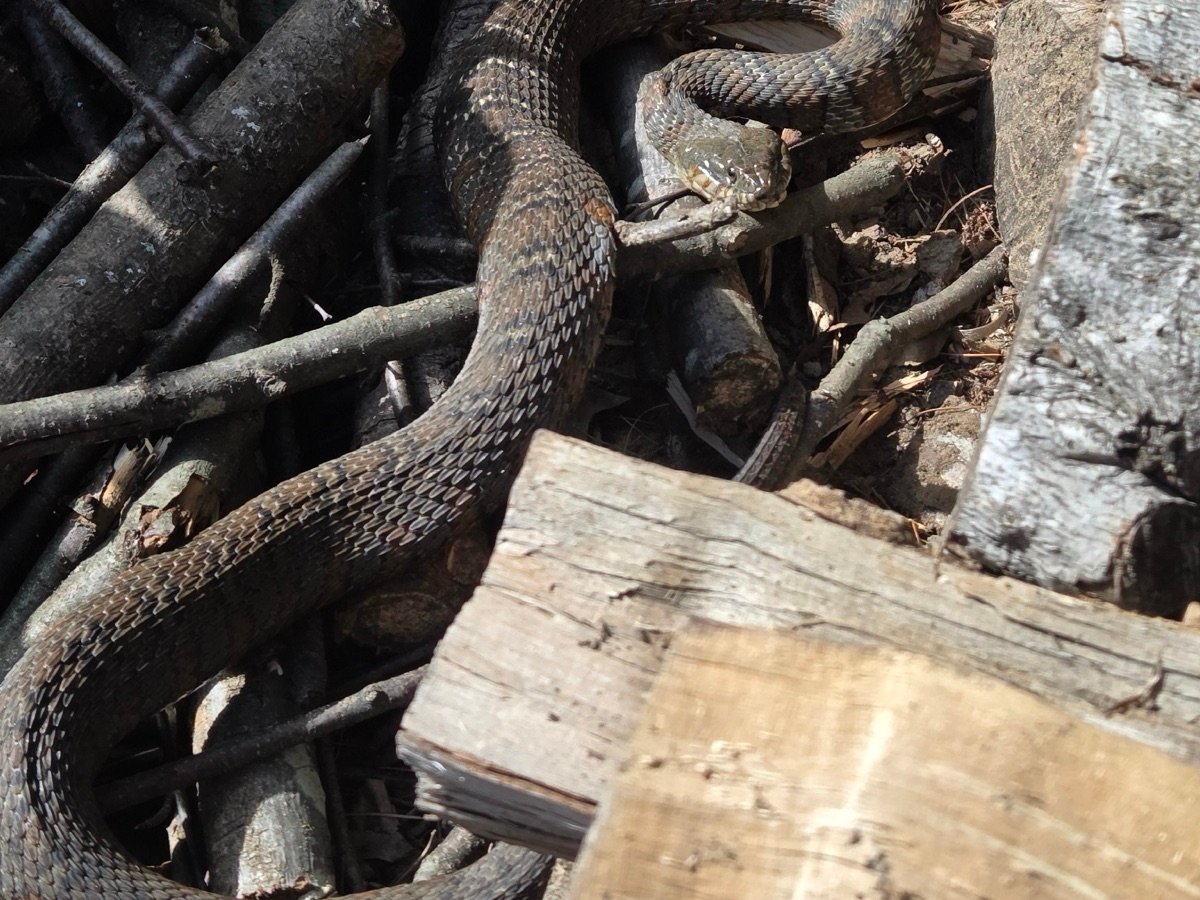
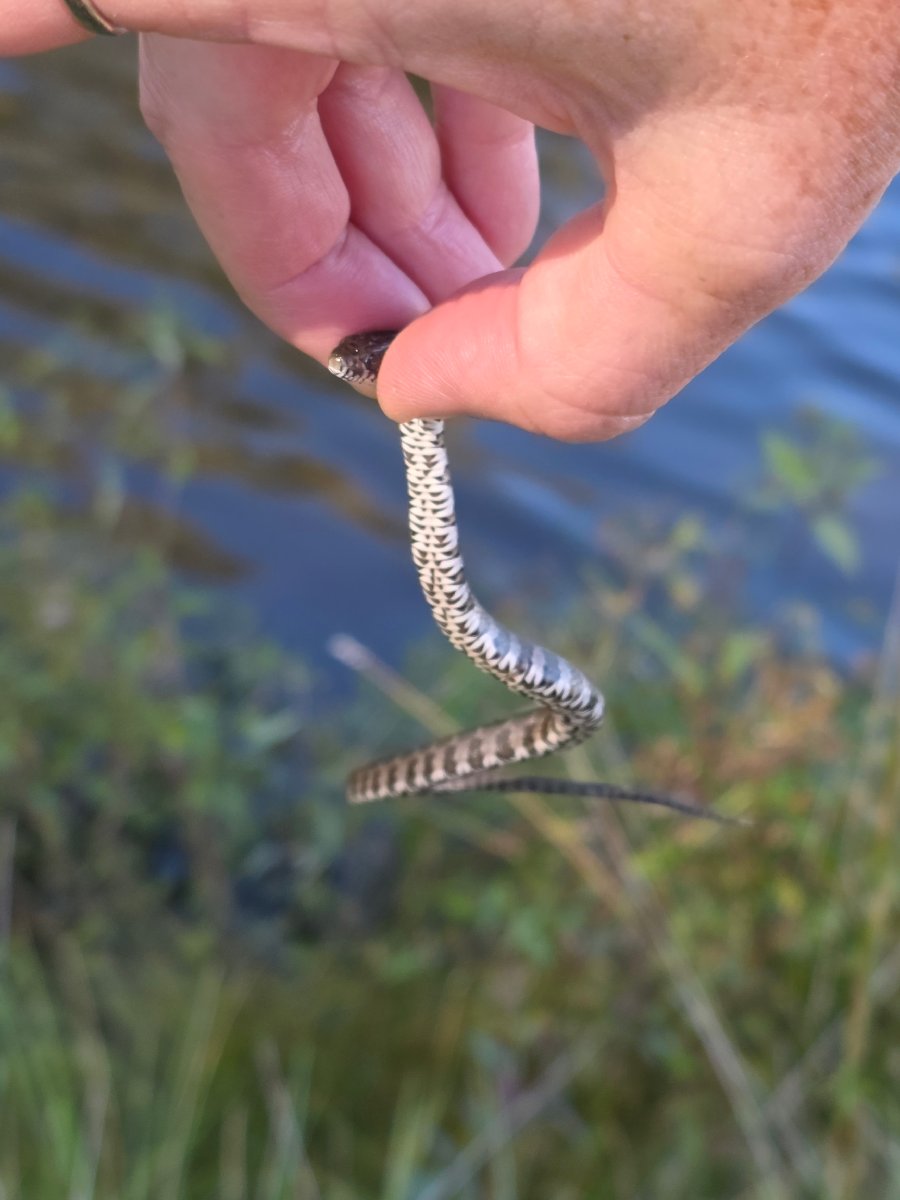
- Crossbands up front breaking into blotches toward the tail; reddish half-moons on the belly.
- Eyes
- Round pupil, eyes set high on the head; no heat-sensing pit.
- Pits
- None. There is no pit between the eye and the nostril.
- Tail
- Tapers evenly; no rattle.
- What it does
- Basks on docks and banks; drops into water, bites hard if grabbed.
Often confused with
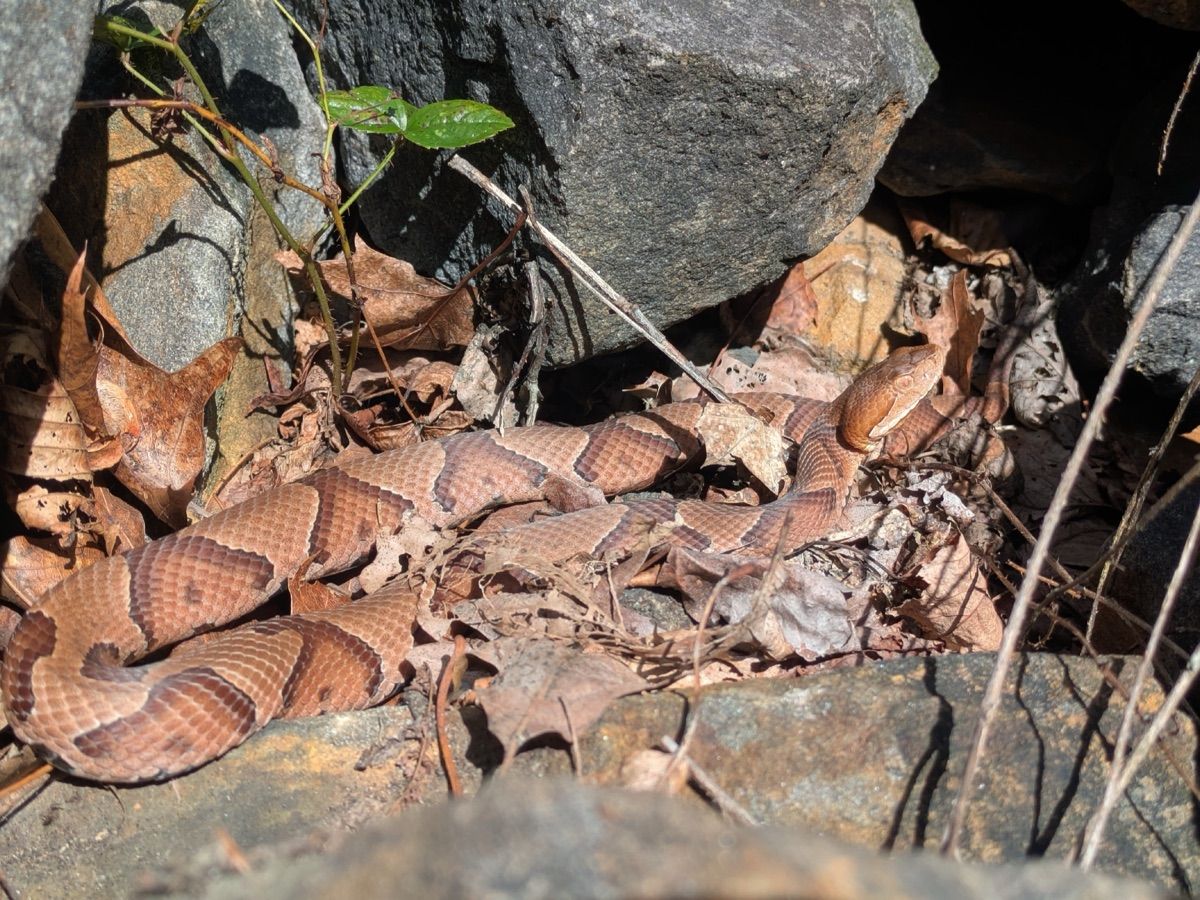
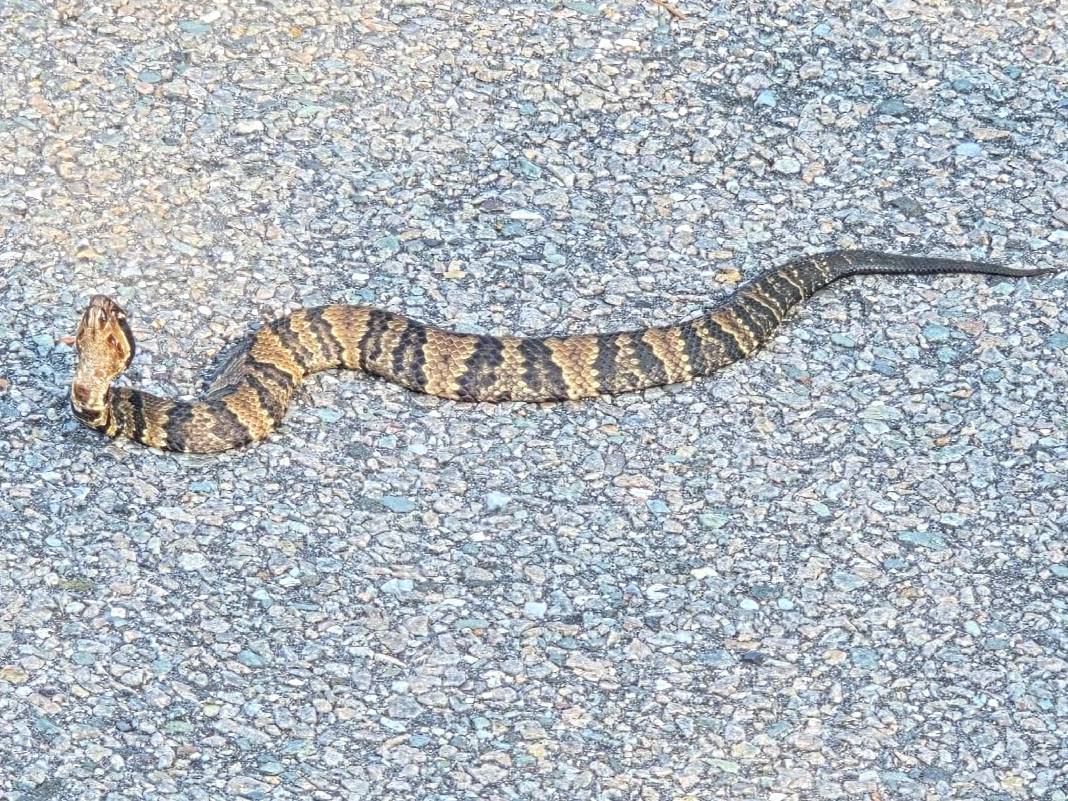
Eastern Copperhead and Northern Cottonmouth get blamed for most sightings; both have vertical pupils. Copperhead bands pinch in at the spine, and its head is plain copper.
How to tell them apart
Northern Watersnake vs Eastern Copperhead›
The quick way to tellLook at the bands from above. The copperhead's pinch to a narrow waist over the spine, like an hourglass. The watersnake's don't.
Northern Watersnake: Crossbands up front breaking into blotches toward the tail; reddish half-moons on the belly.
Eastern Copperhead: Dark hourglass bands - wide at the sides, pinched to a narrow waist over the spine.
Northern Watersnake vs Northern Cottonmouth›
The quick way to tellCheck the face. The cottonmouth has a vertical pupil and a dark mask through the eye. The watersnake has round pupils and no mask.
Northern Watersnake: Round pupil, eyes set high on the head; no heat-sensing pit.
Northern Cottonmouth: Vertical slit pupil; heat-sensing pit between eye and nostril.
About the Northern Watersnake›
The watersnake most people in the North and Midwest actually meet — on lake docks, stream banks, farm ponds and city creeks.
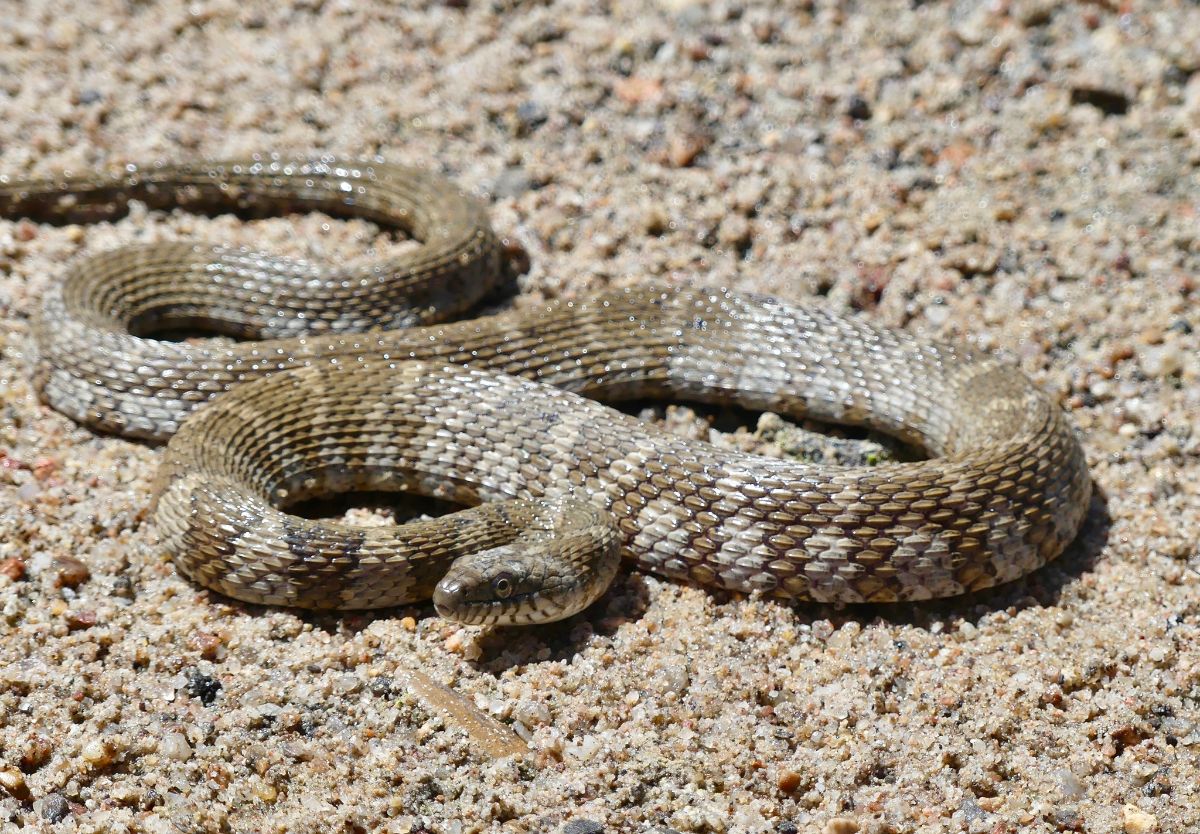
Old adults darken until the pattern nearly disappears. It is quick to flatten its head and strike if cornered, which fuels its bad reputation, but it has no venom.
The details
Size Usually 2–3.5 ft; occasionally over 4 ftWeight Commonly 0.5–2.5 lbLifespan About 10 years
Typical range›
Eastern and central US from Maine and Ontario south to the Carolinas and the Gulf states (just into the Florida panhandle), west to Colorado, Nebraska and Oklahoma; introduced in California.
Activity›
Active by day in spring and fall, often at night in summer. Winters in bank burrows and rock crevices.
Diet›
Fish and amphibians, including many sick or slow fish.
Reproduction›
Gives birth to live young, usually 10–40, in late summer.
Found in parts of 38 states›
Ranges are approximate. It may be found in only part of a state, or be rare there, and snakes can turn up outside of them.
More photos