Plain-bellied Watersnake
Nerodia erythrogaster · Water Snakes
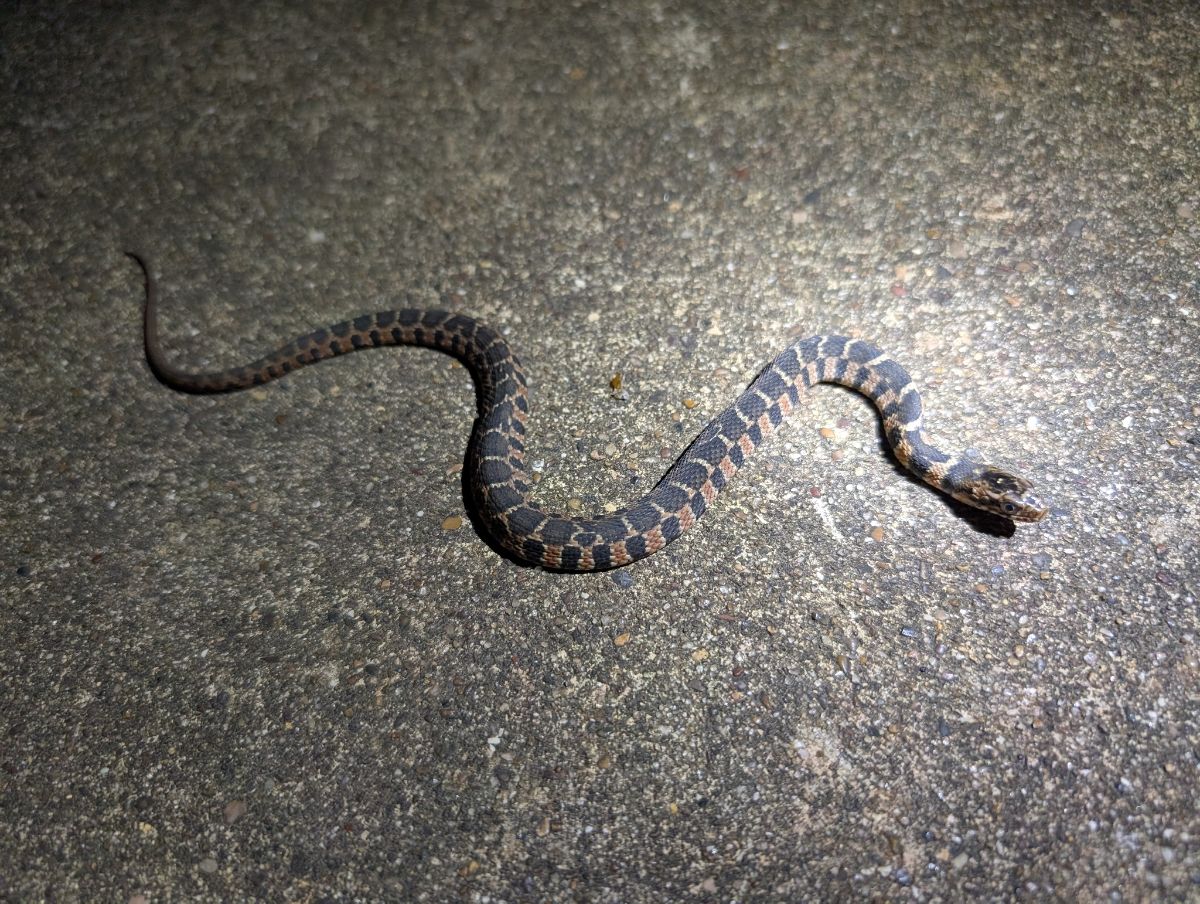
Tap a part to see what to look for. Tap it again to turn it off.
No venom, but it bites readily and smears foul-smelling musk if handled.
How to identify
- Head
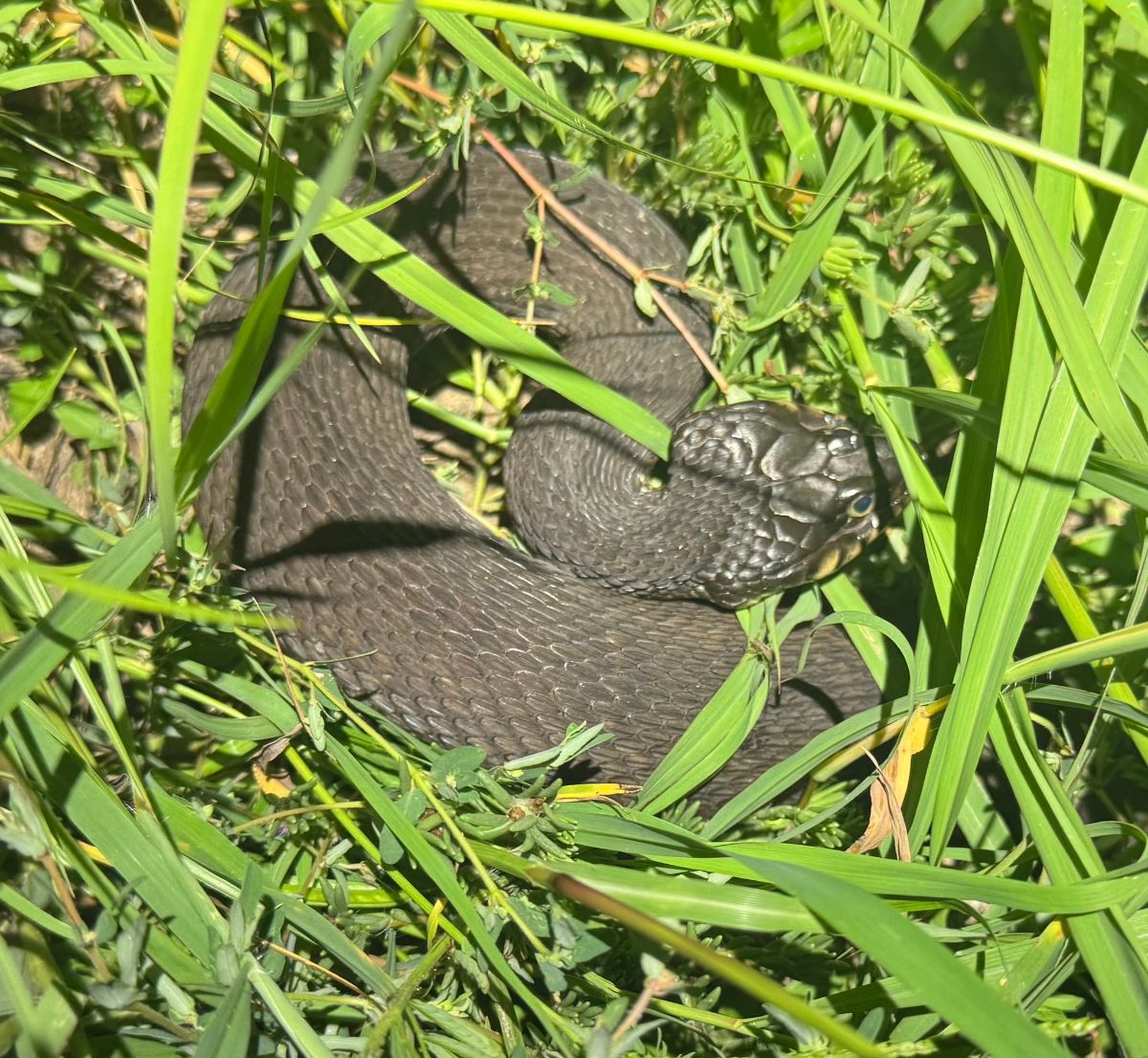
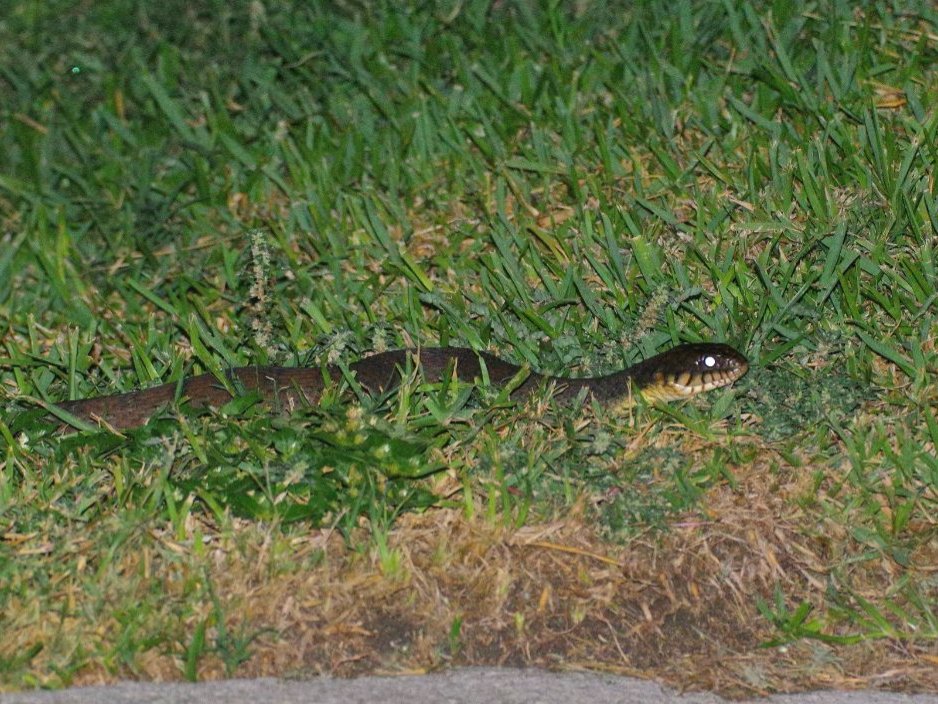
- Fairly large eyes, easy to see from above; lips often yellowish or orange like the belly.
- Pattern
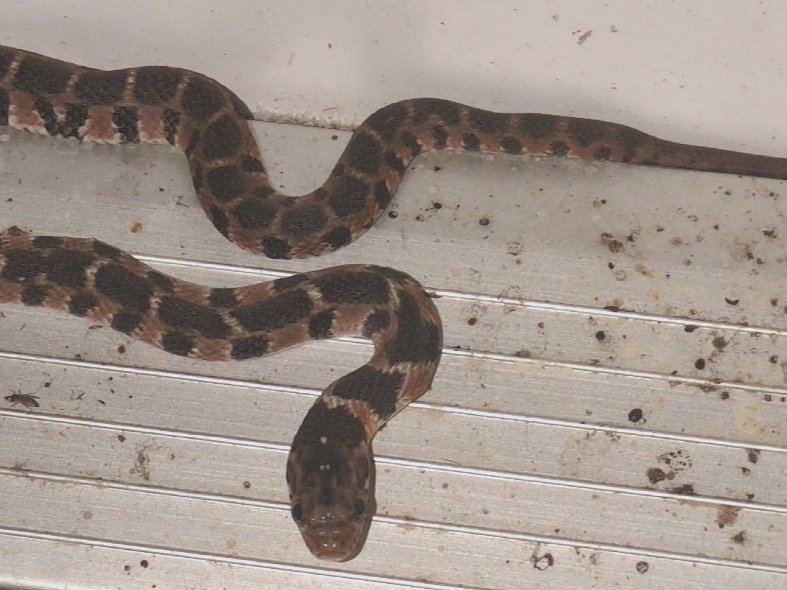
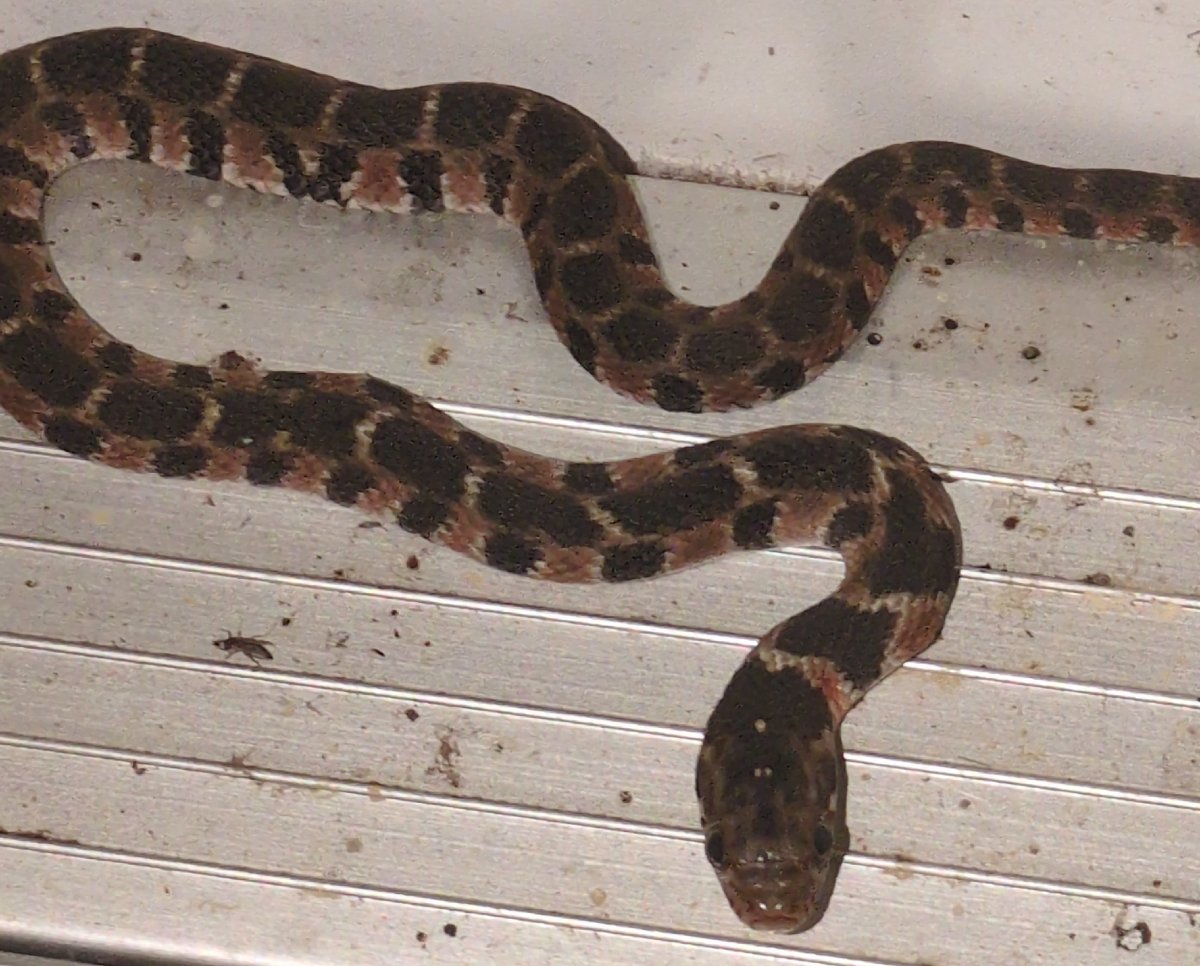
- Adults mostly plain above; young have dark crossbands near the head that turn into blotches down the body.
- Eyes
- Round pupils; eyes clearly visible when you look down on the head.
- Pits
- None. There is no pit between the eye and the nostril.
- Tail
- Plain tapering tail with no rattle; the underside is unmarked like the belly.
- What it does
- Flees if it can; bites hard and releases musk if cornered or grabbed.
Often confused with
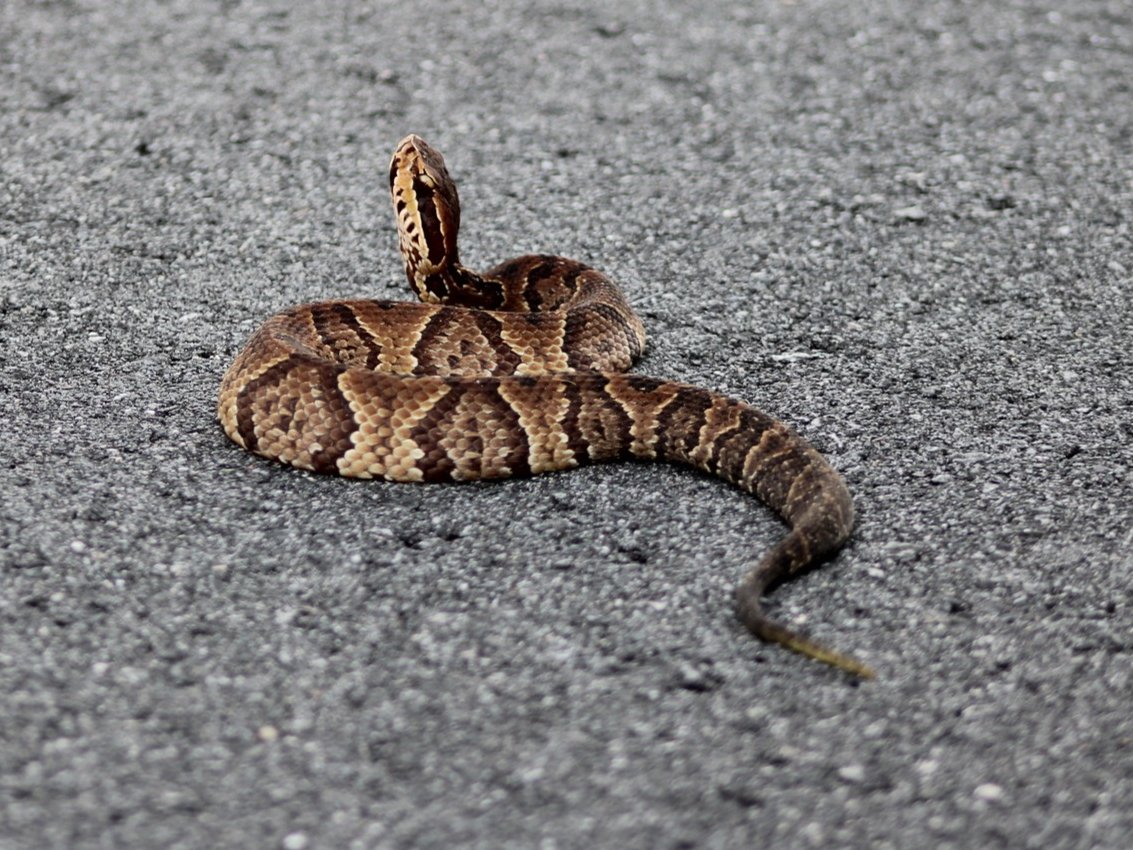
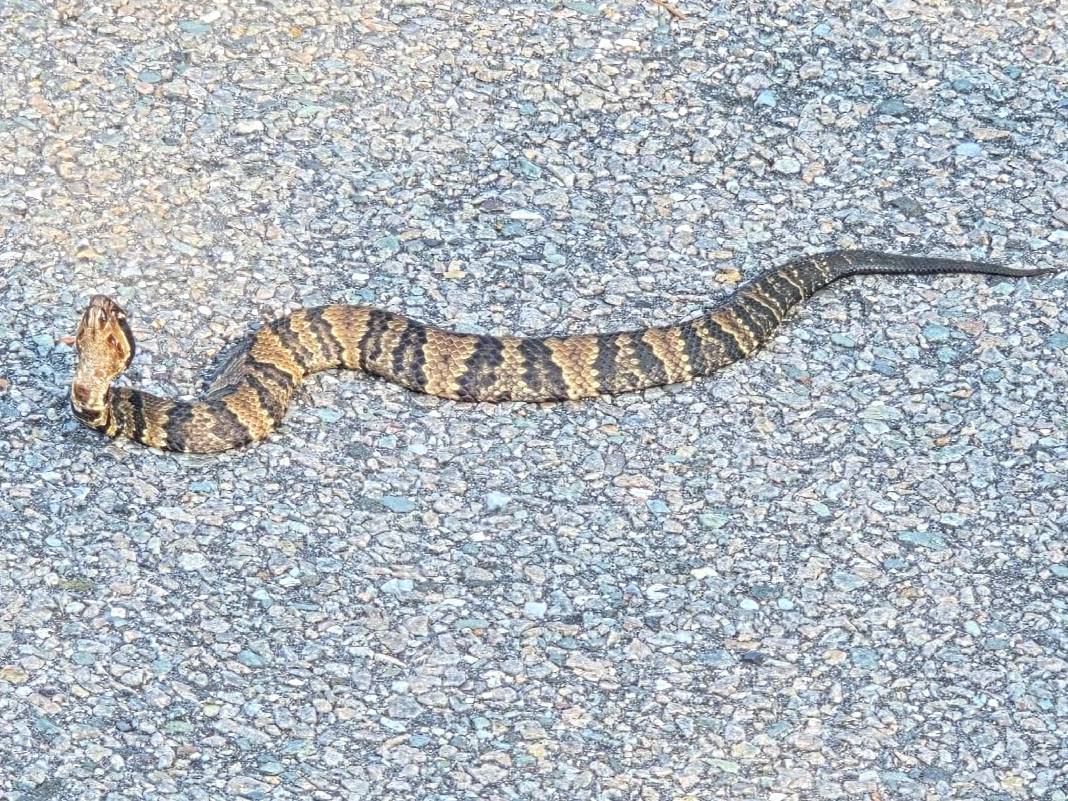
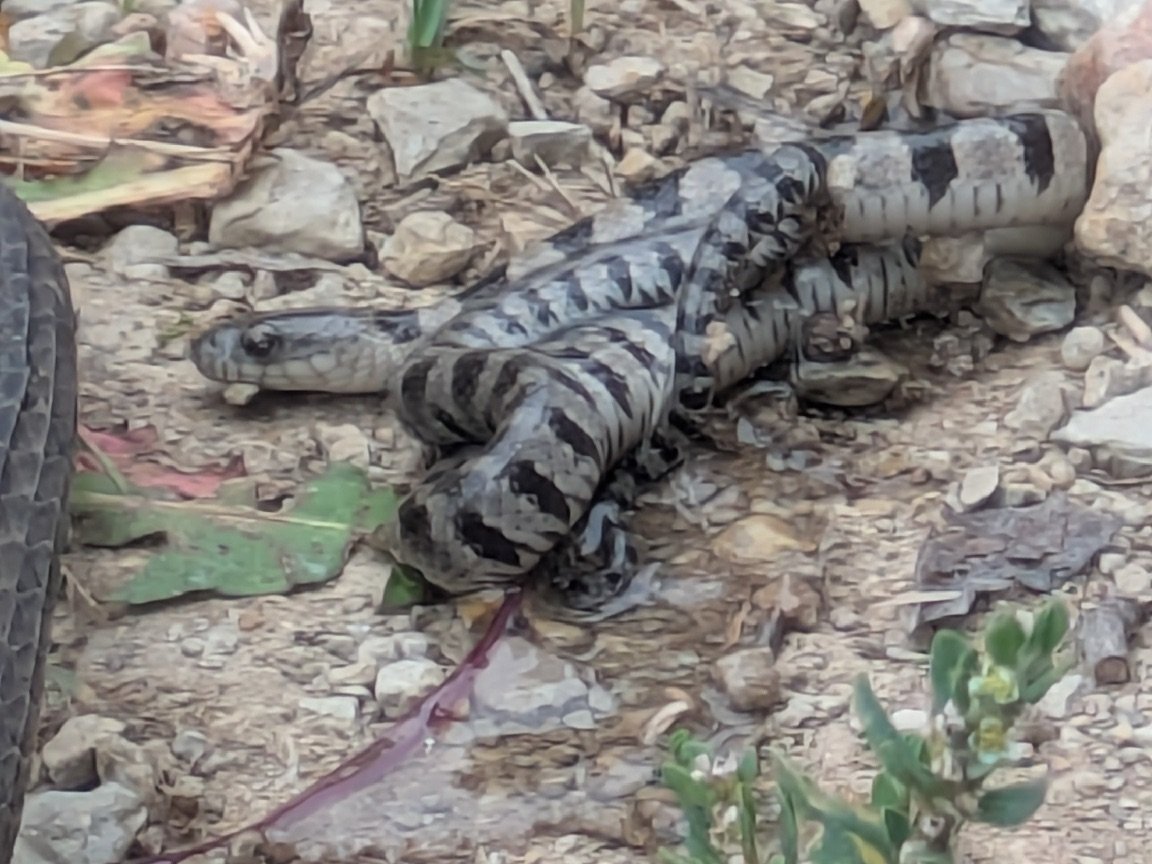
Northern Cottonmouth and Florida Cottonmouth are the dangerous mix-ups; the watersnake has round pupils, eyes visible from above and no pit. Northern Watersnake is also similar but has a marked belly.
How to tell them apart
Plain-bellied Watersnake vs Florida Cottonmouth›
The quick way to tellLook between the eye and the nostril. The Florida Cottonmouth has a deep heat-sensing pit there. The Plain-bellied Watersnake has no pit.
Plain-bellied Watersnake: None. There is no pit between the eye and the nostril.
Florida Cottonmouth: A deep heat-sensing pit on each side of the face, between the eye and the nostril.
Plain-bellied Watersnake vs Northern Cottonmouth›
The quick way to tellLook down at the head from above. You can see the Plain-bellied Watersnake's eyes, and its pupils are round. The Northern Cottonmouth's eyes are hidden from above by a brow ridge, and its pupils are cat-like vertical slits.
Plain-bellied Watersnake: Round pupils; eyes clearly visible when you look down on the head.
Northern Cottonmouth: Vertical slit pupil; heat-sensing pit between eye and nostril.
Plain-bellied Watersnake vs Northern Watersnake›
The quick way to tellLook at the belly. The Plain-bellied Watersnake's belly is plain yellow, orange or red with no markings. The Northern Watersnake's belly has dark markings, and adults usually keep some banding on the back.
Plain-bellied Watersnake: Adults mostly plain above; young have dark crossbands near the head that turn into blotches down the body.
Northern Watersnake: Crossbands up front breaking into blotches toward the tail; reddish half-moons on the belly.
About the Plain-bellied Watersnake›
A big, heavy-bodied watersnake of swamps, sloughs, oxbow lakes, slow rivers and flooded bottomlands across the southeastern and central US. Unlike most watersnakes, it often travels overland between wetlands and may be found well away from water in summer.
Adults are nearly plain above and have a plain, unmarked belly — yellow, orange or red depending on the region, which is why it is also called the Yellow-bellied, Red-bellied or Copperbelly Watersnake. It is often mistaken for a cottonmouth and killed.
The details
Size Usually 2.5–4 ft; occasionally over 5 ftWeight Not well documented (one source gives adult averages around 0.6–1.1 lb)Lifespan About 8–15 years (captive records)
Typical range›
Southeastern and central US from Delaware and southeastern Virginia south to the Florida Panhandle, west through the Mississippi Valley to Kansas, Oklahoma, Texas and the Pecos River in New Mexico; small scattered northern populations in Iowa, Illinois, Indiana, Ohio, Kentucky and southern Michigan. Also northern Mexico.
Activity›
Active by day from spring through fall, often basking on logs and branches near water.
Diet›
Frogs, toads and tadpoles make up much of its diet, plus fish, salamanders and crayfish.
Reproduction›
Mates in spring and gives birth to about 5–37 live young in late summer.
Found in parts of 23 states›
Ranges are approximate. It may be found in only part of a state, or be rare there, and snakes can turn up outside of them.
More photos