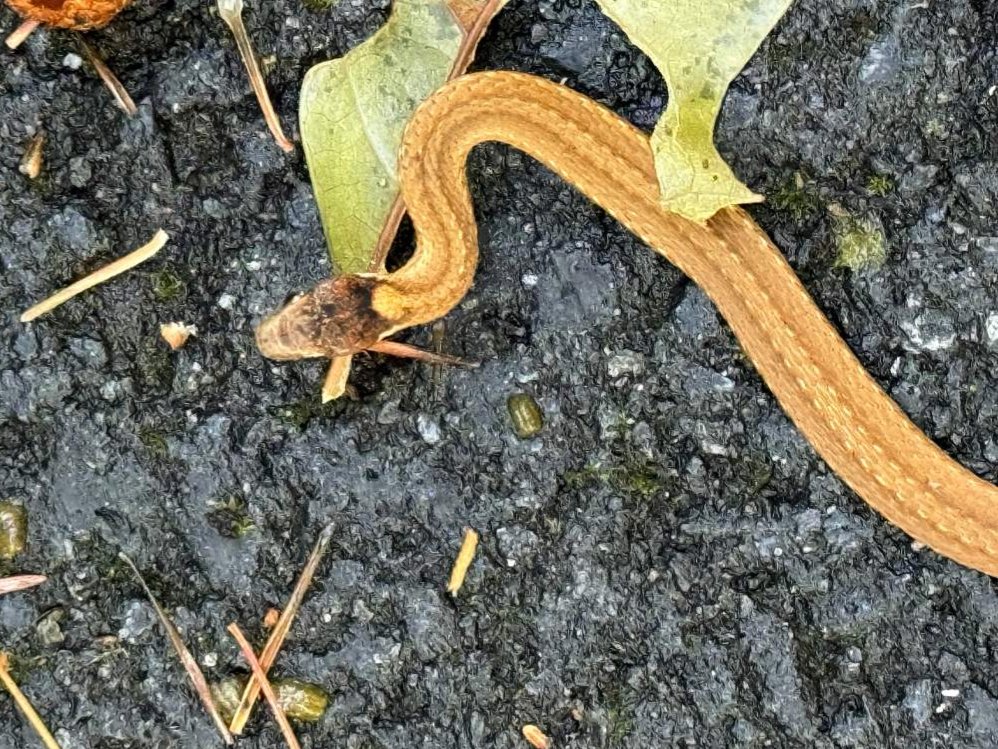
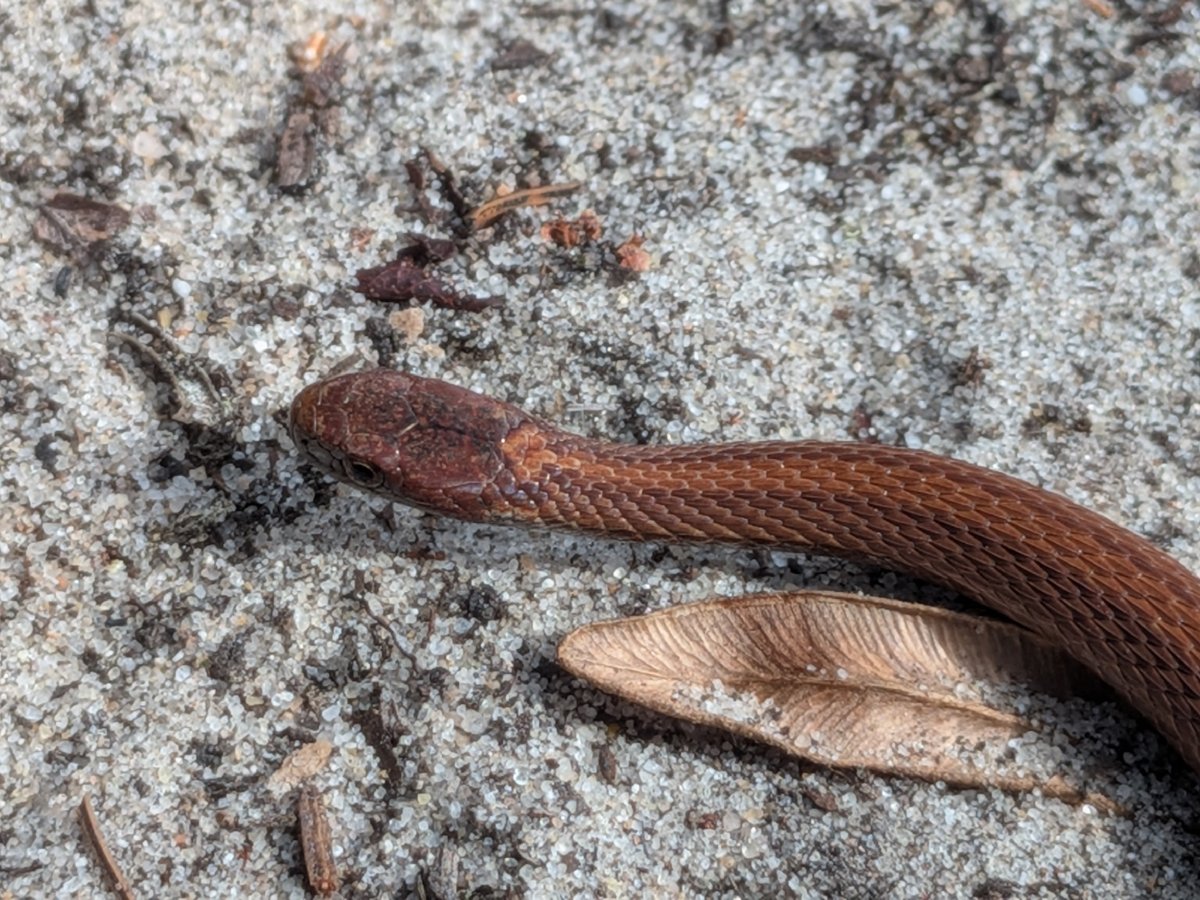
Red-bellied Snake
Storeria occipitomaculata · Brownsnakes & Red-bellied Snakes
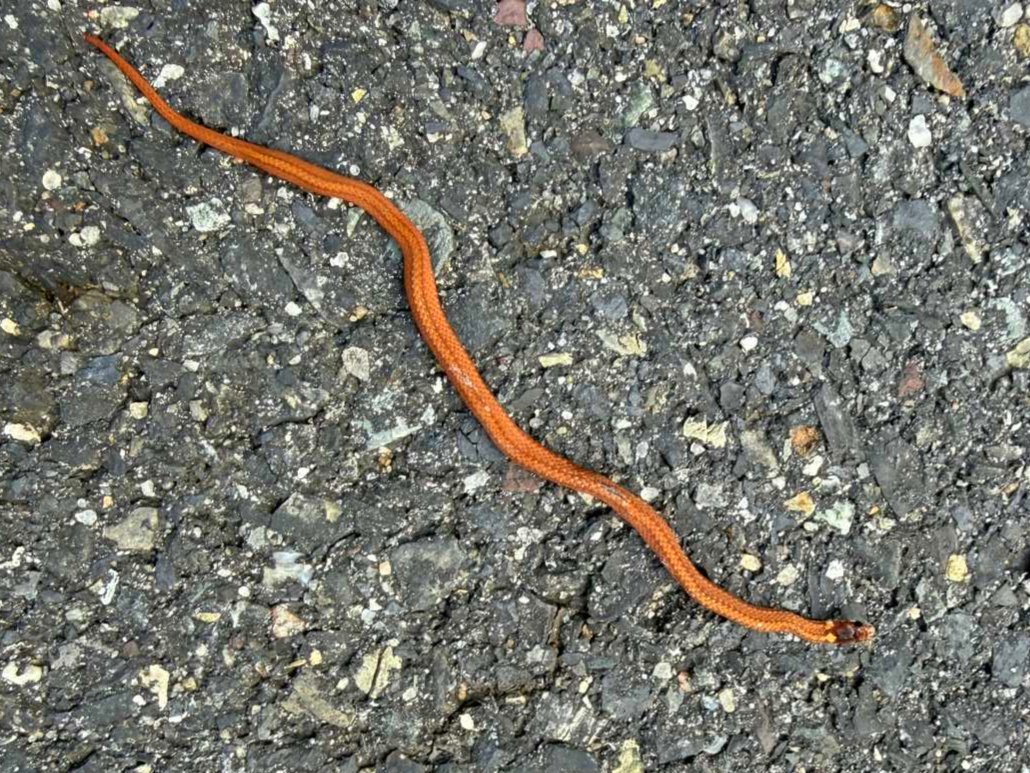
Tap a part to see what to look for. Tap it again to turn it off.
No venom. It very rarely bites, but if handled it may curl its upper lip, release musk or play dead.
How to identify
- Head
- Head is often darker than the body (dark brown to black), with a light collar or three pale spots just behind it and white on the chin and throat.
- Pattern
- Plain brown, gray, reddish or blackish back, sometimes with a paler stripe down the middle and faint thin dark stripes. The belly is bright red or orange with no spots (sometimes pink, yellow or black).
- Pits
- None. There is no pit between the eye and the nostril.
- Tail
- Short and thin, colored like the body, with the red belly color continuing underneath.
- What it does
- Very secretive, hiding under logs, rocks and leaf litter. It very rarely bites; when bothered it curls its upper lip, may release musk, flatten its body or play dead.
Often confused with
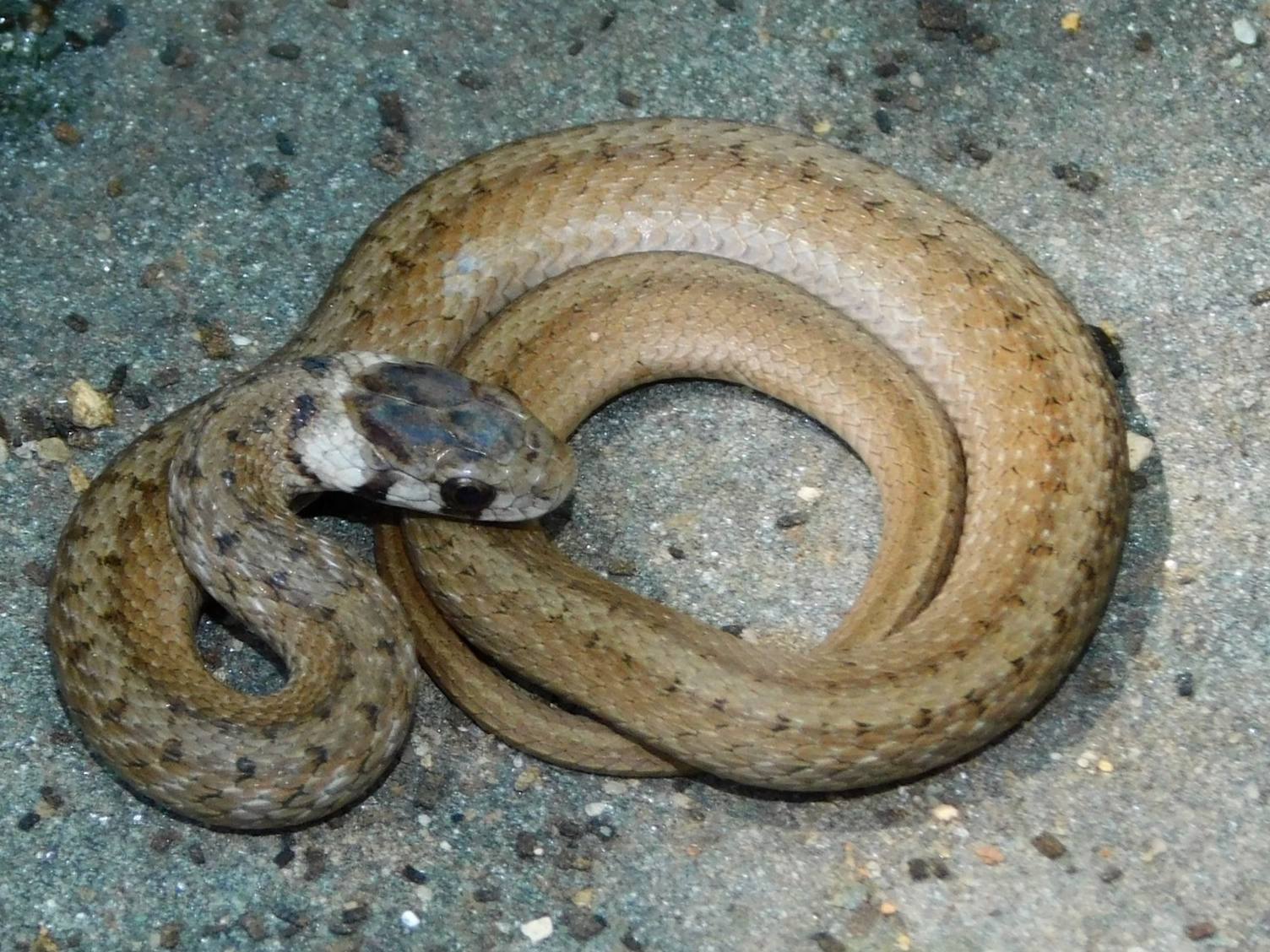
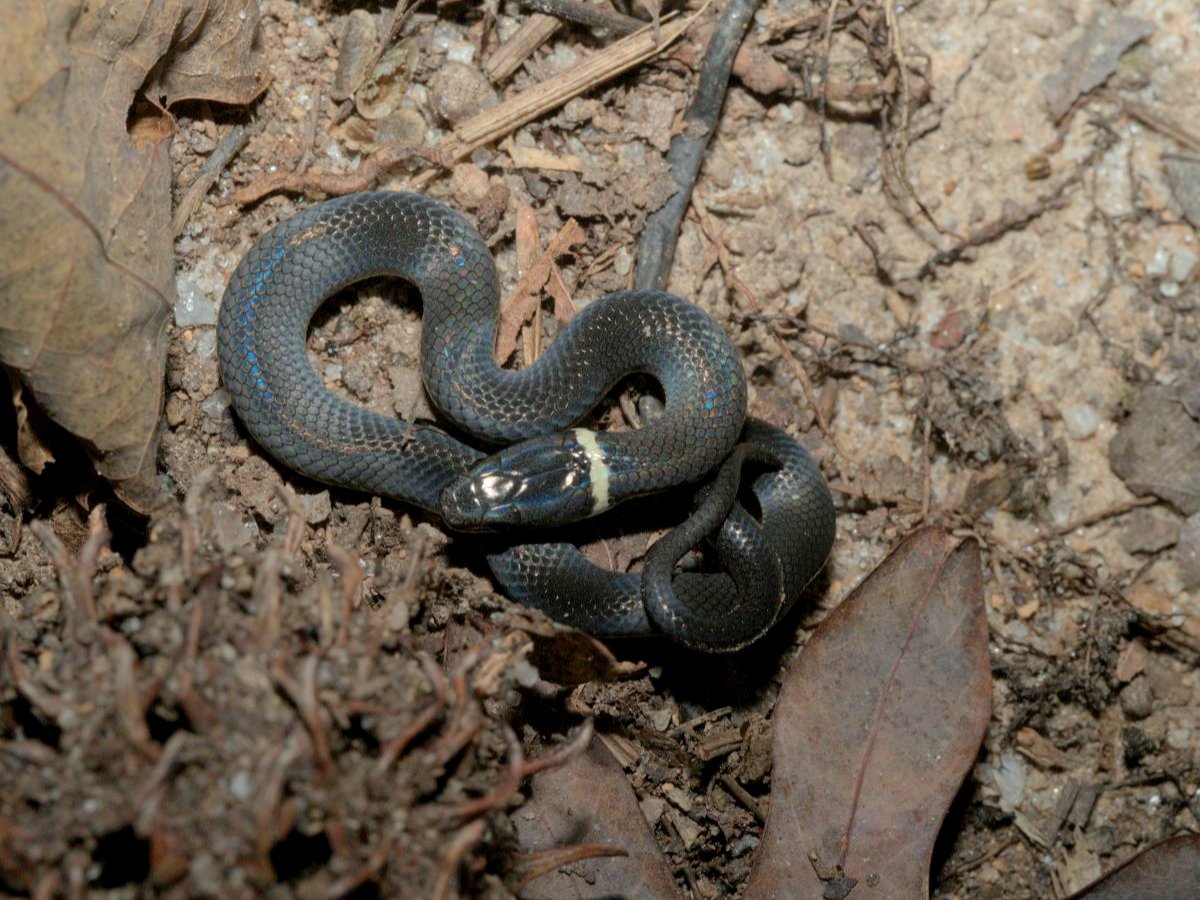
DeKay's Brownsnake is similar in size and shape but has a pale, not red, belly and rows of small dark spots on the back. The Ring-necked Snake has a bold complete yellow-orange ring around the neck and smooth, slate-gray to black sides. Young Rough and Smooth Earthsnakes can also look similar but lack the red belly.
How to tell them apart
Red-bellied Snake vs DeKay's Brownsnake›
The quick way to tellLook at the belly and back. The Red-bellied Snake has a bright red or orange belly and a mostly plain back. DeKay's Brownsnake has a pale belly and two rows of small dark spots down the back.
Red-bellied Snake: Plain brown, gray, reddish or blackish back, sometimes with a paler stripe down the middle and faint thin dark stripes. The belly is bright red or orange with no spots (sometimes pink, yellow or black).
DeKay's Brownsnake: Pale stripe down a brown back between two rows of small dark spots.
Red-bellied Snake vs Ring-necked Snake›
The quick way to tellLook at the neck. The Red-bellied Snake usually has three pale spots or a faint light collar on a brown or gray body. The Ring-necked Snake has a bold, sharp yellow-orange ring around the neck on a smooth slate-gray to black body.
Red-bellied Snake: Plain brown, gray, reddish or blackish back, sometimes with a paler stripe down the middle and faint thin dark stripes. The belly is bright red or orange with no spots (sometimes pink, yellow or black).
Ring-necked Snake: Plain slate gray with a bright yellow to red neck ring and matching belly.
About the Red-bellied Snake›
The Red-bellied Snake is found across most of the eastern US and southeastern Canada, from the Dakotas and Maine south to northern Florida and eastern Texas, plus a separate group in the Black Hills. It lives in moist woods, bogs and the edges of small wetlands and fields, hiding under logs, rocks, leaf litter and rotting stumps.
It is a small brown, gray or nearly black snake with a bright red or orange belly. Most have three light spots on the neck, often joining into a pale collar behind the head.
The details
Size Most adults are 8–10 inches (20–26 cm) long; the largest reach about 16 inches (41 cm).Lifespan Poorly known; about 2–4 years recorded in captivity.
Typical range›
Eastern US from the Dakotas, Minnesota and Maine south to northern Florida and eastern Texas, with an isolated group in the Black Hills of South Dakota and Wyoming. Also southeastern Canada (Saskatchewan to Nova Scotia).
Activity›
Secretive and mostly hidden; often seen in September and October basking or crossing back roads and trails.
Diet›
Mostly slugs; also snails, earthworms and soft insect larvae such as beetle grubs.
Reproduction›
Gives birth to live young. Mating can happen in spring, summer or fall; usually 4–9 young (up to about 21) are born in late summer.
Found in parts of 38 states›
Ranges are approximate. It may be found in only part of a state, or be rare there, and snakes can turn up outside of them.
More photos