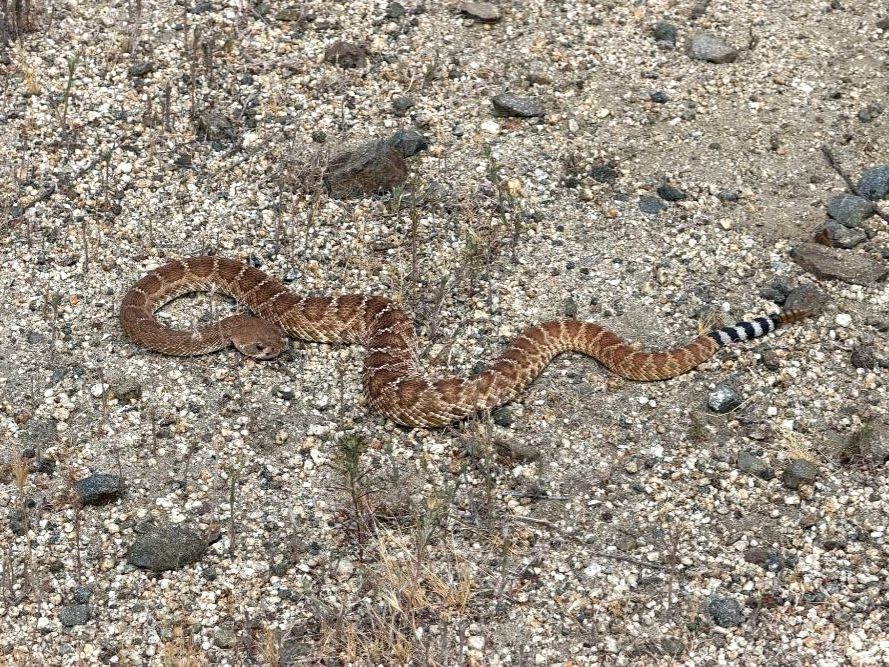
Red Diamond Rattlesnake
Crotalus ruber · Rattlesnakes
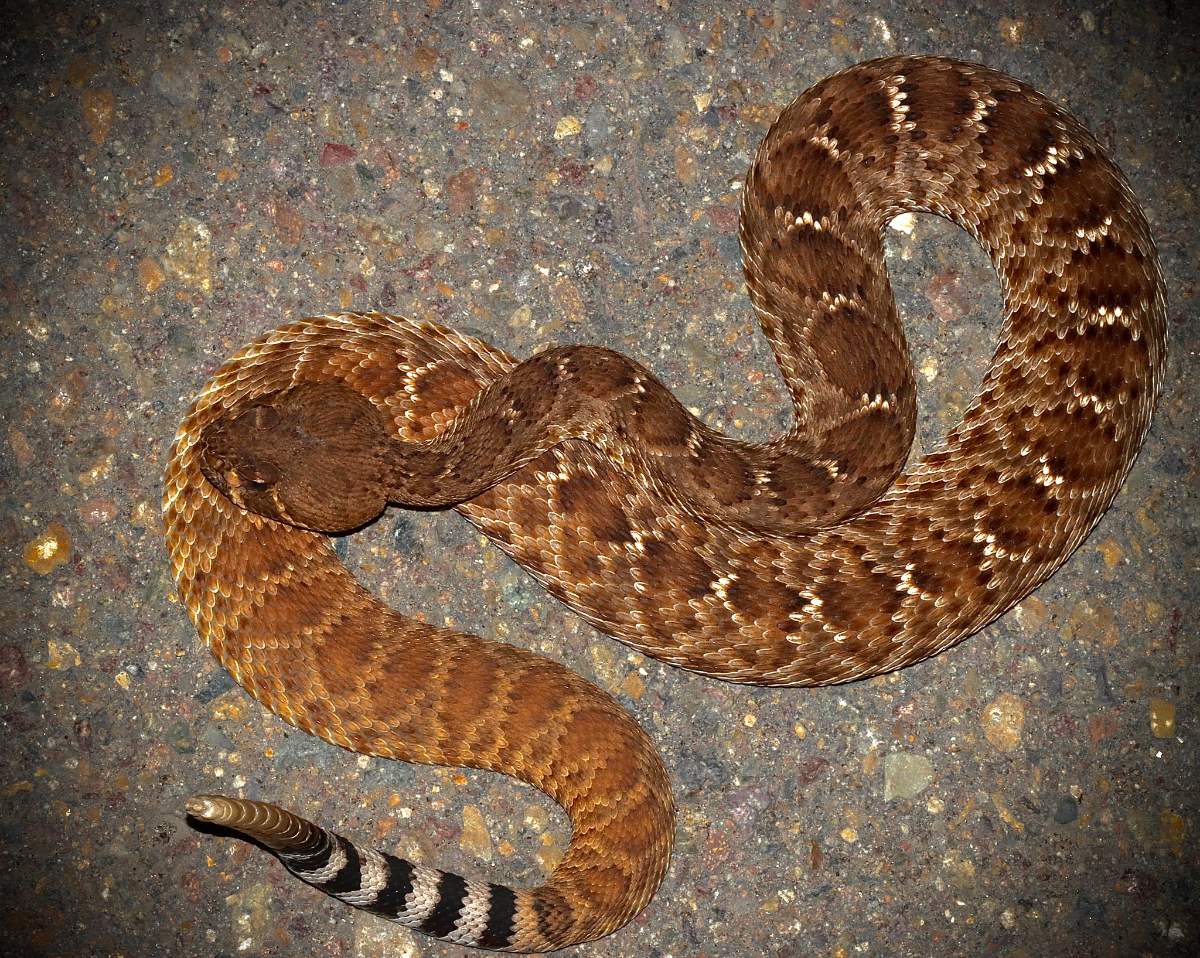
Tap a part to see what to look for. Tap it again to turn it off.
Venomous. Usually calm and slow to strike, but it will coil, rattle and strike if cornered; keep well back — a bite is a medical emergency.
How to identify
- Head
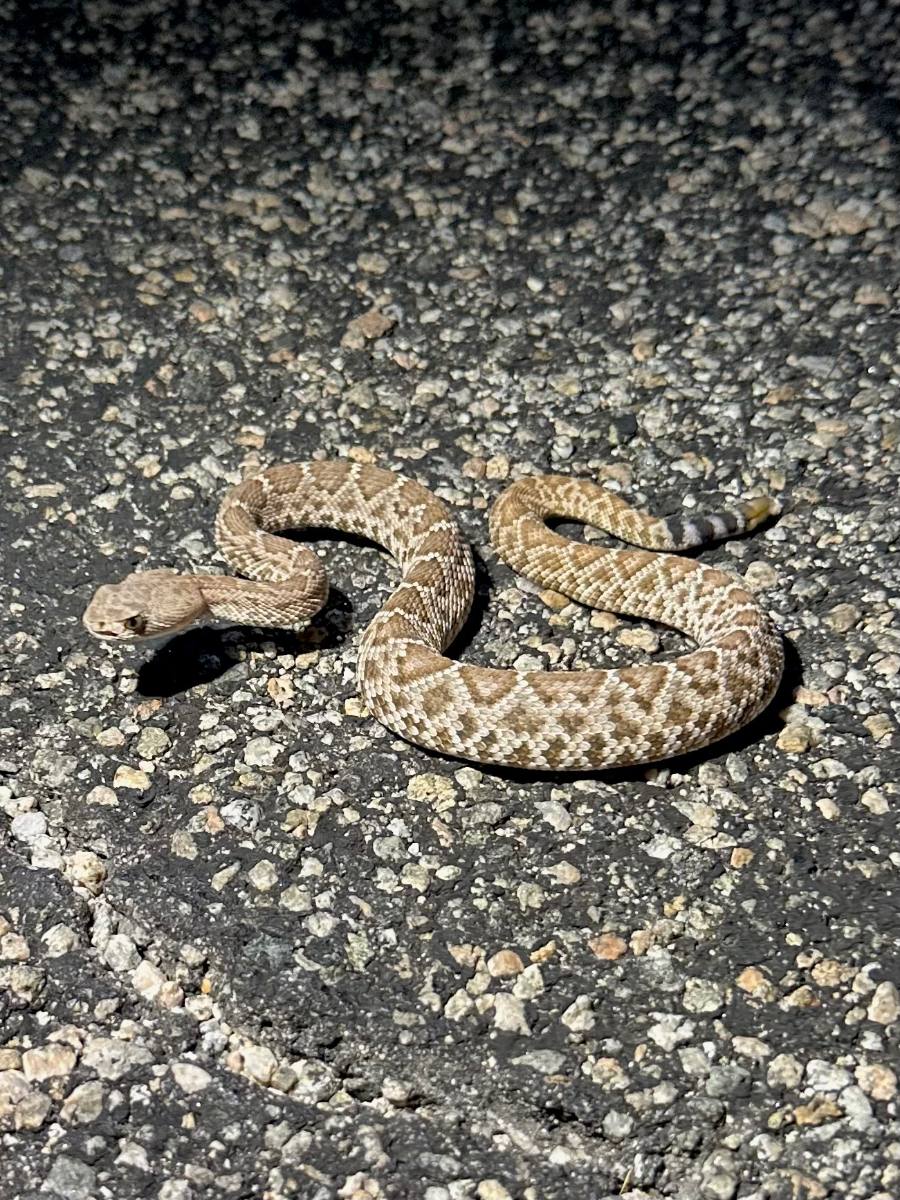
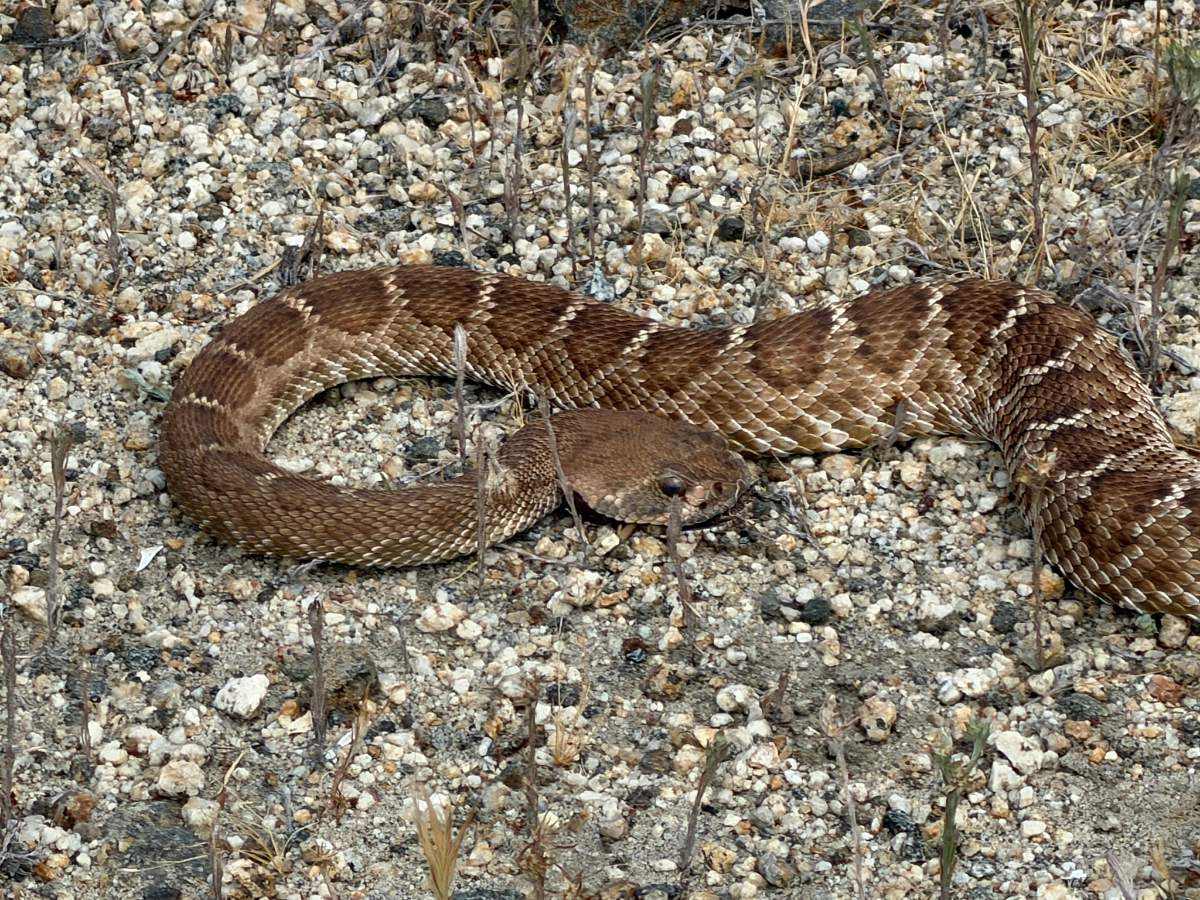
- Broad triangular head on a thin neck, often reddish, with a dark stripe slanting from below the eye to the corner of the mouth, edged by light lines.
- Pattern
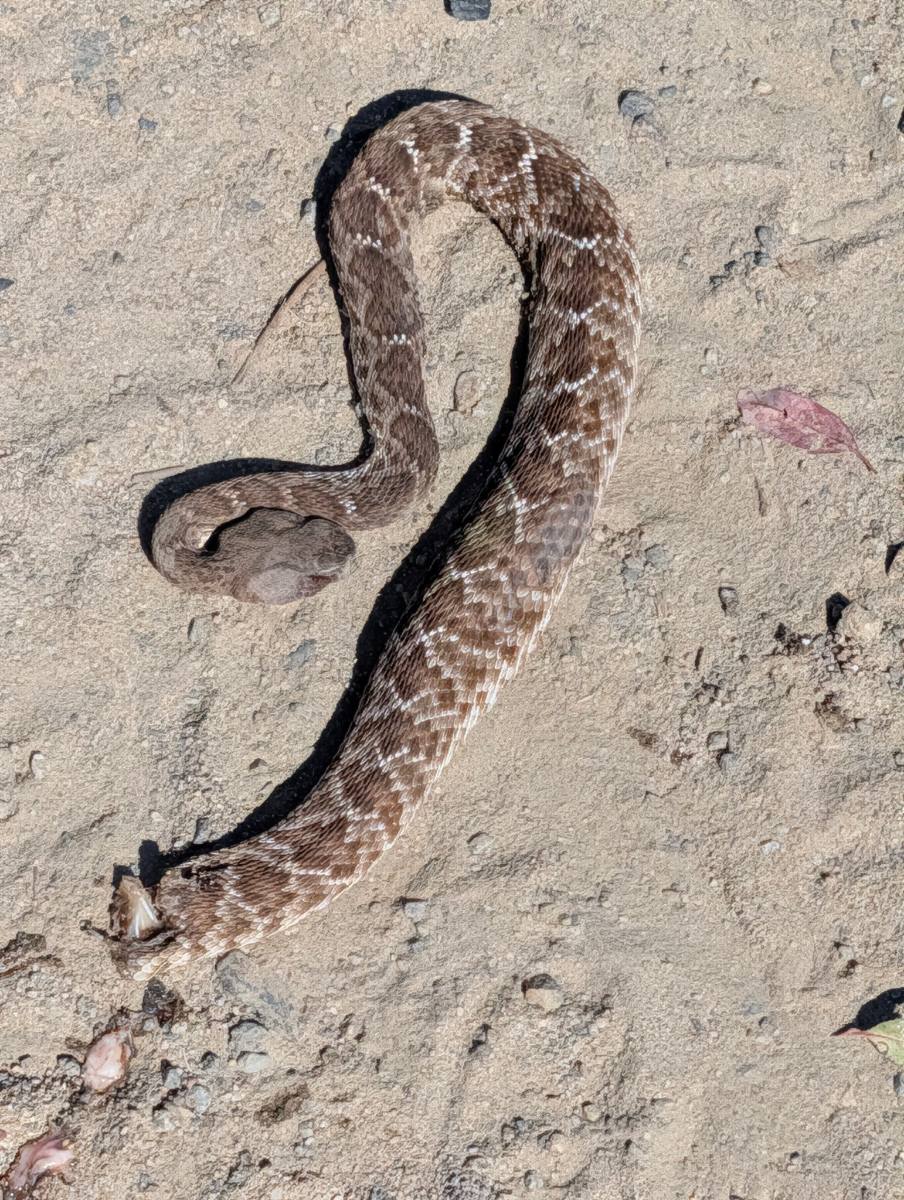
- Reddish-brown diamonds with pale edges, fairly plain inside, on a reddish or tan body.
- Eyes
- Vertical slit pupil; heat-sensing pit between eye and nostril.
- Pits
- A deep heat-sensing pit on each side of the face, between the eye and the nostril.
- Tail
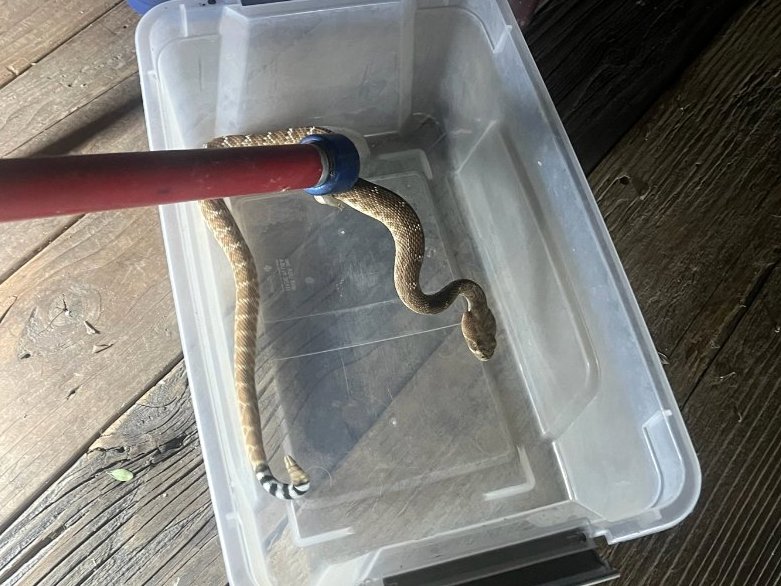
- Black-and-white rings of similar width just ahead of the rattle.
- What it does
- Usually calm; many stay still or hide, but it will rattle and strike if provoked.
Often confused with
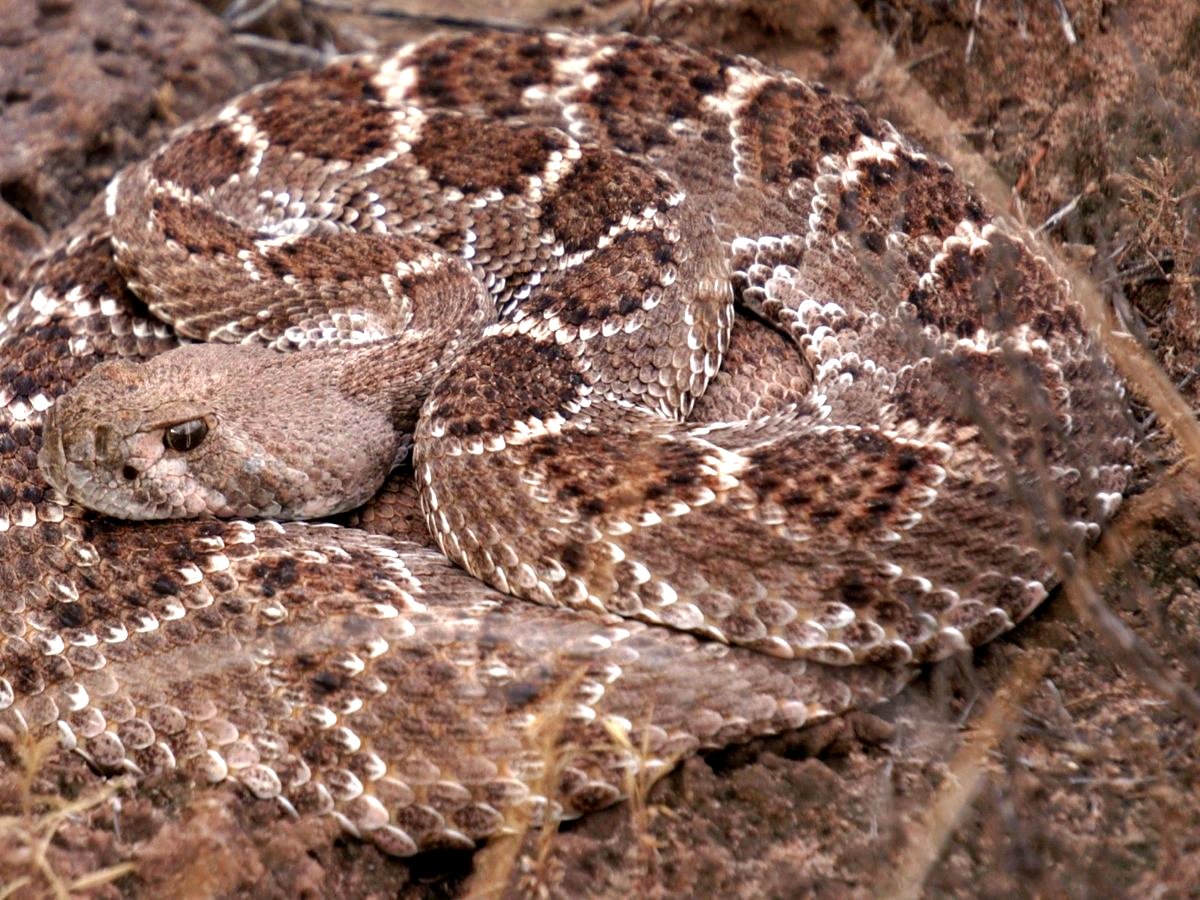
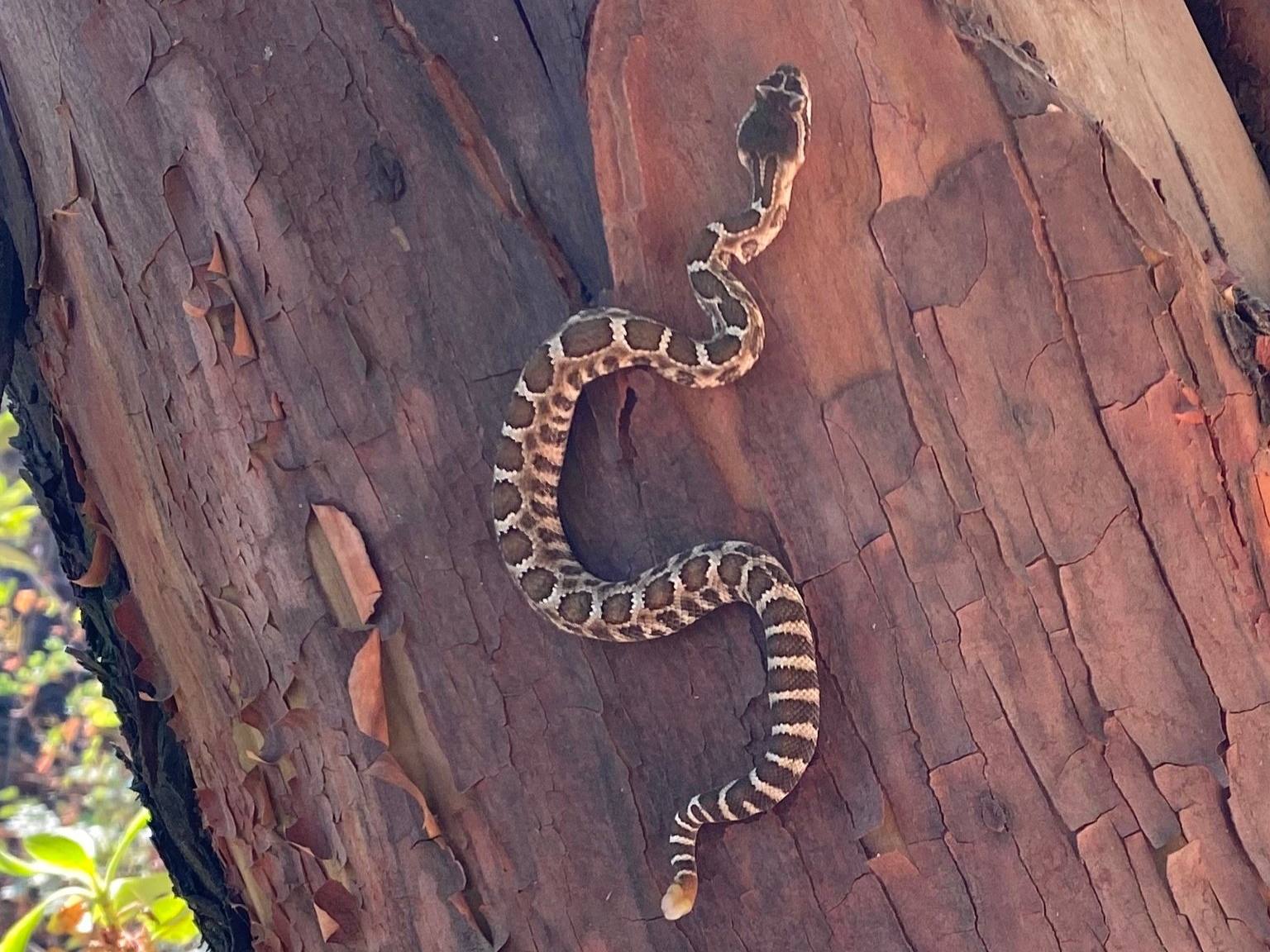
Western Diamondback Rattlesnake and Western Rattlesnake are the usual mix-ups; the Red Diamond's reddish color and plain, light-edged diamonds are the best clues.
How to tell them apart
Red Diamond Rattlesnake vs Western Diamondback Rattlesnake›
The quick way to tellLook at the color and the diamonds. The Red Diamond is brick-red or pinkish with fairly plain, light-edged diamonds. The Western Diamondback is gray or tan, and its diamonds are peppered with dark speckles.
Red Diamond Rattlesnake: Reddish-brown diamonds with pale edges, fairly plain inside, on a reddish or tan body.
Western Diamondback Rattlesnake: Fuzzy-edged, speckled-looking diamonds on dusty gray-brown.
Red Diamond Rattlesnake vs Western Rattlesnake›
The quick way to tellLook at the body color and markings. The Red Diamond is reddish with light-edged diamonds and a black-and-white ringed tail. The Western Rattlesnake in the same area is brown to olive-brown with dark brown blotches that turn into crossbars toward the tail.
Red Diamond Rattlesnake: Reddish-brown diamonds with pale edges, fairly plain inside, on a reddish or tan body.
Western Rattlesnake: Pale-edged blotches wider than long, banding near the tail; olive to nearly black.
About the Red Diamond Rattlesnake›
A big, reddish rattlesnake of southwestern California's coastal sage scrub, chaparral, rocky hillsides and desert edges. In the US it lives only in California, and its range continues south through Baja California in Mexico. It is a California Species of Special Concern.
Known for a calm temperament. Many lie quiet or slip away when approached, and it is generally described as less defensive than the Western Diamondback.
The details
Size Usually 2.5–4 ft; rarely up to about 5.3 ftLifespan Not well documented in the wild; one captive snake lived over 19 years
Typical range›
Southwestern California, from southeastern Los Angeles and Orange Counties and the Morongo Valley south through western Riverside and San Diego Counties to extreme southwestern Imperial County; continues south through Baja California, Mexico.
Activity›
Most active March to June, out by day in cool weather and at night in summer heat.
Diet›
Mostly small mammals such as ground squirrels, woodrats, mice and rabbits, plus some lizards and birds.
Reproduction›
Mates in spring and gives birth to about 3–20 live young in late summer, usually August or September.
Found in parts of 1 state›
Ranges are approximate. It may be found in only part of a state, or be rare there, and snakes can turn up outside of them.
More photos